Forwarded from Words of the Buddha
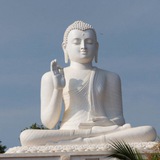
Sanghanussati Bhavana is the recollection on the qualities of the community of Ariya sangha.
Supatipanno Bhagavato savakasangho, ²ujupatipanno Bhagavato savakasangho, ³nayapatipanno Bhagavato savakasangho, 4samicipatpanno Bhagavato savakasangho; yadidam cattari purisa yugani attha purisa puggala, esa Bhagavato savakasangho, 5ahuneyyo, 6pahuneyyo, 7dakkhineyyo, 8anjali karaniyo, 9anuttaram punnakkhettam lokassa ti.”
“ 1Well attained is the Order of the Blessed One’s disciples, 2upright is the Order of the Blessed One’s disciples, 3true is the Order of the Blessed One’s disciples,4proper is the Order of the Blessed One’s disciples. That is, the four pairs of persons, the eight individual persons, this is the Order of the Blessed One’s disciples; 5worthy of gifts, 6worthy of hospitality, 7worthy of offerings, 8worthy of salutations, 9an incomparable field of merits for the world. ”
Supatipanno Bhagavato savakasangho, ²ujupatipanno Bhagavato savakasangho, ³nayapatipanno Bhagavato savakasangho, 4samicipatpanno Bhagavato savakasangho; yadidam cattari purisa yugani attha purisa puggala, esa Bhagavato savakasangho, 5ahuneyyo, 6pahuneyyo, 7dakkhineyyo, 8anjali karaniyo, 9anuttaram punnakkhettam lokassa ti.”
“ 1Well attained is the Order of the Blessed One’s disciples, 2upright is the Order of the Blessed One’s disciples, 3true is the Order of the Blessed One’s disciples,4proper is the Order of the Blessed One’s disciples. That is, the four pairs of persons, the eight individual persons, this is the Order of the Blessed One’s disciples; 5worthy of gifts, 6worthy of hospitality, 7worthy of offerings, 8worthy of salutations, 9an incomparable field of merits for the world. ”
🕊1😇1
Dhammapada Verse 422
Angulimatthera Vatthu
Usabham pavaram viram
mahesim vijitavinam
anejam nhatakam1 buddham
tamaham brumi brahmanam.
Verse 422: Him I call a brahmana, who is fearless like a bull, who is noble and diligent, who is a seeker of high moral virtues and a conqueror (of three Maras), who is free from craving, who has been cleansed of moral defilements and knows the Four Noble Truths.
1. nhatakam: made clean (of moral defilements); an allusion to the ceremonial bathing of the brahmin after finishing his course of studies.
The Story of Angulimala
While residing at the Jetavana monastery, the Buddha uttered Verse (422) of this book, with reference to Thera Angulimala.
On one occasion, King Pasenadi and Queen Mallika made an alms-offering to the Buddha and his bhikkhus numbering five hundred in all, on a scale which could not be surpassed by anyone else. At that ceremony, each bhikkhu was to have an elephant holding a white umbrella over his head as a sunshade. However, they could get only four hundred and ninety-nine trained elephants and so they had to put in an untrained elephant and it was allotted to hold the umbrella over Thera Angulimala. Every one was afraid that the untrained elephant might give trouble, but when brought near Thera Angulimala it was quite docile.
It was with reference to this incident that the bhikkhus later asked Angulimala whether he did not get frightened or not. To this question Angulimala answered that he was not frightened. The bhikkhus then went to the Buddha and said that Thera Angulimala claimed to have attained arahatship. To them the Buddha said, "Bhikkhus! It is quite true that Angulimala was not afraid; those who are like him are also not afraid."
Then the Buddha spoke in verse as follows:
Verse 422: Him I call a brahmana, who is fearless like a bull, who is noble and diligent, who is a seeker of high moral virtues and a conqueror (of three Maras), who is free from craving, who has been cleansed of moral defilements and knows the Four Noble Truths.
===
Dhammapada, beloved and favorite teachings of the Buddha channel:
https://invite.viber.com/?g2=AQBLD6phsgvP%2F061YjEM3K%2BNeH1Yb372b9mtfQX2EmuBpgoLUoc99BDMfzHghrme
===
Angulimatthera Vatthu
Usabham pavaram viram
mahesim vijitavinam
anejam nhatakam1 buddham
tamaham brumi brahmanam.
Verse 422: Him I call a brahmana, who is fearless like a bull, who is noble and diligent, who is a seeker of high moral virtues and a conqueror (of three Maras), who is free from craving, who has been cleansed of moral defilements and knows the Four Noble Truths.
1. nhatakam: made clean (of moral defilements); an allusion to the ceremonial bathing of the brahmin after finishing his course of studies.
The Story of Angulimala
While residing at the Jetavana monastery, the Buddha uttered Verse (422) of this book, with reference to Thera Angulimala.
On one occasion, King Pasenadi and Queen Mallika made an alms-offering to the Buddha and his bhikkhus numbering five hundred in all, on a scale which could not be surpassed by anyone else. At that ceremony, each bhikkhu was to have an elephant holding a white umbrella over his head as a sunshade. However, they could get only four hundred and ninety-nine trained elephants and so they had to put in an untrained elephant and it was allotted to hold the umbrella over Thera Angulimala. Every one was afraid that the untrained elephant might give trouble, but when brought near Thera Angulimala it was quite docile.
It was with reference to this incident that the bhikkhus later asked Angulimala whether he did not get frightened or not. To this question Angulimala answered that he was not frightened. The bhikkhus then went to the Buddha and said that Thera Angulimala claimed to have attained arahatship. To them the Buddha said, "Bhikkhus! It is quite true that Angulimala was not afraid; those who are like him are also not afraid."
Then the Buddha spoke in verse as follows:
Verse 422: Him I call a brahmana, who is fearless like a bull, who is noble and diligent, who is a seeker of high moral virtues and a conqueror (of three Maras), who is free from craving, who has been cleansed of moral defilements and knows the Four Noble Truths.
===
Dhammapada, beloved and favorite teachings of the Buddha channel:
https://invite.viber.com/?g2=AQBLD6phsgvP%2F061YjEM3K%2BNeH1Yb372b9mtfQX2EmuBpgoLUoc99BDMfzHghrme
===
Viber
Dhammapada - Buddha Dharma Teachings
Daily teachings of the Dhammapada, beloved and favorite teachings of the Buddha
😍1🤗1
Form [Feeling, Perception, Choices, Consciousness] is not-self. For if form were self, it wouldn’t lead to affliction. And you could compel form: ‘May my form be like this! May it not be like that!’ But because form is not-self, it leads to affliction. And you can’t compel form: ‘May my form be like this! May it not be like that!’
What do you think? Is form [feeling, perception, choices, consciousness] permanent or impermanent?”
“Impermanent”
“But if it’s impermanent, is it suffering or happiness?”
“Suffering”
“But if it’s impermanent, suffering, and perishable, is it fit to be regarded thus: ‘This is mine, I am this, this is my self’?”
“No”
“So you should truly see any kind of form [feeling, perception, choices, consciousness ] with right understanding: ‘This is not mine, I am not this, this is not my self.’
Being disillusioned, desire fades away. When desire fades away they’re freed...Rebirth is ended, the spiritual journey has been completed.
Partial excerpts from SN 22.59 : Anattalakkhaṇasutta
What do you think? Is form [feeling, perception, choices, consciousness] permanent or impermanent?”
“Impermanent”
“But if it’s impermanent, is it suffering or happiness?”
“Suffering”
“But if it’s impermanent, suffering, and perishable, is it fit to be regarded thus: ‘This is mine, I am this, this is my self’?”
“No”
“So you should truly see any kind of form [feeling, perception, choices, consciousness ] with right understanding: ‘This is not mine, I am not this, this is not my self.’
Being disillusioned, desire fades away. When desire fades away they’re freed...Rebirth is ended, the spiritual journey has been completed.
Partial excerpts from SN 22.59 : Anattalakkhaṇasutta
🙏1👌1🕊1
Forwarded from Words of the Buddha
Sunset at Tanah lot pura temple on a rock, Bali beach, Indonesia.
🤩1😍1
Forwarded from Buddha Dharma books
Free Buddhism Dharma ebook
An Introduction To Abhidhamma
(Buddhist Philosophy & Psychology)
By Silananda Brahmachari
Free download here:
https://ftp.budaedu.org/ebooks/pdf/EN379.pdf
===
An Introduction To Abhidhamma
(Buddhist Philosophy & Psychology)
By Silananda Brahmachari
Free download here:
https://ftp.budaedu.org/ebooks/pdf/EN379.pdf
===
❤1👏1
Forwarded from Buddha Dharma books
Free Buddhism Dharma ebook
An Introduction To Abhidhamma
(Buddhist Philosophy & Psychology)
By Silananda Brahmachari
Abhidhamma is the offshoot of Dhamma-the collection of the Buddha's teachings. 'Abhi' means 'super' 'beyond'. It is said 'paramatthabhāvena abhi visittha dhamma etthāti abhidhamma'. i.e. Abhidhamma contains the Dhamma beyond in terms of absoluteness. In fact, it is the psychological and philosophical analysis of mundane and supramundane themes based on the Buddha's teachings. Abhidhamma is one of the three divisions of the Pali canon.
Obviously the subject matter dealt with therein is so abstruse and intricate that it is almost impossible to proceed with its study without the help of an expert teacher. Hence the circle of its adherents is very limited even in the Buddhist countries. Nevertheless, its importance cannot be overemphasised. The study of Buddhism remains incomplete without it. It is a must for the advanced study of Buddhism. Needlessto say, it is a subject of immense interest to the students of Indian philosophy.
Free download here:
https://ftp.budaedu.org/ebooks/pdf/EN379.pdf
===
An Introduction To Abhidhamma
(Buddhist Philosophy & Psychology)
By Silananda Brahmachari
Abhidhamma is the offshoot of Dhamma-the collection of the Buddha's teachings. 'Abhi' means 'super' 'beyond'. It is said 'paramatthabhāvena abhi visittha dhamma etthāti abhidhamma'. i.e. Abhidhamma contains the Dhamma beyond in terms of absoluteness. In fact, it is the psychological and philosophical analysis of mundane and supramundane themes based on the Buddha's teachings. Abhidhamma is one of the three divisions of the Pali canon.
Obviously the subject matter dealt with therein is so abstruse and intricate that it is almost impossible to proceed with its study without the help of an expert teacher. Hence the circle of its adherents is very limited even in the Buddhist countries. Nevertheless, its importance cannot be overemphasised. The study of Buddhism remains incomplete without it. It is a must for the advanced study of Buddhism. Needlessto say, it is a subject of immense interest to the students of Indian philosophy.
Free download here:
https://ftp.budaedu.org/ebooks/pdf/EN379.pdf
===
👍1💯1
Forwarded from Buddha
“Bhikkhus, all is burning. And what, bhikkhus, is the all that is burning? The eye is burning, forms are burning, eye-consciousness is burning, eye-contact is burning, and whatever feeling arises with eye-contact as condition—whether pleasant or painful or neither-painful-nor-pleasant—that too is burning. Burning with what? Burning with the fire of lust, with the fire of hatred, with the fire of delusion; burning with birth, aging, and death; with sorrow, lamentation, pain, displeasure, and despair, I say.....Experiencing revulsion, he becomes dispassionate. Through dispassion his mind is liberated. When it is liberated there comes the knowledge: ‘It’s liberated.’ He understands: ‘Destroyed is birth, the holy life has been lived, what had to be done has been done, there is no more for this state of being.’”
Partial excerpts from SN 35.28 : Ādittasutta
Partial excerpts from SN 35.28 : Ādittasutta
🙏3🕊1😇1
Dhammapada Verse 423
Devahitabrahmana Vatthu
Pubbenivasam yo vedi
saggapayanca passati
atho jatikkhayam patto
abhinnavosito muni
sabbavositavosanam
tamaham brumi brahmanam.
Verse 423: Him I call a brahmana, who knows past existences, who sees the celestial as well as the lower worlds, who has reached the end of rebirths, who, with Magga Insight, has become an arahat and has accomplished all that is to be accomplished for the eradication of moral defilements.
The Story of Devahita the Brahmin
While residing at the Jetavana monastery, the Buddha uttered Verse (423) of this book, with reference to Devahita, a brahmin.
On one occasion, the Buddha suffered from a gastric ailment and he sent Thera Upavana to get some hot water from Devahita the brahmin. The brahmin was very pleased to have this rare opportunity to offer something to the Buddha. So, in addition to hot water he also gave the thera some molasses for the Buddha. At the monastery Thera Upavana gave a warm bath to the Buddha; after the bath he offered the Buddha a mixture of molasses and hot water. After drinking the mixture there was instant relief. The brahmin then came and asked the Buddha, "Venerable Sir! An offering made to whom gives one the greatest benefit?" To him the Buddha said, "Brahmin! An offering made to one who has given up all evil is the most beneficial."
Then the Buddha spoke in verse as follows:
Verse 423: Him I call a brahmana, who knows past existences, who sees the celestial as well as the lower worlds, who has reached the end of rebirths, who, with Magga Insight, has become an arahat and has accomplished all that is to be accomplished for the eradication of moral defilements.
At the end of the discourse the brahmana became established in the faith in the Three Gems (the Buddha, the Dhamma and the Samgha) and became a lay-disciple of the Buddha.
End of Chapter Twenty-six: The Brahmana
— End of The Dhammapada: Verses and Stories —
===
Ajahn Chah, Buddhist teacher of Thai forest meditation of Theravada Buddhism channel:
https://news.1rj.ru/str/ajahnchah_buddhism
===
Devahitabrahmana Vatthu
Pubbenivasam yo vedi
saggapayanca passati
atho jatikkhayam patto
abhinnavosito muni
sabbavositavosanam
tamaham brumi brahmanam.
Verse 423: Him I call a brahmana, who knows past existences, who sees the celestial as well as the lower worlds, who has reached the end of rebirths, who, with Magga Insight, has become an arahat and has accomplished all that is to be accomplished for the eradication of moral defilements.
The Story of Devahita the Brahmin
While residing at the Jetavana monastery, the Buddha uttered Verse (423) of this book, with reference to Devahita, a brahmin.
On one occasion, the Buddha suffered from a gastric ailment and he sent Thera Upavana to get some hot water from Devahita the brahmin. The brahmin was very pleased to have this rare opportunity to offer something to the Buddha. So, in addition to hot water he also gave the thera some molasses for the Buddha. At the monastery Thera Upavana gave a warm bath to the Buddha; after the bath he offered the Buddha a mixture of molasses and hot water. After drinking the mixture there was instant relief. The brahmin then came and asked the Buddha, "Venerable Sir! An offering made to whom gives one the greatest benefit?" To him the Buddha said, "Brahmin! An offering made to one who has given up all evil is the most beneficial."
Then the Buddha spoke in verse as follows:
Verse 423: Him I call a brahmana, who knows past existences, who sees the celestial as well as the lower worlds, who has reached the end of rebirths, who, with Magga Insight, has become an arahat and has accomplished all that is to be accomplished for the eradication of moral defilements.
At the end of the discourse the brahmana became established in the faith in the Three Gems (the Buddha, the Dhamma and the Samgha) and became a lay-disciple of the Buddha.
End of Chapter Twenty-six: The Brahmana
— End of The Dhammapada: Verses and Stories —
===
Ajahn Chah, Buddhist teacher of Thai forest meditation of Theravada Buddhism channel:
https://news.1rj.ru/str/ajahnchah_buddhism
===
Telegram
Ajahn Chah - Theravada Thailand Buddhism
Collection of teachings of Venerable Ajahn Chah, a foremost meditation and Buddhist teacher from Thailand
🙏1🤗1
Forwarded from Words of the Buddha
heṭṭhā ... pādatalesu cakkāni jātāni, sahassārāni sanemikāni sanābhikāni sabbākāraparipūrāni...
Under the soles of His feet there are wheels, with a thousand rims and naves, complete in every way...
Thirty-two marks of a Great Man (mahā purisa lakkhaņa) in The Digha Nikaya, "Discourse of the Marks" (Pali: Lakkhaṇa Sutta) (DN 30)
Under the soles of His feet there are wheels, with a thousand rims and naves, complete in every way...
Thirty-two marks of a Great Man (mahā purisa lakkhaņa) in The Digha Nikaya, "Discourse of the Marks" (Pali: Lakkhaṇa Sutta) (DN 30)
👍1🥰1👏1
Buddha Sāsanaṃ Ciraṃ Tiṭṭhatu
"So long, Ānanda, as the monks, the nuns, the male lay followers, and the female lay followers live according to the Dhamma, practice the Dhamma properly, and act in accordance with the Dhamma, then the Buddha’s dispensation will last long."
DN 16, Mahāparinibbāna Sutta
"So long, Ānanda, as the monks, the nuns, the male lay followers, and the female lay followers live according to the Dhamma, practice the Dhamma properly, and act in accordance with the Dhamma, then the Buddha’s dispensation will last long."
DN 16, Mahāparinibbāna Sutta
👍1🥰1💯1
Free Buddha Dharma ebook
Light of Asia (full colour illustrations)
by Sir Edwin Arnold
Free download here:
https://static.sariputta.com/pdf/tipitaka/243/lightasia2_pdf.pdf
===
Light of Asia (full colour illustrations)
by Sir Edwin Arnold
Free download here:
https://static.sariputta.com/pdf/tipitaka/243/lightasia2_pdf.pdf
===
❤1🏆1
Forwarded from Buddha Dharma books
Free Buddha Dharma ebook
Light of Asia (full colour illustrations)
by Sir Edwin Arnold
In the sumptuous Buddhist literature of the world, “Light of Asia”, by Sir Edwin Arnold, is without any doubt, an unique work. It is primarily because, this is the only original poem written in English on the Buddha, throughout the long history of Buddhism. This distinction is quite necessary to be established, because there are translations of original Pali works into English and other languages. Some of these are outstanding instances of spiritual poetry.
Sir Edwin Arnold, the Author of this epic poem, was initially persuaded to compose this sacred work, as a result of his deep and abiding desire to aid in the better and more wholesome mutual understanding between East and West.
His discovery and profound appreciation of the perennial philosophies of ancient India, could form a subject for a substantial research paper. In his early youth in England, Edwin Arnold felt the first stirrings of the Muse. His adept command over poetic expression, won him the Newgate Prize at the University College, Oxford in 1852, for his poem “The Feast of the Belahazzar”.
Free download here:
https://static.sariputta.com/pdf/tipitaka/243/lightasia2_pdf.pdf
===
Light of Asia (full colour illustrations)
by Sir Edwin Arnold
In the sumptuous Buddhist literature of the world, “Light of Asia”, by Sir Edwin Arnold, is without any doubt, an unique work. It is primarily because, this is the only original poem written in English on the Buddha, throughout the long history of Buddhism. This distinction is quite necessary to be established, because there are translations of original Pali works into English and other languages. Some of these are outstanding instances of spiritual poetry.
Sir Edwin Arnold, the Author of this epic poem, was initially persuaded to compose this sacred work, as a result of his deep and abiding desire to aid in the better and more wholesome mutual understanding between East and West.
His discovery and profound appreciation of the perennial philosophies of ancient India, could form a subject for a substantial research paper. In his early youth in England, Edwin Arnold felt the first stirrings of the Muse. His adept command over poetic expression, won him the Newgate Prize at the University College, Oxford in 1852, for his poem “The Feast of the Belahazzar”.
Free download here:
https://static.sariputta.com/pdf/tipitaka/243/lightasia2_pdf.pdf
===
🤗1🆒1
Forwarded from Words of the Buddha
“And what is the origin of suffering? In dependence on the eye & forms, eye-consciousness arises. The meeting of the three is contact. With contact as condition, feeling comes to be; with feeling as condition, craving. This is the origin of suffering.
“In dependence on the ear & sounds …[the nose & odours, the tongue & tastes, the body & tactile objects, the mind & mental phenomena], mind-consciousness arises. The meeting of the three is contact. With contact as condition, feeling comes to be; with feeling as condition, craving. This is the origin of suffering.
“And what , is the passing away of suffering? With the remainderless fading away & cessation of that same craving comes cessation of clinging; with the cessation of clinging, cessation of existence; with the cessation of existence, cessation of birth; with the cessation of birth, aging-and-death, sorrow, lamentation, pain, displeasure, & despair cease. This is the passing away of suffering.
Partial excerpts from SN 12.43: Dukkhasutta
“In dependence on the ear & sounds …[the nose & odours, the tongue & tastes, the body & tactile objects, the mind & mental phenomena], mind-consciousness arises. The meeting of the three is contact. With contact as condition, feeling comes to be; with feeling as condition, craving. This is the origin of suffering.
“And what , is the passing away of suffering? With the remainderless fading away & cessation of that same craving comes cessation of clinging; with the cessation of clinging, cessation of existence; with the cessation of existence, cessation of birth; with the cessation of birth, aging-and-death, sorrow, lamentation, pain, displeasure, & despair cease. This is the passing away of suffering.
Partial excerpts from SN 12.43: Dukkhasutta
👌2❤1🙏1🕊1