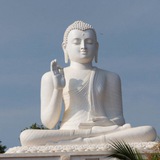
Forwarded from Words of the Buddha
Buddham Saranam Gacchami
Dhammam Saranam Gacchami
Sangham Saranam Gacchami
I go to the Buddha for refuge.
I go to the Dhamma for refuge.
I go to the Sangha for refuge.
बुद्धं शरणं गच्छामि। धर्मं शरणं गच्छामि। संघं शरणं गच्छामि।
Dhammam Saranam Gacchami
Sangham Saranam Gacchami
I go to the Buddha for refuge.
I go to the Dhamma for refuge.
I go to the Sangha for refuge.
बुद्धं शरणं गच्छामि। धर्मं शरणं गच्छामि। संघं शरणं गच्छामि।
🙏2👌1😇1
How the Brahmaviharas Can Help Us Shed Our Egoism
Scholar Jay Garfield discusses how the brahmaviharas can restructure our moral landscape and support us in leading happier, more meaningful lives.
By Jay L. Garfield, PhD.
One of the dangers of the illusion of self is that it lays the foundation for moral egoism. Moral egoism is the idea that my own narrow self-interest is prima facie motivating and justifying. In other words, if I do something and explain that I did it because it made me happy, that by itself constitutes at least a basic justification for the action. The moment we allow a self into the picture, moral egoism is just hiding in the closet. As soon as I’ve got a self and everything else is an object for that self, there’s a fundamental ontological divide in the nature of being between me and everything else. I’m the subject; everything else is my object. I’m the agent of those actions; everything else is the patient of my actions. There’s something very special about me, and that becomes the unspoken justification for the morally egoistic attitude.
Once I have a morally egoistic attitude, the interests of others have to be defended as somehow overriding my own interests, and that can be very hard to do. I can always find reasons that my interests are actually more important, and that can give way to an attitude of every person for themselves—I might see another person and think, “She can pursue her own interests, but I don’t need to worry about them. I’ll pursue mine. Each to their own.” It’s a short step from there to seeing all of life as a competitive social arrangement where everything is a race, where the person who’s fastest wins. Under this arrangement, it’s acceptable for me to win goods and resources and leave everyone else impoverished because if they had competed harder, they would have gotten more.
When we buy into this model, it breeds not just a lack of interest in the welfare of others but possibly a kind of disregard for the welfare of others completely. We might hope that everything is remediated by an invisible hand that will result in all of this selfish, competitive behavior somehow generating equitable prosperity and happiness. But it won’t. It simply leads to self-alienation, alienation from others, and a deeply misleading reduction of happiness to possession or pleasure. This is what Karl Marx called commodity fetishism, when we think that somehow just having goods makes us happy. This leads to our alienation of our own being in the pursuit of what looks like success. None of this is good, and all of it, I think, is inevitably grounded in the self illusion.
My hope is that if we can extirpate the self illusion, we can take some strides in the direction of social justice. We can move toward caring for others, cultivating friendliness, having greater impartiality, and being able to take joy in the success of others and not only in our own vanquishing of them. In other words, we can move beyond the self illusion and generate a healthier society through practicing the brahmaviharas, or divine states.
The brahmaviharas are maitri, or friendliness; karuna, or care; mudita, the ability to take joy in the success and the accomplishments of others; and upeksha, or impartiality and equanimity. When we take those four together, they constitute a vision of the moral landscape that is antithetical to the landscape of moral egoism. Moral egoism gives us a sense of the moral landscape that is structured by my own identity and the relation of everybody else to me. In Buddhist philosophy, this is called the twofold self grasping of “I” and “mine.” That is, I grasp myself as a self, and I see the existence and the importance of everything else in terms of its relationship to me: Is that my friend or my enemy, close to me or far from me, useful to me or unimportant to me? Moral egoism thus encourages us to see ourselves as at the center of the moral universe, where we care less and less about others the further they are from us.
Scholar Jay Garfield discusses how the brahmaviharas can restructure our moral landscape and support us in leading happier, more meaningful lives.
By Jay L. Garfield, PhD.
One of the dangers of the illusion of self is that it lays the foundation for moral egoism. Moral egoism is the idea that my own narrow self-interest is prima facie motivating and justifying. In other words, if I do something and explain that I did it because it made me happy, that by itself constitutes at least a basic justification for the action. The moment we allow a self into the picture, moral egoism is just hiding in the closet. As soon as I’ve got a self and everything else is an object for that self, there’s a fundamental ontological divide in the nature of being between me and everything else. I’m the subject; everything else is my object. I’m the agent of those actions; everything else is the patient of my actions. There’s something very special about me, and that becomes the unspoken justification for the morally egoistic attitude.
Once I have a morally egoistic attitude, the interests of others have to be defended as somehow overriding my own interests, and that can be very hard to do. I can always find reasons that my interests are actually more important, and that can give way to an attitude of every person for themselves—I might see another person and think, “She can pursue her own interests, but I don’t need to worry about them. I’ll pursue mine. Each to their own.” It’s a short step from there to seeing all of life as a competitive social arrangement where everything is a race, where the person who’s fastest wins. Under this arrangement, it’s acceptable for me to win goods and resources and leave everyone else impoverished because if they had competed harder, they would have gotten more.
When we buy into this model, it breeds not just a lack of interest in the welfare of others but possibly a kind of disregard for the welfare of others completely. We might hope that everything is remediated by an invisible hand that will result in all of this selfish, competitive behavior somehow generating equitable prosperity and happiness. But it won’t. It simply leads to self-alienation, alienation from others, and a deeply misleading reduction of happiness to possession or pleasure. This is what Karl Marx called commodity fetishism, when we think that somehow just having goods makes us happy. This leads to our alienation of our own being in the pursuit of what looks like success. None of this is good, and all of it, I think, is inevitably grounded in the self illusion.
My hope is that if we can extirpate the self illusion, we can take some strides in the direction of social justice. We can move toward caring for others, cultivating friendliness, having greater impartiality, and being able to take joy in the success of others and not only in our own vanquishing of them. In other words, we can move beyond the self illusion and generate a healthier society through practicing the brahmaviharas, or divine states.
The brahmaviharas are maitri, or friendliness; karuna, or care; mudita, the ability to take joy in the success and the accomplishments of others; and upeksha, or impartiality and equanimity. When we take those four together, they constitute a vision of the moral landscape that is antithetical to the landscape of moral egoism. Moral egoism gives us a sense of the moral landscape that is structured by my own identity and the relation of everybody else to me. In Buddhist philosophy, this is called the twofold self grasping of “I” and “mine.” That is, I grasp myself as a self, and I see the existence and the importance of everything else in terms of its relationship to me: Is that my friend or my enemy, close to me or far from me, useful to me or unimportant to me? Moral egoism thus encourages us to see ourselves as at the center of the moral universe, where we care less and less about others the further they are from us.
Telegram
Dhammapada - Buddha Dharma Teachings
Daily teachings of the Dhammapada, beloved and favorite teachings of the Buddha
💯1🤗1
The world is full of sources of happiness, and most of them aren’t me.
Now, if you think for a moment, you’ll realize that that is a terrible distortion of what the moral landscape looks like. We can’t each be the center of the moral universe. The idea that we simply live our lives in disconnected moral universes, each of them centered on another self, makes the possibility of community and morality completely incomprehensible. Instead, we should be thinking of the moral universe as a kind of uniform space where our own position is no different in kind and no more or less special than any other position in that landscape. This is what happens when we think in terms of upeksha, or impartiality. When we do that, we see that our sources of happiness aren’t just our own achievements but also those of the people we are connected to. That allows us a much greater scope for joy. This is mudita, or sympathetic joy. It also enables us to recognize our interconnectedness with others and hence the fact that we’re bound by friendship, or maitri. It causes us to react to others’ distress with care and not with callousness, and that’s karuna.
These four aspects can help us reorient ourselves in the moral landscape. They ask each of us to recognize that the only way that I can succeed is if we succeed. The only way I can be happy is if we’re happy. And the only way my life can be meaningful is if our lives are meaningful. The recognition that the only kind of identity that we have is interdependent allows us to respond to others with gratitude, with care, and with friendship. And that’s the moral attitude that I think we ought to be encouraging. No matter how egoistic we might be, I think each of us will find that we’re happier when we shed our egoism and discover that the world is full of sources of happiness, and most of them aren’t me.
===
Jay L. Garfield is Professor of Philosophy, Logic, and Buddhist Studies at Smith College and a visiting professor of Buddhist philosophy at Harvard Divinity School. He has written, translated, and edited several books, including Fundamental Wisdom of the Middle Way: Nagarjuna’s Mulamadhyamakakarika and Engaging Buddhism: Why It Matters to Philosophy.
===
Dhammapada, beloved and favorite teachings of the Buddha channel:
https://news.1rj.ru/str/dhammapadas
===
Now, if you think for a moment, you’ll realize that that is a terrible distortion of what the moral landscape looks like. We can’t each be the center of the moral universe. The idea that we simply live our lives in disconnected moral universes, each of them centered on another self, makes the possibility of community and morality completely incomprehensible. Instead, we should be thinking of the moral universe as a kind of uniform space where our own position is no different in kind and no more or less special than any other position in that landscape. This is what happens when we think in terms of upeksha, or impartiality. When we do that, we see that our sources of happiness aren’t just our own achievements but also those of the people we are connected to. That allows us a much greater scope for joy. This is mudita, or sympathetic joy. It also enables us to recognize our interconnectedness with others and hence the fact that we’re bound by friendship, or maitri. It causes us to react to others’ distress with care and not with callousness, and that’s karuna.
These four aspects can help us reorient ourselves in the moral landscape. They ask each of us to recognize that the only way that I can succeed is if we succeed. The only way I can be happy is if we’re happy. And the only way my life can be meaningful is if our lives are meaningful. The recognition that the only kind of identity that we have is interdependent allows us to respond to others with gratitude, with care, and with friendship. And that’s the moral attitude that I think we ought to be encouraging. No matter how egoistic we might be, I think each of us will find that we’re happier when we shed our egoism and discover that the world is full of sources of happiness, and most of them aren’t me.
===
Jay L. Garfield is Professor of Philosophy, Logic, and Buddhist Studies at Smith College and a visiting professor of Buddhist philosophy at Harvard Divinity School. He has written, translated, and edited several books, including Fundamental Wisdom of the Middle Way: Nagarjuna’s Mulamadhyamakakarika and Engaging Buddhism: Why It Matters to Philosophy.
===
Dhammapada, beloved and favorite teachings of the Buddha channel:
https://news.1rj.ru/str/dhammapadas
===
Telegram
Dhammapada - Buddha Dharma Teachings
Daily teachings of the Dhammapada, beloved and favorite teachings of the Buddha
❤1👍1🙏1
Free Buddhism Dharma ebook
Your Questions, My Answers
On Buddhism and Experience
By Venerable S.M. Sujano
Free download available:
https://ftp.budaedu.org/ebooks/pdf/EN388.pdf
===
Your Questions, My Answers
On Buddhism and Experience
By Venerable S.M. Sujano
Free download available:
https://ftp.budaedu.org/ebooks/pdf/EN388.pdf
===
❤1👏1🤗1
Free Buddhism Dharma ebook
Your Questions, My Answers
On Buddhism and Experience
By Venerable S.M. Sujano
This book is a collection of questions and answers about Buddhism and my life as a Buddhist monk and how I deal with worldly matters. The first part is an interview about me and the work of the Varapunya Meditation Centre in the community.
The personal incline reveals much of my life and how Buddhism has helped me. Simona, a student of journalism writes her intension of interview in her appointment message; 'We've met before, ...I came a few times to your house [Varapunya Meditation Centre] for a meditation session.... I am a Journalism student at RGU and as a coursework for university I have to write a feature interview. I thought about interviewing you, if you are interested, because I believe you are a person that would inspire people, that has something to say, or that simply people would be curious to read about.'
I have also included few other questions and answers that I have encountered on different occasions. They are directly related to the teachings of the Buddha and the practice of meditation. I have answered these to the best of my knowledge and my limited understanding of Buddhist philosophy! I welcome any comments or suggestions. There are still many questions that yet to answer, which I intend to answer them in due future. I hope that this helps to deepen your understanding of the Buddha's teaching and guides you to use in your daily life for a happy life.
Free download available:
https://ftp.budaedu.org/ebooks/pdf/EN388.pdf
===
Your Questions, My Answers
On Buddhism and Experience
By Venerable S.M. Sujano
This book is a collection of questions and answers about Buddhism and my life as a Buddhist monk and how I deal with worldly matters. The first part is an interview about me and the work of the Varapunya Meditation Centre in the community.
The personal incline reveals much of my life and how Buddhism has helped me. Simona, a student of journalism writes her intension of interview in her appointment message; 'We've met before, ...I came a few times to your house [Varapunya Meditation Centre] for a meditation session.... I am a Journalism student at RGU and as a coursework for university I have to write a feature interview. I thought about interviewing you, if you are interested, because I believe you are a person that would inspire people, that has something to say, or that simply people would be curious to read about.'
I have also included few other questions and answers that I have encountered on different occasions. They are directly related to the teachings of the Buddha and the practice of meditation. I have answered these to the best of my knowledge and my limited understanding of Buddhist philosophy! I welcome any comments or suggestions. There are still many questions that yet to answer, which I intend to answer them in due future. I hope that this helps to deepen your understanding of the Buddha's teaching and guides you to use in your daily life for a happy life.
Free download available:
https://ftp.budaedu.org/ebooks/pdf/EN388.pdf
===
👏1💯1
Forwarded from Words of the Buddha
Wat Arun Ratchawararam Ratchawaramahawihan Buddhist temple, Thonburi, on the west bank of the Chao Phraya River, Bangkok, Thailand.
🤩2🙏1😍1🏆1
Chapter 2
Appamada Vagga
Heedfulness
5. Uññhanenappamadena
sañamena damena ca
Dipam kayiratha medhavi
yam ogho n'abhikirati. 25.
BY THEIR EFFORTS THE WISE CREATE THEIR OWN HEAVENS
5. By sustained effort, earnestness, discipline, and self-control let the wise man make for himself an island, 9 which no flood overwhelms. 25.
Story
A young monk, named Culapanthaka, could not memorize a verse of four lines despite trying for four months and he was advised by his brother monk to leave the Order. But he was reluctant to do so. The Buddha understanding his temperament, gave him a clean piece of cloth and asked him to handle it gazing at the morning sun. By his constant handling of it with his sweating hands it soon got soiled. This perceptible change made him reflect on the impermanence of life. He meditated and attained Arahantship.
===
Words of the Buddha channel:
https://invite.viber.com/?g2=AQAFqzqlj7FmI061PX17rxWMAtZ%2BRuso%2FH2KmHKZSgnv7v9DD8X0bDkKnZDr9JDq
===
Appamada Vagga
Heedfulness
5. Uññhanenappamadena
sañamena damena ca
Dipam kayiratha medhavi
yam ogho n'abhikirati. 25.
BY THEIR EFFORTS THE WISE CREATE THEIR OWN HEAVENS
5. By sustained effort, earnestness, discipline, and self-control let the wise man make for himself an island, 9 which no flood overwhelms. 25.
Story
A young monk, named Culapanthaka, could not memorize a verse of four lines despite trying for four months and he was advised by his brother monk to leave the Order. But he was reluctant to do so. The Buddha understanding his temperament, gave him a clean piece of cloth and asked him to handle it gazing at the morning sun. By his constant handling of it with his sweating hands it soon got soiled. This perceptible change made him reflect on the impermanence of life. He meditated and attained Arahantship.
===
Words of the Buddha channel:
https://invite.viber.com/?g2=AQAFqzqlj7FmI061PX17rxWMAtZ%2BRuso%2FH2KmHKZSgnv7v9DD8X0bDkKnZDr9JDq
===
Viber
Words Of The Buddha
Daily teachings from Buddha Dharma
❤1👏1
Forwarded from Words of the Buddha
White dragons of Wat Huay Pla Kang Buddhist temple complex, Chiang Rai, Thailand which has the tallest Guan Yin / Avalokiteshvara statue in Thailand.
❤3😍1🏆1
Forwarded from Buddha
The Buddha's Farewell
Excerpted from The Gospel of Buddha by Paul Carus, 1894.
WHEN the Blessed One had remained as long as he wished at Ambapali's grove, he went to Beluva, near Vesali. There the Blessed One addressed the brethren, and said: "O mendicants, take up your abode for the rainy season round about Vesali, each one according to the place where his friends and near companions may live. I shall enter upon the rainy season here at Beluva."
When the Blessed One had thus entered upon the rainy season there fell upon him a dire sickness and sharp pains came upon him even unto death. But the Blessed One, mindful and self- possessed, bore his ailments without complaint. Then this thought occurred to the Blessed. "It would not be right for me to pass away com life without addressing the disciples, without taking leave of the order. Let me now, by a strong effort of the will, subdue this sickness, and keep my hold on life till the allotted time has come." And the Blessed One by a strong effort of the will subdued the sickness, and kept his hold on life till the time he fixed upon should come. And the sickness abated.
Thus the Blessed One began to recover; and when he had quite got rid of the sickness, he went out from the monastery, and sat down on a seat spread out in the open air. And the venerable Ananda, accompanied by many other disciples, approached where the Blessed One was, saluted him, and taking a seat respectfully on one side, said: "I have beheld, Lord, how the Blessed One was in health, and I have beheld how the Blessed One had to suffer.
And though at the sight of the sickness of the Blessed One my body became weak as a creeper, and the horizon became dim to me, and my faculties were no longer clear, yet notwithstanding I look some little comfort from the thought that the Blessed One would not pass away from existence until at least he had left instructions as touching the order."
The Blessed One addressed Ananda on behalf of the order, saying: "What, then, Ananda, does the order expect of me? I have preached the truth without making any distinction between doctrine hidden or revealed; for in respect of the truth, Ananda, the Tathagata has no such thing as the closed fist of a teacher, who keeps some things back.
"Surely, Ananda, should there be any one who harbour the thought, 'It is I who will lead the brotherhood,' or, 'The order is dependent upon me,' he should lay down instructions in any matter concerning the order, Now the Tathagata, Ananda, thinks not that it is he who should lead the brotherhood, or that the order is dependent upon him. Why, then, should the Tathagata leavr instructions in any matter concerning the order?
"I am now grown old, O Ananda, and full of years; my journey is drawing to its close, I have reached the sum of my days, I am turning eighty years of age. Just as a wornout cart can not be made to move along without much difficulty, so the body of the Tathagata can only be kept going with much additional care, It is only when the Tathagata, Ananda, ceasing to attend to any outward thing, becomes plunged in that devout meditation of heart which is concerned with no bodily object, it is only then that the body of the Tathagata is at ease."
"Therefore, O Ananda, be ye lamps unto yourselves. Rely on yourselves, and do not rely on external help. Hold fast to the truth as a lamp. Seek salvation alone in the truth. Look not for assistance to any one besides yourselves."
"And how, Ananda, can a brother be a lamp unto himself, rely on himself only and not on any external help, holding fast to the truth as his lamp and seeking salvation in the truth alone, looking not for assistance to any one besides himself? Herein, O Ananda, let a brother, as he dwells in the body, so regard the body that he, being strenuous, thoughtful, and mindful, may, whilst in the world, overcome the grief which arises from the body's cravings.
Excerpted from The Gospel of Buddha by Paul Carus, 1894.
WHEN the Blessed One had remained as long as he wished at Ambapali's grove, he went to Beluva, near Vesali. There the Blessed One addressed the brethren, and said: "O mendicants, take up your abode for the rainy season round about Vesali, each one according to the place where his friends and near companions may live. I shall enter upon the rainy season here at Beluva."
When the Blessed One had thus entered upon the rainy season there fell upon him a dire sickness and sharp pains came upon him even unto death. But the Blessed One, mindful and self- possessed, bore his ailments without complaint. Then this thought occurred to the Blessed. "It would not be right for me to pass away com life without addressing the disciples, without taking leave of the order. Let me now, by a strong effort of the will, subdue this sickness, and keep my hold on life till the allotted time has come." And the Blessed One by a strong effort of the will subdued the sickness, and kept his hold on life till the time he fixed upon should come. And the sickness abated.
Thus the Blessed One began to recover; and when he had quite got rid of the sickness, he went out from the monastery, and sat down on a seat spread out in the open air. And the venerable Ananda, accompanied by many other disciples, approached where the Blessed One was, saluted him, and taking a seat respectfully on one side, said: "I have beheld, Lord, how the Blessed One was in health, and I have beheld how the Blessed One had to suffer.
And though at the sight of the sickness of the Blessed One my body became weak as a creeper, and the horizon became dim to me, and my faculties were no longer clear, yet notwithstanding I look some little comfort from the thought that the Blessed One would not pass away from existence until at least he had left instructions as touching the order."
The Blessed One addressed Ananda on behalf of the order, saying: "What, then, Ananda, does the order expect of me? I have preached the truth without making any distinction between doctrine hidden or revealed; for in respect of the truth, Ananda, the Tathagata has no such thing as the closed fist of a teacher, who keeps some things back.
"Surely, Ananda, should there be any one who harbour the thought, 'It is I who will lead the brotherhood,' or, 'The order is dependent upon me,' he should lay down instructions in any matter concerning the order, Now the Tathagata, Ananda, thinks not that it is he who should lead the brotherhood, or that the order is dependent upon him. Why, then, should the Tathagata leavr instructions in any matter concerning the order?
"I am now grown old, O Ananda, and full of years; my journey is drawing to its close, I have reached the sum of my days, I am turning eighty years of age. Just as a wornout cart can not be made to move along without much difficulty, so the body of the Tathagata can only be kept going with much additional care, It is only when the Tathagata, Ananda, ceasing to attend to any outward thing, becomes plunged in that devout meditation of heart which is concerned with no bodily object, it is only then that the body of the Tathagata is at ease."
"Therefore, O Ananda, be ye lamps unto yourselves. Rely on yourselves, and do not rely on external help. Hold fast to the truth as a lamp. Seek salvation alone in the truth. Look not for assistance to any one besides yourselves."
"And how, Ananda, can a brother be a lamp unto himself, rely on himself only and not on any external help, holding fast to the truth as his lamp and seeking salvation in the truth alone, looking not for assistance to any one besides himself? Herein, O Ananda, let a brother, as he dwells in the body, so regard the body that he, being strenuous, thoughtful, and mindful, may, whilst in the world, overcome the grief which arises from the body's cravings.
Telegram
Buddha
Buddha dharma teachings from the suttas and commentaries
❤1🏆1
Forwarded from Buddha
While subject to sensations let him continue so to reqard the sensations that he, being strenuous, thoughtful, and mindful, may, whilst in the world, overcome the arief which arises from the sensations.
And so, also, when he thinks or reasons, or feels, let him so regard his thoughts that being strenuous, thoughtful and mindful he may. whilst in the world, overcome the arief which arises from the craving due to ideas, or to reasoning, or to feeling. "Those who, either now or after I am dead, shall be lamps unto themselves, relying upon themselves only and not relying upon any external help, but holding fast to the truth as their lamp, and seeking their salvation in the truth alone, and shall not look for assistance to any one besides themselves, it is they, Ananda, among my bhikkhus, who shall reach the very topmost height! But they must be anxious to learn.
The Buddha Announces His Death
Said the Tathagata to Ananda: "In former years, Ananda, Mara, the Evil One, approached the holy Buddha three times to tempt him. And now, Ananda, the Evil One, came again today to the place where I was, and, standing beside me, addressed me in the same words as he did when I was resting under the shepherd's Nigrodha tree on the bank of the Neranjara River : 'Be greeted, thou Holy One. Thou hast attained the highest bliss and it is time for thee to enter into the finala Nirvana.'-And when Mara had thus spoken, Ananda, I answered hinm and said: 'Make thyself happy, O wicked one; the final extinction of the Tathagata shall take place before long.'
The Venerable Ananda addressed the Blessed One and said: "Vouchsafe, Lord, to remain with us, O Blessed One I for the good and the happiness of the great multitudes, out of pity for the world , for the good and the gain of mankind!" Said the Blessed one: "Enough now, Ananda, beseech not the Tathagata!"
And again, a second time, the venerable Ananda besought the Blessed One in the same words. He received from the Blessed one the same reply. And again, the third time, the venerable Ananda besought the Blessed One to live longer; and the Blessed One said: "Hast thou faith, Ananda?" Said Ananda: "I have, my Lord!" The Blessed One, seeing the quivering eyelids of Ananda, read the deep grief in the heart of his beloved disciple, and he asked again: "Hast thou, indeed, faith, Ananda?" And Ananda said: "I have faith, my Lord." Then the Blessed One continued: "If thou hast faith, Ananda in the wisdom of the Tathagata, why, then, Ananda, dost thou trouble the Tathagata even until the third time? Have I not formerly declared to you that it is in the very nature of all compound things that they must be dissolved again? We must separate ourselves from all things near and dear to us, and must leave them. How then, Ananda, can it be possible for me to remain, since everything that is born, or brought into being, and organised, contains within itself the inherent necessity of dissolution? How, then, can it be possible that this body of mine should not be dissolved? No such condition can exist! And this mortal existence, O Ananda, has been relinquished, cast away, renounced, rejected, and abandoned by the Tathagata." And the Blessed One said to Ananda: "Go now, Ananda, and assemble in the Service Hall such of the brethren as reside in the neighbourhood of Vesali."
Then the Blessed One proceeded to the Service Hall and sat down there on the mat spread out for him. And when he w seated, the Blessed One addressed the brethren, and said: "O brethren, ye to whom the truth has been made known, having thoroughly made yourselves masters of it, practise it, meditate upon it, and spread it abroad, in order that pure religion may last long and be perpetuated, in order that it may continue for the good and happiness of the great multitudes, out of pity for the world, and to the good and gain of all living beings! Star-gazing and astrology, forecasting lucky or unfortunate events by signs, prognosticating good or evil, all these are things forbidden.
And so, also, when he thinks or reasons, or feels, let him so regard his thoughts that being strenuous, thoughtful and mindful he may. whilst in the world, overcome the arief which arises from the craving due to ideas, or to reasoning, or to feeling. "Those who, either now or after I am dead, shall be lamps unto themselves, relying upon themselves only and not relying upon any external help, but holding fast to the truth as their lamp, and seeking their salvation in the truth alone, and shall not look for assistance to any one besides themselves, it is they, Ananda, among my bhikkhus, who shall reach the very topmost height! But they must be anxious to learn.
The Buddha Announces His Death
Said the Tathagata to Ananda: "In former years, Ananda, Mara, the Evil One, approached the holy Buddha three times to tempt him. And now, Ananda, the Evil One, came again today to the place where I was, and, standing beside me, addressed me in the same words as he did when I was resting under the shepherd's Nigrodha tree on the bank of the Neranjara River : 'Be greeted, thou Holy One. Thou hast attained the highest bliss and it is time for thee to enter into the finala Nirvana.'-And when Mara had thus spoken, Ananda, I answered hinm and said: 'Make thyself happy, O wicked one; the final extinction of the Tathagata shall take place before long.'
The Venerable Ananda addressed the Blessed One and said: "Vouchsafe, Lord, to remain with us, O Blessed One I for the good and the happiness of the great multitudes, out of pity for the world , for the good and the gain of mankind!" Said the Blessed one: "Enough now, Ananda, beseech not the Tathagata!"
And again, a second time, the venerable Ananda besought the Blessed One in the same words. He received from the Blessed one the same reply. And again, the third time, the venerable Ananda besought the Blessed One to live longer; and the Blessed One said: "Hast thou faith, Ananda?" Said Ananda: "I have, my Lord!" The Blessed One, seeing the quivering eyelids of Ananda, read the deep grief in the heart of his beloved disciple, and he asked again: "Hast thou, indeed, faith, Ananda?" And Ananda said: "I have faith, my Lord." Then the Blessed One continued: "If thou hast faith, Ananda in the wisdom of the Tathagata, why, then, Ananda, dost thou trouble the Tathagata even until the third time? Have I not formerly declared to you that it is in the very nature of all compound things that they must be dissolved again? We must separate ourselves from all things near and dear to us, and must leave them. How then, Ananda, can it be possible for me to remain, since everything that is born, or brought into being, and organised, contains within itself the inherent necessity of dissolution? How, then, can it be possible that this body of mine should not be dissolved? No such condition can exist! And this mortal existence, O Ananda, has been relinquished, cast away, renounced, rejected, and abandoned by the Tathagata." And the Blessed One said to Ananda: "Go now, Ananda, and assemble in the Service Hall such of the brethren as reside in the neighbourhood of Vesali."
Then the Blessed One proceeded to the Service Hall and sat down there on the mat spread out for him. And when he w seated, the Blessed One addressed the brethren, and said: "O brethren, ye to whom the truth has been made known, having thoroughly made yourselves masters of it, practise it, meditate upon it, and spread it abroad, in order that pure religion may last long and be perpetuated, in order that it may continue for the good and happiness of the great multitudes, out of pity for the world, and to the good and gain of all living beings! Star-gazing and astrology, forecasting lucky or unfortunate events by signs, prognosticating good or evil, all these are things forbidden.
👍1💯1
Forwarded from Buddha
He who lets his heart go loose without restraint shall not attain Nirvana; therefore, must we hold the heart in check, and retire from worldly excitements and seek tranquillity of mind. Eat your food to satisfy your hunger, and drink to satisfy your thirst. Satisfy the necessities of life like the butterfly that sips the flower, without destroying its fragrance or its texture. It is through not understanding and grasping the four truths, O brethren, that we have gone astray so long and wandered in this weary path of transmigrations, both you and I, until we have found the truth. Practise the earnest meditations I have taught you. Continue in the great struggle against sin. Walk steadily in the roads of saintship. Be strong in moral powers. Let the organs of your spiritual sense be quick. When the seven kinds of wisdom enlighten your mind, you will find the noble, eightfold path that leads to Nirvana.
"Behold, O brethren, the final extinction of the Tathagata will take place before long. I now exhort you, saying:
All component things must grow old and be dissolved again. Seek ye for that which is permanent, and work out your salvation with diligence."
(Pali : “Handadani bhikkhave amantayami: vayadhamma sankhara, appamadena sampadetha’ti, ayam Tathagatassa pacchima vaca.”)
===
Buddha dharma teachings channel:
https://news.1rj.ru/str/lorddivinebuddha
===
"Behold, O brethren, the final extinction of the Tathagata will take place before long. I now exhort you, saying:
All component things must grow old and be dissolved again. Seek ye for that which is permanent, and work out your salvation with diligence."
(Pali : “Handadani bhikkhave amantayami: vayadhamma sankhara, appamadena sampadetha’ti, ayam Tathagatassa pacchima vaca.”)
===
Buddha dharma teachings channel:
https://news.1rj.ru/str/lorddivinebuddha
===
Telegram
Buddha
Buddha dharma teachings from the suttas and commentaries
🥰1💯1
Chapter 2
Appamada Vagga
Heedfulness
6. Pamadamanuyuñjanti
bala dummedhino jana
Appamadañ ca medhavi
dhanam seññham'va rakkhati. 26.
7. Ma pamadamanuyuñjetha
ma kamaratisanthavam
Appamatto hi jhayanto
pappoti vipulam sukham. 27.
BE HEEDFUL NOT HEEDLESS
6. The ignorant, foolish folk indulge in heedlessness; the wise man guards earnestness as the greatest treasure. 26.
7. Indulge not in heedlessness; have no intimacy with sensuous delights. Verily, the earnest, meditative person obtains abundant bliss. 27.
Story
At a certain period of the year in India it was the custom of some people to indulge in harsh speech for fun for seven days irrespective of persons. During that time the Buddha and His disciples confine themselves to the monastery. At the close of the period the devotees brought alms to the Buddha and His disciples and remarked that the Buddha must have had an unpleasant time. The Buddha replied that despite such foolish acts the wise ever live heedfully.
===
Dhammapada, beloved and favorite teachings of the Buddha channel:
https://invite.viber.com/?g2=AQBLD6phsgvP%2F061YjEM3K%2BNeH1Yb372b9mtfQX2EmuBpgoLUoc99BDMfzHghrme
===
Appamada Vagga
Heedfulness
6. Pamadamanuyuñjanti
bala dummedhino jana
Appamadañ ca medhavi
dhanam seññham'va rakkhati. 26.
7. Ma pamadamanuyuñjetha
ma kamaratisanthavam
Appamatto hi jhayanto
pappoti vipulam sukham. 27.
BE HEEDFUL NOT HEEDLESS
6. The ignorant, foolish folk indulge in heedlessness; the wise man guards earnestness as the greatest treasure. 26.
7. Indulge not in heedlessness; have no intimacy with sensuous delights. Verily, the earnest, meditative person obtains abundant bliss. 27.
Story
At a certain period of the year in India it was the custom of some people to indulge in harsh speech for fun for seven days irrespective of persons. During that time the Buddha and His disciples confine themselves to the monastery. At the close of the period the devotees brought alms to the Buddha and His disciples and remarked that the Buddha must have had an unpleasant time. The Buddha replied that despite such foolish acts the wise ever live heedfully.
===
Dhammapada, beloved and favorite teachings of the Buddha channel:
https://invite.viber.com/?g2=AQBLD6phsgvP%2F061YjEM3K%2BNeH1Yb372b9mtfQX2EmuBpgoLUoc99BDMfzHghrme
===
Viber
Dhammapada - Buddha Dharma Teachings
Daily teachings of the Dhammapada, beloved and favorite teachings of the Buddha
❤1👌1