Forwarded from Words of the Buddha
How to Deal With Toxic People
Don’t get mad, get mindful.
By Ven. Mahindasiri Thero
Toxic people can be found everywhere in society. Sometimes we find toxic people among our friends, our neighbors, or even our family. So, in one way or another, we have no choice but to deal with these people. While doing so, we also must have the intention to not hurt others, and to not get hurt ourselves. I will tell you a wonderful story that shows us how Buddha dealt with a toxic person:
One day, a man came to the Buddha, and he started yelling, insulting, and cursing Buddha. Do you know how Buddha faced that situation?
He was smiling.
He didn’t have any reaction throughout the conversation. He put a positive smile on his face, looking at the person who was yelling at him very kindly. Now, after some time, the man stopped yelling. Everything that he had packed down inside him was out. He was finished.
Then Buddha asked him a wonderful question. It did not quite suit the situation; it was out of the blue. The Buddha asked, “Do you get visitors to your home?”
The man was astonished. Taken aback, he replied, “Yes, I get many visitors to my home.”
The Buddha kindly asked him, “Do you treat them with food and drink?”
The man replied, “Yes, I do treat them.”
Then the Buddha said, “What if they do not accept what you have given them? What if they do not accept your food and drink?”
Then the man laughed at the Buddha and said, “If they do not accept my treats, then the treats belong to me. I will eat and drink them.”
With a great and wonderful smile on his face, the Buddha said, “The same goes with this situation. You treated me with rude and harsh words. You treated me with anger. But I do not accept what you have tried to give to me. I will never accept those rude and harsh words that you treated me with. So, since I do not accept anything that you have given, then everything that you tried to give me belongs to you. You must eat it yourself.”
The man was amazed, but his anger cooled down. The Buddha preached the dhamma to him, and after that, the man became a follower.
Now, see how positively and how successfully our great Buddha dealt with that toxic person? If we were in that situation, what would our reaction be? Normally, when people are yelling at us, we try to talk back to them. We try to prove them wrong. We try to control them with our rude and harsh words. But Buddha said, “If you react with anger to the person who is treating you with anger, that means you are accepting their food and eating it with them.”
Whenever you are in such situations, whenever you face toxic people, whenever people around you are angry, what do you have to do instead?
The first thing that you must do is put a positive smile on your face. Never show them your sad or angry face. If you do, that means you are providing what they want, since they are coming to you expecting to hurt you. If you show them that you are hurt, then they are successful. You provide them with what they wanted.
Put on a smile. Be a positive person. Be a bigger person, because when you get angry, you become mentally weak. Remember that mentally weak people express their anger easily. The reason they are expressing their anger to another person so openly is that they don’t have a strong mentality.
To be the bigger guy, you have to be positive, you have to smile, and you have to be motivated with virtues and morals. Don’t try to talk back to them. Instead, listen to what they say. Set apart the person speaking and focus on what they are saying. Sometimes they may be yelling at you because of a mistake that they think you have made, but sometimes you haven’t made it.
If you have made some mistake and that is the reason that they are yelling at you, then you have to correct your mistake. But never show the face of anger or sadness. Just correct the mistake.
Don’t get mad, get mindful.
By Ven. Mahindasiri Thero
Toxic people can be found everywhere in society. Sometimes we find toxic people among our friends, our neighbors, or even our family. So, in one way or another, we have no choice but to deal with these people. While doing so, we also must have the intention to not hurt others, and to not get hurt ourselves. I will tell you a wonderful story that shows us how Buddha dealt with a toxic person:
One day, a man came to the Buddha, and he started yelling, insulting, and cursing Buddha. Do you know how Buddha faced that situation?
He was smiling.
He didn’t have any reaction throughout the conversation. He put a positive smile on his face, looking at the person who was yelling at him very kindly. Now, after some time, the man stopped yelling. Everything that he had packed down inside him was out. He was finished.
Then Buddha asked him a wonderful question. It did not quite suit the situation; it was out of the blue. The Buddha asked, “Do you get visitors to your home?”
The man was astonished. Taken aback, he replied, “Yes, I get many visitors to my home.”
The Buddha kindly asked him, “Do you treat them with food and drink?”
The man replied, “Yes, I do treat them.”
Then the Buddha said, “What if they do not accept what you have given them? What if they do not accept your food and drink?”
Then the man laughed at the Buddha and said, “If they do not accept my treats, then the treats belong to me. I will eat and drink them.”
With a great and wonderful smile on his face, the Buddha said, “The same goes with this situation. You treated me with rude and harsh words. You treated me with anger. But I do not accept what you have tried to give to me. I will never accept those rude and harsh words that you treated me with. So, since I do not accept anything that you have given, then everything that you tried to give me belongs to you. You must eat it yourself.”
The man was amazed, but his anger cooled down. The Buddha preached the dhamma to him, and after that, the man became a follower.
Now, see how positively and how successfully our great Buddha dealt with that toxic person? If we were in that situation, what would our reaction be? Normally, when people are yelling at us, we try to talk back to them. We try to prove them wrong. We try to control them with our rude and harsh words. But Buddha said, “If you react with anger to the person who is treating you with anger, that means you are accepting their food and eating it with them.”
Whenever you are in such situations, whenever you face toxic people, whenever people around you are angry, what do you have to do instead?
The first thing that you must do is put a positive smile on your face. Never show them your sad or angry face. If you do, that means you are providing what they want, since they are coming to you expecting to hurt you. If you show them that you are hurt, then they are successful. You provide them with what they wanted.
Put on a smile. Be a positive person. Be a bigger person, because when you get angry, you become mentally weak. Remember that mentally weak people express their anger easily. The reason they are expressing their anger to another person so openly is that they don’t have a strong mentality.
To be the bigger guy, you have to be positive, you have to smile, and you have to be motivated with virtues and morals. Don’t try to talk back to them. Instead, listen to what they say. Set apart the person speaking and focus on what they are saying. Sometimes they may be yelling at you because of a mistake that they think you have made, but sometimes you haven’t made it.
If you have made some mistake and that is the reason that they are yelling at you, then you have to correct your mistake. But never show the face of anger or sadness. Just correct the mistake.
Telegram
Dhammapada - Buddha Dharma Teachings
Dhammapada Verse 399
Akkosakabharadvaja Vatthu
Akkosam vadhabandhanca
aduttho yo titikkhati
khantibalam balanikam
tamaham brumi brahmanam.
Verse 399: Him I call a brahmana, who, without anger endures abuse, beating and being bound, and to whom the strength…
Akkosakabharadvaja Vatthu
Akkosam vadhabandhanca
aduttho yo titikkhati
khantibalam balanikam
tamaham brumi brahmanam.
Verse 399: Him I call a brahmana, who, without anger endures abuse, beating and being bound, and to whom the strength…
👌1🆒1
Forwarded from Words of the Buddha
If you haven’t made any mistake and still they are complaining, don’t try to prove them wrong. When our mind gets deluded, or when our mind is covered by anger, we shut our eyes and ears and open our mouths. We cannot see anything, we cannot hear anything. So what is best is to stay silent. Silence can give answers to many problems.
If you need to prove them wrong, prove them wrong with your success, not with your words. That is how we do it. The best practice that you can do to generate skill is to practice the mind of loving-kindness. If you love yourself, you will never enjoy making yourself angry. If you love yourself, you will have the opportunity to love others. And if you love others, you will never try to hurt those people with rude and angry words. Practice loving-kindness, practice compassion. Love, compassion, care—these things can provide many answers to the problems that pop up in our life. You always need to be kind. You always need to be humble. And, most importantly, remember being humble is not being weak.
These situations require mental skill. Now, this can be built by visualizing to yourself how you’re going to face such a situation. Try to visualize a situation like that now, if you can. If you can see that you have a good smile on your face, and you are fearless in listening to those people, then you are handling that situation very successfully. This visualization will help you to deal in a real situation like that. Practice that.
This is how we deal with toxic people: Never provide what they want. When they come to you, they need anger from you. They need to hurt you. Do not provide that. If you do not provide it, you will handle it successfully. Namo Buddhaya.
Adapted from a dharma talk noscriptd “How to Deal With Toxic People” by Ven. Mahindasiri Thero, a Sri Lankan monk and the CEO of Shradda Media Network.
===
Dhammapada Verse 399
Akkosakabharadvaja Vatthu:
https://news.1rj.ru/str/dhammapadas/2381
===
If you need to prove them wrong, prove them wrong with your success, not with your words. That is how we do it. The best practice that you can do to generate skill is to practice the mind of loving-kindness. If you love yourself, you will never enjoy making yourself angry. If you love yourself, you will have the opportunity to love others. And if you love others, you will never try to hurt those people with rude and angry words. Practice loving-kindness, practice compassion. Love, compassion, care—these things can provide many answers to the problems that pop up in our life. You always need to be kind. You always need to be humble. And, most importantly, remember being humble is not being weak.
These situations require mental skill. Now, this can be built by visualizing to yourself how you’re going to face such a situation. Try to visualize a situation like that now, if you can. If you can see that you have a good smile on your face, and you are fearless in listening to those people, then you are handling that situation very successfully. This visualization will help you to deal in a real situation like that. Practice that.
This is how we deal with toxic people: Never provide what they want. When they come to you, they need anger from you. They need to hurt you. Do not provide that. If you do not provide it, you will handle it successfully. Namo Buddhaya.
Adapted from a dharma talk noscriptd “How to Deal With Toxic People” by Ven. Mahindasiri Thero, a Sri Lankan monk and the CEO of Shradda Media Network.
===
Dhammapada Verse 399
Akkosakabharadvaja Vatthu:
https://news.1rj.ru/str/dhammapadas/2381
===
Telegram
Dhammapada - Buddha Dharma Teachings
Dhammapada Verse 399
Akkosakabharadvaja Vatthu
Akkosam vadhabandhanca
aduttho yo titikkhati
khantibalam balanikam
tamaham brumi brahmanam.
Verse 399: Him I call a brahmana, who, without anger endures abuse, beating and being bound, and to whom the strength…
Akkosakabharadvaja Vatthu
Akkosam vadhabandhanca
aduttho yo titikkhati
khantibalam balanikam
tamaham brumi brahmanam.
Verse 399: Him I call a brahmana, who, without anger endures abuse, beating and being bound, and to whom the strength…
🏆2👍1
Forwarded from Words of the Buddha
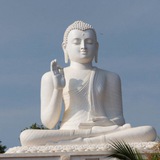
Big Buddha Phra Phutthasuwanmongkhon Mahamuni, Wat Phikun Thong Buddhist temple, Sing Buri, Thailand.
🤩1🙏1🏆1
3. Pheuupamam kayamimam viditva
marãcidhammam abhisambudhano
Chetvana marassa papupphakani
adassanam maccurajassa gacche. 46.
LIKE A MIRAGE IS THIS BODY
3. Knowing that this body is like foam, 8 and comprehending its mirage-nature, 9 one should destroy the flower-shafts of sensual passions (Mara), and pass beyond the sight of the king of death. 10 46.
Story
The sight of a mirage and bubbles of foam induced a monk to meditate on the impermanence and non-substantiality of life. The Buddha read his thoughts and, appearing before him, confirmed his views.
===
Buddha dharma teachings channel:
https://invite.viber.com/?g2=AQAKw1y3rv%2F6sk61PI2W4izuIiaEZj8YZujhY1tSzL%2B07s7rFnVFDAd0bAYFaMLw
===
marãcidhammam abhisambudhano
Chetvana marassa papupphakani
adassanam maccurajassa gacche. 46.
LIKE A MIRAGE IS THIS BODY
3. Knowing that this body is like foam, 8 and comprehending its mirage-nature, 9 one should destroy the flower-shafts of sensual passions (Mara), and pass beyond the sight of the king of death. 10 46.
Story
The sight of a mirage and bubbles of foam induced a monk to meditate on the impermanence and non-substantiality of life. The Buddha read his thoughts and, appearing before him, confirmed his views.
===
Buddha dharma teachings channel:
https://invite.viber.com/?g2=AQAKw1y3rv%2F6sk61PI2W4izuIiaEZj8YZujhY1tSzL%2B07s7rFnVFDAd0bAYFaMLw
===
Viber
Buddha
Buddha dharma teachings from the suttas and commentaries from Theravada tradition
👍1🏆1
Forwarded from Words of the Buddha
pacchima-vaca:
Vaya-dhamma sankhara,
appamadena sampadetha.
All compounded things are impermanent.
Work out your own salvation with diligence.
DN 16: Maha Parinibbana sutta
Vaya-dhamma sankhara,
appamadena sampadetha.
All compounded things are impermanent.
Work out your own salvation with diligence.
DN 16: Maha Parinibbana sutta
❤1💯1
Forwarded from Buddha Dharma books
Free Buddha Dharma ebook
Jesus And The Buddha, A Study of Their Commonalities and Contrasts
By Bhante Shravasti Dhammika
Free download available:
https://budblooms.org/2020/05/28/jesus-and-the-buddha/
===
Jesus And The Buddha, A Study of Their Commonalities and Contrasts
By Bhante Shravasti Dhammika
Free download available:
https://budblooms.org/2020/05/28/jesus-and-the-buddha/
===
❤1🥰1
Forwarded from Buddha Dharma books
Free Buddha Dharma ebook
Jesus And The Buddha, A Study of Their Commonalities and Contrasts
By Bhante Shravasti Dhammika
During the last hundred years it has increasingly been said that all religions are actually pointing to the same reality. Now there are numerous books claiming that the teachings of Jesus and the Buddha are just different versions of the same truth. Is this true or is it the outcome of a superficial examination of the facts or perhaps a genuine but misguided attempt to encourage inter-religious understanding? This book is the first in-depth comparison of the life and teachings of Jesus and the Buddha and presented in the New Testament and the Tipitaka, the Buddhist noscriptures. The result is portraits of the two great religious figures very different from how they have traditionally been seen and the question ‘Are Christianity and Buddhism compatible?’ is answered in a way that may surprise many readers. Bhante Shravasti Dhammika is well placed to write this comparative study having been brought up a Christian and later becoming a Buddhist and a monk.
Free download available:
https://budblooms.org/2020/05/28/jesus-and-the-buddha/
===
Jesus And The Buddha, A Study of Their Commonalities and Contrasts
By Bhante Shravasti Dhammika
During the last hundred years it has increasingly been said that all religions are actually pointing to the same reality. Now there are numerous books claiming that the teachings of Jesus and the Buddha are just different versions of the same truth. Is this true or is it the outcome of a superficial examination of the facts or perhaps a genuine but misguided attempt to encourage inter-religious understanding? This book is the first in-depth comparison of the life and teachings of Jesus and the Buddha and presented in the New Testament and the Tipitaka, the Buddhist noscriptures. The result is portraits of the two great religious figures very different from how they have traditionally been seen and the question ‘Are Christianity and Buddhism compatible?’ is answered in a way that may surprise many readers. Bhante Shravasti Dhammika is well placed to write this comparative study having been brought up a Christian and later becoming a Buddhist and a monk.
Free download available:
https://budblooms.org/2020/05/28/jesus-and-the-buddha/
===
❤1🥰1🙏1
4. Pupphani h'eva pacinantam
byasattamanasam naram
Suttam gamam mahogho'va
maccu adaya gacchati. 47.
DEATH TAKES THE SENSUAL UNAWARES
4. The man who gathers flowers (of sensual pleasure), whose mind is distracted, death carries off as a great flood sweeps away a sleeping village. 47.
Story
Provoked by a disparaging remark, king Vidudabha wreaked vengeance on the Sakyas, kinsmen of the Buddha, by killing them wholesale. On his return journey he camped with his followers on the bed of a river. At night an unexpected flood swept them all to the sea. Hearing of their tragic end, the Buddha remarked that people come to ruin without accomplishing their objects.
===
Words of the Buddha channel:
https://invite.viber.com/?g2=AQAFqzqlj7FmI061PX17rxWMAtZ%2BRuso%2FH2KmHKZSgnv7v9DD8X0bDkKnZDr9JDq
===
byasattamanasam naram
Suttam gamam mahogho'va
maccu adaya gacchati. 47.
DEATH TAKES THE SENSUAL UNAWARES
4. The man who gathers flowers (of sensual pleasure), whose mind is distracted, death carries off as a great flood sweeps away a sleeping village. 47.
Story
Provoked by a disparaging remark, king Vidudabha wreaked vengeance on the Sakyas, kinsmen of the Buddha, by killing them wholesale. On his return journey he camped with his followers on the bed of a river. At night an unexpected flood swept them all to the sea. Hearing of their tragic end, the Buddha remarked that people come to ruin without accomplishing their objects.
===
Words of the Buddha channel:
https://invite.viber.com/?g2=AQAFqzqlj7FmI061PX17rxWMAtZ%2BRuso%2FH2KmHKZSgnv7v9DD8X0bDkKnZDr9JDq
===
Viber
Words Of The Buddha
Daily teachings from Buddha Dharma
❤1🏆1
Forwarded from Words of the Buddha
If I have harmed anyone in any way either knowingly or unknowingly
through my own confusions I ask their forgiveness.
If anyone has harmed me in any way either knowingly or unknowingly
through their own confusions I forgive them.
And if there is a situation I am not yet ready to forgive
I forgive myself for that.
For all the ways that I harm myself, negate, doubt, belittle myself,
judge or be unkind to myself through my own confusions
I forgive myself.
"Asking for forgiveness" Buddhist prayer
through my own confusions I ask their forgiveness.
If anyone has harmed me in any way either knowingly or unknowingly
through their own confusions I forgive them.
And if there is a situation I am not yet ready to forgive
I forgive myself for that.
For all the ways that I harm myself, negate, doubt, belittle myself,
judge or be unkind to myself through my own confusions
I forgive myself.
"Asking for forgiveness" Buddhist prayer
❤2👏1🕊1
Forwarded from Words of the Buddha
Borobudur temple, world largest lava stone stupa, Java island, Indonesia.
❤1🙏1😍1
5. Pupphani h'eva pacinantam
byasattamanasam naram
Atittam yeva kamesu
antako kurute vasam. 48.
WITH UNGRATIFIED DESIRES THE SENSUAL DIE
5. The man who gathers flowers (of sensual pleasure), whose mind is distracted, and who is insatiate in desires, the Destroyer 11 brings under his sway. 48.
Story
A woman offered alms to the monks in the morning and died in the evening of that very day. When this pathetic incident was reported to the Buddha He spoke on the fleeting nature of life and added that men succumb to death with insatiate desires.
===
Dhammapada, beloved and favorite teachings of the Buddha channel:
https://invite.viber.com/?g2=AQBLD6phsgvP%2F061YjEM3K%2BNeH1Yb372b9mtfQX2EmuBpgoLUoc99BDMfzHghrme
===
byasattamanasam naram
Atittam yeva kamesu
antako kurute vasam. 48.
WITH UNGRATIFIED DESIRES THE SENSUAL DIE
5. The man who gathers flowers (of sensual pleasure), whose mind is distracted, and who is insatiate in desires, the Destroyer 11 brings under his sway. 48.
Story
A woman offered alms to the monks in the morning and died in the evening of that very day. When this pathetic incident was reported to the Buddha He spoke on the fleeting nature of life and added that men succumb to death with insatiate desires.
===
Dhammapada, beloved and favorite teachings of the Buddha channel:
https://invite.viber.com/?g2=AQBLD6phsgvP%2F061YjEM3K%2BNeH1Yb372b9mtfQX2EmuBpgoLUoc99BDMfzHghrme
===
Viber
Dhammapada - Buddha Dharma Teachings
Daily teachings of the Dhammapada, beloved and favorite teachings of the Buddha
❤1💯1
Free Buddha Dharma ebook
Selves & Not-self: The Buddhist Teaching on Anatta
By Thanissaro Bhikkhu
Free download available:
https://www.accesstoinsight.org/lib/authors/thanissaro/selvesnotself.pdf
===
Selves & Not-self: The Buddhist Teaching on Anatta
By Thanissaro Bhikkhu
Free download available:
https://www.accesstoinsight.org/lib/authors/thanissaro/selvesnotself.pdf
===
❤1👏1🏆1
Free Buddha Dharma ebook
Selves & Not-self: The Buddhist Teaching on Anatta
By Thanissaro Bhikkhu
In May of thar year, members of Le Refuge, a Buddhist group located in Eguilles, near Aix-en-Provence, invited me to lead a ten-day retreat on the topics of breath meditation and anatta, or not-self. The retreat provided me with the rare opportunity to gather my thoughts on the topic of not-self under one framework. The result was a series of eight evening talks; edited trannoscripts of these talks form the body of this book.
For people unfamiliar with the Thai forest tradition, you should know that it is a meditation tradition founded in the late nineteenth and early twentieth century by Ajaan Mun Bhuridatto. The other ajaans mentioned in the talks trained under him. Of these, Ajaan Fuang and Ajaan Suwat were my teachers. Ajaan Fuang, although he spent some time training directly under Ajaan Mun, spent more time training under one of Ajaan Mun’s students, Ajaan Lee.
Free download available:
https://www.accesstoinsight.org/lib/authors/thanissaro/selvesnotself.pdf
===
Selves & Not-self: The Buddhist Teaching on Anatta
By Thanissaro Bhikkhu
In May of thar year, members of Le Refuge, a Buddhist group located in Eguilles, near Aix-en-Provence, invited me to lead a ten-day retreat on the topics of breath meditation and anatta, or not-self. The retreat provided me with the rare opportunity to gather my thoughts on the topic of not-self under one framework. The result was a series of eight evening talks; edited trannoscripts of these talks form the body of this book.
For people unfamiliar with the Thai forest tradition, you should know that it is a meditation tradition founded in the late nineteenth and early twentieth century by Ajaan Mun Bhuridatto. The other ajaans mentioned in the talks trained under him. Of these, Ajaan Fuang and Ajaan Suwat were my teachers. Ajaan Fuang, although he spent some time training directly under Ajaan Mun, spent more time training under one of Ajaan Mun’s students, Ajaan Lee.
Free download available:
https://www.accesstoinsight.org/lib/authors/thanissaro/selvesnotself.pdf
===
❤1👍1
heṭṭhā ... pādatalesu cakkāni jātāni, sahassārāni sanemikāni sanābhikāni sabbākāraparipūrāni...
Under the soles of His feet there are wheels, with a thousand rims and naves, complete in every way...
Thirty-two marks of a Great Man (mahā purisa lakkhaņa) in The Digha Nikaya, "Discourse of the Marks" (Pali: Lakkhaṇa Sutta) (DN 30)
Under the soles of His feet there are wheels, with a thousand rims and naves, complete in every way...
Thirty-two marks of a Great Man (mahā purisa lakkhaņa) in The Digha Nikaya, "Discourse of the Marks" (Pali: Lakkhaṇa Sutta) (DN 30)
❤1🔥1💯1😘1