Forwarded from Words of the Buddha
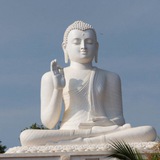
Borobudur temple, world largest lava stone stupa, Java island, Indonesia.
❤1🙏1😍1
5. Pupphani h'eva pacinantam
byasattamanasam naram
Atittam yeva kamesu
antako kurute vasam. 48.
WITH UNGRATIFIED DESIRES THE SENSUAL DIE
5. The man who gathers flowers (of sensual pleasure), whose mind is distracted, and who is insatiate in desires, the Destroyer 11 brings under his sway. 48.
Story
A woman offered alms to the monks in the morning and died in the evening of that very day. When this pathetic incident was reported to the Buddha He spoke on the fleeting nature of life and added that men succumb to death with insatiate desires.
===
Dhammapada, beloved and favorite teachings of the Buddha channel:
https://invite.viber.com/?g2=AQBLD6phsgvP%2F061YjEM3K%2BNeH1Yb372b9mtfQX2EmuBpgoLUoc99BDMfzHghrme
===
byasattamanasam naram
Atittam yeva kamesu
antako kurute vasam. 48.
WITH UNGRATIFIED DESIRES THE SENSUAL DIE
5. The man who gathers flowers (of sensual pleasure), whose mind is distracted, and who is insatiate in desires, the Destroyer 11 brings under his sway. 48.
Story
A woman offered alms to the monks in the morning and died in the evening of that very day. When this pathetic incident was reported to the Buddha He spoke on the fleeting nature of life and added that men succumb to death with insatiate desires.
===
Dhammapada, beloved and favorite teachings of the Buddha channel:
https://invite.viber.com/?g2=AQBLD6phsgvP%2F061YjEM3K%2BNeH1Yb372b9mtfQX2EmuBpgoLUoc99BDMfzHghrme
===
Viber
Dhammapada - Buddha Dharma Teachings
Daily teachings of the Dhammapada, beloved and favorite teachings of the Buddha
❤1💯1
Free Buddha Dharma ebook
Selves & Not-self: The Buddhist Teaching on Anatta
By Thanissaro Bhikkhu
Free download available:
https://www.accesstoinsight.org/lib/authors/thanissaro/selvesnotself.pdf
===
Selves & Not-self: The Buddhist Teaching on Anatta
By Thanissaro Bhikkhu
Free download available:
https://www.accesstoinsight.org/lib/authors/thanissaro/selvesnotself.pdf
===
❤1👏1🏆1
Free Buddha Dharma ebook
Selves & Not-self: The Buddhist Teaching on Anatta
By Thanissaro Bhikkhu
In May of thar year, members of Le Refuge, a Buddhist group located in Eguilles, near Aix-en-Provence, invited me to lead a ten-day retreat on the topics of breath meditation and anatta, or not-self. The retreat provided me with the rare opportunity to gather my thoughts on the topic of not-self under one framework. The result was a series of eight evening talks; edited trannoscripts of these talks form the body of this book.
For people unfamiliar with the Thai forest tradition, you should know that it is a meditation tradition founded in the late nineteenth and early twentieth century by Ajaan Mun Bhuridatto. The other ajaans mentioned in the talks trained under him. Of these, Ajaan Fuang and Ajaan Suwat were my teachers. Ajaan Fuang, although he spent some time training directly under Ajaan Mun, spent more time training under one of Ajaan Mun’s students, Ajaan Lee.
Free download available:
https://www.accesstoinsight.org/lib/authors/thanissaro/selvesnotself.pdf
===
Selves & Not-self: The Buddhist Teaching on Anatta
By Thanissaro Bhikkhu
In May of thar year, members of Le Refuge, a Buddhist group located in Eguilles, near Aix-en-Provence, invited me to lead a ten-day retreat on the topics of breath meditation and anatta, or not-self. The retreat provided me with the rare opportunity to gather my thoughts on the topic of not-self under one framework. The result was a series of eight evening talks; edited trannoscripts of these talks form the body of this book.
For people unfamiliar with the Thai forest tradition, you should know that it is a meditation tradition founded in the late nineteenth and early twentieth century by Ajaan Mun Bhuridatto. The other ajaans mentioned in the talks trained under him. Of these, Ajaan Fuang and Ajaan Suwat were my teachers. Ajaan Fuang, although he spent some time training directly under Ajaan Mun, spent more time training under one of Ajaan Mun’s students, Ajaan Lee.
Free download available:
https://www.accesstoinsight.org/lib/authors/thanissaro/selvesnotself.pdf
===
❤1👍1
heṭṭhā ... pādatalesu cakkāni jātāni, sahassārāni sanemikāni sanābhikāni sabbākāraparipūrāni...
Under the soles of His feet there are wheels, with a thousand rims and naves, complete in every way...
Thirty-two marks of a Great Man (mahā purisa lakkhaņa) in The Digha Nikaya, "Discourse of the Marks" (Pali: Lakkhaṇa Sutta) (DN 30)
Under the soles of His feet there are wheels, with a thousand rims and naves, complete in every way...
Thirty-two marks of a Great Man (mahā purisa lakkhaņa) in The Digha Nikaya, "Discourse of the Marks" (Pali: Lakkhaṇa Sutta) (DN 30)
❤1🔥1💯1😘1
Forwarded from Buddha
The Karma of Now
Why the present moment isn’t the goal
By Thanissaro Bhikkhu
Part 1 of 3
Have you ever wondered why Buddhist meditation focuses so much attention on observing the mind in the present moment? It’s because of the way the Buddha taught karma (Pali, kamma), or action.
His teachings on karma were so central to all of his teachings that when he classified himself as a teacher, he used the label kamma-vadin: someone who teaches action. This was to distinguish himself from the many contemporary teachers in India who taught that action was unreal or had no consequences.
But he also found it necessary to distinguish himself from other kamma-vadins, and he emphasized two main points where his teachings departed from theirs: (1) the issue of how karma shaped the present moment, and (2) the issue of which kind of action, physical or mental, was more important in shaping experience.
With regard to the first question, a kamma-vadin group called the Niganthas taught that the present moment was shaped entirely by your past actions. In other words, your present actions can have an influence on the future, but not on what you’re experiencing right now. The Niganthas also believed that all karma resulted in suffering, which meant that the only way to put an end to suffering would be to stop acting. So their practice consisted of austerities in which they endured sharp pains in the present moment without reacting to them. That way, they believed, they would burn off past karma while creating no new karma. Freedom from suffering would come when all past karma was burned away.
If you envision the Buddha as uttering nothing but sweetness and light, it may come as a shock to learn how thoroughly he ridiculed the Niganthas for holding to their beliefs. To paraphrase some of his remarks (Majjhima Nikaya 101), he once asked them if they could possibly measure how much karma they burned off through their practice, or how much remained to be burned. If they couldn’t measure it, how could they know it was burned away? As for their claims that suffering in the present came entirely from past karma, he asked them if they hadn’t noticed that the pain caused by their austerities stopped when they stopped doing them.
In other words, he was pointing to the fact that what you do in the present moment can have an influence not only on the future, but also on what you experience right now. Past actions may have some role in shaping your present experience of pleasure and pain, but they don’t totally determine it. In fact, present actions can make all the difference between whether a past bad action leads to a lot of suffering right now or only a little (Anguttara Nikaya 3.101). This means that the present moment doesn’t arrive ready-built. We’re constantly constructing it as it’s happening, with greater or less skill, out of the raw materials provided by past karma.
As for the second question, the Niganthas taught that physical action was more important than mental action. This is why they made no attempt to understand the psychology of action. All they had to do with past karma, they thought, was to believe that it existed and to burn it off through austerities. The Buddha, however, taught that mental action was more important than physical action in leading toward suffering or away from it.
These two features of the Buddha’s teaching on action—the role of present action in shaping the present in addition to the future, and the central importance of mental actions—explain why Buddhist meditation focuses on observing and understanding the mind in the here and now. But they explain even more. They tell us what we can expect to see in the here and now, what we can do with it, and—because the present moment, like the past and future, is by definition an ongoing construction site—why we have to go beyond it if we want to put an end to all suffering and stress.The present moment is never simply to be accepted as it is.
Why the present moment isn’t the goal
By Thanissaro Bhikkhu
Part 1 of 3
Have you ever wondered why Buddhist meditation focuses so much attention on observing the mind in the present moment? It’s because of the way the Buddha taught karma (Pali, kamma), or action.
His teachings on karma were so central to all of his teachings that when he classified himself as a teacher, he used the label kamma-vadin: someone who teaches action. This was to distinguish himself from the many contemporary teachers in India who taught that action was unreal or had no consequences.
But he also found it necessary to distinguish himself from other kamma-vadins, and he emphasized two main points where his teachings departed from theirs: (1) the issue of how karma shaped the present moment, and (2) the issue of which kind of action, physical or mental, was more important in shaping experience.
With regard to the first question, a kamma-vadin group called the Niganthas taught that the present moment was shaped entirely by your past actions. In other words, your present actions can have an influence on the future, but not on what you’re experiencing right now. The Niganthas also believed that all karma resulted in suffering, which meant that the only way to put an end to suffering would be to stop acting. So their practice consisted of austerities in which they endured sharp pains in the present moment without reacting to them. That way, they believed, they would burn off past karma while creating no new karma. Freedom from suffering would come when all past karma was burned away.
If you envision the Buddha as uttering nothing but sweetness and light, it may come as a shock to learn how thoroughly he ridiculed the Niganthas for holding to their beliefs. To paraphrase some of his remarks (Majjhima Nikaya 101), he once asked them if they could possibly measure how much karma they burned off through their practice, or how much remained to be burned. If they couldn’t measure it, how could they know it was burned away? As for their claims that suffering in the present came entirely from past karma, he asked them if they hadn’t noticed that the pain caused by their austerities stopped when they stopped doing them.
In other words, he was pointing to the fact that what you do in the present moment can have an influence not only on the future, but also on what you experience right now. Past actions may have some role in shaping your present experience of pleasure and pain, but they don’t totally determine it. In fact, present actions can make all the difference between whether a past bad action leads to a lot of suffering right now or only a little (Anguttara Nikaya 3.101). This means that the present moment doesn’t arrive ready-built. We’re constantly constructing it as it’s happening, with greater or less skill, out of the raw materials provided by past karma.
As for the second question, the Niganthas taught that physical action was more important than mental action. This is why they made no attempt to understand the psychology of action. All they had to do with past karma, they thought, was to believe that it existed and to burn it off through austerities. The Buddha, however, taught that mental action was more important than physical action in leading toward suffering or away from it.
These two features of the Buddha’s teaching on action—the role of present action in shaping the present in addition to the future, and the central importance of mental actions—explain why Buddhist meditation focuses on observing and understanding the mind in the here and now. But they explain even more. They tell us what we can expect to see in the here and now, what we can do with it, and—because the present moment, like the past and future, is by definition an ongoing construction site—why we have to go beyond it if we want to put an end to all suffering and stress.The present moment is never simply to be accepted as it is.
Telegram
Buddha
Buddha dharma teachings from the suttas and commentaries
❤1🙏1💯1
Forwarded from Buddha
Because part of it is constructed in the present, it can always be improved; it can even be turned into the path to the end of suffering. But because it’s always under construction, it’s at best only the path, never the goal.To borrow an image from the canon, the present is like a house that constantly needs repair, not just because it keeps disintegrating right before your eyes, never to return, but also because it’s on fire with the flames of suffering. The path of practice is not meant to keep you in the house. Its function is to help you find the way out.
When the Buddha talks about the importance of the present moment, he often portrays it as a place where work has to be done: the work of improving your skills in how to construct it. And the motivation for doing the work is provided by contemplation of death—the message being that if you don’t do the work needed to get your mind under control, you have no idea where the mind will take you at death, and the work won’t get done unless you do it right now. The Middle Length Discourses of the Pali Canon, for instance, contain a famous passage (MN 131) on the importance of focusing on the present moment:
You shouldn’t chase after the past or place expectations on the future.
What is past is left behind.
The future is as yet unreached.
Whatever quality is present you clearly see right there, right there. Not taken in, unshaken, that’s how you develop the heart.
But then the reason it offers for focusing “right there” is death:
Ardently doing
what should be done today, for—who knows?—tomorrow death.
There is no bargaining
with Death and his mighty horde.
The “duty” referred to here is the fourfold duty pertaining to the four noble truths: to comprehend suffering, abandon its cause, realize the possibility of its cessation, and develop the path to its cessation.This work needs to be done in the present moment because suffering is experienced, and its cause keeps getting created, right here.
We may think that the present moment begins with contact at the senses, but as we follow the duties of the four noble truths, digging down into suffering and its causes, we discover that the present moment includes several steps prior to sensory contact, steps determining whether that contact will lead to suffering or not. One of the most important of these steps is “fabrication” (sankhara), the process that fashions our sense of the body and all other activities of the mind. The fact that the present moment depends on the activities of fabrication explains why it’s always under construction: If you want an activity to persist from one moment to the next, you have to keep doing it. Otherwise, it’ll cease.
===
Buddha dharma teachings channel:
https://news.1rj.ru/str/lorddivinebuddha
===
When the Buddha talks about the importance of the present moment, he often portrays it as a place where work has to be done: the work of improving your skills in how to construct it. And the motivation for doing the work is provided by contemplation of death—the message being that if you don’t do the work needed to get your mind under control, you have no idea where the mind will take you at death, and the work won’t get done unless you do it right now. The Middle Length Discourses of the Pali Canon, for instance, contain a famous passage (MN 131) on the importance of focusing on the present moment:
You shouldn’t chase after the past or place expectations on the future.
What is past is left behind.
The future is as yet unreached.
Whatever quality is present you clearly see right there, right there. Not taken in, unshaken, that’s how you develop the heart.
But then the reason it offers for focusing “right there” is death:
Ardently doing
what should be done today, for—who knows?—tomorrow death.
There is no bargaining
with Death and his mighty horde.
The “duty” referred to here is the fourfold duty pertaining to the four noble truths: to comprehend suffering, abandon its cause, realize the possibility of its cessation, and develop the path to its cessation.This work needs to be done in the present moment because suffering is experienced, and its cause keeps getting created, right here.
We may think that the present moment begins with contact at the senses, but as we follow the duties of the four noble truths, digging down into suffering and its causes, we discover that the present moment includes several steps prior to sensory contact, steps determining whether that contact will lead to suffering or not. One of the most important of these steps is “fabrication” (sankhara), the process that fashions our sense of the body and all other activities of the mind. The fact that the present moment depends on the activities of fabrication explains why it’s always under construction: If you want an activity to persist from one moment to the next, you have to keep doing it. Otherwise, it’ll cease.
===
Buddha dharma teachings channel:
https://news.1rj.ru/str/lorddivinebuddha
===
Telegram
Buddha
Buddha dharma teachings from the suttas and commentaries
❤1👌1
6. Yatha'pi bhamaro puppham
vannagandham ahethayam
Paleti rasam'adaya
evam game munã care. 49.
SAINTLY MONKS CAUSE NO INCONVENIENCE TO ANY
6. As a bee without harming the flower, its colour or scent, flies away, collecting only the honey, even so should the sage wander in the village. 12 49.
Story
The Venerable Moggallana exercising his psychic powers, brought a niggardly treasurer and his wife to the presence of the Buddha. Hearing the doctrine they became converts. When the monks extolled the virtues of the Venerable Moggallana the Buddha remarked that good monks like the Venerable Moggallana should induce people to repose confidence in the Teacher, causing no inconvenience to any.
===
Ajahn Chah, Buddhist teacher of Thai forest meditation of Theravada Buddhism channel:
https://news.1rj.ru/str/ajahnchah_buddhism
===
vannagandham ahethayam
Paleti rasam'adaya
evam game munã care. 49.
SAINTLY MONKS CAUSE NO INCONVENIENCE TO ANY
6. As a bee without harming the flower, its colour or scent, flies away, collecting only the honey, even so should the sage wander in the village. 12 49.
Story
The Venerable Moggallana exercising his psychic powers, brought a niggardly treasurer and his wife to the presence of the Buddha. Hearing the doctrine they became converts. When the monks extolled the virtues of the Venerable Moggallana the Buddha remarked that good monks like the Venerable Moggallana should induce people to repose confidence in the Teacher, causing no inconvenience to any.
===
Ajahn Chah, Buddhist teacher of Thai forest meditation of Theravada Buddhism channel:
https://news.1rj.ru/str/ajahnchah_buddhism
===
Telegram
Ajahn Chah - Theravada Thailand Buddhism
Collection of teachings of Venerable Ajahn Chah, a foremost meditation and Buddhist teacher from Thailand
❤1🙏1
Forwarded from Words of the Buddha
The Karma of Now
Why the present moment isn’t the goal
By Thanissaro Bhikkhu
Part 2 of 3
And the fact that this activity comes prior to sensory contact—and even prior to sensory consciousness—means that the mind isn’t simply a passive recipient of contact. Instead, it’s proactive, on the prowl, out looking for contact to feed on. We can see this in the way people turn on their personal devices looking for things to aggravate their greed, lust, or anger: online shopping, Internet porn, or hate radio. Even before you see a sight or hear a sound, you’ve already fashioned acts of consciousness, intention, attention, and perception that shape what you’ll perceive in the sensory contact, what you’ll pay attention to, and what you’ll try to get out of it. As Samyutta Nikaya 22.79 notes, fabrication is always “for the sake of ” creating activities that serve the desires that drive them.
The present moment is never simply to be accepted as is.
This is why, when you’re trying to put an end to suffering, the Buddha doesn’t tell you to blame the suffering on the world outside: painful sights, sounds, or tactile sensations. Instead, you have to look at the fabrications you’re carrying out right now—your present karma— to see how they can create suffering out of sensory contact—the results of past karma—regardless of whether that contact is painful or pleasant.
At the same time, because the present moment is fabricated in this way, and because fabrication is always “for the sake of ” something, the present is, at best, only a temporary resting spot. Even when you manage to “be the knowing” in the present, that knowing has been fabricated, and the underlying fabrication has a time-arrow embedded in it, pointing to a purpose beyond itself. Usually that purpose is happiness, either right now or in the future.
This is why, when stepping fully into the present moment, you don’t really step out of time. In fact, the present is where the conditions for future time are being created. Even when the process of fabrication aims solely at pleasure in the present with no thought for the future, it’s always creating karma that has both present and future ramifications. The way you build your home in the present creates the raw material from which you’ll fashion present moments in the future, along with the habits—good or bad—by which you’ll shape them. The hedonists and meditators who pride themselves on not sacrificing the present moment for the sake of a future happiness are simply turning a blind eye to an important aspect of what they’re doing: the long-term karmic consequences of how they search for pleasure now.
And the blindness of that eye doesn’t shield them from those consequences. If it did, the Buddha would have simply taught you to follow your bliss, without feeling obliged to teach the precepts or to warn you against the dangers of getting stuck in the calm pleasures of a still mind. He wouldn’t have taught that wisdom begins by looking both at present actions and at their long-term results (MN 135). Actually, a blind eye is a symbol for ignorance, which is the underlying condition for acts of fabrication leading to suffering. So those who focus on being in the present for its own sake are simply setting themselves up to suffer more.
But if we bring the proper knowledge to the process of fabrication, we can turn fabrication from a cause of suffering into the path leading to its end. That knowledge begins with right views about how the present moment is constructed, but it first becomes effective when you get hands-on experience in trying to build something really skillful and pleasant out of the activities that make up the present moment. This is the role of the more active factors of the path: right resolve, right effort, right mindfulness, and right concentration. Right resolve sets your intention to look for a happiness that’s harmless and free from sensuality. Right effort actually carries through with that intention.
Why the present moment isn’t the goal
By Thanissaro Bhikkhu
Part 2 of 3
And the fact that this activity comes prior to sensory contact—and even prior to sensory consciousness—means that the mind isn’t simply a passive recipient of contact. Instead, it’s proactive, on the prowl, out looking for contact to feed on. We can see this in the way people turn on their personal devices looking for things to aggravate their greed, lust, or anger: online shopping, Internet porn, or hate radio. Even before you see a sight or hear a sound, you’ve already fashioned acts of consciousness, intention, attention, and perception that shape what you’ll perceive in the sensory contact, what you’ll pay attention to, and what you’ll try to get out of it. As Samyutta Nikaya 22.79 notes, fabrication is always “for the sake of ” creating activities that serve the desires that drive them.
The present moment is never simply to be accepted as is.
This is why, when you’re trying to put an end to suffering, the Buddha doesn’t tell you to blame the suffering on the world outside: painful sights, sounds, or tactile sensations. Instead, you have to look at the fabrications you’re carrying out right now—your present karma— to see how they can create suffering out of sensory contact—the results of past karma—regardless of whether that contact is painful or pleasant.
At the same time, because the present moment is fabricated in this way, and because fabrication is always “for the sake of ” something, the present is, at best, only a temporary resting spot. Even when you manage to “be the knowing” in the present, that knowing has been fabricated, and the underlying fabrication has a time-arrow embedded in it, pointing to a purpose beyond itself. Usually that purpose is happiness, either right now or in the future.
This is why, when stepping fully into the present moment, you don’t really step out of time. In fact, the present is where the conditions for future time are being created. Even when the process of fabrication aims solely at pleasure in the present with no thought for the future, it’s always creating karma that has both present and future ramifications. The way you build your home in the present creates the raw material from which you’ll fashion present moments in the future, along with the habits—good or bad—by which you’ll shape them. The hedonists and meditators who pride themselves on not sacrificing the present moment for the sake of a future happiness are simply turning a blind eye to an important aspect of what they’re doing: the long-term karmic consequences of how they search for pleasure now.
And the blindness of that eye doesn’t shield them from those consequences. If it did, the Buddha would have simply taught you to follow your bliss, without feeling obliged to teach the precepts or to warn you against the dangers of getting stuck in the calm pleasures of a still mind. He wouldn’t have taught that wisdom begins by looking both at present actions and at their long-term results (MN 135). Actually, a blind eye is a symbol for ignorance, which is the underlying condition for acts of fabrication leading to suffering. So those who focus on being in the present for its own sake are simply setting themselves up to suffer more.
But if we bring the proper knowledge to the process of fabrication, we can turn fabrication from a cause of suffering into the path leading to its end. That knowledge begins with right views about how the present moment is constructed, but it first becomes effective when you get hands-on experience in trying to build something really skillful and pleasant out of the activities that make up the present moment. This is the role of the more active factors of the path: right resolve, right effort, right mindfulness, and right concentration. Right resolve sets your intention to look for a happiness that’s harmless and free from sensuality. Right effort actually carries through with that intention.
Telegram
Words of the Buddha
Daily teachings of Buddha Dharma
❤1👍1
Forwarded from Words of the Buddha
Right mindfulness—which, in the Buddha’s analysis, is a function of memory—remembers how to develop skillful states and abandon unskillful ones (MN 117; AN 4.245). And right concentration turns the mind’s activities into a pleasant and bright dwelling: “an easeful abiding in the here-and-now” (AN 4.41).
The important point to notice here is that, just as fabrication in general is proactive, the Buddha’s approach to really comprehending fabrication—with the purpose of going beyond it—is proactive as well. You don’t learn about fabrications simply by watching them come and go on their own, because they don’t come and go on their own.They’re driven by purposeful desires. And the best way to learn about those desires is to create skillful desires to thwart any unskillful purposes lurking behind them. That’s when those purposes will show themselves. Just as the Army Corps of Engineers has learned a lot about the Mississippi River by proactively trying to keep it in its channel, you learn a lot about fabrication by proactively trying to put it and keep it in right concentration.
Those who focus on being in the present for its own sake are simply setting themselves up to suffer more.
Even the seemingly passive and accepting qualities that the Buddha recommends as part of the path—such as equanimity, patience, and contentment—are types of karma, and they have to play their role in a primarily proactive context. They focus acceptance only on the results of past karma, not on the prospect of creating more new unskillful karma in the present.
Equanimity, for instance, is never taught as a positive value on its own. As the Buddha notes, it can be either skillful or unskillful, and if developed exclusively it can lead to stagnation in the path. This is why he teaches equanimity in the context of other qualities to ensure that it plays a positive role. For instance, in the context of the sublime attitudes (Pali, brahma-viharas—goodwill, compassion, empathetic joy, and equanimity), he teaches the equanimity of a doctor: The ideal doctor is motivated by goodwill for his patients, compassionate when they’re suffering and joyful with their recovery, but he also needs equanimity in the face of diseases that—because of his or the patient’s past karma—he can’t cure. This doesn’t mean that he abandons his efforts, simply that he learns to be equanimous about the areas where he can’t help so that he can focus his compassion on areas where he can.
Similarly, the Buddha distinguishes between skillful and unskillful patience. He advises being patient with painful feelings and harsh, hurtful words, but impatient with unskillful qualities arising in the mind. His patience is not the patience of a water buffalo who simply endures the work and punishments imposed on it. Instead, it’s the patience of a warrior who, despite wounds and setbacks, never abandons the desire to come out victorious.
===
Words of the Buddha channel:
https://news.1rj.ru/str/wordsofbuddha
===
The important point to notice here is that, just as fabrication in general is proactive, the Buddha’s approach to really comprehending fabrication—with the purpose of going beyond it—is proactive as well. You don’t learn about fabrications simply by watching them come and go on their own, because they don’t come and go on their own.They’re driven by purposeful desires. And the best way to learn about those desires is to create skillful desires to thwart any unskillful purposes lurking behind them. That’s when those purposes will show themselves. Just as the Army Corps of Engineers has learned a lot about the Mississippi River by proactively trying to keep it in its channel, you learn a lot about fabrication by proactively trying to put it and keep it in right concentration.
Those who focus on being in the present for its own sake are simply setting themselves up to suffer more.
Even the seemingly passive and accepting qualities that the Buddha recommends as part of the path—such as equanimity, patience, and contentment—are types of karma, and they have to play their role in a primarily proactive context. They focus acceptance only on the results of past karma, not on the prospect of creating more new unskillful karma in the present.
Equanimity, for instance, is never taught as a positive value on its own. As the Buddha notes, it can be either skillful or unskillful, and if developed exclusively it can lead to stagnation in the path. This is why he teaches equanimity in the context of other qualities to ensure that it plays a positive role. For instance, in the context of the sublime attitudes (Pali, brahma-viharas—goodwill, compassion, empathetic joy, and equanimity), he teaches the equanimity of a doctor: The ideal doctor is motivated by goodwill for his patients, compassionate when they’re suffering and joyful with their recovery, but he also needs equanimity in the face of diseases that—because of his or the patient’s past karma—he can’t cure. This doesn’t mean that he abandons his efforts, simply that he learns to be equanimous about the areas where he can’t help so that he can focus his compassion on areas where he can.
Similarly, the Buddha distinguishes between skillful and unskillful patience. He advises being patient with painful feelings and harsh, hurtful words, but impatient with unskillful qualities arising in the mind. His patience is not the patience of a water buffalo who simply endures the work and punishments imposed on it. Instead, it’s the patience of a warrior who, despite wounds and setbacks, never abandons the desire to come out victorious.
===
Words of the Buddha channel:
https://news.1rj.ru/str/wordsofbuddha
===
Telegram
Words of the Buddha
Daily teachings of Buddha Dharma
❤1💯1
Forwarded from Buddha
Free Buddhism Dharma ebook
The True Power of Kanni Meditation
The Essential Guide to Anapanassati & Vipassana
By Venerable Sumangala
Free download here:
https://ftp.budaedu.org/ebooks/pdf/EN437.pdf
===
The True Power of Kanni Meditation
The Essential Guide to Anapanassati & Vipassana
By Venerable Sumangala
Free download here:
https://ftp.budaedu.org/ebooks/pdf/EN437.pdf
===
❤1👏1
Forwarded from Buddha
Free Buddhism Dharma ebook
The True Power of Kanni Meditation
The Essential Guide to Anapanassati & Vipassana
By Venerable Sumangala
Kanni meditation practice is a logical and systematic method to attain Magga Nana (Path to Nibbana) in a short period of time. Decades ago, this meditation was a tradition revealed only to monks. This Kannī meditation is included in samatha leading vipassanā meditation.
Although being a samatha leading meditation, it is practiced only to attain upacāra samādhi (access concentration) and switches to vipassanā.
Being supported by the upacāra samādhi, its yogī can clearly see the characteristics of vipassanā objects (nāma and rūpa). It is used in ānāpānassati meditation as the permanent practice till the 4th method of the 1st stage.
It takes 35 days to practice samatha, and 20 days for vipassanā. In samatha, it is practiced using the 1st, 2nd, 3rd, 4th method according to the Pāḷi texts and commentaries. The practice of applying a nimitta (light sign acquired from ānāpānassati) was excluded from the commentary. Within 15 days of practising the 1st method, a yogī can attain the nimitta, send the nimitta and see the object through the power of nimitta. And by practising samatha meditation, this makes the nimitta stronger and stable and the yogī can increase greater faith and confidence in the practice and himself. After the 4th method, yogī’s samādhi (concentration) becomes as strong as upacāra samādhi. Finally, the nimitta is put inside the heart base through the samatha practice of the 4th method. In this stage, the yogī can see the object of meditation (nāma and rūpa) as a visible haze (rūpa kalāpa) all the time. Then, switch over to vipassanā practice. To see the visible haze of an object, nāma and rūpa, it will take a long time for yogīs in other traditions. They will only be able to see the visible haze in Udayabbaya ñāṇa. Therefore, up to this stage, Kannī yogīs are 4 steps advanced in their knowledge compared to that of other yogīs. By using the visible haze as the vipassanā object, the yogī will see the arising and vanishing of nāma and rūpa clearly. Thus, the yogī will attain Nāma-rūpa pariccheda ñāṇa without difficulty. Throughout the vipassanā practice, by using the visible haze as a permanent object, the yogī will attain the Vipassanā ñāṇa quickly.
Then the yogī will attain the Magga ñāṇa faster and easier than other traditions’ yogīs.
Free download here:
https://ftp.budaedu.org/ebooks/pdf/EN437.pdf
===
The True Power of Kanni Meditation
The Essential Guide to Anapanassati & Vipassana
By Venerable Sumangala
Kanni meditation practice is a logical and systematic method to attain Magga Nana (Path to Nibbana) in a short period of time. Decades ago, this meditation was a tradition revealed only to monks. This Kannī meditation is included in samatha leading vipassanā meditation.
Although being a samatha leading meditation, it is practiced only to attain upacāra samādhi (access concentration) and switches to vipassanā.
Being supported by the upacāra samādhi, its yogī can clearly see the characteristics of vipassanā objects (nāma and rūpa). It is used in ānāpānassati meditation as the permanent practice till the 4th method of the 1st stage.
It takes 35 days to practice samatha, and 20 days for vipassanā. In samatha, it is practiced using the 1st, 2nd, 3rd, 4th method according to the Pāḷi texts and commentaries. The practice of applying a nimitta (light sign acquired from ānāpānassati) was excluded from the commentary. Within 15 days of practising the 1st method, a yogī can attain the nimitta, send the nimitta and see the object through the power of nimitta. And by practising samatha meditation, this makes the nimitta stronger and stable and the yogī can increase greater faith and confidence in the practice and himself. After the 4th method, yogī’s samādhi (concentration) becomes as strong as upacāra samādhi. Finally, the nimitta is put inside the heart base through the samatha practice of the 4th method. In this stage, the yogī can see the object of meditation (nāma and rūpa) as a visible haze (rūpa kalāpa) all the time. Then, switch over to vipassanā practice. To see the visible haze of an object, nāma and rūpa, it will take a long time for yogīs in other traditions. They will only be able to see the visible haze in Udayabbaya ñāṇa. Therefore, up to this stage, Kannī yogīs are 4 steps advanced in their knowledge compared to that of other yogīs. By using the visible haze as the vipassanā object, the yogī will see the arising and vanishing of nāma and rūpa clearly. Thus, the yogī will attain Nāma-rūpa pariccheda ñāṇa without difficulty. Throughout the vipassanā practice, by using the visible haze as a permanent object, the yogī will attain the Vipassanā ñāṇa quickly.
Then the yogī will attain the Magga ñāṇa faster and easier than other traditions’ yogīs.
Free download here:
https://ftp.budaedu.org/ebooks/pdf/EN437.pdf
===
❤1👏1🤗1