14. Tesam sampannasãlanam
appamadaviharinam
Sammadannavimuttanam
maro maggam na vindati. 57.
REBIRTH-CONSCIOUSNESS OF ARAHANTS CANNOT BE TRACED
14. Mara 14 finds not the path of those who are virtuous, careful in living, and freed by right knowledge. 57.
Story
The Venerable Godhika, impeded by a certain disease, cut his throat with a razor; but immediately before his death cultivated insight and realized Nibbana. The Evil One was searching for his rebirth- consciousness. The Buddha remarked that the Evil One cannot trace the rebirth-consciousness of an Arahant.
===
Buddha dharma teachings channel:
https://invite.viber.com/?g2=AQAKw1y3rv%2F6sk61PI2W4izuIiaEZj8YZujhY1tSzL%2B07s7rFnVFDAd0bAYFaMLw
===
appamadaviharinam
Sammadannavimuttanam
maro maggam na vindati. 57.
REBIRTH-CONSCIOUSNESS OF ARAHANTS CANNOT BE TRACED
14. Mara 14 finds not the path of those who are virtuous, careful in living, and freed by right knowledge. 57.
Story
The Venerable Godhika, impeded by a certain disease, cut his throat with a razor; but immediately before his death cultivated insight and realized Nibbana. The Evil One was searching for his rebirth- consciousness. The Buddha remarked that the Evil One cannot trace the rebirth-consciousness of an Arahant.
===
Buddha dharma teachings channel:
https://invite.viber.com/?g2=AQAKw1y3rv%2F6sk61PI2W4izuIiaEZj8YZujhY1tSzL%2B07s7rFnVFDAd0bAYFaMLw
===
Viber
Buddha
Buddha dharma teachings from the suttas and commentaries from Theravada tradition
❤1👍1🥰1
It’s when a mendicant—gone to a wilderness, or to the root of a tree, or to an empty hut—sits down cross-legged, sets their body straight, and establishes mindfulness in their presence. Just mindful, they breathe in. Mindful, they breathe out. Breathing in heavily they know: ‘I’m breathing in heavily.’ Breathing out heavily they know: ‘I’m breathing out heavily.’ When breathing in lightly they know: ‘I’m breathing in lightly.’ Breathing out lightly they know: ‘I’m breathing out lightly.’ They practice like this: ‘I’ll breathe in experiencing the whole body.’ They practice like this: ‘I’ll breathe out experiencing the whole body.’They practice like this: ‘I’ll breathe in stilling the physical process.’ They practice like this: ‘I’ll breathe out stilling the physical process.’ As they meditate like this—diligent, keen, and resolute—memories and thoughts tied to domestic life are given up. That’s how a mendicant develops mindfulness of the body.
Partial excepts from MN 119 : Kāyagatāsatisutta
Partial excepts from MN 119 : Kāyagatāsatisutta
❤3👌1
Forwarded from Words of the Buddha
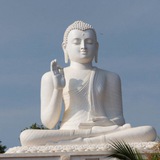
Laykyun Sekkya Big Buddhas, Khatakan Taung, near Monywa, Myanmar is one of the tallest statue in the world depicting Siddhartha Gautama in standing and parinirvana position.
❤2👍1😍1🏆1
Forwarded from Buddha Dharma books
Free Buddha Dharma ebook
A Reminiscence Transcribed from a Talk by Phra Ajaan Phut Thaniyo
Free download here:
https://www.dhammatalks.org/Archive/Writings/ThaiAjaans/AjaanPhut.pdf
===
A Reminiscence Transcribed from a Talk by Phra Ajaan Phut Thaniyo
Free download here:
https://www.dhammatalks.org/Archive/Writings/ThaiAjaans/AjaanPhut.pdf
===
🥰2🤗1
Forwarded from Buddha Dharma books
Free Buddha Dharma ebook
A Reminiscence Transcribed from a Talk by Phra Ajaan Phut Thaniyo
In our day and age, the practice of going into the forest to meditate and follow the ascetic dhutaṅga practices began with Phra Ajaan Sao Kantasīlo, the teacher of Phra Ajaan Mun and, by extension, Phra Ajaan Singh and Phra Ajaan Lee. Phra Ajaan Sao was inclined to be, not a preacher or a speaker, but a doer. When he taught his students, he said very little. And those who studied directly under him are now elders who speak very little, who rarely preach, having picked up the habit from their teacher. Thus, as Phra Ajaan Sao was not a preacher, I would like to tell you a little of the way in which he taught meditation.
Free download here:
https://www.dhammatalks.org/Archive/Writings/ThaiAjaans/AjaanPhut.pdf
===
A Reminiscence Transcribed from a Talk by Phra Ajaan Phut Thaniyo
In our day and age, the practice of going into the forest to meditate and follow the ascetic dhutaṅga practices began with Phra Ajaan Sao Kantasīlo, the teacher of Phra Ajaan Mun and, by extension, Phra Ajaan Singh and Phra Ajaan Lee. Phra Ajaan Sao was inclined to be, not a preacher or a speaker, but a doer. When he taught his students, he said very little. And those who studied directly under him are now elders who speak very little, who rarely preach, having picked up the habit from their teacher. Thus, as Phra Ajaan Sao was not a preacher, I would like to tell you a little of the way in which he taught meditation.
Free download here:
https://www.dhammatalks.org/Archive/Writings/ThaiAjaans/AjaanPhut.pdf
===
👍1👌1
The Art of Investigation
How a closer look at our likes and dislikes can lead to equanimity
By Sayadaw U Tejaniya
Part 1 of 2
I once was sitting in meditation while listening to my teacher, Shwe Oo Min Sayadaw, giving a dhamma talk. My mind was very calm, but suddenly I saw it become highly agitated. How did this happen? How did anger arise in the mind so quickly when it was peaceful only moments before?
In that moment, I noticed something very interesting: my mind became curious about what had happened. It wanted to know about itself. It wanted to know why it had lost its peacefulness and had become angry. So it had backed up a bit, and it began to ask questions. Its interest in knowing itself then changed the mind’s quality away from anger. It wanted to learn and know the truth, and, because of that, it began to gently watch the anger run its course.
As I continued to sit, I was able to watch aversion operating in the mind. On the one hand, the mind was straining to hear what my teacher was saying. On the other hand, a group of children were making noise just outside the meditation hall. I wanted them to stop, and I saw the mind complaining about the noise and complaining that I couldn’t hear my teacher’s talk. Some strong feelings came up. The observing mind saw everything that was going on in the mind.
Can you see how expansive the mind’s field of view was at this point? After it saw itself going back and forth between these two sides for a while, it saw the dissatisfaction, the aversion. The mind realized that it had taken one kind of sound, which was the sound of my teacher’s voice, and labeled it “good” and favorable, whereas the sounds of other people talking were “bad,” unwanted sounds.
In this moment of realization, the mind didn’t favor one object or another. It was able to hear sounds as just sounds, without buying into the story the mind was telling about good sounds and bad sounds. At that point the mind stopped both its craving to hear my teacher’s voice and its aversion to the voices of the people who were talking. Instead, the mind just remained in the middle and continued watching with interest. The mind saw the suffering and just died down.
This is how to meditate—with interest and inquiry every time one or more of the three unwholesome root qualities [craving, anger, and confusion] arise.
The Buddha called this vital quality of inquiry in the mind dhamma vicaya, which means a mind that naturally investigates reality. It is a mind that studies itself by asking questions to discover what is happening and why it is happening. The mind wants to know the nature of the three unwholesome root qualities.
SEVEN QUALITIES OF AN INVESTIGATIVE MIND
ACCORDING TO THE Buddha, there are seven conditions for dhamma vicaya - the investigative quality of mind to arise:
1. Repeatedly asking questions about the nature of the mind, talking about topics related to nature, investigating them, and thinking about them.
2. Cleaning our possessions, both internal and external. This brings clarity of mind. Clarity of mind is a condition for wisdom to arise. External cleaning means cleaning our bodies and our environment. But what is more important is cleaning the inside, which means cleaning the mind of craving, aversion, and delusion.
3. Learning how to balance the five spiritual faculties of confidence, energy, mind-fulness, stability of mind, and wisdom.
4. Avoiding the company of 4people who do not have wisdom.
5. Associating with people who have wisdom.
6. Contemplating deep wisdom and reflecting on deeper things.
7. Having the desire to grow in wisdom.
===
Part 1 of 2:
https://news.1rj.ru/str/dhammapadas/2912
Part 2 of 2:
https://news.1rj.ru/str/wordsofbuddha/4104
===
Dhammapada, beloved and favorite teachings of the Buddha channel:
https://news.1rj.ru/str/dhammapadas
===
How a closer look at our likes and dislikes can lead to equanimity
By Sayadaw U Tejaniya
Part 1 of 2
I once was sitting in meditation while listening to my teacher, Shwe Oo Min Sayadaw, giving a dhamma talk. My mind was very calm, but suddenly I saw it become highly agitated. How did this happen? How did anger arise in the mind so quickly when it was peaceful only moments before?
In that moment, I noticed something very interesting: my mind became curious about what had happened. It wanted to know about itself. It wanted to know why it had lost its peacefulness and had become angry. So it had backed up a bit, and it began to ask questions. Its interest in knowing itself then changed the mind’s quality away from anger. It wanted to learn and know the truth, and, because of that, it began to gently watch the anger run its course.
As I continued to sit, I was able to watch aversion operating in the mind. On the one hand, the mind was straining to hear what my teacher was saying. On the other hand, a group of children were making noise just outside the meditation hall. I wanted them to stop, and I saw the mind complaining about the noise and complaining that I couldn’t hear my teacher’s talk. Some strong feelings came up. The observing mind saw everything that was going on in the mind.
Can you see how expansive the mind’s field of view was at this point? After it saw itself going back and forth between these two sides for a while, it saw the dissatisfaction, the aversion. The mind realized that it had taken one kind of sound, which was the sound of my teacher’s voice, and labeled it “good” and favorable, whereas the sounds of other people talking were “bad,” unwanted sounds.
In this moment of realization, the mind didn’t favor one object or another. It was able to hear sounds as just sounds, without buying into the story the mind was telling about good sounds and bad sounds. At that point the mind stopped both its craving to hear my teacher’s voice and its aversion to the voices of the people who were talking. Instead, the mind just remained in the middle and continued watching with interest. The mind saw the suffering and just died down.
This is how to meditate—with interest and inquiry every time one or more of the three unwholesome root qualities [craving, anger, and confusion] arise.
The Buddha called this vital quality of inquiry in the mind dhamma vicaya, which means a mind that naturally investigates reality. It is a mind that studies itself by asking questions to discover what is happening and why it is happening. The mind wants to know the nature of the three unwholesome root qualities.
SEVEN QUALITIES OF AN INVESTIGATIVE MIND
ACCORDING TO THE Buddha, there are seven conditions for dhamma vicaya - the investigative quality of mind to arise:
1. Repeatedly asking questions about the nature of the mind, talking about topics related to nature, investigating them, and thinking about them.
2. Cleaning our possessions, both internal and external. This brings clarity of mind. Clarity of mind is a condition for wisdom to arise. External cleaning means cleaning our bodies and our environment. But what is more important is cleaning the inside, which means cleaning the mind of craving, aversion, and delusion.
3. Learning how to balance the five spiritual faculties of confidence, energy, mind-fulness, stability of mind, and wisdom.
4. Avoiding the company of 4people who do not have wisdom.
5. Associating with people who have wisdom.
6. Contemplating deep wisdom and reflecting on deeper things.
7. Having the desire to grow in wisdom.
===
Part 1 of 2:
https://news.1rj.ru/str/dhammapadas/2912
Part 2 of 2:
https://news.1rj.ru/str/wordsofbuddha/4104
===
Dhammapada, beloved and favorite teachings of the Buddha channel:
https://news.1rj.ru/str/dhammapadas
===
Telegram
Dhammapada - Buddha Dharma Teachings
Daily teachings of the Dhammapada, beloved and favorite teachings of the Buddha
👌1🆒1
15. Yatha sankaradhanasmim
ujjhitasmim mahapathe
Padumam tattha jayetha
sucigandham manoramam. 58.
16. Evam sankarabhutesu
andhabhute puthujjane
Atirocati pannaya
sammasambuddhasavako. 59.
GREATNESS MAY BE FOUND EVEN AMONGST THE BASEST THE WISE OUTSHINE WORLDLINGS
15-16. As upon a heap of rubbish thrown on the highway, a sweet-smelling lovely lotus may grow, even so amongst worthless beings, a disciple of the Fully Enlightened One outshines the blind worldlings in wisdom. 15 58-59.
Story
A devotee of an alien sect devised a means to humiliate the Buddha and His disciples. The Buddha discovered it and succeeded in converting him to His Teaching. Due to lack of wisdom, the Buddha remarked, some could not realize the goodness of His disciples and He compared the ignorant to the blind and the wise to those who have eyes.
===
Words of the Buddha channel:
https://invite.viber.com/?g2=AQAFqzqlj7FmI061PX17rxWMAtZ%2BRuso%2FH2KmHKZSgnv7v9DD8X0bDkKnZDr9JDq
===
ujjhitasmim mahapathe
Padumam tattha jayetha
sucigandham manoramam. 58.
16. Evam sankarabhutesu
andhabhute puthujjane
Atirocati pannaya
sammasambuddhasavako. 59.
GREATNESS MAY BE FOUND EVEN AMONGST THE BASEST THE WISE OUTSHINE WORLDLINGS
15-16. As upon a heap of rubbish thrown on the highway, a sweet-smelling lovely lotus may grow, even so amongst worthless beings, a disciple of the Fully Enlightened One outshines the blind worldlings in wisdom. 15 58-59.
Story
A devotee of an alien sect devised a means to humiliate the Buddha and His disciples. The Buddha discovered it and succeeded in converting him to His Teaching. Due to lack of wisdom, the Buddha remarked, some could not realize the goodness of His disciples and He compared the ignorant to the blind and the wise to those who have eyes.
===
Words of the Buddha channel:
https://invite.viber.com/?g2=AQAFqzqlj7FmI061PX17rxWMAtZ%2BRuso%2FH2KmHKZSgnv7v9DD8X0bDkKnZDr9JDq
===
Viber
Words Of The Buddha
Daily teachings from Buddha Dharma
👏1💯1
Forwarded from Words of the Buddha
The Art of Investigation
How a closer look at our likes and dislikes can lead to equanimity
By Sayadaw U Tejaniya
Part 2 of 2
Often practitioners pay attention to mindfulness and right effort, but they forget to practice dhamma vicaya. They forget to investigate and to ask questions about experience in order to learn. But mindfulness is about understanding. You have to use wise thinking to decide how to handle things; you cannot limit your practice to continuously being aware. That’s not good enough.
The unwholesome roots are very dominant in the mind. They are very experienced, very skillful, and they will always get their way if we are not aware. If you don’t fully recognize them and bring in wisdom, they will take over the mind.
The equanimity that came when I was listening to my teacher and the visitors talk was the result of true understanding of the nature of liking and disliking in the mind. This arose through observation and investigation of the discomfort that I was feeling.
In this same way, as soon as you recognize any mental discomfort, turn your attention toward it to learn all that you can about it. If you can see subtle mental discomfort, watch it change: Does it increase or decrease? As the mind becomes more equanimous and sensitive, it will recognize subtle reactions more easily.
Always take the arising of an unskillful root quality as an opportunity to investigate its nature. Ask yourself questions! How do the unwholesome roots make you feel? What thoughts arise in the mind? How does what you think affect the way you feel? How does what you feel affect the way you think? What is the attitude behind the thoughts? How does any of this change the way you perceive pain?
The mind needs to be directed, and dhamma vicaya does that. Once you have set a direction for the mind, it will continue in that direction. This is a natural quality of the mind. If you leave the mind undirected, there will be chaos.
Take fear as another example. If there is fear and you decide to investigate this emotion, you are setting the mind in the right direction. If, however, you try to get rid of this fear, you are directing the mind wrongly.
Give yourself time. Go slowly, feel your way through whatever is happening. Try to gather as much information as you can. That’s the function of awareness—to gather information. Whenever you feel there is an issue that needs to be looked into, investigate it. What is going on in the mind will seem rather chaotic at first.
You need to look at the same issues repeatedly and from different angles. As your awareness becomes more continuous, your fear will settle down, and you will be able to understand which issues are important and which are not.
You will see the benefit of the practice more clearly and understand what you have learned at deeper levels. All this will further increase your confidence.
Never get discouraged when you lose awareness. Every time you recognize that you have lost awareness, be happy. The fact that you have recognized that you lost awareness means that you are now aware. Just keep looking at this process of losing and regaining awareness and learn from it.
Life is a reflection of the quality of the mind. If you really understand the mind, you understand the world. You gain this understanding by observing and learning. You don’t need to believe anything you don’t intellectually understand. Just keep investigating. Just keep learning from your personal experience.
Excerpted from Relax and Be Aware: Mindfulness Meditations for Clarity, Confidence, and Wisdom, by Sayadaw U Tejaniya.
===
Sayadaw U Tejaniya teaches meditation at Shwe Oo Min Dhamma Sukha Forest Meditation Center in Yangon, Myanmar.
===
Part 1 of 2:
https://news.1rj.ru/str/dhammapadas/2912
Part 2 of 2:
https://news.1rj.ru/str/wordsofbuddha/4104
===
Words of the Buddha channel:
https://news.1rj.ru/str/wordsofbuddha
===
How a closer look at our likes and dislikes can lead to equanimity
By Sayadaw U Tejaniya
Part 2 of 2
Often practitioners pay attention to mindfulness and right effort, but they forget to practice dhamma vicaya. They forget to investigate and to ask questions about experience in order to learn. But mindfulness is about understanding. You have to use wise thinking to decide how to handle things; you cannot limit your practice to continuously being aware. That’s not good enough.
The unwholesome roots are very dominant in the mind. They are very experienced, very skillful, and they will always get their way if we are not aware. If you don’t fully recognize them and bring in wisdom, they will take over the mind.
The equanimity that came when I was listening to my teacher and the visitors talk was the result of true understanding of the nature of liking and disliking in the mind. This arose through observation and investigation of the discomfort that I was feeling.
In this same way, as soon as you recognize any mental discomfort, turn your attention toward it to learn all that you can about it. If you can see subtle mental discomfort, watch it change: Does it increase or decrease? As the mind becomes more equanimous and sensitive, it will recognize subtle reactions more easily.
Always take the arising of an unskillful root quality as an opportunity to investigate its nature. Ask yourself questions! How do the unwholesome roots make you feel? What thoughts arise in the mind? How does what you think affect the way you feel? How does what you feel affect the way you think? What is the attitude behind the thoughts? How does any of this change the way you perceive pain?
The mind needs to be directed, and dhamma vicaya does that. Once you have set a direction for the mind, it will continue in that direction. This is a natural quality of the mind. If you leave the mind undirected, there will be chaos.
Take fear as another example. If there is fear and you decide to investigate this emotion, you are setting the mind in the right direction. If, however, you try to get rid of this fear, you are directing the mind wrongly.
Give yourself time. Go slowly, feel your way through whatever is happening. Try to gather as much information as you can. That’s the function of awareness—to gather information. Whenever you feel there is an issue that needs to be looked into, investigate it. What is going on in the mind will seem rather chaotic at first.
You need to look at the same issues repeatedly and from different angles. As your awareness becomes more continuous, your fear will settle down, and you will be able to understand which issues are important and which are not.
You will see the benefit of the practice more clearly and understand what you have learned at deeper levels. All this will further increase your confidence.
Never get discouraged when you lose awareness. Every time you recognize that you have lost awareness, be happy. The fact that you have recognized that you lost awareness means that you are now aware. Just keep looking at this process of losing and regaining awareness and learn from it.
Life is a reflection of the quality of the mind. If you really understand the mind, you understand the world. You gain this understanding by observing and learning. You don’t need to believe anything you don’t intellectually understand. Just keep investigating. Just keep learning from your personal experience.
Excerpted from Relax and Be Aware: Mindfulness Meditations for Clarity, Confidence, and Wisdom, by Sayadaw U Tejaniya.
===
Sayadaw U Tejaniya teaches meditation at Shwe Oo Min Dhamma Sukha Forest Meditation Center in Yangon, Myanmar.
===
Part 1 of 2:
https://news.1rj.ru/str/dhammapadas/2912
Part 2 of 2:
https://news.1rj.ru/str/wordsofbuddha/4104
===
Words of the Buddha channel:
https://news.1rj.ru/str/wordsofbuddha
===
Telegram
Words of the Buddha
Daily teachings of Buddha Dharma
❤1👌1🏆1
Chapter 5
Bala Vagga
Fools
(Text and Translation by Ven. Narada)
1. Digha jagarato ratti
dagham santassa yojanam
Digho balanam samsaro
addhammam avijanatam. 60.
LONG IS SAMSARA TO THOSE WHO KNOW NOT THE DHAMMA
1. Long is the night to the wakeful; long is the league to the weary; long is samsara 1 to the foolish who know not the Sublime Truth. 60.
Story
King Pasenadi once came to the Buddha and said that he felt that a particular night was too long. Another person remarked that on the previous day he felt that the league was too long. The Buddha summed up by adding that Samsara is long to those who are ignorant of the Dhamma.
===
Dhammapada, beloved and favorite teachings of the Buddha channel:
https://invite.viber.com/?g2=AQBLD6phsgvP%2F061YjEM3K%2BNeH1Yb372b9mtfQX2EmuBpgoLUoc99BDMfzHghrme
===
Bala Vagga
Fools
(Text and Translation by Ven. Narada)
1. Digha jagarato ratti
dagham santassa yojanam
Digho balanam samsaro
addhammam avijanatam. 60.
LONG IS SAMSARA TO THOSE WHO KNOW NOT THE DHAMMA
1. Long is the night to the wakeful; long is the league to the weary; long is samsara 1 to the foolish who know not the Sublime Truth. 60.
Story
King Pasenadi once came to the Buddha and said that he felt that a particular night was too long. Another person remarked that on the previous day he felt that the league was too long. The Buddha summed up by adding that Samsara is long to those who are ignorant of the Dhamma.
===
Dhammapada, beloved and favorite teachings of the Buddha channel:
https://invite.viber.com/?g2=AQBLD6phsgvP%2F061YjEM3K%2BNeH1Yb372b9mtfQX2EmuBpgoLUoc99BDMfzHghrme
===
Viber
Dhammapada - Buddha Dharma Teachings
Daily teachings of the Dhammapada, beloved and favorite teachings of the Buddha
👍1🙏1
Forwarded from Words of the Buddha
When the Realized One understands the supreme perfect awakening. And then—in this world with its gods, Māras, and divinities, this population with its ascetics and brahmins, gods and humans—an immeasurable, magnificent light appears, surpassing the glory of the gods. Even in the boundless void of interstellar space—so utterly dark that even the light of the moon and the sun, so mighty and powerful, makes no impression—an immeasurable, magnificent light appears, surpassing the glory of the gods. And the sentient beings reborn there recognize each other by that light: ‘So, it seems other sentient beings have been reborn here!’ This is the third incredible and amazing thing that appears with the appearance of a Realized One.
Partial excerpts from AN 4.127: Paṭhamatathāgataacchariyasutta
Partial excerpts from AN 4.127: Paṭhamatathāgataacchariyasutta
🙏3💯1
Forwarded from Buddha
Free Buddha Dharma ebook
Knowing and Seeing (Fifth Revised Edition)
By Pa-Auk Tawya Sayadaw
Free download available:
https://drive.google.com/open?id=1qwl-bqy180Foo5kT7_ABpp3uPiv0hEdi
===
Knowing and Seeing (Fifth Revised Edition)
By Pa-Auk Tawya Sayadaw
Free download available:
https://drive.google.com/open?id=1qwl-bqy180Foo5kT7_ABpp3uPiv0hEdi
===
👍1🙏1💯1
Forwarded from Buddha
Free Buddha Dharma ebook
Knowing and Seeing (Fifth Revised Edition)
By Pa-Auk Tawya Sayadaw
Knowing and Seeing is teachings given by the Myanmarese meditation master, the Most Venerable Pa-Auk Tawya Sayadaw, at a two-month retreat for monks and nuns in Taiwan.
In strict accordance with the standard Pali Texts, the Most Venerable Pa-Auk Tawya Sayadaw gives a practical overview of how you develop absorption (jhāna) with mindfulness-of-breathing, the thirty-two parts of your own body and that of others (near and far), repulsiveness of the body, the ten kasiṇas and four immaterial states. He then explains how you use the 'strong and powerful' jhāna concentration to perfect lovingkindness, compassion, appreciative joy, equanimity, recollection-of-The-Buddha, foulness, and recollection-of-death. Next, he explains how, with the light of jhāna, you penetrate the delusion of compactness and see the sub-atomic particles of materiality, and see the ultimate materiality of your own body, that of others, and throughout the universe; how likewise you see the cognitive-processes of your own mind and that of others; how likewise you examine your materiality and mentality of past lives, your present life and future lives (on this and other planes); and how likewise you develop the remaining knowledges till 'Your mind knows and sees Nibbāna directly: it is fully aware of the (unformed) Nibbāna as object.' The Sayadaw also answers questions from meditators at the retreat, on details regarding meditation, related matters, and the Bodhisatta Path etc. Finally, there is a stirring talk where he exhorts us to 'breathe according to The Buddha's instructions', followed by a talk on the most superior type of offering.
Free download available:
https://drive.google.com/open?id=1qwl-bqy180Foo5kT7_ABpp3uPiv0hEdi
===
Knowing and Seeing (Fifth Revised Edition)
By Pa-Auk Tawya Sayadaw
Knowing and Seeing is teachings given by the Myanmarese meditation master, the Most Venerable Pa-Auk Tawya Sayadaw, at a two-month retreat for monks and nuns in Taiwan.
In strict accordance with the standard Pali Texts, the Most Venerable Pa-Auk Tawya Sayadaw gives a practical overview of how you develop absorption (jhāna) with mindfulness-of-breathing, the thirty-two parts of your own body and that of others (near and far), repulsiveness of the body, the ten kasiṇas and four immaterial states. He then explains how you use the 'strong and powerful' jhāna concentration to perfect lovingkindness, compassion, appreciative joy, equanimity, recollection-of-The-Buddha, foulness, and recollection-of-death. Next, he explains how, with the light of jhāna, you penetrate the delusion of compactness and see the sub-atomic particles of materiality, and see the ultimate materiality of your own body, that of others, and throughout the universe; how likewise you see the cognitive-processes of your own mind and that of others; how likewise you examine your materiality and mentality of past lives, your present life and future lives (on this and other planes); and how likewise you develop the remaining knowledges till 'Your mind knows and sees Nibbāna directly: it is fully aware of the (unformed) Nibbāna as object.' The Sayadaw also answers questions from meditators at the retreat, on details regarding meditation, related matters, and the Bodhisatta Path etc. Finally, there is a stirring talk where he exhorts us to 'breathe according to The Buddha's instructions', followed by a talk on the most superior type of offering.
Free download available:
https://drive.google.com/open?id=1qwl-bqy180Foo5kT7_ABpp3uPiv0hEdi
===
🙏1🤗1
Forwarded from Words of the Buddha
Then the Holy One, the Teacher, went on to say:
“When an ethical person with trusting heart gives a proper gift to unethical persons, trusting in the ample fruit of deeds, that offering is purified by the giver.
When an unethical and untrusting person, gives an improper gift to ethical persons, not trusting in the ample fruit of deeds, that offering is purified by the receivers.
When an unethical and untrusting person, gives an improper gift to unethical persons, not trusting in the ample fruit of deeds, I declare that gift is not very fruitful.
When an ethical person with trusting heart gives a proper gift to ethical persons, trusting in the ample fruit of deeds, I declare that gift is abundantly fruitful.
But when a passionless one gives to the passionless a proper gift with trusting heart, trusting in the ample fruit of deeds, that’s truly the best of material gifts.”
Partial excerpts from MN 142 : Dakkhiṇāvibhaṅgasutta
“When an ethical person with trusting heart gives a proper gift to unethical persons, trusting in the ample fruit of deeds, that offering is purified by the giver.
When an unethical and untrusting person, gives an improper gift to ethical persons, not trusting in the ample fruit of deeds, that offering is purified by the receivers.
When an unethical and untrusting person, gives an improper gift to unethical persons, not trusting in the ample fruit of deeds, I declare that gift is not very fruitful.
When an ethical person with trusting heart gives a proper gift to ethical persons, trusting in the ample fruit of deeds, I declare that gift is abundantly fruitful.
But when a passionless one gives to the passionless a proper gift with trusting heart, trusting in the ample fruit of deeds, that’s truly the best of material gifts.”
Partial excerpts from MN 142 : Dakkhiṇāvibhaṅgasutta
👏1👌1🏆1
2. Carañ ce nadhigaccheyya
seyyam sadisam attano
Ekacariyam daëham kayira
natthi bale sahayata. 61.
AVOID COMPANIONSHIP WITH THE FOOLISH
2. If, as the disciple fares along, he meets no companion who is better or equal, let him firmly pursue his solitary career. There is no fellowship 2 with the foolish. 3 61.
Story
A teacher reproached his pupil for some misdemeanour. The displeased pupil set fire to the teacher's hut and fled. The Buddha, hearing of the incident, commended a solitary career in preference to companionship with the foolish.
===
Ajahn Chah, Buddhist teacher of Thai forest meditation of Theravada Buddhism channel:
https://news.1rj.ru/str/ajahnchah_buddhism
===
seyyam sadisam attano
Ekacariyam daëham kayira
natthi bale sahayata. 61.
AVOID COMPANIONSHIP WITH THE FOOLISH
2. If, as the disciple fares along, he meets no companion who is better or equal, let him firmly pursue his solitary career. There is no fellowship 2 with the foolish. 3 61.
Story
A teacher reproached his pupil for some misdemeanour. The displeased pupil set fire to the teacher's hut and fled. The Buddha, hearing of the incident, commended a solitary career in preference to companionship with the foolish.
===
Ajahn Chah, Buddhist teacher of Thai forest meditation of Theravada Buddhism channel:
https://news.1rj.ru/str/ajahnchah_buddhism
===
Telegram
Ajahn Chah - Theravada Thailand Buddhism
Collection of teachings of Venerable Ajahn Chah, a foremost meditation and Buddhist teacher from Thailand
❤1🥰1