Forwarded from Words of the Buddha
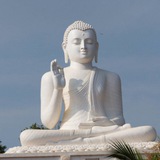
Ulun Danu Tamblingan water temple, Lake Tamblingan, Bali, Indonesia. Ulun Danu = lakeshore, Tamblingan = heal the soul/ awareness. A place by the lakeside to heal the soul.
❤2🤩1😍1
Forwarded from Words of the Buddha
Free Buddha Dharma ebook
Seven Factors of Enlightenment
By Piyadassi Thera
Free download here:
https://www.accesstoinsight.org/lib/authors/piyadassi/wheel001.pdf
===
Seven Factors of Enlightenment
By Piyadassi Thera
Free download here:
https://www.accesstoinsight.org/lib/authors/piyadassi/wheel001.pdf
===
👏1👌1
Forwarded from Words of the Buddha
Free Buddha Dharma ebook
Seven Factors of Enlightenment
By Piyadassi Thera
Tipitaka, the Buddhist canon, is replete with references to the factors of enlightenment expounded by the Enlightened One on different occasions under different circumstances. In the Book of the Kindred Sayings, V (Saíyutta Nikáya, Mahá Vagga) we find a special section under the noscript Bojjhaóga Saíyutta wherein the Buddha discourses on the bojjhaógas in diverse ways. In this section we read a series of three discourses or sermons recited by Buddhists since the time of the Buddha as a protection (paritta or pirit) against pain, disease, and adversity.
The term bojjhanga is composed of bodhi + anga. Bodh denotes enlightenment — to be exact, insight concerned with the realization of the four Noble Truths, namely: the Noble Truth of suffering; the Noble Truth of the origin of suffering; the Noble Truth of the cessation of suffering and the Noble Truth of the path leading to the cessation of suffering. Anga means factors or limbs. Bodhi + anga (bojjhanga), therefore, means the factors of enlightenment, or the factors for insight, wisdom.
Free download here:
https://www.accesstoinsight.org/lib/authors/piyadassi/wheel001.pdf
===
Seven Factors of Enlightenment
By Piyadassi Thera
Tipitaka, the Buddhist canon, is replete with references to the factors of enlightenment expounded by the Enlightened One on different occasions under different circumstances. In the Book of the Kindred Sayings, V (Saíyutta Nikáya, Mahá Vagga) we find a special section under the noscript Bojjhaóga Saíyutta wherein the Buddha discourses on the bojjhaógas in diverse ways. In this section we read a series of three discourses or sermons recited by Buddhists since the time of the Buddha as a protection (paritta or pirit) against pain, disease, and adversity.
The term bojjhanga is composed of bodhi + anga. Bodh denotes enlightenment — to be exact, insight concerned with the realization of the four Noble Truths, namely: the Noble Truth of suffering; the Noble Truth of the origin of suffering; the Noble Truth of the cessation of suffering and the Noble Truth of the path leading to the cessation of suffering. Anga means factors or limbs. Bodhi + anga (bojjhanga), therefore, means the factors of enlightenment, or the factors for insight, wisdom.
Free download here:
https://www.accesstoinsight.org/lib/authors/piyadassi/wheel001.pdf
===
🥰1👏1
Forwarded from Buddha
Trusting in Simplicity
A teaching on conviviality and moving toward awakened awareness
By Ajahn Sumedho
Part 2 of 2
This inclusive awareness is very simple and totally natural. The mind stops, and you are just open and receptive. Even if you’re tense and uptight, just open to it by accepting it and allowing it to be as it is. Being in a pleasant state of mind is not a prerequisite for inclusive awareness. One can be in the pits of hell and misery and yet still open to the experience of being aware, and thus allow even the most upsetting states to be just what they are.
In one’s life one develops so many ways of distracting oneself from feelings such as despair, unhappiness, depression, and fear that one no longer even does so consciously—it becomes habitual to distract oneself from painful experiences. The encouragement now is to begin to notice it. It’s a matter of opening to the way it is, not the way you think it should be or the way you think it is.
You don’t have to perceive them with thoughts or words, or analyze them; you’re just allowing the experience to be, just the way it is. It’s more a case of developing an intuitive sense, what I call intuitive awareness.
With intuitive awareness we are taking our refuge in awakeness, which is expansive, unlimited. Thoughts and mental conceptions create boundaries. The body is a boundary; emotional habits are boundaries; language is a boundary; words expressing feelings are also boundaries. Joy, sorrow, and neutrality are all conditioned and dependent upon other conditions. Through awakening we begin to recognize what transcends all of this.
Whatever is happening for you now is that way; it is what it is. It’s a matter of recognizing what it is and not judging what you see. As soon as you add to it in any way, it becomes more than what it is; it becomes personal, emotional, complicated. One’s whole life is an endless procession of meeting and separating. We get so used to it that we hardly notice it or reflect on it. Sadness is the natural response to being separated from what one likes, from people one loves. But the awareness of that sadness is not itself sad. The emotion we feel is sadness, but when the emotion is held in awareness, then the awareness itself is not sad. The same is true when being present with thinking of something that gives rise to excitement or joy. The awareness is not excited; it holds the excitement. Awareness embraces the feeling of excitement or sadness, but it does not get excited or sad. So it’s a matter of learning to trust in that awareness rather than just endlessly struggling with whatever feelings might be arising.
This awareness is subtle and simple. But if no one ever points it out, we don’t learn to trust in it, and so we will relate to meditation from the mind-state of achieving and attaining. It is very easy to go back into this dualistic struggle: trying to get and trying to get rid of. Right and wrong, good and bad—we’re very easily intimidated by righteous feelings.
If we don’t have boundaries, we tend to get lost. The precepts are a vehicle that simplifies our lives and limits our behavior. If we have no way of knowing limitations, then we follow any impulse or idea that we might feel inclined to in the moment. So the Vinaya and sila are always a form of restriction. It’s a vehicle; its purpose is to aid reflection.
The thing is not to try complicating yourself even more by adopting another role but to learn to observe how the restrictions of this form bring into the open one’s resistance, indulgence, attachment, and aversion, to see that all of these reactions are like this. In this way you’re going beyond the dualistic structures of thought and conditioned phenomena. Your refuge is in the deathless, the unconditioned—in dhamma itself rather than someone else’s view about dhamma.
If you hold to a view, then you are bound and limited by that very thing that you are grasping.
A teaching on conviviality and moving toward awakened awareness
By Ajahn Sumedho
Part 2 of 2
This inclusive awareness is very simple and totally natural. The mind stops, and you are just open and receptive. Even if you’re tense and uptight, just open to it by accepting it and allowing it to be as it is. Being in a pleasant state of mind is not a prerequisite for inclusive awareness. One can be in the pits of hell and misery and yet still open to the experience of being aware, and thus allow even the most upsetting states to be just what they are.
In one’s life one develops so many ways of distracting oneself from feelings such as despair, unhappiness, depression, and fear that one no longer even does so consciously—it becomes habitual to distract oneself from painful experiences. The encouragement now is to begin to notice it. It’s a matter of opening to the way it is, not the way you think it should be or the way you think it is.
You don’t have to perceive them with thoughts or words, or analyze them; you’re just allowing the experience to be, just the way it is. It’s more a case of developing an intuitive sense, what I call intuitive awareness.
With intuitive awareness we are taking our refuge in awakeness, which is expansive, unlimited. Thoughts and mental conceptions create boundaries. The body is a boundary; emotional habits are boundaries; language is a boundary; words expressing feelings are also boundaries. Joy, sorrow, and neutrality are all conditioned and dependent upon other conditions. Through awakening we begin to recognize what transcends all of this.
Whatever is happening for you now is that way; it is what it is. It’s a matter of recognizing what it is and not judging what you see. As soon as you add to it in any way, it becomes more than what it is; it becomes personal, emotional, complicated. One’s whole life is an endless procession of meeting and separating. We get so used to it that we hardly notice it or reflect on it. Sadness is the natural response to being separated from what one likes, from people one loves. But the awareness of that sadness is not itself sad. The emotion we feel is sadness, but when the emotion is held in awareness, then the awareness itself is not sad. The same is true when being present with thinking of something that gives rise to excitement or joy. The awareness is not excited; it holds the excitement. Awareness embraces the feeling of excitement or sadness, but it does not get excited or sad. So it’s a matter of learning to trust in that awareness rather than just endlessly struggling with whatever feelings might be arising.
This awareness is subtle and simple. But if no one ever points it out, we don’t learn to trust in it, and so we will relate to meditation from the mind-state of achieving and attaining. It is very easy to go back into this dualistic struggle: trying to get and trying to get rid of. Right and wrong, good and bad—we’re very easily intimidated by righteous feelings.
If we don’t have boundaries, we tend to get lost. The precepts are a vehicle that simplifies our lives and limits our behavior. If we have no way of knowing limitations, then we follow any impulse or idea that we might feel inclined to in the moment. So the Vinaya and sila are always a form of restriction. It’s a vehicle; its purpose is to aid reflection.
The thing is not to try complicating yourself even more by adopting another role but to learn to observe how the restrictions of this form bring into the open one’s resistance, indulgence, attachment, and aversion, to see that all of these reactions are like this. In this way you’re going beyond the dualistic structures of thought and conditioned phenomena. Your refuge is in the deathless, the unconditioned—in dhamma itself rather than someone else’s view about dhamma.
If you hold to a view, then you are bound and limited by that very thing that you are grasping.
Telegram
Buddha
Buddha dharma teachings from the suttas and commentaries
👍1😘1
Forwarded from Buddha
If I had not developed this awareness, then life would be more difficult, because I’m always struggling with my feelings. Sometimes the sangha will be going well, and people will say that they love Amaravati and want to remain monks and nuns all their lives and that they believe Theravada Buddhism is the only way. Then all of a sudden they change to saying that they’re fed up with this joint and want to convert to some other religion. Then one can feel dejected and think one has to persuade them that joining some other religion is not the way, getting into one’s righteous Buddhist mood about how “right” one is.
If we’re emotionally attached to the way we do things, we feel threatened by anyone who questions it. I’ve found that whenever I get upset by someone criticizing Theravada Buddhism, our sangha, or the way we do things, it is due to my personality and its tendency to attach and identify with these things. You can’t trust that at all. But you can trust awareness. As you begin to recognize it and know it, you can rest more in being aware and listening to the sound of silence. As you sustain awareness in this way, consciousness can expand and become infinite. When this occurs, you are just present in a conscious moment and you lose the sense of being a self—being a person, this body. It just drops away.
It is not possible for emotional habits to sustain themselves, because, being impermanent, their nature is to arise and cease. You then begin to recognize the value of this expansiveness, which some people call emptiness. It’s a natural state, it’s not created—I don’t create this emptiness. When I was first getting into concentration practices I was always feeling frustrated, because just when I’d be getting somewhere, someone would slam the door. That type of practice is all about trying to shut out, control, and limit everything. It can be skillful to do that kind of practice, but if you hold on to it, then you are limited by it; you can’t take life as it comes, and instead you start trying to control everything.
You see monks going all over the place trying to find the perfect monastery where they can get their samadhi together. But in this expansive awareness, everything belongs, so it doesn’t demand certain conditions in which it may be cultivated. Intuitive awareness allows you to accept life as a flow, rather than being endlessly frustrated when life seems difficult or unpleasant.
Stillness is here in the heart.
===
The Sound of Silence: The Selected Teachings of Ajahn Sumedho.
===
Ajahn Sumedho is a senior monk of the Thai forest tradition and was abbot of Amaravati Buddhist Monastery, UK, from its consecration in 1984 until his retirement in 2010.
===
Part 1 of 2:
https://news.1rj.ru/str/dhammapadas/2960
Part 2 of 2:
https://news.1rj.ru/str/lorddivinebuddha/3418
===
Buddha dharma teachings channel:
https://news.1rj.ru/str/lorddivinebuddha
===
If we’re emotionally attached to the way we do things, we feel threatened by anyone who questions it. I’ve found that whenever I get upset by someone criticizing Theravada Buddhism, our sangha, or the way we do things, it is due to my personality and its tendency to attach and identify with these things. You can’t trust that at all. But you can trust awareness. As you begin to recognize it and know it, you can rest more in being aware and listening to the sound of silence. As you sustain awareness in this way, consciousness can expand and become infinite. When this occurs, you are just present in a conscious moment and you lose the sense of being a self—being a person, this body. It just drops away.
It is not possible for emotional habits to sustain themselves, because, being impermanent, their nature is to arise and cease. You then begin to recognize the value of this expansiveness, which some people call emptiness. It’s a natural state, it’s not created—I don’t create this emptiness. When I was first getting into concentration practices I was always feeling frustrated, because just when I’d be getting somewhere, someone would slam the door. That type of practice is all about trying to shut out, control, and limit everything. It can be skillful to do that kind of practice, but if you hold on to it, then you are limited by it; you can’t take life as it comes, and instead you start trying to control everything.
You see monks going all over the place trying to find the perfect monastery where they can get their samadhi together. But in this expansive awareness, everything belongs, so it doesn’t demand certain conditions in which it may be cultivated. Intuitive awareness allows you to accept life as a flow, rather than being endlessly frustrated when life seems difficult or unpleasant.
Stillness is here in the heart.
===
The Sound of Silence: The Selected Teachings of Ajahn Sumedho.
===
Ajahn Sumedho is a senior monk of the Thai forest tradition and was abbot of Amaravati Buddhist Monastery, UK, from its consecration in 1984 until his retirement in 2010.
===
Part 1 of 2:
https://news.1rj.ru/str/dhammapadas/2960
Part 2 of 2:
https://news.1rj.ru/str/lorddivinebuddha/3418
===
Buddha dharma teachings channel:
https://news.1rj.ru/str/lorddivinebuddha
===
Telegram
Buddha
Buddha dharma teachings from the suttas and commentaries
💯1🤗1
8. Na tam kammam katam sadhu
yam katva anutappati
Yassa assumukho rodam
vipakam pañisevati. 67.
NOT WELL DONE IS THAT DEED WHICH CAUSES REPENTANCE
8. That deed is not well done when, after having done it, one repents, and when weeping, with tearful face, one reaps the fruit thereof. 67.
Story
A farmer was accused of theft for keeping in his possession some stolen property. Owing to his peculiar behaviour he was produced before the Buddha, who then explained the actual circumstances of the case. When the poor man was released because of his innocence the Buddha stated the consequences of evil deeds.
===
Buddha dharma teachings channel:
https://invite.viber.com/?g2=AQAKw1y3rv%2F6sk61PI2W4izuIiaEZj8YZujhY1tSzL%2B07s7rFnVFDAd0bAYFaMLw
===
yam katva anutappati
Yassa assumukho rodam
vipakam pañisevati. 67.
NOT WELL DONE IS THAT DEED WHICH CAUSES REPENTANCE
8. That deed is not well done when, after having done it, one repents, and when weeping, with tearful face, one reaps the fruit thereof. 67.
Story
A farmer was accused of theft for keeping in his possession some stolen property. Owing to his peculiar behaviour he was produced before the Buddha, who then explained the actual circumstances of the case. When the poor man was released because of his innocence the Buddha stated the consequences of evil deeds.
===
Buddha dharma teachings channel:
https://invite.viber.com/?g2=AQAKw1y3rv%2F6sk61PI2W4izuIiaEZj8YZujhY1tSzL%2B07s7rFnVFDAd0bAYFaMLw
===
Viber
Buddha
Buddha dharma teachings from the suttas and commentaries from Theravada tradition
👏1💯1
Forwarded from Buddha Dharma books
Free Buddha Dharma ebook
Middle Land, Middle Way, A Pilgrim’s Guide to the Buddha’s India
By Bhante Shravasti Dhammika
Free download available:
https://budblooms.org/middle-land/
===
Middle Land, Middle Way, A Pilgrim’s Guide to the Buddha’s India
By Bhante Shravasti Dhammika
Free download available:
https://budblooms.org/middle-land/
===
👍1😍1
Forwarded from Buddha Dharma books
Free Buddha Dharma ebook
Middle Land, Middle Way, A Pilgrim’s Guide to the Buddha’s India
By Bhante Shravasti Dhammika
Ananda, there are four places the sight of which will arouse strong emotion in those with faith. Which four places? ‘Here the Tathagata was born’ this is the first. ‘Here the Tathagata attained enlightenment’- this is the second. ‘Here the Tathagata set in motion the Wheel of the Dhamma’ – this is the third. ‘Here the Tathagata attained final Nirvana without remainder’ – this is the fourth. And the monk, the nun, the layman or the laywoman who has faith should visit these places. And anyone who dies while making a pilgrimage to these shrines with a devoted heart will, at the breaking up of the body at death, be reborn in heaven.
Free download available:
https://budblooms.org/middle-land/
===
Middle Land, Middle Way, A Pilgrim’s Guide to the Buddha’s India
By Bhante Shravasti Dhammika
Ananda, there are four places the sight of which will arouse strong emotion in those with faith. Which four places? ‘Here the Tathagata was born’ this is the first. ‘Here the Tathagata attained enlightenment’- this is the second. ‘Here the Tathagata set in motion the Wheel of the Dhamma’ – this is the third. ‘Here the Tathagata attained final Nirvana without remainder’ – this is the fourth. And the monk, the nun, the layman or the laywoman who has faith should visit these places. And anyone who dies while making a pilgrimage to these shrines with a devoted heart will, at the breaking up of the body at death, be reborn in heaven.
Free download available:
https://budblooms.org/middle-land/
===
❤1🏆1😘1
9. Tañ ca kammam katam sadhu
yam katva nanutappati
Yassa patato sumano
vipakam pañisevati. 68.
WELL DONE IS THAT DEED WHICH CAUSES NO REPENTANCE
9. That deed is well done when, after having done it, one repents not, and when, with joy and pleasure, one reaps the fruit thereof. 68.
Story
A gardener, risking his life, offered to the Buddha some jasmine flowers which were meant for the king. Contrary to his expectations, the king was pleased with his meritorious act and rewarded him suitably. The Buddha thereupon commented on the effects of good deeds.
===
Words of the Buddha channel:
https://invite.viber.com/?g2=AQAFqzqlj7FmI061PX17rxWMAtZ%2BRuso%2FH2KmHKZSgnv7v9DD8X0bDkKnZDr9JDq
===
yam katva nanutappati
Yassa patato sumano
vipakam pañisevati. 68.
WELL DONE IS THAT DEED WHICH CAUSES NO REPENTANCE
9. That deed is well done when, after having done it, one repents not, and when, with joy and pleasure, one reaps the fruit thereof. 68.
Story
A gardener, risking his life, offered to the Buddha some jasmine flowers which were meant for the king. Contrary to his expectations, the king was pleased with his meritorious act and rewarded him suitably. The Buddha thereupon commented on the effects of good deeds.
===
Words of the Buddha channel:
https://invite.viber.com/?g2=AQAFqzqlj7FmI061PX17rxWMAtZ%2BRuso%2FH2KmHKZSgnv7v9DD8X0bDkKnZDr9JDq
===
Viber
Words Of The Buddha
Daily teachings from Buddha Dharma
🥰2👌1
Forwarded from Words of the Buddha
Phra Kaeo Morakot, The Emerald Buddha clothed in pure gold, Temple of the Emerald Buddha (Wat Phra Kaew) on the grounds of the Grand Palace, Bangkok, Thailand.
❤1👍1🏆1
“Bhikkhus, there are these four streams of merit, streams of the wholesome, nutriments of happiness—heavenly, ripening in happiness, conducive to heaven—that lead to what is wished for, desired, and agreeable, to one’s welfare and happiness.
When a bhikkhu enters and dwells in a measureless concentration of mind while using a robe [alms food, lodgings, medicine] that one has given him, one acquires a measureless stream of merit, stream of the wholesome, a nutriment of happiness … that leads … to one’s welfare and happiness.
“Bhikkhus, just as it is not easy to measure the water in the great ocean thus... it is reckoned simply as an incalculable, immeasurable, great mass of water; so too, when a noble disciple possesses these four streams of merit … it is reckoned simply as an incalculable, immeasurable, great mass of merit.”
Partial excerpts from AN 4.51 : Pathamapunnabhisandasutta : Stream of Merit
When a bhikkhu enters and dwells in a measureless concentration of mind while using a robe [alms food, lodgings, medicine] that one has given him, one acquires a measureless stream of merit, stream of the wholesome, a nutriment of happiness … that leads … to one’s welfare and happiness.
“Bhikkhus, just as it is not easy to measure the water in the great ocean thus... it is reckoned simply as an incalculable, immeasurable, great mass of water; so too, when a noble disciple possesses these four streams of merit … it is reckoned simply as an incalculable, immeasurable, great mass of merit.”
Partial excerpts from AN 4.51 : Pathamapunnabhisandasutta : Stream of Merit
❤1🥰1
Forwarded from Words of the Buddha
Big White Buddha at Wat Tham Khao Prang Buddhist temple, Lopburi, Thailand.
❤1🤩1😍1
10. Madhu va 4 maññati balo
yava papam na paccati
Yada ca paccata papam
atha balo dukkham nigacchati. 69.
EVIL-DOERS COME TO GRIEF
10. As sweet as honey is an evil deed, so thinks the fool so long as it ripens not; but when it ripens, then he comes to grief. 69.
Story
A former suitor of a nun ravished her while she was dwelling alone in a forest. On hearing of the incident, the Buddha commented on the sufferings that accrue to evil-doers.
===
Dhammapada, beloved and favorite teachings of the Buddha channel:
https://invite.viber.com/?g2=AQBLD6phsgvP%2F061YjEM3K%2BNeH1Yb372b9mtfQX2EmuBpgoLUoc99BDMfzHghrme
===
yava papam na paccati
Yada ca paccata papam
atha balo dukkham nigacchati. 69.
EVIL-DOERS COME TO GRIEF
10. As sweet as honey is an evil deed, so thinks the fool so long as it ripens not; but when it ripens, then he comes to grief. 69.
Story
A former suitor of a nun ravished her while she was dwelling alone in a forest. On hearing of the incident, the Buddha commented on the sufferings that accrue to evil-doers.
===
Dhammapada, beloved and favorite teachings of the Buddha channel:
https://invite.viber.com/?g2=AQBLD6phsgvP%2F061YjEM3K%2BNeH1Yb372b9mtfQX2EmuBpgoLUoc99BDMfzHghrme
===
Viber
Dhammapada - Buddha Dharma Teachings
Daily teachings of the Dhammapada, beloved and favorite teachings of the Buddha
❤1🙏1
Forwarded from Buddha Dharma books
Free Buddhism ebook
A Treasury of Buddhist Stories
From the Dhammapada Commentary
By E. W. Burlingame (translator)
56 Buddhist stories for young and old bundled into 8 convenient categories.
Free download here:
https://www.lotuslibrary.com/wp-content/uploads/2024/12/2062-treasury-of-Buddhist-stories_Burlingame.pdf
===
A Treasury of Buddhist Stories
From the Dhammapada Commentary
By E. W. Burlingame (translator)
56 Buddhist stories for young and old bundled into 8 convenient categories.
Free download here:
https://www.lotuslibrary.com/wp-content/uploads/2024/12/2062-treasury-of-Buddhist-stories_Burlingame.pdf
===
❤1🤗1