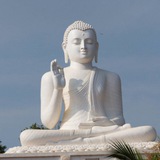
Forwarded from Buddha
However onerous the load,
however deep the pathway is,
at that time they harness Kaṇha,
and he carries away the load.
Having related this Birth Story, to make the matter clearer, he related in detail also the Birth Story about the Bull Nandivisāla:
In the past at Taxila in the land of Gandhāra there was a king reigning there, and the Bodhisatta came to life as a bull. When he was quite a tiny calf, he was presented by his owners to a Brahmin who came in – they being known to give away presents of oxen to such-like holy men. The Brahmin called it Nandivisāla (Great Joy), and treated it like his own child, feeding the young creature on rice-gruel and rice. When the Bodhisatta grew up, he thought thus to himself: “I have been brought up by this Brahmin with great pains, and all Jambudīpa cannot show the bull which can draw what I can. How if I were to repay the Brahmin the cost of my nurture by making proof of my strength?” Accordingly, one day he said to the Brahmin: “Go, Brahmin, to some merchant rich in herds, and wager him a thousand pieces that your bull can draw a hundred loaded carts.”
The Brahmin went his way to a merchant and got into a discussion with him as to whose oxen in the town were the strongest. “Oh, So-and-so’s, or So-and-so’s,” said the merchant. “But,” added he, “there are no oxen in the town which can compare with mine for real strength.” Said the Brahmin: “I have a bull who can pull a hundred loaded carts.” – “Where’s such a bull to be found?” laughed the merchant. “I’ve got him at home,” said the Brahmin. “Make it a wager.” – “Certainly,” said the Brahmin, and staked a thousand pieces.
Then he loaded a hundred carts with sand, gravel, and stones, and tied the lot together, one behind the other, by cords from the axle tree of the one in front to the trace-bar of its successor. This done, he bathed Nandivisāla, gave him a measure of perfumed rice to eat, hung a garland round his neck, and harnessed him all alone to the leading cart. The Brahmin in person took his seat upon the pole, and flourished his goad in the air, shouting: “Now then, you rascal! Pull them along, you rascal!”
“I’m not the rascal he calls me,” thought the Bodhisatta to himself; and so he planted his four feet like so many posts, and budged not an inch.
===
Buddha dharma teachings channel:
https://news.1rj.ru/str/lorddivinebuddha
===
however deep the pathway is,
at that time they harness Kaṇha,
and he carries away the load.
Having related this Birth Story, to make the matter clearer, he related in detail also the Birth Story about the Bull Nandivisāla:
In the past at Taxila in the land of Gandhāra there was a king reigning there, and the Bodhisatta came to life as a bull. When he was quite a tiny calf, he was presented by his owners to a Brahmin who came in – they being known to give away presents of oxen to such-like holy men. The Brahmin called it Nandivisāla (Great Joy), and treated it like his own child, feeding the young creature on rice-gruel and rice. When the Bodhisatta grew up, he thought thus to himself: “I have been brought up by this Brahmin with great pains, and all Jambudīpa cannot show the bull which can draw what I can. How if I were to repay the Brahmin the cost of my nurture by making proof of my strength?” Accordingly, one day he said to the Brahmin: “Go, Brahmin, to some merchant rich in herds, and wager him a thousand pieces that your bull can draw a hundred loaded carts.”
The Brahmin went his way to a merchant and got into a discussion with him as to whose oxen in the town were the strongest. “Oh, So-and-so’s, or So-and-so’s,” said the merchant. “But,” added he, “there are no oxen in the town which can compare with mine for real strength.” Said the Brahmin: “I have a bull who can pull a hundred loaded carts.” – “Where’s such a bull to be found?” laughed the merchant. “I’ve got him at home,” said the Brahmin. “Make it a wager.” – “Certainly,” said the Brahmin, and staked a thousand pieces.
Then he loaded a hundred carts with sand, gravel, and stones, and tied the lot together, one behind the other, by cords from the axle tree of the one in front to the trace-bar of its successor. This done, he bathed Nandivisāla, gave him a measure of perfumed rice to eat, hung a garland round his neck, and harnessed him all alone to the leading cart. The Brahmin in person took his seat upon the pole, and flourished his goad in the air, shouting: “Now then, you rascal! Pull them along, you rascal!”
“I’m not the rascal he calls me,” thought the Bodhisatta to himself; and so he planted his four feet like so many posts, and budged not an inch.
===
Buddha dharma teachings channel:
https://news.1rj.ru/str/lorddivinebuddha
===
Telegram
Buddha
Buddha dharma teachings from the suttas and commentaries
🥰1👏1
14. Asatam bhavanam iccheyya
purekkharañ ca bhikkhusu
âvasesu ca issariyam
puja parakulesu ca. 73.
15. Mam eva katam maññantu
giha pabbajita ubho
Mam ev'ativasa assu
kiccakiccesu kismici
Iti balassa saïkappo
iccha mano ca vaddhati. 74.
THE IGNORANT SEEK UNDUE FAME
14. The fool will desire undue reputation, precedence among monks, authority in the monasteries, honour among other families. 73.
15. Let both laymen and monks think, "by myself was this done; in every work, great or small, let them refer to me". Such is the ambition of the fool; his desires and pride increase. 74.
Story
A resident monk, jealous of the honour paid to the visiting Chief Disciple by his supporters, insulted him and reported the matter to the Buddha. The Teacher advised the monk to seek his pardon and told him not to be egoistic and ambitious, thinking in terms of "me" and "mine".
===
Words of the Buddha channel:
https://news.1rj.ru/str/wordsofbuddha
===
purekkharañ ca bhikkhusu
âvasesu ca issariyam
puja parakulesu ca. 73.
15. Mam eva katam maññantu
giha pabbajita ubho
Mam ev'ativasa assu
kiccakiccesu kismici
Iti balassa saïkappo
iccha mano ca vaddhati. 74.
THE IGNORANT SEEK UNDUE FAME
14. The fool will desire undue reputation, precedence among monks, authority in the monasteries, honour among other families. 73.
15. Let both laymen and monks think, "by myself was this done; in every work, great or small, let them refer to me". Such is the ambition of the fool; his desires and pride increase. 74.
Story
A resident monk, jealous of the honour paid to the visiting Chief Disciple by his supporters, insulted him and reported the matter to the Buddha. The Teacher advised the monk to seek his pardon and told him not to be egoistic and ambitious, thinking in terms of "me" and "mine".
===
Words of the Buddha channel:
https://news.1rj.ru/str/wordsofbuddha
===
Telegram
Words of the Buddha
Daily teachings of Buddha Dharma
🤗2🥰1
Forwarded from Words of the Buddha
If no-one else is found
in front or behind,
it’s extremely pleasant
to be dwelling alone in a forest grove.
Come now, I’ll go alone
to the wilderness praised by the Buddha.
It’s pleasant for a mendicant
to be dwelling alone and resolute.
When will I dwell alone,
without a companion,
in the great wood, so delightful,
my task complete, free of defilements?
This is what I want to do:
may my wish succeed!
I’ll make it happen myself,
for no-one can do another’s duty.
Fastening my armor,
I’ll enter the forest.
I won’t leave
without attaining the end of defilements.
As the cool breeze blows
with fragrant scent,
I’ll split ignorance apart,
sitting on the mountain-peak.
In a forest grove covered with blossoms,
in a cave so very cool,
I take pleasure in the Mountainfold,
happy with the happiness of freedom.
I’ve got all I wished for
like the moon on the fifteenth day.
With the utter ending of all defilements,
now there’ll be no more future lives.
Partially excerpted from Thag 10.2 Ekavihāriyattheragāthā
in front or behind,
it’s extremely pleasant
to be dwelling alone in a forest grove.
Come now, I’ll go alone
to the wilderness praised by the Buddha.
It’s pleasant for a mendicant
to be dwelling alone and resolute.
When will I dwell alone,
without a companion,
in the great wood, so delightful,
my task complete, free of defilements?
This is what I want to do:
may my wish succeed!
I’ll make it happen myself,
for no-one can do another’s duty.
Fastening my armor,
I’ll enter the forest.
I won’t leave
without attaining the end of defilements.
As the cool breeze blows
with fragrant scent,
I’ll split ignorance apart,
sitting on the mountain-peak.
In a forest grove covered with blossoms,
in a cave so very cool,
I take pleasure in the Mountainfold,
happy with the happiness of freedom.
I’ve got all I wished for
like the moon on the fifteenth day.
With the utter ending of all defilements,
now there’ll be no more future lives.
Partially excerpted from Thag 10.2 Ekavihāriyattheragāthā
💯2🕊1
Forwarded from Buddha
Free Buddha Dharma ebook
Void Mind
By Bhikkhu Buddhadasa
Free download available:
https://www.lotuslibrary.com/wp-content/uploads/2024/12/2060-void-mind_Buddhadasa.pdf
===
Void Mind
By Bhikkhu Buddhadasa
Free download available:
https://www.lotuslibrary.com/wp-content/uploads/2024/12/2060-void-mind_Buddhadasa.pdf
===
❤1🥰1👏1
Forwarded from Buddha
Free Buddha Dharma ebook
Void Mind
By Bhikkhu Buddhadasa
“Form is emptiness and emptiness is form” – a phrase from one particular translation of the Heart Sutra, the Mahāyāna text which deals with the concept of suññatā, ‘emptiness’or ‘voidness.’ ‘Form’ here representing one of the five aggregates, the pañca-khandhas, being ‘empty’ or ‘void,’ then the remaining four aggregates – feelings, perceptions, thinking, and awareness – must also be ‘empty,’ or ‘void’ too.
But what are the aggregates empty, or void of? Empty of any meaning of ‘self’ Buddhadāsa would have said. That’s the rub: we don’t understand ourselves properly, that what we are is essentially what the Buddhists call the five aggregates, so we cling to them as being ‘me,’ take possession of them as being ‘mine’ and get into trouble because we do.
Ajahn Buddhadāsa investigates the experience of suññatā as it arises from the bases of samādhi and vipassanā practice, and as an experience arising naturally during the course of our daily lives. Always willing to explore the different traditions, the Ajahn takes a long, penetrating and occasionally controversial look at this still misunderstood
Free download available:
https://www.lotuslibrary.com/wp-content/uploads/2024/12/2060-void-mind_Buddhadasa.pdf
===
Void Mind
By Bhikkhu Buddhadasa
“Form is emptiness and emptiness is form” – a phrase from one particular translation of the Heart Sutra, the Mahāyāna text which deals with the concept of suññatā, ‘emptiness’or ‘voidness.’ ‘Form’ here representing one of the five aggregates, the pañca-khandhas, being ‘empty’ or ‘void,’ then the remaining four aggregates – feelings, perceptions, thinking, and awareness – must also be ‘empty,’ or ‘void’ too.
But what are the aggregates empty, or void of? Empty of any meaning of ‘self’ Buddhadāsa would have said. That’s the rub: we don’t understand ourselves properly, that what we are is essentially what the Buddhists call the five aggregates, so we cling to them as being ‘me,’ take possession of them as being ‘mine’ and get into trouble because we do.
Ajahn Buddhadāsa investigates the experience of suññatā as it arises from the bases of samādhi and vipassanā practice, and as an experience arising naturally during the course of our daily lives. Always willing to explore the different traditions, the Ajahn takes a long, penetrating and occasionally controversial look at this still misunderstood
Free download available:
https://www.lotuslibrary.com/wp-content/uploads/2024/12/2060-void-mind_Buddhadasa.pdf
===
❤2👍1
Forwarded from Words of the Buddha
Buddha's twin miracles from the attainment of jhana absorption and four elements meditation.
❤1💯1😘1
Forwarded from Words of the Buddha
The Story about the Twin Miracle
Yamakapāṭihāriyavatthu
From the Dhammapada Aṭṭhakathā
By E W Burlingame and Ānandajoti Bhikkhu
Part 2 of 2
Straightaway, the merchant made the Brahmin pay over the thousand pieces. His money gone, the Brahmin took his bull out of the cart and went home, where he lay down on his bed in an agony of grief. When Nandivisāla strolled in and found the Brahmin a prey to such grief, he went up to him and enquired if the Brahmin were taking a nap. “How should I be taking a nap, when I have lost a thousand pieces?” – “Brahmin, all the time I have lived in your house, have I ever broken a pot, or squeezed up against anybody, or made messes about?” – “Never, my child.” – “Then, why did you call me a rascal? It’s you who are to blame, not I. Go and bet him two thousand this time. Only remember not to call me rascal again.”
When he heard this, the Brahmin went off to the merchant, and laid a wager of two thousand. Just as before, he tied the hundred carts to one another and harnessed Nandivisāla, very spruce and fine, to the leading cart. If you ask how he harnessed him, well, he did it in this way: first, he fastened the cross- yoke on to the pole; then he put the bull in on one side, and made the other fast by fastening a smooth piece of wood from the cross-yoke on to the axle-tree, so that the yoke was taut and could not skew round either way. Thus a single bull could draw a cart made to be drawn by two.
So now seated on the pole, the Brahmin stroked Nandivisāla on the back, and urged on him in this style, “Now then, my fine fellow! Pull them along, my fine fellow!” With a single pull the Bodhisatta tugged along the whole string of the hundred carts till the hindermost stood where the foremost had started. The merchant, rich in herds, paid up the two thousand pieces he had lost to the Brahmin. Other folks, too, gave large sums to the Bodhisatta, and the whole passed into the hands of the Brahmin. Thus did he gain greatly by reason of the Bodhisatta.
Thus … the Teacher, after Fully Awakening, uttered this verse:
You should surely speak pleasantly, and speak nothing unpleasantly, for the one who spoke pleasantly he pulled a very heavy load, because of that he received wealth and satisfaction, it is said.
Now when the Teacher had related these Birth Stories, he came down the jeweled walk. His retinue extended twelve leagues before him to the east, twelve leagues behind him, twelve leagues on his left hand, and twelve leagues on his right. And standing erect in the midst of this numerous company extending twenty-four leagues in all directions, the Fortunate One performed the Twin Miracle. According to the Sacred Text, the facts are to be understood as follows:
The Buddha Performs the Twin Miracle
What is known regarding the Twin Miracle performed by the Realised One? On this occasion the Realised One performed the Twin Miracle, a miracle far more wonderful than any performed by his disciples. From the upper part of his body proceeded flames of fire, and from the lower part of his body a stream of water. From the lower part of his body proceeded flames of fire and from the upper part of his body a stream of water. From the front part of his body proceeded flames of fire, and from the back part of his body a stream of water. From the back part of his body proceeded flames of fire, and from the front part of his body a stream of water.
Flames of fire and streams of water proceeded from his right and left eyes, from his right and left ears, from his right and left nostrils, from his right and left shoulders, from his right and left hands, from his right and left sides, from his right and left feet, from the tips of his fingers and from the roots of his fingers; from every pore of his body proceeded forth flames of fire, and from every pore of his body proceeded forth a stream of water. Six-colored they were: blue, gold, white, red, pink and glittering colours.
Yamakapāṭihāriyavatthu
From the Dhammapada Aṭṭhakathā
By E W Burlingame and Ānandajoti Bhikkhu
Part 2 of 2
Straightaway, the merchant made the Brahmin pay over the thousand pieces. His money gone, the Brahmin took his bull out of the cart and went home, where he lay down on his bed in an agony of grief. When Nandivisāla strolled in and found the Brahmin a prey to such grief, he went up to him and enquired if the Brahmin were taking a nap. “How should I be taking a nap, when I have lost a thousand pieces?” – “Brahmin, all the time I have lived in your house, have I ever broken a pot, or squeezed up against anybody, or made messes about?” – “Never, my child.” – “Then, why did you call me a rascal? It’s you who are to blame, not I. Go and bet him two thousand this time. Only remember not to call me rascal again.”
When he heard this, the Brahmin went off to the merchant, and laid a wager of two thousand. Just as before, he tied the hundred carts to one another and harnessed Nandivisāla, very spruce and fine, to the leading cart. If you ask how he harnessed him, well, he did it in this way: first, he fastened the cross- yoke on to the pole; then he put the bull in on one side, and made the other fast by fastening a smooth piece of wood from the cross-yoke on to the axle-tree, so that the yoke was taut and could not skew round either way. Thus a single bull could draw a cart made to be drawn by two.
So now seated on the pole, the Brahmin stroked Nandivisāla on the back, and urged on him in this style, “Now then, my fine fellow! Pull them along, my fine fellow!” With a single pull the Bodhisatta tugged along the whole string of the hundred carts till the hindermost stood where the foremost had started. The merchant, rich in herds, paid up the two thousand pieces he had lost to the Brahmin. Other folks, too, gave large sums to the Bodhisatta, and the whole passed into the hands of the Brahmin. Thus did he gain greatly by reason of the Bodhisatta.
Thus … the Teacher, after Fully Awakening, uttered this verse:
You should surely speak pleasantly, and speak nothing unpleasantly, for the one who spoke pleasantly he pulled a very heavy load, because of that he received wealth and satisfaction, it is said.
Now when the Teacher had related these Birth Stories, he came down the jeweled walk. His retinue extended twelve leagues before him to the east, twelve leagues behind him, twelve leagues on his left hand, and twelve leagues on his right. And standing erect in the midst of this numerous company extending twenty-four leagues in all directions, the Fortunate One performed the Twin Miracle. According to the Sacred Text, the facts are to be understood as follows:
The Buddha Performs the Twin Miracle
What is known regarding the Twin Miracle performed by the Realised One? On this occasion the Realised One performed the Twin Miracle, a miracle far more wonderful than any performed by his disciples. From the upper part of his body proceeded flames of fire, and from the lower part of his body a stream of water. From the lower part of his body proceeded flames of fire and from the upper part of his body a stream of water. From the front part of his body proceeded flames of fire, and from the back part of his body a stream of water. From the back part of his body proceeded flames of fire, and from the front part of his body a stream of water.
Flames of fire and streams of water proceeded from his right and left eyes, from his right and left ears, from his right and left nostrils, from his right and left shoulders, from his right and left hands, from his right and left sides, from his right and left feet, from the tips of his fingers and from the roots of his fingers; from every pore of his body proceeded forth flames of fire, and from every pore of his body proceeded forth a stream of water. Six-colored they were: blue, gold, white, red, pink and glittering colours.
Telegram
Dhammapada - Buddha Dharma Teachings
Daily teachings of the Dhammapada, beloved and favorite teachings of the Buddha
🙏1🤗1
Forwarded from Words of the Buddha
The Fortunate One walked, and a counterpart of him stood or sat or lay down … his counterpart lay down and the Fortunate One walked or stood or sat. This is the tradition regarding the Twin Miracle performed by the Fortunate One.
This miracle, therefore, the Teacher performed as he walked up and down the jeweled walk. By means of a absorption induced by meditation on the element of fire, flames of fire proceeded from the upper part of his body; and by means of a absorption induced by meditation on the element of water, a stream of water proceeded from the lower part of his body. The words “From the lower part of his body,” and “From the upper part of his body,” are used to show that from the same part of the body from which a stream of water proceeded, from that part also flames of fire proceeded; and that from the same part of the body from which flames of fire proceeded, from that part also a stream of water also proceeded. The same principle of interpretation applies also to the following expressions. Now the flames of fire were not mingled with the stream of water, nor was the stream of water mingled with the flames of fire. Both the flames of fire and the stream of water shot upwards as far as the world of Brahma, and streamed thence to the rim of the universe. With reference to the “six colors,” rays of six colors, like molten gold running out of crucibles, or like an ooze of king's yellow coming out of a tube, shot upwards from the interior of one universe to the world of Brahma, whence they streamed back to the rim of the universe. Thus each universe was arched with rays of light shaped as crooked as a rafter, and the Bodhi tree building was suffused with an even light.
On that day the Teacher walked up and down performing his Twin Miracle, and as he did so, he taught the Dhamma to the multitude from time to time, not wearying them with uninterrupted discourse, but giving them sufficient opportunity to refresh themselves from time to time. Thereupon the multitude sent up shouts of applause. Hearing the shouts of applause which proceeded from the multitude, the Teacher straightaway looked into the hearts of the great multitude, and in sixteen ways perceived the disposition of mind of each one. So quick is the movement of the mind of the Buddhas, that in case any person took pleasure in any portion of the Dhamma or in any miracle, the Buddha taught the Dhamma and performed a miracle in accordance with the temper and disposition of every such person. As he thus taught the Dhamma and performed miracles, a great multitude of living beings obtained clear comprehension of the Dhamma.
Since the Teacher saw in that vast throng none other than himself who understood his mind and could ask him questions, he put forth his supernatural power and created a Nimitta Buddha; who then asked him questions and the Teacher answered them. While the Fortunate One walked up and down, the Nimitta Buddha occupied himself otherwise; while the Nimitta Buddha walked up and down, the Fortunate One occupied himself otherwise. It is in order to make this point clear that the statement: “The Nimitta Buddha walked,” and so forth, is introduced. Seeing the Teacher perform his miracle thus and hearing him teach the Dhamma, two hundred millions of living beings in that vast throng had comprehension of the Dhamma.
===
Part 1 of 2:
https://news.1rj.ru/str/lorddivinebuddha/3465
Part 2 of 2:
https://news.1rj.ru/str/wordsofbuddha/4253
===
Dhammapada, beloved and favorite teachings of the Buddha channel:
https://news.1rj.ru/str/dhammapadas
===
This miracle, therefore, the Teacher performed as he walked up and down the jeweled walk. By means of a absorption induced by meditation on the element of fire, flames of fire proceeded from the upper part of his body; and by means of a absorption induced by meditation on the element of water, a stream of water proceeded from the lower part of his body. The words “From the lower part of his body,” and “From the upper part of his body,” are used to show that from the same part of the body from which a stream of water proceeded, from that part also flames of fire proceeded; and that from the same part of the body from which flames of fire proceeded, from that part also a stream of water also proceeded. The same principle of interpretation applies also to the following expressions. Now the flames of fire were not mingled with the stream of water, nor was the stream of water mingled with the flames of fire. Both the flames of fire and the stream of water shot upwards as far as the world of Brahma, and streamed thence to the rim of the universe. With reference to the “six colors,” rays of six colors, like molten gold running out of crucibles, or like an ooze of king's yellow coming out of a tube, shot upwards from the interior of one universe to the world of Brahma, whence they streamed back to the rim of the universe. Thus each universe was arched with rays of light shaped as crooked as a rafter, and the Bodhi tree building was suffused with an even light.
On that day the Teacher walked up and down performing his Twin Miracle, and as he did so, he taught the Dhamma to the multitude from time to time, not wearying them with uninterrupted discourse, but giving them sufficient opportunity to refresh themselves from time to time. Thereupon the multitude sent up shouts of applause. Hearing the shouts of applause which proceeded from the multitude, the Teacher straightaway looked into the hearts of the great multitude, and in sixteen ways perceived the disposition of mind of each one. So quick is the movement of the mind of the Buddhas, that in case any person took pleasure in any portion of the Dhamma or in any miracle, the Buddha taught the Dhamma and performed a miracle in accordance with the temper and disposition of every such person. As he thus taught the Dhamma and performed miracles, a great multitude of living beings obtained clear comprehension of the Dhamma.
Since the Teacher saw in that vast throng none other than himself who understood his mind and could ask him questions, he put forth his supernatural power and created a Nimitta Buddha; who then asked him questions and the Teacher answered them. While the Fortunate One walked up and down, the Nimitta Buddha occupied himself otherwise; while the Nimitta Buddha walked up and down, the Fortunate One occupied himself otherwise. It is in order to make this point clear that the statement: “The Nimitta Buddha walked,” and so forth, is introduced. Seeing the Teacher perform his miracle thus and hearing him teach the Dhamma, two hundred millions of living beings in that vast throng had comprehension of the Dhamma.
===
Part 1 of 2:
https://news.1rj.ru/str/lorddivinebuddha/3465
Part 2 of 2:
https://news.1rj.ru/str/wordsofbuddha/4253
===
Dhammapada, beloved and favorite teachings of the Buddha channel:
https://news.1rj.ru/str/dhammapadas
===
Telegram
Buddha
The Story about the Twin Miracle
Yamakapāṭihāriyavatthu
From the Dhammapada Aṭṭhakathā
By E W Burlingame and Ānandajoti Bhikkhu
Part 1 of 2
The Birth Story about the Bull Blackie:
In the past when Brahmadatta was reigning in Benares, the Bodhisatta…
Yamakapāṭihāriyavatthu
From the Dhammapada Aṭṭhakathā
By E W Burlingame and Ānandajoti Bhikkhu
Part 1 of 2
The Birth Story about the Bull Blackie:
In the past when Brahmadatta was reigning in Benares, the Bodhisatta…
😍1🆒1
Brahma Palace, Ling Shan scenic area, the costliest Buddhist compound in modern history. The large complex has world tallest standing bronze Amitabha Buddha statue, world largest Buddha's hand square, Indian style gigantic Brahma Palace, Tibetan style Five Mudras Mandala Palace, Nine Dragons Buddha bathing fountain, Maitreya Buddha with 100 children, Xiangfu Buddhist temple, Thai style Flying Dragon stupas, Buddha's footprints altar and two man-made lakes.
❤1👏1🤩1
Forwarded from Words of the Buddha
Vesak celebration, Borobudur temple, Java island, Indonesia.
🎉1🤩1🍾1
Forwarded from Buddha
Phra Mahathat Chedi Pakdee Prakas Stupa, Bang Saphan, Thailand. The great Rattanakosin-style pagoda is built to have five floors building implies five aggregates and the group of 9 pagodas implies the temple of King Rama IX.
👍1👏1🏆1
16. Añña hi labhupanisa
añña nibbanagamina
Evam etam abhiññaya
bhikkhu Buddhassa savako
Sakkaram nabhinandeyya
vivekam anubruhaye. 75.
THE PATH TO GAIN IS ONE AND TO NIBBANA IS ANOTHER
16. Surely the path that leads to worldly gain is one, and the path that leads to Nibbana is another; understanding this, the bhikkhu, the disciple of the Buddha, should not rejoice in worldly favours, but cultivate detachment.
Story
A novice who hailed from a respected family was showered with gifts, but he spurned them and lived a life of poverty in a forest and attained Arahantship. The bhikkhus spoke in praise of his exemplary conduct. The Buddha, hearing their talk, described the two different paths that lead to gain and Nibbana.
===
Dhammapada, beloved and favorite teachings of the Buddha channel:
https://news.1rj.ru/str/dhammapadas
===
añña nibbanagamina
Evam etam abhiññaya
bhikkhu Buddhassa savako
Sakkaram nabhinandeyya
vivekam anubruhaye. 75.
THE PATH TO GAIN IS ONE AND TO NIBBANA IS ANOTHER
16. Surely the path that leads to worldly gain is one, and the path that leads to Nibbana is another; understanding this, the bhikkhu, the disciple of the Buddha, should not rejoice in worldly favours, but cultivate detachment.
Story
A novice who hailed from a respected family was showered with gifts, but he spurned them and lived a life of poverty in a forest and attained Arahantship. The bhikkhus spoke in praise of his exemplary conduct. The Buddha, hearing their talk, described the two different paths that lead to gain and Nibbana.
===
Dhammapada, beloved and favorite teachings of the Buddha channel:
https://news.1rj.ru/str/dhammapadas
===
Telegram
Dhammapada - Buddha Dharma Teachings
Daily teachings of the Dhammapada, beloved and favorite teachings of the Buddha
👌1🏆1
Forwarded from Buddha
I have heard that on one occasion the Blessed One was staying near Savatthi in Jeta's Grove, Anathapindika's monastery. There Ven. Sariputta addressed the monks, saying, "Friend monks!"
"Yes, friend," the monks responded.
Ven. Sariputta said: "Friends, just as the footprints of all legged animals are encompassed by the footprint of the elephant, and the elephant's footprint is reckoned the foremost among them in terms of size; in the same way, all skillful qualities are gathered under the four noble truths. Under which four? Under the noble truth of sufferings, under the noble truth of the origination of sufferings, under the noble truth of the cessation of sufferings, and under the noble truth of the path of practice leading to the cessation of sufferings.
Maha-hatthipadopama Sutta: The Great Elephant Footprint Simile.
MN 28
"Yes, friend," the monks responded.
Ven. Sariputta said: "Friends, just as the footprints of all legged animals are encompassed by the footprint of the elephant, and the elephant's footprint is reckoned the foremost among them in terms of size; in the same way, all skillful qualities are gathered under the four noble truths. Under which four? Under the noble truth of sufferings, under the noble truth of the origination of sufferings, under the noble truth of the cessation of sufferings, and under the noble truth of the path of practice leading to the cessation of sufferings.
Maha-hatthipadopama Sutta: The Great Elephant Footprint Simile.
MN 28
👏1🙏1🏆1
Forwarded from Words of the Buddha
Free Buddha Dharma ebook
Visible Here and Now
Buddha's Teachings on the Rewards of Spiritual Practice
By Ayya Khema
Free download here:
https://archive.org/details/ayya-khema-visible-here-and-now-2001
===
Visible Here and Now
Buddha's Teachings on the Rewards of Spiritual Practice
By Ayya Khema
Free download here:
https://archive.org/details/ayya-khema-visible-here-and-now-2001
===
❤1🥰1🙏1
Forwarded from Words of the Buddha
Free Buddha Dharma ebook
Visible Here and Now
Buddha's Teachings on the Rewards of Spiritual Practice
By Ayya Khema
WHEN MY TEACHER, THE REVEREND NANARAMA MAHATHERA, was asked once which of the many discourses of the Buddha he thought particularly important, he answered: the Samaññaphala Sutta, the discourse on the fruits of spiritual life. If you could get to know only one discourse, he explained, that should be the one. It contains the whole path of purification, meditation, and under-standing that the Buddha taught and that leads to complete en-lightenment.
So when we use this discourse (the second one in the long collection of the Buddha's discourses) as a guide for our spiritual development, it can shed a meaningful light on many questions that often seem difficult to us.
Free download here:
https://archive.org/details/ayya-khema-visible-here-and-now-2001
===
Visible Here and Now
Buddha's Teachings on the Rewards of Spiritual Practice
By Ayya Khema
WHEN MY TEACHER, THE REVEREND NANARAMA MAHATHERA, was asked once which of the many discourses of the Buddha he thought particularly important, he answered: the Samaññaphala Sutta, the discourse on the fruits of spiritual life. If you could get to know only one discourse, he explained, that should be the one. It contains the whole path of purification, meditation, and under-standing that the Buddha taught and that leads to complete en-lightenment.
So when we use this discourse (the second one in the long collection of the Buddha's discourses) as a guide for our spiritual development, it can shed a meaningful light on many questions that often seem difficult to us.
Free download here:
https://archive.org/details/ayya-khema-visible-here-and-now-2001
===
Internet Archive
Ayya Khema - Visible Here and Now (2001) : Allan R. Bomhard : Free Download, Borrow, and Streaming : Internet Archive
The Buddha's teaching on the rewards of spiritual practice.
👍1🤩1
Pradakshina (known as padakkhinā in Pāli) is the act of circumambulating a sacred object or place, such as a stupa, Bodhi tree, or statue of the Buddha. This practice is a physical expression of devotion and respect, often done as a meditative or mindful activity. It symbolizes reverence, veneration, and a mental focus on the Triple Gem: the Buddha, the Dhamma (his teachings), and the Sangha (the community of practitioners).
👏1🙏1👌1
Chapter 6
Pandita Vagga
The Wise
(Text and Translation by Ven. Narada)
1. Nidhinam' va pavattaram
yam passe vajjadassinam
Niggayhavadim medhavim
tadisam panditam bhaje
Tadisam bhajamanassa
seyyo hoti na papiyo. 76.
ASSOCIATE WITH THE WISE WHO TRY TO CORRECT YOU
1. Should one see a wise man, who, like a revealer of treasure, points out faults and reproves; let one associate with such a wise person; it will be better, not worse, for him who associates with such a one. 76.
Story
The Venerable Sariputta admitted a poor man into the Order as a mark of gratitude for a ladleful of food offered to him. The new monk was extremely obedient to his teacher and was ever so eager to receive advice that before long he attained Arahantship. The Buddha commented on his readiness to accept advice and exhorted the monks to emulate him.
===
Vajrayana Tantrayana Buddhism channel:
https://news.1rj.ru/str/tantrayanabuddhism
Tibetan Buddhism - Vajrayana, Tantrayana and esoteric Buddhism channel:
https://news.1rj.ru/str/tibetanbuddha
===
Pandita Vagga
The Wise
(Text and Translation by Ven. Narada)
1. Nidhinam' va pavattaram
yam passe vajjadassinam
Niggayhavadim medhavim
tadisam panditam bhaje
Tadisam bhajamanassa
seyyo hoti na papiyo. 76.
ASSOCIATE WITH THE WISE WHO TRY TO CORRECT YOU
1. Should one see a wise man, who, like a revealer of treasure, points out faults and reproves; let one associate with such a wise person; it will be better, not worse, for him who associates with such a one. 76.
Story
The Venerable Sariputta admitted a poor man into the Order as a mark of gratitude for a ladleful of food offered to him. The new monk was extremely obedient to his teacher and was ever so eager to receive advice that before long he attained Arahantship. The Buddha commented on his readiness to accept advice and exhorted the monks to emulate him.
===
Vajrayana Tantrayana Buddhism channel:
https://news.1rj.ru/str/tantrayanabuddhism
Tibetan Buddhism - Vajrayana, Tantrayana and esoteric Buddhism channel:
https://news.1rj.ru/str/tibetanbuddha
===
Telegram
Vajrayana Tantrayana Buddhism
Buddha teachings from the Vajrayana, esoteric, secret or Tantrayana vehicle
💯1🤗1
Forwarded from Buddha
Gunung Kawi Buddhist temple and meditation cave, Tampak Siring, Bali, Indonesia.
❤1🕊1