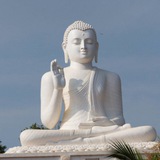
Forwarded from Words of the Buddha
Free Buddha Dharma ebook
Visible Here and Now
Buddha's Teachings on the Rewards of Spiritual Practice
By Ayya Khema
Free download here:
https://archive.org/details/ayya-khema-visible-here-and-now-2001
===
Visible Here and Now
Buddha's Teachings on the Rewards of Spiritual Practice
By Ayya Khema
Free download here:
https://archive.org/details/ayya-khema-visible-here-and-now-2001
===
❤1🥰1🙏1
Forwarded from Words of the Buddha
Free Buddha Dharma ebook
Visible Here and Now
Buddha's Teachings on the Rewards of Spiritual Practice
By Ayya Khema
WHEN MY TEACHER, THE REVEREND NANARAMA MAHATHERA, was asked once which of the many discourses of the Buddha he thought particularly important, he answered: the Samaññaphala Sutta, the discourse on the fruits of spiritual life. If you could get to know only one discourse, he explained, that should be the one. It contains the whole path of purification, meditation, and under-standing that the Buddha taught and that leads to complete en-lightenment.
So when we use this discourse (the second one in the long collection of the Buddha's discourses) as a guide for our spiritual development, it can shed a meaningful light on many questions that often seem difficult to us.
Free download here:
https://archive.org/details/ayya-khema-visible-here-and-now-2001
===
Visible Here and Now
Buddha's Teachings on the Rewards of Spiritual Practice
By Ayya Khema
WHEN MY TEACHER, THE REVEREND NANARAMA MAHATHERA, was asked once which of the many discourses of the Buddha he thought particularly important, he answered: the Samaññaphala Sutta, the discourse on the fruits of spiritual life. If you could get to know only one discourse, he explained, that should be the one. It contains the whole path of purification, meditation, and under-standing that the Buddha taught and that leads to complete en-lightenment.
So when we use this discourse (the second one in the long collection of the Buddha's discourses) as a guide for our spiritual development, it can shed a meaningful light on many questions that often seem difficult to us.
Free download here:
https://archive.org/details/ayya-khema-visible-here-and-now-2001
===
Internet Archive
Ayya Khema - Visible Here and Now (2001) : Allan R. Bomhard : Free Download, Borrow, and Streaming : Internet Archive
The Buddha's teaching on the rewards of spiritual practice.
👍1🤩1
Pradakshina (known as padakkhinā in Pāli) is the act of circumambulating a sacred object or place, such as a stupa, Bodhi tree, or statue of the Buddha. This practice is a physical expression of devotion and respect, often done as a meditative or mindful activity. It symbolizes reverence, veneration, and a mental focus on the Triple Gem: the Buddha, the Dhamma (his teachings), and the Sangha (the community of practitioners).
👏1🙏1👌1
Chapter 6
Pandita Vagga
The Wise
(Text and Translation by Ven. Narada)
1. Nidhinam' va pavattaram
yam passe vajjadassinam
Niggayhavadim medhavim
tadisam panditam bhaje
Tadisam bhajamanassa
seyyo hoti na papiyo. 76.
ASSOCIATE WITH THE WISE WHO TRY TO CORRECT YOU
1. Should one see a wise man, who, like a revealer of treasure, points out faults and reproves; let one associate with such a wise person; it will be better, not worse, for him who associates with such a one. 76.
Story
The Venerable Sariputta admitted a poor man into the Order as a mark of gratitude for a ladleful of food offered to him. The new monk was extremely obedient to his teacher and was ever so eager to receive advice that before long he attained Arahantship. The Buddha commented on his readiness to accept advice and exhorted the monks to emulate him.
===
Vajrayana Tantrayana Buddhism channel:
https://news.1rj.ru/str/tantrayanabuddhism
Tibetan Buddhism - Vajrayana, Tantrayana and esoteric Buddhism channel:
https://news.1rj.ru/str/tibetanbuddha
===
Pandita Vagga
The Wise
(Text and Translation by Ven. Narada)
1. Nidhinam' va pavattaram
yam passe vajjadassinam
Niggayhavadim medhavim
tadisam panditam bhaje
Tadisam bhajamanassa
seyyo hoti na papiyo. 76.
ASSOCIATE WITH THE WISE WHO TRY TO CORRECT YOU
1. Should one see a wise man, who, like a revealer of treasure, points out faults and reproves; let one associate with such a wise person; it will be better, not worse, for him who associates with such a one. 76.
Story
The Venerable Sariputta admitted a poor man into the Order as a mark of gratitude for a ladleful of food offered to him. The new monk was extremely obedient to his teacher and was ever so eager to receive advice that before long he attained Arahantship. The Buddha commented on his readiness to accept advice and exhorted the monks to emulate him.
===
Vajrayana Tantrayana Buddhism channel:
https://news.1rj.ru/str/tantrayanabuddhism
Tibetan Buddhism - Vajrayana, Tantrayana and esoteric Buddhism channel:
https://news.1rj.ru/str/tibetanbuddha
===
Telegram
Vajrayana Tantrayana Buddhism
Buddha teachings from the Vajrayana, esoteric, secret or Tantrayana vehicle
💯1🤗1
Forwarded from Buddha
Gunung Kawi Buddhist temple and meditation cave, Tampak Siring, Bali, Indonesia.
❤1🕊1
Forwarded from Buddha Dharma books
Free Buddha Dharma ebook
A Single Mind
By Phra Ajaan Fuang Jotiko
Free download available:
https://www.dhammatalks.org/Archive/Writings/ThaiAjaans/AjaanFuang_ASingleMind.pdf
===
A Single Mind
By Phra Ajaan Fuang Jotiko
Free download available:
https://www.dhammatalks.org/Archive/Writings/ThaiAjaans/AjaanFuang_ASingleMind.pdf
===
🙏1😇1
Forwarded from Buddha Dharma books
Free Buddha Dharma ebook
A Single Mind
By Phra Ajaan Fuang Jotiko
Ajaan Fuang rarely allowed his talks to be taped, and he was even more adamant about not allowing anyone to tape his conversations. Somehow, though, the following conversation was taped with his permission. In it, he's giving advice to some of his students — young women in their late twenties and early thirties — who were being pressured by their parents to settle down, get married, and start having children. There were other occasions on which, when asked, he gave advice on how to lead a happily married life to any of his students who were planning on marriage, but it's easy to see from this discussion where his heart really lay.
Free download available:
https://www.dhammatalks.org/Archive/Writings/ThaiAjaans/AjaanFuang_ASingleMind.pdf
===
A Single Mind
By Phra Ajaan Fuang Jotiko
Ajaan Fuang rarely allowed his talks to be taped, and he was even more adamant about not allowing anyone to tape his conversations. Somehow, though, the following conversation was taped with his permission. In it, he's giving advice to some of his students — young women in their late twenties and early thirties — who were being pressured by their parents to settle down, get married, and start having children. There were other occasions on which, when asked, he gave advice on how to lead a happily married life to any of his students who were planning on marriage, but it's easy to see from this discussion where his heart really lay.
Free download available:
https://www.dhammatalks.org/Archive/Writings/ThaiAjaans/AjaanFuang_ASingleMind.pdf
===
❤1👍1
Magha Puja
A Thai Forest Tradition teacher on the significance of the Buddhist holiday
By Ajaan Mahā Boowa Ñãṇasampanno, translated by Ajaan Suchart Abhijāto
Part 1 of 3
Mãgha Pūjã is the day when the Lord Buddha declared his intention to let go of life, taking leave of the world of samsara and the prison of the cycle of birth and death (Pali: vatta cakka). He chose to abandon his body and discard the very heavy burden he carried for eighty years. He had borne this extremely oppressive load during all that time, and it was never anything but a burden. Such is the nature of the human body (dhātu khandha).
By contrast, other things are sometimes heavy and sometimes light, allowing us to occasionally catch a breath. For example, food and water are heavy when we have to carry them, but as we steadily use them, they become lighter and lighter. But we have been bearing the load of our body since birth, and it never gets lighter. It’s always heavy. As we advance in years and our strength declines, it seems increasingly heavy. That is why the Buddha declared: “Bhārā have pañcakhandhā”—these five groups are an extremely heavy load.
Apart from shouldering the heavy load of this body, we also have painful feelings, memories, thoughts, and consciousness to put up with—all burdensome. Not only are they oppressive but they are also sharp-pointed, so they pierce through the body and the heart.
The Lord Buddha put up with this body until he was eighty. To put it simply, he must have said: “Oh! This body is beyond bearing. It is time to leave it!” Thus he declared that in three months’ time, he would abandon life and lay down the burden. He made the decision on the full moon day of the third lunar month.
On that very same day, 1,250 noble disciples (ariya sāvakas) assembled together, spontaneously, without invitation, each coming [of their] own initiative. The Lord Buddha then expounded the teaching to the enlightened (arahant) disciples, delighting them with the bliss of the buddhadhamma. This gathering thus became [known as] the Pure Assembly.
Here is a brief outline of what was said on that day:
Sabbapāpassa akaranam kusalassūpasampadā
Sacitta parlyodapanam etam Buddhānasāsanam
Anūpavādo anūpaghāto pāṭimokkhe ca samvaro
Mattaññutā ca bhattasmim pantañca sayanāsanam
Adhicitte ca āyogo, etam Buddhānasāsanam
Sabbapāpassa akaranam—to refrain from unwholesome actions, which give rise to all kinds of suffering (dukkha). The evil nature of the heart is critically important. The bad actions of body and speech have their limitations, but the evil of the mind (citta), which depresses and dulls itself, is prompted by our own thinking and imagining. The agents that push and compel the mind into sadness and depression are those things in the mind that are already murky and defiled. The Lord Buddha called them the defilements (kilesas). They are those factors that maneuver perception (saññā) and mental formations (sankhāra) into functioning. They cause the mind to become gloomy and disconsolate. Evil acts of wrongdoing are not merely actions like robbery, looting, and plundering—or evil on a gross level—but also the intermediate and more subtle evils that we continually generate in our hearts all the time. [Such evils] automatically bring feelings of depression. The heart that is downcast will be downcast wherever we go because we constantly create that condition in our hearts. Walking, standing, sitting, or reclining—our hearts always imagine and contrive, thus we become miserable in every posture. The Lord Buddha urged us not to produce gloom and misery for ourselves.
What method will prevent the heart from being gloomy and depressed? We must develop wisdom to correct this depression (kusalassūpasampadā). By cleaning out the gloom-makers and the evils, we will have a bright and cheerful heart (sacitta pariyodapanam). When our cleverness—our establishment of mindfulness (satipaññā)—has cleaned out all the filth and gloom from the heart, it becomes bright and clear.
A Thai Forest Tradition teacher on the significance of the Buddhist holiday
By Ajaan Mahā Boowa Ñãṇasampanno, translated by Ajaan Suchart Abhijāto
Part 1 of 3
Mãgha Pūjã is the day when the Lord Buddha declared his intention to let go of life, taking leave of the world of samsara and the prison of the cycle of birth and death (Pali: vatta cakka). He chose to abandon his body and discard the very heavy burden he carried for eighty years. He had borne this extremely oppressive load during all that time, and it was never anything but a burden. Such is the nature of the human body (dhātu khandha).
By contrast, other things are sometimes heavy and sometimes light, allowing us to occasionally catch a breath. For example, food and water are heavy when we have to carry them, but as we steadily use them, they become lighter and lighter. But we have been bearing the load of our body since birth, and it never gets lighter. It’s always heavy. As we advance in years and our strength declines, it seems increasingly heavy. That is why the Buddha declared: “Bhārā have pañcakhandhā”—these five groups are an extremely heavy load.
Apart from shouldering the heavy load of this body, we also have painful feelings, memories, thoughts, and consciousness to put up with—all burdensome. Not only are they oppressive but they are also sharp-pointed, so they pierce through the body and the heart.
The Lord Buddha put up with this body until he was eighty. To put it simply, he must have said: “Oh! This body is beyond bearing. It is time to leave it!” Thus he declared that in three months’ time, he would abandon life and lay down the burden. He made the decision on the full moon day of the third lunar month.
On that very same day, 1,250 noble disciples (ariya sāvakas) assembled together, spontaneously, without invitation, each coming [of their] own initiative. The Lord Buddha then expounded the teaching to the enlightened (arahant) disciples, delighting them with the bliss of the buddhadhamma. This gathering thus became [known as] the Pure Assembly.
Here is a brief outline of what was said on that day:
Sabbapāpassa akaranam kusalassūpasampadā
Sacitta parlyodapanam etam Buddhānasāsanam
Anūpavādo anūpaghāto pāṭimokkhe ca samvaro
Mattaññutā ca bhattasmim pantañca sayanāsanam
Adhicitte ca āyogo, etam Buddhānasāsanam
Sabbapāpassa akaranam—to refrain from unwholesome actions, which give rise to all kinds of suffering (dukkha). The evil nature of the heart is critically important. The bad actions of body and speech have their limitations, but the evil of the mind (citta), which depresses and dulls itself, is prompted by our own thinking and imagining. The agents that push and compel the mind into sadness and depression are those things in the mind that are already murky and defiled. The Lord Buddha called them the defilements (kilesas). They are those factors that maneuver perception (saññā) and mental formations (sankhāra) into functioning. They cause the mind to become gloomy and disconsolate. Evil acts of wrongdoing are not merely actions like robbery, looting, and plundering—or evil on a gross level—but also the intermediate and more subtle evils that we continually generate in our hearts all the time. [Such evils] automatically bring feelings of depression. The heart that is downcast will be downcast wherever we go because we constantly create that condition in our hearts. Walking, standing, sitting, or reclining—our hearts always imagine and contrive, thus we become miserable in every posture. The Lord Buddha urged us not to produce gloom and misery for ourselves.
What method will prevent the heart from being gloomy and depressed? We must develop wisdom to correct this depression (kusalassūpasampadā). By cleaning out the gloom-makers and the evils, we will have a bright and cheerful heart (sacitta pariyodapanam). When our cleverness—our establishment of mindfulness (satipaññā)—has cleaned out all the filth and gloom from the heart, it becomes bright and clear.
Telegram
Dhammapada - Buddha Dharma Teachings
Daily teachings of the Dhammapada, beloved and favorite teachings of the Buddha
❤1👌1
Evils, great and small, then gradually fade away as the mind becomes purified.
The teaching of all the buddhas is like this. They all say: “Do it this way. There is no alternative.” Any easier way would be known by the wisest of all, the Lord Buddha. He would have woven us all a hammock to lounge around in as we progressively eliminated the defilements. This would accord with his reputation as a teacher full of love and compassion, ministering to a world full of frail and grumbling beings. In fact, the Lord Buddha had already used his superior skill and ability to establish the shortest and most direct path.
Each of the buddhas had to cultivate the perfections (parami) before realizing buddhahood. They used the dhamma in their hearts to drive out the defilements and then taught this as the true and correct way. They tested and selected with the maximum power of their minds before discovering and teaching dhamma suitable for all living beings. “Suitable” here does not mean suitable to people’s liking; it refers to a practice suited to overcoming the defilements.
Dhamma that is right and suitable has just this one purpose. No other dhammas can surpass the Middle Way of practice passed on by the Lord Buddha. The defilements are not frightened by any other means or methods. Nothing else can eject them from the heart, or even scratch their skins.
Anūpavādo—Don’t slander other people.
Anūpaghāto—Don’t harm or kill human beings or animals.
Pāṭimokkhe ca samvaro—Keep your behavior within the bounds of dhamma, which is the means of uprooting the defilements.
Mattaññutā ca bhattasmim—Know the right measure in using food and living frugally. Don’t indulge and exceed what is reasonable for a practitioner. Know the right amount in whatever you’re involved with.
Pantañca sayanāsanam—Look for seclusion, and use this solitude to deal with the defilements.
Adhicitte ca āyogo—Develop the mind to excel in dhamma, employing establishment of mindfulness, step by step.
Etam Buddhānasāsanam—This is the essence of the teaching of all the buddhas.
This was the dhamma with which the Lord Buddha delighted all the disciples (sāvakas). To those disciples who were not yet arahants, he also taught to refrain from unwholesome actions. This is a practice necessary for us to follow, the only way we can gradually destroy the defilements in our hearts. But do we genuinely feel this to be true, or is it merely a hammock that takes our fancy?
===
Part 1 of 3:
https://news.1rj.ru/str/dhammapadas/3040
Part 2 of 3:
https://news.1rj.ru/str/wordsofbuddha/4284
Part 3 of 3:
https://news.1rj.ru/str/lorddivinebuddha/3503
===
Dhammapada, beloved and favorite teachings of the Buddha channel:
https://news.1rj.ru/str/dhammapadas
===
The teaching of all the buddhas is like this. They all say: “Do it this way. There is no alternative.” Any easier way would be known by the wisest of all, the Lord Buddha. He would have woven us all a hammock to lounge around in as we progressively eliminated the defilements. This would accord with his reputation as a teacher full of love and compassion, ministering to a world full of frail and grumbling beings. In fact, the Lord Buddha had already used his superior skill and ability to establish the shortest and most direct path.
Each of the buddhas had to cultivate the perfections (parami) before realizing buddhahood. They used the dhamma in their hearts to drive out the defilements and then taught this as the true and correct way. They tested and selected with the maximum power of their minds before discovering and teaching dhamma suitable for all living beings. “Suitable” here does not mean suitable to people’s liking; it refers to a practice suited to overcoming the defilements.
Dhamma that is right and suitable has just this one purpose. No other dhammas can surpass the Middle Way of practice passed on by the Lord Buddha. The defilements are not frightened by any other means or methods. Nothing else can eject them from the heart, or even scratch their skins.
Anūpavādo—Don’t slander other people.
Anūpaghāto—Don’t harm or kill human beings or animals.
Pāṭimokkhe ca samvaro—Keep your behavior within the bounds of dhamma, which is the means of uprooting the defilements.
Mattaññutā ca bhattasmim—Know the right measure in using food and living frugally. Don’t indulge and exceed what is reasonable for a practitioner. Know the right amount in whatever you’re involved with.
Pantañca sayanāsanam—Look for seclusion, and use this solitude to deal with the defilements.
Adhicitte ca āyogo—Develop the mind to excel in dhamma, employing establishment of mindfulness, step by step.
Etam Buddhānasāsanam—This is the essence of the teaching of all the buddhas.
This was the dhamma with which the Lord Buddha delighted all the disciples (sāvakas). To those disciples who were not yet arahants, he also taught to refrain from unwholesome actions. This is a practice necessary for us to follow, the only way we can gradually destroy the defilements in our hearts. But do we genuinely feel this to be true, or is it merely a hammock that takes our fancy?
===
Part 1 of 3:
https://news.1rj.ru/str/dhammapadas/3040
Part 2 of 3:
https://news.1rj.ru/str/wordsofbuddha/4284
Part 3 of 3:
https://news.1rj.ru/str/lorddivinebuddha/3503
===
Dhammapada, beloved and favorite teachings of the Buddha channel:
https://news.1rj.ru/str/dhammapadas
===
Telegram
Dhammapada - Buddha Dharma Teachings
Daily teachings of the Dhammapada, beloved and favorite teachings of the Buddha
😍1💯1
2. Ovadeyyanusaseyya
asabbha ca nivaraye
Satam hi so piyo hoti
asatam hoti appiyo. 77.
ADVISERS ARE PLEASING TO THE GOOD, BUT NOT TO THE BAD
2. Let him advise, instruct, and dissuade one from evil; truly pleasing is he to the good, displeasing is he to the bad. 77.
Story
The Buddha requested His two Chief Disciples to advise two unruly monks, remarking that advisers are not loved by the ill-disciplined.
===
Buddha dharma teachings channel:
https://invite.viber.com/?g2=AQAKw1y3rv%2F6sk61PI2W4izuIiaEZj8YZujhY1tSzL%2B07s7rFnVFDAd0bAYFaMLw
===
asabbha ca nivaraye
Satam hi so piyo hoti
asatam hoti appiyo. 77.
ADVISERS ARE PLEASING TO THE GOOD, BUT NOT TO THE BAD
2. Let him advise, instruct, and dissuade one from evil; truly pleasing is he to the good, displeasing is he to the bad. 77.
Story
The Buddha requested His two Chief Disciples to advise two unruly monks, remarking that advisers are not loved by the ill-disciplined.
===
Buddha dharma teachings channel:
https://invite.viber.com/?g2=AQAKw1y3rv%2F6sk61PI2W4izuIiaEZj8YZujhY1tSzL%2B07s7rFnVFDAd0bAYFaMLw
===
Viber
Buddha
Buddha dharma teachings from the suttas and commentaries from Theravada tradition
🥰1👏1
Forwarded from Buddha
Ulun Danu Beratan water temple, Lake Beratan, Bedugul highlands, North Bali, Indonesia.
🤩1😍1
Forwarded from Words of the Buddha
Magha Puja
A Thai Forest Tradition teacher on the significance of the Buddhist holiday
By Ajaan Mahā Boowa Ñãṇasampanno, translated by Ajaan Suchart Abhijāto
Part 2 of 3
The essence of the pure dhamma, imparted by each Buddha, is directly drawn from each of their hearts. But have we received it into ours? The Lord Buddha shared it with his utmost love (mettā). Do we receive it with full devotion and trust? With total mind and heart? If we merely feign acceptance of the dhamma and later discard it, then it will have no value for us at all, and that would go against the Buddha’s original intention.
The Lord Buddha decided to relinquish his body on the full moon day of the sixth lunar month. He had announced this on the third month’s full moon—which is today. From that moment on, the elements and aggregates—with all their oppressive and irritating effects—vanished from the Lord. This is the complete passing away without remainder (anupādisesa nibbāna). No more worries, no more responsibilities to any mundane conventions (sammuti). Nothing remained. This is the dhamma that transcends the world. The ultimate dhamma.
The world comprises various forms of mundane conventions, evident everywhere. The three realms of existence are the worlds of mundane conventions, the worlds of assumption and change, [and] the worlds of impermanence (anicca), suffering, and not-self (anattā)—the governing principles of all existence. No one can resist them. But once we have transcended them, all concerns come to an end—craving totally ends. No mundane conventions remain. It is from this dhamma that all the truths taught by the Buddha emanate.
Any easier way would be known by the wisest of all, the Lord Buddha. He would have woven us all a hammock to lounge around in as we progressively eliminated the defilements.
If we take this dhamma deeply to heart in our practice, then it will “ring and roar” in our hearts. At first, it will resound in a cool, calm, and peaceful condition of heart: namely, the various concentration levels (samādhi). Then it will resonate with wisdom (paññā) in our reflection and analysis so that we can gradually free ourselves, step by step. Finally, it will resound in the pure (visuddhi) state wherein we are completely released—all craving is entirely extinguished. The source of these cravings is all of the various kinds of defilements, which are never sated, never satisfied. Such is the nature of the defilements. All the waters of the ocean cannot match this craving. Natthi tanhā samā nadī—the waters of river and ocean cannot equal the defilements—the cause of craving. They continually engulf the hearts of sentient beings and never run out.
How can we dry up these waters? We must bail them out, using the energy of our practice, until they eventually diminish. We must drain these waters every day, scrutinizing, understanding, and relinquishing them every day. Then the waters will not appear to be so great. They are only as large as our aggregates (khandhas): form (rūpa), feeling (vedanā), sense perception (saññā), mental formations (sankhāra), [and] consciousness (viññāna)—that’s all. But for the heart that is attached to them, they are a heavy matter. The defilements are the very things that fuel the fires of the heart. No other fires can burn as hot as the fires of mental defilements, craving, and outflow (kilesa-tanhā-āsava). They inhabit the heart, where they endlessly turn up the heat.
We all know about floods. And when our lungs are flooded, the doctor can drain them. But when mental defilements, craving, and outflow engulf the heart, what are we going to use to pump them out? There is only faith, effort, the establishment of mindfulness, and wisdom to use. So we must probe, examine, and investigate to see things clearly, as they really are. What does the heart cling to? What are its false assumptions? Does it ever heed the voice of dhamma?
A Thai Forest Tradition teacher on the significance of the Buddhist holiday
By Ajaan Mahā Boowa Ñãṇasampanno, translated by Ajaan Suchart Abhijāto
Part 2 of 3
The essence of the pure dhamma, imparted by each Buddha, is directly drawn from each of their hearts. But have we received it into ours? The Lord Buddha shared it with his utmost love (mettā). Do we receive it with full devotion and trust? With total mind and heart? If we merely feign acceptance of the dhamma and later discard it, then it will have no value for us at all, and that would go against the Buddha’s original intention.
The Lord Buddha decided to relinquish his body on the full moon day of the sixth lunar month. He had announced this on the third month’s full moon—which is today. From that moment on, the elements and aggregates—with all their oppressive and irritating effects—vanished from the Lord. This is the complete passing away without remainder (anupādisesa nibbāna). No more worries, no more responsibilities to any mundane conventions (sammuti). Nothing remained. This is the dhamma that transcends the world. The ultimate dhamma.
The world comprises various forms of mundane conventions, evident everywhere. The three realms of existence are the worlds of mundane conventions, the worlds of assumption and change, [and] the worlds of impermanence (anicca), suffering, and not-self (anattā)—the governing principles of all existence. No one can resist them. But once we have transcended them, all concerns come to an end—craving totally ends. No mundane conventions remain. It is from this dhamma that all the truths taught by the Buddha emanate.
Any easier way would be known by the wisest of all, the Lord Buddha. He would have woven us all a hammock to lounge around in as we progressively eliminated the defilements.
If we take this dhamma deeply to heart in our practice, then it will “ring and roar” in our hearts. At first, it will resound in a cool, calm, and peaceful condition of heart: namely, the various concentration levels (samādhi). Then it will resonate with wisdom (paññā) in our reflection and analysis so that we can gradually free ourselves, step by step. Finally, it will resound in the pure (visuddhi) state wherein we are completely released—all craving is entirely extinguished. The source of these cravings is all of the various kinds of defilements, which are never sated, never satisfied. Such is the nature of the defilements. All the waters of the ocean cannot match this craving. Natthi tanhā samā nadī—the waters of river and ocean cannot equal the defilements—the cause of craving. They continually engulf the hearts of sentient beings and never run out.
How can we dry up these waters? We must bail them out, using the energy of our practice, until they eventually diminish. We must drain these waters every day, scrutinizing, understanding, and relinquishing them every day. Then the waters will not appear to be so great. They are only as large as our aggregates (khandhas): form (rūpa), feeling (vedanā), sense perception (saññā), mental formations (sankhāra), [and] consciousness (viññāna)—that’s all. But for the heart that is attached to them, they are a heavy matter. The defilements are the very things that fuel the fires of the heart. No other fires can burn as hot as the fires of mental defilements, craving, and outflow (kilesa-tanhā-āsava). They inhabit the heart, where they endlessly turn up the heat.
We all know about floods. And when our lungs are flooded, the doctor can drain them. But when mental defilements, craving, and outflow engulf the heart, what are we going to use to pump them out? There is only faith, effort, the establishment of mindfulness, and wisdom to use. So we must probe, examine, and investigate to see things clearly, as they really are. What does the heart cling to? What are its false assumptions? Does it ever heed the voice of dhamma?
Telegram
Words of the Buddha
Daily teachings of Buddha Dharma
🥰1💯1
Forwarded from Words of the Buddha
The defilements usually tend to play smart with the Buddha. They are his adversaries. They must always assert their cleverness with the dhamma and contend with it. Grasping is the defilements’ way, while correcting and uprooting the defilements is dhamma’s way. Dhamma extracts the defilements with wisdom, transcending them to arrive at the supreme happiness of the Nibbāna Dhamma, or the Pure Dhamma. So there is always this rivalry between the defilements and dhamma.
Keep on trying! Don’t lose out to those things. This time you have now entered the boxing ring and must resolve to be the champion. Fight without backing down. Better to die than to let them carry you out of the ring.
The mind is subtle and extraordinary. The body, in contrast, is nothing special—no matter how much we cling to it in our delusion. Is it not our utter stupidity that makes us so readily shoulder this gross thing without ever wanting to put it down? If we were smart and considered what’s behind it all, instead of shouldering it, we’d let go of it. Why carry it? Probe and investigate this matter carefully. You do have the establishment of mindfulness and wisdom, after all!
We must not dread dying. Why be afraid? Fear is just another defilement. Why build up defilements by being frightened? We must build courage because this is the quality that counters the defilements.
People now, as in the Buddha’s time, all have defilements. The overcoming of the defilements must also be done with the same virtue (sīla), concentration, wisdom, faith, and effort. We must uncover whatever is cloaking the heart. The establishment of mindfulness and wisdom must be focused on whatever is dark and obscure, taking that as the target for investigation. Where exactly is the sadness and gloom? They are conditions of the heart that we know. It’s just like when darkness and light contact our eyes. We perceive darkness as dark, but the “one who knows” the darkness is not in the dark. Light and darkness are known; sadness and cheerfulness are known.
===
Words of the Buddha channel:
https://news.1rj.ru/str/wordsofbuddha
===
Keep on trying! Don’t lose out to those things. This time you have now entered the boxing ring and must resolve to be the champion. Fight without backing down. Better to die than to let them carry you out of the ring.
The mind is subtle and extraordinary. The body, in contrast, is nothing special—no matter how much we cling to it in our delusion. Is it not our utter stupidity that makes us so readily shoulder this gross thing without ever wanting to put it down? If we were smart and considered what’s behind it all, instead of shouldering it, we’d let go of it. Why carry it? Probe and investigate this matter carefully. You do have the establishment of mindfulness and wisdom, after all!
We must not dread dying. Why be afraid? Fear is just another defilement. Why build up defilements by being frightened? We must build courage because this is the quality that counters the defilements.
People now, as in the Buddha’s time, all have defilements. The overcoming of the defilements must also be done with the same virtue (sīla), concentration, wisdom, faith, and effort. We must uncover whatever is cloaking the heart. The establishment of mindfulness and wisdom must be focused on whatever is dark and obscure, taking that as the target for investigation. Where exactly is the sadness and gloom? They are conditions of the heart that we know. It’s just like when darkness and light contact our eyes. We perceive darkness as dark, but the “one who knows” the darkness is not in the dark. Light and darkness are known; sadness and cheerfulness are known.
===
Words of the Buddha channel:
https://news.1rj.ru/str/wordsofbuddha
===
Telegram
Words of the Buddha
Daily teachings of Buddha Dharma
❤2👏2😘1