Forwarded from Buddha
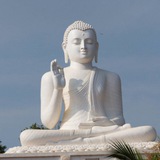
Ulun Danu Beratan water temple, Lake Beratan, Bedugul highlands, North Bali, Indonesia.
🤩1😍1
Forwarded from Words of the Buddha
Magha Puja
A Thai Forest Tradition teacher on the significance of the Buddhist holiday
By Ajaan Mahā Boowa Ñãṇasampanno, translated by Ajaan Suchart Abhijāto
Part 2 of 3
The essence of the pure dhamma, imparted by each Buddha, is directly drawn from each of their hearts. But have we received it into ours? The Lord Buddha shared it with his utmost love (mettā). Do we receive it with full devotion and trust? With total mind and heart? If we merely feign acceptance of the dhamma and later discard it, then it will have no value for us at all, and that would go against the Buddha’s original intention.
The Lord Buddha decided to relinquish his body on the full moon day of the sixth lunar month. He had announced this on the third month’s full moon—which is today. From that moment on, the elements and aggregates—with all their oppressive and irritating effects—vanished from the Lord. This is the complete passing away without remainder (anupādisesa nibbāna). No more worries, no more responsibilities to any mundane conventions (sammuti). Nothing remained. This is the dhamma that transcends the world. The ultimate dhamma.
The world comprises various forms of mundane conventions, evident everywhere. The three realms of existence are the worlds of mundane conventions, the worlds of assumption and change, [and] the worlds of impermanence (anicca), suffering, and not-self (anattā)—the governing principles of all existence. No one can resist them. But once we have transcended them, all concerns come to an end—craving totally ends. No mundane conventions remain. It is from this dhamma that all the truths taught by the Buddha emanate.
Any easier way would be known by the wisest of all, the Lord Buddha. He would have woven us all a hammock to lounge around in as we progressively eliminated the defilements.
If we take this dhamma deeply to heart in our practice, then it will “ring and roar” in our hearts. At first, it will resound in a cool, calm, and peaceful condition of heart: namely, the various concentration levels (samādhi). Then it will resonate with wisdom (paññā) in our reflection and analysis so that we can gradually free ourselves, step by step. Finally, it will resound in the pure (visuddhi) state wherein we are completely released—all craving is entirely extinguished. The source of these cravings is all of the various kinds of defilements, which are never sated, never satisfied. Such is the nature of the defilements. All the waters of the ocean cannot match this craving. Natthi tanhā samā nadī—the waters of river and ocean cannot equal the defilements—the cause of craving. They continually engulf the hearts of sentient beings and never run out.
How can we dry up these waters? We must bail them out, using the energy of our practice, until they eventually diminish. We must drain these waters every day, scrutinizing, understanding, and relinquishing them every day. Then the waters will not appear to be so great. They are only as large as our aggregates (khandhas): form (rūpa), feeling (vedanā), sense perception (saññā), mental formations (sankhāra), [and] consciousness (viññāna)—that’s all. But for the heart that is attached to them, they are a heavy matter. The defilements are the very things that fuel the fires of the heart. No other fires can burn as hot as the fires of mental defilements, craving, and outflow (kilesa-tanhā-āsava). They inhabit the heart, where they endlessly turn up the heat.
We all know about floods. And when our lungs are flooded, the doctor can drain them. But when mental defilements, craving, and outflow engulf the heart, what are we going to use to pump them out? There is only faith, effort, the establishment of mindfulness, and wisdom to use. So we must probe, examine, and investigate to see things clearly, as they really are. What does the heart cling to? What are its false assumptions? Does it ever heed the voice of dhamma?
A Thai Forest Tradition teacher on the significance of the Buddhist holiday
By Ajaan Mahā Boowa Ñãṇasampanno, translated by Ajaan Suchart Abhijāto
Part 2 of 3
The essence of the pure dhamma, imparted by each Buddha, is directly drawn from each of their hearts. But have we received it into ours? The Lord Buddha shared it with his utmost love (mettā). Do we receive it with full devotion and trust? With total mind and heart? If we merely feign acceptance of the dhamma and later discard it, then it will have no value for us at all, and that would go against the Buddha’s original intention.
The Lord Buddha decided to relinquish his body on the full moon day of the sixth lunar month. He had announced this on the third month’s full moon—which is today. From that moment on, the elements and aggregates—with all their oppressive and irritating effects—vanished from the Lord. This is the complete passing away without remainder (anupādisesa nibbāna). No more worries, no more responsibilities to any mundane conventions (sammuti). Nothing remained. This is the dhamma that transcends the world. The ultimate dhamma.
The world comprises various forms of mundane conventions, evident everywhere. The three realms of existence are the worlds of mundane conventions, the worlds of assumption and change, [and] the worlds of impermanence (anicca), suffering, and not-self (anattā)—the governing principles of all existence. No one can resist them. But once we have transcended them, all concerns come to an end—craving totally ends. No mundane conventions remain. It is from this dhamma that all the truths taught by the Buddha emanate.
Any easier way would be known by the wisest of all, the Lord Buddha. He would have woven us all a hammock to lounge around in as we progressively eliminated the defilements.
If we take this dhamma deeply to heart in our practice, then it will “ring and roar” in our hearts. At first, it will resound in a cool, calm, and peaceful condition of heart: namely, the various concentration levels (samādhi). Then it will resonate with wisdom (paññā) in our reflection and analysis so that we can gradually free ourselves, step by step. Finally, it will resound in the pure (visuddhi) state wherein we are completely released—all craving is entirely extinguished. The source of these cravings is all of the various kinds of defilements, which are never sated, never satisfied. Such is the nature of the defilements. All the waters of the ocean cannot match this craving. Natthi tanhā samā nadī—the waters of river and ocean cannot equal the defilements—the cause of craving. They continually engulf the hearts of sentient beings and never run out.
How can we dry up these waters? We must bail them out, using the energy of our practice, until they eventually diminish. We must drain these waters every day, scrutinizing, understanding, and relinquishing them every day. Then the waters will not appear to be so great. They are only as large as our aggregates (khandhas): form (rūpa), feeling (vedanā), sense perception (saññā), mental formations (sankhāra), [and] consciousness (viññāna)—that’s all. But for the heart that is attached to them, they are a heavy matter. The defilements are the very things that fuel the fires of the heart. No other fires can burn as hot as the fires of mental defilements, craving, and outflow (kilesa-tanhā-āsava). They inhabit the heart, where they endlessly turn up the heat.
We all know about floods. And when our lungs are flooded, the doctor can drain them. But when mental defilements, craving, and outflow engulf the heart, what are we going to use to pump them out? There is only faith, effort, the establishment of mindfulness, and wisdom to use. So we must probe, examine, and investigate to see things clearly, as they really are. What does the heart cling to? What are its false assumptions? Does it ever heed the voice of dhamma?
Telegram
Words of the Buddha
Daily teachings of Buddha Dharma
🥰1💯1
Forwarded from Words of the Buddha
The defilements usually tend to play smart with the Buddha. They are his adversaries. They must always assert their cleverness with the dhamma and contend with it. Grasping is the defilements’ way, while correcting and uprooting the defilements is dhamma’s way. Dhamma extracts the defilements with wisdom, transcending them to arrive at the supreme happiness of the Nibbāna Dhamma, or the Pure Dhamma. So there is always this rivalry between the defilements and dhamma.
Keep on trying! Don’t lose out to those things. This time you have now entered the boxing ring and must resolve to be the champion. Fight without backing down. Better to die than to let them carry you out of the ring.
The mind is subtle and extraordinary. The body, in contrast, is nothing special—no matter how much we cling to it in our delusion. Is it not our utter stupidity that makes us so readily shoulder this gross thing without ever wanting to put it down? If we were smart and considered what’s behind it all, instead of shouldering it, we’d let go of it. Why carry it? Probe and investigate this matter carefully. You do have the establishment of mindfulness and wisdom, after all!
We must not dread dying. Why be afraid? Fear is just another defilement. Why build up defilements by being frightened? We must build courage because this is the quality that counters the defilements.
People now, as in the Buddha’s time, all have defilements. The overcoming of the defilements must also be done with the same virtue (sīla), concentration, wisdom, faith, and effort. We must uncover whatever is cloaking the heart. The establishment of mindfulness and wisdom must be focused on whatever is dark and obscure, taking that as the target for investigation. Where exactly is the sadness and gloom? They are conditions of the heart that we know. It’s just like when darkness and light contact our eyes. We perceive darkness as dark, but the “one who knows” the darkness is not in the dark. Light and darkness are known; sadness and cheerfulness are known.
===
Words of the Buddha channel:
https://news.1rj.ru/str/wordsofbuddha
===
Keep on trying! Don’t lose out to those things. This time you have now entered the boxing ring and must resolve to be the champion. Fight without backing down. Better to die than to let them carry you out of the ring.
The mind is subtle and extraordinary. The body, in contrast, is nothing special—no matter how much we cling to it in our delusion. Is it not our utter stupidity that makes us so readily shoulder this gross thing without ever wanting to put it down? If we were smart and considered what’s behind it all, instead of shouldering it, we’d let go of it. Why carry it? Probe and investigate this matter carefully. You do have the establishment of mindfulness and wisdom, after all!
We must not dread dying. Why be afraid? Fear is just another defilement. Why build up defilements by being frightened? We must build courage because this is the quality that counters the defilements.
People now, as in the Buddha’s time, all have defilements. The overcoming of the defilements must also be done with the same virtue (sīla), concentration, wisdom, faith, and effort. We must uncover whatever is cloaking the heart. The establishment of mindfulness and wisdom must be focused on whatever is dark and obscure, taking that as the target for investigation. Where exactly is the sadness and gloom? They are conditions of the heart that we know. It’s just like when darkness and light contact our eyes. We perceive darkness as dark, but the “one who knows” the darkness is not in the dark. Light and darkness are known; sadness and cheerfulness are known.
===
Words of the Buddha channel:
https://news.1rj.ru/str/wordsofbuddha
===
Telegram
Words of the Buddha
Daily teachings of Buddha Dharma
❤2👏2😘1
Forwarded from Buddha
Magha Puja
A Thai Forest Tradition teacher on the significance of the Buddhist holiday
By Ajaan Mahā Boowa Ñãṇasampanno, translated by Ajaan Suchart Abhijāto
Part 3 of 3
The one-who-knows knows in this way. We must make wisdom penetrate further, taking the mind or some mental object as our target. Don’t be alarmed. Be neither glad nor regretful when sadness and gloom appear within the heart. Look on them as mental conditions that must be investigated, as things which arise, cease, and come out from the heart. They depend on the heart for their birth and then latch on to it. We must examine them with persevering effort until we understand their true nature. Why get excited or concerned with them? Whatever passes through the heart—that we must know. Then we are studying and practicing Buddhism. We have to study until we know, scrutinizing with wisdom until we understand those things that appear within ourselves. This true knowingness has no ups and downs. It is never like that. Mere conditions should be recognized as such by the practitioner.
When those conditions end, all that remains is the state of complete purity (pārisuddhi). From then on there’s no longer any concern for those conditions because they remained a problem only as long as we encountered them in the mind. When they are there, they have to declare their existence for us to know. So if we want the truth, we must take up the task of investigating feelings (vedanā) that appear simultaneously with any sadness, cheerfulness, depression, happiness, or suffering that come up. Such is the way of one who knows with all-round wisdom, and we must use this wisdom to know all those things dwelling as conditions in the mind.
Buddhaṁ, Dhammaṁ, Sanghaṁ saranaṁ gacchāmi—we take refuge in the Buddha, dhamma, and sangha. The light of dhamma always shines brightly. This is the true dhamma—timeless and unconditioned. Let’s build the Buddha, dhamma, and sangha in our hearts. More precisely, we arrive at the Buddha, dhamma, and sangha in the purity inside the heart, which is the coming together of all three refuges. This is the way to create a refuge within ourselves. This is the complete attāhi attano nātho—we are our own refuge, not needing to depend on anything else.
As is the Buddha, so are the dhamma and sangha—Buddha, dhamma, and sangha are the same. When one has reached this stage, there is no need to go anywhere to pay our respects to the Lord Buddha. We can offer this purity of heart, this wholly pure dhamma, as our homage (pūjā) to him. Nothing else can fit together as well as the heart and dhamma do. The Buddha of the Lord Buddha and our Buddha, are one and the same Buddha. This is indisputable. Did the Lord Buddha pass away a long time ago or not? We no longer ask because it’s only a process involving the physical elements (dhātu khandha). The Lord simply let go of his aggregates at a certain time, in a certain year and place. The Noble Disciples were just the same. Were they all completely annihilated after they passed away? Was it really like that? This is the view of empty, useless men and women—not the truth of the dhamma of Supreme Happiness, which validates that state of purity.
What is sangha? It is the one who is now in possession of the state of purity. This is the real sangha, which is found within all of us. Attāhi attano nātho—we are our own refuge. Make this refuge sufficiently secure. This is an essential point. It is imperative for the mind to free itself from all dangers and attain freedom. Whatever is worth attaining is worth striving for. So go for it right here.
Don’t upset yourself over anything at all. Nothing in this world matters. It’s simply that our hearts go and get involved with things. We look for matters to disturb ourselves, so we must cut them off with mindfulness (sati) and wisdom. Wherever we are, we are always alone. We are born alone. When we are sick, it isn’t the assembled relatives that are in pain. When we die, we die alone; nobody else can die in our place or be deputized for our pain.
A Thai Forest Tradition teacher on the significance of the Buddhist holiday
By Ajaan Mahā Boowa Ñãṇasampanno, translated by Ajaan Suchart Abhijāto
Part 3 of 3
The one-who-knows knows in this way. We must make wisdom penetrate further, taking the mind or some mental object as our target. Don’t be alarmed. Be neither glad nor regretful when sadness and gloom appear within the heart. Look on them as mental conditions that must be investigated, as things which arise, cease, and come out from the heart. They depend on the heart for their birth and then latch on to it. We must examine them with persevering effort until we understand their true nature. Why get excited or concerned with them? Whatever passes through the heart—that we must know. Then we are studying and practicing Buddhism. We have to study until we know, scrutinizing with wisdom until we understand those things that appear within ourselves. This true knowingness has no ups and downs. It is never like that. Mere conditions should be recognized as such by the practitioner.
When those conditions end, all that remains is the state of complete purity (pārisuddhi). From then on there’s no longer any concern for those conditions because they remained a problem only as long as we encountered them in the mind. When they are there, they have to declare their existence for us to know. So if we want the truth, we must take up the task of investigating feelings (vedanā) that appear simultaneously with any sadness, cheerfulness, depression, happiness, or suffering that come up. Such is the way of one who knows with all-round wisdom, and we must use this wisdom to know all those things dwelling as conditions in the mind.
Buddhaṁ, Dhammaṁ, Sanghaṁ saranaṁ gacchāmi—we take refuge in the Buddha, dhamma, and sangha. The light of dhamma always shines brightly. This is the true dhamma—timeless and unconditioned. Let’s build the Buddha, dhamma, and sangha in our hearts. More precisely, we arrive at the Buddha, dhamma, and sangha in the purity inside the heart, which is the coming together of all three refuges. This is the way to create a refuge within ourselves. This is the complete attāhi attano nātho—we are our own refuge, not needing to depend on anything else.
As is the Buddha, so are the dhamma and sangha—Buddha, dhamma, and sangha are the same. When one has reached this stage, there is no need to go anywhere to pay our respects to the Lord Buddha. We can offer this purity of heart, this wholly pure dhamma, as our homage (pūjā) to him. Nothing else can fit together as well as the heart and dhamma do. The Buddha of the Lord Buddha and our Buddha, are one and the same Buddha. This is indisputable. Did the Lord Buddha pass away a long time ago or not? We no longer ask because it’s only a process involving the physical elements (dhātu khandha). The Lord simply let go of his aggregates at a certain time, in a certain year and place. The Noble Disciples were just the same. Were they all completely annihilated after they passed away? Was it really like that? This is the view of empty, useless men and women—not the truth of the dhamma of Supreme Happiness, which validates that state of purity.
What is sangha? It is the one who is now in possession of the state of purity. This is the real sangha, which is found within all of us. Attāhi attano nātho—we are our own refuge. Make this refuge sufficiently secure. This is an essential point. It is imperative for the mind to free itself from all dangers and attain freedom. Whatever is worth attaining is worth striving for. So go for it right here.
Don’t upset yourself over anything at all. Nothing in this world matters. It’s simply that our hearts go and get involved with things. We look for matters to disturb ourselves, so we must cut them off with mindfulness (sati) and wisdom. Wherever we are, we are always alone. We are born alone. When we are sick, it isn’t the assembled relatives that are in pain. When we die, we die alone; nobody else can die in our place or be deputized for our pain.
Telegram
Buddha
Buddha dharma teachings from the suttas and commentaries
❤1👍1🥰1👏1
Forwarded from Buddha
We alone must suffer illness and die. Therefore, we must help ourselves using our own establishment of mindfulness and wisdom. This is the most correct and appropriate way.
The Lord Buddha decided to let go of his life on this same full moon day. Today we should also resolve to relinquish the defilements. These are the essential things that we must get rid of.
As far as dying is concerned, the Lord Buddha said it wasn’t important which day we die on. Whenever our breath runs out, that is the day we die. The only criterion is our last breath. If there’s still breath, then we haven’t yet died. So we keep on breathing, which is itself no real problem. It’s merely a lot of wind. The important point is the laying of a firm spiritual basis and putting ourselves on the alert for the sake of our heart. Attāhi attano nātho—we are our own refuge. When this is fully realized, we experience contentment in living and dying, whenever or wherever it may happen. No more problems remain.
Excerpted from Amata Dhamma: Six Talks on Dhamma by Ajaan Mahā Boowa Ñãṇasampanno, translated by Ajaan Suchard Abhijāto.
===
Ajaan Suchart Abhijāto is a Thai Forest Tradition monk and teacher at Wat Yannasangwararam in Chonburi, Thailand. His books include My Way (2014), Beyond Birth (2021), and the series, Dhamma for the Asking.
Ajaan Mahā Boowa Ñãṇasampanno was a Thai Buddhist monk. He was thought by many of his followers to be an arahant. He was a disciple of the esteemed forest master Ajaan Mun Bhuridatta, and was himself considered a master in the Thai Forest Tradition. Following the death of Ajaan Thate in 1994, he was considered to be the Ajaan Yai (or head monk) of the Thai Forest Tradition lineage until his death in 2011.
===
Part 1 of 3:
https://news.1rj.ru/str/dhammapadas/3040
Part 2 of 3:
https://news.1rj.ru/str/wordsofbuddha/4284
Part 3 of 3:
https://news.1rj.ru/str/lorddivinebuddha/3503
===
Buddha dharma teachings channel:
https://news.1rj.ru/str/lorddivinebuddha
===
The Lord Buddha decided to let go of his life on this same full moon day. Today we should also resolve to relinquish the defilements. These are the essential things that we must get rid of.
As far as dying is concerned, the Lord Buddha said it wasn’t important which day we die on. Whenever our breath runs out, that is the day we die. The only criterion is our last breath. If there’s still breath, then we haven’t yet died. So we keep on breathing, which is itself no real problem. It’s merely a lot of wind. The important point is the laying of a firm spiritual basis and putting ourselves on the alert for the sake of our heart. Attāhi attano nātho—we are our own refuge. When this is fully realized, we experience contentment in living and dying, whenever or wherever it may happen. No more problems remain.
Excerpted from Amata Dhamma: Six Talks on Dhamma by Ajaan Mahā Boowa Ñãṇasampanno, translated by Ajaan Suchard Abhijāto.
===
Ajaan Suchart Abhijāto is a Thai Forest Tradition monk and teacher at Wat Yannasangwararam in Chonburi, Thailand. His books include My Way (2014), Beyond Birth (2021), and the series, Dhamma for the Asking.
Ajaan Mahā Boowa Ñãṇasampanno was a Thai Buddhist monk. He was thought by many of his followers to be an arahant. He was a disciple of the esteemed forest master Ajaan Mun Bhuridatta, and was himself considered a master in the Thai Forest Tradition. Following the death of Ajaan Thate in 1994, he was considered to be the Ajaan Yai (or head monk) of the Thai Forest Tradition lineage until his death in 2011.
===
Part 1 of 3:
https://news.1rj.ru/str/dhammapadas/3040
Part 2 of 3:
https://news.1rj.ru/str/wordsofbuddha/4284
Part 3 of 3:
https://news.1rj.ru/str/lorddivinebuddha/3503
===
Buddha dharma teachings channel:
https://news.1rj.ru/str/lorddivinebuddha
===
Telegram
Buddha
Buddha dharma teachings from the suttas and commentaries
👏1💯1🤗1
3. Na bhaje papake mitte
na bhaje purisadhame
Bhajetha mitte kalyane
bhajetha purisuttame. 78.
CULTIVATE GOOD FRIENDSHIP
3. Associate not with evil friends, associate not with mean men; associate with good friends, associate with noble men. 78.
Story
The Venerable Channa, who was formerly the charioteer of Prince Siddhattha, was very obstinate and insolent. He used to rebuke the two Chief Disciples. Thrice the Buddha advised him and spoke on good friendship, remarking that the two Chief Disciples were his great friends.
===
Words of the Buddha channel:
https://invite.viber.com/?g2=AQAFqzqlj7FmI061PX17rxWMAtZ%2BRuso%2FH2KmHKZSgnv7v9DD8X0bDkKnZDr9JDq
===
na bhaje purisadhame
Bhajetha mitte kalyane
bhajetha purisuttame. 78.
CULTIVATE GOOD FRIENDSHIP
3. Associate not with evil friends, associate not with mean men; associate with good friends, associate with noble men. 78.
Story
The Venerable Channa, who was formerly the charioteer of Prince Siddhattha, was very obstinate and insolent. He used to rebuke the two Chief Disciples. Thrice the Buddha advised him and spoke on good friendship, remarking that the two Chief Disciples were his great friends.
===
Words of the Buddha channel:
https://invite.viber.com/?g2=AQAFqzqlj7FmI061PX17rxWMAtZ%2BRuso%2FH2KmHKZSgnv7v9DD8X0bDkKnZDr9JDq
===
Viber
Words Of The Buddha
Daily teachings from Buddha Dharma
👍1👏1💯1
Forwarded from Buddha
Cutting off the householder's marks [hair and beard],
like a kovilara tree
that has shed its leaves,
the prudent one, cutting all household ties,
wander alone
like a rhinoceros.
Rhinoceros Sutta
Sutta Nipata 1.3
like a kovilara tree
that has shed its leaves,
the prudent one, cutting all household ties,
wander alone
like a rhinoceros.
Rhinoceros Sutta
Sutta Nipata 1.3
🙏1🕊1
Forwarded from Buddha
Free Buddhism ebook
Handbook Vipassana Meditation for Beginners
By Phra Athikan Somsak Sorado
Guidebook put together from the authors personal experiences, listening to talks, readings and advice from learned monks.
Free download here:
https://www.lotuslibrary.com/wp-content/uploads/2024/12/2056-vipasana-meditatn-handbook_Sorado.pdf
===
Handbook Vipassana Meditation for Beginners
By Phra Athikan Somsak Sorado
Guidebook put together from the authors personal experiences, listening to talks, readings and advice from learned monks.
Free download here:
https://www.lotuslibrary.com/wp-content/uploads/2024/12/2056-vipasana-meditatn-handbook_Sorado.pdf
===
👍1😘1
Forwarded from Buddha
Free Buddhism ebook
Handbook Vipassana Meditation for Beginners
By Phra Athikan Somsak Sorado
Guidebook put together from the authors personal experiences, listening to talks, readings and advice from learned monks.
Free download here:
https://www.lotuslibrary.com/wp-content/uploads/2024/12/2056-vipasana-meditatn-handbook_Sorado.pdf
===
Handbook Vipassana Meditation for Beginners
By Phra Athikan Somsak Sorado
Guidebook put together from the authors personal experiences, listening to talks, readings and advice from learned monks.
Free download here:
https://www.lotuslibrary.com/wp-content/uploads/2024/12/2056-vipasana-meditatn-handbook_Sorado.pdf
===
❤1🙏1🤗1
Forwarded from Buddha
At Sāvatthi. "Bhikkhus, did you hear an old jackal howling at the flush of dawn?" "Yes, venerable sir." “There may be some gratitude and thankfulness in that old jackal, but there is no gratitude and thankfulness in a certain person here claiming to be a follower of the Sakyan son. "Therefore, bhikkhus, you should train yourselves thus: 'We will be grateful and thankful, and we will not overlook even the least favour done to us.' Thus should you train yourselves."
Samyutta Nikaya II 272
Early morning at Candi Plaosan Buddhist temple, Klaten, East Java, Indonesia.
Samyutta Nikaya II 272
Early morning at Candi Plaosan Buddhist temple, Klaten, East Java, Indonesia.
❤1🕊1💯1
4. Dhammapiti sukham seti
vippasannena cetasa
Ariyappavedite dhamme
sada ramati pandito. 79.
HAPPILY HE LIVES WHO DRINKS OF THE DHAMMA
4. He who imbibes the Dhamma abides in happiness with mind pacified; the wise man ever delights in the Dhamma revealed by the Ariyas. 1 79.
Story
A king entered the Order and, attaining Arahantship, was constantly saying, "oh happiness! The monks misconstruing his joy, told the Buddha that he was evidently thinking of his erstwhile royal pleasures. The Buddha corrected them and said that he was mentally enjoying the bliss of Nibbana.
===
Dhammapada, beloved and favorite teachings of the Buddha channel:
https://invite.viber.com/?g2=AQBLD6phsgvP%2F061YjEM3K%2BNeH1Yb372b9mtfQX2EmuBpgoLUoc99BDMfzHghrme
===
vippasannena cetasa
Ariyappavedite dhamme
sada ramati pandito. 79.
HAPPILY HE LIVES WHO DRINKS OF THE DHAMMA
4. He who imbibes the Dhamma abides in happiness with mind pacified; the wise man ever delights in the Dhamma revealed by the Ariyas. 1 79.
Story
A king entered the Order and, attaining Arahantship, was constantly saying, "oh happiness! The monks misconstruing his joy, told the Buddha that he was evidently thinking of his erstwhile royal pleasures. The Buddha corrected them and said that he was mentally enjoying the bliss of Nibbana.
===
Dhammapada, beloved and favorite teachings of the Buddha channel:
https://invite.viber.com/?g2=AQBLD6phsgvP%2F061YjEM3K%2BNeH1Yb372b9mtfQX2EmuBpgoLUoc99BDMfzHghrme
===
Viber
Dhammapada - Buddha Dharma Teachings
Daily teachings of the Dhammapada, beloved and favorite teachings of the Buddha
❤1🥰1🤗1
Forwarded from Buddha
Furthermore, I have explained to my disciples a practice that they use to develop the ten universal dimensions of meditation.
Someone perceives the meditation on universal (= kasina) earth above, below, across, undivided and limitless.
They perceive the meditation on universal water … the meditation on universal fire … the meditation on universal air … the meditation on universal blue … the meditation on universal yellow … the meditation on universal red … the meditation on universal white … the meditation on universal space … the meditation on universal consciousness above, below, across, undivided and limitless.
And many of my disciples meditate on that having attained perfection and consummation of insight.
MN 77 : Mahāsakuludāyisutta
Someone perceives the meditation on universal (= kasina) earth above, below, across, undivided and limitless.
They perceive the meditation on universal water … the meditation on universal fire … the meditation on universal air … the meditation on universal blue … the meditation on universal yellow … the meditation on universal red … the meditation on universal white … the meditation on universal space … the meditation on universal consciousness above, below, across, undivided and limitless.
And many of my disciples meditate on that having attained perfection and consummation of insight.
MN 77 : Mahāsakuludāyisutta
🔥1🙏1🕊1