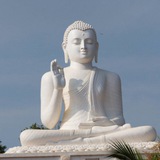
Forwarded from Buddha
“Mendicants, there are eight causes and reasons that lead to acquiring the wisdom fundamental to the spiritual life, and to its increase, growth, and full development once it has been acquired. What eight?
5. They’re very learned, remembering and keeping what they’ve learned. These teachings are good in the beginning, good in the middle, and good in the end, meaningful and well-phrased, describing a spiritual practice that’s entirely full and pure. They are very learned in such teachings, remembering them, reinforcing them by recitation, mentally scrutinizing them, and comprehending them theoretically. This is the fifth cause.
8. They meditate observing rise and fall in the five grasping aggregates. ‘Such is form [feeling, perception, choices, consciousness] such is the origin of form [feeling, perception, choices, consciousness], such is the ending of form [feeling, perception, choices, consciousness]. This is the eighth cause.
Partial excerpts from AN 8.2 Paññāsutta: Wisdom
5. They’re very learned, remembering and keeping what they’ve learned. These teachings are good in the beginning, good in the middle, and good in the end, meaningful and well-phrased, describing a spiritual practice that’s entirely full and pure. They are very learned in such teachings, remembering them, reinforcing them by recitation, mentally scrutinizing them, and comprehending them theoretically. This is the fifth cause.
8. They meditate observing rise and fall in the five grasping aggregates. ‘Such is form [feeling, perception, choices, consciousness] such is the origin of form [feeling, perception, choices, consciousness], such is the ending of form [feeling, perception, choices, consciousness]. This is the eighth cause.
Partial excerpts from AN 8.2 Paññāsutta: Wisdom
🙏2👌1😇1
3. Yesam sannicayo natthi
ye parinnatabhojana
Sunnato animitto ca
vimokkho yassa gocaro
Akase'va sakuntanam
gati tesam durannaya. 92.
BE NOT ATTACHED TO FOOD
3. They for whom there is no accumulation, 8 who reflect well over their food, 9 who have Deliverance 10 which is Void and Signless, as their object - their course, like that of birds in the air, cannot be traced. 92.
Story
A monk stored food for future use. The Buddha advised him not to do so and explained the right attitude of a good monk.
===
Ajahn Chah, Buddhist teacher of Thai forest meditation of Theravada Buddhism channel:
https://news.1rj.ru/str/ajahnchah_buddhism
===
ye parinnatabhojana
Sunnato animitto ca
vimokkho yassa gocaro
Akase'va sakuntanam
gati tesam durannaya. 92.
BE NOT ATTACHED TO FOOD
3. They for whom there is no accumulation, 8 who reflect well over their food, 9 who have Deliverance 10 which is Void and Signless, as their object - their course, like that of birds in the air, cannot be traced. 92.
Story
A monk stored food for future use. The Buddha advised him not to do so and explained the right attitude of a good monk.
===
Ajahn Chah, Buddhist teacher of Thai forest meditation of Theravada Buddhism channel:
https://news.1rj.ru/str/ajahnchah_buddhism
===
Telegram
Ajahn Chah - Theravada Thailand Buddhism
Collection of teachings of Venerable Ajahn Chah, a foremost meditation and Buddhist teacher from Thailand
👏1🤗1
Forwarded from Buddha
Now how is mindfulness of in-&-out breathing developed & pursued so as to be of great fruit, of great benefit?
"There is the case where a monk, having gone to the wilderness, to the shade of a tree, or to an empty building, sits down folding his legs crosswise, holding his body erect, and setting mindfulness to the fore. Always mindful, he breathes in; mindful he breathes out.
"Breathing in long, he discerns, 'I am breathing in long'; or breathing out long, he discerns, 'I am breathing out long.' Or breathing in short, he discerns, 'I am breathing in short'; or breathing out short, he discerns, 'I am breathing out short.' He trains himself, 'I will breathe in sensitive to the entire body.'He trains himself, 'I will breathe out sensitive to the entire body.' He trains himself, 'I will breathe in calming bodily fabrication.' He trains himself, 'I will breathe out calming bodily fabrication.'
Partially excerpted from MN 118 : Anapanasati Sutta.
"There is the case where a monk, having gone to the wilderness, to the shade of a tree, or to an empty building, sits down folding his legs crosswise, holding his body erect, and setting mindfulness to the fore. Always mindful, he breathes in; mindful he breathes out.
"Breathing in long, he discerns, 'I am breathing in long'; or breathing out long, he discerns, 'I am breathing out long.' Or breathing in short, he discerns, 'I am breathing in short'; or breathing out short, he discerns, 'I am breathing out short.' He trains himself, 'I will breathe in sensitive to the entire body.'He trains himself, 'I will breathe out sensitive to the entire body.' He trains himself, 'I will breathe in calming bodily fabrication.' He trains himself, 'I will breathe out calming bodily fabrication.'
Partially excerpted from MN 118 : Anapanasati Sutta.
🙏2❤1🕊1😇1
It’s when a mendicant—gone to a wilderness, or to the root of a tree, or to an empty hut—sits down cross-legged, sets their body straight, and establishes mindfulness in their presence. Just mindful, they breathe in. Mindful, they breathe out. Breathing in heavily they know: ‘I’m breathing in heavily.’ Breathing out heavily they know: ‘I’m breathing out heavily.’ When breathing in lightly they know: ‘I’m breathing in lightly.’ Breathing out lightly they know: ‘I’m breathing out lightly.’ They practice like this: ‘I’ll breathe in experiencing the whole body.’ They practice like this: ‘I’ll breathe out experiencing the whole body.’They practice like this: ‘I’ll breathe in stilling the physical process.’ They practice like this: ‘I’ll breathe out stilling the physical process.’ As they meditate like this—diligent, keen, and resolute—memories and thoughts tied to domestic life are given up. That’s how a mendicant develops mindfulness of the body.
Partial excepts from MN 119 : Kāyagatāsatisutta
Partial excepts from MN 119 : Kāyagatāsatisutta
❤2👏1🙏1😇1
Forwarded from Buddha Dharma books
Free Buddha Dharma ebook
What was the Buddha Like
By Bhante Shravasti Dhammika
Free download available:
https://budblooms.org/what-was-the-buddha-like/
===
What was the Buddha Like
By Bhante Shravasti Dhammika
Free download available:
https://budblooms.org/what-was-the-buddha-like/
===
❤1😍1
Forwarded from Buddha Dharma books
Free Buddha Dharma ebook
What was the Buddha Like
By Bhante Shravasti Dhammika
So extraordinary was the Buddha, so unerringly kind and wise, and so positive was an encounter with him, that is would change people’s lives. Even while he was alive legends were told about him. In the centuries after his final Nirvana it sometimes got to the stage that the legends and myths obscured the very real human being behind them and the Buddha came to be looked upon as a god. Actually the Buddha was a human being, not a “mere human being” as is sometimes said, but a special class of human being called a complete or great person (mahapurisa). Such complete persons are born no different from others and indeed physically they always remain quite ordinary. But through their own efforts they bring to completion every human potential and their mental purity and understanding develop to the stage where they far exceed those of ordinary human beings. A Buddha, a complete person, is even higher than a god because he or she is even free from the jealousy, anger and favouritism that we are told some gods are still capable of feeling.
Free download available:
https://budblooms.org/what-was-the-buddha-like/
===
What was the Buddha Like
By Bhante Shravasti Dhammika
So extraordinary was the Buddha, so unerringly kind and wise, and so positive was an encounter with him, that is would change people’s lives. Even while he was alive legends were told about him. In the centuries after his final Nirvana it sometimes got to the stage that the legends and myths obscured the very real human being behind them and the Buddha came to be looked upon as a god. Actually the Buddha was a human being, not a “mere human being” as is sometimes said, but a special class of human being called a complete or great person (mahapurisa). Such complete persons are born no different from others and indeed physically they always remain quite ordinary. But through their own efforts they bring to completion every human potential and their mental purity and understanding develop to the stage where they far exceed those of ordinary human beings. A Buddha, a complete person, is even higher than a god because he or she is even free from the jealousy, anger and favouritism that we are told some gods are still capable of feeling.
Free download available:
https://budblooms.org/what-was-the-buddha-like/
===
👍1💯1🆒1
4. Yassmsava parikkhina
ahare ca anissito
Sunnato animitto ca
vimokkho yassa gocaro
Akase'va sakuntanam
padam tassa durannayam. 93.
FREE ARE THE UNDEFILED ONES
4. He whose corruptions are destroyed, he who is not attached to food, he who has Deliverance, which is Void and Signless, as his object - his path, like that of birds in the air, cannot be traced. 93.
Story
When his supporters brought food in abundance the Venerable Anuruddha was unjustly blamed by some monks saying that he was inducing the people to do so to show his influence. The Buddha remarked that the supporters' generosity was not due to any inducement on the part of the Venerable Anuruddha and added that the Undefiled Ones waste no time in talking about their requisites.
===
Free Buddhism books, teachings, podcasts and videos from Theravada, Mahayana and Vajrayana traditions:
https://news.1rj.ru/str/buddha_ebooks
===
ahare ca anissito
Sunnato animitto ca
vimokkho yassa gocaro
Akase'va sakuntanam
padam tassa durannayam. 93.
FREE ARE THE UNDEFILED ONES
4. He whose corruptions are destroyed, he who is not attached to food, he who has Deliverance, which is Void and Signless, as his object - his path, like that of birds in the air, cannot be traced. 93.
Story
When his supporters brought food in abundance the Venerable Anuruddha was unjustly blamed by some monks saying that he was inducing the people to do so to show his influence. The Buddha remarked that the supporters' generosity was not due to any inducement on the part of the Venerable Anuruddha and added that the Undefiled Ones waste no time in talking about their requisites.
===
Free Buddhism books, teachings, podcasts and videos from Theravada, Mahayana and Vajrayana traditions:
https://news.1rj.ru/str/buddha_ebooks
===
Telegram
Buddha Dharma books
Free Buddhism books, teachings, podcasts and videos from Theravada, Mahayana and Vajrayana traditions
❤1👏1🙏1💯1
Forwarded from Buddha
The Hatsadiling, a giant bird with elephant head, is instrumental in the founding of Hariphunchai, an ancient Mon kingdom in modern-day Thailand. The creature is mentioned in the Cāmadevivaṃsa, a Pali chronicle that recounts the founding of the kingdom by Queen Camadevi. The Hatsadiling is also associated with funerary ceremonies for prominent Buddhist monks in Northern Thailand. It is believed that a structure in the likeness of the Hatsadiling is used to guide the spirit of the deceased to heaven during cremation.
👍1👏1🕊1
Forwarded from Buddha
Free Buddha Dharma ebook
Listen Well
By Phra Ajaan Fuang Jotiko
Free download here:
https://www.dhammatalks.org/Archive/Writings/ThaiAjaans/AjaanFuang_ListenWell.pdf
===
Listen Well
By Phra Ajaan Fuang Jotiko
Free download here:
https://www.dhammatalks.org/Archive/Writings/ThaiAjaans/AjaanFuang_ListenWell.pdf
===
🙏2🥰1
Forwarded from Buddha
Free Buddha Dharma ebook
Listen Well
By Phra Ajaan Fuang Jotiko
We're told that if we listen well, we gain discernment. If we don't listen well, we won't gain any discernment. In terms of the Buddha's teachings, listening well means that the mind has to be centered and firmly intent. Success depends on our mind's being firmly intent. If we're not intent, there won't be any success — we won't succeed in attaining the paths and fruitions leading to nibbana in the way they did in the past. In the past they listened for just an instant and succeeded in attaining nibbana. Why was that? Because they listened well.
Free download here:
https://www.dhammatalks.org/Archive/Writings/ThaiAjaans/AjaanFuang_ListenWell.pdf
===
Listen Well
By Phra Ajaan Fuang Jotiko
We're told that if we listen well, we gain discernment. If we don't listen well, we won't gain any discernment. In terms of the Buddha's teachings, listening well means that the mind has to be centered and firmly intent. Success depends on our mind's being firmly intent. If we're not intent, there won't be any success — we won't succeed in attaining the paths and fruitions leading to nibbana in the way they did in the past. In the past they listened for just an instant and succeeded in attaining nibbana. Why was that? Because they listened well.
Free download here:
https://www.dhammatalks.org/Archive/Writings/ThaiAjaans/AjaanFuang_ListenWell.pdf
===
🥰1👏1🤗1
Forwarded from Buddha
Cause and Effect
Reflecting on the law of karma
By Joseph Goldstein
Part 1 of 2
Karma, the action of body, speech, and mind, affects every aspect of our life. Actions affect both doers and those around them in unimaginable ways, and the seeds of karma shape our lives and our worlds, though different Buddhist traditions give different weight to whether the action is willed or not. In either case, through mindfulness, we become aware of the nature of these actions and can in fact change our karma, the concept of cause and effect.
The law of karma is one of the most important laws governing our lives. When we understand it, and live our understanding, when we act on what we know, then we experience a sense of wholeness and peace. If we live in a way that is out of harmony, ignoring the nature of things, we then experience dissonance, pain, and confusion. The law of karma is one of the fundamental natural laws through which we create these vastly different realities. It is as though we are all artists, but instead of canvas and paint, or marble or music, as our medium, our very bodies, minds, and life experience are the materials of our creative expression. A great sense of fulfillment in dharma practice comes from knowing this and from actively creating and fashioning our lives.
Karma is a Sanskrit word (kamma in Pali) that means “action.” The law of karma refers to the law of cause and effect: that every volitional act brings about a certain result. If we act motivated by greed, hatred, or delusion, we are planting the seed of suffering; when our acts are motivated by generosity, love, or wisdom, then we are creating the karmic conditions for abundance and happiness. An analogy from the physical world illustrates this: if we plant an apple seed, the tree that grows will bear apples, not mangoes. And once the apple seed is planted, no amount of manipulation or beseeching or complaining will induce the tree to yield a mango. The only meaningful action that will produce a mango is to plant a mango seed. Karma is just such a law of nature, the law of cause and effect on the psychophysical plane.
The Buddha used the term karma specifically referring to volition, the intention or motive behind an action. He said that karma is volition, because it is the motivation behind the action that determines the karmic fruit. Inherent in each intention in the mind is an energy powerful enough to bring about subsequent results. When we understand that karma is based on volition, we can see the enormous responsibility we have to become conscious of the intentions that precede our actions. If we are unaware of the motives in our minds, when unskillful volitions arise we may unmindfully act on them and thus create the conditions for future suffering.
The law of karma can be understood on two levels, which indicate the vast scope of its implications in our lives. On one level, karma refers to the experience of cause and effect over a period of time. We perform an action, and sometime later we begin to experience its results. We plant a mango seed, and many years later we taste the fruit. The other level of understanding karma has to do with the quality of mind in the very moment of action. When we experience a mind state of love, there comes naturally, along with it, a feeling of openness and love that is its immediate fruit; similarly, when there are moments of greed or hatred, in addition to whatever future results will come, we also experience the painful energies that arise with those states. Our direct awareness of how the karmic law is working in each moment can be a strong motivation to develop skillful states of mind that create happiness for us in the moment, as well as produce the fruit of well-being in the future.
Another dimension of the law of karma helps in understanding how individual personalities develop. While it is true that there is no enduring entity, no unchanging self that can be called “I,” it is also quite obvious that each of us is a uniquely changing and recognizable pattern of elements.
Reflecting on the law of karma
By Joseph Goldstein
Part 1 of 2
Karma, the action of body, speech, and mind, affects every aspect of our life. Actions affect both doers and those around them in unimaginable ways, and the seeds of karma shape our lives and our worlds, though different Buddhist traditions give different weight to whether the action is willed or not. In either case, through mindfulness, we become aware of the nature of these actions and can in fact change our karma, the concept of cause and effect.
The law of karma is one of the most important laws governing our lives. When we understand it, and live our understanding, when we act on what we know, then we experience a sense of wholeness and peace. If we live in a way that is out of harmony, ignoring the nature of things, we then experience dissonance, pain, and confusion. The law of karma is one of the fundamental natural laws through which we create these vastly different realities. It is as though we are all artists, but instead of canvas and paint, or marble or music, as our medium, our very bodies, minds, and life experience are the materials of our creative expression. A great sense of fulfillment in dharma practice comes from knowing this and from actively creating and fashioning our lives.
Karma is a Sanskrit word (kamma in Pali) that means “action.” The law of karma refers to the law of cause and effect: that every volitional act brings about a certain result. If we act motivated by greed, hatred, or delusion, we are planting the seed of suffering; when our acts are motivated by generosity, love, or wisdom, then we are creating the karmic conditions for abundance and happiness. An analogy from the physical world illustrates this: if we plant an apple seed, the tree that grows will bear apples, not mangoes. And once the apple seed is planted, no amount of manipulation or beseeching or complaining will induce the tree to yield a mango. The only meaningful action that will produce a mango is to plant a mango seed. Karma is just such a law of nature, the law of cause and effect on the psychophysical plane.
The Buddha used the term karma specifically referring to volition, the intention or motive behind an action. He said that karma is volition, because it is the motivation behind the action that determines the karmic fruit. Inherent in each intention in the mind is an energy powerful enough to bring about subsequent results. When we understand that karma is based on volition, we can see the enormous responsibility we have to become conscious of the intentions that precede our actions. If we are unaware of the motives in our minds, when unskillful volitions arise we may unmindfully act on them and thus create the conditions for future suffering.
The law of karma can be understood on two levels, which indicate the vast scope of its implications in our lives. On one level, karma refers to the experience of cause and effect over a period of time. We perform an action, and sometime later we begin to experience its results. We plant a mango seed, and many years later we taste the fruit. The other level of understanding karma has to do with the quality of mind in the very moment of action. When we experience a mind state of love, there comes naturally, along with it, a feeling of openness and love that is its immediate fruit; similarly, when there are moments of greed or hatred, in addition to whatever future results will come, we also experience the painful energies that arise with those states. Our direct awareness of how the karmic law is working in each moment can be a strong motivation to develop skillful states of mind that create happiness for us in the moment, as well as produce the fruit of well-being in the future.
Another dimension of the law of karma helps in understanding how individual personalities develop. While it is true that there is no enduring entity, no unchanging self that can be called “I,” it is also quite obvious that each of us is a uniquely changing and recognizable pattern of elements.
Telegram
Buddha
Buddha dharma teachings from the suttas and commentaries
🆒1😘1
Forwarded from Buddha
This comes about because each of us has in our own way, both consciously and unconsciously, cultivated different mind states. If we cultivate lovingkindness, we experience its taste in the moment and at the same time are strengthening it as a force in the mind, making it easier for it to arise again. When we are angry, we experience the suffering of that anger as present karma and are also strengthening that particular pattern of mind. Just as we condition our bodies in different ways through exercise or lack of it, so we also condition our minds. Every mind state, thought, or emotion that we experience repeatedly becomes stronger and more habituated. Who we are as personalities is a collection of all the tendencies of mind that have been developed, the particular energy configurations we have cultivated.
We tend not to pay attention to this conditioning factor of our experience, thinking instead that once an experience has passed it is gone without residue or result. That would be like dropping a stone in water without creating any ripples. Each mind state that we experience further conditions and strengthens it. When we see how this is happening in our own minds, we begin to get an intuitive sense of something the Buddha spoke of often in his teachings, the conditionality of the six realms of existence. These six realms are the manifestations of strongly developed patterns of mind. They refer to the different realities we experience from moment to moment, and also to the actual planes of existence in which beings are reborn according to their karma.
The attitude in Western cultural conditioning toward rebirth and different realms of existence is often skeptical or disbelieving; there is a healthy strain of “Show me, I’m from Missouri” in our approach to these questions. It may be of value, though, to realize that along with all that we can verify directly in our practice, these concepts of karma and rebirth are very much part of what the Buddha taught, and that it is possible through meditative attainment to experience for oneself the truth of these teachings. For those of us with something less than perfect concentration or great psychic power, however, an attitude that helps to keep us open to possibilities beyond our present level of understanding is expressed in a phrase of the poet Coleridge: “the willing suspension of disbelief.” With this attitude of mind we are trapped neither by blind belief nor blind disbelief. In this way we acknowledge what we don’t yet know for ourselves and stay receptive to new levels of understanding.
According to the Buddha’s teachings there are six realms or planes of existence: the four lower realms of suffering, the human realm, and the higher planes of the various heaven worlds. The lower realms are conditioned by intense anger, hatred, greed, and delusion, and when we cultivate these states, developing them as a pattern of response to situations, they become a strong force in the mind. Not only do we then experience the present karma of the painful feelings in the moment, but we also create the conditions for possible rebirth in realms of terrible suffering.
The human realm is the first of the happy planes of existence. It is said to be the most conducive for developing wisdom and compassion because of its particular mixture of pain and pleasure. In the lower realms the intensity and degree of suffering is too great for most beings to develop wholesome qualities of mind, while in the higher planes of existence everything is so blissful that there is little inspiration to practice. It is precisely the combination of pain and pleasure in the human realm that provides the best circumstances for deep understanding and realization.
We take birth as human beings conditioned by a basic attitude of generosity and nonharming. These mind states create the powerful karmic force that results in birth in this realm, and indeed, these qualities of mind reflect a true humaneness.
We tend not to pay attention to this conditioning factor of our experience, thinking instead that once an experience has passed it is gone without residue or result. That would be like dropping a stone in water without creating any ripples. Each mind state that we experience further conditions and strengthens it. When we see how this is happening in our own minds, we begin to get an intuitive sense of something the Buddha spoke of often in his teachings, the conditionality of the six realms of existence. These six realms are the manifestations of strongly developed patterns of mind. They refer to the different realities we experience from moment to moment, and also to the actual planes of existence in which beings are reborn according to their karma.
The attitude in Western cultural conditioning toward rebirth and different realms of existence is often skeptical or disbelieving; there is a healthy strain of “Show me, I’m from Missouri” in our approach to these questions. It may be of value, though, to realize that along with all that we can verify directly in our practice, these concepts of karma and rebirth are very much part of what the Buddha taught, and that it is possible through meditative attainment to experience for oneself the truth of these teachings. For those of us with something less than perfect concentration or great psychic power, however, an attitude that helps to keep us open to possibilities beyond our present level of understanding is expressed in a phrase of the poet Coleridge: “the willing suspension of disbelief.” With this attitude of mind we are trapped neither by blind belief nor blind disbelief. In this way we acknowledge what we don’t yet know for ourselves and stay receptive to new levels of understanding.
According to the Buddha’s teachings there are six realms or planes of existence: the four lower realms of suffering, the human realm, and the higher planes of the various heaven worlds. The lower realms are conditioned by intense anger, hatred, greed, and delusion, and when we cultivate these states, developing them as a pattern of response to situations, they become a strong force in the mind. Not only do we then experience the present karma of the painful feelings in the moment, but we also create the conditions for possible rebirth in realms of terrible suffering.
The human realm is the first of the happy planes of existence. It is said to be the most conducive for developing wisdom and compassion because of its particular mixture of pain and pleasure. In the lower realms the intensity and degree of suffering is too great for most beings to develop wholesome qualities of mind, while in the higher planes of existence everything is so blissful that there is little inspiration to practice. It is precisely the combination of pain and pleasure in the human realm that provides the best circumstances for deep understanding and realization.
We take birth as human beings conditioned by a basic attitude of generosity and nonharming. These mind states create the powerful karmic force that results in birth in this realm, and indeed, these qualities of mind reflect a true humaneness.
❤1💯1
Forwarded from Buddha
When generosity and morality are practiced and developed even further, they condition rebirth in the deva realm, the heavenly planes of existence. In these deva worlds everything is pleasant, beings have refined bodies of light, and there are delightful sense objects on all sides.
The highest planes of conditioned existence are the brahma realms. They are characterized by great bliss, which is a happiness beyond sensual pleasure and is the result of the cultivation of a deep concentration of mind known as absorption.
These six realms are all karmically created. There is no one who judges, condemns, or elevates us to different realms, just as there is nobody who decides which mind states we are to experience in each moment. The great inspiration of the Buddha’s teaching is that we must each take ultimate responsibility for the quality of our lives. Given certain volitional actions, certain results will follow. When we understand that our lives are the unfolding of karmic law that we are the heirs to our own deeds, then there grows in us a deepening sense of responsibility for how we live, the choices we make, and the actions we undertake.
===
Buddha dharma teachings channel:
https://news.1rj.ru/str/lorddivinebuddha
===
The highest planes of conditioned existence are the brahma realms. They are characterized by great bliss, which is a happiness beyond sensual pleasure and is the result of the cultivation of a deep concentration of mind known as absorption.
These six realms are all karmically created. There is no one who judges, condemns, or elevates us to different realms, just as there is nobody who decides which mind states we are to experience in each moment. The great inspiration of the Buddha’s teaching is that we must each take ultimate responsibility for the quality of our lives. Given certain volitional actions, certain results will follow. When we understand that our lives are the unfolding of karmic law that we are the heirs to our own deeds, then there grows in us a deepening sense of responsibility for how we live, the choices we make, and the actions we undertake.
===
Buddha dharma teachings channel:
https://news.1rj.ru/str/lorddivinebuddha
===
Telegram
Buddha
Buddha dharma teachings from the suttas and commentaries
👏1🤩1
Forwarded from Buddha
After seven days, the Buddha came out from that stillness and went from the goatherd’s banyan tree to a powderpuff tree. There too he sat cross-legged for seven days without moving, experiencing the bliss of freedom.
Just then an unseasonal storm was approaching, bringing seven days of rain, cold winds, and clouds. Mucalinda, the dragon king, came out from his abode. He encircled the body of the Buddha with seven coils and spread his large hood over his head, thinking, “May the Buddha not be hot or cold, nor be bothered by horseflies or mosquitoes, by the wind or the burning sun, or by creeping animals or insects.”
After seven days, when he knew the sky was clear, Mucalinda unraveled his coils from the Buddha’s body and transformed himself into a young brahmin. He then stood in front of the Buddha, raising his joined palms in veneration.
Partial excerpts from Vinaya Pitaka, Mahavagga, Mahakhandhaka 3 : Mucalinda tree
Just then an unseasonal storm was approaching, bringing seven days of rain, cold winds, and clouds. Mucalinda, the dragon king, came out from his abode. He encircled the body of the Buddha with seven coils and spread his large hood over his head, thinking, “May the Buddha not be hot or cold, nor be bothered by horseflies or mosquitoes, by the wind or the burning sun, or by creeping animals or insects.”
After seven days, when he knew the sky was clear, Mucalinda unraveled his coils from the Buddha’s body and transformed himself into a young brahmin. He then stood in front of the Buddha, raising his joined palms in veneration.
Partial excerpts from Vinaya Pitaka, Mahavagga, Mahakhandhaka 3 : Mucalinda tree
🙏2🏆1🆒1