Forwarded from Buddha
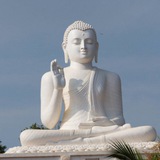
After seven days, the Buddha came out from that stillness and went from the goatherd’s banyan tree to a powderpuff tree. There too he sat cross-legged for seven days without moving, experiencing the bliss of freedom.
Just then an unseasonal storm was approaching, bringing seven days of rain, cold winds, and clouds. Mucalinda, the dragon king, came out from his abode. He encircled the body of the Buddha with seven coils and spread his large hood over his head, thinking, “May the Buddha not be hot or cold, nor be bothered by horseflies or mosquitoes, by the wind or the burning sun, or by creeping animals or insects.”
After seven days, when he knew the sky was clear, Mucalinda unraveled his coils from the Buddha’s body and transformed himself into a young brahmin. He then stood in front of the Buddha, raising his joined palms in veneration.
Partial excerpts from Vinaya Pitaka, Mahavagga, Mahakhandhaka 3 : Mucalinda tree
Just then an unseasonal storm was approaching, bringing seven days of rain, cold winds, and clouds. Mucalinda, the dragon king, came out from his abode. He encircled the body of the Buddha with seven coils and spread his large hood over his head, thinking, “May the Buddha not be hot or cold, nor be bothered by horseflies or mosquitoes, by the wind or the burning sun, or by creeping animals or insects.”
After seven days, when he knew the sky was clear, Mucalinda unraveled his coils from the Buddha’s body and transformed himself into a young brahmin. He then stood in front of the Buddha, raising his joined palms in veneration.
Partial excerpts from Vinaya Pitaka, Mahavagga, Mahakhandhaka 3 : Mucalinda tree
🙏2🏆1🆒1
Cause and Effect
Reflecting on the law of karma
By Joseph Goldstein
Part 2 of 2
People sometimes wonder whether reflecting upon the law of karma will lead to feelings of guilt for past unwholesome actions. Guilt is a manifestation of condemnation or aversion toward oneself, which does not understand the changing transformative quality of mind. It solidifies a sense of self by being nonforgiving. Understanding the law of karma leads us to reflect wisely on the skillfulness or unskillfulness of our actions. In the infinite time of our births, through all the realms of existence, we have done so many different kinds of actions, wholesome and unwholesome. In view of karmic law, guilt is an inappropriate feeling, and a rather useless burden. It simply creates more unwholesome results. Coming to an understanding of karma is the basis for a very straightforward development of the wisdom to know whether our actions will lead to happiness and freedom, or to further suffering. When we understand this, it allows us to take responsibility for past actions with an attitude of compassion, appreciating that a particular act may have been unwholesome or harmful, and strongly determining not to repeat it. Guilt is a manifestation of condemnation, wisdom an expression of sensitivity and forgiveness. . . .
It is said that on the eve of his enlightenment, the Buddha, with the power of his mind, reviewed the births and deaths of countless beings wandering throughout the cycle of existence in accordance with their karma. His great compassion was awakened when he saw all those beings wanting happiness, striving for happiness, yet performing the very actions that would lead to suffering. When we do not understand the unfolding of karmic law, when we are deluded about the nature of things, then we continually create the conditions for greater suffering for ourselves and others, even when we are wishing and hoping for peace. There are those even today who have developed the power of mind to see karmic unfolding through past and future lifetimes. But it is not necessary to be able to see our past lives in order to understand the principles of karmic law. If we pay attention and carefully observe our own lives, it can become very clear how our actions condition certain results.
The Buddha spoke often about right and wrong view with regard to the effects of one’s actions. Right view is the understanding that our actions do bring results, both in the present and in the future, while wrong view denies this cause-and-effect relationship. Our culture is generally geared to the pursuit of immediate gratification of desires, and this reinforces the view that what we do will not have effects, that there is no karmic result from our actions that will come back to us. But when we step back and take a broader perspective, we begin to understand that we are the heirs of our own motives and deeds and that our lives do not unfold randomly or haphazardly. It is important to see what our motives and volitions are and to understand the results they condition.
Mindfulness plays a critical role in understanding the unfolding of karma. Two aspects of mindfulness that are particularly relevant to this are clear comprehension and suitability of purpose. Clear comprehension means paying attention to what we are doing, being fully aware of what is actually happening. When we stand up, we know we’re standing; when we walk, we know we’re walking. Clear comprehension of what we are doing in the moment then allows us to consider the suitability of purpose. This means knowing whether the actions are skillful or unskillful, whether or not they will bring the results that we want.
When mindfulness is weak, we have little sense of clear comprehension or suitability of purpose. Not only may we be unaware of our intentions, we often are not even paying attention to the action itself, hence we may be propelled by habitual patterns into actions that bring painful results. The deep understanding that actions condition results creates a compelling interest in what we do.
Reflecting on the law of karma
By Joseph Goldstein
Part 2 of 2
People sometimes wonder whether reflecting upon the law of karma will lead to feelings of guilt for past unwholesome actions. Guilt is a manifestation of condemnation or aversion toward oneself, which does not understand the changing transformative quality of mind. It solidifies a sense of self by being nonforgiving. Understanding the law of karma leads us to reflect wisely on the skillfulness or unskillfulness of our actions. In the infinite time of our births, through all the realms of existence, we have done so many different kinds of actions, wholesome and unwholesome. In view of karmic law, guilt is an inappropriate feeling, and a rather useless burden. It simply creates more unwholesome results. Coming to an understanding of karma is the basis for a very straightforward development of the wisdom to know whether our actions will lead to happiness and freedom, or to further suffering. When we understand this, it allows us to take responsibility for past actions with an attitude of compassion, appreciating that a particular act may have been unwholesome or harmful, and strongly determining not to repeat it. Guilt is a manifestation of condemnation, wisdom an expression of sensitivity and forgiveness. . . .
It is said that on the eve of his enlightenment, the Buddha, with the power of his mind, reviewed the births and deaths of countless beings wandering throughout the cycle of existence in accordance with their karma. His great compassion was awakened when he saw all those beings wanting happiness, striving for happiness, yet performing the very actions that would lead to suffering. When we do not understand the unfolding of karmic law, when we are deluded about the nature of things, then we continually create the conditions for greater suffering for ourselves and others, even when we are wishing and hoping for peace. There are those even today who have developed the power of mind to see karmic unfolding through past and future lifetimes. But it is not necessary to be able to see our past lives in order to understand the principles of karmic law. If we pay attention and carefully observe our own lives, it can become very clear how our actions condition certain results.
The Buddha spoke often about right and wrong view with regard to the effects of one’s actions. Right view is the understanding that our actions do bring results, both in the present and in the future, while wrong view denies this cause-and-effect relationship. Our culture is generally geared to the pursuit of immediate gratification of desires, and this reinforces the view that what we do will not have effects, that there is no karmic result from our actions that will come back to us. But when we step back and take a broader perspective, we begin to understand that we are the heirs of our own motives and deeds and that our lives do not unfold randomly or haphazardly. It is important to see what our motives and volitions are and to understand the results they condition.
Mindfulness plays a critical role in understanding the unfolding of karma. Two aspects of mindfulness that are particularly relevant to this are clear comprehension and suitability of purpose. Clear comprehension means paying attention to what we are doing, being fully aware of what is actually happening. When we stand up, we know we’re standing; when we walk, we know we’re walking. Clear comprehension of what we are doing in the moment then allows us to consider the suitability of purpose. This means knowing whether the actions are skillful or unskillful, whether or not they will bring the results that we want.
When mindfulness is weak, we have little sense of clear comprehension or suitability of purpose. Not only may we be unaware of our intentions, we often are not even paying attention to the action itself, hence we may be propelled by habitual patterns into actions that bring painful results. The deep understanding that actions condition results creates a compelling interest in what we do.
Telegram
Dhammapada - Buddha Dharma Teachings
Daily teachings of the Dhammapada, beloved and favorite teachings of the Buddha
🥰1👏1
We begin to pay quite meticulous attention; we begin to awaken. Not only does each action, no matter how insignificant it may seem, condition a future result, it also reconditions the mind. If a moment of anger arises in the mind and we get lost in it, we are then actually cultivating anger. If we get lost in greed, we are cultivating greed. It is like a bucket being filled with water, drop by drop. We think each drop is so tiny, so insignificant, that it doesn’t matter at all. Yet drop by drop the bucket gets filled. In just this way, the mind is conditioned by each experience in every moment, and moment after moment the mind gets filled. We should have a tremendous respect for the conditioning power of the mind, not only in terms of our present experience, but also in terms of our future direction. . . .
During a visit to the United States, His Holiness the Dalai Lama gave a talk about emptiness of self and the karmic law of cause and effect. In the course of the talk, he said that given a choice between understanding karma and understanding emptiness, one should try to understand karma. To many that was surprising, because the very heart of the wisdom of Buddhism is understanding the empty, selfless, insubstantial nature of phenomena. His point of emphasis, though, is extremely important for us to grasp, because without an understanding of karma, of the effect of our actions, the aspect of the emptiness of phenomena can be used as a rationale for not taking responsibility in our lives. To think that nothing matters, that we can do anything because it’s all empty anyway, is a serious misunderstanding of the teaching and a poor justification for unskillful behavior. If we are sensitive to the law of karma and become responsible for our actions and their results, then it will help us come to a genuine understanding of emptiness.
Compassion, as well as insight, arises from understanding karma. When we understand that unfair, harmful, or hateful actions rebound in suffering to the person committing them as well as to the recipient, we can respond to both with compassion rather than with anger or resentment. This in no way means that our response is weak or indecisive. In fact, seeing people act out of ignorance in ways that cause themselves or others great pain can inspire a very strong and direct response to that ignorance, but it is a response of compassion.
In explaining the workings of karma, the Buddha spoke of the potency of different actions. He spoke often of the great power of generosity, explaining that an act of generosity is purified and empowered in three ways. It is purified by the giver, by the receiver, and by that which is given. The purity of mind of the one giving and of the one receiving, and the purity of the gift itself (that is, the means by which the gift came into one’s possession), strengthen the karmic force of each act of generosity.
And many times more powerful than giving a gift even to the Buddha and the whole order of enlightened disciples is one moment in which the mind is fully concentrated on extending thoughts of lovingkindness toward all beings. When we genuinely open our hearts, the deep feeling of our connectedness to all beings is a tremendously effective force, which can then motivate a wide variety of skillful actions.
The Buddha went on to say that even more powerful than that moment of lovingkindness is one moment of deeply seeing the impermanent nature of phenomena. This moment of insight is so profound because it deconditions attachment in the mind and opens up the possibility of true nonattachment. When we deeply see the impermanent, ephemeral nature of the mind and body, how they are in constant flux, we develop detachment and equanimity toward the dreamlike elements of our experience. Sometimes in meditation practice when we are dealing with the pain, restlessness, boredom, and other difficulties that come up, we may lose sight of the larger context of what the practice is about.
During a visit to the United States, His Holiness the Dalai Lama gave a talk about emptiness of self and the karmic law of cause and effect. In the course of the talk, he said that given a choice between understanding karma and understanding emptiness, one should try to understand karma. To many that was surprising, because the very heart of the wisdom of Buddhism is understanding the empty, selfless, insubstantial nature of phenomena. His point of emphasis, though, is extremely important for us to grasp, because without an understanding of karma, of the effect of our actions, the aspect of the emptiness of phenomena can be used as a rationale for not taking responsibility in our lives. To think that nothing matters, that we can do anything because it’s all empty anyway, is a serious misunderstanding of the teaching and a poor justification for unskillful behavior. If we are sensitive to the law of karma and become responsible for our actions and their results, then it will help us come to a genuine understanding of emptiness.
Compassion, as well as insight, arises from understanding karma. When we understand that unfair, harmful, or hateful actions rebound in suffering to the person committing them as well as to the recipient, we can respond to both with compassion rather than with anger or resentment. This in no way means that our response is weak or indecisive. In fact, seeing people act out of ignorance in ways that cause themselves or others great pain can inspire a very strong and direct response to that ignorance, but it is a response of compassion.
In explaining the workings of karma, the Buddha spoke of the potency of different actions. He spoke often of the great power of generosity, explaining that an act of generosity is purified and empowered in three ways. It is purified by the giver, by the receiver, and by that which is given. The purity of mind of the one giving and of the one receiving, and the purity of the gift itself (that is, the means by which the gift came into one’s possession), strengthen the karmic force of each act of generosity.
And many times more powerful than giving a gift even to the Buddha and the whole order of enlightened disciples is one moment in which the mind is fully concentrated on extending thoughts of lovingkindness toward all beings. When we genuinely open our hearts, the deep feeling of our connectedness to all beings is a tremendously effective force, which can then motivate a wide variety of skillful actions.
The Buddha went on to say that even more powerful than that moment of lovingkindness is one moment of deeply seeing the impermanent nature of phenomena. This moment of insight is so profound because it deconditions attachment in the mind and opens up the possibility of true nonattachment. When we deeply see the impermanent, ephemeral nature of the mind and body, how they are in constant flux, we develop detachment and equanimity toward the dreamlike elements of our experience. Sometimes in meditation practice when we are dealing with the pain, restlessness, boredom, and other difficulties that come up, we may lose sight of the larger context of what the practice is about.
❤1🙏1😘1
It is helpful to remember that the karmic energy generated by the repeated observation and awareness of the changing nature of things is a tremendously powerful karmic force that leads to many kinds of happiness and to freedom.
Understanding the law of karma is known as the light of the world because through this understanding we can take responsibility for our destinies and be more truly guided to greater fulfillment in our lives.
===
Joseph Goldstein is cofounder and a guiding teacher of the Insight Meditation Society in Barre, Massachusetts, and its Forest Refuge program, and helped establish the Barre Center for Buddhist Studies. His books include A Heart Full of Peace, One Dharma: The Emerging Western Buddhism, and Mindfulness: A Practical Guide to Awakening.
===
Part 1 of 2:
https://news.1rj.ru/str/lorddivinebuddha/3598
Part 2 of 2:
https://news.1rj.ru/str/dhammapadas/3163
===
Dhammapada, beloved and favorite teachings of the Buddha channel:
https://news.1rj.ru/str/dhammapadas
===
Understanding the law of karma is known as the light of the world because through this understanding we can take responsibility for our destinies and be more truly guided to greater fulfillment in our lives.
===
Joseph Goldstein is cofounder and a guiding teacher of the Insight Meditation Society in Barre, Massachusetts, and its Forest Refuge program, and helped establish the Barre Center for Buddhist Studies. His books include A Heart Full of Peace, One Dharma: The Emerging Western Buddhism, and Mindfulness: A Practical Guide to Awakening.
===
Part 1 of 2:
https://news.1rj.ru/str/lorddivinebuddha/3598
Part 2 of 2:
https://news.1rj.ru/str/dhammapadas/3163
===
Dhammapada, beloved and favorite teachings of the Buddha channel:
https://news.1rj.ru/str/dhammapadas
===
Telegram
Dhammapada - Buddha Dharma Teachings
Daily teachings of the Dhammapada, beloved and favorite teachings of the Buddha
💯1🤗1
5. Yass'indriyani samatham gatani
assa yatha sarathina sudanta
Pahinamanassa anasavassa
deva'pi tassa pihayanti tadino. 94.
THE SENSE-CONTROLLED ARE DEAR TO ALL
5. He whose senses are subdued, like steeds well-trained by a charioteer, he whose pride is destroyed and is free from the corruptions - such a steadfast one even the gods hold dear. 94.
Story
Sakka, king of the gods, paid great reverence to the Venerable Kaccayana. Some monks accused Sakka of favouritism. The Buddha reproved them and remarked that Arahants like the Venerable Kaccayana whose senses are well subdued, are dear to both gods and men alike.
===
Buddha dharma teachings channel:
https://news.1rj.ru/str/lorddivinebuddha
===
assa yatha sarathina sudanta
Pahinamanassa anasavassa
deva'pi tassa pihayanti tadino. 94.
THE SENSE-CONTROLLED ARE DEAR TO ALL
5. He whose senses are subdued, like steeds well-trained by a charioteer, he whose pride is destroyed and is free from the corruptions - such a steadfast one even the gods hold dear. 94.
Story
Sakka, king of the gods, paid great reverence to the Venerable Kaccayana. Some monks accused Sakka of favouritism. The Buddha reproved them and remarked that Arahants like the Venerable Kaccayana whose senses are well subdued, are dear to both gods and men alike.
===
Buddha dharma teachings channel:
https://news.1rj.ru/str/lorddivinebuddha
===
Telegram
Buddha
Buddha dharma teachings from the suttas and commentaries
🥰1👏1👌1
Forwarded from Buddha Dharma books
Free Buddha Dharma ebook
Ten Perfections
By Thanissaro Bhikkhu
Free download available:
https://www.lotuslibrary.com/wp-content/uploads/2024/12/2043-ten-perfections_Thanissaro.pdf
===
Ten Perfections
By Thanissaro Bhikkhu
Free download available:
https://www.lotuslibrary.com/wp-content/uploads/2024/12/2043-ten-perfections_Thanissaro.pdf
===
👏1😍1
Forwarded from Buddha Dharma books
Free Buddha Dharma ebook
Ten Perfections
By Thanissaro Bhikkhu
For people in the modern world facing the issue of how to practice the Dhamma in daily life, the ten perfections provide a useful framework for how to do it. When you view life as an opportunity to develop these ten qualities—generosity, virtue, renunciation, discernment, persistence, endurance, truth, determination, good will, and equanimity—you develop a fruitful attitude toward your daily activities so that any skillful activity or relationship, undertaken wisely and in a balanced way, becomes part of the practice.
Free download available:
https://www.lotuslibrary.com/wp-content/uploads/2024/12/2043-ten-perfections_Thanissaro.pdf
===
Ten Perfections
By Thanissaro Bhikkhu
For people in the modern world facing the issue of how to practice the Dhamma in daily life, the ten perfections provide a useful framework for how to do it. When you view life as an opportunity to develop these ten qualities—generosity, virtue, renunciation, discernment, persistence, endurance, truth, determination, good will, and equanimity—you develop a fruitful attitude toward your daily activities so that any skillful activity or relationship, undertaken wisely and in a balanced way, becomes part of the practice.
Free download available:
https://www.lotuslibrary.com/wp-content/uploads/2024/12/2043-ten-perfections_Thanissaro.pdf
===
🥰1👏1🆒1
6. Pañhavi samo no virujjhati
indakhilupamo tadi subbato
Rahado' va apetakaddamo
samsara na bhavanti tadino. 95.
LIKE THE EARTH ARAHANTS RESENT NOT
6. Like the earth a balanced and well-disciplined person resents not. He is comparable to an Indakhila. 11 Like a pool unsullied by mud, is he; to such a balanced one 12 life's wanderings do not arise. 13
Story
Inadvertently the Venerable Sariputta brushed against the ear of a monk who was jealous of him. The latter reported this unconscious discourtesy to the Buddha. Questioned by the Buddha about the incident, the Venerable Sariputta, without asserting his innocence, described his humble ways ever since he became a monk. Remorse overtook the erring monk, who now implored pardon from the Venerable Sariputta, who in his turn sought pardon from him if he has done any wrong. The Buddha extolled the Venerable Sariputta, comparing him to the unresenting earth.
===
Words of the Buddha channel:
https://news.1rj.ru/str/wordsofbuddha
===
indakhilupamo tadi subbato
Rahado' va apetakaddamo
samsara na bhavanti tadino. 95.
LIKE THE EARTH ARAHANTS RESENT NOT
6. Like the earth a balanced and well-disciplined person resents not. He is comparable to an Indakhila. 11 Like a pool unsullied by mud, is he; to such a balanced one 12 life's wanderings do not arise. 13
Story
Inadvertently the Venerable Sariputta brushed against the ear of a monk who was jealous of him. The latter reported this unconscious discourtesy to the Buddha. Questioned by the Buddha about the incident, the Venerable Sariputta, without asserting his innocence, described his humble ways ever since he became a monk. Remorse overtook the erring monk, who now implored pardon from the Venerable Sariputta, who in his turn sought pardon from him if he has done any wrong. The Buddha extolled the Venerable Sariputta, comparing him to the unresenting earth.
===
Words of the Buddha channel:
https://news.1rj.ru/str/wordsofbuddha
===
Telegram
Words of the Buddha
Daily teachings of Buddha Dharma
👏1🏆1
Forwarded from Buddha
“Mendicants, in some past lives the Realized One was reborn as a human being. ... Due to performing those deeds he was reborn in a heavenly realm. When he came back to this place he obtained this mark: he is golden colored; his skin shines like lustrous gold.
On this it is said:
“Fixated on good will, he gave gifts. In an earlier life he poured forth cloth fine and soft to touch, like a god pouring rain on this broad earth.
So doing he passed from here to heaven, where he enjoyed the fruits of deeds well done. Here he wins a figure shining like honey-yellow gold, like Indra, the finest of gods.
If that man stays in the house, not wishing to go forth, he conquers and rules this vast, broad earth. He obtains abundant excellent cloth, so fine and soft to touch.
He receives robes, cloth, and the finest garments. if he chooses the life gone forth. For he still partakes of past deed’s fruit; what’s been done is never lost.”
Partial excerpts from DN 30 : Pathikavagga
On this it is said:
“Fixated on good will, he gave gifts. In an earlier life he poured forth cloth fine and soft to touch, like a god pouring rain on this broad earth.
So doing he passed from here to heaven, where he enjoyed the fruits of deeds well done. Here he wins a figure shining like honey-yellow gold, like Indra, the finest of gods.
If that man stays in the house, not wishing to go forth, he conquers and rules this vast, broad earth. He obtains abundant excellent cloth, so fine and soft to touch.
He receives robes, cloth, and the finest garments. if he chooses the life gone forth. For he still partakes of past deed’s fruit; what’s been done is never lost.”
Partial excerpts from DN 30 : Pathikavagga
👌2🏆1
Forwarded from Words of the Buddha
Free Buddhism ebook
The Workings of Kamma (Second Revised Edition)
By Pa-Auk Tawya Sayadaw
Free download available:
https://drive.google.com/open?id=1tAhYl7YCCv03qRKCFnmlRwwmdbvFkr1u
===
The Workings of Kamma (Second Revised Edition)
By Pa-Auk Tawya Sayadaw
Free download available:
https://drive.google.com/open?id=1tAhYl7YCCv03qRKCFnmlRwwmdbvFkr1u
===
❤1😍1🆒1
Forwarded from Words of the Buddha
Free Buddhism ebook
The Workings of Kamma (Second Revised Edition)
By Pa-Auk Tawya Sayadaw
Over the years, as he has encountered 'Western Buddhists', meditation master the Most Venerable Pa-Auk Tawya Sayadaw has seen the need for a thorough explanation of the workings of kamma in English. To that end he has composed The Workings of Kamma. It is a detailed analysis and discussion of the workings of kamma, in accordance with the Pali Texts: Vinaya, suttas, Abhidhamma, and the authoritative commentaries and subcommentaries.
Free download available:
https://drive.google.com/open?id=1tAhYl7YCCv03qRKCFnmlRwwmdbvFkr1u
===
The Workings of Kamma (Second Revised Edition)
By Pa-Auk Tawya Sayadaw
Over the years, as he has encountered 'Western Buddhists', meditation master the Most Venerable Pa-Auk Tawya Sayadaw has seen the need for a thorough explanation of the workings of kamma in English. To that end he has composed The Workings of Kamma. It is a detailed analysis and discussion of the workings of kamma, in accordance with the Pali Texts: Vinaya, suttas, Abhidhamma, and the authoritative commentaries and subcommentaries.
Free download available:
https://drive.google.com/open?id=1tAhYl7YCCv03qRKCFnmlRwwmdbvFkr1u
===
🥰1👏1
7. Santam tassa manam hoti
santa vaca ca kamma ca
Sammadannavimuttassa
upasantassa tadino. 96.
CALM ARE THE PEACEFUL
7. Calm is his mind, calm is his speech, calm is his action, who, rightly knowing, is wholly freed, 14 perfectly peaceful, 15 and equipoised. 96.
Story
While attempting to awaken, with his fan, a pupil novice who was thought to be asleep, a teacher accidentally injured the pupil's eye. Later, when the teacher tried to close the door, he injured the pupil's hand too. But the pupil showed no resentment at the carelessness of his teacher. He was well restrained. The Buddha praised him.
===
Dhammapada, beloved and favorite teachings of the Buddha channel:
https://news.1rj.ru/str/dhammapadas
===
santa vaca ca kamma ca
Sammadannavimuttassa
upasantassa tadino. 96.
CALM ARE THE PEACEFUL
7. Calm is his mind, calm is his speech, calm is his action, who, rightly knowing, is wholly freed, 14 perfectly peaceful, 15 and equipoised. 96.
Story
While attempting to awaken, with his fan, a pupil novice who was thought to be asleep, a teacher accidentally injured the pupil's eye. Later, when the teacher tried to close the door, he injured the pupil's hand too. But the pupil showed no resentment at the carelessness of his teacher. He was well restrained. The Buddha praised him.
===
Dhammapada, beloved and favorite teachings of the Buddha channel:
https://news.1rj.ru/str/dhammapadas
===
Telegram
Dhammapada - Buddha Dharma Teachings
Daily teachings of the Dhammapada, beloved and favorite teachings of the Buddha
🕊1🆒1