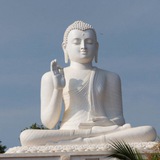
Forwarded from Buddha
These questions begin with the underlying questions leading to discernment as to which actions are skillful and which actions are not, and culminate in the questions related to the four noble truths: understanding suffering and developing the path that leads to its end. Appropriate attention is what gives proper focus to your powers of observation and your truthfulness. You focus attention on your actions, beginning with your desires and intentions, and judge them as to whether you expect them to be harmful or not.
This step emphasizes the role of desire as the root of all intentions, and the role of intention—the desire to act—as the beginning of kamma. It also teaches you that, if you really want to learn from your mistakes, you try your best not to make them. When you act only on what you think are good intentions but later find out that actions based on those intentions led to harm, you’ve learned something: Those intentions may have been good, but they weren’t really skillful. They contained an element of delusion, which you can now try to ferret out. If, however, you act on intentions you already know to be unskillful and they end up causing harm, you haven’t learned much.
Once you’ve set yourself on a course of action you think is skillful, then, given that actions can show some of their results in the present moment and some over time, you judge the results of your actions both while you’re doing them and again after they’re done. Here you use the same criteria: Are they causing—did they cause—harm or not? And, of course, you don’t stop with simply judging the results. You refrain from acting on intentions you judge to be potentially harmful, you stop continuing with any action you judge to be immediately harmful, and you resolve not to repeat any actions that you judge to be harmful in the end.
These instructions show the basic pattern for how to train yourself to stick with your determination for awakening. You commit to the path by trying to act in line with it, you reflect on the results of your actions, and then make adjustments wherever you see that you’re lacking, until you finally get things right. This is called success by approximation. It’s a pattern that holds all the way to the end of the practice.
You don’t simply force yourself to become calm and equanimous regardless of events. You first have to find an inner sense of joy that comes from virtue, concentration, and discernment.
In teaching Rahula to talk over his mistakes with someone more advanced on the path, the Buddha is introducing him to the most important external quality for achieving his first glimpse of awakening: admirable friendship. This type of friendship involves not only trying to choose admirable people as your friends but also emulating their good qualities and asking them about how to develop those qualities in yourself. As the Buddha’s instructions to Rahula make clear, this relationship works best if you’re truthful in reporting your mistakes to your friends so that you can get pertinent advice.
The Buddha is also introducing his son more generally to training in heightened virtue. Here it’s important to notice that this training takes two forms: specific do’s and don’ts on the one hand, and qualities of character on the other.
===
Buddha dharma teachings channel:
https://news.1rj.ru/str/lorddivinebuddha
===
This step emphasizes the role of desire as the root of all intentions, and the role of intention—the desire to act—as the beginning of kamma. It also teaches you that, if you really want to learn from your mistakes, you try your best not to make them. When you act only on what you think are good intentions but later find out that actions based on those intentions led to harm, you’ve learned something: Those intentions may have been good, but they weren’t really skillful. They contained an element of delusion, which you can now try to ferret out. If, however, you act on intentions you already know to be unskillful and they end up causing harm, you haven’t learned much.
Once you’ve set yourself on a course of action you think is skillful, then, given that actions can show some of their results in the present moment and some over time, you judge the results of your actions both while you’re doing them and again after they’re done. Here you use the same criteria: Are they causing—did they cause—harm or not? And, of course, you don’t stop with simply judging the results. You refrain from acting on intentions you judge to be potentially harmful, you stop continuing with any action you judge to be immediately harmful, and you resolve not to repeat any actions that you judge to be harmful in the end.
These instructions show the basic pattern for how to train yourself to stick with your determination for awakening. You commit to the path by trying to act in line with it, you reflect on the results of your actions, and then make adjustments wherever you see that you’re lacking, until you finally get things right. This is called success by approximation. It’s a pattern that holds all the way to the end of the practice.
You don’t simply force yourself to become calm and equanimous regardless of events. You first have to find an inner sense of joy that comes from virtue, concentration, and discernment.
In teaching Rahula to talk over his mistakes with someone more advanced on the path, the Buddha is introducing him to the most important external quality for achieving his first glimpse of awakening: admirable friendship. This type of friendship involves not only trying to choose admirable people as your friends but also emulating their good qualities and asking them about how to develop those qualities in yourself. As the Buddha’s instructions to Rahula make clear, this relationship works best if you’re truthful in reporting your mistakes to your friends so that you can get pertinent advice.
The Buddha is also introducing his son more generally to training in heightened virtue. Here it’s important to notice that this training takes two forms: specific do’s and don’ts on the one hand, and qualities of character on the other.
===
Buddha dharma teachings channel:
https://news.1rj.ru/str/lorddivinebuddha
===
Telegram
Buddha
Buddha dharma teachings from the suttas and commentaries
🆒1😘1
Swayambhunath Great Stupa, mainly featuring the white-domed stupa with four sets of all-seeing Buddha eyes, Kathmandu, Nepal, one of the most ancient and important stupas in the world, having hosted numerous Buddhas of the past: Konagamana Buddha, Kakusandha Buddha, Kassapa Buddha and Gautama Buddha. A UNESCO world heritage site.
🙏2💯1🏆1
Forwarded from Words of the Buddha
Starting Out Right
The virtues the Buddha taught to his own son
By Thanissaro Bhikkhu
Part 2 of 2
He starts Rahula with a don’t: “I will not tell a deliberate lie, even in jest.” As he points out, this is a rule that Rahula will have to train himself in. In other words, Rahula will have to be responsible for voluntarily taking on this rule, for sticking with it, and for detecting times when he’s failed to hold to it, so that he can learn what unskillful desires or passions might have made him want to break it.
At the same time, the Buddha is teaching Rahula virtue in terms of qualities of character, both explicitly and implicitly. The quality he mentions explicitly is shame—not the unhealthy shame that’s the opposite of pride but the healthy shame that’s the opposite of shamelessness. This is the shame that makes you want your behavior to look good in the eyes of people you respect. When you respect the right people—noble ones—this type of shame can take you far. It goes together with a sense of honor—that giving in to unskillful desires is beneath you.
Other qualities that are more implicit in these instructions include:
heedfulness in that Rahula should take the results of his actions seriously because they could cause harm if he’s not careful;
compassion in that he shouldn’t want to do harm to anyone, himself or others;
integrity in taking responsibility for any harm that he’s done. (Notice how often the word “I” appears in the questions that Rahula is supposed to ask himself. He’s being taught to acknowledge his agency in deciding which desires to act on and how best to do it.)
Finally, the Buddha is also teaching Rahula how to begin developing the four overriding determinations that he says culminate in awakening: discernment, truth, relinquishment, and calm.
• Rahula will learn truthfulness in his willingness to admit his mistakes.
• He’ll commit himself to relinquish any desires that would run counter to this training.
• Note that when Rahula is able to reflect on his actions and see that they have caused no harm, he is to take joy in that fact. That sense of joy is calming—the calm that comes from a life of virtue. This is a pattern that holds throughout the triple training. You don’t simply force yourself to become calm and equanimous regardless of events. You first have to find an inner sense of joy that comes from virtue, concentration, and discernment. That joy keeps your calm from becoming grudging or defeatist. Based on a sense of inner satisfaction, it’s a calm that’s expansive and strong.
• Above all, Rahula will be learning to develop his discernment through a process that the Buddha calls commitment and reflection. Rahula is to commit himself to acting as skillfully as he can, at the same time reflecting on:
the desire that motivates each action,
the action itself, and
its immediate and long-term results.
When he sees room for improvement, he commits himself further to making those improvements as best he can, using both his own determination to be skillful and ingenious in thinking up alternatives, and the wisdom and compassion of others who can help him attain that aim.
The discernment that the Buddha is recommending here begins by asking two questions: “What, when I do it, will lead to my long-term harm and suffering? What, when I do it, will lead to my long-term well-being and happiness?” In the discourse where the Buddha sets forth these questions (MN 135), he recommends requesting answers from people who are more advanced on the path. Here, however, Rahula is also being taught how to begin finding the answers for himself.
Big fires come from little ones.
This is the basic approach required in learning any skill, although here it’s applied to an especially high level of skill: putting an end to all suffering and stress. It’s the basic framework for all the steps in taking on the triple training. And it depends on what the Buddha observed about the mind: (1) It’s luminous in the sense that it can observe its own actions.
The virtues the Buddha taught to his own son
By Thanissaro Bhikkhu
Part 2 of 2
He starts Rahula with a don’t: “I will not tell a deliberate lie, even in jest.” As he points out, this is a rule that Rahula will have to train himself in. In other words, Rahula will have to be responsible for voluntarily taking on this rule, for sticking with it, and for detecting times when he’s failed to hold to it, so that he can learn what unskillful desires or passions might have made him want to break it.
At the same time, the Buddha is teaching Rahula virtue in terms of qualities of character, both explicitly and implicitly. The quality he mentions explicitly is shame—not the unhealthy shame that’s the opposite of pride but the healthy shame that’s the opposite of shamelessness. This is the shame that makes you want your behavior to look good in the eyes of people you respect. When you respect the right people—noble ones—this type of shame can take you far. It goes together with a sense of honor—that giving in to unskillful desires is beneath you.
Other qualities that are more implicit in these instructions include:
heedfulness in that Rahula should take the results of his actions seriously because they could cause harm if he’s not careful;
compassion in that he shouldn’t want to do harm to anyone, himself or others;
integrity in taking responsibility for any harm that he’s done. (Notice how often the word “I” appears in the questions that Rahula is supposed to ask himself. He’s being taught to acknowledge his agency in deciding which desires to act on and how best to do it.)
Finally, the Buddha is also teaching Rahula how to begin developing the four overriding determinations that he says culminate in awakening: discernment, truth, relinquishment, and calm.
• Rahula will learn truthfulness in his willingness to admit his mistakes.
• He’ll commit himself to relinquish any desires that would run counter to this training.
• Note that when Rahula is able to reflect on his actions and see that they have caused no harm, he is to take joy in that fact. That sense of joy is calming—the calm that comes from a life of virtue. This is a pattern that holds throughout the triple training. You don’t simply force yourself to become calm and equanimous regardless of events. You first have to find an inner sense of joy that comes from virtue, concentration, and discernment. That joy keeps your calm from becoming grudging or defeatist. Based on a sense of inner satisfaction, it’s a calm that’s expansive and strong.
• Above all, Rahula will be learning to develop his discernment through a process that the Buddha calls commitment and reflection. Rahula is to commit himself to acting as skillfully as he can, at the same time reflecting on:
the desire that motivates each action,
the action itself, and
its immediate and long-term results.
When he sees room for improvement, he commits himself further to making those improvements as best he can, using both his own determination to be skillful and ingenious in thinking up alternatives, and the wisdom and compassion of others who can help him attain that aim.
The discernment that the Buddha is recommending here begins by asking two questions: “What, when I do it, will lead to my long-term harm and suffering? What, when I do it, will lead to my long-term well-being and happiness?” In the discourse where the Buddha sets forth these questions (MN 135), he recommends requesting answers from people who are more advanced on the path. Here, however, Rahula is also being taught how to begin finding the answers for himself.
Big fires come from little ones.
This is the basic approach required in learning any skill, although here it’s applied to an especially high level of skill: putting an end to all suffering and stress. It’s the basic framework for all the steps in taking on the triple training. And it depends on what the Buddha observed about the mind: (1) It’s luminous in the sense that it can observe its own actions.
Telegram
Words of the Buddha
Daily teachings of Buddha Dharma
🙏1🆒1
Forwarded from Words of the Buddha
(2) It has, in the present moment, the power of choice, together with the ability to change direction quickly. The power of choice allows you to commit to a course of action; the luminosity allows you to reflect on the results of following that course, and at the same time it gives you the ability to check to see whether the mind has switched direction, away from its commitment, while its ability to change course allows you to make adjustments as they seem advisable.
In terms of dependent co-arising, this approach is the way to overcome the ignorance—avijjā, which can also mean lack of skill—that causes your intentional activities to lead to suffering. As you observe for yourself which desires work and which don’t work, and as your standards for “what works” grow higher as you develop virtue, concentration, and discernment, you weaken ignorant desires and replace them with knowledgeable and skillful ones. In that way, you grow closer and closer to total freedom.
Those are some of the qualities of character that the Buddha taught to Rahula.
If we want to understand virtue as taught by the Buddha, we have to understand the rules of behavior he laid down, clearly delineating right and wrong, as well as the qualities of character he praised and tried to inculcate in his students. The rules are there to alert you to specific unskillful desires and passions that could hide behind general principles, as when you claim to be acting on compassion when it’s nothing more than an excuse for what’s actually careless behavior. The rules teach you that no unskillful desire is too small to merit your attention. After all, big fires come from little ones. At the same time, the qualities of character mentioned above enable you to deal skillfully with areas calling for integrity that can’t properly be covered by rules.
It’s in this way that the training in virtue offered by the Buddha is both thorough and all-around.
Excerpted from Beyond Desire & Passion: The Buddha’s Training for Freedom By Thanissaro Bhikkhu.
Thanissaro Bhikkhu is an American Theravada Buddhist monk trained in the Thai Forest Tradition. He currently serves as abbot of the Metta Forest Monastery in San Diego County, California, and is a frequent contributor to Tricycle. His latest book is Good Heart, Good Mind: The Practice of the Ten Perfections. Thanissaro Bhikkhu’s talks, writings, and translations are all freely available at his website:
www.dhammatalks.org
===
Part 1 of 2:
https://news.1rj.ru/str/lorddivinebuddha/3659
Part 2 of 2:
https://news.1rj.ru/str/wordsofbuddha/4491
===
Words of the Buddha channel:
https://news.1rj.ru/str/wordsofbuddha
===
In terms of dependent co-arising, this approach is the way to overcome the ignorance—avijjā, which can also mean lack of skill—that causes your intentional activities to lead to suffering. As you observe for yourself which desires work and which don’t work, and as your standards for “what works” grow higher as you develop virtue, concentration, and discernment, you weaken ignorant desires and replace them with knowledgeable and skillful ones. In that way, you grow closer and closer to total freedom.
Those are some of the qualities of character that the Buddha taught to Rahula.
If we want to understand virtue as taught by the Buddha, we have to understand the rules of behavior he laid down, clearly delineating right and wrong, as well as the qualities of character he praised and tried to inculcate in his students. The rules are there to alert you to specific unskillful desires and passions that could hide behind general principles, as when you claim to be acting on compassion when it’s nothing more than an excuse for what’s actually careless behavior. The rules teach you that no unskillful desire is too small to merit your attention. After all, big fires come from little ones. At the same time, the qualities of character mentioned above enable you to deal skillfully with areas calling for integrity that can’t properly be covered by rules.
It’s in this way that the training in virtue offered by the Buddha is both thorough and all-around.
Excerpted from Beyond Desire & Passion: The Buddha’s Training for Freedom By Thanissaro Bhikkhu.
Thanissaro Bhikkhu is an American Theravada Buddhist monk trained in the Thai Forest Tradition. He currently serves as abbot of the Metta Forest Monastery in San Diego County, California, and is a frequent contributor to Tricycle. His latest book is Good Heart, Good Mind: The Practice of the Ten Perfections. Thanissaro Bhikkhu’s talks, writings, and translations are all freely available at his website:
www.dhammatalks.org
===
Part 1 of 2:
https://news.1rj.ru/str/lorddivinebuddha/3659
Part 2 of 2:
https://news.1rj.ru/str/wordsofbuddha/4491
===
Words of the Buddha channel:
https://news.1rj.ru/str/wordsofbuddha
===
Telegram
Words of the Buddha
Daily teachings of Buddha Dharma
👌1💯1
2. Sahassam api ce gatha
anatthapadasamhita
Ekam gathapadam seyyo
yam sutva upasammati. 101.
ONE USEFUL VERSE IS BETTER THAN A THOUSAND USELESS VERSES
2. Better than a thousand verses, comprising useless words, is one beneficial single line, by hearing which one is pacified. 101.
Story
A ship-wrecked person swam with difficulty to the shore and saved himself. As be went about clothed with the bark of trees people mistook him for an Arahant. Realizing his folly, he went to see the Buddha and was converted by His beneficial words of wisdom.
===
Ajahn Chah, Buddhist teacher of Thai forest meditation of Theravada Buddhism channel:
https://news.1rj.ru/str/ajahnchah_buddhism
===
anatthapadasamhita
Ekam gathapadam seyyo
yam sutva upasammati. 101.
ONE USEFUL VERSE IS BETTER THAN A THOUSAND USELESS VERSES
2. Better than a thousand verses, comprising useless words, is one beneficial single line, by hearing which one is pacified. 101.
Story
A ship-wrecked person swam with difficulty to the shore and saved himself. As be went about clothed with the bark of trees people mistook him for an Arahant. Realizing his folly, he went to see the Buddha and was converted by His beneficial words of wisdom.
===
Ajahn Chah, Buddhist teacher of Thai forest meditation of Theravada Buddhism channel:
https://news.1rj.ru/str/ajahnchah_buddhism
===
Telegram
Ajahn Chah - Theravada Thailand Buddhism
Collection of teachings of Venerable Ajahn Chah, a foremost meditation and Buddhist teacher from Thailand
👍1🏆1
Forwarded from Buddha
Sangoku Daiichisan Arakura Fuji Sengen Pagoda viewing snow capped Mount Fuji, at Mount Arakura, Fujiyoshida, Yamanashi Prefecture, Japan.
🤩2😍1
Brahma Palace, Ling Shan scenic area, the costliest Buddhist compound in modern history. The large complex has world tallest standing bronze Amitabha Buddha statue, world largest Buddha's hand square, Indian style gigantic Brahma Palace, Tibetan style Five Mudras Mandala Palace, Nine Dragons Buddha bathing fountain, Maitreya Buddha with 100 children, Xiangfu Buddhist temple, Thai style Flying Dragon stupas, Buddha's footprints altar and two man-made lakes.
👍1👏1🤩1😍1
Free Buddha Dharma ebook
Yogavacaropadesa
GUIDANCE FOR A MEDITATIVE LIFE
Most Ven. Matara Sri Nanarama Thero
Free download here:
https://ftp.budaedu.org/ebooks/pdf/EN466.pdf
===
Yogavacaropadesa
GUIDANCE FOR A MEDITATIVE LIFE
Most Ven. Matara Sri Nanarama Thero
Free download here:
https://ftp.budaedu.org/ebooks/pdf/EN466.pdf
===
🙏1🏆1
Free Buddha Dharma ebook
Yogavacaropadesa
GUIDANCE FOR A MEDITATIVE LIFE
Most Ven. Matara Sri Nanarama Thero
Most Venerable Ñāṇārāma thero was a genuine yogāvacara in its utmost depth of the meaning. When writing this guide, Venerable thero combined his deep knowledge of Dhamma as well as his piercing intuition forged by meditation, and consequently (this book) has become a valuable handbook for those who follow the path of Dhamma.
Free download here:
https://ftp.budaedu.org/ebooks/pdf/EN466.pdf
===
Yogavacaropadesa
GUIDANCE FOR A MEDITATIVE LIFE
Most Ven. Matara Sri Nanarama Thero
Most Venerable Ñāṇārāma thero was a genuine yogāvacara in its utmost depth of the meaning. When writing this guide, Venerable thero combined his deep knowledge of Dhamma as well as his piercing intuition forged by meditation, and consequently (this book) has become a valuable handbook for those who follow the path of Dhamma.
Free download here:
https://ftp.budaedu.org/ebooks/pdf/EN466.pdf
===
👏1💯1🏆1
3. Yo ce gathasatam bhase
anatthapadasamhita
Ekam dhammapadam seyyo 2
yam sutva upasammati. 102.
4. Yo sahassam sahassena
sangame manuse jine
Ekan ca jeyya attanam
sa ve sangamajuttamo. 103.
BETTER THAN A HUNDRED USELESS WORDS IS ONE WORD OF THE DHAMMA.
SELF-CONQUEST IS THE BEST OF ALL CONQUESTS
3. Should one recite a hundred verses, comprising useless words, better is one single word of the Dhamma, by hearing which one is pacified. 102.
4. Though one should conquer a million 3 men in battlefield, yet he, indeed, is the noblest victor who has conquered himself. 103.
Story
A wealthy maiden fell in love with a thief and married him. Later, the husband took the wife to the top of a cliff and wanted to rob her of her jewellery and kill her. The wife's entreaties proved useless. Under the pretext of paying her last respects to him she got behind him and pushed him down the cliff. Later, she became a nun and, meeting the Venerable Sariputta, heard the Dhamma, and attained Arahantship. The bhikkhus discussed how she had battled with a bandit and later, hearing a few words of the Dhamma, had become an Arahant. The Buddha then spoke on the efficacy of the words of Truth and on the importance of self-conquest.
===
Free Buddhism books, teachings, podcasts and videos from Theravada, Mahayana and Vajrayana traditions:
https://news.1rj.ru/str/buddha_ebooks
===
anatthapadasamhita
Ekam dhammapadam seyyo 2
yam sutva upasammati. 102.
4. Yo sahassam sahassena
sangame manuse jine
Ekan ca jeyya attanam
sa ve sangamajuttamo. 103.
BETTER THAN A HUNDRED USELESS WORDS IS ONE WORD OF THE DHAMMA.
SELF-CONQUEST IS THE BEST OF ALL CONQUESTS
3. Should one recite a hundred verses, comprising useless words, better is one single word of the Dhamma, by hearing which one is pacified. 102.
4. Though one should conquer a million 3 men in battlefield, yet he, indeed, is the noblest victor who has conquered himself. 103.
Story
A wealthy maiden fell in love with a thief and married him. Later, the husband took the wife to the top of a cliff and wanted to rob her of her jewellery and kill her. The wife's entreaties proved useless. Under the pretext of paying her last respects to him she got behind him and pushed him down the cliff. Later, she became a nun and, meeting the Venerable Sariputta, heard the Dhamma, and attained Arahantship. The bhikkhus discussed how she had battled with a bandit and later, hearing a few words of the Dhamma, had become an Arahant. The Buddha then spoke on the efficacy of the words of Truth and on the importance of self-conquest.
===
Free Buddhism books, teachings, podcasts and videos from Theravada, Mahayana and Vajrayana traditions:
https://news.1rj.ru/str/buddha_ebooks
===
Telegram
Buddha Dharma books
Free Buddhism books, teachings, podcasts and videos from Theravada, Mahayana and Vajrayana traditions
🥰1👌1
There are four places that a pious person should visit and look upon with feelings of reverence, said the Buddha.
Lumbini is where the Tathagata was born.
Bodhgaya is where the Tathagata became fully enlightened in unsurpassed, supreme Enlightenment.
Sarnath is where the Tathagata set rolling the unexcelled Wheel of the Dharma.
Kushinagar is where the Tathagata passed away into the state of Parinirvana in which no element of clinging remains.
These, Ananda, are the four places that a pious person should visit and look upon with feelings of reverence. And truly there will come to these places pious monks and nuns, and laymen and laywomen to reflect on the life of the Tathagata.
~paraphrased from Mahaparinibbana Sutta
Lumbini is where the Tathagata was born.
Bodhgaya is where the Tathagata became fully enlightened in unsurpassed, supreme Enlightenment.
Sarnath is where the Tathagata set rolling the unexcelled Wheel of the Dharma.
Kushinagar is where the Tathagata passed away into the state of Parinirvana in which no element of clinging remains.
These, Ananda, are the four places that a pious person should visit and look upon with feelings of reverence. And truly there will come to these places pious monks and nuns, and laymen and laywomen to reflect on the life of the Tathagata.
~paraphrased from Mahaparinibbana Sutta
👏1💯1🤗1
Forwarded from Buddha
Every kind of delighting or longing,
So often attaching to all kinds of stuff,
Yearned for because of deep-rooted confusion
— All these, with their roots, have been vanquished by me (Buddha)
I'm devoid of attachment, longing, or thirst,
And see clearly amidst all phenomena.
Having gained the sublime, highest awakening,
I meditate in ripened seclusion (a desolate forest)
Katthaharaka Sutta: Buddha in the Forest
Samyutta Nikaya 7.18
So often attaching to all kinds of stuff,
Yearned for because of deep-rooted confusion
— All these, with their roots, have been vanquished by me (Buddha)
I'm devoid of attachment, longing, or thirst,
And see clearly amidst all phenomena.
Having gained the sublime, highest awakening,
I meditate in ripened seclusion (a desolate forest)
Katthaharaka Sutta: Buddha in the Forest
Samyutta Nikaya 7.18
👍1👏1👌1🕊1
5. Atta have jitam seyyo
ya ca'yam itara paja
Attadantassa posassa
niccam sannatacarino. 104.
6. N'eva devo na gandhabbo
na maro saha brahmuna
Jitam apajitam kayira
tatharupassa jantuno. 105.
BE RATHER A VICTOR OF YOURSELF THAN A VICTOR OF OTHERS.
NONE CAN TURN INTO DEFEAT SELF-VICTORY
5-6. Self-conquest 4 is, indeed, far greater than the conquest of all other folk; neither a god nor a gandhabba, 5 nor Mara 6 with Brahma, 7 can win back the victory of such a person who is self-subdued and ever lives in restraint. 104-105.
Story
A gambler questioned the Buddha about the causes of loss. The Buddha answered his question and inquired of him how he earned his living. When he replied that it was by gambling, which resulted in both gain and loss, the Buddha explained that real victory was self-victory.
===
Buddha dharma teachings channel:
https://news.1rj.ru/str/lorddivinebuddha
===
ya ca'yam itara paja
Attadantassa posassa
niccam sannatacarino. 104.
6. N'eva devo na gandhabbo
na maro saha brahmuna
Jitam apajitam kayira
tatharupassa jantuno. 105.
BE RATHER A VICTOR OF YOURSELF THAN A VICTOR OF OTHERS.
NONE CAN TURN INTO DEFEAT SELF-VICTORY
5-6. Self-conquest 4 is, indeed, far greater than the conquest of all other folk; neither a god nor a gandhabba, 5 nor Mara 6 with Brahma, 7 can win back the victory of such a person who is self-subdued and ever lives in restraint. 104-105.
Story
A gambler questioned the Buddha about the causes of loss. The Buddha answered his question and inquired of him how he earned his living. When he replied that it was by gambling, which resulted in both gain and loss, the Buddha explained that real victory was self-victory.
===
Buddha dharma teachings channel:
https://news.1rj.ru/str/lorddivinebuddha
===
Telegram
Buddha
Buddha dharma teachings from the suttas and commentaries
❤1👍1
Forwarded from Buddha Dharma books
Free Buddha Dharma ebook
The Miracle of Contact
By Bhikkhu Katukurunde Nanananda
Free download available:
https://www.lotuslibrary.com/wp-content/uploads/2024/12/2039-miracle-of-contact_Nanananda.pdf
===
The Miracle of Contact
By Bhikkhu Katukurunde Nanananda
Free download available:
https://www.lotuslibrary.com/wp-content/uploads/2024/12/2039-miracle-of-contact_Nanananda.pdf
===
👌1🆒1
Forwarded from Buddha Dharma books
Free Buddha Dharma ebook
The Miracle of Contact
By Bhikkhu Katukurunde Nanananda
The series of 20 sermons on ‘Paṭicca Samuppāda’ which I delivered at Pothgulgala Āraṇya in Devalegama seems to have had an appeal to those who listened to the sermons, or read them when the series came out in 4 volumes. Although the translation of the first ten sermons have already appeared (‘The Law of Dependent Arising’ – The Secret of Bondage and Release – volumes I & II), due to failing health I have not been able to translate them all myself. So I delegated the task to someone who is competent and the last two volumes will be issued in due course.
However I have translated the 15th sermon on ‘Contact’ (phassa) because of its pivotal significance and the special way of presentation. Hence I thought of giving it priority by bringing it out as a separate booklet noscriptd: ‘The Miracle of Contact’. Even to those who are disinclined to go through the entire series, it is hoped that this booklet would at least give a foretaste of the depth of the Law of Dependent Arising and its practical value to our lives.
Free download available:
https://www.lotuslibrary.com/wp-content/uploads/2024/12/2039-miracle-of-contact_Nanananda.pdf
===
The Miracle of Contact
By Bhikkhu Katukurunde Nanananda
The series of 20 sermons on ‘Paṭicca Samuppāda’ which I delivered at Pothgulgala Āraṇya in Devalegama seems to have had an appeal to those who listened to the sermons, or read them when the series came out in 4 volumes. Although the translation of the first ten sermons have already appeared (‘The Law of Dependent Arising’ – The Secret of Bondage and Release – volumes I & II), due to failing health I have not been able to translate them all myself. So I delegated the task to someone who is competent and the last two volumes will be issued in due course.
However I have translated the 15th sermon on ‘Contact’ (phassa) because of its pivotal significance and the special way of presentation. Hence I thought of giving it priority by bringing it out as a separate booklet noscriptd: ‘The Miracle of Contact’. Even to those who are disinclined to go through the entire series, it is hoped that this booklet would at least give a foretaste of the depth of the Law of Dependent Arising and its practical value to our lives.
Free download available:
https://www.lotuslibrary.com/wp-content/uploads/2024/12/2039-miracle-of-contact_Nanananda.pdf
===
👍1💯1