4. Pàpo' pi passati bhadram
yàva pàpam na paccati
Yadà ca paccati pàpam
atha pàpo pàpàni passati. 119.
5. Bhadro' pi passati pàpam
yàva bhadram na paccati
Yadà ca paccati bhadram
atha bhadro bhadràni passati. 120.
BY ITS EFFECTS EVIL IS KNOWN
BY ITS EFFECTS GOOD IS KNOWN
4. Even an evil-doer sees good as long as evil ripens not; but when it bears fruit, then he sees the evil results. 4 119.
5. Even a good person sees evil so long as good ripens not; but when it bears fruit then the good one sees the good results. 5 120.
Story
Anàthapiudika very generously supported the Sangha and lost the greater part of his fortune. He was criticised for his extravagant almsgiving. But ignoring all criticism, he continued his generous acts. Appreciating his generosity, the Buddha uttered these verses to show the results of both good and bad.
===
Words of the Buddha channel:
https://invite.viber.com/?g2=AQAFqzqlj7FmI061PX17rxWMAtZ%2BRuso%2FH2KmHKZSgnv7v9DD8X0bDkKnZDr9JDq
===
yàva pàpam na paccati
Yadà ca paccati pàpam
atha pàpo pàpàni passati. 119.
5. Bhadro' pi passati pàpam
yàva bhadram na paccati
Yadà ca paccati bhadram
atha bhadro bhadràni passati. 120.
BY ITS EFFECTS EVIL IS KNOWN
BY ITS EFFECTS GOOD IS KNOWN
4. Even an evil-doer sees good as long as evil ripens not; but when it bears fruit, then he sees the evil results. 4 119.
5. Even a good person sees evil so long as good ripens not; but when it bears fruit then the good one sees the good results. 5 120.
Story
Anàthapiudika very generously supported the Sangha and lost the greater part of his fortune. He was criticised for his extravagant almsgiving. But ignoring all criticism, he continued his generous acts. Appreciating his generosity, the Buddha uttered these verses to show the results of both good and bad.
===
Words of the Buddha channel:
https://invite.viber.com/?g2=AQAFqzqlj7FmI061PX17rxWMAtZ%2BRuso%2FH2KmHKZSgnv7v9DD8X0bDkKnZDr9JDq
===
Viber
Words Of The Buddha
Daily teachings from Buddha Dharma
👌1🆒1
Forwarded from Buddha
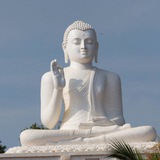
White Buddha of the Blue Temple, Wat Rong Suea Ten, Chiang Rai, Thailand.
❤2👏1🤩1😍1
Forwarded from Buddha
The Story of Theri Patacara
AN 1.5.4
Etad-aggaṁ bhikkhave mama sāvikānaṁ bhikkhunīnaṁ
Vinayadharānaṁ, yad-idaṁ Paṭācārā.
This is the foremost of my nun disciples, monastics, amongst those
who bear the Discipline in mind, that is to say, Patacara.
While residing at the Jetavana monastery, the Buddha uttered Verse (113) of the Dhammapada, with reference to Patacara.
Patacara was the daughter of a rich man from Savatthi. She was very beautiful and was guarded very strictly by her parents. But one day, she eloped with a young male attendant of the family and went to live in a village, as a poor man's wife. In due course she became pregnant and as the time for confinement drew near, she asked permission from her husband to return to her parents in Savatthi, but her husband discouraged her. So, one day, while her husband was away, she set out for the home of her parents. Her husband followed her and caught up with her on the way and pleaded with her to return with him; but she refused. It so happened that as her time was drawing so near, she had to give birth to a son in one of the bushes. After the birth of her son she returned home with her husband.
Then, she was again with child and as the time for confinement drew nears taking her son with her, she again set out for the home of her parents in Savatthi. Her husband followed her and caught up with her on the way; but her time for delivery was coming on very fast and it was also raining hard. The husband looked for a suitable place for confinement and while he was clearing a little patch of land, he was bitten by a poisonous snake, and died instantaneously. Patacara waited for her husband, and while waiting for his return she gave birth to her second son. In the morning, she searched for her husband, but only found his dead body. Saying to herself that her husband died on account of her, she continued on her way to her parents.
Because it had rained incessantly the whole night, the river Aciravati was in spate; so it was not possible for her to cross the river carrying both her sons. Leaving the elder boy on this side of the river, she crossed the stream with her day-old son and left him on the other bank. She then came back for the elder boy. While she was still in the middle of the river, a large hawk hovered over the younger child taking it for a piece of meat. She shouted to frighten away the bird, but it was all in vain; the child was carried away by the hawk. Meanwhile, the elder boy heard his mother shouting from the middle of the stream and thought she was calling out to him to come to her. So he entered the stream to go to his mother, and was carried away by the strong current. Thus, Patacara lost her two sons as well as her husband.
So she wept and lamented loudly, "A son is carried away by a hawk, another son is carried away by the current, my husband is also dead, bitten by a poisonous snake!" Then, she saw a man from Savatthi and she tearfully asked after her parents. The man replied that due to a violent storm in Savatthi the previous night, the house of her parents had fallen down and that both her parents together with her three brothers, had died, and had been cremated on one funeral pyre. On hearing this tragic news, Patacara went stark mad. She did not even notice that her clothes had fallen off from her and that she was half-naked. She went about the streets, shouting out her woes.
While the Buddha was giving a discourse at the Jetavana monastery, he saw Patacara at a distance; so he willed that she should come to the congregation. The crowd seeing her coming tried to stop her, saying "Don't let the mad woman come in." But the Buddha told them not to prevent her coming in. When Patacara was close enough to hear him, he told her to be careful and to keep calm. Then, she realized that she did not have her skirt on and shamefacedly sat down. Someone gave her a piece of cloth and she wrapped herself up in it. She then told the Buddha how she had lost her sons, her husband, her brothers and her parents.
AN 1.5.4
Etad-aggaṁ bhikkhave mama sāvikānaṁ bhikkhunīnaṁ
Vinayadharānaṁ, yad-idaṁ Paṭācārā.
This is the foremost of my nun disciples, monastics, amongst those
who bear the Discipline in mind, that is to say, Patacara.
While residing at the Jetavana monastery, the Buddha uttered Verse (113) of the Dhammapada, with reference to Patacara.
Patacara was the daughter of a rich man from Savatthi. She was very beautiful and was guarded very strictly by her parents. But one day, she eloped with a young male attendant of the family and went to live in a village, as a poor man's wife. In due course she became pregnant and as the time for confinement drew near, she asked permission from her husband to return to her parents in Savatthi, but her husband discouraged her. So, one day, while her husband was away, she set out for the home of her parents. Her husband followed her and caught up with her on the way and pleaded with her to return with him; but she refused. It so happened that as her time was drawing so near, she had to give birth to a son in one of the bushes. After the birth of her son she returned home with her husband.
Then, she was again with child and as the time for confinement drew nears taking her son with her, she again set out for the home of her parents in Savatthi. Her husband followed her and caught up with her on the way; but her time for delivery was coming on very fast and it was also raining hard. The husband looked for a suitable place for confinement and while he was clearing a little patch of land, he was bitten by a poisonous snake, and died instantaneously. Patacara waited for her husband, and while waiting for his return she gave birth to her second son. In the morning, she searched for her husband, but only found his dead body. Saying to herself that her husband died on account of her, she continued on her way to her parents.
Because it had rained incessantly the whole night, the river Aciravati was in spate; so it was not possible for her to cross the river carrying both her sons. Leaving the elder boy on this side of the river, she crossed the stream with her day-old son and left him on the other bank. She then came back for the elder boy. While she was still in the middle of the river, a large hawk hovered over the younger child taking it for a piece of meat. She shouted to frighten away the bird, but it was all in vain; the child was carried away by the hawk. Meanwhile, the elder boy heard his mother shouting from the middle of the stream and thought she was calling out to him to come to her. So he entered the stream to go to his mother, and was carried away by the strong current. Thus, Patacara lost her two sons as well as her husband.
So she wept and lamented loudly, "A son is carried away by a hawk, another son is carried away by the current, my husband is also dead, bitten by a poisonous snake!" Then, she saw a man from Savatthi and she tearfully asked after her parents. The man replied that due to a violent storm in Savatthi the previous night, the house of her parents had fallen down and that both her parents together with her three brothers, had died, and had been cremated on one funeral pyre. On hearing this tragic news, Patacara went stark mad. She did not even notice that her clothes had fallen off from her and that she was half-naked. She went about the streets, shouting out her woes.
While the Buddha was giving a discourse at the Jetavana monastery, he saw Patacara at a distance; so he willed that she should come to the congregation. The crowd seeing her coming tried to stop her, saying "Don't let the mad woman come in." But the Buddha told them not to prevent her coming in. When Patacara was close enough to hear him, he told her to be careful and to keep calm. Then, she realized that she did not have her skirt on and shamefacedly sat down. Someone gave her a piece of cloth and she wrapped herself up in it. She then told the Buddha how she had lost her sons, her husband, her brothers and her parents.
Telegram
Buddha
Buddha dharma teachings from the suttas and commentaries
👍1💯1
Forwarded from Buddha
The Buddha said to her, "Patacara, have no fear; you have now come to one who can protect you and guide you. Throughout this round of existences (samsara), the amount of tears you have shed on account of the death of your sons, husbands, parents and brothers is voluminous; it is even more than the waters of the four oceans." Thus the Buddha expounded to her the Anamatagga Sutta, which dealt with countless existences, and she felt relieved. Then, the Buddha added that one should not think too much about those who were gone, but that one should purify oneself and strive to realize Nibbana. On hearing this exhortation from the Buddha, Patacara attained Sotapatti Fruition.
Then, Patacara became a bhikkhuni. One day, she was cleaning her feet with water from a water-pot. As she poured the water for the first time, it flowed only a short distance and disappeared; then she poured for the second time and the water went a little farther, but the water she poured for the third time went the farthest. As she looked at the flow and the disappearance of water poured cut successively for three times, she came to perceive clearly the three stages in the life of beings. The Buddha seeing her through supernormal power from the Jetavana monastery sent forth his radiance and appeared to her in person. He then said to her, "Patacara, you are now on the right track, and you now have the true perception of the aggregates (khandhas). One who does not perceive the impermanence, unsatisfactoriness and insubstantiality of the aggregates is useless, even if he were to live for a hundred years.
Then the Buddha spoke in verse as follows:
Verse 113: Better than a hundred years in the life of a person who does not perceive the arising and the dissolving of the five aggregates (khandhas), is a day in the life of one who perceives the arising and dissolving of the five aggregates.
At the end of the discourse, Patacara attained arahatship.
===
Buddha dharma teachings channel:
https://news.1rj.ru/str/lorddivinebuddha
===
Then, Patacara became a bhikkhuni. One day, she was cleaning her feet with water from a water-pot. As she poured the water for the first time, it flowed only a short distance and disappeared; then she poured for the second time and the water went a little farther, but the water she poured for the third time went the farthest. As she looked at the flow and the disappearance of water poured cut successively for three times, she came to perceive clearly the three stages in the life of beings. The Buddha seeing her through supernormal power from the Jetavana monastery sent forth his radiance and appeared to her in person. He then said to her, "Patacara, you are now on the right track, and you now have the true perception of the aggregates (khandhas). One who does not perceive the impermanence, unsatisfactoriness and insubstantiality of the aggregates is useless, even if he were to live for a hundred years.
Then the Buddha spoke in verse as follows:
Verse 113: Better than a hundred years in the life of a person who does not perceive the arising and the dissolving of the five aggregates (khandhas), is a day in the life of one who perceives the arising and dissolving of the five aggregates.
At the end of the discourse, Patacara attained arahatship.
===
Buddha dharma teachings channel:
https://news.1rj.ru/str/lorddivinebuddha
===
Telegram
Buddha
Buddha dharma teachings from the suttas and commentaries
👌1😇1
6. Màvamaññetha 6 pàpassa
na mam tam àgamissati.
Udabindunipàtena
udakumbho' pi purati
Purati bàlo pàpassa
thokathokam pi àcinam. 121.
THINK NOT LIGHTLY OF EVIL
6. Do not disregard evil, saying, "It will not come nigh unto me"; by the falling of drops even a water-jar is filled; likewise the fool, gathering little by little, fills himself with evil. 121.
Story
A monk was indifferent to a slight wrong which he was continually doing. As he would not give heed to the advice of the other monks the matter was reported to the Buddha. In the presence of the Buddha too he remarked that one should not be so much concerned with such a slight wrong. The Buddha advised him not to disregard even a slight wrong.
===
Dhammapada, beloved and favorite teachings of the Buddha channel:
https://invite.viber.com/?g2=AQBLD6phsgvP%2F061YjEM3K%2BNeH1Yb372b9mtfQX2EmuBpgoLUoc99BDMfzHghrme
===
na mam tam àgamissati.
Udabindunipàtena
udakumbho' pi purati
Purati bàlo pàpassa
thokathokam pi àcinam. 121.
THINK NOT LIGHTLY OF EVIL
6. Do not disregard evil, saying, "It will not come nigh unto me"; by the falling of drops even a water-jar is filled; likewise the fool, gathering little by little, fills himself with evil. 121.
Story
A monk was indifferent to a slight wrong which he was continually doing. As he would not give heed to the advice of the other monks the matter was reported to the Buddha. In the presence of the Buddha too he remarked that one should not be so much concerned with such a slight wrong. The Buddha advised him not to disregard even a slight wrong.
===
Dhammapada, beloved and favorite teachings of the Buddha channel:
https://invite.viber.com/?g2=AQBLD6phsgvP%2F061YjEM3K%2BNeH1Yb372b9mtfQX2EmuBpgoLUoc99BDMfzHghrme
===
Viber
Dhammapada - Buddha Dharma Teachings
Daily teachings of the Dhammapada, beloved and favorite teachings of the Buddha
👏1🙏1
Forwarded from Buddha Dharma books
Free Buddha Dharma ebook
A Study of the Buddha’s Travels
By Bhante Shravasti Dhammika
Free download available:
https://budblooms.org/a-study-of-the-buddhas-travels/
===
A Study of the Buddha’s Travels
By Bhante Shravasti Dhammika
Free download available:
https://budblooms.org/a-study-of-the-buddhas-travels/
===
🥰1🙏1👌1
Forwarded from Buddha Dharma books
Free Buddha Dharma ebook
A Study of the Buddha’s Travels
By Bhante Shravasti Dhammika
The only two of the great religious teachers who were successful during their own lifetimes were Mohammed and Gotama Buddha. Both had long teaching careers and both lived to see their respective religions firmly established. Prof. Basham has written that Buddhism was a minor religion until its adoption and promotion by King Asoka. Basham bases his assumption on the fact that there is no archaeological evidence of Buddhism before Asoka’s time but this seems to me to be a rather weak argument. What physical evidence are wandering ascetics, which are what the Buddha’s disciples were, likely to leave? They established few permanent monasteries and those they did build were made of mud, bamboo and thatch. As for stupas, these did not become an important feature of Buddhist worship until about the 3nd century BCE.
Free download available:
https://budblooms.org/a-study-of-the-buddhas-travels/
===
A Study of the Buddha’s Travels
By Bhante Shravasti Dhammika
The only two of the great religious teachers who were successful during their own lifetimes were Mohammed and Gotama Buddha. Both had long teaching careers and both lived to see their respective religions firmly established. Prof. Basham has written that Buddhism was a minor religion until its adoption and promotion by King Asoka. Basham bases his assumption on the fact that there is no archaeological evidence of Buddhism before Asoka’s time but this seems to me to be a rather weak argument. What physical evidence are wandering ascetics, which are what the Buddha’s disciples were, likely to leave? They established few permanent monasteries and those they did build were made of mud, bamboo and thatch. As for stupas, these did not become an important feature of Buddhist worship until about the 3nd century BCE.
Free download available:
https://budblooms.org/a-study-of-the-buddhas-travels/
===
👍1💯1
7. Màvamaññetha puññassa
na mam tam àgamissati.
Udabindunipàtena
udakumbho' pi purati
Purati dhãro puññassa
thokathokam pi àcinam. 122.
THINK NOT LIGHTLY OF GOOD
7. Do not disregard merit, saying "It will not come nigh unto me"; by the falling of drops even a water-jar is filled; likewise the wise man, gathering little by little, fills himself with good. 122.
Story
A wise man, hearing the Buddha preach on the giving of alms, induced a whole village to give alms to the Buddha and the Sangha according to their means. When he went collecting provisions a rich man, misconstruing his motive, contributed a very small amount. While thanks were being offered to the various donors the rich man went there with the object of killing the wise man if he should speak disparagingly of him. The wise man on the contrary thanked all equally and wished them a great reward. The rich man felt remorse and sought his pardon.
Hearing the story, the Buddha discoursed on the value of even a small gift.
===
Ajahn Chah, Buddhist teacher of Thai forest meditation of Theravada Buddhism channel:
https://news.1rj.ru/str/ajahnchah_buddhism
===
na mam tam àgamissati.
Udabindunipàtena
udakumbho' pi purati
Purati dhãro puññassa
thokathokam pi àcinam. 122.
THINK NOT LIGHTLY OF GOOD
7. Do not disregard merit, saying "It will not come nigh unto me"; by the falling of drops even a water-jar is filled; likewise the wise man, gathering little by little, fills himself with good. 122.
Story
A wise man, hearing the Buddha preach on the giving of alms, induced a whole village to give alms to the Buddha and the Sangha according to their means. When he went collecting provisions a rich man, misconstruing his motive, contributed a very small amount. While thanks were being offered to the various donors the rich man went there with the object of killing the wise man if he should speak disparagingly of him. The wise man on the contrary thanked all equally and wished them a great reward. The rich man felt remorse and sought his pardon.
Hearing the story, the Buddha discoursed on the value of even a small gift.
===
Ajahn Chah, Buddhist teacher of Thai forest meditation of Theravada Buddhism channel:
https://news.1rj.ru/str/ajahnchah_buddhism
===
Telegram
Ajahn Chah - Theravada Thailand Buddhism
Collection of teachings of Venerable Ajahn Chah, a foremost meditation and Buddhist teacher from Thailand
👌1💯1🏆1
Swayambhunath Great Stupa, mainly featuring the white-domed stupa with four sets of all-seeing Buddha eyes, Kathmandu, Nepal, one of the most ancient and important stupas in the world, having hosted numerous Buddhas of the past: Konagamana Buddha, Kakusandha Buddha, Kassapa Buddha and Gautama Buddha. A UNESCO world heritage site.
❤1👍1👏1👀1
Forwarded from Buddha
Avalokitesvara Buddhagaya Watugong Pagoda, Semarang city, Java island, Indonesia.
🤩1😍1
Forwarded from Buddha
Free Buddhism ebook
Mindfulness Precepts
And Crashing in the Same Car
By Ajahn Jayasaro
Free download available:
https://www.lotuslibrary.com/wp-content/uploads/2024/12/2021-mindfulness-precepts_Jayasaro.pdf
===
Mindfulness Precepts
And Crashing in the Same Car
By Ajahn Jayasaro
Free download available:
https://www.lotuslibrary.com/wp-content/uploads/2024/12/2021-mindfulness-precepts_Jayasaro.pdf
===
👍1😍1
Forwarded from Buddha
Free Buddhism ebook
Mindfulness Precepts
And Crashing in the Same Car
By Ajahn Jayasaro
A book, based on a talk given by Ajahn Jayasaro on November 9th 2009, comprised of several inspirational mini stories from Mindfulness of the Present Moment, Opening up the the Truth of Things, Liberation and Precepts, Crashing in the Same Car to Samadhi and Kammathana.
Be inspired by these mini stories while learning the essence of the teachings of Lord Buddha.
Free download available:
https://www.lotuslibrary.com/wp-content/uploads/2024/12/2021-mindfulness-precepts_Jayasaro.pdf
===
Mindfulness Precepts
And Crashing in the Same Car
By Ajahn Jayasaro
A book, based on a talk given by Ajahn Jayasaro on November 9th 2009, comprised of several inspirational mini stories from Mindfulness of the Present Moment, Opening up the the Truth of Things, Liberation and Precepts, Crashing in the Same Car to Samadhi and Kammathana.
Be inspired by these mini stories while learning the essence of the teachings of Lord Buddha.
Free download available:
https://www.lotuslibrary.com/wp-content/uploads/2024/12/2021-mindfulness-precepts_Jayasaro.pdf
===
❤1💯1
8. Vàuijo' va bhayam maggam
appasattho mahaddhano
Visam jãvitukàmo' va
pàpàni parivajjaye. 123.
SHUN EVIL LIKE A PERILOUS PATH
8. Just as a merchant, with a small escort and great wealth, avoids a perilous route, just as one desiring to live avoids poison, even so should one shun evil things. 123.
Story
A merchant, accompanied by many monks, set out with a caravan. Some robbers tried to waylay him but failed in their attempt. The monks left the merchant and went to the Buddha and told Him of the attempt of the robbers. Thereupon the Buddha uttered this verse.
===
Free Buddhism books, teachings, podcasts and videos from Theravada, Mahayana and Vajrayana traditions:
https://news.1rj.ru/str/buddha_ebooks
===
appasattho mahaddhano
Visam jãvitukàmo' va
pàpàni parivajjaye. 123.
SHUN EVIL LIKE A PERILOUS PATH
8. Just as a merchant, with a small escort and great wealth, avoids a perilous route, just as one desiring to live avoids poison, even so should one shun evil things. 123.
Story
A merchant, accompanied by many monks, set out with a caravan. Some robbers tried to waylay him but failed in their attempt. The monks left the merchant and went to the Buddha and told Him of the attempt of the robbers. Thereupon the Buddha uttered this verse.
===
Free Buddhism books, teachings, podcasts and videos from Theravada, Mahayana and Vajrayana traditions:
https://news.1rj.ru/str/buddha_ebooks
===
Telegram
Buddha Dharma books
Free Buddhism books, teachings, podcasts and videos from Theravada, Mahayana and Vajrayana traditions
❤1🆒1