8. Atha pàpàni kammàni
karam bàlo na bujjhati
Sehi kammehi dummedho
aggidaddho' va tappati. 136.
THE EVIL-DOER IS CONSUMED BY THE EFFECT OF HIS OWN EVIL
8. So, when a fool does wrong deeds, he does not realize (their evil nature); by his own deeds the stupid man is tormented, like one burnt by fire. 136.
Story
The Arahant Moggallàna saw a Peta in the form of a python. The Buddha related that it was due to his past evil action.
===
Buddha dharma teachings channel:
https://invite.viber.com/?g2=AQAKw1y3rv%2F6sk61PI2W4izuIiaEZj8YZujhY1tSzL%2B07s7rFnVFDAd0bAYFaMLw
===
karam bàlo na bujjhati
Sehi kammehi dummedho
aggidaddho' va tappati. 136.
THE EVIL-DOER IS CONSUMED BY THE EFFECT OF HIS OWN EVIL
8. So, when a fool does wrong deeds, he does not realize (their evil nature); by his own deeds the stupid man is tormented, like one burnt by fire. 136.
Story
The Arahant Moggallàna saw a Peta in the form of a python. The Buddha related that it was due to his past evil action.
===
Buddha dharma teachings channel:
https://invite.viber.com/?g2=AQAKw1y3rv%2F6sk61PI2W4izuIiaEZj8YZujhY1tSzL%2B07s7rFnVFDAd0bAYFaMLw
===
Viber
Buddha
Buddha dharma teachings from the suttas and commentaries from Theravada tradition
👍1🙏1👌1
Forwarded from Buddha
Dragon Temple, Amphoe Sam Phran, Nakhon Pathom province, Thailand. The dragon's body is the stairs leading to the main Buddhist temple on top of the building.
❤2👏1🏆1
Forwarded from Buddha Dharma books
Free Buddha Dharma ebook
Moment to Moment Meditation
By Sopako Bodhi (Sobin Namto)
Free download here:
https://www.vipassanadhura.com/PDF/momtomom.pdf
===
Moment to Moment Meditation
By Sopako Bodhi (Sobin Namto)
Free download here:
https://www.vipassanadhura.com/PDF/momtomom.pdf
===
👏2🤝1
Forwarded from Buddha Dharma books
Free Buddha Dharma ebook
Moment to Moment Meditation
By Sopako Bodhi (Sobin Namto)
For a long time, I have had the intention to write a book on insight (Vipassana) meditation based on the "Four Foundations of Mindfulness" of the Maha Satipatthana Sutta.
As a novice monk in Bangkok, monastic training centered on memorization of texts by rote. No manuals were available on Vipassana practice, but my teacher, The Most Venerable Chao Khun Bhavanabhirama Thera, did not teach us to parrot the material we learned by heart. He would reconstruct the building blocks of abstruse noscriptural material in a systematic way until we had a thorough knowledge of our studies. No certificate was awarded for Vipassana study and very few novices joined these classes. In those days, the practice of insight meditation was not wide-spread, end I felt fortunate to be the student of so conscientious an instructor.
Almost 70 years ago, my teacher studied and practiced with extraordinarily gifted monks at the Burmese temple in Bangkok. Through the years, I had a number of instructors from whom I earned the principles of teaching Vipassana meditation, yet I retained the basic method of my first teacher, finding it to be a precise and highly eHective approach to training based on the early Commentary to the Maha Satipatthana Sutta.
When I arrived in California, I observed many Americans were introduced to meditation through the written word. Over 90% ot Buddhist books in North America explored the concentration practices of various traditions, but only a handful of publications are produced on Vipassana meditation, which is the earliest instruction given by the Buddha. As ffar as I know, no detailed book on the step by step approach to training exists on Insight practice in the West.
Therefore, I wrote the present book on theory and practical guidance for the novice and the more experienced meditator.
Free download here:
https://www.vipassanadhura.com/PDF/momtomom.pdf
===
Moment to Moment Meditation
By Sopako Bodhi (Sobin Namto)
For a long time, I have had the intention to write a book on insight (Vipassana) meditation based on the "Four Foundations of Mindfulness" of the Maha Satipatthana Sutta.
As a novice monk in Bangkok, monastic training centered on memorization of texts by rote. No manuals were available on Vipassana practice, but my teacher, The Most Venerable Chao Khun Bhavanabhirama Thera, did not teach us to parrot the material we learned by heart. He would reconstruct the building blocks of abstruse noscriptural material in a systematic way until we had a thorough knowledge of our studies. No certificate was awarded for Vipassana study and very few novices joined these classes. In those days, the practice of insight meditation was not wide-spread, end I felt fortunate to be the student of so conscientious an instructor.
Almost 70 years ago, my teacher studied and practiced with extraordinarily gifted monks at the Burmese temple in Bangkok. Through the years, I had a number of instructors from whom I earned the principles of teaching Vipassana meditation, yet I retained the basic method of my first teacher, finding it to be a precise and highly eHective approach to training based on the early Commentary to the Maha Satipatthana Sutta.
When I arrived in California, I observed many Americans were introduced to meditation through the written word. Over 90% ot Buddhist books in North America explored the concentration practices of various traditions, but only a handful of publications are produced on Vipassana meditation, which is the earliest instruction given by the Buddha. As ffar as I know, no detailed book on the step by step approach to training exists on Insight practice in the West.
Therefore, I wrote the present book on theory and practical guidance for the novice and the more experienced meditator.
Free download here:
https://www.vipassanadhura.com/PDF/momtomom.pdf
===
💯1🤗1
9. Yo daudena adaudesu
appaduññhesu dussati
Dasannam aññataram ñhànam
khippam eva nigacchati: 137.
10. Vedanam pharusam jànim
sarãrassa ca bhedanam
Garukam và' pi àbàdham
cittakkhepam va pàpuue 138.
11. Ràjato và upassaggam
abbhakkhànam va dàruuam
Parikkhayam vañàtinam
bhogànam va pabhaïguram.139.
12. Atha v'assa agàràni
aggi dahati pàvako.
Kàyassa bhedà duppañño
nirayam so'papajjati. 140.
HE WHO OFFENDS THE INNOCENT COMES TO GRIEF
9. He who with the rod harms the rodless and harmless, 6 soon will come to one of these states:- 137.
10-12. He will be subject to acute pain, 7 disaster, bodily injury, or even grievous sickness, or loss of mind, or oppression by the king, or heavy accusation, or loss of relatives, or destruction of wealth, 8 or ravaging fire that will burn his house. Upon the dissolution of the body such unwise man will be born in hell. 138-140.
Story -
Owing to a past heinous evil kamma the Arahant Moggallàna was clubbed to death by bandits. Later, they were captured by the King and burnt alive.
===
Words of the Buddha channel:
https://invite.viber.com/?g2=AQAFqzqlj7FmI061PX17rxWMAtZ%2BRuso%2FH2KmHKZSgnv7v9DD8X0bDkKnZDr9JDq
===
appaduññhesu dussati
Dasannam aññataram ñhànam
khippam eva nigacchati: 137.
10. Vedanam pharusam jànim
sarãrassa ca bhedanam
Garukam và' pi àbàdham
cittakkhepam va pàpuue 138.
11. Ràjato và upassaggam
abbhakkhànam va dàruuam
Parikkhayam vañàtinam
bhogànam va pabhaïguram.139.
12. Atha v'assa agàràni
aggi dahati pàvako.
Kàyassa bhedà duppañño
nirayam so'papajjati. 140.
HE WHO OFFENDS THE INNOCENT COMES TO GRIEF
9. He who with the rod harms the rodless and harmless, 6 soon will come to one of these states:- 137.
10-12. He will be subject to acute pain, 7 disaster, bodily injury, or even grievous sickness, or loss of mind, or oppression by the king, or heavy accusation, or loss of relatives, or destruction of wealth, 8 or ravaging fire that will burn his house. Upon the dissolution of the body such unwise man will be born in hell. 138-140.
Story -
Owing to a past heinous evil kamma the Arahant Moggallàna was clubbed to death by bandits. Later, they were captured by the King and burnt alive.
===
Words of the Buddha channel:
https://invite.viber.com/?g2=AQAFqzqlj7FmI061PX17rxWMAtZ%2BRuso%2FH2KmHKZSgnv7v9DD8X0bDkKnZDr9JDq
===
Viber
Words Of The Buddha
Daily teachings from Buddha Dharma
👍1🫡1
13. Na naggacariyà na jañà na païkà
nànàsakà thaudilasàyikà và
Rajo ca jallam ukkuñikappadhànam
sodhenti maccam avitiuuakaïkham. 141.
EXTERNAL PENANCES CANNOT PURIFY A PERSON
13. Not wandering naked, 9 nor matted locks, 10 nor filth, 11 nor fasting, 12 nor lying on the ground, 13 nor dust, 14 nor ashes, 15 nor striving squatting on the heels, 16 can purify a mortal who has not overcome doubts. 17
Story
Seeing a monk with many robes, the Buddha admonished him. He got angry and, throwing away the outer garment, stood draped in the under garment. The Buddha then related a similar incident in the monk's previous existence and mentioned the futility of austerities.
===
Dhammapada, beloved and favorite teachings of the Buddha channel:
https://invite.viber.com/?g2=AQBLD6phsgvP%2F061YjEM3K%2BNeH1Yb372b9mtfQX2EmuBpgoLUoc99BDMfzHghrme
===
nànàsakà thaudilasàyikà và
Rajo ca jallam ukkuñikappadhànam
sodhenti maccam avitiuuakaïkham. 141.
EXTERNAL PENANCES CANNOT PURIFY A PERSON
13. Not wandering naked, 9 nor matted locks, 10 nor filth, 11 nor fasting, 12 nor lying on the ground, 13 nor dust, 14 nor ashes, 15 nor striving squatting on the heels, 16 can purify a mortal who has not overcome doubts. 17
Story
Seeing a monk with many robes, the Buddha admonished him. He got angry and, throwing away the outer garment, stood draped in the under garment. The Buddha then related a similar incident in the monk's previous existence and mentioned the futility of austerities.
===
Dhammapada, beloved and favorite teachings of the Buddha channel:
https://invite.viber.com/?g2=AQBLD6phsgvP%2F061YjEM3K%2BNeH1Yb372b9mtfQX2EmuBpgoLUoc99BDMfzHghrme
===
Viber
Dhammapada - Buddha Dharma Teachings
Daily teachings of the Dhammapada, beloved and favorite teachings of the Buddha
❤1👍1👌1
Forwarded from Buddha
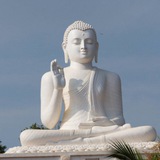
Uttararama Gal Viharaya, ancient city Polonnaruwa, Sri Lanka, the best rock carvings art of Sinhalese culture.
🙏1😇1🤝1
Forwarded from Buddha Dharma books
Free Buddhism ebook
Thus Should You Train Yourselves
Evanhi ho Sikkhitabbam
By Abhayagiri Buddhist Monastery translators team
Free download available:
https://www.lotuslibrary.com/wp-content/uploads/2024/11/1998-thus-should-you-train-yourselves_Sikkhitabbam.pdf
===
Thus Should You Train Yourselves
Evanhi ho Sikkhitabbam
By Abhayagiri Buddhist Monastery translators team
Free download available:
https://www.lotuslibrary.com/wp-content/uploads/2024/11/1998-thus-should-you-train-yourselves_Sikkhitabbam.pdf
===
👍1💯1🤝1
Forwarded from Buddha Dharma books
Free Buddhism ebook
Thus Should You Train Yourselves
Evanhi ho Sikkhitabbam
By Abhayagiri Buddhist Monastery translators team
This book is an exhaustive survey of the Buddha’s ex-
hortations from the Pali Canon addressed in the form
“thus … should you train yourselves” (evañhi vo … sik-
khitabbaṃ). The passages are organized by theme and
roughly follow the gradual path taught in the Mahā-
Assapurasutta (MN 39). In addition to outlining a
gradual course, this sutta is one of the primary sources
for this type of injunction.
Free download available:
https://www.lotuslibrary.com/wp-content/uploads/2024/11/1998-thus-should-you-train-yourselves_Sikkhitabbam.pdf
===
Thus Should You Train Yourselves
Evanhi ho Sikkhitabbam
By Abhayagiri Buddhist Monastery translators team
This book is an exhaustive survey of the Buddha’s ex-
hortations from the Pali Canon addressed in the form
“thus … should you train yourselves” (evañhi vo … sik-
khitabbaṃ). The passages are organized by theme and
roughly follow the gradual path taught in the Mahā-
Assapurasutta (MN 39). In addition to outlining a
gradual course, this sutta is one of the primary sources
for this type of injunction.
Free download available:
https://www.lotuslibrary.com/wp-content/uploads/2024/11/1998-thus-should-you-train-yourselves_Sikkhitabbam.pdf
===
❤1🙏1🆒1
Forwarded from Buddha
The Nature of Concepts
Plato’s allegory of the cave as a metaphor for seeking nirvana
By Joseph Goldstein
Part 1 of 2
There is a famous parable in the Republic of Plato about a cave. In the cave is a row of people, chained in such a way that they can only face the back wall. Behind the row of people is a fire and a procession of figures walking by engaged in all the activities of life. The procession of figures casts shadows on the back wall of the cave. The people who are chained can see only the changing view of shadows, and because that is all they have ever seen, they take these shadows to be ultimate reality. Sometimes a person who is bound in this way, through great effort, manages to loosen the chains and turn around. He or she sees the fire and the procession and begins to understand that the shadows are not the reality, but merely a reflection on the wall. Perhaps with further effort that person is able to cut the chains completely and emerge into the sunlight, into freedom.
Our predicament is similar to those people chained in the cave. The shadows are the world of concepts in which we live. Chained through our attachments, we perceive the world through our ideas, our thoughts, our mental constructs, taking these concepts to be the reality itself.
There are many concepts with which we have been strongly conditioned and that are deeply ingrained in our minds. For example, many people’s lives are committed to the concept of place, of country, of nation. On the planet, there are no divisions between countries. Our minds have created these arbitrary divisions. Every time you cross a border you see how much “reality” has been invested in this concept of place. So many problems in the world—political and economic tensions and hostilities—are related to the thought, “This is my nation, my country.” In understanding that the concept is only the product of our own thought processes, we can begin to free ourselves from that attachment.
Concepts of time are also strongly conditioned in our minds, ideas of past and future. What is it that we call time? We have certain thoughts occurring in the present moment—memories, reflections—we label this whole class of thoughts “past,” and project it somewhere beyond us, apart from the present moment. Likewise, we engage in planning or imagining, label these thoughts “future,” and project them outside into some imagined reality. We rarely see that “past” and “future” are happening right now. All that there is, is an unfolding of present moments. We have created these concepts to serve a useful purpose, but by taking the ideas to be the reality, by not understanding that they are merely the product of our own thought processes, we find ourselves burdened by worries and regrets about the past and anxieties of anticipation about what has not yet happened. When we can settle back into the moment, realizing that past and future are simply thoughts in the present, then we free ourselves from the bondage of “time.”
Self, I, me, mine are all ideas in the mind, arising out of our identification with various aspects of the mind-body process.
It is useful to develop insight into the nature of concepts to see how attached we are to them. We have the idea that we “own” things. The cushion that we sit on does not know that it is owned by anyone. The concept of ownership deals with the relationship of nearness we have to various objects. At times we are near to objects, use them, and then have the idea that we own them. Actually, ownership is a thought process independent of the actual relationship that exists between us and objects in the world. Freeing ourselves from attachment to “ownership” frees us from our enslavement to objects.
Another concept with which we are all particularly involved is the concept of man and woman. When you close your eyes there is the breath, sensations, sounds, thoughts—where is “man” or “woman” except as an idea, a concept? Man and woman cease to exist when the mind is silent.
Plato’s allegory of the cave as a metaphor for seeking nirvana
By Joseph Goldstein
Part 1 of 2
There is a famous parable in the Republic of Plato about a cave. In the cave is a row of people, chained in such a way that they can only face the back wall. Behind the row of people is a fire and a procession of figures walking by engaged in all the activities of life. The procession of figures casts shadows on the back wall of the cave. The people who are chained can see only the changing view of shadows, and because that is all they have ever seen, they take these shadows to be ultimate reality. Sometimes a person who is bound in this way, through great effort, manages to loosen the chains and turn around. He or she sees the fire and the procession and begins to understand that the shadows are not the reality, but merely a reflection on the wall. Perhaps with further effort that person is able to cut the chains completely and emerge into the sunlight, into freedom.
Our predicament is similar to those people chained in the cave. The shadows are the world of concepts in which we live. Chained through our attachments, we perceive the world through our ideas, our thoughts, our mental constructs, taking these concepts to be the reality itself.
There are many concepts with which we have been strongly conditioned and that are deeply ingrained in our minds. For example, many people’s lives are committed to the concept of place, of country, of nation. On the planet, there are no divisions between countries. Our minds have created these arbitrary divisions. Every time you cross a border you see how much “reality” has been invested in this concept of place. So many problems in the world—political and economic tensions and hostilities—are related to the thought, “This is my nation, my country.” In understanding that the concept is only the product of our own thought processes, we can begin to free ourselves from that attachment.
Concepts of time are also strongly conditioned in our minds, ideas of past and future. What is it that we call time? We have certain thoughts occurring in the present moment—memories, reflections—we label this whole class of thoughts “past,” and project it somewhere beyond us, apart from the present moment. Likewise, we engage in planning or imagining, label these thoughts “future,” and project them outside into some imagined reality. We rarely see that “past” and “future” are happening right now. All that there is, is an unfolding of present moments. We have created these concepts to serve a useful purpose, but by taking the ideas to be the reality, by not understanding that they are merely the product of our own thought processes, we find ourselves burdened by worries and regrets about the past and anxieties of anticipation about what has not yet happened. When we can settle back into the moment, realizing that past and future are simply thoughts in the present, then we free ourselves from the bondage of “time.”
Self, I, me, mine are all ideas in the mind, arising out of our identification with various aspects of the mind-body process.
It is useful to develop insight into the nature of concepts to see how attached we are to them. We have the idea that we “own” things. The cushion that we sit on does not know that it is owned by anyone. The concept of ownership deals with the relationship of nearness we have to various objects. At times we are near to objects, use them, and then have the idea that we own them. Actually, ownership is a thought process independent of the actual relationship that exists between us and objects in the world. Freeing ourselves from attachment to “ownership” frees us from our enslavement to objects.
Another concept with which we are all particularly involved is the concept of man and woman. When you close your eyes there is the breath, sensations, sounds, thoughts—where is “man” or “woman” except as an idea, a concept? Man and woman cease to exist when the mind is silent.
Telegram
Buddha
Buddha dharma teachings from the suttas and commentaries
💯1🤗1
Forwarded from Buddha
Imagine waves arising out of the ocean and commenting upon each other as being big or small, beautiful or grand, which is true in a relative sense but doesn’t reflect the underlying unity of the great mass of water. It is just the same when we become attached to concepts about certain shapes and forms; comparisons, judgments, evaluations, all arise and strengthen the relative separateness and isolation. In meditation, we free ourselves from attachment to that conceptualization and experience the fundamental unity of the elements that comprise our being.
Perhaps the most deeply ingrained concept, the one that has kept us chained longest in the cave of shadows, binding us to the wheel of life and death and rebirth, is the concept of self. The idea that there is someone behind this flow, that there is some entity, some permanent element, that is the essence of our being. Self, I, me, mine are all ideas in the mind, arising out of our identification with various aspects of the mind-body process. From the beginning this “self” does not exist, yet because we’re so firmly attached to the idea of it, we spend much of our lives defending or enlarging or satisfying this imaginary self. Meditation helps us to see its conceptual nature, to see that in reality it does not exist, that it is simply an idea, an extraneous projection onto what’s happening in the moment.
These are a few of the concepts that keep us bound—concepts of place, of time, of ownership, of man or woman, of self. You can see how very strong these concepts are, how much of our lives revolve about them, how much we live in the world of shadow. Kalu Rinpoche, a well-known Tibetan meditation master, wrote,
You live in illusion and the appearance of things. There is a Reality. You are that Reality. When you understand this, you will see that you are nothing. And being nothing, you are everything. That is all.
There are four “ultimate realities.” They are called that because they can be experienced, as opposed to merely thought about. These four ultimate realities are the entire content of our experience.
The first of these are the material elements composing all objects of the physical universe. Traditionally, and in terms of how we can experience them in our practice, they are described as the earth, air, fire, and water elements. The earth element is the element of extension. We experience it as the hardness or softness of objects. When we experience pain in the body, it is a manifestation of this element. When we walk and have contact with the earth, that feeling of tangible contact is the earth element—the feeling of hardness, softness, extension.
===
Buddha dharma teachings channel:
https://news.1rj.ru/str/lorddivinebuddha
===
Perhaps the most deeply ingrained concept, the one that has kept us chained longest in the cave of shadows, binding us to the wheel of life and death and rebirth, is the concept of self. The idea that there is someone behind this flow, that there is some entity, some permanent element, that is the essence of our being. Self, I, me, mine are all ideas in the mind, arising out of our identification with various aspects of the mind-body process. From the beginning this “self” does not exist, yet because we’re so firmly attached to the idea of it, we spend much of our lives defending or enlarging or satisfying this imaginary self. Meditation helps us to see its conceptual nature, to see that in reality it does not exist, that it is simply an idea, an extraneous projection onto what’s happening in the moment.
These are a few of the concepts that keep us bound—concepts of place, of time, of ownership, of man or woman, of self. You can see how very strong these concepts are, how much of our lives revolve about them, how much we live in the world of shadow. Kalu Rinpoche, a well-known Tibetan meditation master, wrote,
You live in illusion and the appearance of things. There is a Reality. You are that Reality. When you understand this, you will see that you are nothing. And being nothing, you are everything. That is all.
There are four “ultimate realities.” They are called that because they can be experienced, as opposed to merely thought about. These four ultimate realities are the entire content of our experience.
The first of these are the material elements composing all objects of the physical universe. Traditionally, and in terms of how we can experience them in our practice, they are described as the earth, air, fire, and water elements. The earth element is the element of extension. We experience it as the hardness or softness of objects. When we experience pain in the body, it is a manifestation of this element. When we walk and have contact with the earth, that feeling of tangible contact is the earth element—the feeling of hardness, softness, extension.
===
Buddha dharma teachings channel:
https://news.1rj.ru/str/lorddivinebuddha
===
Telegram
Buddha
Buddha dharma teachings from the suttas and commentaries
❤3🥰1👌1