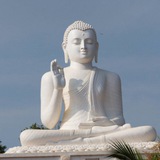
Forwarded from Words of the Buddha
Where then does the idea of self come from? Why is it that we’re so conditioned to believe in the existence of “I”?
There is one mental factor that is called wrong view, and it has the function of identifying with the various changing elements of the mind and body. When the factor of wrong view occurs in a moment of consciousness, the concept of self arises. But it too is impermanent and impersonal, arising at times and passing away. When we are mindful in the moment, wrong view does not arise, and so we begin to free ourselves from the conditioning of “I, me, mine.” Every moment of mindfulness is a moment of egolessness, of purity.
The question has often been asked in this practice, “Who’s being mindful?” Mindfulness, too, is a mental factor. It has the function of noticing what the object is, staying aware of the present moment. Gurdjieff called this quality self-remembering. There is no one who is mindful, only the functioning of a particular factor: an awareness without clinging, condemning, or identifying. As mindfulness is developed, there is a deeper understanding that all conditioned phenomena are transitory and empty of an abiding self.
We are like a big, moving jigsaw puzzle. The pieces of the puzzle are the material elements, consciousness, and mental factors. When the pieces join together in a certain way we see “man” or “woman,” “tree,” “house.” But that is only the picture of the arranged pieces, the concepts. It is the fundamental elements of mind and body, the underlying energies in constant flow and transformation, that constitute the reality of our experience.
The fourth ultimate reality is nirvana. Nirvana is like the experience of a person freeing himself entirely from the chains and emerging from the cave into sunlight, going beyond this conditioned mind-body process into freedom.
We are all in the process of breaking the chains that keep us bound in the cave of ignorance. At times during the practice it may seem as if nothing much is happening except a lot of pain and restlessness and agitation and doubt. But, in fact, every moment of awareness, every moment of mindfulness, helps to weaken the chain of our attachments. We are building the momentum of that awareness and, as the mindfulness and concentration get stronger, the mind becomes more powerful and insightful.
From The Experience of Insight by Joseph Goldstein.
===
Joseph Goldstein is cofounder and a guiding teacher of the Insight Meditation Society in Barre, Massachusetts, and its Forest Refuge program, and helped establish the Barre Center for Buddhist Studies. His books include A Heart Full of Peace, One Dharma: The Emerging Western Buddhism, and Mindfulness: A Practical Guide to Awakening.
===
Part 1 of 2:
https://news.1rj.ru/str/lorddivinebuddha/3984
Part 2 of 2:
https://news.1rj.ru/str/wordsofbuddha/4917
===
Words of the Buddha channel:
https://news.1rj.ru/str/wordsofbuddha
===
There is one mental factor that is called wrong view, and it has the function of identifying with the various changing elements of the mind and body. When the factor of wrong view occurs in a moment of consciousness, the concept of self arises. But it too is impermanent and impersonal, arising at times and passing away. When we are mindful in the moment, wrong view does not arise, and so we begin to free ourselves from the conditioning of “I, me, mine.” Every moment of mindfulness is a moment of egolessness, of purity.
The question has often been asked in this practice, “Who’s being mindful?” Mindfulness, too, is a mental factor. It has the function of noticing what the object is, staying aware of the present moment. Gurdjieff called this quality self-remembering. There is no one who is mindful, only the functioning of a particular factor: an awareness without clinging, condemning, or identifying. As mindfulness is developed, there is a deeper understanding that all conditioned phenomena are transitory and empty of an abiding self.
We are like a big, moving jigsaw puzzle. The pieces of the puzzle are the material elements, consciousness, and mental factors. When the pieces join together in a certain way we see “man” or “woman,” “tree,” “house.” But that is only the picture of the arranged pieces, the concepts. It is the fundamental elements of mind and body, the underlying energies in constant flow and transformation, that constitute the reality of our experience.
The fourth ultimate reality is nirvana. Nirvana is like the experience of a person freeing himself entirely from the chains and emerging from the cave into sunlight, going beyond this conditioned mind-body process into freedom.
We are all in the process of breaking the chains that keep us bound in the cave of ignorance. At times during the practice it may seem as if nothing much is happening except a lot of pain and restlessness and agitation and doubt. But, in fact, every moment of awareness, every moment of mindfulness, helps to weaken the chain of our attachments. We are building the momentum of that awareness and, as the mindfulness and concentration get stronger, the mind becomes more powerful and insightful.
From The Experience of Insight by Joseph Goldstein.
===
Joseph Goldstein is cofounder and a guiding teacher of the Insight Meditation Society in Barre, Massachusetts, and its Forest Refuge program, and helped establish the Barre Center for Buddhist Studies. His books include A Heart Full of Peace, One Dharma: The Emerging Western Buddhism, and Mindfulness: A Practical Guide to Awakening.
===
Part 1 of 2:
https://news.1rj.ru/str/lorddivinebuddha/3984
Part 2 of 2:
https://news.1rj.ru/str/wordsofbuddha/4917
===
Words of the Buddha channel:
https://news.1rj.ru/str/wordsofbuddha
===
Telegram
Words of the Buddha
Daily teachings of Buddha Dharma
🕊1🍓1
14. Alaïkato ce'pi samam careyya
santo danto niyato brahmacàrã
Sabbesu bhutesu nidhàya daudam
so bràhmauo so samauo sa bhikkhu. 142.
NOT BY EXTERNAL APPEARANCE DOES ONE BECOME HOLY
14. Though gaily decked, if he should live in peace, (with passions) subdued, (and senses) controlled, certain 18 (of the four Paths of Sainthood), perfectly pure, 19 laying aside the rod (in his relations) towards all living beings, 20 a Bràhmaua 21 indeed is he, an ascetic 22 is he, a bhikkhu 23 is he. 24 142.
Story
A minister saw his nautch girl fall dead while dancing. Overcome with grief, he went to the Buddha, who preached to him. Hearing the Dhamma he attained Arahantship and passed away, though adorned and dressed in state. The monks inquired whether it was proper to call him a samaua. In reply the Buddha stated that holiness did not depend on external appearance.
===
Ajahn Chah, Buddhist teacher of Thai forest meditation of Theravada Buddhism channel:
https://news.1rj.ru/str/ajahnchah_buddhism
===
santo danto niyato brahmacàrã
Sabbesu bhutesu nidhàya daudam
so bràhmauo so samauo sa bhikkhu. 142.
NOT BY EXTERNAL APPEARANCE DOES ONE BECOME HOLY
14. Though gaily decked, if he should live in peace, (with passions) subdued, (and senses) controlled, certain 18 (of the four Paths of Sainthood), perfectly pure, 19 laying aside the rod (in his relations) towards all living beings, 20 a Bràhmaua 21 indeed is he, an ascetic 22 is he, a bhikkhu 23 is he. 24 142.
Story
A minister saw his nautch girl fall dead while dancing. Overcome with grief, he went to the Buddha, who preached to him. Hearing the Dhamma he attained Arahantship and passed away, though adorned and dressed in state. The monks inquired whether it was proper to call him a samaua. In reply the Buddha stated that holiness did not depend on external appearance.
===
Ajahn Chah, Buddhist teacher of Thai forest meditation of Theravada Buddhism channel:
https://news.1rj.ru/str/ajahnchah_buddhism
===
Telegram
Ajahn Chah - Theravada Thailand Buddhism
Collection of teachings of Venerable Ajahn Chah, a foremost meditation and Buddhist teacher from Thailand
👍1👌1
Free Buddhism ebook
Dependent Liberation
By Ajahn Brahmali
Dependent Liberation, as discussed by Ajahn Brahmali, is a framework that explains how the process of meditation, particularly the experience of different meditative states, is connected to the Buddhist concept of Dependent Origination. It highlights how suffering, or unsatisfactory experiences, can be a catalyst for liberation when understood through the lens of dependent arising.
Free download here:
https://www.lotuslibrary.com/wp-content/uploads/2024/11/1991-dependent-liberation_Brahmali.pdf
===
Dependent Liberation
By Ajahn Brahmali
Dependent Liberation, as discussed by Ajahn Brahmali, is a framework that explains how the process of meditation, particularly the experience of different meditative states, is connected to the Buddhist concept of Dependent Origination. It highlights how suffering, or unsatisfactory experiences, can be a catalyst for liberation when understood through the lens of dependent arising.
Free download here:
https://www.lotuslibrary.com/wp-content/uploads/2024/11/1991-dependent-liberation_Brahmali.pdf
===
👍1🏆1
Free Buddhism ebook
Dependent Liberation
By Ajahn Brahmali
Dependent Liberation, as discussed by Ajahn Brahmali, is a framework that explains how the process of meditation, particularly the experience of different meditative states, is connected to the Buddhist concept of Dependent Origination. It highlights how suffering, or unsatisfactory experiences, can be a catalyst for liberation when understood through the lens of dependent arising.
Free download here:
https://www.lotuslibrary.com/wp-content/uploads/2024/11/1991-dependent-liberation_Brahmali.pdf
===
Dependent Liberation
By Ajahn Brahmali
Dependent Liberation, as discussed by Ajahn Brahmali, is a framework that explains how the process of meditation, particularly the experience of different meditative states, is connected to the Buddhist concept of Dependent Origination. It highlights how suffering, or unsatisfactory experiences, can be a catalyst for liberation when understood through the lens of dependent arising.
Free download here:
https://www.lotuslibrary.com/wp-content/uploads/2024/11/1991-dependent-liberation_Brahmali.pdf
===
💯1🫡1
15. Hirãnisedho puriso
koci lokasmim vijjati
Yo nindam apabodhati
asso bhadro kasàm iva. 143.
16. Asso yathà bhadro kasàniviññho
âtàpino samvegino bhavàtha.
Saddhàya sãlena ca viriyena ca
samàdhinà dhammavinicchayena ca
Sampannavijjàcarauà patissatà
pahassatha dukkham idam anappakam. 144.
THE MODEST ARE RARE IN THIS WORLD
15. (Rarely) is found in this world anyone who, restrained by modesty, avoids reproach, as a thorough-bred horse (avoids) the whip. 25 143.
BE VIRTUOUS AND GET RID OF SUFFERING
16. Like a thorough-bred horse touched by the whip, even so be strenuous and zealous. By confidence, by virtue, by effort, by concentration, by investigation of the Truth, by being endowed with knowledge and conduct, 26 and by being mindful, get rid of this great suffering. 144.
Story
A poor youth, whose only possessions were his ragged garment and a potsherd, hung them on the branch of a tree and became a monk. Several times he disrobed and re-entered the Order. Finally he thought of the helpless state he would be in if he were to disrobe again. He meditated and attained Arahantship. Concerning his discontent and subsequent striving, the Buddha uttered these verses.
===
Free Buddhism books, teachings, podcasts and videos from Theravada, Mahayana and Vajrayana traditions:
https://news.1rj.ru/str/buddha_ebooks
===
koci lokasmim vijjati
Yo nindam apabodhati
asso bhadro kasàm iva. 143.
16. Asso yathà bhadro kasàniviññho
âtàpino samvegino bhavàtha.
Saddhàya sãlena ca viriyena ca
samàdhinà dhammavinicchayena ca
Sampannavijjàcarauà patissatà
pahassatha dukkham idam anappakam. 144.
THE MODEST ARE RARE IN THIS WORLD
15. (Rarely) is found in this world anyone who, restrained by modesty, avoids reproach, as a thorough-bred horse (avoids) the whip. 25 143.
BE VIRTUOUS AND GET RID OF SUFFERING
16. Like a thorough-bred horse touched by the whip, even so be strenuous and zealous. By confidence, by virtue, by effort, by concentration, by investigation of the Truth, by being endowed with knowledge and conduct, 26 and by being mindful, get rid of this great suffering. 144.
Story
A poor youth, whose only possessions were his ragged garment and a potsherd, hung them on the branch of a tree and became a monk. Several times he disrobed and re-entered the Order. Finally he thought of the helpless state he would be in if he were to disrobe again. He meditated and attained Arahantship. Concerning his discontent and subsequent striving, the Buddha uttered these verses.
===
Free Buddhism books, teachings, podcasts and videos from Theravada, Mahayana and Vajrayana traditions:
https://news.1rj.ru/str/buddha_ebooks
===
Telegram
Buddha Dharma books
Free Buddhism books, teachings, podcasts and videos from Theravada, Mahayana and Vajrayana traditions
👍1🙏1👌1
Forwarded from Buddha
Free Buddha Dharma ebook
Two Paths to Knowledge
By Bhikkhu Bodhi
Free download here:
https://www.accesstoinsight.org/lib/authors/bodhi/bps-essay_42.pdf
===
Two Paths to Knowledge
By Bhikkhu Bodhi
Free download here:
https://www.accesstoinsight.org/lib/authors/bodhi/bps-essay_42.pdf
===
👏1😇1
Forwarded from Buddha
Free Buddha Dharma ebook
Two Paths to Knowledge
By Bhikkhu Bodhi
ANY of the formidable social and cultural problems we face today are rooted in the sharp schism that has divided Western civilization between science and religion, where science claims invincible knowledge based on the empirical investigation of the natural world, while religion can do little more than call for faith in supernatural creeds and obedience to codes of ethics that require restraint, self-discipline, and self-sacrifice. Since religion, as traditionally understood, often rests on little more than blithe promises and pompous threats, its appeals to our allegiance seldom win assent, while the ethical ideals it advocates stand hardly a fighting chance against the constant injunction—thrust upon us by TV, radio, and signboard—to enjoy life to the hilt while we can. As a result, a vast portion of humankind today has become alienated from religion as a meaningful guide to life, left with no alternative but to plunge headlong into the secular religion of consumerism and hedonism. Too often, those in the religious camp, sensing the threat secularism poses to their own security, feel driven toward an aggressive fundamentalism in a desperate bid to salvage traditional loyalties.
Free download here:
https://www.accesstoinsight.org/lib/authors/bodhi/bps-essay_42.pdf
===
Two Paths to Knowledge
By Bhikkhu Bodhi
ANY of the formidable social and cultural problems we face today are rooted in the sharp schism that has divided Western civilization between science and religion, where science claims invincible knowledge based on the empirical investigation of the natural world, while religion can do little more than call for faith in supernatural creeds and obedience to codes of ethics that require restraint, self-discipline, and self-sacrifice. Since religion, as traditionally understood, often rests on little more than blithe promises and pompous threats, its appeals to our allegiance seldom win assent, while the ethical ideals it advocates stand hardly a fighting chance against the constant injunction—thrust upon us by TV, radio, and signboard—to enjoy life to the hilt while we can. As a result, a vast portion of humankind today has become alienated from religion as a meaningful guide to life, left with no alternative but to plunge headlong into the secular religion of consumerism and hedonism. Too often, those in the religious camp, sensing the threat secularism poses to their own security, feel driven toward an aggressive fundamentalism in a desperate bid to salvage traditional loyalties.
Free download here:
https://www.accesstoinsight.org/lib/authors/bodhi/bps-essay_42.pdf
===
❤1💯1
Caganussati
As long as he recollects his own generosity in its special qualities of freedom from stain by avarice, etc., then: “On that occasion his mind is not obsessed by greed, hate, or delusion; his mind being inspired by generosity”.
[...] jhana factors arise in a single conscious moment. But owing to the profundity of the generosity’s special qualities, or owing to his being occupied in recollecting the generosity’s special qualities, the jhana is only access & does not reach absorption. And that access jhana is known as “recollection of generosity” because it arises with the generosity’s special qualities as the means.
And when a bhikkhu is devoted to this recollection of generosity, he becomes ever more intent on generosity, his preference is for non-greed, he acts in conformity with loving-kindness, he is fearless. He has much happiness and gladness. And if he penetrates no higher, he is at least headed for a happy destiny.
Partial excerpts from the Visuddhimagga Chapter 7 : Six Recollections
As long as he recollects his own generosity in its special qualities of freedom from stain by avarice, etc., then: “On that occasion his mind is not obsessed by greed, hate, or delusion; his mind being inspired by generosity”.
[...] jhana factors arise in a single conscious moment. But owing to the profundity of the generosity’s special qualities, or owing to his being occupied in recollecting the generosity’s special qualities, the jhana is only access & does not reach absorption. And that access jhana is known as “recollection of generosity” because it arises with the generosity’s special qualities as the means.
And when a bhikkhu is devoted to this recollection of generosity, he becomes ever more intent on generosity, his preference is for non-greed, he acts in conformity with loving-kindness, he is fearless. He has much happiness and gladness. And if he penetrates no higher, he is at least headed for a happy destiny.
Partial excerpts from the Visuddhimagga Chapter 7 : Six Recollections
🙏2💯1🤗1
17. Udakam hi nayanti nettikà
usukàrà namayanti tejanam
Dàrum namayanti tacchakà
attànam damayanti subbatà. 145.
THE GOOD CONTROL THEMSELVES
17. Irrigators lead the waters. Fletchers bend the shafts. Carpenters bend the wood. The virtuous control themselves. 27 145.
Story
A boy belonging to a respectful family entered the Order. While going on his alms round he noticed irrigators and carpenters controlling inanimate things. This induced him to think of the latent power of man. He meditated strenuously and attained Arahantship. Hearing of his realization, the Buddha commented on self-control.
===
Buddha dharma teachings channel:
https://news.1rj.ru/str/lorddivinebuddha
===
usukàrà namayanti tejanam
Dàrum namayanti tacchakà
attànam damayanti subbatà. 145.
THE GOOD CONTROL THEMSELVES
17. Irrigators lead the waters. Fletchers bend the shafts. Carpenters bend the wood. The virtuous control themselves. 27 145.
Story
A boy belonging to a respectful family entered the Order. While going on his alms round he noticed irrigators and carpenters controlling inanimate things. This induced him to think of the latent power of man. He meditated strenuously and attained Arahantship. Hearing of his realization, the Buddha commented on self-control.
===
Buddha dharma teachings channel:
https://news.1rj.ru/str/lorddivinebuddha
===
Telegram
Buddha
Buddha dharma teachings from the suttas and commentaries
👏1🙏1💯1
Chapter 11
Jarà Vagga
Old Age
(Text and Translation by Ven. Nàrada)
1. Ko nu hàso kimànando
niccam pajjalite sati
Andhakàrena onaddhà
padãpam na gavessatha 146.
SEEK THE LIGHT
1. What is laughter, what is joy, when the world is ever burning? 1 Shrouded by darkness, would you not seek the light? 146.
Story
Visàkhà, the chief lay benefactress of the Buddha, once visited Him, accompanied by some women who, without her knowledge, had become drunk. In their drunken state they discourteously danced and sang before the Buddha. By His psychic powers the Buddha created a darkness which brought them to their senses. The Buddha then uttered this verse.
===
Vajrayana Tantrayana Buddhism channel:
https://news.1rj.ru/str/tantrayanabuddhism
Tibetan Buddhism - Vajrayana, Tantrayana and esoteric Buddhism channel:
https://news.1rj.ru/str/tibetanbuddha
===
Jarà Vagga
Old Age
(Text and Translation by Ven. Nàrada)
1. Ko nu hàso kimànando
niccam pajjalite sati
Andhakàrena onaddhà
padãpam na gavessatha 146.
SEEK THE LIGHT
1. What is laughter, what is joy, when the world is ever burning? 1 Shrouded by darkness, would you not seek the light? 146.
Story
Visàkhà, the chief lay benefactress of the Buddha, once visited Him, accompanied by some women who, without her knowledge, had become drunk. In their drunken state they discourteously danced and sang before the Buddha. By His psychic powers the Buddha created a darkness which brought them to their senses. The Buddha then uttered this verse.
===
Vajrayana Tantrayana Buddhism channel:
https://news.1rj.ru/str/tantrayanabuddhism
Tibetan Buddhism - Vajrayana, Tantrayana and esoteric Buddhism channel:
https://news.1rj.ru/str/tibetanbuddha
===
Telegram
Vajrayana Tantrayana Buddhism
Buddha teachings from the Vajrayana, esoteric, secret or Tantrayana vehicle
👍1🆒1
2. Passa cittakatam bimbam
arukàyam samussitam
âturam bahusaïkappam
yassa natthi dhuvam ñhiti. 147.
FOUL IS THIS GAILY DECKED BODY
2. Behold this beautiful body, a mass of sores, a heaped-up (lump), diseased, much thought of, in which nothing lasts, nothing persists. 2 147.
Story
A young monk fell in love with Sirimà, a beautiful courtesan. Unexpectedly she died. Even when the King ordered the people to have a look at her corpse nobody cared to look at it. Showing the decaying and worm-infested body to the monks, the Buddha spoke on the loathsomeness of the body.
===
Words of the Buddha channel:
https://news.1rj.ru/str/wordsofbuddha
===
arukàyam samussitam
âturam bahusaïkappam
yassa natthi dhuvam ñhiti. 147.
FOUL IS THIS GAILY DECKED BODY
2. Behold this beautiful body, a mass of sores, a heaped-up (lump), diseased, much thought of, in which nothing lasts, nothing persists. 2 147.
Story
A young monk fell in love with Sirimà, a beautiful courtesan. Unexpectedly she died. Even when the King ordered the people to have a look at her corpse nobody cared to look at it. Showing the decaying and worm-infested body to the monks, the Buddha spoke on the loathsomeness of the body.
===
Words of the Buddha channel:
https://news.1rj.ru/str/wordsofbuddha
===
Telegram
Words of the Buddha
Daily teachings of Buddha Dharma
❤1👏1🏆1
3. Parijiuuam idam rupam
roganiddham pabhaïguram
Bhijjati putisandeho
marauantam hi jãvitam. 148.
LIFE ENDS IN DEATH
3. Thoroughly worn out is this body, a nest of diseases, perishable. This putrid mass breaks up. Truly, life ends in death. 148.
Story
Seeing an old nun stumble and fall, the Buddha spoke on the fleeting nature of life.
===
Dhammapada, beloved and favorite teachings of the Buddha channel:
https://news.1rj.ru/str/dhammapadas
===
roganiddham pabhaïguram
Bhijjati putisandeho
marauantam hi jãvitam. 148.
LIFE ENDS IN DEATH
3. Thoroughly worn out is this body, a nest of diseases, perishable. This putrid mass breaks up. Truly, life ends in death. 148.
Story
Seeing an old nun stumble and fall, the Buddha spoke on the fleeting nature of life.
===
Dhammapada, beloved and favorite teachings of the Buddha channel:
https://news.1rj.ru/str/dhammapadas
===
Telegram
Dhammapada - Buddha Dharma Teachings
Daily teachings of the Dhammapada, beloved and favorite teachings of the Buddha
🙏1💯1🏆1
4. Yànimàni apatthàni
alàpun' eva sàrade
Kàpotakàni aññhãni
tàni disvàna kà rati 149.
WHAT DELIGHT IN SEEING WHITE BONES?
4. Like gourds cast away in autumn are these dove-hued bones. What pleasure is there in looking at them? 149.
Story
Many monks went to a cemetery to meditate. Lust arose in them while meditating on fresh corpses. Thereupon the Buddha uttered this verse in admonition.
===
Buddha dharma teachings channel:
https://invite.viber.com/?g2=AQAKw1y3rv%2F6sk61PI2W4izuIiaEZj8YZujhY1tSzL%2B07s7rFnVFDAd0bAYFaMLw
===
alàpun' eva sàrade
Kàpotakàni aññhãni
tàni disvàna kà rati 149.
WHAT DELIGHT IN SEEING WHITE BONES?
4. Like gourds cast away in autumn are these dove-hued bones. What pleasure is there in looking at them? 149.
Story
Many monks went to a cemetery to meditate. Lust arose in them while meditating on fresh corpses. Thereupon the Buddha uttered this verse in admonition.
===
Buddha dharma teachings channel:
https://invite.viber.com/?g2=AQAKw1y3rv%2F6sk61PI2W4izuIiaEZj8YZujhY1tSzL%2B07s7rFnVFDAd0bAYFaMLw
===
Viber
Buddha
Buddha dharma teachings from the suttas and commentaries from Theravada tradition
💯1🤝1