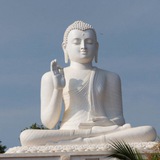
He knows in every way
beings’ passing away,
and their re-
arising;
unattached, awakened,
well-gone:
he’s what I call
a brahman.
419
Dhammapada XXVI : Brahmans
Tibetan Buddhism - Vajrayana, Tantrayana and esoteric Buddhism channel:
https://news.1rj.ru/str/tibetanbuddha
Vajrayana Tantrayana Buddhism channel:
https://news.1rj.ru/str/tantrayanabuddhism
beings’ passing away,
and their re-
arising;
unattached, awakened,
well-gone:
he’s what I call
a brahman.
419
Dhammapada XXVI : Brahmans
Tibetan Buddhism - Vajrayana, Tantrayana and esoteric Buddhism channel:
https://news.1rj.ru/str/tibetanbuddha
Vajrayana Tantrayana Buddhism channel:
https://news.1rj.ru/str/tantrayanabuddhism
Telegram
Tibetan Buddhism Vajrayana Tantrayana esoteric tradition
Buddha Dharma teachings from the esoteric Vajrayana or Tantrayana Buddhism, includes all major schools Nyingma, Kagyu, Gelug, Sakya, Jonang and Bonpo.
❤1👍1
Free Buddha Dharma ebook
Everything Is Teaching Us
by Venerable Ajahn Chah
‘Everything is teaching us’ summarizes Ajahn Chah’s approach quite neatly. Showing us the immediacy of the Dhamma, he demystified the concepts of Buddhism so that almost anyone who listened could get the point, be they barely literate farmers or highly educated city people, Thais or Westerners. Yet nothing was compromised, and through his unmatched skill people usually got more than they bargained for.
He taught villagers how to manage their family lives and finances, yet he might be just as likely to tell them about making causes for realization of Nibbana. He could instruct a visiting group on the basics of morality, without moralizing and in a way that was uplifting, but would gently remind them of their mortality at the end of infusing them with his infectious happiness; or he might scold the daylights out of local monastics and lay people. He could start a discourse by expounding the most basic Buddhist ideas and seamlessly move on to talking about ultimate reality.
Free download here:
https://static.sariputta.com/pdf/tipitaka/261/everything_is_teaching_us_pdf.pdf
=============
Everything Is Teaching Us
by Venerable Ajahn Chah
‘Everything is teaching us’ summarizes Ajahn Chah’s approach quite neatly. Showing us the immediacy of the Dhamma, he demystified the concepts of Buddhism so that almost anyone who listened could get the point, be they barely literate farmers or highly educated city people, Thais or Westerners. Yet nothing was compromised, and through his unmatched skill people usually got more than they bargained for.
He taught villagers how to manage their family lives and finances, yet he might be just as likely to tell them about making causes for realization of Nibbana. He could instruct a visiting group on the basics of morality, without moralizing and in a way that was uplifting, but would gently remind them of their mortality at the end of infusing them with his infectious happiness; or he might scold the daylights out of local monastics and lay people. He could start a discourse by expounding the most basic Buddhist ideas and seamlessly move on to talking about ultimate reality.
Free download here:
https://static.sariputta.com/pdf/tipitaka/261/everything_is_teaching_us_pdf.pdf
=============
❤1👍1
He whose course they don’t know
–devas, gandhabbas, & human beings–
his effluents ended, an arahant:
he’s what I call
a brahman.
420
Dhammapada XXVI : Brahmans
Words of the Buddha channel:
https://news.1rj.ru/str/wordsofbuddha
–devas, gandhabbas, & human beings–
his effluents ended, an arahant:
he’s what I call
a brahman.
420
Dhammapada XXVI : Brahmans
Words of the Buddha channel:
https://news.1rj.ru/str/wordsofbuddha
Telegram
Words of the Buddha
Daily teachings of Buddha Dharma
❤1👍1
He who has nothing
–in front, behind, in between–
the one with nothing
who clings to no thing:
he’s what I call
a brahman.
421*
Dhammapada XXVI : Brahmans
Dhammapada, beloved and favorite teachings of the Buddha channel:
https://news.1rj.ru/str/dhammapadas
–in front, behind, in between–
the one with nothing
who clings to no thing:
he’s what I call
a brahman.
421*
Dhammapada XXVI : Brahmans
Dhammapada, beloved and favorite teachings of the Buddha channel:
https://news.1rj.ru/str/dhammapadas
Telegram
Dhammapada - Buddha Dharma Teachings
Daily teachings of the Dhammapada, beloved and favorite teachings of the Buddha
❤1👍1
A splendid bull, conqueror,
hero, great seer–
free from want,
awakened, washed:
he’s what I call
a brahman.
422
Dhammapada XXVI : Brahmans
Buddha dharma teachings channel:
https://invite.viber.com/?g2=AQAKw1y3rv%2F6sk61PI2W4izuIiaEZj8YZujhY1tSzL%2B07s7rFnVFDAd0bAYFaMLw
hero, great seer–
free from want,
awakened, washed:
he’s what I call
a brahman.
422
Dhammapada XXVI : Brahmans
Buddha dharma teachings channel:
https://invite.viber.com/?g2=AQAKw1y3rv%2F6sk61PI2W4izuIiaEZj8YZujhY1tSzL%2B07s7rFnVFDAd0bAYFaMLw
Viber
Buddha
Buddha dharma teachings from the suttas and commentaries from Theravada tradition
❤1👍1
Free Buddha Dharma ebook
The Buddha`s Ways to Peace and Happiness
by Chanmyay Sayadaw
For those who have not studied the Buddha's teaching completely and thoroughly, there can be a misunderstanding that the Buddha Dhamma is only about the attainment of Nibbana or well-being in future lives, and not about peace and happiness in this very life.
As a matter of fact, the Buddha's teaching also show the ways to live in peace and happiness in the present life. The various kinds of advice range from how to act, speak, and think to how to eat and dress, as well as how to develop a pure mental attitude that allows one to live with integrity.
Free download here:
https://drive.google.com/file/d/1nyLLmmFtMxrutsGkEB5BcHn8cyK5BVZB/view?usp=sharing
The Buddha`s Ways to Peace and Happiness
by Chanmyay Sayadaw
For those who have not studied the Buddha's teaching completely and thoroughly, there can be a misunderstanding that the Buddha Dhamma is only about the attainment of Nibbana or well-being in future lives, and not about peace and happiness in this very life.
As a matter of fact, the Buddha's teaching also show the ways to live in peace and happiness in the present life. The various kinds of advice range from how to act, speak, and think to how to eat and dress, as well as how to develop a pure mental attitude that allows one to live with integrity.
Free download here:
https://drive.google.com/file/d/1nyLLmmFtMxrutsGkEB5BcHn8cyK5BVZB/view?usp=sharing
❤1👍1
He knows
his former lives.
He sees
heavens & states of woe,
has attained
the ending of birth,
is a sage
who has mastered full-knowing,
his mastery totally mastered:
he’s what I call
a brahman.
423*
Dhammapada XXVI : Brahmans
Words of the Buddha channel:
https://invite.viber.com/?g2=AQAFqzqlj7FmI061PX17rxWMAtZ%2BRuso%2FH2KmHKZSgnv7v9DD8X0bDkKnZDr9JDq
his former lives.
He sees
heavens & states of woe,
has attained
the ending of birth,
is a sage
who has mastered full-knowing,
his mastery totally mastered:
he’s what I call
a brahman.
423*
Dhammapada XXVI : Brahmans
Words of the Buddha channel:
https://invite.viber.com/?g2=AQAFqzqlj7FmI061PX17rxWMAtZ%2BRuso%2FH2KmHKZSgnv7v9DD8X0bDkKnZDr9JDq
Viber
Words Of The Buddha
Daily teachings from Buddha Dharma
❤1👍1
This was said by the Lord, said by the Arahant, so I heard:
“Bhikkhus, there are these three eyes. What three? The fleshly eye, the divine eye, and the wisdom eye. These, bhikkhus, are the three eyes.”
This is the meaning of what the Lord said. So in regard to this it was said:
The fleshly eye, the divine eye,
And the unsurpassed wisdom eye—
These three eyes were described
By the Buddha, supreme among men.
The arising of the fleshly eye
Is the path to the divine eye,
But the unsurpassed wisdom eye
Is that from which knowledge arises.
By obtaining such an eye
One is released from all suffering.
This too is the meaning of what was said by the Lord, so I heard.
Iti 61 Cakkhusutta: Eyes
“Bhikkhus, there are these three eyes. What three? The fleshly eye, the divine eye, and the wisdom eye. These, bhikkhus, are the three eyes.”
This is the meaning of what the Lord said. So in regard to this it was said:
The fleshly eye, the divine eye,
And the unsurpassed wisdom eye—
These three eyes were described
By the Buddha, supreme among men.
The arising of the fleshly eye
Is the path to the divine eye,
But the unsurpassed wisdom eye
Is that from which knowledge arises.
By obtaining such an eye
One is released from all suffering.
This too is the meaning of what was said by the Lord, so I heard.
Iti 61 Cakkhusutta: Eyes
❤2👍1👏1
The Dhammapada: Verses and Stories
Translated by Daw Mya Tin, M.A.
Edited by Editorial Committee, Burma Tipitaka Association Rangoon, Burma, 1986
Dhammapada Verse 1
Cakkhupalatthera Vatthu
Manopubbangama dhamma1
manosettha manomaya
manasa ce padutthena2
bhasati va karoti va
tato nam dukkhamanveti
cakkamva vahato padam.
Verse 1: All mental phenomena have mind as their forerunner; they have mind as their chief; they are mind-made. If one speaks or acts with an evil mind, 'dukkha' 3 follows him just as the wheel follows the hoofprint of the ox that draws the cart.
1. manopubbangama dhamma: All mental phenomena have Mind as their forerunner in the sense that Mind is the most dominant, and it is the cause of the other three mental phenomena, namely, Feeling (vedana), Perception (sanna) and Mental Formations or Mental Concomitants (sankhara). These three have Mind or Consciousness (vinnana) as their forerunner, because although they arise simultaneously with Mind they cannot arise if Mind does not arise. (The Commentary)
2. manasa ce padutthena (Verse 1) and manasi ce pasannena (Verse 2): Manasa here means intention or volition (cetana); volition leads one to the performance of volitional actions, both good and evil. This volition and the resultant actions constitute kamma; and kamma always follows one to produce results. Cakkhupala's blindness (Verse 1) was the consequence of his having acted with an evil intention in a previous existence and Matthakundali's happy existence in Tavatimsa celestial world (Verse 2) was the result of his mental devotion (manopasada) to the Buddha.
3. dukkha: In this context, dukkha mens suffering, or physical or mental pain, misfortune, unsatisfactoriness, evil consequences, etc., and rebirth in the lower planes of existence or in the lower strata of human society if born in the human world.
The Story of Thera Cakkhupala
While residing at the Jetavana monastery in Savatthi, the Buddha uttered Verse (1) of this book, with reference to Cakkhupala, a blind thera.
On one occasion, Thera Cakkhupala came to pay homage to the Buddha at the Jetavana monastery. One night, while pacing up and down in meditation, the thera accidentally stepped on some insects. In the morning, some bhikkhus visiting the thera found the dead insects. They thought ill of the thera and reported the matter to the Buddha. The Buddha asked them whether they had seen the thera killing the insects. When they answered in the negative, the Buddha said, "Just as you had not seen him killing, so also he had not seen those living insects. Besides, as the thera had already attained arahatship he could have no intention of killing and so was quite innocent." On being asked why Cakkhupala was blind although he was an arahat, the Buddha told the following story:
Cakkhupala was a physician in one of his past existences. Once, he had deliberately made a woman patient blind. That woman had promised him to become his slave, together with her children, if her eyes were completely cured. Fearing that she and her children would have to become slaves, she lied to the physician. She told him that her eyes were getting worse when, in fact, they were perfectly cured. The physician knew she was deceiving him, so in revenge, he gave her another ointment, which made her totally blind. As a result of this evil deed the physician lost his eyesight many times in his later existences.
Then the Buddha spoke in verse as follows:
Verse 1: All mental phenomena have mind as their forerunner; they have mind as their chief; they are mind-made. If one speaks or acts with an evil mind, 'dukkha' follows him just as the wheel follows the hoofprint of the ox that draws the cart.
At the end of the discourse, thirty thousand bhikkhus attained arahatship together with Analytical Insight (Patisambhida).
Dhammapada, beloved and favorite teachings of the Buddha channel:
https://invite.viber.com/?g2=AQBLD6phsgvP%2F061YjEM3K%2BNeH1Yb372b9mtfQX2EmuBpgoLUoc99BDMfzHghrme
Translated by Daw Mya Tin, M.A.
Edited by Editorial Committee, Burma Tipitaka Association Rangoon, Burma, 1986
Dhammapada Verse 1
Cakkhupalatthera Vatthu
Manopubbangama dhamma1
manosettha manomaya
manasa ce padutthena2
bhasati va karoti va
tato nam dukkhamanveti
cakkamva vahato padam.
Verse 1: All mental phenomena have mind as their forerunner; they have mind as their chief; they are mind-made. If one speaks or acts with an evil mind, 'dukkha' 3 follows him just as the wheel follows the hoofprint of the ox that draws the cart.
1. manopubbangama dhamma: All mental phenomena have Mind as their forerunner in the sense that Mind is the most dominant, and it is the cause of the other three mental phenomena, namely, Feeling (vedana), Perception (sanna) and Mental Formations or Mental Concomitants (sankhara). These three have Mind or Consciousness (vinnana) as their forerunner, because although they arise simultaneously with Mind they cannot arise if Mind does not arise. (The Commentary)
2. manasa ce padutthena (Verse 1) and manasi ce pasannena (Verse 2): Manasa here means intention or volition (cetana); volition leads one to the performance of volitional actions, both good and evil. This volition and the resultant actions constitute kamma; and kamma always follows one to produce results. Cakkhupala's blindness (Verse 1) was the consequence of his having acted with an evil intention in a previous existence and Matthakundali's happy existence in Tavatimsa celestial world (Verse 2) was the result of his mental devotion (manopasada) to the Buddha.
3. dukkha: In this context, dukkha mens suffering, or physical or mental pain, misfortune, unsatisfactoriness, evil consequences, etc., and rebirth in the lower planes of existence or in the lower strata of human society if born in the human world.
The Story of Thera Cakkhupala
While residing at the Jetavana monastery in Savatthi, the Buddha uttered Verse (1) of this book, with reference to Cakkhupala, a blind thera.
On one occasion, Thera Cakkhupala came to pay homage to the Buddha at the Jetavana monastery. One night, while pacing up and down in meditation, the thera accidentally stepped on some insects. In the morning, some bhikkhus visiting the thera found the dead insects. They thought ill of the thera and reported the matter to the Buddha. The Buddha asked them whether they had seen the thera killing the insects. When they answered in the negative, the Buddha said, "Just as you had not seen him killing, so also he had not seen those living insects. Besides, as the thera had already attained arahatship he could have no intention of killing and so was quite innocent." On being asked why Cakkhupala was blind although he was an arahat, the Buddha told the following story:
Cakkhupala was a physician in one of his past existences. Once, he had deliberately made a woman patient blind. That woman had promised him to become his slave, together with her children, if her eyes were completely cured. Fearing that she and her children would have to become slaves, she lied to the physician. She told him that her eyes were getting worse when, in fact, they were perfectly cured. The physician knew she was deceiving him, so in revenge, he gave her another ointment, which made her totally blind. As a result of this evil deed the physician lost his eyesight many times in his later existences.
Then the Buddha spoke in verse as follows:
Verse 1: All mental phenomena have mind as their forerunner; they have mind as their chief; they are mind-made. If one speaks or acts with an evil mind, 'dukkha' follows him just as the wheel follows the hoofprint of the ox that draws the cart.
At the end of the discourse, thirty thousand bhikkhus attained arahatship together with Analytical Insight (Patisambhida).
Dhammapada, beloved and favorite teachings of the Buddha channel:
https://invite.viber.com/?g2=AQBLD6phsgvP%2F061YjEM3K%2BNeH1Yb372b9mtfQX2EmuBpgoLUoc99BDMfzHghrme
Viber
Dhammapada - Buddha Dharma Teachings
Daily teachings of the Dhammapada, beloved and favorite teachings of the Buddha
❤2👍1
Dhammapada Verse 2
Matthakundali Vatthu
Manopubbangama dhamma
manosettha manomaya
manasa ce pasannena
bhasati va karoti va
tato nam sukha1 manveti
chayava anapayini.
Verse 2: All mental phenomena have mind as their forerunner; they have mind as their chief; they are mind-made. If one speaks or acts with a pure mind, happiness (sukha) follows him like a shadow that never leaves him.
1. Sukham/sukha: in this context, happiness, satifactoriness, fortune, etc., and rebirth in the three upper planes of happy existence.
The Story of Matthakundali
While residing at the Jetavana monastery in Savatthi, the Buddha uttered Verse (2) of this book, with reference to Matthakundali, a young Brahmin. Matthakundali was a young brahmin, whose father, Adinnapubbaka, was very stingy and never gave anything in charity. Even the gold ornaments for his only son were made by himself to save payment for workmanship. When his son fell ill, no physician was consulted, until it was too late. When he realized that his son was dying, he had the youth carried outside on to the verandah, so that people coming to his house would not see his possessions.
On that morning, the Buddha arising early from his deep meditation of compassion saw, in his Net of Knowledge, Matthakundali lying on the verandah. So when entering Savatthi for alms-food with his disciples, the Buddha stood near the door of the brahmin Adinnapubbaka. The Buddha sent forth a ray of light to attract the attention of the youth, who was facing the interior of the house. The youth saw the Buddha; and as he was very weak he could only profess his faith mentally. But that was enough. When he passed away with his heart in devotion to the Buddha he was reborn in the Tavatimsa celestial world.
From his celestial abode the young Matthakundali, seeing his father mourning over him at the cemetery, appeared to the old man in the likeness of his old self. He told his father about his rebirth in the Tavatimsa world and also urged him to approach and invite the Buddha to a meal. At the house of Adinnapubbaka the question of whether one could or could not be reborn in a celestial world simply by mentally professing profound faith in the Buddha, without giving in charity or observing the moral precepts, was brought up. So the Buddha willed that Matthakundali should appear in person; Matthakundali soon appeared fully decked with celestial ornaments and told them about his rebirth in the Tavatimsa world. Then only, the audience became convinced that the son of the brahmin Adinnapubbaka by simply devoting his mind to the Buddha had attained much glory.
Then the Buddha spoke in verse as follows:
Verse 2: All mental phenomena have mind as their forerunner; they have mind as their chief; they are mind-made. If one speaks or acts with a pure mind, happiness (sukha) follows him like a shadow that never leaves him.
At the end of the discourse Matthakundali and his father Adinnapubbaka attained Sotapatti Magga and Sotapatti Phala. Adinnapubbaka also donated almost all his wealth to the cause of the Buddha's Teaching
Buddha dharma teachings channel:
https://news.1rj.ru/str/lorddivinebuddha
Matthakundali Vatthu
Manopubbangama dhamma
manosettha manomaya
manasa ce pasannena
bhasati va karoti va
tato nam sukha1 manveti
chayava anapayini.
Verse 2: All mental phenomena have mind as their forerunner; they have mind as their chief; they are mind-made. If one speaks or acts with a pure mind, happiness (sukha) follows him like a shadow that never leaves him.
1. Sukham/sukha: in this context, happiness, satifactoriness, fortune, etc., and rebirth in the three upper planes of happy existence.
The Story of Matthakundali
While residing at the Jetavana monastery in Savatthi, the Buddha uttered Verse (2) of this book, with reference to Matthakundali, a young Brahmin. Matthakundali was a young brahmin, whose father, Adinnapubbaka, was very stingy and never gave anything in charity. Even the gold ornaments for his only son were made by himself to save payment for workmanship. When his son fell ill, no physician was consulted, until it was too late. When he realized that his son was dying, he had the youth carried outside on to the verandah, so that people coming to his house would not see his possessions.
On that morning, the Buddha arising early from his deep meditation of compassion saw, in his Net of Knowledge, Matthakundali lying on the verandah. So when entering Savatthi for alms-food with his disciples, the Buddha stood near the door of the brahmin Adinnapubbaka. The Buddha sent forth a ray of light to attract the attention of the youth, who was facing the interior of the house. The youth saw the Buddha; and as he was very weak he could only profess his faith mentally. But that was enough. When he passed away with his heart in devotion to the Buddha he was reborn in the Tavatimsa celestial world.
From his celestial abode the young Matthakundali, seeing his father mourning over him at the cemetery, appeared to the old man in the likeness of his old self. He told his father about his rebirth in the Tavatimsa world and also urged him to approach and invite the Buddha to a meal. At the house of Adinnapubbaka the question of whether one could or could not be reborn in a celestial world simply by mentally professing profound faith in the Buddha, without giving in charity or observing the moral precepts, was brought up. So the Buddha willed that Matthakundali should appear in person; Matthakundali soon appeared fully decked with celestial ornaments and told them about his rebirth in the Tavatimsa world. Then only, the audience became convinced that the son of the brahmin Adinnapubbaka by simply devoting his mind to the Buddha had attained much glory.
Then the Buddha spoke in verse as follows:
Verse 2: All mental phenomena have mind as their forerunner; they have mind as their chief; they are mind-made. If one speaks or acts with a pure mind, happiness (sukha) follows him like a shadow that never leaves him.
At the end of the discourse Matthakundali and his father Adinnapubbaka attained Sotapatti Magga and Sotapatti Phala. Adinnapubbaka also donated almost all his wealth to the cause of the Buddha's Teaching
Buddha dharma teachings channel:
https://news.1rj.ru/str/lorddivinebuddha
Telegram
Buddha
Buddha dharma teachings from the suttas and commentaries
❤1👍1👏1
Free Buddha Dharma ebook
In This Very Life
by Sayadaw U. Pandita
Burmese meditation master Sayadaw U Pandita shows us that freedom is as immediate as breathing, as fundamental as a footstep. In this book he describes the path of the Buddha and calls all of us to that heroic journey of liberation. Enlivened by numerous case histories and anecdotes, In This Very Life is a matchless guide to the inner territory of meditation as described by the Buddha.
Free Download available:
https://theravada.vn/wp-content/uploads/2021/05/In-This-Very-Life.pdf
In This Very Life
by Sayadaw U. Pandita
Burmese meditation master Sayadaw U Pandita shows us that freedom is as immediate as breathing, as fundamental as a footstep. In this book he describes the path of the Buddha and calls all of us to that heroic journey of liberation. Enlivened by numerous case histories and anecdotes, In This Very Life is a matchless guide to the inner territory of meditation as described by the Buddha.
Free Download available:
https://theravada.vn/wp-content/uploads/2021/05/In-This-Very-Life.pdf
❤1👍1
Dhammapada Verses 3 and 4
Tissatthera Vatthu
Akkocchi mam avadhi mam
ajini mam ahasi me
ye ca tam upanayhanti
veram tesam na sammati.
Akkocchi mam avadhi mam
ajini mam ahasi me
ye ca tam nupanayhanti
veram tesupasammati.
Verse 3: "He abused me, he ill-treated me, he got the better of me, he stole my belongings;"... the enmity of those harbouring such thoughts cannot be appeased.
Verse 4: "He abused me, he ill-treated me, he got the better of me, he stole my belongings;"... the enmity of those not harbouring such thoughts can be appeased.
The Story of Thera Tissa
While residing at the Jetavana monastery in Savatthi, the Buddha uttered Verses (3) and (4) of this book, with reference to Thera Tissa.
Tissa, son of the Buddha's maternal aunt, was at one time staying with the Buddha. He had become a bhikkhu only in his old age, but he posed as a senior bhikkhu and was very pleased when visiting bhikkhus asked his permission to do some service for him. On the other hand, he failed to perform the duties expected of junior bhikkhus; besides, he often quarrelled with the younger bhikkhus. Should anyone rebuke him on account of his behaviour he would go complaining to the Buddha, weeping, very much dissatisfied and very upset. The others also followed him to the presence of the Buddha. The Buddha told them not to harbour thoughts of enmity, for enmity could only be appeased by not harbouring enmity.
Then the Buddha spoke in verse as follows:
Verse 3: "He abused me, he ill-treated me, he got the better of me, he stole my belongings;"... the enmity of those harbouring such thoughts cannot be appeased.
Verse 4: "He abused me, he ill-treated me, he got the better of me, he stole my belongings;"... the enmity of those not harbouring such thoughts can be appeased.
At the end of the discourse, one hundred thousand bhikkhus attained Sotapatti Fruition.
Tibetan Buddhism - Vajrayana, Tantrayana and esoteric Buddhism channel:
https://news.1rj.ru/str/tibetanbuddha
Vajrayana Tantrayana Buddhism channel:
https://news.1rj.ru/str/tantrayanabuddhism
Tissatthera Vatthu
Akkocchi mam avadhi mam
ajini mam ahasi me
ye ca tam upanayhanti
veram tesam na sammati.
Akkocchi mam avadhi mam
ajini mam ahasi me
ye ca tam nupanayhanti
veram tesupasammati.
Verse 3: "He abused me, he ill-treated me, he got the better of me, he stole my belongings;"... the enmity of those harbouring such thoughts cannot be appeased.
Verse 4: "He abused me, he ill-treated me, he got the better of me, he stole my belongings;"... the enmity of those not harbouring such thoughts can be appeased.
The Story of Thera Tissa
While residing at the Jetavana monastery in Savatthi, the Buddha uttered Verses (3) and (4) of this book, with reference to Thera Tissa.
Tissa, son of the Buddha's maternal aunt, was at one time staying with the Buddha. He had become a bhikkhu only in his old age, but he posed as a senior bhikkhu and was very pleased when visiting bhikkhus asked his permission to do some service for him. On the other hand, he failed to perform the duties expected of junior bhikkhus; besides, he often quarrelled with the younger bhikkhus. Should anyone rebuke him on account of his behaviour he would go complaining to the Buddha, weeping, very much dissatisfied and very upset. The others also followed him to the presence of the Buddha. The Buddha told them not to harbour thoughts of enmity, for enmity could only be appeased by not harbouring enmity.
Then the Buddha spoke in verse as follows:
Verse 3: "He abused me, he ill-treated me, he got the better of me, he stole my belongings;"... the enmity of those harbouring such thoughts cannot be appeased.
Verse 4: "He abused me, he ill-treated me, he got the better of me, he stole my belongings;"... the enmity of those not harbouring such thoughts can be appeased.
At the end of the discourse, one hundred thousand bhikkhus attained Sotapatti Fruition.
Tibetan Buddhism - Vajrayana, Tantrayana and esoteric Buddhism channel:
https://news.1rj.ru/str/tibetanbuddha
Vajrayana Tantrayana Buddhism channel:
https://news.1rj.ru/str/tantrayanabuddhism
Telegram
Tibetan Buddhism Vajrayana Tantrayana esoteric tradition
Buddha Dharma teachings from the esoteric Vajrayana or Tantrayana Buddhism, includes all major schools Nyingma, Kagyu, Gelug, Sakya, Jonang and Bonpo.
❤1👍1
The Dhammapada: Verses and Stories
Translated by Daw Mya Tin, M.A.
Edited by Editorial Committee, Burma Tipitaka Association Rangoon, Burma, 1986
Dhammapada Verse 5
Kalayakkhini Vatthu
Na hi verena verani
sammantidha kudacanam
averena ca sammanti
esa dhammo sanantano.1
Verse 5: Hatred is, indeed, never appeased by hatred in this world. It is appeased only by loving-kindness. This is an ancient law.
1. esa dhammo sanantano: This is the same as "poranako dhammo," the doctrine followed by the Budhha and his disciples. The exhortation is not to return hatred for hatred but to conquer it by loving-kindness (absence of hatred).
The Story of Kalayakkhini
While residing at the Jetavana monastery in Savatthi, the Buddha uttered Verse (5) of this book, with reference to a certain woman who was barren, and her rival.
Once there lived a householder, whose wife was barren; later he took another wife. The feud started when the elder wife caused abortion of the other one, who eventually died in child birth. In later existences the two were reborn as a hen and a cat; a doe and a leopardess; and finally as the daughter of a nobleman in Savatthi and an ogress named Kali. The ogress (Kalayakkhini) was in hot pursuit of the lady with the baby, when the latter learned that the Buddha was nearby, giving a religious discourse at the Jetavana monastery. She fled to him and placed her son at his feet for protection. The ogress was stopped at the door by the guardian spirit of the monastery and was refused admission. She was later called in and both the lady and the ogress were reprimanded by the Buddha. The Buddha told them about their past feuds as rival wives of a common husband, as a cat and a hen, and as a doe and a leopardess. They were made to see that hatred could only cause more hatred, and that it could only cease through friendship, understanding and goodwill.
Then the Buddha spoke in verse as follows:
Verse 5: Hatred is, indeed, never appeased by hatred in this world. It is appeased only by loving-kindness. This is an ancient law.
At the end of the discourse, the ogress was established in Sotapatti Fruition and the long-standing feud came to an end.
Words of the Buddha channel:
https://news.1rj.ru/str/wordsofbuddha
Translated by Daw Mya Tin, M.A.
Edited by Editorial Committee, Burma Tipitaka Association Rangoon, Burma, 1986
Dhammapada Verse 5
Kalayakkhini Vatthu
Na hi verena verani
sammantidha kudacanam
averena ca sammanti
esa dhammo sanantano.1
Verse 5: Hatred is, indeed, never appeased by hatred in this world. It is appeased only by loving-kindness. This is an ancient law.
1. esa dhammo sanantano: This is the same as "poranako dhammo," the doctrine followed by the Budhha and his disciples. The exhortation is not to return hatred for hatred but to conquer it by loving-kindness (absence of hatred).
The Story of Kalayakkhini
While residing at the Jetavana monastery in Savatthi, the Buddha uttered Verse (5) of this book, with reference to a certain woman who was barren, and her rival.
Once there lived a householder, whose wife was barren; later he took another wife. The feud started when the elder wife caused abortion of the other one, who eventually died in child birth. In later existences the two were reborn as a hen and a cat; a doe and a leopardess; and finally as the daughter of a nobleman in Savatthi and an ogress named Kali. The ogress (Kalayakkhini) was in hot pursuit of the lady with the baby, when the latter learned that the Buddha was nearby, giving a religious discourse at the Jetavana monastery. She fled to him and placed her son at his feet for protection. The ogress was stopped at the door by the guardian spirit of the monastery and was refused admission. She was later called in and both the lady and the ogress were reprimanded by the Buddha. The Buddha told them about their past feuds as rival wives of a common husband, as a cat and a hen, and as a doe and a leopardess. They were made to see that hatred could only cause more hatred, and that it could only cease through friendship, understanding and goodwill.
Then the Buddha spoke in verse as follows:
Verse 5: Hatred is, indeed, never appeased by hatred in this world. It is appeased only by loving-kindness. This is an ancient law.
At the end of the discourse, the ogress was established in Sotapatti Fruition and the long-standing feud came to an end.
Words of the Buddha channel:
https://news.1rj.ru/str/wordsofbuddha
Telegram
Words of the Buddha
Daily teachings of Buddha Dharma
❤1👍1