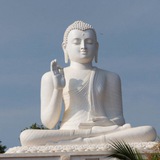
Dhammapada Verse 6
Kosambaka Vatthu
Pare ca na vijananti1
mayamettha yamamase2
ye ca tattha vijananti3
tato sammanti medhaga.
Verse 6: People, other than the wise, do not realize, "We in this world must all die," (and, not realizing it, continue their quarrels). The wise realize it and thereby their quarrels cease.
1. Pare ca na vijananti: 'Pare' means 'others'; in this context, people other than the wise. These people do not realize that they must die, and behave as if they were never going to die and keep on quarrelling. Therefore, they are sometimes referred to as the ignorant or the foolish, or those who are not worthy of love and respect.
2. mayamettha yamamase: lit., "We here must die," meaning we, of this world, must die; or all men are mortal.
3. ye ca tattha vijananti: in the case of those who understand, meaning the wise. The wise understand (or realize) that all men are mortal.
The Story of Kosambi Bhikkhus
While residing at the Jetavana monastery in Savatthi, the Buddha uttered Verse (6) of this book, with reference to the bhikkhus of Kosambi.
The bhikkhus of Kosambi had formed into two groups. One group followed the master of Vinaya and the other followed the teacher of the Dhamma and they were often quarrelling among themselves. Even the Buddha could not stop them from quarrelling; so he left them and spent the vassa, residence period of the rains, all alone in Rakkhita Grove near Palileyyaka forest. There, the elephant Palileyya waited upon the Buddha.
The lay disciples of Kosambi, on learning the reason for the departure of the Buddha, refused to make offerings to the remaining bhikkhus. This made them realize their mistake and reconciliation took place among themselves. Still, the lay disciples would not treat them as respectfully as before, until they owned up their fault to the Buddha. But the Buddha was away and it was in the middle of the vassa; so the bhikkhus of Kosambi spent the vassa in misery and hardship.
At the end of the vassa, the Venerable Ananda and five hundred bhikkhus approached the Buddha and gave the message from Annathapindika and other lay disciples imploring him to return. In due course the Buddha returned to the Jetavana monastery in Savatthi. The bhikkhus followed him there, fell down at his feet, and owned up their fault. The Buddha rebuked them for disobeying him. He told them to remember that they must all die some day and therefore, they must stop their quarrels and must not act as if they would never die.
Then the Buddha spoke in verse as follows:
Verse 6: People, other than the wise, do not realize, "We in this world must all die," (and, not realizing it, continue their quarrels). The wise realize it and thereby their quarrels cease.
At the end of the discourse, all the assembled bhikkhus were established in Sotapatti Fruition.
Dhammapada, beloved and favorite teachings of the Buddha channel:
https://news.1rj.ru/str/dhammapadas
Kosambaka Vatthu
Pare ca na vijananti1
mayamettha yamamase2
ye ca tattha vijananti3
tato sammanti medhaga.
Verse 6: People, other than the wise, do not realize, "We in this world must all die," (and, not realizing it, continue their quarrels). The wise realize it and thereby their quarrels cease.
1. Pare ca na vijananti: 'Pare' means 'others'; in this context, people other than the wise. These people do not realize that they must die, and behave as if they were never going to die and keep on quarrelling. Therefore, they are sometimes referred to as the ignorant or the foolish, or those who are not worthy of love and respect.
2. mayamettha yamamase: lit., "We here must die," meaning we, of this world, must die; or all men are mortal.
3. ye ca tattha vijananti: in the case of those who understand, meaning the wise. The wise understand (or realize) that all men are mortal.
The Story of Kosambi Bhikkhus
While residing at the Jetavana monastery in Savatthi, the Buddha uttered Verse (6) of this book, with reference to the bhikkhus of Kosambi.
The bhikkhus of Kosambi had formed into two groups. One group followed the master of Vinaya and the other followed the teacher of the Dhamma and they were often quarrelling among themselves. Even the Buddha could not stop them from quarrelling; so he left them and spent the vassa, residence period of the rains, all alone in Rakkhita Grove near Palileyyaka forest. There, the elephant Palileyya waited upon the Buddha.
The lay disciples of Kosambi, on learning the reason for the departure of the Buddha, refused to make offerings to the remaining bhikkhus. This made them realize their mistake and reconciliation took place among themselves. Still, the lay disciples would not treat them as respectfully as before, until they owned up their fault to the Buddha. But the Buddha was away and it was in the middle of the vassa; so the bhikkhus of Kosambi spent the vassa in misery and hardship.
At the end of the vassa, the Venerable Ananda and five hundred bhikkhus approached the Buddha and gave the message from Annathapindika and other lay disciples imploring him to return. In due course the Buddha returned to the Jetavana monastery in Savatthi. The bhikkhus followed him there, fell down at his feet, and owned up their fault. The Buddha rebuked them for disobeying him. He told them to remember that they must all die some day and therefore, they must stop their quarrels and must not act as if they would never die.
Then the Buddha spoke in verse as follows:
Verse 6: People, other than the wise, do not realize, "We in this world must all die," (and, not realizing it, continue their quarrels). The wise realize it and thereby their quarrels cease.
At the end of the discourse, all the assembled bhikkhus were established in Sotapatti Fruition.
Dhammapada, beloved and favorite teachings of the Buddha channel:
https://news.1rj.ru/str/dhammapadas
Telegram
Dhammapada - Buddha Dharma Teachings
Daily teachings of the Dhammapada, beloved and favorite teachings of the Buddha
❤1👍1
Free Buddha Dharma ebook
The Only Way for the Realization of Nibbāna
The only way, bhikkhus, is this path, for beings' purification, for sorrow and lamentation's overcoming, for pain and displeasure's disappearance, for the true way's attainment, for Nibbāna's realization: that is, the four foundations of mindfulness(cattāro sati∙paṭṭhānā).
'Mahā∙Sati∙Paṭṭhāna∙Suttaṃ' ('The Great Mindfulness-Foundation Sutta')
In The Only Way for the Realization of Nibbāna, the Most Venerable Sayadaw gives a brief summary of the practice necessary for such realization, namely samatha and vipassanā. He bases his discussion on the first section of the ‘Mahā∙Sati∙Paṭṭhāṇa Sutta’, the in&out-breath section of ‘The Great Mindfulness-Foundation Sutta’.
In the preface (pp.1-23), the Sayadaw discusses the ‘Mahā∙Sati∙Paṭṭhāṇa Sutta’ within the context of other suttas where The Buddha discusses the practice necessary for realizing Nibbāna. Afterwards, the Sayadaw discusses the in&out-breath section of the sutta within the context of the remaining sections of ‘The Great Mindfulness-Foundation Sutta’. Afterwards, the entire in&out-breath section is quoted (pp.25-26). And there is a brief discussion of how one progresses from mundane samatha and vipassanā to supramundane samatha and vipassanā (p.27).
The Sayadaw then discusses in practical detail The Buddha’s instructions on samatha in the in&out-breath section of the ‘Mahā∙Sati∙Paṭṭhāṇa Sutta’, beginning with Ever mindful he breathes in; ever mindful he breathes out; ending with ‘Tranquillizing the body formation, I shall breathe in ’: thus he trains. ‘Tranquillizing the body formation, I shall breathe out ’: thus he trains; this being the four stages of development for attaining the four jhānas (pp.28-36).
The Sayadaw then discusses in practical detail The Buddha’s instructions on the four stages of vipassanā. First Thus he abides contemplating the body in the body internally, or he abides contemplating the body in the body externally, or he abides contemplating the body in the body internally and externally; this being direct knowledge and contemplation of ultimate materiality and ultimate mentality through the elements contemplation section of the ‘Mahā∙Sati∙Paṭṭhāṇa Sutta’, as well as the sections of consciousness-, feelings- and dhammas contemplation (pp.37-60). Second He abides contemplating originating phenomena in the body; or he abides contemplating perishing phenomena in the body; or he abides contemplating [both] originating&perishing phenomena in the body; this being the direct knowledge and contemplation of causal and momentary rise&perish (pp.61-65). Third Or mindfulness that ‘there is the body’ is established just sufficient for knowledge, sufficient for mindfulness; this being the higher mundane vipassanā knowledges, prior to the realization of Nibbāna (p.66). Fourth And he abides independent, and does not cling to anything in the world; this being the supramundane realization of Nibbāna (p.67).
The Sayadaw describes each stage of samatha and vipassanā in terms of the Noble Eightfold Path, and he describes vipassanā in terms of the full knowledges described by The Buddha as necessary for realization of Nibbāna, quoted and discussed in the preface. Their mutual correspondence is shown in a table (p.69).
Tables describe the phenomena that make up ultimate materiality (pp.41-45) and mentality (pp.51, 53, 56-59) as described by The Buddha, and their correspondence to the various classifications given by The Buddha in earlier quoted suttas (p.71): the five aggregates (p.72), twelve bases (p.73), eighteen elements (p.74), and four Noble Truths (p.75).
Free download here:
https://drive.google.com/open?id=0B7p0UB1QfBmvS3ZaSzdEOE1Vdnc
The Only Way for the Realization of Nibbāna
The only way, bhikkhus, is this path, for beings' purification, for sorrow and lamentation's overcoming, for pain and displeasure's disappearance, for the true way's attainment, for Nibbāna's realization: that is, the four foundations of mindfulness(cattāro sati∙paṭṭhānā).
'Mahā∙Sati∙Paṭṭhāna∙Suttaṃ' ('The Great Mindfulness-Foundation Sutta')
In The Only Way for the Realization of Nibbāna, the Most Venerable Sayadaw gives a brief summary of the practice necessary for such realization, namely samatha and vipassanā. He bases his discussion on the first section of the ‘Mahā∙Sati∙Paṭṭhāṇa Sutta’, the in&out-breath section of ‘The Great Mindfulness-Foundation Sutta’.
In the preface (pp.1-23), the Sayadaw discusses the ‘Mahā∙Sati∙Paṭṭhāṇa Sutta’ within the context of other suttas where The Buddha discusses the practice necessary for realizing Nibbāna. Afterwards, the Sayadaw discusses the in&out-breath section of the sutta within the context of the remaining sections of ‘The Great Mindfulness-Foundation Sutta’. Afterwards, the entire in&out-breath section is quoted (pp.25-26). And there is a brief discussion of how one progresses from mundane samatha and vipassanā to supramundane samatha and vipassanā (p.27).
The Sayadaw then discusses in practical detail The Buddha’s instructions on samatha in the in&out-breath section of the ‘Mahā∙Sati∙Paṭṭhāṇa Sutta’, beginning with Ever mindful he breathes in; ever mindful he breathes out; ending with ‘Tranquillizing the body formation, I shall breathe in ’: thus he trains. ‘Tranquillizing the body formation, I shall breathe out ’: thus he trains; this being the four stages of development for attaining the four jhānas (pp.28-36).
The Sayadaw then discusses in practical detail The Buddha’s instructions on the four stages of vipassanā. First Thus he abides contemplating the body in the body internally, or he abides contemplating the body in the body externally, or he abides contemplating the body in the body internally and externally; this being direct knowledge and contemplation of ultimate materiality and ultimate mentality through the elements contemplation section of the ‘Mahā∙Sati∙Paṭṭhāṇa Sutta’, as well as the sections of consciousness-, feelings- and dhammas contemplation (pp.37-60). Second He abides contemplating originating phenomena in the body; or he abides contemplating perishing phenomena in the body; or he abides contemplating [both] originating&perishing phenomena in the body; this being the direct knowledge and contemplation of causal and momentary rise&perish (pp.61-65). Third Or mindfulness that ‘there is the body’ is established just sufficient for knowledge, sufficient for mindfulness; this being the higher mundane vipassanā knowledges, prior to the realization of Nibbāna (p.66). Fourth And he abides independent, and does not cling to anything in the world; this being the supramundane realization of Nibbāna (p.67).
The Sayadaw describes each stage of samatha and vipassanā in terms of the Noble Eightfold Path, and he describes vipassanā in terms of the full knowledges described by The Buddha as necessary for realization of Nibbāna, quoted and discussed in the preface. Their mutual correspondence is shown in a table (p.69).
Tables describe the phenomena that make up ultimate materiality (pp.41-45) and mentality (pp.51, 53, 56-59) as described by The Buddha, and their correspondence to the various classifications given by The Buddha in earlier quoted suttas (p.71): the five aggregates (p.72), twelve bases (p.73), eighteen elements (p.74), and four Noble Truths (p.75).
Free download here:
https://drive.google.com/open?id=0B7p0UB1QfBmvS3ZaSzdEOE1Vdnc
❤2👍1
Dhammapada Verses 7 and 8
Mahakalatthera Vatthu
Subhanupassim viharantam
indriyesu asamvutam
bhojanamhi camattannum
kusitam hinaviriyam
tam ve pasahati Maro1
vato rukkhamva dubbalam.
Asubhanupassim viharantam
indriyesu susamvutam
bhojanamhi ca mattannum
saddham2 araddhaviriyam
tam ve nappasahati Maro
vato selamva pabbatam.
Verse 7: He who keeps his mind on pleasant objects, who is uncontrolled in his senses, immoderate in his food, and is lazy and lacking in energy, will certainly be overwhelmed by Mara,3 just as stormy winds uproot a weak tree.
Verse 8: He who keeps his mind on the impurities (of the body), who is well-controlled in his senses and is full of faith and energy, will certainly be not overwhelmed by Mara, just as stormy winds cannot shake a mountain of rock.
1. Maro/Mara: in this context kilesamara, the defilements hindering the realization of Nibbana.
2. saddham/saddha: According to the Commentary,
(a) unwavering (unshakable) faith in the Buddha, the Dhamma (the Doctrine) and the Samgha (the Buddhist Religious Order) and
(b) faith or belief in kamma (action) and its results.
3. Refer to 1.
The Story of Thera Mahakala
While residing in the neighbourhood of the town of Setabya, the Buddha uttered Verses (7) and (8) of this book, with reference to Mahakala and his brother Culakala. Mahakala and Culakala were two merchant brothers from the town of Setabya. While travelling about with their merchandise on one occasion, they had a chance to listen to a religious discourse given by the Buddha. After hearing the discourse Mahakala asked the Buddha for admission to the Order of the bhikkhus. Culakala also joined the Order but with the intention of coming out of the Order and to bring out his brother along with him.
Mahakala was serious in his ascetic practice at the cemetery (Sosanika dhutinga) and diligently meditated on decay and impermanence. He finally gained Insight and attained arahatship.
Later, the Buddha and his disciples, including the brothers, happened to be staying in the forest of Simsapa, near Setabya. While staying there, the former wives of Culakala invited the Buddha and his disciples to their house. Culakala himself went ahead to prepare seating arrangements for the Buddha and his disciples. Once there, the former wives of Culakala made him change into lay clothes.
The next day, the wives of Mahakala invited the Buddha and his disciples to their house hoping to do the same with Mahakala as the wives of Culakala had done to Culakala. After the meal they requested the Buddha to let Mahakala remain to "express appreciation" (anumodana). So the Buddha and the other disciples left.
Arriving at the village gate the bhikkhus expressed their dissatisfaction and apprehension. They were dissatisfied because Mahakala was permitted to stay behind and they were afraid that, like Culakala, his brother, Mahakala, too, would be made to leave the Order by his former wives. To this, the Buddha replied that the two brothers were not alike. Culakala indulged in sensual pleasures and was lazy and weak; he was just like a weak tree. Mahakala, on the other hand, was diligent, steadfast and strong in his faith of the Buddha, the Dhamma and the Samgha; he was like a mountain of rock.
Then the Buddha spoke in verse as follows:
Verse 7: He who keeps his mind on pleasant objects, who is uncontrolled in his senses, immoderate in his food, and is lazy and lacking in energy, will certainly be overwhelmed by Mara, just as stormy winds uproot a weak tree.
Verse 8: He who keeps his mind on the impurities (of the body), who is well-controlled in his senses and is full of faith and energy, will certainly be not overwhelmed by Mara, just as stormy winds cannot shake a mountain of rock.
Mahakalatthera Vatthu
Subhanupassim viharantam
indriyesu asamvutam
bhojanamhi camattannum
kusitam hinaviriyam
tam ve pasahati Maro1
vato rukkhamva dubbalam.
Asubhanupassim viharantam
indriyesu susamvutam
bhojanamhi ca mattannum
saddham2 araddhaviriyam
tam ve nappasahati Maro
vato selamva pabbatam.
Verse 7: He who keeps his mind on pleasant objects, who is uncontrolled in his senses, immoderate in his food, and is lazy and lacking in energy, will certainly be overwhelmed by Mara,3 just as stormy winds uproot a weak tree.
Verse 8: He who keeps his mind on the impurities (of the body), who is well-controlled in his senses and is full of faith and energy, will certainly be not overwhelmed by Mara, just as stormy winds cannot shake a mountain of rock.
1. Maro/Mara: in this context kilesamara, the defilements hindering the realization of Nibbana.
2. saddham/saddha: According to the Commentary,
(a) unwavering (unshakable) faith in the Buddha, the Dhamma (the Doctrine) and the Samgha (the Buddhist Religious Order) and
(b) faith or belief in kamma (action) and its results.
3. Refer to 1.
The Story of Thera Mahakala
While residing in the neighbourhood of the town of Setabya, the Buddha uttered Verses (7) and (8) of this book, with reference to Mahakala and his brother Culakala. Mahakala and Culakala were two merchant brothers from the town of Setabya. While travelling about with their merchandise on one occasion, they had a chance to listen to a religious discourse given by the Buddha. After hearing the discourse Mahakala asked the Buddha for admission to the Order of the bhikkhus. Culakala also joined the Order but with the intention of coming out of the Order and to bring out his brother along with him.
Mahakala was serious in his ascetic practice at the cemetery (Sosanika dhutinga) and diligently meditated on decay and impermanence. He finally gained Insight and attained arahatship.
Later, the Buddha and his disciples, including the brothers, happened to be staying in the forest of Simsapa, near Setabya. While staying there, the former wives of Culakala invited the Buddha and his disciples to their house. Culakala himself went ahead to prepare seating arrangements for the Buddha and his disciples. Once there, the former wives of Culakala made him change into lay clothes.
The next day, the wives of Mahakala invited the Buddha and his disciples to their house hoping to do the same with Mahakala as the wives of Culakala had done to Culakala. After the meal they requested the Buddha to let Mahakala remain to "express appreciation" (anumodana). So the Buddha and the other disciples left.
Arriving at the village gate the bhikkhus expressed their dissatisfaction and apprehension. They were dissatisfied because Mahakala was permitted to stay behind and they were afraid that, like Culakala, his brother, Mahakala, too, would be made to leave the Order by his former wives. To this, the Buddha replied that the two brothers were not alike. Culakala indulged in sensual pleasures and was lazy and weak; he was just like a weak tree. Mahakala, on the other hand, was diligent, steadfast and strong in his faith of the Buddha, the Dhamma and the Samgha; he was like a mountain of rock.
Then the Buddha spoke in verse as follows:
Verse 7: He who keeps his mind on pleasant objects, who is uncontrolled in his senses, immoderate in his food, and is lazy and lacking in energy, will certainly be overwhelmed by Mara, just as stormy winds uproot a weak tree.
Verse 8: He who keeps his mind on the impurities (of the body), who is well-controlled in his senses and is full of faith and energy, will certainly be not overwhelmed by Mara, just as stormy winds cannot shake a mountain of rock.
❤1👍1
Meanwhile, the former wives of Mahakala surrounded him and tried to remove his yellow robes. The thera, sensing their attitude, stood up and rising up into the air by his supernormal powers passed through the roof of the house into the sky. He landed at the feet of the Buddha at the very moment the Master was coming to the end of his utterance of the above two stanzas. At the same time, all the bhikkhus assembled there were established in Sotapatti Fruition.
Buddha dharma teachings channel:
https://invite.viber.com/?g2=AQAKw1y3rv%2F6sk61PI2W4izuIiaEZj8YZujhY1tSzL%2B07s7rFnVFDAd0bAYFaMLw
Buddha dharma teachings channel:
https://invite.viber.com/?g2=AQAKw1y3rv%2F6sk61PI2W4izuIiaEZj8YZujhY1tSzL%2B07s7rFnVFDAd0bAYFaMLw
Viber
Buddha
Buddha dharma teachings from the suttas and commentaries from Theravada tradition
❤1👍1
Dhammapada Verses 9 and 10
Devadatta Vatthu
Anikkasavo kasavam1
yo vattham paridahissati
apeto damasaccena
na so kasavamarahati.
Yo ca vantakasav'assa2
silesu susamahito
upeto damasaccena
sa ve kasavamarahati.
Verse 9: He who is not free from taints of moral defilements (kilesas) and yet dons the yellow robe, who lacks restraint in his senses and (speaks not the) truth is unworthy of the yellow robe.
Verse 10: He who has discarded all moral defilements (kilesas), who is established in moral precepts, is endowed with restraint and (speaks the) truth is, indeed, worthy of the yellow robe.
1. kasavam or kasavam vattham: the yellow or reddish yellow robe donned by members of the Buddhist Religious Order. There is a play on words in the above stanzas; 'anikkasavo', meaning, not free from faults of moral defilements and therefore, stained; and kasavam, the yellow robe, dyed sombre in some astringent juice and is therefore stained.
2. vantakasav'assa: lit., has vomited all moral defilements; it means, has discarded all moral defilements through the four Path Knowledge (Magga nana).
The Story of Devadatta
While residing at the Jetavana monastery in Savatthi, the Buddha uttered Verses (9) and (10) of this book, with reference to Devadatta.
Once the two Chief Disciples, the Venerable Sariputta and the Venerable Maha Moggallana, went from Savatthi to Rajagaha. There, the people of Rajagaha invited them, with their one thousand followers, to a morning meal. On that occasion someone handed over a piece of cloth, worth one hundred thousand, to the organizers of the alms-giving ceremony. He instructed them to dispose of it and use the proceeds for the ceremony should there be any shortage of funds, or if there were no such shortage, to offer it to anyone of the bhikkhus they thought fit. It so happened that there was no shortage of anything and the cloth was to be offered to one of the theras. Since the two Chief Disciples visited Rajagaha only occasionally, the cloth was offered to Devadatta, who was a permanent resident of Rajagaha.
Devadatta promptly made the cloth into robes and moved about pompously, wearing them. Then, a certain bhikkhu from Rajagaha came to Savatthi to pay homage to the Buddha, and told him about Devadatta and the robe, made out of cloth worth one hundred thousand. The Buddha then said that it was not the first time that Devadatta was wearing robes that he did not deserve. The Buddha then related the following story.
Devadatta was an elephant hunter in one of his previous existences. At that time, in a certain forest, there lived a large number of elephants. One day, the hunter noticed that these elephants knelt down to the paccekabuddhas* on seeing them. Having observed that, the hunter stole an upper part of a yellow robe and covered his body and hand with it. Then, holding a spear in his hand, he waited for the elephants on their usual route. The elephants came, and taking him for a paccekabuddha fell down on their knees to pay obeisance. They easily fell prey to the hunter. Thus, one by one, he killed the last elephant in the row each day for many days.
The Bodhisatta (the Buddha-to-be) was then the leader of the herd. Noticing the dwindling number of his followers he decided to investigate and followed his herd at the end of the line. He was alert, and was therefore able to evade the spear. He caught hold of the hunter in his trunk and was about to dash him against the ground, when he saw the yellow robe. Seeing the yellow robe, he desisted and spared the life of the hunter.
The hunter was rebuked for trying to kill under cover of the yellow robe and for commuting such an act of depravity. The hunter clearly did not deserve to put on the yellow robe.
Then the Buddha spoke in verse as follows:
Verse 9: He who is not free from taints of moral defilements (kilesas) and yet dons the yellow robe, who lacks restraint in his senses and (speaks not the) truth is unworthy of the yellow robe.
Devadatta Vatthu
Anikkasavo kasavam1
yo vattham paridahissati
apeto damasaccena
na so kasavamarahati.
Yo ca vantakasav'assa2
silesu susamahito
upeto damasaccena
sa ve kasavamarahati.
Verse 9: He who is not free from taints of moral defilements (kilesas) and yet dons the yellow robe, who lacks restraint in his senses and (speaks not the) truth is unworthy of the yellow robe.
Verse 10: He who has discarded all moral defilements (kilesas), who is established in moral precepts, is endowed with restraint and (speaks the) truth is, indeed, worthy of the yellow robe.
1. kasavam or kasavam vattham: the yellow or reddish yellow robe donned by members of the Buddhist Religious Order. There is a play on words in the above stanzas; 'anikkasavo', meaning, not free from faults of moral defilements and therefore, stained; and kasavam, the yellow robe, dyed sombre in some astringent juice and is therefore stained.
2. vantakasav'assa: lit., has vomited all moral defilements; it means, has discarded all moral defilements through the four Path Knowledge (Magga nana).
The Story of Devadatta
While residing at the Jetavana monastery in Savatthi, the Buddha uttered Verses (9) and (10) of this book, with reference to Devadatta.
Once the two Chief Disciples, the Venerable Sariputta and the Venerable Maha Moggallana, went from Savatthi to Rajagaha. There, the people of Rajagaha invited them, with their one thousand followers, to a morning meal. On that occasion someone handed over a piece of cloth, worth one hundred thousand, to the organizers of the alms-giving ceremony. He instructed them to dispose of it and use the proceeds for the ceremony should there be any shortage of funds, or if there were no such shortage, to offer it to anyone of the bhikkhus they thought fit. It so happened that there was no shortage of anything and the cloth was to be offered to one of the theras. Since the two Chief Disciples visited Rajagaha only occasionally, the cloth was offered to Devadatta, who was a permanent resident of Rajagaha.
Devadatta promptly made the cloth into robes and moved about pompously, wearing them. Then, a certain bhikkhu from Rajagaha came to Savatthi to pay homage to the Buddha, and told him about Devadatta and the robe, made out of cloth worth one hundred thousand. The Buddha then said that it was not the first time that Devadatta was wearing robes that he did not deserve. The Buddha then related the following story.
Devadatta was an elephant hunter in one of his previous existences. At that time, in a certain forest, there lived a large number of elephants. One day, the hunter noticed that these elephants knelt down to the paccekabuddhas* on seeing them. Having observed that, the hunter stole an upper part of a yellow robe and covered his body and hand with it. Then, holding a spear in his hand, he waited for the elephants on their usual route. The elephants came, and taking him for a paccekabuddha fell down on their knees to pay obeisance. They easily fell prey to the hunter. Thus, one by one, he killed the last elephant in the row each day for many days.
The Bodhisatta (the Buddha-to-be) was then the leader of the herd. Noticing the dwindling number of his followers he decided to investigate and followed his herd at the end of the line. He was alert, and was therefore able to evade the spear. He caught hold of the hunter in his trunk and was about to dash him against the ground, when he saw the yellow robe. Seeing the yellow robe, he desisted and spared the life of the hunter.
The hunter was rebuked for trying to kill under cover of the yellow robe and for commuting such an act of depravity. The hunter clearly did not deserve to put on the yellow robe.
Then the Buddha spoke in verse as follows:
Verse 9: He who is not free from taints of moral defilements (kilesas) and yet dons the yellow robe, who lacks restraint in his senses and (speaks not the) truth is unworthy of the yellow robe.
❤1👍1
Verse 10: He who has discarded all moral defilements (kilesas), who is established in moral precepts, is endowed with restraint and (speaks the) truth is, indeed, worthy of the yellow robe.
At the end of the discourse, many bhikkhus were established in Sotapatti Fruition.
* Paccekabuddha: One who, like the Buddha, is Self-Enlightened in the Four Noble Truths and has uprooted all the moral defilements (kilesas). However, he cannot teach others. Paccekabuddhas appear during the absence of the Buddha Sasana (Teaching).
Words of the Buddha channel:
https://invite.viber.com/?g2=AQAFqzqlj7FmI061PX17rxWMAtZ%2BRuso%2FH2KmHKZSgnv7v9DD8X0bDkKnZDr9JDq
At the end of the discourse, many bhikkhus were established in Sotapatti Fruition.
* Paccekabuddha: One who, like the Buddha, is Self-Enlightened in the Four Noble Truths and has uprooted all the moral defilements (kilesas). However, he cannot teach others. Paccekabuddhas appear during the absence of the Buddha Sasana (Teaching).
Words of the Buddha channel:
https://invite.viber.com/?g2=AQAFqzqlj7FmI061PX17rxWMAtZ%2BRuso%2FH2KmHKZSgnv7v9DD8X0bDkKnZDr9JDq
Viber
Words Of The Buddha
Daily teachings from Buddha Dharma
❤1👍1
Dhamapada Verses 11 and 12
Sariputtatthera Vatthu
Asare1saramatino
sare2casaradassino
te saram3 nadhigacchanti
micchasankappagocara.
Saranca sarato natva
asaranca adhigacchanti
te saram adhigacchanti
sammasankappagocara.
Verse 11: They take untruth for truth; they take truth for untruth; such persons can never arrive at the truth, for they hold wrong views.
Verse 12: They take truth for truth; they take untruth for untruth; such persons arrive at the truth, for they hold right views.
1. asare: lit., essenceless; according to the Commentary, wrong view, i.e., untruth.
2. sare: lit., essence; according to the Commentary, right view, i.e. , truth.
3. siram: Truth — According to the Commentary, essence of the Dhamma. The essence of the Dhamma comprises sila (moral precepts or morality), samadhi (concentration), panna (knowledge), vimutti (liberation), vimutti-nanadasasana (Knowledge of and Insight into liberation), haramattha (ultimate truth) and Nibbana.
The Story of Thera Sariputta
While residing at Veluvana, the Bamboo Grove monastery in Rajagaha, the Buddha uttered Verses (11) and (12) of this book, with reference to Sanjaya, a former teacher of the Chief Disciples, the Venerable Sariputta and the Venerable Moggallana (formerly Upatissa and Kolita).
Upatissa and Kolita were two youths from Upatissa and Kolita, two villages near Rajagaha. While looking at a show they realized the insubstantiality of things and they decided to search for the way to liberation. First, they approached Sanjaya. the wandering ascetic at Rajagaha, but they were not satisfied with his teachings. So they went all over Jambudipa and came back to their native place, after searching for, but not finding the true dhamma. At this point they came to an understanding that one who found the true dhamma should inform the other.
One day, Upatissa came across Thera Assaji and learned from him the substance of the dhamma. The thera uttered the verse beginning with "Ye dhamma hetuppabhava", meaning, "those phenomena which proceed from a cause". Listening to the verse, Upatissa became established in the Sotapatti Magga and Phala. Then, as promised, he went to his friend Kolita, explained to him that he, Upatissa, had attained the state of Deathlessness and repeated the verse to his friend. Kolita also become established in Sotapatti Fruition at the end of the verse. They both remembered their former teacher and so went to Sanjaya and said to him, "We have found one who could point out the Path to Deathlesseness; the Buddha has appeared in the world; the Dhamma has appeared; the Sangha has appeared... Come, let us go to the Teacher." They had hoped that their former teacher would go along with them to the Buddha and by listening to the discourses he, too, would come to realize Magga and Phala. But Sanjaya refused.
So Upatissa and Kolita, with two hundred and fifty followers, went to the Buddha, at Veluvana. There, they were initiated and admitted into the Order as bhikkhus. Upatissa as son of Rupasari became known as Thera Sariputta; Kolita as son of Moggali became known as Thera Maha Moggallana. On the seventh day after the initiation Maha Moggallana attained Arahatship. Thera Sariputta achieved the same a fortnight after initiation. On that day, the Buddha made them his two Chief Disciples (Agga-Savaka).
The two Chief Disciples then related to the Buddha how they went to the Giragga festival, the meeting with Thera Assaji and their attainment of Sotapatti Fruition. They also told the Buddha about their former teacher Sanjaya, who refused to accompany them. Sanjaya had said, "Having been a teacher to so many pupils, for me to become his pupil would be like a jar turning into a drinking cup. Besides, only few people are wise and the majority are foolish; let the wise go to the wise Gotama, the foolish would still come to me. Go your way, my pupils."
Sariputtatthera Vatthu
Asare1saramatino
sare2casaradassino
te saram3 nadhigacchanti
micchasankappagocara.
Saranca sarato natva
asaranca adhigacchanti
te saram adhigacchanti
sammasankappagocara.
Verse 11: They take untruth for truth; they take truth for untruth; such persons can never arrive at the truth, for they hold wrong views.
Verse 12: They take truth for truth; they take untruth for untruth; such persons arrive at the truth, for they hold right views.
1. asare: lit., essenceless; according to the Commentary, wrong view, i.e., untruth.
2. sare: lit., essence; according to the Commentary, right view, i.e. , truth.
3. siram: Truth — According to the Commentary, essence of the Dhamma. The essence of the Dhamma comprises sila (moral precepts or morality), samadhi (concentration), panna (knowledge), vimutti (liberation), vimutti-nanadasasana (Knowledge of and Insight into liberation), haramattha (ultimate truth) and Nibbana.
The Story of Thera Sariputta
While residing at Veluvana, the Bamboo Grove monastery in Rajagaha, the Buddha uttered Verses (11) and (12) of this book, with reference to Sanjaya, a former teacher of the Chief Disciples, the Venerable Sariputta and the Venerable Moggallana (formerly Upatissa and Kolita).
Upatissa and Kolita were two youths from Upatissa and Kolita, two villages near Rajagaha. While looking at a show they realized the insubstantiality of things and they decided to search for the way to liberation. First, they approached Sanjaya. the wandering ascetic at Rajagaha, but they were not satisfied with his teachings. So they went all over Jambudipa and came back to their native place, after searching for, but not finding the true dhamma. At this point they came to an understanding that one who found the true dhamma should inform the other.
One day, Upatissa came across Thera Assaji and learned from him the substance of the dhamma. The thera uttered the verse beginning with "Ye dhamma hetuppabhava", meaning, "those phenomena which proceed from a cause". Listening to the verse, Upatissa became established in the Sotapatti Magga and Phala. Then, as promised, he went to his friend Kolita, explained to him that he, Upatissa, had attained the state of Deathlessness and repeated the verse to his friend. Kolita also become established in Sotapatti Fruition at the end of the verse. They both remembered their former teacher and so went to Sanjaya and said to him, "We have found one who could point out the Path to Deathlesseness; the Buddha has appeared in the world; the Dhamma has appeared; the Sangha has appeared... Come, let us go to the Teacher." They had hoped that their former teacher would go along with them to the Buddha and by listening to the discourses he, too, would come to realize Magga and Phala. But Sanjaya refused.
So Upatissa and Kolita, with two hundred and fifty followers, went to the Buddha, at Veluvana. There, they were initiated and admitted into the Order as bhikkhus. Upatissa as son of Rupasari became known as Thera Sariputta; Kolita as son of Moggali became known as Thera Maha Moggallana. On the seventh day after the initiation Maha Moggallana attained Arahatship. Thera Sariputta achieved the same a fortnight after initiation. On that day, the Buddha made them his two Chief Disciples (Agga-Savaka).
The two Chief Disciples then related to the Buddha how they went to the Giragga festival, the meeting with Thera Assaji and their attainment of Sotapatti Fruition. They also told the Buddha about their former teacher Sanjaya, who refused to accompany them. Sanjaya had said, "Having been a teacher to so many pupils, for me to become his pupil would be like a jar turning into a drinking cup. Besides, only few people are wise and the majority are foolish; let the wise go to the wise Gotama, the foolish would still come to me. Go your way, my pupils."
❤1👍1
Thus, as the Buddha pointed out, Sanjaya's false pride was preventing him from seeing truth as truth; he was seeing untruth as truth and would never arrive at the real truth.
Then the Buddha spoke in verse as follows:
Verse 11: They take untruth for truth; they take truth for untruth; such persons can never arrive at the truth, for they hold wrong views.
Verse 12: They take truth for truth; they take untruth for untruth; such persons arrive at the truth, for they hold right views. At the end of the discourse, many people came to be established in Sotapatti Fruition.
At the end of the discourse, many people came to be established in Sotapatti Fruition.
Dhammapada, beloved and favorite teachings of the Buddha channel:
https://invite.viber.com/?g2=AQBLD6phsgvP%2F061YjEM3K%2BNeH1Yb372b9mtfQX2EmuBpgoLUoc99BDMfzHghrme
Then the Buddha spoke in verse as follows:
Verse 11: They take untruth for truth; they take truth for untruth; such persons can never arrive at the truth, for they hold wrong views.
Verse 12: They take truth for truth; they take untruth for untruth; such persons arrive at the truth, for they hold right views. At the end of the discourse, many people came to be established in Sotapatti Fruition.
At the end of the discourse, many people came to be established in Sotapatti Fruition.
Dhammapada, beloved and favorite teachings of the Buddha channel:
https://invite.viber.com/?g2=AQBLD6phsgvP%2F061YjEM3K%2BNeH1Yb372b9mtfQX2EmuBpgoLUoc99BDMfzHghrme
Viber
Dhammapada - Buddha Dharma Teachings
Daily teachings of the Dhammapada, beloved and favorite teachings of the Buddha
❤1👍1
Dhammapada Verses 13 and 14
Nandatthera Vatthu
Yatha agaram ducchannam
vutthi samativijjhati
evam abhavitam cittam
rago samativijjhati.
Yatha agaram suchannam
vutthi na samativijjhati
evam subhavitam cittam
rago na samativijjhati.
Verse 13: Just as rain penetrates a badly-roofed house, so also, passion (raga) penetrates a mind not cultivated in Tranquillity and Insight Development (Samatha and Vipassana).
Verse 14: Just as rain cannot penetrate a well-roofed house, so also, passion (raga) cannot penetrate a mind well-cultivated in Tranquillity and Insight Development (Samatha and Vipassana).
The Story of Thera Nanda
While residing at the Jetavana monastery in Savatthi, the Buddha uttered Verses (13) and (14) of this book, with reference to Thera Nanda, a cousin of the Buddha.
Once the Buddha was residing at the Veluvana monastery in Rajagaha when his father King Suddhodana repeatedly sent messengers to the Buddha requesting him to visit the city of Kapilavatthu. Accordingly, the Buddha made the journey in the company of twenty thousand arahats. On arrival at Kapilavatthu he related the Vessantara Jataka to the assembly of his relatives. On the second day, he entered the city, where by reciting the verse beginning with "Uttitthe Nappamajjeyya ..." (i.e., One should arise and should not be unmindful ...) he caused his father to be established in Sotapatti Fruition. On arrival at the palace, the Buddha recited another verse beginning with "Dhammam care sucaritam ..." (i.e., One should practise the Dhamma...) and established the king in Sakadagami Fruition*. After the meal he narrated the Candakinnari Jataka, with reference to the virtues of Rahula's mother.
On the third day, there was the marriage ceremony of Prince Nanda, a cousin of the Buddha. The Buddha went there for alms and handed over the alms bowl to Prince Nanda. The Buddha then departed without taking back the bowl. So the prince, holding the bowl, had to follow the Buddha. The bride, Princess Janapadakalyani, seeing the prince following the Buddha rushed forth and cried out to the prince to come back soon. At the monastery, the prince was admitted into the Order as a bhikkhu.
Later, the Buddha moved into the monastery built by Anathapindika, at Jeta Park in Savatthi. While residing there Nanda was discontented and half-hearted and found little pleasure in the life of a bhikkhu. He wanted to return to the life of a householder because he kept on remembering the words of Princess Janapadakalyani, imploring him to return soon.
Knowing this, the Buddha, by supernormal power, showed Nanda, the beautiful female devas of the Tavatimsa world who were far prettier than Princess Janapadakalyani. He promised to get them for Nanda, if the latter strove hard in the practice of the Dhamma. Other bhikkhus ridiculed Nanda by saying that he was like a hireling who practised the Dhamma for the sake of beautiful women, etc. Nanda felt very much tormented and ashamed. So, in seclusion, he tried very hard in the practice of the Dhamma and eventually attained arahatship. As an arahat his mind was totally released from all attachments, and the Buddha was also released from his promise to Nanda. All this had been foreseen by the Buddha right from the very beginning.
Other bhikkhus, having known that Nanda was not happy in the life of a bhikkhu, again asked him how he was faring. When he answered that he had no more attachments to the life of a householder, they thought Nanda was not speaking the truth. So they informed the Buddha about the matter, at the same time expressing their doubts. The Buddha then explained to them that, previously, the nature of Nanda was like that of an ill-roofed house, but now, it had grown to be like a well-roofed one.
Then the Buddha spoke in verse as follows:
Verse 13: Just as rain penetrates a badly-roofed house, so also, passion (raga) penetrates a mind not cultivated in Tranquillity and Insight Development (Samatha and Vipassana).
Nandatthera Vatthu
Yatha agaram ducchannam
vutthi samativijjhati
evam abhavitam cittam
rago samativijjhati.
Yatha agaram suchannam
vutthi na samativijjhati
evam subhavitam cittam
rago na samativijjhati.
Verse 13: Just as rain penetrates a badly-roofed house, so also, passion (raga) penetrates a mind not cultivated in Tranquillity and Insight Development (Samatha and Vipassana).
Verse 14: Just as rain cannot penetrate a well-roofed house, so also, passion (raga) cannot penetrate a mind well-cultivated in Tranquillity and Insight Development (Samatha and Vipassana).
The Story of Thera Nanda
While residing at the Jetavana monastery in Savatthi, the Buddha uttered Verses (13) and (14) of this book, with reference to Thera Nanda, a cousin of the Buddha.
Once the Buddha was residing at the Veluvana monastery in Rajagaha when his father King Suddhodana repeatedly sent messengers to the Buddha requesting him to visit the city of Kapilavatthu. Accordingly, the Buddha made the journey in the company of twenty thousand arahats. On arrival at Kapilavatthu he related the Vessantara Jataka to the assembly of his relatives. On the second day, he entered the city, where by reciting the verse beginning with "Uttitthe Nappamajjeyya ..." (i.e., One should arise and should not be unmindful ...) he caused his father to be established in Sotapatti Fruition. On arrival at the palace, the Buddha recited another verse beginning with "Dhammam care sucaritam ..." (i.e., One should practise the Dhamma...) and established the king in Sakadagami Fruition*. After the meal he narrated the Candakinnari Jataka, with reference to the virtues of Rahula's mother.
On the third day, there was the marriage ceremony of Prince Nanda, a cousin of the Buddha. The Buddha went there for alms and handed over the alms bowl to Prince Nanda. The Buddha then departed without taking back the bowl. So the prince, holding the bowl, had to follow the Buddha. The bride, Princess Janapadakalyani, seeing the prince following the Buddha rushed forth and cried out to the prince to come back soon. At the monastery, the prince was admitted into the Order as a bhikkhu.
Later, the Buddha moved into the monastery built by Anathapindika, at Jeta Park in Savatthi. While residing there Nanda was discontented and half-hearted and found little pleasure in the life of a bhikkhu. He wanted to return to the life of a householder because he kept on remembering the words of Princess Janapadakalyani, imploring him to return soon.
Knowing this, the Buddha, by supernormal power, showed Nanda, the beautiful female devas of the Tavatimsa world who were far prettier than Princess Janapadakalyani. He promised to get them for Nanda, if the latter strove hard in the practice of the Dhamma. Other bhikkhus ridiculed Nanda by saying that he was like a hireling who practised the Dhamma for the sake of beautiful women, etc. Nanda felt very much tormented and ashamed. So, in seclusion, he tried very hard in the practice of the Dhamma and eventually attained arahatship. As an arahat his mind was totally released from all attachments, and the Buddha was also released from his promise to Nanda. All this had been foreseen by the Buddha right from the very beginning.
Other bhikkhus, having known that Nanda was not happy in the life of a bhikkhu, again asked him how he was faring. When he answered that he had no more attachments to the life of a householder, they thought Nanda was not speaking the truth. So they informed the Buddha about the matter, at the same time expressing their doubts. The Buddha then explained to them that, previously, the nature of Nanda was like that of an ill-roofed house, but now, it had grown to be like a well-roofed one.
Then the Buddha spoke in verse as follows:
Verse 13: Just as rain penetrates a badly-roofed house, so also, passion (raga) penetrates a mind not cultivated in Tranquillity and Insight Development (Samatha and Vipassana).
❤1👍1
Verse 14: Just as rain cannot penetrate a well-roofed house, so also, passion (raga) cannot penetrate a mind well-cultivated in Tranquillity and Insight Development (Samatha and Vipassana).
* Sakadagami Fruition: Sakadagami Phala, 'fruit' or 'fruition'. This immediately follows Sakadagami Magga which is the second Magga or the second stage of Enlightenment attained by one who has practised Insight Meditation.
Buddha dharma teachings channel:
https://news.1rj.ru/str/lorddivinebuddha
* Sakadagami Fruition: Sakadagami Phala, 'fruit' or 'fruition'. This immediately follows Sakadagami Magga which is the second Magga or the second stage of Enlightenment attained by one who has practised Insight Meditation.
Buddha dharma teachings channel:
https://news.1rj.ru/str/lorddivinebuddha
Telegram
Buddha
Buddha dharma teachings from the suttas and commentaries
❤1👍1
Free Buddha Dharma ebook
Mindfulness of Breathing (Ānāpāna·Ssati) (Second Revised Edition)
By Pa Auk Tawya Sayadaw
In accordance with The Buddha's series of instructions, the Sayadaw first describes how the yogi develops samatha with mindfulness of breathing, until there appears the light of wisdom and the sign of concentration, the nimitta. Then the Sayadaw explains how the yogi develops the gained concentration, until the attainment of the fourth jhāna. Afterwards, the Sayadaw explains how the yogi uses the light of wisdom to discern ultimate materiality, ultimate mentality, and their dependent origination, in order then to develop vipassanā. Finally, the Sayadaw explains how the yogi progresses through the series of insight knowledges until there is realization of Nibbāna. In each case, the Sayadaw explains how the yogi's gradual development fulfils the thirty-seven requisites of enlightenment: in samatha, in vipassanā, and in the realization of Nibbāna.
Free download available:
https://drive.google.com/open?id=0B7p0UB1QfBmvcl8ycFE1N0xXNGc
Mindfulness of Breathing (Ānāpāna·Ssati) (Second Revised Edition)
By Pa Auk Tawya Sayadaw
In accordance with The Buddha's series of instructions, the Sayadaw first describes how the yogi develops samatha with mindfulness of breathing, until there appears the light of wisdom and the sign of concentration, the nimitta. Then the Sayadaw explains how the yogi develops the gained concentration, until the attainment of the fourth jhāna. Afterwards, the Sayadaw explains how the yogi uses the light of wisdom to discern ultimate materiality, ultimate mentality, and their dependent origination, in order then to develop vipassanā. Finally, the Sayadaw explains how the yogi progresses through the series of insight knowledges until there is realization of Nibbāna. In each case, the Sayadaw explains how the yogi's gradual development fulfils the thirty-seven requisites of enlightenment: in samatha, in vipassanā, and in the realization of Nibbāna.
Free download available:
https://drive.google.com/open?id=0B7p0UB1QfBmvcl8ycFE1N0xXNGc
❤2👍1
Dhammapada Verse 15
Cundasukarika Vatthu
Idha socati pecca socati
papakari ubhayattha socati
so socati so vihannati
disva kammakilitthamattano.
Verse 15: Here he grieves, hereafter he grieves; the evil-doer grieves in both existences. He grieves and he suffers anguish when he sees the depravity of his own deeds.
The Story of Cundasukarika
While residing at the Veluvana monastery in Rajagaha, the Buddha uttered Verse (15) of this book, with reference to Cunda, the pork-butcher.
Once, in a village not far away from the Veluvana monastery, there lived a very cruel and hard-hearted pork-butcher, by the name of Cunda. Cunda was a pork-butcher for over fifty-five years; all this time he had not done a single meritorious deed. Before he died, he was in such great pain and agony that he was grunting and squealing and kept on moving about on his hands and knees like a pig for seven whole days. In fact, even before he died, he was suffering as if he were in Niraya*. On the seventh day, the pork-butcher died and was reborn in Avici Niraya. Thus, the evil-doer must always suffer for the evil deeds done by him; he suffers in this world as well as in the next.
In this connection, the Buddha spoke in verse as follows:
Verse 15: Here he grieves, hereafter he grieves; the evil-doer grieves in both existences. He grieves and he suffers anguish when he sees the depravity of his own deeds.
* Niraya or Naraka: a place of continuous torment sometimes compared with hell; but it is different from hell because suffering in Niraya is not everlasting like suffering in hell. Avici Niraya is the most fearful of all Nirayas.
Tibetan Buddhism - Vajrayana, Tantrayana and esoteric Buddhism channel:
https://news.1rj.ru/str/tibetanbuddha
Vajrayana Tantrayana Buddhism channel:
https://news.1rj.ru/str/tantrayanabuddhism
Cundasukarika Vatthu
Idha socati pecca socati
papakari ubhayattha socati
so socati so vihannati
disva kammakilitthamattano.
Verse 15: Here he grieves, hereafter he grieves; the evil-doer grieves in both existences. He grieves and he suffers anguish when he sees the depravity of his own deeds.
The Story of Cundasukarika
While residing at the Veluvana monastery in Rajagaha, the Buddha uttered Verse (15) of this book, with reference to Cunda, the pork-butcher.
Once, in a village not far away from the Veluvana monastery, there lived a very cruel and hard-hearted pork-butcher, by the name of Cunda. Cunda was a pork-butcher for over fifty-five years; all this time he had not done a single meritorious deed. Before he died, he was in such great pain and agony that he was grunting and squealing and kept on moving about on his hands and knees like a pig for seven whole days. In fact, even before he died, he was suffering as if he were in Niraya*. On the seventh day, the pork-butcher died and was reborn in Avici Niraya. Thus, the evil-doer must always suffer for the evil deeds done by him; he suffers in this world as well as in the next.
In this connection, the Buddha spoke in verse as follows:
Verse 15: Here he grieves, hereafter he grieves; the evil-doer grieves in both existences. He grieves and he suffers anguish when he sees the depravity of his own deeds.
* Niraya or Naraka: a place of continuous torment sometimes compared with hell; but it is different from hell because suffering in Niraya is not everlasting like suffering in hell. Avici Niraya is the most fearful of all Nirayas.
Tibetan Buddhism - Vajrayana, Tantrayana and esoteric Buddhism channel:
https://news.1rj.ru/str/tibetanbuddha
Vajrayana Tantrayana Buddhism channel:
https://news.1rj.ru/str/tantrayanabuddhism
Telegram
Tibetan Buddhism Vajrayana Tantrayana esoteric tradition
Buddha Dharma teachings from the esoteric Vajrayana or Tantrayana Buddhism, includes all major schools Nyingma, Kagyu, Gelug, Sakya, Jonang and Bonpo.
❤1👍1🙏1
Dhammapada Verse 16
Dhammika-upasaka Vatthu
Idha modati pecca modati
katapunno ubhayattha modati
so modati so pamodati
disva kammavisuddhimattano.
Verse 16: Here he rejoices, hereafter he rejoices; one who performed meritorious deeds rejoices in both existences. He rejoices and greatly rejoices when he sees the purity of his own deeds.
The Story of Dhammika Upasaka
While residing at the Jetavana monastery in Savatthi, the Buddha uttered Verse (16) of this book, with reference to Dhammika, a lay disciple.
Once there lived in Savatthi, a lay disciple by the name of Dhammika, who was virtuous and very fond of giving in charity. He generously offered food and other requisites to the bhikkhus regularly and also on special occasions. He was, in fact, the leader of five hundred virtuous lay disciples of the Buddha who lived in Savatthi. Dhammika had seven sons and seven daughters and all of them, like their father, were virtuous and devoted to charity. When Dhammika was very ill and was on his death-bed he made a request to the Samgha to come to him and recite the sacred texts by his bedside. While the bhikkhus were reciting the Maha satipatthana Sutta, six decorated chariots from six celestial worlds arrived to invite him to their respective worlds. Dhammika told them to wait for a while for fear of interrupting the recitation of the Sutta. The bhikkhus, thinking that they were being asked to stop, stopped and left the place.
A little while later, Dhammika told his children about the six decorated chariots waiting for him. Then and there he decided to choose the chariot from the Tusita world and asked one of his children to throw a garland on to it. Then he passed away and was reborn in the Tusita world. Thus, the virtuous man rejoices in this world as well as in the next.
Then the Buddha spoke in verse as follows:
Verse 16: Here he rejoices, hereafter he rejoices; one who performed meritorious deeds rejoices in both existences. He rejoices and greatly rejoices when he sees the purity of his own deeds.
Words of the Buddha channel:
https://news.1rj.ru/str/wordsofbuddha
Dhammika-upasaka Vatthu
Idha modati pecca modati
katapunno ubhayattha modati
so modati so pamodati
disva kammavisuddhimattano.
Verse 16: Here he rejoices, hereafter he rejoices; one who performed meritorious deeds rejoices in both existences. He rejoices and greatly rejoices when he sees the purity of his own deeds.
The Story of Dhammika Upasaka
While residing at the Jetavana monastery in Savatthi, the Buddha uttered Verse (16) of this book, with reference to Dhammika, a lay disciple.
Once there lived in Savatthi, a lay disciple by the name of Dhammika, who was virtuous and very fond of giving in charity. He generously offered food and other requisites to the bhikkhus regularly and also on special occasions. He was, in fact, the leader of five hundred virtuous lay disciples of the Buddha who lived in Savatthi. Dhammika had seven sons and seven daughters and all of them, like their father, were virtuous and devoted to charity. When Dhammika was very ill and was on his death-bed he made a request to the Samgha to come to him and recite the sacred texts by his bedside. While the bhikkhus were reciting the Maha satipatthana Sutta, six decorated chariots from six celestial worlds arrived to invite him to their respective worlds. Dhammika told them to wait for a while for fear of interrupting the recitation of the Sutta. The bhikkhus, thinking that they were being asked to stop, stopped and left the place.
A little while later, Dhammika told his children about the six decorated chariots waiting for him. Then and there he decided to choose the chariot from the Tusita world and asked one of his children to throw a garland on to it. Then he passed away and was reborn in the Tusita world. Thus, the virtuous man rejoices in this world as well as in the next.
Then the Buddha spoke in verse as follows:
Verse 16: Here he rejoices, hereafter he rejoices; one who performed meritorious deeds rejoices in both existences. He rejoices and greatly rejoices when he sees the purity of his own deeds.
Words of the Buddha channel:
https://news.1rj.ru/str/wordsofbuddha
Telegram
Words of the Buddha
Daily teachings of Buddha Dharma
❤1👍1🙏1
Dhammapada Verse 17
Devadatta Vatthu
Idha tappati pecca tappati
papakari ubhayattha tappati
papam me katanti tappati
bhiyyo tappati duggatim1 gato.
Verse 17: Here he is tormented, hereafter he is tormented; the evil-doer is tormented in both existences. He is tormented, and he laments: "Evil have I done." He is even more tormented when he is reborn in one of the lower worlds (Apaya).
1. duggatim/duggati: unhappy destinations, the four lower worlds (apaya). In the case of Devadatta, avici niraya, the lowest niraya, (placement of torment).
The Story of Devadatta
While residing at the Jetavana monastery in Savatthi, the Buddha uttered Verse (17) of this book, with reference to Devadatta.
Devadatta was at one time residing with the Buddha in Kosambi. While staying there he realized that the Buddha was receiving much respect and honour as well as offerings. He envied the Buddha and aspired to head the Order of the bhikkhus. One day, while the Buddha was preaching at the Veluvana monastery in Rajagaha, he approached the Buddha and on the ground that the Buddha was getting old, he suggested that the Order be entrusted to his care. The Buddha rejected his offer and rebuked him, saying that he was a swallower of other people's spittle. The Buddha next asked the Samgha to carry out an act of proclamation (Pakasaniya kamma*) regarding Devadatta.
Devadatta felt aggrieved and vowed vengeance against the Buddha. Three times, he attempted to kill the Buddha: first, by employing some archers; secondly, by climbing up the Gijjhakuta hill and rolling down a big piece of rock on to the Buddha; and thirdly, by causing the elephant Nalagiri to attack the Buddha. The hired assassins returned after being established in Sotapatti Fruition, without harming the Buddha. The big piece of rock rolled down by Devadatta hurt the big toe of the Buddha just a little, and when the Nalagiri elephant rushed at the Buddha, it was made docile by the Buddha. Thus Devadatta failed to kill the Buddha, and he tried another tactic. He tried to break up the Order of the bhikkhus by taking away some newly admitted bhikkhus with him to Gayasisa; however, most of them were brought back by Thera Sariputta and Thera Maha Moggallana.
Later, Devadatta fell ill. He had been ill for nine months when he asked his pupils to take him to the Buddha, and subsequently made the trip to the Jetavana monastery. Hearing that Devadatta was coming, the Buddha told his disciples that Devadatta would never get the opportunity to see him.
When Devadatta and his party reached the pond in the Jetavana monastery compound the carriers put down the couch on the bank of the pond and went to take a bath. Devadatta also rose from his couch and placed both his feet on the ground. Immediately, his feet sank into the earth and he was gradually swallowed up, Devadatta did not have the opportunity to see the Buddha because of the wicked deeds he had done to the Buddha. After his death, he was reborn in Avici Niraya, a place of intense and continuous torment.
Then the Buddha spoke in verse as follows:
Verse 17: Here he is tormented, hereafter he is tormented; the evil-doer is tormented in both existences. He is tormented, and he laments: "Evil have I done." He is even more tormented when he is reborn in one of the lower worlds (Apaya).
* Pakasaniya kamma: An act of Proclamation carried out by the Order of the Samgha regarding a member declaring that as his conduct was of one kind before and is of another kind now, henceforth all his physical and verbal actions are only his and have nothing to do with the Buddha, the Dhamma and the Samgha.
Dhammapada, beloved and favorite teachings of the Buddha channel:
https://news.1rj.ru/str/dhammapadas
Devadatta Vatthu
Idha tappati pecca tappati
papakari ubhayattha tappati
papam me katanti tappati
bhiyyo tappati duggatim1 gato.
Verse 17: Here he is tormented, hereafter he is tormented; the evil-doer is tormented in both existences. He is tormented, and he laments: "Evil have I done." He is even more tormented when he is reborn in one of the lower worlds (Apaya).
1. duggatim/duggati: unhappy destinations, the four lower worlds (apaya). In the case of Devadatta, avici niraya, the lowest niraya, (placement of torment).
The Story of Devadatta
While residing at the Jetavana monastery in Savatthi, the Buddha uttered Verse (17) of this book, with reference to Devadatta.
Devadatta was at one time residing with the Buddha in Kosambi. While staying there he realized that the Buddha was receiving much respect and honour as well as offerings. He envied the Buddha and aspired to head the Order of the bhikkhus. One day, while the Buddha was preaching at the Veluvana monastery in Rajagaha, he approached the Buddha and on the ground that the Buddha was getting old, he suggested that the Order be entrusted to his care. The Buddha rejected his offer and rebuked him, saying that he was a swallower of other people's spittle. The Buddha next asked the Samgha to carry out an act of proclamation (Pakasaniya kamma*) regarding Devadatta.
Devadatta felt aggrieved and vowed vengeance against the Buddha. Three times, he attempted to kill the Buddha: first, by employing some archers; secondly, by climbing up the Gijjhakuta hill and rolling down a big piece of rock on to the Buddha; and thirdly, by causing the elephant Nalagiri to attack the Buddha. The hired assassins returned after being established in Sotapatti Fruition, without harming the Buddha. The big piece of rock rolled down by Devadatta hurt the big toe of the Buddha just a little, and when the Nalagiri elephant rushed at the Buddha, it was made docile by the Buddha. Thus Devadatta failed to kill the Buddha, and he tried another tactic. He tried to break up the Order of the bhikkhus by taking away some newly admitted bhikkhus with him to Gayasisa; however, most of them were brought back by Thera Sariputta and Thera Maha Moggallana.
Later, Devadatta fell ill. He had been ill for nine months when he asked his pupils to take him to the Buddha, and subsequently made the trip to the Jetavana monastery. Hearing that Devadatta was coming, the Buddha told his disciples that Devadatta would never get the opportunity to see him.
When Devadatta and his party reached the pond in the Jetavana monastery compound the carriers put down the couch on the bank of the pond and went to take a bath. Devadatta also rose from his couch and placed both his feet on the ground. Immediately, his feet sank into the earth and he was gradually swallowed up, Devadatta did not have the opportunity to see the Buddha because of the wicked deeds he had done to the Buddha. After his death, he was reborn in Avici Niraya, a place of intense and continuous torment.
Then the Buddha spoke in verse as follows:
Verse 17: Here he is tormented, hereafter he is tormented; the evil-doer is tormented in both existences. He is tormented, and he laments: "Evil have I done." He is even more tormented when he is reborn in one of the lower worlds (Apaya).
* Pakasaniya kamma: An act of Proclamation carried out by the Order of the Samgha regarding a member declaring that as his conduct was of one kind before and is of another kind now, henceforth all his physical and verbal actions are only his and have nothing to do with the Buddha, the Dhamma and the Samgha.
Dhammapada, beloved and favorite teachings of the Buddha channel:
https://news.1rj.ru/str/dhammapadas
Telegram
Dhammapada - Buddha Dharma Teachings
Daily teachings of the Dhammapada, beloved and favorite teachings of the Buddha
❤1👍1🙏1