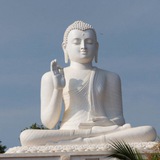
Dhammapada Verse 43
Soreyya Vatthu
Na tam mata pita kayira
anne vapi ca nataka
sammapanihitam cittam
seyyaso1naim tato kare.
Verse 43: Not a mother, nor a father, nor any other relative can do more for the well-being of one than a rightly-directed mind can.
1. seyyaso: still better; here it means much better service; because it (the rightly-directed mind) can lead one to the well-being of a man and of a deva and even to the realization of Nibbana.
The Story of Soreyya
While residing at the Jetavana monastery, the Buddha uttered Verse (43) of this book, with reference to Soreyya, the son of a rich man of Soreyya city.
On one occasion, Soreyya accompanied by a friend and some attendants was going out in a luxurious carriage for a bath. At that moment, Thera Mahakaccayana was adjusting his robes outside the city, as he was going into the city of Soreyya for alms-food. The youth Soreyya, seeing the golden complexion of the thera, thought, "How I wish the thera were my wife, or else that the complexion of my wife were like that of his." As the wish arose in him, his sex changed and he became a woman. Very much ashamed, he got down from the carriage and ran away, taking the road to Taxila. His companions missing him, looked for him, but could not find him.
Soreyya, now a woman, offered her signet ring to some people going to Taxila, to allow her to go along with them in their carriage. On arrival at Taxila, her companions told a young rich man of Taxila about the lady who came along with them. The young rich man, finding her to be very beautiful and of a suitable age for him, married her. As a result of this marriage two sons were born; there were also two sons from the previous marriage of Soreyya as a man.
One day, a rich man's son from the city of Soreyya came to Taxila with five hundred carts. Lady-Soreyya recognizing him to be an old friend sent for him. The man from Soreyya city was surprised that he was invited, because he did not know the lady who invited him. He told the lady-Soreyya that he did not know her, and asked her whether she knew him. She answered that she knew him and also enquired after the health of her family and other people in Soreyya city. The man from Soreyya city next told her about the rich man's son who disappeared mysteriously while going out for a bath. Then the Lady-Soreyya revealed her identity and related all that had happened, about the wrongful thoughts with regard to Thera Mahakaccayana, about the change of sex, and her marriage to the young rich man of Taxila. The man from the city of Soreyya then advised the lady-Soreyya to ask pardon of the thera. Thera Mahakaccayana was accordingly invited to the home of Soreyya and alms-food was offered to him. After the meal, the lady-Soreyya was brought to the presence of the thera, and the man from Soreyya told the thera that the lady was at one time the son of a rich man from Soreyya city. He then explained to the thera how Soreyya was turned into a female on account of his wrongful thoughts towards the respected thera. Lady-Soreyya then respectfully asked pardon of Thera Mahakaccayana. The thera then said, "Get up, I forgive you." As soon as these words were spoken, the woman was changed back to a man. Soreyya then pondered how within a single existence and with a single body he had undergone change of sex and how sons were born to him, etc. And feeling very weary and repulsive of all these things, he decided to leave the household life and joined the Order under the thera.
After that, he was often asked, "Whom do you love more, the two sons you had as a man or the other two you had as a wife?" To them, he would answer that his love for those born of the womb was greater. This question was put to him so often, he felt very much annoyed and ashamed. So he stayed by himself and with diligence, contemplated the decay and dissolution of the body. He soon attained arahatship together with the Analytical Insight.
Soreyya Vatthu
Na tam mata pita kayira
anne vapi ca nataka
sammapanihitam cittam
seyyaso1naim tato kare.
Verse 43: Not a mother, nor a father, nor any other relative can do more for the well-being of one than a rightly-directed mind can.
1. seyyaso: still better; here it means much better service; because it (the rightly-directed mind) can lead one to the well-being of a man and of a deva and even to the realization of Nibbana.
The Story of Soreyya
While residing at the Jetavana monastery, the Buddha uttered Verse (43) of this book, with reference to Soreyya, the son of a rich man of Soreyya city.
On one occasion, Soreyya accompanied by a friend and some attendants was going out in a luxurious carriage for a bath. At that moment, Thera Mahakaccayana was adjusting his robes outside the city, as he was going into the city of Soreyya for alms-food. The youth Soreyya, seeing the golden complexion of the thera, thought, "How I wish the thera were my wife, or else that the complexion of my wife were like that of his." As the wish arose in him, his sex changed and he became a woman. Very much ashamed, he got down from the carriage and ran away, taking the road to Taxila. His companions missing him, looked for him, but could not find him.
Soreyya, now a woman, offered her signet ring to some people going to Taxila, to allow her to go along with them in their carriage. On arrival at Taxila, her companions told a young rich man of Taxila about the lady who came along with them. The young rich man, finding her to be very beautiful and of a suitable age for him, married her. As a result of this marriage two sons were born; there were also two sons from the previous marriage of Soreyya as a man.
One day, a rich man's son from the city of Soreyya came to Taxila with five hundred carts. Lady-Soreyya recognizing him to be an old friend sent for him. The man from Soreyya city was surprised that he was invited, because he did not know the lady who invited him. He told the lady-Soreyya that he did not know her, and asked her whether she knew him. She answered that she knew him and also enquired after the health of her family and other people in Soreyya city. The man from Soreyya city next told her about the rich man's son who disappeared mysteriously while going out for a bath. Then the Lady-Soreyya revealed her identity and related all that had happened, about the wrongful thoughts with regard to Thera Mahakaccayana, about the change of sex, and her marriage to the young rich man of Taxila. The man from the city of Soreyya then advised the lady-Soreyya to ask pardon of the thera. Thera Mahakaccayana was accordingly invited to the home of Soreyya and alms-food was offered to him. After the meal, the lady-Soreyya was brought to the presence of the thera, and the man from Soreyya told the thera that the lady was at one time the son of a rich man from Soreyya city. He then explained to the thera how Soreyya was turned into a female on account of his wrongful thoughts towards the respected thera. Lady-Soreyya then respectfully asked pardon of Thera Mahakaccayana. The thera then said, "Get up, I forgive you." As soon as these words were spoken, the woman was changed back to a man. Soreyya then pondered how within a single existence and with a single body he had undergone change of sex and how sons were born to him, etc. And feeling very weary and repulsive of all these things, he decided to leave the household life and joined the Order under the thera.
After that, he was often asked, "Whom do you love more, the two sons you had as a man or the other two you had as a wife?" To them, he would answer that his love for those born of the womb was greater. This question was put to him so often, he felt very much annoyed and ashamed. So he stayed by himself and with diligence, contemplated the decay and dissolution of the body. He soon attained arahatship together with the Analytical Insight.
❤1👍1
When the old question was next put to him he replied that he had no affection for any one in particular. Other bhikkhus hearing him thought he must be telling a lie. When reported about Soreyya giving a different answer, the Buddha said, "My son is not telling lies, he is speaking the truth. His answer now is different because he has now realized arahatship and so has no more affection for anyone in particular. By his well-directed mind my son has brought about in himself a well-being which neither the father nor the mother can bestow on him."
Then the Buddha spoke in verse as follows:
Verse 43: Not a mother, nor a father, nor any other relative can do more for the well-being of one than a rightly-directed mind can.
At the end of the discourse many attained Sotapatti Fruition.
End of Chapter Three: The Mind (Cittavagga)
Words of the Buddha channel:
https://news.1rj.ru/str/wordsofbuddha
====================
Then the Buddha spoke in verse as follows:
Verse 43: Not a mother, nor a father, nor any other relative can do more for the well-being of one than a rightly-directed mind can.
At the end of the discourse many attained Sotapatti Fruition.
End of Chapter Three: The Mind (Cittavagga)
Words of the Buddha channel:
https://news.1rj.ru/str/wordsofbuddha
====================
Telegram
Words of the Buddha
Daily teachings of Buddha Dharma
❤1👍1
Dhammapada Verses 44 and 45
Pancasatabhikkhu Vatthu
Ko imam pathavim vicessati
yamalokanca imam sadevakam
ko dhammapadam sudesitam1
kusalo pupphamiva pacessati.
Sekho pathavim vicessati
yamalokanca imam sadevakam
sekho dhammapadam sudesitam
kusalo pupphamiva pacessati.
Verse 44: Who shall examine this earth (i.e., this body), the world of Yama (i.e., the four Apayas) and the world of man together with the world of devas? Who shall examine the well-taught Path of Virtue (Dhammapada) as an expert florist picks and chooses flowers?
Verse 45: The Ariya Sekha2 shall examine this earth (i.e., the body), the world of Yama (i.e., the four Apayas) and the world of man together with the world of devas. The Ariya Sekha shall examine the well-taught Path of Virtue (Dhammapada) as an expert florist picks and chooses flowers.
1. dhammapadam sudesitam: the well-taught Path of Virtue; here it means the thirty-seven Factors of Enlightenment (Bodhipakkhiya Dhamma).
2. sekho/sekhapuggala: one who is practising the Dhamma, and has entered the Path, but has not yet become an arahat. The term is applied to the first seven ariyapuggalas, the eighth or arahat being asekho.
The Story of Five Hundred Bhikkhus
While residing at the Jetavana monastery, the Buddha uttered Verses (44) and (45) of this book, with reference to five hundred bhikkhus.
Five hundred bhikkhus, after accompanying the Buddha to a village, returned to the Jetavana monastery. In the evening, while the bhikkhus were talking about the trip, especially the condition of the land, whether it was level or hilly, or whether the soil was clayey or sandy, red or black, etc., the Buddha came to them. Knowing the subject of their talk, he said to them, "Bhikkhus, the earth you are talking about is external to the body; it is better, indeed, to examine your own body and make preparations (for meditation practice)."
The Buddha then spoke in verse as follows:
Verse 44: Who shall examine this earth (i.e., this body)' the world of Yama (i.e., the four Apayas) and the world of man together with the world of devas? Who shall examine the well-taught Path of Virtue (Dhammapada) as an expert florist picks and chooses flowers?
Verse 45: The Ariya Sekha* shall examine this earth (i.e., the body), the world of Yama (i.e., the four Apayas) and the world of man together with the world of devas. The Ariya Sekha shall examine the well-taught Path of Virtue (Dhammapada) as an expert florist picks and chooses flowers.
At the end of the discourse those five hundred bhikkhus attained arahatship.
* Sekha/Ariya Sekha: one who practises the Dhamma and has entered the Path, but has not yet become an arahat.
Dhammapada, beloved and favorite teachings of the Buddha channel:
https://news.1rj.ru/str/dhammapadas
====================
Pancasatabhikkhu Vatthu
Ko imam pathavim vicessati
yamalokanca imam sadevakam
ko dhammapadam sudesitam1
kusalo pupphamiva pacessati.
Sekho pathavim vicessati
yamalokanca imam sadevakam
sekho dhammapadam sudesitam
kusalo pupphamiva pacessati.
Verse 44: Who shall examine this earth (i.e., this body), the world of Yama (i.e., the four Apayas) and the world of man together with the world of devas? Who shall examine the well-taught Path of Virtue (Dhammapada) as an expert florist picks and chooses flowers?
Verse 45: The Ariya Sekha2 shall examine this earth (i.e., the body), the world of Yama (i.e., the four Apayas) and the world of man together with the world of devas. The Ariya Sekha shall examine the well-taught Path of Virtue (Dhammapada) as an expert florist picks and chooses flowers.
1. dhammapadam sudesitam: the well-taught Path of Virtue; here it means the thirty-seven Factors of Enlightenment (Bodhipakkhiya Dhamma).
2. sekho/sekhapuggala: one who is practising the Dhamma, and has entered the Path, but has not yet become an arahat. The term is applied to the first seven ariyapuggalas, the eighth or arahat being asekho.
The Story of Five Hundred Bhikkhus
While residing at the Jetavana monastery, the Buddha uttered Verses (44) and (45) of this book, with reference to five hundred bhikkhus.
Five hundred bhikkhus, after accompanying the Buddha to a village, returned to the Jetavana monastery. In the evening, while the bhikkhus were talking about the trip, especially the condition of the land, whether it was level or hilly, or whether the soil was clayey or sandy, red or black, etc., the Buddha came to them. Knowing the subject of their talk, he said to them, "Bhikkhus, the earth you are talking about is external to the body; it is better, indeed, to examine your own body and make preparations (for meditation practice)."
The Buddha then spoke in verse as follows:
Verse 44: Who shall examine this earth (i.e., this body)' the world of Yama (i.e., the four Apayas) and the world of man together with the world of devas? Who shall examine the well-taught Path of Virtue (Dhammapada) as an expert florist picks and chooses flowers?
Verse 45: The Ariya Sekha* shall examine this earth (i.e., the body), the world of Yama (i.e., the four Apayas) and the world of man together with the world of devas. The Ariya Sekha shall examine the well-taught Path of Virtue (Dhammapada) as an expert florist picks and chooses flowers.
At the end of the discourse those five hundred bhikkhus attained arahatship.
* Sekha/Ariya Sekha: one who practises the Dhamma and has entered the Path, but has not yet become an arahat.
Dhammapada, beloved and favorite teachings of the Buddha channel:
https://news.1rj.ru/str/dhammapadas
====================
Telegram
Dhammapada - Buddha Dharma Teachings
Daily teachings of the Dhammapada, beloved and favorite teachings of the Buddha
👍2❤1
Dhammapada Verse 46
Maricikammatthanika bhikkhu Vatthu
Phepnupamam1 kayamimam viditva
maricidhammam2 abhisambudhano
chetvana marassa papupphakani3
adassanam maccurajassa gacche4
Verse 46: One who knows that this body is impermanent like froth, and comprehends that it is insubstantial like a mirage, will cut the flowers of Mara (i.e., the three kinds of vatta or rounds), and pass out of sight of the King of Death.
1. Phepnupamam: like froth; it means that this body is perishable and impermanent like froth.
2. maricidhammam: lit., mirage + nature; nature of a mirage, i. e., insubstantial like a mirage.
3. marassa papupphakani: flowers or flower-tipped arrows of Mara. These flowers or arrows of Mara represent the tivattam or the three kinds of vattam (rounds), viz., kilesavattam ( the round of moral defilements), kammavattam (the round of volitional action) and vipakavattam (the round of resultant effects). According to the Commentary, this chain or round is broken when cut by the sword of ariya magga nana.
4. adassanam maccurajassa gacche: In this context, out of sight of the King of Death means the realization of Nibbana.
The Story of the Bhikkhu who Contemplates the Body as a Mirage
While residing at the Jetavana monastery, the Buddha uttered Verse (46) of this book, with reference to a certain bhikkhu.
On one occasion, a certain bhikkhu, after taking a subject of meditation from the Buddha, went to the forest. Although he tried hard he made little progress in his meditation; so he decided to go back to the Buddha for further instruction. On his way back he saw a mirage, which, after all, was only an illusive appearance of a sheet of water. At that instant, he came to realize that the body also was insubstantial like a mirage. Thus keeping his mind on the insubstantiality of the body he came to the bank of the river Aciravati. While sitting under a tree close to the river, seeing big froths breaking up, he realized the impermanent nature of the body.
Soon, the Buddha appeared in his vision and said to him, "My son, just as you have realized, this body is impermanent like froth and insubstantial like a mirage."
Then the Buddha spoke in verse as follows:
Verse 46: One who knows that this body is impermanent like froth, and comprehends that it is insubstantial like a mirage will cut the flowers of Mara (i.e., the three kinds of vatta or rounds), and pass out of sight of the King of Death.
At the end of the discourse the bhikkhu attained arahatship.
Buddha dharma teachings channel:
https://invite.viber.com/?g2=AQAKw1y3rv%2F6sk61PI2W4izuIiaEZj8YZujhY1tSzL%2B07s7rFnVFDAd0bAYFaMLw
====================
Maricikammatthanika bhikkhu Vatthu
Phepnupamam1 kayamimam viditva
maricidhammam2 abhisambudhano
chetvana marassa papupphakani3
adassanam maccurajassa gacche4
Verse 46: One who knows that this body is impermanent like froth, and comprehends that it is insubstantial like a mirage, will cut the flowers of Mara (i.e., the three kinds of vatta or rounds), and pass out of sight of the King of Death.
1. Phepnupamam: like froth; it means that this body is perishable and impermanent like froth.
2. maricidhammam: lit., mirage + nature; nature of a mirage, i. e., insubstantial like a mirage.
3. marassa papupphakani: flowers or flower-tipped arrows of Mara. These flowers or arrows of Mara represent the tivattam or the three kinds of vattam (rounds), viz., kilesavattam ( the round of moral defilements), kammavattam (the round of volitional action) and vipakavattam (the round of resultant effects). According to the Commentary, this chain or round is broken when cut by the sword of ariya magga nana.
4. adassanam maccurajassa gacche: In this context, out of sight of the King of Death means the realization of Nibbana.
The Story of the Bhikkhu who Contemplates the Body as a Mirage
While residing at the Jetavana monastery, the Buddha uttered Verse (46) of this book, with reference to a certain bhikkhu.
On one occasion, a certain bhikkhu, after taking a subject of meditation from the Buddha, went to the forest. Although he tried hard he made little progress in his meditation; so he decided to go back to the Buddha for further instruction. On his way back he saw a mirage, which, after all, was only an illusive appearance of a sheet of water. At that instant, he came to realize that the body also was insubstantial like a mirage. Thus keeping his mind on the insubstantiality of the body he came to the bank of the river Aciravati. While sitting under a tree close to the river, seeing big froths breaking up, he realized the impermanent nature of the body.
Soon, the Buddha appeared in his vision and said to him, "My son, just as you have realized, this body is impermanent like froth and insubstantial like a mirage."
Then the Buddha spoke in verse as follows:
Verse 46: One who knows that this body is impermanent like froth, and comprehends that it is insubstantial like a mirage will cut the flowers of Mara (i.e., the three kinds of vatta or rounds), and pass out of sight of the King of Death.
At the end of the discourse the bhikkhu attained arahatship.
Buddha dharma teachings channel:
https://invite.viber.com/?g2=AQAKw1y3rv%2F6sk61PI2W4izuIiaEZj8YZujhY1tSzL%2B07s7rFnVFDAd0bAYFaMLw
====================
Viber
Buddha
Buddha dharma teachings from the suttas and commentaries from Theravada tradition
❤1👍1
Free Buddha Dharma ebook
Silavanta Sutta
Commentaries by Mahasi Sayadaw Gyi
Most of the Mahasi Sayadaw’s discourses had been taught in number of places including in the Mahasi Sasana Yeiktha where he had resided. These dhammas that were delivered as discourses had been originally recorded at the time of delivery and thereafter they were transcribed, edited and published as books. He composed a number of books throughout the period of 38 years. So far, we had published over 100 religious text books. Among them we translated the most outstanding discourses into English in order to be studied well by the foreigners.
Mahasi Sayadaw taught on different subjects, usually he based his talks on a discourse given by the Buddha and explained it in detail and also with references to actual practice of meditation.
Here are some selections of his talks, called “Silavanta Sutta”, which was translated into English by U Htin Fatt, and was first published in 1982 by the Mahasi Buddha Sasana Nuggaha Organization.
Sayadaw delivered a lot about how to apply right mindfulness to the practice of meditation and how power of concentration developes with constant practice of vipassana. This book includes about fourteen lectures on “Silavanta Sutta”, covering up to the tenth strength of an Arahat. Also mentioned are the principles to abide in the law of kamma and its results, how to practise the purity of morals, right speech, right action and right livelihood. Sayadaw also described about how important a meditator should observe the five precepts fundamentally and also taught about the stages in which a person attained Arahatship. It also contains instructions to devotees, who pay respectful attention might know correctly the state of Anicca and how to discard the five aggregates of clinging, enabling them to gain enlightenment in insight-knowledge and knowledge of the path which gave the way to Nibbana where all the sufferings cease.
Free download available:
http://www.mediafire.com/file/7m3pva8hx9vj13y/
=============
Silavanta Sutta
Commentaries by Mahasi Sayadaw Gyi
Most of the Mahasi Sayadaw’s discourses had been taught in number of places including in the Mahasi Sasana Yeiktha where he had resided. These dhammas that were delivered as discourses had been originally recorded at the time of delivery and thereafter they were transcribed, edited and published as books. He composed a number of books throughout the period of 38 years. So far, we had published over 100 religious text books. Among them we translated the most outstanding discourses into English in order to be studied well by the foreigners.
Mahasi Sayadaw taught on different subjects, usually he based his talks on a discourse given by the Buddha and explained it in detail and also with references to actual practice of meditation.
Here are some selections of his talks, called “Silavanta Sutta”, which was translated into English by U Htin Fatt, and was first published in 1982 by the Mahasi Buddha Sasana Nuggaha Organization.
Sayadaw delivered a lot about how to apply right mindfulness to the practice of meditation and how power of concentration developes with constant practice of vipassana. This book includes about fourteen lectures on “Silavanta Sutta”, covering up to the tenth strength of an Arahat. Also mentioned are the principles to abide in the law of kamma and its results, how to practise the purity of morals, right speech, right action and right livelihood. Sayadaw also described about how important a meditator should observe the five precepts fundamentally and also taught about the stages in which a person attained Arahatship. It also contains instructions to devotees, who pay respectful attention might know correctly the state of Anicca and how to discard the five aggregates of clinging, enabling them to gain enlightenment in insight-knowledge and knowledge of the path which gave the way to Nibbana where all the sufferings cease.
Free download available:
http://www.mediafire.com/file/7m3pva8hx9vj13y/
=============
👍2❤1
Dhammapada Verse 47
Vitatubha Vatthu
Pupphani heva pacinantam
byasattamanasam naram
suttam gamam mahoghova
maccu adaya gacchati.
Verse 47: Like one who picks and chooses flowers, a man who has his mind attached to sensual pleasures is carried away by Death, just as a great flood sweeps away a sleeping village.
The Story of Vitatubha
While residing at the Jetavana monastery, the Buddha uttered Verse (47) of this book, with reference to Vitatubha, son of King Pasenadi of Kosala.
King Pasenadi of Kosala, wishing to marry into the clan of the Sakyans, sent some emissaries to Kapilavatthu with a request for the hand of one of the Sakyan princesses. Not wishing to offend King Pasenadi, the Sakyan princes replied that they would comply with his request, but instead of a Sakyan princess they sent a very beautiful girl born of King Mahanama and a slave woman. King Pasenadi made that girl one of his chief queens and subsequently she gave birth to a son. This son was named Vitatubha. When the prince was sixteen years old, he was sent on a visit to King Mahanama and the Sakyan princes. There he was received with some hospitality but all the Sakyan princes who were younger than Vitatubha had been sent away to a village, so that they would not have to pay respect to Vitatubha. After staying a few days in Kapilavatthu, Vitatubha and his company left for home. Soon after they left, a slave girl was washing with milk the place where Vitatubha had sat; she was also cursing him, shouting, "This is the place where that son of a slave woman had sat". At that moment, a member of Vitatubha's entourage returned to fetch something which he had left at the place and heard what the slave girl said. The slave girl also told him that Vitatubha's mother, Vasabhakhattiya, was the daughter of a slave girl belonging to Mahanama.
When Vitatubha was told about the above incident, he became wild with rage and declared that one day he would wipe out the whole clan of the Sakyans. True to his word, when Vitatubha became king, he marched on the Sakyan clan and massacred them all, with the exception of a few who were with Mahanama and some others. On their way home, Vitatubha and his army encamped on the sandbank in the river Aciravati. As heavy rain fell in the upper parts of the country on that very night, the river swelled and rushed down with great force carrying away Vitatubha and his army into the ocean.
On hearing about these two tragic incidents, the Buddha explained to the bhikkhus that his relatives, the Sakyan princes, had in one of their previous existences, put poison into the river killing the fishes. It was as a result of that particular action that the Sakyan princes had to die en masse. Then, referring to the incident about Vitatubha and his army, the Buddha said, "As a great flood sweeps away all the villagers in a sleeping village, so also, Death carries away all the creatures hankering after sensual pleasures."
Then the Buddha spoke in verse as follows:
Verse 47: Like one who picks and chooses flowers, a man who has his mind attached to sensual pleasures is carried away by Death, just as a great flood sweeps away a sleeping village.
Words of the Buddha channel:
https://invite.viber.com/?g2=AQAFqzqlj7FmI061PX17rxWMAtZ%2BRuso%2FH2KmHKZSgnv7v9DD8X0bDkKnZDr9JDq
====================
Vitatubha Vatthu
Pupphani heva pacinantam
byasattamanasam naram
suttam gamam mahoghova
maccu adaya gacchati.
Verse 47: Like one who picks and chooses flowers, a man who has his mind attached to sensual pleasures is carried away by Death, just as a great flood sweeps away a sleeping village.
The Story of Vitatubha
While residing at the Jetavana monastery, the Buddha uttered Verse (47) of this book, with reference to Vitatubha, son of King Pasenadi of Kosala.
King Pasenadi of Kosala, wishing to marry into the clan of the Sakyans, sent some emissaries to Kapilavatthu with a request for the hand of one of the Sakyan princesses. Not wishing to offend King Pasenadi, the Sakyan princes replied that they would comply with his request, but instead of a Sakyan princess they sent a very beautiful girl born of King Mahanama and a slave woman. King Pasenadi made that girl one of his chief queens and subsequently she gave birth to a son. This son was named Vitatubha. When the prince was sixteen years old, he was sent on a visit to King Mahanama and the Sakyan princes. There he was received with some hospitality but all the Sakyan princes who were younger than Vitatubha had been sent away to a village, so that they would not have to pay respect to Vitatubha. After staying a few days in Kapilavatthu, Vitatubha and his company left for home. Soon after they left, a slave girl was washing with milk the place where Vitatubha had sat; she was also cursing him, shouting, "This is the place where that son of a slave woman had sat". At that moment, a member of Vitatubha's entourage returned to fetch something which he had left at the place and heard what the slave girl said. The slave girl also told him that Vitatubha's mother, Vasabhakhattiya, was the daughter of a slave girl belonging to Mahanama.
When Vitatubha was told about the above incident, he became wild with rage and declared that one day he would wipe out the whole clan of the Sakyans. True to his word, when Vitatubha became king, he marched on the Sakyan clan and massacred them all, with the exception of a few who were with Mahanama and some others. On their way home, Vitatubha and his army encamped on the sandbank in the river Aciravati. As heavy rain fell in the upper parts of the country on that very night, the river swelled and rushed down with great force carrying away Vitatubha and his army into the ocean.
On hearing about these two tragic incidents, the Buddha explained to the bhikkhus that his relatives, the Sakyan princes, had in one of their previous existences, put poison into the river killing the fishes. It was as a result of that particular action that the Sakyan princes had to die en masse. Then, referring to the incident about Vitatubha and his army, the Buddha said, "As a great flood sweeps away all the villagers in a sleeping village, so also, Death carries away all the creatures hankering after sensual pleasures."
Then the Buddha spoke in verse as follows:
Verse 47: Like one who picks and chooses flowers, a man who has his mind attached to sensual pleasures is carried away by Death, just as a great flood sweeps away a sleeping village.
Words of the Buddha channel:
https://invite.viber.com/?g2=AQAFqzqlj7FmI061PX17rxWMAtZ%2BRuso%2FH2KmHKZSgnv7v9DD8X0bDkKnZDr9JDq
====================
Viber
Words Of The Buddha
Daily teachings from Buddha Dharma
❤1👍1
Karma: The Choice Is Yours
by Ajahn Buddhadasa
There are two ways to understand dependent origination, teaches Ajahn Buddhadasa. But only one leads to liberation.
In the Pali suttas there are two denoscriptions of what occurred under the Bodhi tree at the time of the Buddha’s great awakening. In one version, appearing in various texts, the Buddha realized the three supreme knowledges. In the first true knowing, as it is generally understood, he recollected his former lives. In this account, as traditionally understood, he is able to recall his own previous births far into the distant past. These are invariably described as happening to the same person. In the second true knowing, he reviewed how beings carry on according to their actions (cutupapatañana), how beings pass away and reappear according to the karma they have done. Through the third true knowing, he realized the destruction of the impulses (asavakkhyañana). The out-flowing fermentations (asavas) are the deepest level of defilement; when they are completely ended, no further defilement, egoism, or suffering is possible. This is the more commonly recounted denoscription of the night of the Buddha’s awakening.
Elsewhere, the Pali texts state that the Buddha awakened to dependent co-arising. There also are accounts of the Buddha contemplating dependent co-arising immediately after his awakening, while he was still sitting under the Bodhi tree. Together, these give a second denoscription of the Buddha’s great awakening. In the immediate aftermath, during the first four-hour watch one night, the Buddha examined dependent co-arising in the forward order, starting with ignorance, then concoctings, and so on, one after the other. During the second watch of the night, he reviewed dependent co-arising in the reverse order, starting from suffering, then birth, becoming, clinging, and so on all the way back to ignorance. Then for the third watch, he examined dependent co-arising in both forward and reverse orders until dawn.
Between these two versions, the second is more reasonable and acceptable in light of the overall themes and threads of the Pali suttas. In the other account, the first knowledge concerning the recollection of past lives is in the language of eternalism, just as in the pre-Buddhist Upanishads, which speak of a self or an individual being born again and again over many lives. The belief that the same person is repeatedly reborn is eternalism, which Buddhism aims to eliminate. This idea has more in common with popular beliefs and the philosophy of the Upanishads than with the core of the Buddha’s message.
At heart, Buddhism teaches the end of karma, living beyond karma, rather than carrying on according to karma.
The second knowledge is about beings passing away and reappearing according to karma. This is generally understood to mean that the same being disappears from one existence (bhava) and reappears in another according to karmic influences somehow carried over from one existence to the next. However, this is not directly or specifically a Buddhist teaching. At heart, Buddhism teaches the end of karma, living beyond karma, rather than carrying on according to karma. The noble path is for freedom from karma; living under the sway of karma is limiting, distressful, and burdensome. It is not good enough to merely surrender to karma, to die and be reborn according to the fruits of our actions. In Buddhism, liberating insight must go further than that.
Neither of these first two knowledges can be considered truly Buddhist principles. Why, then, are they included in the Pali noscriptures? My own view is that perhaps the compilers of the discourses included these passages for the benefit of ordinary people. For those people unable to understand dependent co-arising and the end of karma, these passages were included for the sake of morality. Consequently, this is an account of the Buddha’s awakening for the moral benefit of ordinary people.
by Ajahn Buddhadasa
There are two ways to understand dependent origination, teaches Ajahn Buddhadasa. But only one leads to liberation.
In the Pali suttas there are two denoscriptions of what occurred under the Bodhi tree at the time of the Buddha’s great awakening. In one version, appearing in various texts, the Buddha realized the three supreme knowledges. In the first true knowing, as it is generally understood, he recollected his former lives. In this account, as traditionally understood, he is able to recall his own previous births far into the distant past. These are invariably described as happening to the same person. In the second true knowing, he reviewed how beings carry on according to their actions (cutupapatañana), how beings pass away and reappear according to the karma they have done. Through the third true knowing, he realized the destruction of the impulses (asavakkhyañana). The out-flowing fermentations (asavas) are the deepest level of defilement; when they are completely ended, no further defilement, egoism, or suffering is possible. This is the more commonly recounted denoscription of the night of the Buddha’s awakening.
Elsewhere, the Pali texts state that the Buddha awakened to dependent co-arising. There also are accounts of the Buddha contemplating dependent co-arising immediately after his awakening, while he was still sitting under the Bodhi tree. Together, these give a second denoscription of the Buddha’s great awakening. In the immediate aftermath, during the first four-hour watch one night, the Buddha examined dependent co-arising in the forward order, starting with ignorance, then concoctings, and so on, one after the other. During the second watch of the night, he reviewed dependent co-arising in the reverse order, starting from suffering, then birth, becoming, clinging, and so on all the way back to ignorance. Then for the third watch, he examined dependent co-arising in both forward and reverse orders until dawn.
Between these two versions, the second is more reasonable and acceptable in light of the overall themes and threads of the Pali suttas. In the other account, the first knowledge concerning the recollection of past lives is in the language of eternalism, just as in the pre-Buddhist Upanishads, which speak of a self or an individual being born again and again over many lives. The belief that the same person is repeatedly reborn is eternalism, which Buddhism aims to eliminate. This idea has more in common with popular beliefs and the philosophy of the Upanishads than with the core of the Buddha’s message.
At heart, Buddhism teaches the end of karma, living beyond karma, rather than carrying on according to karma.
The second knowledge is about beings passing away and reappearing according to karma. This is generally understood to mean that the same being disappears from one existence (bhava) and reappears in another according to karmic influences somehow carried over from one existence to the next. However, this is not directly or specifically a Buddhist teaching. At heart, Buddhism teaches the end of karma, living beyond karma, rather than carrying on according to karma. The noble path is for freedom from karma; living under the sway of karma is limiting, distressful, and burdensome. It is not good enough to merely surrender to karma, to die and be reborn according to the fruits of our actions. In Buddhism, liberating insight must go further than that.
Neither of these first two knowledges can be considered truly Buddhist principles. Why, then, are they included in the Pali noscriptures? My own view is that perhaps the compilers of the discourses included these passages for the benefit of ordinary people. For those people unable to understand dependent co-arising and the end of karma, these passages were included for the sake of morality. Consequently, this is an account of the Buddha’s awakening for the moral benefit of ordinary people.
❤1👍1
The second account puts dependent co-arising at the center of the Buddha’s awakening. Not only did he express his awakening in these terms but he also described how he pondered and contemplated dependent co-arising both before the awakening and immediately after. After experiencing the bliss of liberation for a week, he examined and investigated dependent co-arising throughout at least one night, the first watch of which focused on how dependent co-arising occurs. He repeatedly investigated this in the forward order from ignorance to concoctings on through suffering. He spent four full hours thoroughly penetrating this truth. In the next four hours, he investigated the causality of dukkha in careful detail all the way back to ignorance. In the final four hours, he examined dependent co-arising in both directions, forward and backward. This shows the central importance of dependent co-arising. The formula recorded is brief and succinct—the Buddha looked into it forward and backward for twelve hours without a break. He had the most profound spiritual experience of this through each of the watches: forward order, reverse order, and both forward and backward, each for four full hours. Please consider how profound, how difficult, how subtle, and how important this is. This ought to be of great interest to all serious meditators.
The words we have translated as “forward order” and “reverse order,” or “forward” and “backward”—anuloma and patiloma—can be understood rather broadly. Thus, for clarity’s sake, we can explain anuloma, “with the hairs,” as the examining of the arising sequence, that is, dependent co-arising. The reverse, patiloma, “against the hairs,” is the quenching of dependent co-arising, that is, dependent quenching. In the first watch, the Buddha investigated and reviewed how dependent co-arising arises. In the second watch, he investigated and reviewed how it quenches. In the final watch, he investigated and reviewed both. This understanding is eminently reasonable and fully supported by the core themes of the discourses.
Please consider this important question: Have you ever practiced like this? Have you ever investigated dependent co-arising in the way that the Buddha did before, during, and after his awakening? We suggest that you examine and scrutinize dependent co-arising in the same great detail, with the same sincerity and intensity. Then, you might understand it like he did. You will find it worth your while to follow the Buddha’s example.
Two Understandings of Karma
This is a good place to consider karma. After all, it parallels the dependent co-arising teaching, though with less precision and depth. In the first account of the Buddha’s awakening, the second knowledge suggests that beings carry on after death according to their karma. The difficulty with this understanding is that we cannot take this as the understanding of karma in line with core Buddhist principles. Rather, this understanding is simply the standard version of karma that existed in India before the Buddha’s time. Before the Buddha’s awakening, the Upanishads already taught that beings are reborn after death according to the workings of karma. Even Christianity, at least mainstream forms, teaches pretty much the same. If that is not the true Buddhist teaching, then what is?
In Buddhism, the central teaching on karma is about the practice that makes karma meaningless, “the karma that ends karma.” This karma transforms us beyond all the influences of karma, which is the unique, more profound aspect of the Buddha’s karma teaching. The idea that doing good deeds leads to good results and doing bad deeds leads to bad results was a general teaching that existed before the Buddha’s time. The Buddha did not deny or object to such karma doctrines, which were already common before he appeared and are found in some form in all religions. However, such teachings were not sufficient for his purpose: the end of suffering. Therefore, the Buddha went further.
The words we have translated as “forward order” and “reverse order,” or “forward” and “backward”—anuloma and patiloma—can be understood rather broadly. Thus, for clarity’s sake, we can explain anuloma, “with the hairs,” as the examining of the arising sequence, that is, dependent co-arising. The reverse, patiloma, “against the hairs,” is the quenching of dependent co-arising, that is, dependent quenching. In the first watch, the Buddha investigated and reviewed how dependent co-arising arises. In the second watch, he investigated and reviewed how it quenches. In the final watch, he investigated and reviewed both. This understanding is eminently reasonable and fully supported by the core themes of the discourses.
Please consider this important question: Have you ever practiced like this? Have you ever investigated dependent co-arising in the way that the Buddha did before, during, and after his awakening? We suggest that you examine and scrutinize dependent co-arising in the same great detail, with the same sincerity and intensity. Then, you might understand it like he did. You will find it worth your while to follow the Buddha’s example.
Two Understandings of Karma
This is a good place to consider karma. After all, it parallels the dependent co-arising teaching, though with less precision and depth. In the first account of the Buddha’s awakening, the second knowledge suggests that beings carry on after death according to their karma. The difficulty with this understanding is that we cannot take this as the understanding of karma in line with core Buddhist principles. Rather, this understanding is simply the standard version of karma that existed in India before the Buddha’s time. Before the Buddha’s awakening, the Upanishads already taught that beings are reborn after death according to the workings of karma. Even Christianity, at least mainstream forms, teaches pretty much the same. If that is not the true Buddhist teaching, then what is?
In Buddhism, the central teaching on karma is about the practice that makes karma meaningless, “the karma that ends karma.” This karma transforms us beyond all the influences of karma, which is the unique, more profound aspect of the Buddha’s karma teaching. The idea that doing good deeds leads to good results and doing bad deeds leads to bad results was a general teaching that existed before the Buddha’s time. The Buddha did not deny or object to such karma doctrines, which were already common before he appeared and are found in some form in all religions. However, such teachings were not sufficient for his purpose: the end of suffering. Therefore, the Buddha went further.
❤1👍1
His real teaching is about not being trapped by karma, thus transcending karma and its consequences.
To be trapped forever in the prison of karma is not Buddhism. If everything constantly happens to us according to karma, there could never be any liberation.
Allow me to reiterate that most of the books on Buddhism with chapters on “Karma and Rebirth” are not correct, not if they really intend to represent Buddhism. If we are to explain “Karma in Buddhism,” it is not enough to teach that good actions bring good fruits, bad actions bring bad fruits, and we inevitably receive the fruits of our good and bad karma. Properly, a Buddhist explanation must focus on “the karma that ends all karma.” The practice of the noble eightfold path is that karma that ends all karma. The Buddha’s teaching on karma is to be free of karma, not trapped by it, so that karma has no more power over our lives.
The Buddha Perfected the Teaching of Karma
To be trapped forever in the prison of karma is not Buddhism. If everything constantly happens to us according to karma, there could never be any liberation. For a teaching and practice to be Buddhism, we must be liberated from the power and oppression of karma. A teaching that merely reiterates the old approach cannot be the true Buddhist teaching. It must be completed to the extent of liberation to be Buddhism. Thus, the Buddha needed to teach the karma that ends karma. He took the kind of karma that does not explain liberation and perfected it so that liberation from karma became the central point.
“Beyond karma” is a teaching above and beyond the world, or a lokuttara teaching. The ordinary karma teachings are part and parcel with the world (lokiya). Lokiyadhamma is for the mind still trapped in worldly conditions. Lokuttaradhamma is for the mind free of and beyond worldly conditions. The Buddha accepted a number of the old teachings, perfecting them within his lokuttaradhamma system as he did so. The Buddhist teaching on karma—the noble eightfold path that ends karma—is a perfect example of how the Buddha completed the old teachings and traditions.
The Buddha accepted some teachings that existed in India before his awakening, such as non-vengeance (avera), non-harming or nonviolence (avihimsa), the five sila, various samadhi practices, and the form and formless jhanas. All of these are older teachings and practices that he did not reject. Instead, he further developed, completed, and perfected them. Please be aware that Buddhism contains a certain amount of older teachings and practices that the Buddha included, deepened, and completed for the sake of quenching dukkha. Understanding this fact is important so that we will not confuse the old versions of such teachings with the new, perfected versions.
The Buddha completed the Upanishadic teaching on karma and the like. To do so, he taught the end of karma.
Two Levels of Teaching
These examples clearly show that there are two levels of teaching, both of which are necessary. One is for the sake of morality, for those who still believe in and hold to self. The moral level of teaching is necessary for those who can only understand things in terms of me and mine, who require moral and therapeutic teachings that operate on a worldly level. It teaches people how to live in the world morally and peacefully, to be less selfish about the selves to which they cling, and thereby suffer less.
You can continue rebirthing yourself in a worldly way, but with healthy morality, not harming others and living relatively peacefully.
For those aiming higher, the Buddha’s teaching focuses on letting go of self, that everything is not-self and nothing is worth clinging to as me or mine. This level does not ignore or reject the moral teachings; it simply goes beyond them. This is the more comprehensive transcendent level of ultimate truth that truly liberates from all suffering. If both levels are understood, there is no conflict between them.
To be trapped forever in the prison of karma is not Buddhism. If everything constantly happens to us according to karma, there could never be any liberation.
Allow me to reiterate that most of the books on Buddhism with chapters on “Karma and Rebirth” are not correct, not if they really intend to represent Buddhism. If we are to explain “Karma in Buddhism,” it is not enough to teach that good actions bring good fruits, bad actions bring bad fruits, and we inevitably receive the fruits of our good and bad karma. Properly, a Buddhist explanation must focus on “the karma that ends all karma.” The practice of the noble eightfold path is that karma that ends all karma. The Buddha’s teaching on karma is to be free of karma, not trapped by it, so that karma has no more power over our lives.
The Buddha Perfected the Teaching of Karma
To be trapped forever in the prison of karma is not Buddhism. If everything constantly happens to us according to karma, there could never be any liberation. For a teaching and practice to be Buddhism, we must be liberated from the power and oppression of karma. A teaching that merely reiterates the old approach cannot be the true Buddhist teaching. It must be completed to the extent of liberation to be Buddhism. Thus, the Buddha needed to teach the karma that ends karma. He took the kind of karma that does not explain liberation and perfected it so that liberation from karma became the central point.
“Beyond karma” is a teaching above and beyond the world, or a lokuttara teaching. The ordinary karma teachings are part and parcel with the world (lokiya). Lokiyadhamma is for the mind still trapped in worldly conditions. Lokuttaradhamma is for the mind free of and beyond worldly conditions. The Buddha accepted a number of the old teachings, perfecting them within his lokuttaradhamma system as he did so. The Buddhist teaching on karma—the noble eightfold path that ends karma—is a perfect example of how the Buddha completed the old teachings and traditions.
The Buddha accepted some teachings that existed in India before his awakening, such as non-vengeance (avera), non-harming or nonviolence (avihimsa), the five sila, various samadhi practices, and the form and formless jhanas. All of these are older teachings and practices that he did not reject. Instead, he further developed, completed, and perfected them. Please be aware that Buddhism contains a certain amount of older teachings and practices that the Buddha included, deepened, and completed for the sake of quenching dukkha. Understanding this fact is important so that we will not confuse the old versions of such teachings with the new, perfected versions.
The Buddha completed the Upanishadic teaching on karma and the like. To do so, he taught the end of karma.
Two Levels of Teaching
These examples clearly show that there are two levels of teaching, both of which are necessary. One is for the sake of morality, for those who still believe in and hold to self. The moral level of teaching is necessary for those who can only understand things in terms of me and mine, who require moral and therapeutic teachings that operate on a worldly level. It teaches people how to live in the world morally and peacefully, to be less selfish about the selves to which they cling, and thereby suffer less.
You can continue rebirthing yourself in a worldly way, but with healthy morality, not harming others and living relatively peacefully.
For those aiming higher, the Buddha’s teaching focuses on letting go of self, that everything is not-self and nothing is worth clinging to as me or mine. This level does not ignore or reject the moral teachings; it simply goes beyond them. This is the more comprehensive transcendent level of ultimate truth that truly liberates from all suffering. If both levels are understood, there is no conflict between them.
❤1👍1
They can coexist for the sake of both those who want to live in and of the world (lokiya) and those aiming to live above and free of the world (lokuttara), in it but not of it.
Each person decides their own preference and way. If you want to travel the paths of the world and have no wish to transcend the world, you can follow the worldly teachings and receive the moralistic explanation of dependent co-arising given by various commentators. You can continue rebirthing yourself in a worldly way, but with healthy morality, not harming others and living relatively peacefully. If you want to be free, to transcend the world and no longer be caught by all its trappings, you must study the transcendent teachings such as “the end of karma” that do not involve self. For this, we have the dependent co-arising of ultimate truth that enables us to see through all the concoctings of self. Dependent co-arising also has these two levels or two models. The choice of which to follow is yours.
About Ajahn Buddhadasa
Ajahn Buddhadasa (1906–93) was one of Thailand's most influential Buddhist teachers. In 1932 he founded Suan Mokkhablarama, the first modern forest monastery in Thailand. His work would eventually inspire a new generation of socially concerned individuals both in Thailand and throughout the world.
Each person decides their own preference and way. If you want to travel the paths of the world and have no wish to transcend the world, you can follow the worldly teachings and receive the moralistic explanation of dependent co-arising given by various commentators. You can continue rebirthing yourself in a worldly way, but with healthy morality, not harming others and living relatively peacefully. If you want to be free, to transcend the world and no longer be caught by all its trappings, you must study the transcendent teachings such as “the end of karma” that do not involve self. For this, we have the dependent co-arising of ultimate truth that enables us to see through all the concoctings of self. Dependent co-arising also has these two levels or two models. The choice of which to follow is yours.
About Ajahn Buddhadasa
Ajahn Buddhadasa (1906–93) was one of Thailand's most influential Buddhist teachers. In 1932 he founded Suan Mokkhablarama, the first modern forest monastery in Thailand. His work would eventually inspire a new generation of socially concerned individuals both in Thailand and throughout the world.
❤1👍1
Dhammapada Verse 48
Patipujikakumari Vatthu
Pupphani heva pacinantam
bysssasattamanasam naram
atittanneva kamesu
antako kurute vasam.
Verse 48: Like one who picks and chooses flowers, a man who has his mind attached to sensual pleasures and is insatiate in them is over powered by Death.
The Story of Patipujika Kumari
While residing at the Jetavana monastery, the Buddha uttered Verse (48) of this book, with reference to Patipujika Kumari.
Patipujika Kumari was a lady from Savatthi. She married at the age of sixteen and had four sons. She was a virtuous as well as a generous lady, who loved to make offerings of food and other requisites to the bhikkhus. She would often go to the monastery and clean up the premises, fill the pots and jars with water and perform other services. Patipujika also possessed Jatissara Knowledge through which she remembered that in her previous existence she was one of the numerous wives of Malabhari, in the deva world of Tavatimsa. She also remembered that she had passed away from there when all of them were out in the garden enjoying themselves, plucking and picking flowers. So, every time she made offerings to the bhikkhus or performed any other meritorious act, she would pray that she might be reborn in the Tavatimsa realm as a wife of Malabhari, her previous husband.
One day, Patipujika fell ill and passed away that same evening. As she had so ardently wished, she was reborn in Tavatimsa deva world as a wife of Malabhari. As one hundred years in the human world is equivalent to just one day in Tavatimsa world, Malabhari and his other wives were still in the garden enjoying themselves and Patipujika was barely missed by them. So, when she rejoined them, Malabhari asked her where she had been the whole morning. She then told him about her passing away from Tavatimsa, her rebirth in the human world, her marriage to a man and also about how she had given birth to four sons, her passing away from there and finally her return to Tavatimsa.
When the bhikkhus learned about the death of Patipujika, they were stricken with grief. They went to the Buddha and reported that Patipujika, who was offering alms-food to them early in the morning, had passed away in the evening. To them the Buddha replied that the life of beings was very brief; and that before they could hardly be satiated in their sensual pleasures, they were overpowered by Death.
Then the Buddha spoke in verse as follows:
Verse 48: Like one who picks and chooses flowers, a man who has his mind attached to sensual pleasures and is insatiate in them is over powered by Death.
Dhammapada, beloved and favorite teachings of the Buddha channel:
https://invite.viber.com/?g2=AQBLD6phsgvP%2F061YjEM3K%2BNeH1Yb372b9mtfQX2EmuBpgoLUoc99BDMfzHghrme
====================
Patipujikakumari Vatthu
Pupphani heva pacinantam
bysssasattamanasam naram
atittanneva kamesu
antako kurute vasam.
Verse 48: Like one who picks and chooses flowers, a man who has his mind attached to sensual pleasures and is insatiate in them is over powered by Death.
The Story of Patipujika Kumari
While residing at the Jetavana monastery, the Buddha uttered Verse (48) of this book, with reference to Patipujika Kumari.
Patipujika Kumari was a lady from Savatthi. She married at the age of sixteen and had four sons. She was a virtuous as well as a generous lady, who loved to make offerings of food and other requisites to the bhikkhus. She would often go to the monastery and clean up the premises, fill the pots and jars with water and perform other services. Patipujika also possessed Jatissara Knowledge through which she remembered that in her previous existence she was one of the numerous wives of Malabhari, in the deva world of Tavatimsa. She also remembered that she had passed away from there when all of them were out in the garden enjoying themselves, plucking and picking flowers. So, every time she made offerings to the bhikkhus or performed any other meritorious act, she would pray that she might be reborn in the Tavatimsa realm as a wife of Malabhari, her previous husband.
One day, Patipujika fell ill and passed away that same evening. As she had so ardently wished, she was reborn in Tavatimsa deva world as a wife of Malabhari. As one hundred years in the human world is equivalent to just one day in Tavatimsa world, Malabhari and his other wives were still in the garden enjoying themselves and Patipujika was barely missed by them. So, when she rejoined them, Malabhari asked her where she had been the whole morning. She then told him about her passing away from Tavatimsa, her rebirth in the human world, her marriage to a man and also about how she had given birth to four sons, her passing away from there and finally her return to Tavatimsa.
When the bhikkhus learned about the death of Patipujika, they were stricken with grief. They went to the Buddha and reported that Patipujika, who was offering alms-food to them early in the morning, had passed away in the evening. To them the Buddha replied that the life of beings was very brief; and that before they could hardly be satiated in their sensual pleasures, they were overpowered by Death.
Then the Buddha spoke in verse as follows:
Verse 48: Like one who picks and chooses flowers, a man who has his mind attached to sensual pleasures and is insatiate in them is over powered by Death.
Dhammapada, beloved and favorite teachings of the Buddha channel:
https://invite.viber.com/?g2=AQBLD6phsgvP%2F061YjEM3K%2BNeH1Yb372b9mtfQX2EmuBpgoLUoc99BDMfzHghrme
====================
Viber
Dhammapada - Buddha Dharma Teachings
Daily teachings of the Dhammapada, beloved and favorite teachings of the Buddha
❤1👍1
Dhammapada Verse 49
Macchariyakosiyasetthi Vatthu
Yathipi bhamaro puppham
vannagandhamahethayam
paleti rasamadaya
evam game muni care.
Verse 49: As the bee collects nectar and flies away without damaging the flower or its colour or its scent, so also, let the bhikkhu dwell and act in the village (without affecting the faith and generosity or the wealth of the villagers).
The Story of Kosiya, the Miserly Rich Man
While residing at the Jetavana monastery, the Buddha uttered Verse (49) of this book, with reference to the Chief Disciple Maha Moggallana and the miserly rich man, Kosiya.
In the village of Sakkara, near Rajagaha, there lived a miserly rich man by the name of Kosiya, who was very reluctant to give away even the tiniest part of anything belonging to him. One day, to avoid sharing with others, the rich man and his wife were making some pancakes in the uppermost storey of their house, where no one would see them.
Early in the morning, on that day, the Buddha through his supernormal power, saw the rich man and his wife in his vision, and knew that both of them would soon attain Sotapatti Fruition. So he sent his Chief Disciple Maha Moggallana to the house of the rich man, with instructions to bring the couple to the Jetavana monastery in time for the midday meal. The Chief Disciple, by supernormal power, reached Kosiya's house in an instant and stood at the window. The rich man saw him and asked him to leave; the Venerable Maha Moggallana just stood there without saying anything. In the end, Kosiya said to his wife, "Make a very small pancake and give it to the bhikkhu." So she took just a little amount of dough and put it in the pan, and the cake filled up the whole pan. Kosiya thought his wife must have put in too much, so he took just a pinch of dough and put it into the pan; his pancake also swelled into a big one. It so happened that however little dough they might put in, they were unable to make small pancakes. At last, Kosiya asked his wife to offer one from the basket to the bhikkhu. When she tried to take out one from the basket it would not come off because all the pancakes were sticking together and could not be separated. By this time Kosiya has lost all appetite for pancakes and offered the whole basket of pancakes to Maha Moggallana. The Chief Disciple then delivered a discourse on charity to the rich man and his wife. He also told the couple about how the Buddha was waiting with five hundred bhikkhus at the Jetavana monastery in Savatthi, forty-five yojanas away from Rajagaha. Maha Moggallana, by his supernormal power, then took both Kosiya and his wife together with their basket of pancakes, to the presence of the Buddha. There, they offered the pancakes to the Buddha and the five hundred bhikkhus. At the end of the meal, the Buddha delivered a discourse on charity, and both Kosiya and his wife attained Sotapatti Fruition.
Next evening, while the bhikkhus were talking in praise of Maha Moggallana, the Buddha came to them and said, "Bhikkhus, you should also dwell and act in the village like Maha Moggallana, receiving the offerings of the villagers without affecting their faith and generosity, or their wealth."
Then the Buddha spoke in verse as follows:
Verse 49: As the bee collects nectar and flies away without damaging the flower or its colour or its scent, so also, let the bhikkhu dwell and act in the village (without affecting the faith and generosity or the wealth of the villagers).
Buddha dharma teachings channel:
https://news.1rj.ru/str/lorddivinebuddha
====================
Macchariyakosiyasetthi Vatthu
Yathipi bhamaro puppham
vannagandhamahethayam
paleti rasamadaya
evam game muni care.
Verse 49: As the bee collects nectar and flies away without damaging the flower or its colour or its scent, so also, let the bhikkhu dwell and act in the village (without affecting the faith and generosity or the wealth of the villagers).
The Story of Kosiya, the Miserly Rich Man
While residing at the Jetavana monastery, the Buddha uttered Verse (49) of this book, with reference to the Chief Disciple Maha Moggallana and the miserly rich man, Kosiya.
In the village of Sakkara, near Rajagaha, there lived a miserly rich man by the name of Kosiya, who was very reluctant to give away even the tiniest part of anything belonging to him. One day, to avoid sharing with others, the rich man and his wife were making some pancakes in the uppermost storey of their house, where no one would see them.
Early in the morning, on that day, the Buddha through his supernormal power, saw the rich man and his wife in his vision, and knew that both of them would soon attain Sotapatti Fruition. So he sent his Chief Disciple Maha Moggallana to the house of the rich man, with instructions to bring the couple to the Jetavana monastery in time for the midday meal. The Chief Disciple, by supernormal power, reached Kosiya's house in an instant and stood at the window. The rich man saw him and asked him to leave; the Venerable Maha Moggallana just stood there without saying anything. In the end, Kosiya said to his wife, "Make a very small pancake and give it to the bhikkhu." So she took just a little amount of dough and put it in the pan, and the cake filled up the whole pan. Kosiya thought his wife must have put in too much, so he took just a pinch of dough and put it into the pan; his pancake also swelled into a big one. It so happened that however little dough they might put in, they were unable to make small pancakes. At last, Kosiya asked his wife to offer one from the basket to the bhikkhu. When she tried to take out one from the basket it would not come off because all the pancakes were sticking together and could not be separated. By this time Kosiya has lost all appetite for pancakes and offered the whole basket of pancakes to Maha Moggallana. The Chief Disciple then delivered a discourse on charity to the rich man and his wife. He also told the couple about how the Buddha was waiting with five hundred bhikkhus at the Jetavana monastery in Savatthi, forty-five yojanas away from Rajagaha. Maha Moggallana, by his supernormal power, then took both Kosiya and his wife together with their basket of pancakes, to the presence of the Buddha. There, they offered the pancakes to the Buddha and the five hundred bhikkhus. At the end of the meal, the Buddha delivered a discourse on charity, and both Kosiya and his wife attained Sotapatti Fruition.
Next evening, while the bhikkhus were talking in praise of Maha Moggallana, the Buddha came to them and said, "Bhikkhus, you should also dwell and act in the village like Maha Moggallana, receiving the offerings of the villagers without affecting their faith and generosity, or their wealth."
Then the Buddha spoke in verse as follows:
Verse 49: As the bee collects nectar and flies away without damaging the flower or its colour or its scent, so also, let the bhikkhu dwell and act in the village (without affecting the faith and generosity or the wealth of the villagers).
Buddha dharma teachings channel:
https://news.1rj.ru/str/lorddivinebuddha
====================
Telegram
Buddha
Buddha dharma teachings from the suttas and commentaries
❤1👍1