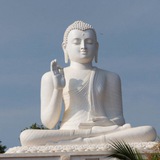
Namakāra Gāthā
Araham Sammā-Sambuddho Bhagavā,
Buddham Bhagavantam abhivādemi.
Svākkhāto Bhagavatā Dhammo,
Dhammam namassāmi.
Supaṭipanno Bhagavato sāvaka-sangho,
Sangham namāmi.
The Blessed One is the Arahant, the Perfectly and Fully Awakened One;
I pay homage to the Buddha, the Blessed One.
The Dhamma is well-expounded by the Blessed One;
I pay homage to the Dhamma.
The Saṅgha of the Blessed One's disciples has practiced well;
I pay homage to the Saṅgha.
Araham Sammā-Sambuddho Bhagavā,
Buddham Bhagavantam abhivādemi.
Svākkhāto Bhagavatā Dhammo,
Dhammam namassāmi.
Supaṭipanno Bhagavato sāvaka-sangho,
Sangham namāmi.
The Blessed One is the Arahant, the Perfectly and Fully Awakened One;
I pay homage to the Buddha, the Blessed One.
The Dhamma is well-expounded by the Blessed One;
I pay homage to the Dhamma.
The Saṅgha of the Blessed One's disciples has practiced well;
I pay homage to the Saṅgha.
❤4👍1🤗1
Forwarded from Buddha Dharma books
Free Buddha Dharma ebook
Dhammapada
By Venerable Narada Mahathera
Venerable Narada’s translation is regarded as being accurate and readable, but the language is perhaps a bit older than Acharya Buddharakkita’s version. It can often be found as a free distribution book that includes the translation, Pali, notes, and summaries from the commentary stories.
Free download available:
http://ftp.budaedu.org/ebooks/pdf/EN014.pdf
=============
Dhammapada
By Venerable Narada Mahathera
Venerable Narada’s translation is regarded as being accurate and readable, but the language is perhaps a bit older than Acharya Buddharakkita’s version. It can often be found as a free distribution book that includes the translation, Pali, notes, and summaries from the commentary stories.
Free download available:
http://ftp.budaedu.org/ebooks/pdf/EN014.pdf
=============
❤1👍1
Dhammapada Verse 72
Satthikutapeta Vatthu
Yavadeva anatthaya
nattam balassa jayati
hanti balassa sukkamsam1
muddhamassa2 vipatayam.
Verse 72: The skill of a fool can only harm him; it destroys his merit and his wisdom (lit., it severs his head).
1. sukkamsa: sukka + amsa : sukka means white, bright, pure or good; amsa means portion. According to the Commentary, sukkamsa means merit.
2. muddha: head, top, summit. According to the Commentary, it means knowledge.
The Story of Satthikutapeta
While residing at the Veluvana monastery, the Buddha uttered Verse (72) of this book with reference to a peta-ghost named Satthikutapeta.
The Chief Disciple Maha Moggallana saw this enormous peta-ghost while going on an alms-round with Thera Lakkhana. In this connection, the Buddha explained that Satthikutapeta, in one of his previous existences, was very skilful in throwing stones at things. One day, he asked permissions from his teacher to try out his skill. His teacher told him not to hit a cow, or a human being as he would have to pay compensation to the owner or to the relative, but to find a target which was ownerless or guardianless.
On seeing the paccekabuddha, the idiots lacking in intelligence, thought the paccekabuddha, having no relative or guardian, would be an ideal target. So he threw a stone at the paccekabuddha who was on an alms-round. The stone entered from one ear and came out of the other. The paccekabuddha expired when he reached the monastery. The stone-thrower was killed by the disciples of the paccekabuddha and he was reborn in Avici Niraya. Afterwards, he was reborn as a peta-ghost and had since been serving the remaining term of the evil consequences (kamma) of his evil deed. As a peta-ghost his enormous head was being continuously hit with red-hot hammers.
In conclusion, the Buddha said, "To a fool, his skill or knowledge is of no use; it can only harm him."
Then the Buddha spoke in verse as follows:
Verse 72: The skill of a fool can only harm him; it destroys his merit and his wisdom (lit., it severs his head).
Buddha dharma teachings channel:
https://invite.viber.com/?g2=AQAKw1y3rv%2F6sk61PI2W4izuIiaEZj8YZujhY1tSzL%2B07s7rFnVFDAd0bAYFaMLw
====================
Satthikutapeta Vatthu
Yavadeva anatthaya
nattam balassa jayati
hanti balassa sukkamsam1
muddhamassa2 vipatayam.
Verse 72: The skill of a fool can only harm him; it destroys his merit and his wisdom (lit., it severs his head).
1. sukkamsa: sukka + amsa : sukka means white, bright, pure or good; amsa means portion. According to the Commentary, sukkamsa means merit.
2. muddha: head, top, summit. According to the Commentary, it means knowledge.
The Story of Satthikutapeta
While residing at the Veluvana monastery, the Buddha uttered Verse (72) of this book with reference to a peta-ghost named Satthikutapeta.
The Chief Disciple Maha Moggallana saw this enormous peta-ghost while going on an alms-round with Thera Lakkhana. In this connection, the Buddha explained that Satthikutapeta, in one of his previous existences, was very skilful in throwing stones at things. One day, he asked permissions from his teacher to try out his skill. His teacher told him not to hit a cow, or a human being as he would have to pay compensation to the owner or to the relative, but to find a target which was ownerless or guardianless.
On seeing the paccekabuddha, the idiots lacking in intelligence, thought the paccekabuddha, having no relative or guardian, would be an ideal target. So he threw a stone at the paccekabuddha who was on an alms-round. The stone entered from one ear and came out of the other. The paccekabuddha expired when he reached the monastery. The stone-thrower was killed by the disciples of the paccekabuddha and he was reborn in Avici Niraya. Afterwards, he was reborn as a peta-ghost and had since been serving the remaining term of the evil consequences (kamma) of his evil deed. As a peta-ghost his enormous head was being continuously hit with red-hot hammers.
In conclusion, the Buddha said, "To a fool, his skill or knowledge is of no use; it can only harm him."
Then the Buddha spoke in verse as follows:
Verse 72: The skill of a fool can only harm him; it destroys his merit and his wisdom (lit., it severs his head).
Buddha dharma teachings channel:
https://invite.viber.com/?g2=AQAKw1y3rv%2F6sk61PI2W4izuIiaEZj8YZujhY1tSzL%2B07s7rFnVFDAd0bAYFaMLw
====================
Viber
Buddha
Buddha dharma teachings from the suttas and commentaries from Theravada tradition
❤1👍1
Please, Kālāmas, don’t go by oral transmission, don’t go by lineage, don’t go by testament, don’t go by canonical authority, don’t rely on logic, don’t rely on inference, don’t go by reasoned train of thought, don’t go by the acceptance of a view after deliberation, don’t go by the appearance of competence, and don’t think ‘The ascetic is our respected teacher.’ But when you know for yourselves: ‘These things are skillful, blameless, praised by sensible people, and when you undertake them, they lead to welfare and happiness’, then you should acquire them and keep them.
Partial excepts from AN 3.65 : Kesamutti or Kalama sutta
Partial excepts from AN 3.65 : Kesamutti or Kalama sutta
❤2👍1🥰1
Dhammapada Verses 73 and 74
Cittagahapati Vatthu
Asantam bhavanamiccheyya
purekkharanca bhikkhusu
avasesu ca issariyam
pujam parakulesu1 ca.
Mameva kata mannantu
gihi2 pabbajita ubho
mamevativasa assu
kiccakiccesu kismici
iti balassa sankappo
iccha mano ca vaddhati.
Verse 73: The foolish bhikkhu desires praise for qualities he does not have, precedence among bhikkhus, authority in the monasteries, and veneration from those unrelated to him.
Verse 74: "Let both laymen and bhikkhus think that things are done because of me; let them obey me in all matters, great and small." Such being the thoughts of the fool, his greed and his pride grow.
1. parakulesu: those outside the family; (para = outside or others).
2. gihi: short form for gahapati, householder.
The Story of Citta the Householder
While residing at the Jetavana monastery, the Buddha uttered Verses (73) and (74) of this book, with reference to Thera Sudhamma and Citta the householder.
Citta, a householder, once met Thera Mahanama, one of the group of the first five bhikkhus (Pancavaggis), going on an alms-round, and invited the thera to his house. There, he offered alms-food to the thera and after listening to the discourse given by him, Citta attained Sotapatti Fruition. Later, Citta built a monastery in his mango grove. There, he looked to the needs of all bhikkhus who came to the monastery and Bhikkhu Sudhamma was installed as the resident bhikkhu.
One day, the two Chief Disciples of the Buddha, the Venerable Sariputta and the Venerable Maha Moggallana, came to the monastery and after listening to the discourse given by the Venerable Sariputta, Citta attained Anagami Fruition. Then, he invited the two Chief Disciples to his house for alms-food the next day. He also invited Thera Sudhamma, but Thera Sudhamma refused in anger and said, "You invite me only after the other two." Citta repeated his invitation, but it was turned down. Nevertheless, Thera Sudhamma went to the house of Citta early on the following day. But when invited to enter the house, Thera Sudhamma refused and said that he would not sit down as he was going on his alms-round. But when he saw the things that were to be offered to the two Chief Disciples, he envied them so much that he could not restrain his anger. He abused Citta and said, "I don't want to stay in your monastery any longer," and left the house in anger.
From there, he went to the Buddha and reported everything that had happened. To him, the Buddha said, "You have insulted a lay-disciple who is endowed with faith and generously. You'd better go back to him and own up your mistake." Sudhamma did as he was told by the Buddha, but Citta would not be appeased; so he returned to the Buddha for the second time. The Buddha, knowing that the pride of Sudhamma had dwindled by this time, said, "My son, a good bhikkhu should have no attachment; a good bhikkhu should not be conceited and say 'This is my monastery, this is my place, these are my lay-disciples,' etc., for in one with such thoughts, covetousness and pride will increase."
Then the Buddha spoke in verse as follows:
Verse 73: The foolish bhikkhu desires praise for qualities he does not have, precedence among bhikkhus, authority in the monasteries, and veneration from those unrelated to him.
Verse 74: "Let both laymen and bhikkhus think that things are done because of me; let them obey me in all matters, great and small." Such being the thoughts of the fool, his greed and his pride grow.
At the end of the discourse, Sudhamma went to the house of Citta, and this time they got reconciled; and within a few days, Sudhamma attained arahatship.
Words of the Buddha channel:
https://invite.viber.com/?g2=AQAFqzqlj7FmI061PX17rxWMAtZ%2BRuso%2FH2KmHKZSgnv7v9DD8X0bDkKnZDr9JDq
====================
Cittagahapati Vatthu
Asantam bhavanamiccheyya
purekkharanca bhikkhusu
avasesu ca issariyam
pujam parakulesu1 ca.
Mameva kata mannantu
gihi2 pabbajita ubho
mamevativasa assu
kiccakiccesu kismici
iti balassa sankappo
iccha mano ca vaddhati.
Verse 73: The foolish bhikkhu desires praise for qualities he does not have, precedence among bhikkhus, authority in the monasteries, and veneration from those unrelated to him.
Verse 74: "Let both laymen and bhikkhus think that things are done because of me; let them obey me in all matters, great and small." Such being the thoughts of the fool, his greed and his pride grow.
1. parakulesu: those outside the family; (para = outside or others).
2. gihi: short form for gahapati, householder.
The Story of Citta the Householder
While residing at the Jetavana monastery, the Buddha uttered Verses (73) and (74) of this book, with reference to Thera Sudhamma and Citta the householder.
Citta, a householder, once met Thera Mahanama, one of the group of the first five bhikkhus (Pancavaggis), going on an alms-round, and invited the thera to his house. There, he offered alms-food to the thera and after listening to the discourse given by him, Citta attained Sotapatti Fruition. Later, Citta built a monastery in his mango grove. There, he looked to the needs of all bhikkhus who came to the monastery and Bhikkhu Sudhamma was installed as the resident bhikkhu.
One day, the two Chief Disciples of the Buddha, the Venerable Sariputta and the Venerable Maha Moggallana, came to the monastery and after listening to the discourse given by the Venerable Sariputta, Citta attained Anagami Fruition. Then, he invited the two Chief Disciples to his house for alms-food the next day. He also invited Thera Sudhamma, but Thera Sudhamma refused in anger and said, "You invite me only after the other two." Citta repeated his invitation, but it was turned down. Nevertheless, Thera Sudhamma went to the house of Citta early on the following day. But when invited to enter the house, Thera Sudhamma refused and said that he would not sit down as he was going on his alms-round. But when he saw the things that were to be offered to the two Chief Disciples, he envied them so much that he could not restrain his anger. He abused Citta and said, "I don't want to stay in your monastery any longer," and left the house in anger.
From there, he went to the Buddha and reported everything that had happened. To him, the Buddha said, "You have insulted a lay-disciple who is endowed with faith and generously. You'd better go back to him and own up your mistake." Sudhamma did as he was told by the Buddha, but Citta would not be appeased; so he returned to the Buddha for the second time. The Buddha, knowing that the pride of Sudhamma had dwindled by this time, said, "My son, a good bhikkhu should have no attachment; a good bhikkhu should not be conceited and say 'This is my monastery, this is my place, these are my lay-disciples,' etc., for in one with such thoughts, covetousness and pride will increase."
Then the Buddha spoke in verse as follows:
Verse 73: The foolish bhikkhu desires praise for qualities he does not have, precedence among bhikkhus, authority in the monasteries, and veneration from those unrelated to him.
Verse 74: "Let both laymen and bhikkhus think that things are done because of me; let them obey me in all matters, great and small." Such being the thoughts of the fool, his greed and his pride grow.
At the end of the discourse, Sudhamma went to the house of Citta, and this time they got reconciled; and within a few days, Sudhamma attained arahatship.
Words of the Buddha channel:
https://invite.viber.com/?g2=AQAFqzqlj7FmI061PX17rxWMAtZ%2BRuso%2FH2KmHKZSgnv7v9DD8X0bDkKnZDr9JDq
====================
Viber
Words Of The Buddha
Daily teachings from Buddha Dharma
❤1👍1
We Are Not One
Interdependence is not what you (and many others) may think.
By Thanissaro Bhikkhu
Twenty-five years ago, one of my teachers, Ajaan Suwat, led a meditation retreat in Massachusetts for which I served as translator. During a group interview session one afternoon, a retreatant new to Buddhism quipped, “You guys would have a good religion here if only you had a God. That way people would have some sense of support in their practice when things aren’t going well.”
Ajaan Suwat’s gentle reply has stayed with me ever since: “If there were a god who could arrange that by my taking a mouthful of food all the beings in the world would become full, I’d bow down to that god. But I haven’t found anyone like that yet.”
There are two main reasons these words have continued to resonate with me. One is that they’re such an elegant argument against the existence of an all-powerful, all-merciful Creator. Look at the way life survives: by feeding on other life. The need to eat entails unavoidable suffering not only for those who are eaten but also for those who feed, because we are never free of the need to feed. Wouldn’t an all-powerful, all-merciful Creator have come up with a better design for life than this?
The other reason is that Ajaan Suwat indirectly addressed an idea often, but wrongly, attributed to the Buddha: that we are all One, and that our organic Oneness is something to celebrate. If we really were One, wouldn’t our stomachs interconnect so that the nourishment of one person nourished everyone else? As it is, my act of feeding can often deprive someone else of food. My need to keep feeding requires that other living beings keep working hard to produce food. In many cases, when one being feeds, others die in the process. Oneness, for most beings, means not sharing a stomach but winding up in someone else’s stomach and being absorbed into that someone else’s bloodstream. Hardly cause for celebration.
The Buddha himself never taught that we are all One. A brahman once asked him, “Is everything a Oneness? Is everything a Plurality?” The Buddha replied that both views are extremes to be avoided (Samyutta Nikaya 12.48). He didn’t explain to the brahman why we should avoid the extreme view that all is Oneness. But three other passages in the Pali canon suggest the reasons for his position.
In Anguttara Nikaya 10.29, the Buddha says that the highest nondual state a meditator can master is to experience consciousness as an unlimited, nondual totality. Everything seems One with your awareness in that experience, yet even in that state there is still change and inconstancy. In other words, that experience doesn’t end suffering. Like everything else conditioned and fabricated, it has to be viewed with dispassion and, ultimately, abandoned.
In Samyutta Nikaya 35.80, he states that in order to relinquish ignorance and give rise to clear knowing, one has to see all things—all the senses and their objects—as something other or separate; as not-self. To see all things as One would thus block the knowledge leading to awakening.
We’re related not by what we inherently are but by what we choose to do.
And in Majjhima Nikaya 22, he singles out the view that the self is identical with the cosmos as particularly foolish. If the cosmos is your true self, he reasoned, then the workings of the cosmos would be yours to control. But how much control do you have over your immediate surroundings, let alone the whole cosmos? As Ajaan Lee [1907–1961] once said, “Try cutting down your neighbor’s tree and see whether there’s going to be trouble.”
Taken together, these three passages suggest that the Buddha wanted to avoid the view that everything is a Oneness because it doesn’t put an end to suffering, because seeing all things as One gets in the way of awakening, and because the idea of Oneness simply doesn’t square with the way things actually are.
Interdependence is not what you (and many others) may think.
By Thanissaro Bhikkhu
Twenty-five years ago, one of my teachers, Ajaan Suwat, led a meditation retreat in Massachusetts for which I served as translator. During a group interview session one afternoon, a retreatant new to Buddhism quipped, “You guys would have a good religion here if only you had a God. That way people would have some sense of support in their practice when things aren’t going well.”
Ajaan Suwat’s gentle reply has stayed with me ever since: “If there were a god who could arrange that by my taking a mouthful of food all the beings in the world would become full, I’d bow down to that god. But I haven’t found anyone like that yet.”
There are two main reasons these words have continued to resonate with me. One is that they’re such an elegant argument against the existence of an all-powerful, all-merciful Creator. Look at the way life survives: by feeding on other life. The need to eat entails unavoidable suffering not only for those who are eaten but also for those who feed, because we are never free of the need to feed. Wouldn’t an all-powerful, all-merciful Creator have come up with a better design for life than this?
The other reason is that Ajaan Suwat indirectly addressed an idea often, but wrongly, attributed to the Buddha: that we are all One, and that our organic Oneness is something to celebrate. If we really were One, wouldn’t our stomachs interconnect so that the nourishment of one person nourished everyone else? As it is, my act of feeding can often deprive someone else of food. My need to keep feeding requires that other living beings keep working hard to produce food. In many cases, when one being feeds, others die in the process. Oneness, for most beings, means not sharing a stomach but winding up in someone else’s stomach and being absorbed into that someone else’s bloodstream. Hardly cause for celebration.
The Buddha himself never taught that we are all One. A brahman once asked him, “Is everything a Oneness? Is everything a Plurality?” The Buddha replied that both views are extremes to be avoided (Samyutta Nikaya 12.48). He didn’t explain to the brahman why we should avoid the extreme view that all is Oneness. But three other passages in the Pali canon suggest the reasons for his position.
In Anguttara Nikaya 10.29, the Buddha says that the highest nondual state a meditator can master is to experience consciousness as an unlimited, nondual totality. Everything seems One with your awareness in that experience, yet even in that state there is still change and inconstancy. In other words, that experience doesn’t end suffering. Like everything else conditioned and fabricated, it has to be viewed with dispassion and, ultimately, abandoned.
In Samyutta Nikaya 35.80, he states that in order to relinquish ignorance and give rise to clear knowing, one has to see all things—all the senses and their objects—as something other or separate; as not-self. To see all things as One would thus block the knowledge leading to awakening.
We’re related not by what we inherently are but by what we choose to do.
And in Majjhima Nikaya 22, he singles out the view that the self is identical with the cosmos as particularly foolish. If the cosmos is your true self, he reasoned, then the workings of the cosmos would be yours to control. But how much control do you have over your immediate surroundings, let alone the whole cosmos? As Ajaan Lee [1907–1961] once said, “Try cutting down your neighbor’s tree and see whether there’s going to be trouble.”
Taken together, these three passages suggest that the Buddha wanted to avoid the view that everything is a Oneness because it doesn’t put an end to suffering, because seeing all things as One gets in the way of awakening, and because the idea of Oneness simply doesn’t square with the way things actually are.
Telegram
Buddha Dharma books
Free Buddhism books, teachings, podcasts and videos from Theravada, Mahayana and Vajrayana traditions
❤1👍1
While the Buddha didn’t tell the brahman why he avoided the extreme of Oneness, he did tell him how to avoid it: by adopting the teaching on dependent co-arising, his explanation of the causal interactions that lead to suffering.
Ironically, dependent co-arising is often interpreted in modern Buddhist circles as the Buddha’s affirmation of Oneness and the interconnectedness of all beings. But this interpretation doesn’t take into account the Buddha’s own dismissal of Oneness, and it blurs two important distinctions.
The first distinction is between the notions of Oneness and interconnectedness. That we live in an interconnected system, dependent on one another, doesn’t mean that we’re One. To be One, in a positive sense, the whole system would have to be working toward the good of every member in the system. But in nature’s grand ecosystem, one member survives only by feeding—physically and mentally—on other members. It’s hard, even heartless, to say that nature works for the common good of all.
The Buddha pointed to this fact in a short series of questions aimed at introducing dharma to newcomers (Khuddaka- patha 4). The questions follow the pattern “What is one? What is two?” all the way to “What is ten?” Most of the answers are unsurprising: four, for example, is the four noble truths; eight, the noble eightfold path. The surprise lies in the answer to “What is one?”—“All beings subsist on food.” The Buddha does not say that all beings are One. Instead, this answer focuses on something that all beings have in common yet which underscores our lack of Oneness: We all need to feed—and we feed on one another. In fact, this is the Buddha’s basic image for introducing the topic of interdependent causality. Causal relationships are feeding relationships. To be interdependent is to “inter-eat.”
This is not cause for celebration, in the Buddha’s view. On the contrary, as he states in the Anguttara Nikaya 10.27, the proper response to all this inter-eating is one of disenchantment and dispassion, leading the mind to gain release from the need to feed.
The second distinction that gets blurred when dependent co-arising is portrayed as the Buddha’s affirmation of Oneness is the distinction between what might be called outer connections and inner ones: the connections among living beings on the one hand, and those among the events within each being’s awareness on the other. When you look at the series of events actually listed in dependent co-arising, you see that it deals with the interior causes of interconnection. None of the causal connections are concerned with how beings are dependent on one another. Instead, every connection describes the interrelationship among events immediately present to your inner awareness—your sense of your body and mind “from the inside,” the intimate part of your awareness that you can’t share with anyone else. These connections include such things as the dependence of consciousness on mental fabrication, of feelings on sensory contact, and of clinging on craving.
The interdependence here is not between you and other beings. It’s between all the experiences exclusively inside you. Just as I can’t enter your visual awareness to see if your sense of “blue” looks like my sense of “blue,” I can’t directly experience your experience of any of the factors of dependent co-arising. Likewise, you can’t directly experience mine. Even when I’m feeling a sense of Oneness with all beings, you—despite the fact that you’re one of those beings—can’t directly feel how that feeling feels to me.
In other words, instead of describing a shared area of experience, dependent co-arising deals precisely with what none of us holds in common. Even when the Buddha describes dependent co-arising as an explanation of the “origination of the world” (SN 12.44), we have to remember that “world” for him means the world of your experience at the six senses (SN 35.82). The factors of dependent co-arising all have to do with your experience as sensed from within.
Ironically, dependent co-arising is often interpreted in modern Buddhist circles as the Buddha’s affirmation of Oneness and the interconnectedness of all beings. But this interpretation doesn’t take into account the Buddha’s own dismissal of Oneness, and it blurs two important distinctions.
The first distinction is between the notions of Oneness and interconnectedness. That we live in an interconnected system, dependent on one another, doesn’t mean that we’re One. To be One, in a positive sense, the whole system would have to be working toward the good of every member in the system. But in nature’s grand ecosystem, one member survives only by feeding—physically and mentally—on other members. It’s hard, even heartless, to say that nature works for the common good of all.
The Buddha pointed to this fact in a short series of questions aimed at introducing dharma to newcomers (Khuddaka- patha 4). The questions follow the pattern “What is one? What is two?” all the way to “What is ten?” Most of the answers are unsurprising: four, for example, is the four noble truths; eight, the noble eightfold path. The surprise lies in the answer to “What is one?”—“All beings subsist on food.” The Buddha does not say that all beings are One. Instead, this answer focuses on something that all beings have in common yet which underscores our lack of Oneness: We all need to feed—and we feed on one another. In fact, this is the Buddha’s basic image for introducing the topic of interdependent causality. Causal relationships are feeding relationships. To be interdependent is to “inter-eat.”
This is not cause for celebration, in the Buddha’s view. On the contrary, as he states in the Anguttara Nikaya 10.27, the proper response to all this inter-eating is one of disenchantment and dispassion, leading the mind to gain release from the need to feed.
The second distinction that gets blurred when dependent co-arising is portrayed as the Buddha’s affirmation of Oneness is the distinction between what might be called outer connections and inner ones: the connections among living beings on the one hand, and those among the events within each being’s awareness on the other. When you look at the series of events actually listed in dependent co-arising, you see that it deals with the interior causes of interconnection. None of the causal connections are concerned with how beings are dependent on one another. Instead, every connection describes the interrelationship among events immediately present to your inner awareness—your sense of your body and mind “from the inside,” the intimate part of your awareness that you can’t share with anyone else. These connections include such things as the dependence of consciousness on mental fabrication, of feelings on sensory contact, and of clinging on craving.
The interdependence here is not between you and other beings. It’s between all the experiences exclusively inside you. Just as I can’t enter your visual awareness to see if your sense of “blue” looks like my sense of “blue,” I can’t directly experience your experience of any of the factors of dependent co-arising. Likewise, you can’t directly experience mine. Even when I’m feeling a sense of Oneness with all beings, you—despite the fact that you’re one of those beings—can’t directly feel how that feeling feels to me.
In other words, instead of describing a shared area of experience, dependent co-arising deals precisely with what none of us holds in common. Even when the Buddha describes dependent co-arising as an explanation of the “origination of the world” (SN 12.44), we have to remember that “world” for him means the world of your experience at the six senses (SN 35.82). The factors of dependent co-arising all have to do with your experience as sensed from within.
❤1👍1
The main message here is that suffering, which is something you experience directly from within, is caused by other factors that you experience from within—as long as you approach them unskillfully. But that same suffering can also be cured if you learn how to approach those factors with skill. Indeed, suffering can only be resolved from within. My lack of skill is something that only I can overcome through practice. This is why each of us has to find awakening for ourselves and experience it for ourselves—the Buddha’s term for this is paccattam. This is also why no one, even with the most compassionate intentions, can gain awakening for anyone else. The best any buddha can do is to point the way, in hopes that we’ll be willing to listen to his advice and act on it.
This is not to say, however, that the Buddha didn’t recognize our connections with one another. But he described them in another context: his teaching on karma.
Karma isn’t radically separate from dependent co-arising—the Buddha defined karma as intention, and intention is one of the subfactors in the causal chain. But karma does have two sides. When you give rise to an intention, no one else can experience how that intention feels to you: That’s the inner side of the intention, the side in the context of dependent co-arising. But when your intention leads you to act in word and deed, that’s its outer side, the side that ripples out into the world. This outer side of intention is what the Buddha was referring to when he said that we are kamma-bandhu: related through our actions (AN 5.57). My relation to you is determined by the things that I have done to you and that you have done to me. We’re related not by what we inherently are but by what we choose to do.
No one has ever fracked his way to nirvana.
Of course, given the wide range of things that people choose to do to and for one another, from very loving to very cruel, this picture of interconnectedness is not very reassuring. Because we’re always hungry, the need to feed can often trump the desire to relate to one another well. At the same time, interconnectedness through action places more demands on individual people. It requires us to be very careful, at the very least, not to create bad interconnections through breaking the precepts under any conditions. The vision of interconnectedness through Oneness, in contrast, is much less specific in the duties it places on people, and often implies that as long as you believe in Oneness, your feelings can be trusted as to what is right or wrong, and that ultimately the vastness of Oneness will set aright any mistakes we make.
Because interconnectedness through karma is not very reassuring on the one hand, and very demanding on the other, it’s easy to see the appeal of a notion of a Oneness that takes care of us all in spite of our actions. Interconnectedness through Oneness is often viewed as a more compassionate teaching than interconnectedness through action in that it provides a more comforting vision of the world and is more forgiving around the precepts. But the principle of interconnectedness through our actions demonstrates profound compassion to the people to whom it’s taught and gives them better reasons to act toward others in compassionate ways.
To begin with, interconnectedness through karma allows for freedom of choice, whereas Oneness does not. If we were really all parts of a larger organic Oneness, how could any of us determine what role we would play within that Oneness? It would be like a stomach suddenly deciding to switch jobs with the liver or to go on strike: The organism would die. At most, the stomach is free simply to act in line with its inner drives as a stomach. But even then, given the constant back and forth among all parts of an organic Oneness, no part of a larger whole can lay independent claim even to its drives. When a stomach starts secreting digestive juices, the signal comes from somewhere else. So it’s not really free.
This is not to say, however, that the Buddha didn’t recognize our connections with one another. But he described them in another context: his teaching on karma.
Karma isn’t radically separate from dependent co-arising—the Buddha defined karma as intention, and intention is one of the subfactors in the causal chain. But karma does have two sides. When you give rise to an intention, no one else can experience how that intention feels to you: That’s the inner side of the intention, the side in the context of dependent co-arising. But when your intention leads you to act in word and deed, that’s its outer side, the side that ripples out into the world. This outer side of intention is what the Buddha was referring to when he said that we are kamma-bandhu: related through our actions (AN 5.57). My relation to you is determined by the things that I have done to you and that you have done to me. We’re related not by what we inherently are but by what we choose to do.
No one has ever fracked his way to nirvana.
Of course, given the wide range of things that people choose to do to and for one another, from very loving to very cruel, this picture of interconnectedness is not very reassuring. Because we’re always hungry, the need to feed can often trump the desire to relate to one another well. At the same time, interconnectedness through action places more demands on individual people. It requires us to be very careful, at the very least, not to create bad interconnections through breaking the precepts under any conditions. The vision of interconnectedness through Oneness, in contrast, is much less specific in the duties it places on people, and often implies that as long as you believe in Oneness, your feelings can be trusted as to what is right or wrong, and that ultimately the vastness of Oneness will set aright any mistakes we make.
Because interconnectedness through karma is not very reassuring on the one hand, and very demanding on the other, it’s easy to see the appeal of a notion of a Oneness that takes care of us all in spite of our actions. Interconnectedness through Oneness is often viewed as a more compassionate teaching than interconnectedness through action in that it provides a more comforting vision of the world and is more forgiving around the precepts. But the principle of interconnectedness through our actions demonstrates profound compassion to the people to whom it’s taught and gives them better reasons to act toward others in compassionate ways.
To begin with, interconnectedness through karma allows for freedom of choice, whereas Oneness does not. If we were really all parts of a larger organic Oneness, how could any of us determine what role we would play within that Oneness? It would be like a stomach suddenly deciding to switch jobs with the liver or to go on strike: The organism would die. At most, the stomach is free simply to act in line with its inner drives as a stomach. But even then, given the constant back and forth among all parts of an organic Oneness, no part of a larger whole can lay independent claim even to its drives. When a stomach starts secreting digestive juices, the signal comes from somewhere else. So it’s not really free.
❤1👍1
For the Buddha, any teaching that denies the possibility of freedom of choice contradicts itself and negates the possibility of an end to suffering. If people aren’t free to choose their actions, to develop skillful actions and abandon unskillful ones, then why teach them? (AN 2.19) How could they choose to follow a path to the end of suffering?
At the same time, if you tell people that what they experience in the present is independent of what they choose to do in the present, you leave them defenseless in the face of their own desires and the desires of others (AN 3.62). Karma, however, despite the common misperception that it teaches fatalism, actually teaches freedom of choice—in particular, our freedom to choose our actions right here and now. It’s because of this freedom that the Buddha found the path to awakening and saw benefits in teaching that path to others.
The notion of Oneness precludes not only everyday freedom of choice but also the larger freedom to gain total release from the system of inter-eating. This is why some teachings on Oneness aim at making you feel more comfortable about staying within the system and banishing any thought of leaving it. If what you are is defined in terms of your role in the system, there’s no way you could ever leave it. It may require that you sleep in the middle of a road clogged with the traffic of aging, illness, and death. But with a few pillows and blankets and friendly companions, you won’t feel so lonely.
But the Buddha didn’t start with a definition of what people are. He began by exploring what we can do. And he found, through his own efforts, that human effort can lead to true happiness outside of the system by following a course of action, the noble eightfold path, that leads to the end of action—in other words, to release from the need to feed and be fed on.
Because each of us is trapped in the system of interconnectedness by our own actions, only we, as individuals, can break out by acting in increasingly skillful ways. The Buddha and members of the noble sangha can show us the way, but actual skillfulness is something we have to develop on our own. If they find us trying to sleep in the middle of the road, they won’t persuade us to stay there. And they won’t try to make us feel ashamed for wanting to get out of the road to find a happiness that’s harmless and safe. They’ll kindly point the way out.
To teach people interconnectedness through karma is an act of compassion. And it gives them better reasons to be compassionate themselves. On the surface, Oneness would seem to offer good incentives for compassion: You should be kind to others because they’re no less you than your lungs or your legs. But when you realize the implications of Oneness—that it doesn’t plumb the facts of how interconnectedness works and offers no room for freedom of choice—you see that it gives you poor guidance as to which acts would have a compassionate effect on the system, and denies your ability to choose whether to act compassionately in the first place.
The teaching on karma, though, makes compassion very specific. It gives a realistic picture of how interconnectedness works; it affirms both your freedom to choose your actions and your ability to influence the world through your intentions; and it gives clear guidelines as to which actions are compassionate and which are not.
Its primary message is that the most compassionate course of action is to practice for your own awakening. Some writers worry that this message devalues the world, making people more likely to mistreat the environment. But no one has ever fracked his way to nirvana. The path to awakening involves generosity, virtue, and the skills of meditation, which include developing attitudes of unlimited goodwill and compassion. You can’t leave the system of inter-eating by abusing it. In fact, the more you abuse it, the more it sucks you in. To free yourself, you have to treat it well, and part of treating it well means learning how to develop your own inner sources of food: concentration and discernment.
At the same time, if you tell people that what they experience in the present is independent of what they choose to do in the present, you leave them defenseless in the face of their own desires and the desires of others (AN 3.62). Karma, however, despite the common misperception that it teaches fatalism, actually teaches freedom of choice—in particular, our freedom to choose our actions right here and now. It’s because of this freedom that the Buddha found the path to awakening and saw benefits in teaching that path to others.
The notion of Oneness precludes not only everyday freedom of choice but also the larger freedom to gain total release from the system of inter-eating. This is why some teachings on Oneness aim at making you feel more comfortable about staying within the system and banishing any thought of leaving it. If what you are is defined in terms of your role in the system, there’s no way you could ever leave it. It may require that you sleep in the middle of a road clogged with the traffic of aging, illness, and death. But with a few pillows and blankets and friendly companions, you won’t feel so lonely.
But the Buddha didn’t start with a definition of what people are. He began by exploring what we can do. And he found, through his own efforts, that human effort can lead to true happiness outside of the system by following a course of action, the noble eightfold path, that leads to the end of action—in other words, to release from the need to feed and be fed on.
Because each of us is trapped in the system of interconnectedness by our own actions, only we, as individuals, can break out by acting in increasingly skillful ways. The Buddha and members of the noble sangha can show us the way, but actual skillfulness is something we have to develop on our own. If they find us trying to sleep in the middle of the road, they won’t persuade us to stay there. And they won’t try to make us feel ashamed for wanting to get out of the road to find a happiness that’s harmless and safe. They’ll kindly point the way out.
To teach people interconnectedness through karma is an act of compassion. And it gives them better reasons to be compassionate themselves. On the surface, Oneness would seem to offer good incentives for compassion: You should be kind to others because they’re no less you than your lungs or your legs. But when you realize the implications of Oneness—that it doesn’t plumb the facts of how interconnectedness works and offers no room for freedom of choice—you see that it gives you poor guidance as to which acts would have a compassionate effect on the system, and denies your ability to choose whether to act compassionately in the first place.
The teaching on karma, though, makes compassion very specific. It gives a realistic picture of how interconnectedness works; it affirms both your freedom to choose your actions and your ability to influence the world through your intentions; and it gives clear guidelines as to which actions are compassionate and which are not.
Its primary message is that the most compassionate course of action is to practice for your own awakening. Some writers worry that this message devalues the world, making people more likely to mistreat the environment. But no one has ever fracked his way to nirvana. The path to awakening involves generosity, virtue, and the skills of meditation, which include developing attitudes of unlimited goodwill and compassion. You can’t leave the system of inter-eating by abusing it. In fact, the more you abuse it, the more it sucks you in. To free yourself, you have to treat it well, and part of treating it well means learning how to develop your own inner sources of food: concentration and discernment.
❤1👍1
When these have been developed to the full, the mind will gain access to a further dimension, outside of the food chain. In that way, you remove your mouth from the feeding frenzy, and show others that they can, too.
From the Buddha’s perspective, the path to awakening will involve many lifetimes—another reason to treat the world well. If we’re in this for the long term, we have to eat with good manners, so that we’ll be able to eat well for however long it takes. If we mistreat others, we’ll be reborn into a world where we’re mistreated. If we’re wasteful of the world’s resources, we’ll be reborn into a wasted world. Because we’ll be returning to the world we leave behind, we should leave it in good shape.
In the meantime, by following the path, we’re taking care of business inside—and this, too, is an act of compassion to others. One of the most heartrending things in the world to witness is a person deeply in pain who can’t be reached: a young baby, crying inconsolably; an ill person on her deathbed, delirious and distraught. You want to reach into their hearts and take out a share of the pain so as to lessen it, but you can’t. Their pain is precisely at the level of their experience defined by dependent co-arising—the area of awareness that they can’t share with anyone else, and that no one else can enter to change. This is why seeing their pain hurts us so: we’re helpless in the face of the chasm between us—glaring proof that we are not One.
Someday, of course, we’ll be in their position. If we can take responsibility now for ourselves on the inner level—learning how not to be overcome by pleasure or pain, and not deceived by our cravings and perceptions—we won’t suffer then, even during the pain leading up to death. As a result, we won’t tear unnecessarily at the feelings of the people around us. This means that even though we can’t transfer the food in our mouths to fill their stomachs, we’ll at least not burden their hearts.
And in mastering that skill, we give a gift both to others and to ourselves.
Thanissaro Bhikkhu is an American Theravada Buddhist monk trained in the Thai Forest Tradition. He currently serves as abbot of the Metta Forest Monastery in San Diego County, California and is a frequent contributor to Tricycle. His latest book is Good Heart, Good Mind: The Practice of the Ten Perfections. Thanissaro Bhikkhu’s talks, writings, and translations are all freely available at his website, dhammatalks.org.
Free Buddhism books, teachings, podcasts and videos from Theravada, Mahayana and Vajrayana traditions:
https://news.1rj.ru/str/buddha_ebooks
From the Buddha’s perspective, the path to awakening will involve many lifetimes—another reason to treat the world well. If we’re in this for the long term, we have to eat with good manners, so that we’ll be able to eat well for however long it takes. If we mistreat others, we’ll be reborn into a world where we’re mistreated. If we’re wasteful of the world’s resources, we’ll be reborn into a wasted world. Because we’ll be returning to the world we leave behind, we should leave it in good shape.
In the meantime, by following the path, we’re taking care of business inside—and this, too, is an act of compassion to others. One of the most heartrending things in the world to witness is a person deeply in pain who can’t be reached: a young baby, crying inconsolably; an ill person on her deathbed, delirious and distraught. You want to reach into their hearts and take out a share of the pain so as to lessen it, but you can’t. Their pain is precisely at the level of their experience defined by dependent co-arising—the area of awareness that they can’t share with anyone else, and that no one else can enter to change. This is why seeing their pain hurts us so: we’re helpless in the face of the chasm between us—glaring proof that we are not One.
Someday, of course, we’ll be in their position. If we can take responsibility now for ourselves on the inner level—learning how not to be overcome by pleasure or pain, and not deceived by our cravings and perceptions—we won’t suffer then, even during the pain leading up to death. As a result, we won’t tear unnecessarily at the feelings of the people around us. This means that even though we can’t transfer the food in our mouths to fill their stomachs, we’ll at least not burden their hearts.
And in mastering that skill, we give a gift both to others and to ourselves.
Thanissaro Bhikkhu is an American Theravada Buddhist monk trained in the Thai Forest Tradition. He currently serves as abbot of the Metta Forest Monastery in San Diego County, California and is a frequent contributor to Tricycle. His latest book is Good Heart, Good Mind: The Practice of the Ten Perfections. Thanissaro Bhikkhu’s talks, writings, and translations are all freely available at his website, dhammatalks.org.
Free Buddhism books, teachings, podcasts and videos from Theravada, Mahayana and Vajrayana traditions:
https://news.1rj.ru/str/buddha_ebooks
Telegram
Buddha Dharma books
Free Buddhism books, teachings, podcasts and videos from Theravada, Mahayana and Vajrayana traditions
❤1👍1
Forwarded from Buddha Dharma books
Free Buddha Dharma ebook
The Problems Of Life
A dhamma discourse by Mahasi Sayadaw Gyi
On the query of Vanna Kyaw Htin Dr. U Myint Swe M.B, B.S, regarding the various problems of life and death, the most venerable Mahasi Sayadaw, Aggamaha Pandita, the questioner of Sixth Buddhist Council, the State Ovadacaryi, Worldwide Buddhist Missionary Sayadaw gave him very vivid and clear answer, which were then collected and first printed and published in 1976 in the name of “The Problems of Life”.
In the writings of Venerable Mahasi Sayadaw, it was mentioned that Dr. U Myint Swe’s questions were related to the four difficult subjects to express as stated by Commentary Scriptures. Those difficult Subjects are:
1. The Four Noble Truths,
2. All Living Beings,
3. Pregnancy,
4. Dependent Origination, the law of cause and effect.
All questions were difficult to give satisfactory answers. It is even harder to solve them in comparison with practice ways of life. For such harder questions, Ven. Mahasi Sayadaw with his depth of understanding and penetrative knowledge of pariyatti and pattipati literature, answered them to the full satisfaction of the questioner.
It was so wonderful and delightful that the Ven. Mahasi Sayadaw had given the reply to those questions, using Inductive and Deductive Logic, without any difficulty. Such being the case, we owe him immense devotion and deep respect sincerely.
Free download here:
http://www.mediafire.com/file/4b30v4bkjg1f8rz/
=============
The Problems Of Life
A dhamma discourse by Mahasi Sayadaw Gyi
On the query of Vanna Kyaw Htin Dr. U Myint Swe M.B, B.S, regarding the various problems of life and death, the most venerable Mahasi Sayadaw, Aggamaha Pandita, the questioner of Sixth Buddhist Council, the State Ovadacaryi, Worldwide Buddhist Missionary Sayadaw gave him very vivid and clear answer, which were then collected and first printed and published in 1976 in the name of “The Problems of Life”.
In the writings of Venerable Mahasi Sayadaw, it was mentioned that Dr. U Myint Swe’s questions were related to the four difficult subjects to express as stated by Commentary Scriptures. Those difficult Subjects are:
1. The Four Noble Truths,
2. All Living Beings,
3. Pregnancy,
4. Dependent Origination, the law of cause and effect.
All questions were difficult to give satisfactory answers. It is even harder to solve them in comparison with practice ways of life. For such harder questions, Ven. Mahasi Sayadaw with his depth of understanding and penetrative knowledge of pariyatti and pattipati literature, answered them to the full satisfaction of the questioner.
It was so wonderful and delightful that the Ven. Mahasi Sayadaw had given the reply to those questions, using Inductive and Deductive Logic, without any difficulty. Such being the case, we owe him immense devotion and deep respect sincerely.
Free download here:
http://www.mediafire.com/file/4b30v4bkjg1f8rz/
=============
❤1👍1
Dhammapada Verse 75
Vanavasitissasamanera Vatthu
Anna hi labhupanisa
anna nibbanagamini
evametam abhinnaya
bhikkhu Buddhassa savako
sakkaram nabhinandeyya
vivekamanubruhaye1.
Verse 75: Indeed, the path that leads to worldly gain is one and the Path that leads to Nibbana is another. Fully comprehending this, the bhikkhu, the disciple of the Buddha, should not take delight in worldly gain and honour, but devote himself to solitude, detachment and the realization of Nibbana.
1.Vivekamanubruhaye (vivekam + anubruhaye): Viveka - solitary seclusion. According to the Commentary, the three kinds of vivekas are kayaviveka (seclusion of the body or solitude); cittaviveka (detachment of the mind from human passions) and upadhiviveka (Nibbana).
The Story of Samanera Tissa of the Forest Monastery
While residing at the Jetavana monastery, the Buddha uttered Verse (75) of this book, with reference to Tissa, a samanera, who dwelt in a forest monastery.
Tissa was the son of a rich man from Savatthi. His father used to offer alms-food to the Chief Disciple Sariputta in their house and so Tissa even as a child had met the Chief Disciple on many occasions. At the age of seven he became a novice (samanera) under the Chief Disciple Sariputta. While he was staying at the Jetavana monastery, many of his friends and relatives came to see him, bringing presents and offerings. The samanera found these visits to be very tiresome; so after taking a subject of meditation from the Buddha, he left for a forest monastery. Whenever a villager offered him anything, Tissa would just say 'May you be happy, may you be liberated from the ills of life,' ("Sukhita hotha, dukkha muccatha"), and would go on his own way. While he stayed at the forest monastery, he ardently and diligently practised meditation, and at the end of three months he attained arahatship.
After the vassa, the Venerable Sariputta accompanied by the Venerable Maha Moggallana and other senior disciples paid a visit to Samanera Tissa, with the permission of the Buddha. All the villagers came out to welcome the Venerable Sariputta and his company of four thousand bhikkhus. They also requested the Venerable Sariputta to favour them with a discourse, but the Chief Disciple declined; instead, he directed his pupil Tissa to deliver a discourse to the villagers. The villagers, however, said that their teacher Tissa could only say "May you be happy, may you be liberated from the ills of life", and asked the Chief Disciple to assign another bhikkhu in his place. But the Venerable Sariputta insisted that Tissa should deliver a discourse on the dhamma, and said to Tissa, "Tissa, talk to them about the dhamma and show them how to gain happiness and how to be liberated from the ills of life."
Thus, in obedience to his teacher, Samanera Tissa went up the platform to deliver his discourse. He explained to the audience the meaning of the aggregates (khandhas), sense bases and sense objects (ayatanas), elements of the perpetuation of the Teaching (Bodhipakkhiya Dhamma), the Path leading to arahatship and Nibbana, etc. Finally he concluded, "And thus, those who attain arahatship are liberated from all the ills of life and have Perfect Peace; all the rest will still wander about in the round of rebirths (samsara)."
The Venerable Sariputta praised Tissa for having expounded the dhamma so well. Dawn was approaching when he finished his exposition, and all the villagers were very much impressed. Some of them were surprised that Samanera Tissa knew the dhamma so well, but they were also dissatisfied with him because formerly he had talked so little about the dhamma to them; the others were happy and contented to find the samanera to be so learned and felt that they were very lucky to have him amongst them.
Vanavasitissasamanera Vatthu
Anna hi labhupanisa
anna nibbanagamini
evametam abhinnaya
bhikkhu Buddhassa savako
sakkaram nabhinandeyya
vivekamanubruhaye1.
Verse 75: Indeed, the path that leads to worldly gain is one and the Path that leads to Nibbana is another. Fully comprehending this, the bhikkhu, the disciple of the Buddha, should not take delight in worldly gain and honour, but devote himself to solitude, detachment and the realization of Nibbana.
1.Vivekamanubruhaye (vivekam + anubruhaye): Viveka - solitary seclusion. According to the Commentary, the three kinds of vivekas are kayaviveka (seclusion of the body or solitude); cittaviveka (detachment of the mind from human passions) and upadhiviveka (Nibbana).
The Story of Samanera Tissa of the Forest Monastery
While residing at the Jetavana monastery, the Buddha uttered Verse (75) of this book, with reference to Tissa, a samanera, who dwelt in a forest monastery.
Tissa was the son of a rich man from Savatthi. His father used to offer alms-food to the Chief Disciple Sariputta in their house and so Tissa even as a child had met the Chief Disciple on many occasions. At the age of seven he became a novice (samanera) under the Chief Disciple Sariputta. While he was staying at the Jetavana monastery, many of his friends and relatives came to see him, bringing presents and offerings. The samanera found these visits to be very tiresome; so after taking a subject of meditation from the Buddha, he left for a forest monastery. Whenever a villager offered him anything, Tissa would just say 'May you be happy, may you be liberated from the ills of life,' ("Sukhita hotha, dukkha muccatha"), and would go on his own way. While he stayed at the forest monastery, he ardently and diligently practised meditation, and at the end of three months he attained arahatship.
After the vassa, the Venerable Sariputta accompanied by the Venerable Maha Moggallana and other senior disciples paid a visit to Samanera Tissa, with the permission of the Buddha. All the villagers came out to welcome the Venerable Sariputta and his company of four thousand bhikkhus. They also requested the Venerable Sariputta to favour them with a discourse, but the Chief Disciple declined; instead, he directed his pupil Tissa to deliver a discourse to the villagers. The villagers, however, said that their teacher Tissa could only say "May you be happy, may you be liberated from the ills of life", and asked the Chief Disciple to assign another bhikkhu in his place. But the Venerable Sariputta insisted that Tissa should deliver a discourse on the dhamma, and said to Tissa, "Tissa, talk to them about the dhamma and show them how to gain happiness and how to be liberated from the ills of life."
Thus, in obedience to his teacher, Samanera Tissa went up the platform to deliver his discourse. He explained to the audience the meaning of the aggregates (khandhas), sense bases and sense objects (ayatanas), elements of the perpetuation of the Teaching (Bodhipakkhiya Dhamma), the Path leading to arahatship and Nibbana, etc. Finally he concluded, "And thus, those who attain arahatship are liberated from all the ills of life and have Perfect Peace; all the rest will still wander about in the round of rebirths (samsara)."
The Venerable Sariputta praised Tissa for having expounded the dhamma so well. Dawn was approaching when he finished his exposition, and all the villagers were very much impressed. Some of them were surprised that Samanera Tissa knew the dhamma so well, but they were also dissatisfied with him because formerly he had talked so little about the dhamma to them; the others were happy and contented to find the samanera to be so learned and felt that they were very lucky to have him amongst them.
❤1👍1
The Buddha, with his supernormal power, saw from the Jetavana monastery these two groups of villagers and appeared before them. His intention in coming to the village was to clear up the misunderstanding amongst the first group of villagers. The Buddha arrived while the villagers were preparing alms-food for the bhikkhus. So, they had the opportunity to offer alms-food to the Buddha as well. After the meal, the Buddha addressed the villagers, "O lay disciples, all of you are so lucky to have Samanera Tissa amongst you. It is on account of his presence here that I myself, my Chief Disciples, senior disciples and many other bhikkhus now pay you a visit." These words made them realize how fortunate they were to have Samanera Tissa with them and they were satisfied. The Buddha then delivered a discourse to the villagers and the bhikkhus, and consequently, many of them attained Sotapatti Fruition.
After the discourse, the Buddha returned to the Jetavana monastery. In the evening, the bhikkhus said in praise of Tissa to the Buddha, "Venerable Sir, Samanera Tissa had performed a very difficult task; he was so well provided with gifts and offerings of all kinds here in Savatthi, yet he gave up all these to go and live austerely in a forest monastery." To them the Buddha replied, "Bhikkhus, a bhikkhu, whether in town or in village, should not live for the sake of gifts and offerings, if a bhikkhu renounces all good prospects or worldly gain and diligently practises the dhamma in solitude, he is sure to attain arahatship."
Then the Buddha spoke in verse as follows:
Verse 75: Indeed, the path that leads to worldly gain is one and the Path that leads to Nibbana is another. Fully comprehending this, the bhikkhu, the disciple of the Buddha, should not take delight in worldly gain and honour, but devote himself to solitude, detachment and the realization of Nibbana.
End of Chapter Five: The Fool (Bilavagga)
Dhammapada, beloved and favorite teachings of the Buddha channel:
https://invite.viber.com/?g2=AQBLD6phsgvP%2F061YjEM3K%2BNeH1Yb372b9mtfQX2EmuBpgoLUoc99BDMfzHghrme
====================
After the discourse, the Buddha returned to the Jetavana monastery. In the evening, the bhikkhus said in praise of Tissa to the Buddha, "Venerable Sir, Samanera Tissa had performed a very difficult task; he was so well provided with gifts and offerings of all kinds here in Savatthi, yet he gave up all these to go and live austerely in a forest monastery." To them the Buddha replied, "Bhikkhus, a bhikkhu, whether in town or in village, should not live for the sake of gifts and offerings, if a bhikkhu renounces all good prospects or worldly gain and diligently practises the dhamma in solitude, he is sure to attain arahatship."
Then the Buddha spoke in verse as follows:
Verse 75: Indeed, the path that leads to worldly gain is one and the Path that leads to Nibbana is another. Fully comprehending this, the bhikkhu, the disciple of the Buddha, should not take delight in worldly gain and honour, but devote himself to solitude, detachment and the realization of Nibbana.
End of Chapter Five: The Fool (Bilavagga)
Dhammapada, beloved and favorite teachings of the Buddha channel:
https://invite.viber.com/?g2=AQBLD6phsgvP%2F061YjEM3K%2BNeH1Yb372b9mtfQX2EmuBpgoLUoc99BDMfzHghrme
====================
Viber
Dhammapada - Buddha Dharma Teachings
Daily teachings of the Dhammapada, beloved and favorite teachings of the Buddha
❤1👍1
“Mendicants, there are eight causes and reasons that lead to acquiring the wisdom fundamental to the spiritual life, and to its increase, growth, and full development once it has been acquired. What eight?
1. It’s when a mendicant lives relying on the Teacher or a spiritual companion in a teacher’s role. And they set up a keen sense of conscience and prudence for them, with warmth and respect. This is the first cause.
2. When a mendicant lives relying on the Teacher or a spiritual companion in a teacher’s role—with a keen sense of conscience and prudence for them, with warmth and respect—from time to time they go and ask them questions: ‘Why, sir, does it say this? What does that mean?’ Those venerables clarify what is unclear, reveal what is obscure, and dispel doubt regarding the many doubtful matters. This is the second cause.
Partial excerpts from AN 8.2 Paññāsutta: Wisdom
1. It’s when a mendicant lives relying on the Teacher or a spiritual companion in a teacher’s role. And they set up a keen sense of conscience and prudence for them, with warmth and respect. This is the first cause.
2. When a mendicant lives relying on the Teacher or a spiritual companion in a teacher’s role—with a keen sense of conscience and prudence for them, with warmth and respect—from time to time they go and ask them questions: ‘Why, sir, does it say this? What does that mean?’ Those venerables clarify what is unclear, reveal what is obscure, and dispel doubt regarding the many doubtful matters. This is the second cause.
Partial excerpts from AN 8.2 Paññāsutta: Wisdom
❤1👍1
Dhammapada Verse 76
Radhatthera Vatthu
Nidhinamva pavattaram
yam passe vajjadassinam
niggayhavadim medhavim
tadisam panditam bhaje
tadisam bhajamanassa
seyyo hoti na papiyo.
Verse 76: One should follow a man of wisdom who rebukes one for one's faults, as one would follow a guide to some buried treasure. To one who follows such a wise man, it will be an advantage and not a disadvantage.
The Story of Thera Radha
While residing at the Jetavana monastery, the Buddha uttered Verse (76) of this book, with reference to Thera Radha, who was at one time a poor old Brahmin.
Radha was a poor brahmin who stayed in the monastery doing small services for the bhikkhus. For his services he was provided with food and clothing and other needs, but was not encouraged to join the Order, although he had a strong desire to become a bhikkhu.
One day, early in the morning, when the Buddha surveyed the world with his supernormal power, he saw the poor old brahmin in his vision and knew that he was due for arahatship. So the Buddha went to the old man, and learned from him that the bhikkhus of the monastery did not want him to join the Order. The Buddha therefore called all the bhikkhus to him and asked them, "Is there any bhikkhu here who recollects any good turn done to him by this old man?" To this question, the Venerable Sariputta replied, "Venerable Sir, I do recollect an instance when this old man offered me a spoonful of rice." "If that be so," the Buddha said, "shouldn't you help your benefactor get liberated from the ills of life?" Then the Venerable Sariputta agreed to make the old man a bhikkhu and he was duly admitted to the Order. The Venerable Sariputta guided the old bhikkhu and the old bhikkhu strictly followed his guidance. Within a few days, the old bhikkhu attained arahatship.
When the Buddha next came to see the bhikkhus, they reported to him how strictly the old bhikkhu followed the guidance of the Venerable Sariputta. To them, the Buddha replied that a bhikkhu should be amenable to guidance like Radha, and should not resent when rebuked for any fault or failing.
Then the Buddha spoke in verse as follows:
Verse 76: One should follow a man of wisdom who rebukes one for one's faults, as one would follow a guide to some buried treasure. To one who follows such a wise man, it will be an advantage and not a disadvantage.
Ajahn Chah, Buddhist teacher of Thai forest meditation of Theravada Buddhism channel:
https://news.1rj.ru/str/ajahnchah_buddhism
Radhatthera Vatthu
Nidhinamva pavattaram
yam passe vajjadassinam
niggayhavadim medhavim
tadisam panditam bhaje
tadisam bhajamanassa
seyyo hoti na papiyo.
Verse 76: One should follow a man of wisdom who rebukes one for one's faults, as one would follow a guide to some buried treasure. To one who follows such a wise man, it will be an advantage and not a disadvantage.
The Story of Thera Radha
While residing at the Jetavana monastery, the Buddha uttered Verse (76) of this book, with reference to Thera Radha, who was at one time a poor old Brahmin.
Radha was a poor brahmin who stayed in the monastery doing small services for the bhikkhus. For his services he was provided with food and clothing and other needs, but was not encouraged to join the Order, although he had a strong desire to become a bhikkhu.
One day, early in the morning, when the Buddha surveyed the world with his supernormal power, he saw the poor old brahmin in his vision and knew that he was due for arahatship. So the Buddha went to the old man, and learned from him that the bhikkhus of the monastery did not want him to join the Order. The Buddha therefore called all the bhikkhus to him and asked them, "Is there any bhikkhu here who recollects any good turn done to him by this old man?" To this question, the Venerable Sariputta replied, "Venerable Sir, I do recollect an instance when this old man offered me a spoonful of rice." "If that be so," the Buddha said, "shouldn't you help your benefactor get liberated from the ills of life?" Then the Venerable Sariputta agreed to make the old man a bhikkhu and he was duly admitted to the Order. The Venerable Sariputta guided the old bhikkhu and the old bhikkhu strictly followed his guidance. Within a few days, the old bhikkhu attained arahatship.
When the Buddha next came to see the bhikkhus, they reported to him how strictly the old bhikkhu followed the guidance of the Venerable Sariputta. To them, the Buddha replied that a bhikkhu should be amenable to guidance like Radha, and should not resent when rebuked for any fault or failing.
Then the Buddha spoke in verse as follows:
Verse 76: One should follow a man of wisdom who rebukes one for one's faults, as one would follow a guide to some buried treasure. To one who follows such a wise man, it will be an advantage and not a disadvantage.
Ajahn Chah, Buddhist teacher of Thai forest meditation of Theravada Buddhism channel:
https://news.1rj.ru/str/ajahnchah_buddhism
Telegram
Ajahn Chah - Theravada Thailand Buddhism
Collection of teachings of Venerable Ajahn Chah, a foremost meditation and Buddhist teacher from Thailand
❤2👍1👏1