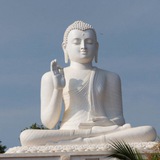
The Big Activity
The venerated teacher on the nature of perceiving Zen versus the act of engaging in Zen and why that distinction makes all the difference.
By Shunryu Suzuki Roshi
When I was at Eiheiji monastery in Japan, everyone was just doing what he should do. That is all. It is the same as waking up in the morning; we have to get up. At Eiheiji monastery, when we had to sit, we sat; when we had to bow to Buddha, we bowed to Buddha. That is all. And when we were practicing, we did not feel anything special. We did not even feel that we were leading a monastic life. For us, the monastic life was the usual life, and the people who came from the city were unusual people. When we saw them we felt, “Oh, some unusual people have come!”
But once I had left Eiheiji and been away for some time, coming back was different. I heard the various sounds of practice—the bells and the monks reciting the sutra—and I had a deep feeling. There were tears flowing out of my eyes, nose, and mouth! It is the people who are outside of the monastery who feel its atmosphere. Those who are practicing actually do not feel anything. I think this is true for everything. When we hear the sound of the pine trees on a windy day, perhaps the wind is just blowing, and the pine tree is just standing in the wind. That is all that they are doing. But the people who listen to the wind in the tree will write a poem, or will feel something unusual. That is, I think, the way everything is.
So to feel something about Buddhism is not the main point. Whether that feeling is good or bad is out of the question. We do not mind, whatever it is. Buddhism is not good or bad. We are doing what we should do. That is Buddhism. Of course some encouragement is necessary, but that encouragement is just encouragement. It is not the true purpose of practice. It is just medicine. When we become discouraged we want some medicine. When we are in good spirits we do not need any medicine. You should not mistake medicine for food. Sometimes medicine is necessary, but it should not become our food.
So, of Rinzai’s four ways of practice, the perfect one is not to give a student any interpretation of himself, nor to give him any encouragement. If we think of ourselves as our bodies, the teaching then may be our clothing. Sometimes we talk about our clothing; sometimes we talk about our body. But neither body nor clothing is actually we ourselves. We ourselves are the big activity. We are just expressing the smallest particle of the big activity, that is all. So it is all right to talk about ourselves, but actually there is no need to do so. Before we open our mouths, we are already expressing the big existence, including ourselves. So the purpose of talking about ourselves is to correct the misunderstanding we have when we are attached to any particular temporal form or color of the big activity. It is necessary to talk about what our body is and what our activity is so that we may not make any mistake about them. So to talk about ourselves is actually to forget about ourselves.
Dogen-zenji said, “To study Buddhism is to study ourselves. To study ourselves is to forget ourselves.” When you become attached to a temporal expression of your true nature, it is necessary to talk about Buddhism, or else you will think the temporal expression is it. But this particular expression of it is not it. And yet at the same time it is it! For a while this is it; for the smallest particle of time, this is it. But it is not always so: the very next instant it is not so, thus this is not it. So that you will realize this fact, it is necessary to study Buddhism. But the purpose of studying Buddhism is to study ourselves and to forget ourselves.
The venerated teacher on the nature of perceiving Zen versus the act of engaging in Zen and why that distinction makes all the difference.
By Shunryu Suzuki Roshi
When I was at Eiheiji monastery in Japan, everyone was just doing what he should do. That is all. It is the same as waking up in the morning; we have to get up. At Eiheiji monastery, when we had to sit, we sat; when we had to bow to Buddha, we bowed to Buddha. That is all. And when we were practicing, we did not feel anything special. We did not even feel that we were leading a monastic life. For us, the monastic life was the usual life, and the people who came from the city were unusual people. When we saw them we felt, “Oh, some unusual people have come!”
But once I had left Eiheiji and been away for some time, coming back was different. I heard the various sounds of practice—the bells and the monks reciting the sutra—and I had a deep feeling. There were tears flowing out of my eyes, nose, and mouth! It is the people who are outside of the monastery who feel its atmosphere. Those who are practicing actually do not feel anything. I think this is true for everything. When we hear the sound of the pine trees on a windy day, perhaps the wind is just blowing, and the pine tree is just standing in the wind. That is all that they are doing. But the people who listen to the wind in the tree will write a poem, or will feel something unusual. That is, I think, the way everything is.
So to feel something about Buddhism is not the main point. Whether that feeling is good or bad is out of the question. We do not mind, whatever it is. Buddhism is not good or bad. We are doing what we should do. That is Buddhism. Of course some encouragement is necessary, but that encouragement is just encouragement. It is not the true purpose of practice. It is just medicine. When we become discouraged we want some medicine. When we are in good spirits we do not need any medicine. You should not mistake medicine for food. Sometimes medicine is necessary, but it should not become our food.
So, of Rinzai’s four ways of practice, the perfect one is not to give a student any interpretation of himself, nor to give him any encouragement. If we think of ourselves as our bodies, the teaching then may be our clothing. Sometimes we talk about our clothing; sometimes we talk about our body. But neither body nor clothing is actually we ourselves. We ourselves are the big activity. We are just expressing the smallest particle of the big activity, that is all. So it is all right to talk about ourselves, but actually there is no need to do so. Before we open our mouths, we are already expressing the big existence, including ourselves. So the purpose of talking about ourselves is to correct the misunderstanding we have when we are attached to any particular temporal form or color of the big activity. It is necessary to talk about what our body is and what our activity is so that we may not make any mistake about them. So to talk about ourselves is actually to forget about ourselves.
Dogen-zenji said, “To study Buddhism is to study ourselves. To study ourselves is to forget ourselves.” When you become attached to a temporal expression of your true nature, it is necessary to talk about Buddhism, or else you will think the temporal expression is it. But this particular expression of it is not it. And yet at the same time it is it! For a while this is it; for the smallest particle of time, this is it. But it is not always so: the very next instant it is not so, thus this is not it. So that you will realize this fact, it is necessary to study Buddhism. But the purpose of studying Buddhism is to study ourselves and to forget ourselves.
❤1👍1
When we forget ourselves, we actually are the true activity of the big existence, or reality itself. When we realize this fact, there is no problem whatsoever in this world, and we can enjoy our life without feeling any difficulties. The purpose of our practice is to be aware of this fact.
From Zen Mind, Beginner’s Mind by Shunryu Suzuki.
Shunryu Suzuki Roshi (1904-1971) was a Soto Zen monk and teacher who helped popularize Zen Buddhism in the United States, and is renowned for founding the first Buddhist monastery outside Asia, Tassajara Zen Mountain Center, and founding the San Francisco Zen Center. A book of his teachings, Zen Mind, Beginner's Mind, is one of the most popular books on Zen and Buddhism in the West.
=====
Ajahn Chah, Buddhist teacher of Thai forest meditation of Theravada Buddhism channel:
https://news.1rj.ru/str/ajahnchah_buddhism
From Zen Mind, Beginner’s Mind by Shunryu Suzuki.
Shunryu Suzuki Roshi (1904-1971) was a Soto Zen monk and teacher who helped popularize Zen Buddhism in the United States, and is renowned for founding the first Buddhist monastery outside Asia, Tassajara Zen Mountain Center, and founding the San Francisco Zen Center. A book of his teachings, Zen Mind, Beginner's Mind, is one of the most popular books on Zen and Buddhism in the West.
=====
Ajahn Chah, Buddhist teacher of Thai forest meditation of Theravada Buddhism channel:
https://news.1rj.ru/str/ajahnchah_buddhism
Telegram
Ajahn Chah - Theravada Thailand Buddhism
Collection of teachings of Venerable Ajahn Chah, a foremost meditation and Buddhist teacher from Thailand
❤1👍1
Dhammapada Verses 85 and 86
Dhammassavana Vatthu
Appaka te manussesu
ye jana paragamino
athayam itara paja
tiramevanudhavati1
Ye ca kho sammadakkhate
dhamme dhammanuvattino
te jana paramessanti2
maccudheyyam3 suduttaram.
Verse 85: Few among men reach the other shore (Nibbana); all the others only run up and down on this shore.
Verse 86: But those who practise according to the well-expounded Dhamma will reach the other shore (Nibbana), having passed the realm of Death (i.e., samsara), very difficult as it is to cross.
1. tiramevanudhavati: tiram + eva + anudhavati: shore + only this + run up and down: according to the Commentary 'only this shore' in this context means sakkayaditthi (ego belief).
2. paramessanti: param + essanti: the other shore + will reach. The other or opposite shore is metaphorically used for Nibbana.
3. maccudheyyam: the realm of Death (or samsara, round of rebirths).
The Story of Dhamma Listeners
While residing at the Jetavana monastery, the Buddha uttered Verses (85) and (86) of this book, with reference to a congregation of people who had come to listen to a religious discourse in Savatthi.
On one occasion, a group of people from Savatthi made special offerings to the bhikkhus collectively and they arranged for some bhikkhus to deliver discourses throughout the night, in their locality. Many in the audience could not sit up the whole night and they returned to their homes early; some sat through the night, but most of the time they were drowsy and half-asleep. There were only a few who listened attentively to the discourses.
At dawn, when the bhikkhus told the Buddha about what happened the previous night, he replied, "Most people are attached to this world; only a very few reach the other shore (Nibbana)."
Then the Buddha spoke in verse as follows:
Verse 85: Few among men reach the other shore (Nibbana); all the others only run up and down on this shore.
Verse 86: But those who practise according to the well-expounded Dhamma will reach the other shore (Nibbana), having passed the realm of Death (i.e., samsara), very difficult as it is to cross.
Dhammapada, beloved and favorite teachings of the Buddha channel:
https://invite.viber.com/?g2=AQBLD6phsgvP%2F061YjEM3K%2BNeH1Yb372b9mtfQX2EmuBpgoLUoc99BDMfzHghrme
====================
Dhammassavana Vatthu
Appaka te manussesu
ye jana paragamino
athayam itara paja
tiramevanudhavati1
Ye ca kho sammadakkhate
dhamme dhammanuvattino
te jana paramessanti2
maccudheyyam3 suduttaram.
Verse 85: Few among men reach the other shore (Nibbana); all the others only run up and down on this shore.
Verse 86: But those who practise according to the well-expounded Dhamma will reach the other shore (Nibbana), having passed the realm of Death (i.e., samsara), very difficult as it is to cross.
1. tiramevanudhavati: tiram + eva + anudhavati: shore + only this + run up and down: according to the Commentary 'only this shore' in this context means sakkayaditthi (ego belief).
2. paramessanti: param + essanti: the other shore + will reach. The other or opposite shore is metaphorically used for Nibbana.
3. maccudheyyam: the realm of Death (or samsara, round of rebirths).
The Story of Dhamma Listeners
While residing at the Jetavana monastery, the Buddha uttered Verses (85) and (86) of this book, with reference to a congregation of people who had come to listen to a religious discourse in Savatthi.
On one occasion, a group of people from Savatthi made special offerings to the bhikkhus collectively and they arranged for some bhikkhus to deliver discourses throughout the night, in their locality. Many in the audience could not sit up the whole night and they returned to their homes early; some sat through the night, but most of the time they were drowsy and half-asleep. There were only a few who listened attentively to the discourses.
At dawn, when the bhikkhus told the Buddha about what happened the previous night, he replied, "Most people are attached to this world; only a very few reach the other shore (Nibbana)."
Then the Buddha spoke in verse as follows:
Verse 85: Few among men reach the other shore (Nibbana); all the others only run up and down on this shore.
Verse 86: But those who practise according to the well-expounded Dhamma will reach the other shore (Nibbana), having passed the realm of Death (i.e., samsara), very difficult as it is to cross.
Dhammapada, beloved and favorite teachings of the Buddha channel:
https://invite.viber.com/?g2=AQBLD6phsgvP%2F061YjEM3K%2BNeH1Yb372b9mtfQX2EmuBpgoLUoc99BDMfzHghrme
====================
Viber
Dhammapada - Buddha Dharma Teachings
Daily teachings of the Dhammapada, beloved and favorite teachings of the Buddha
❤1👍1
Forwarded from Buddha Dharma books
Free Buddha Dharma ebook
Mahasi Abroad (Part-I)
A dhamma discourse by Mahasi Sayadaw Gyi
This book was originally published in 1979 in Myanmar and Pali and was translated into English by U Nyi Nyi and Maung Tha Noe. It is the collection of some of the discourses delivered by the Venerable Mahasi Sayadaw during his Oversea missionary tours. Mahasi Sayadaw had been to many countries extensively for the sake of propagating Buddhism.
Those days Sayadaw was invited to pay visit to some countries like Sri Lanka, India, Nepal, Thailand, Japan, Cambodia, Indonesia, Singapore, England, Canada and USA. Sayadaw paid visit to those countries with untiring effort to spread the Mahasi Meditation Method throughout the world. During his missions he preached and taught people about the Buddha Sasana and the practice of Satipatthana Vipassana meditation. Sayadaw had also authored more than eighty books mostly in Myanmar and some in Pali Language. In this way, Sayadaw promoted the spread of Buddha Sasana and the practice of Mahasi Vipassana Meditation abroad. Since then, there appeared recognized, affiliated Mahasi Meditation Centres in many countries.
Gradually, Mahasi Meditation Centre became well known among the people all over the world and several people paid visit to Yangon Mahasi Meditation Centre to learn the method of Mahasi Vipassana. Here, we give a wise guidance and instructions to those who want to learn and practise about the insight meditation by the experienced teachers. So, I hope this book might be beneficial to study about the Mahasi Vipassana Insight Meditation and be helpful to achieve the peace of mind by means of mindfulness. Hopefully, this book might change the life with great blessings.
Free download available:
http://www.mediafire.com/file/197vxzftcdw0zbs/
=============
Mahasi Abroad (Part-I)
A dhamma discourse by Mahasi Sayadaw Gyi
This book was originally published in 1979 in Myanmar and Pali and was translated into English by U Nyi Nyi and Maung Tha Noe. It is the collection of some of the discourses delivered by the Venerable Mahasi Sayadaw during his Oversea missionary tours. Mahasi Sayadaw had been to many countries extensively for the sake of propagating Buddhism.
Those days Sayadaw was invited to pay visit to some countries like Sri Lanka, India, Nepal, Thailand, Japan, Cambodia, Indonesia, Singapore, England, Canada and USA. Sayadaw paid visit to those countries with untiring effort to spread the Mahasi Meditation Method throughout the world. During his missions he preached and taught people about the Buddha Sasana and the practice of Satipatthana Vipassana meditation. Sayadaw had also authored more than eighty books mostly in Myanmar and some in Pali Language. In this way, Sayadaw promoted the spread of Buddha Sasana and the practice of Mahasi Vipassana Meditation abroad. Since then, there appeared recognized, affiliated Mahasi Meditation Centres in many countries.
Gradually, Mahasi Meditation Centre became well known among the people all over the world and several people paid visit to Yangon Mahasi Meditation Centre to learn the method of Mahasi Vipassana. Here, we give a wise guidance and instructions to those who want to learn and practise about the insight meditation by the experienced teachers. So, I hope this book might be beneficial to study about the Mahasi Vipassana Insight Meditation and be helpful to achieve the peace of mind by means of mindfulness. Hopefully, this book might change the life with great blessings.
Free download available:
http://www.mediafire.com/file/197vxzftcdw0zbs/
=============
👍1💯1
Dhammapada Verses 87, 88 and 89
Pancasata Agantukabhikkhu Vatthu
Kanham dhammam vippahaya
sukkam bhavetha pandito
oka anokamagamma1
viveke2 yattha duramam.
Tatrabhiratimiccheyya
hitva kame akincano3
pariyodapeyya attanam
cittaklesehi4 pandito.
Yesam sambodhiyangesu5
samma cittam subhavitam
adanapatinissagge
anupadaya ye rata
khinasava6 jutimanto7
te loke parinibbuta.8
Verses 87 & 88: The man of wisdom, leaving the home of craving and having Nibbana as his goal, should give up dark, evil ways and cultivate pure, good ones. He should seek great delight in solitude, detachment and Nibbana, which an ordinary man finds so difficult to enjoy. He should also give up sensual pleasures, and clinging to nothing, should cleanse himself of all impurities of the mind.
Verse 89: Those, with mind well-developed in the seven Factors of Enlightenment (bojjhanga), having rid themselves of all craving, rejoice in their abandonment of attachment. Such men, with all moral intoxicants eradicated, and powerful (with the light of Arahatta Magganana), have realized Nibbana in this world (i.e., with Khandha aggregates remaining).
1. oka anakamagamma; lit., having gone from home to the homeless. In this context interpreted as leaving the seat of craving and having Nibbana as a goal.
2. viveke: solitude, detachment, Nibbana.
3. akincano: lit., having nothing; clinging to nothing. (The term kincana may include any of the kilesas or defilements such as passion, ill will, ignorance, etc; it also means clinging or attachment to the world.)
4. cittaklesehi: citta kilesa: impurities of the mind.
5. sambodhiyangesu: sambojjhanga: the Factors of Enlightenment or requisites for attaining Magga Insight.
6. khinasava: one in whom human passions are extinguished; an arahat.
7. jutimanta: one endowed with the power of Arahatta Magganana.
8. te loke parinibbuta: the realization of Nibbana in the realm of the five aggregates (khandhas), or in other words, in this world. But according to the Commentary, in this context, both Sa-upadisesa and Anupadisesa Nibbana are meant. Sa-upadisesa or Kilesa Nibbana is Nibbana with groups of existence or khandhas remaining; it is realized by an arahat on the attainment of arahatship. Anupadisesa or Khandha Nibbana is Nibbana without groups of existence or khandhas remaining. It takes place on the death of an arahat.
The Story of Five Hundred Visiting Bhikkhus
While residing at the Jetavana monastery, the Buddha uttered Verses (87), (88) and (89) of this book, with reference to five hundred visiting bhikkhus.
Five hundred bhikkhus who had spent the vassa in Kosala came to pay homage to the Buddha at the Jetavana monastery, at the end of the vassa.
The Buddha uttered the following three verses to suit their various temperaments:
Verses 87 & 88: The man of wisdom, leaving the home of craving and having Nibbana as his goal, should give up dark, evil ways and cultivate pure, good ones. He should seek great delight in solitude, detachment and Nibbana, which an ordinary man finds so difficult to enjoy. He should also give up sensual pleasures, and clinging to nothing, should cleanse himself of all impurities of the mind.
Verse 89: Those, with mind well-developed in the seven Factors of Enlightenment (bojjhanga), having rid themselves of all craving, rejoice in their abandonment of attachment. Such men, with all moral intoxicants eradicated, and powerful (with the light of Arahatta Magganana), have realized Nibbana in this world (i.e., with Khandha aggregates remaining).
End of Chapter Six: The Wise (Panditavagga)
Ajahn Chah, Buddhist teacher of Thai forest meditation of Theravada Buddhism channel:
https://news.1rj.ru/str/ajahnchah_buddhism
====================
Pancasata Agantukabhikkhu Vatthu
Kanham dhammam vippahaya
sukkam bhavetha pandito
oka anokamagamma1
viveke2 yattha duramam.
Tatrabhiratimiccheyya
hitva kame akincano3
pariyodapeyya attanam
cittaklesehi4 pandito.
Yesam sambodhiyangesu5
samma cittam subhavitam
adanapatinissagge
anupadaya ye rata
khinasava6 jutimanto7
te loke parinibbuta.8
Verses 87 & 88: The man of wisdom, leaving the home of craving and having Nibbana as his goal, should give up dark, evil ways and cultivate pure, good ones. He should seek great delight in solitude, detachment and Nibbana, which an ordinary man finds so difficult to enjoy. He should also give up sensual pleasures, and clinging to nothing, should cleanse himself of all impurities of the mind.
Verse 89: Those, with mind well-developed in the seven Factors of Enlightenment (bojjhanga), having rid themselves of all craving, rejoice in their abandonment of attachment. Such men, with all moral intoxicants eradicated, and powerful (with the light of Arahatta Magganana), have realized Nibbana in this world (i.e., with Khandha aggregates remaining).
1. oka anakamagamma; lit., having gone from home to the homeless. In this context interpreted as leaving the seat of craving and having Nibbana as a goal.
2. viveke: solitude, detachment, Nibbana.
3. akincano: lit., having nothing; clinging to nothing. (The term kincana may include any of the kilesas or defilements such as passion, ill will, ignorance, etc; it also means clinging or attachment to the world.)
4. cittaklesehi: citta kilesa: impurities of the mind.
5. sambodhiyangesu: sambojjhanga: the Factors of Enlightenment or requisites for attaining Magga Insight.
6. khinasava: one in whom human passions are extinguished; an arahat.
7. jutimanta: one endowed with the power of Arahatta Magganana.
8. te loke parinibbuta: the realization of Nibbana in the realm of the five aggregates (khandhas), or in other words, in this world. But according to the Commentary, in this context, both Sa-upadisesa and Anupadisesa Nibbana are meant. Sa-upadisesa or Kilesa Nibbana is Nibbana with groups of existence or khandhas remaining; it is realized by an arahat on the attainment of arahatship. Anupadisesa or Khandha Nibbana is Nibbana without groups of existence or khandhas remaining. It takes place on the death of an arahat.
The Story of Five Hundred Visiting Bhikkhus
While residing at the Jetavana monastery, the Buddha uttered Verses (87), (88) and (89) of this book, with reference to five hundred visiting bhikkhus.
Five hundred bhikkhus who had spent the vassa in Kosala came to pay homage to the Buddha at the Jetavana monastery, at the end of the vassa.
The Buddha uttered the following three verses to suit their various temperaments:
Verses 87 & 88: The man of wisdom, leaving the home of craving and having Nibbana as his goal, should give up dark, evil ways and cultivate pure, good ones. He should seek great delight in solitude, detachment and Nibbana, which an ordinary man finds so difficult to enjoy. He should also give up sensual pleasures, and clinging to nothing, should cleanse himself of all impurities of the mind.
Verse 89: Those, with mind well-developed in the seven Factors of Enlightenment (bojjhanga), having rid themselves of all craving, rejoice in their abandonment of attachment. Such men, with all moral intoxicants eradicated, and powerful (with the light of Arahatta Magganana), have realized Nibbana in this world (i.e., with Khandha aggregates remaining).
End of Chapter Six: The Wise (Panditavagga)
Ajahn Chah, Buddhist teacher of Thai forest meditation of Theravada Buddhism channel:
https://news.1rj.ru/str/ajahnchah_buddhism
====================
Telegram
Ajahn Chah - Theravada Thailand Buddhism
Collection of teachings of Venerable Ajahn Chah, a foremost meditation and Buddhist teacher from Thailand
❤2👍1💯1
Vangisa Bhante:
Dear Deva, you are sitting on the back of an elephant that is huge and all white. You travel from park to park, surrounded by goddesses, shining brightly in all directions like the star Osadhi.
What kind of meritorious actions did you do when you were in the human world?
That deva, delighted at being questioned by Arahant Vangisa, gladly explained what he had done that resulted in such great happiness.
Deva:
In my previous life, I was a man in the human world. I was a lay disciple of the Buddha. I abstained from killing, stealing, taking intoxicants, and lying. I was content with my own wife, and did not even think of other women. I offered things with a very happy mind.
Because of these meritorious deeds, I have been born as a very beautiful deva and enjoy all the wonderful things that delight my heart.
Great Bhante, those were the meritorious deeds I did to have such a beautiful body which shines brightly in all directions.
Vv 5.11 Dutiya Nāga Sutta: Second Elephant Mansion
Dear Deva, you are sitting on the back of an elephant that is huge and all white. You travel from park to park, surrounded by goddesses, shining brightly in all directions like the star Osadhi.
What kind of meritorious actions did you do when you were in the human world?
That deva, delighted at being questioned by Arahant Vangisa, gladly explained what he had done that resulted in such great happiness.
Deva:
In my previous life, I was a man in the human world. I was a lay disciple of the Buddha. I abstained from killing, stealing, taking intoxicants, and lying. I was content with my own wife, and did not even think of other women. I offered things with a very happy mind.
Because of these meritorious deeds, I have been born as a very beautiful deva and enjoy all the wonderful things that delight my heart.
Great Bhante, those were the meritorious deeds I did to have such a beautiful body which shines brightly in all directions.
Vv 5.11 Dutiya Nāga Sutta: Second Elephant Mansion
❤1🥰1
Dhammapada Verse 90
Jivakapanha Vatthu
Gataddhino1 Visokassa
vippamuttassa sabbadhi
sabbaganthappahinassa2
parilaho na vijjati.
Verse 90: For him (an arahat) whose journey is ended, who is free from sorrow and from all (e.g. khandha aggregates), who has destroyed all fetters, there is no more distress.
1. gataddhino: the journey is ended. Here 'the journey' means round of rebirths (samsara).
2. sabbaganthappahinassa: one who has destroyed all fetters. Here 'fetters' means greed, ill will, and wrong view.
The Story of the Question Asked by Jivaka
While residing at the mango-grove monastery of Jivaka, the Buddha uttered Verse (90) of this book, with reference to the question raised by Jivaka to the Buddha.
Devadatta, on one occasion, tried to kill the Buddha by pushing a big rock from the peak of Gijjhakuta mountain (Vulture's Peak). The rock struck a ledge on the side of the mountain and a splinter struck the big toe of the Buddha. The Buddha was taken to the mango-grove monastery of Jivaka. There, Jivaka, the renowned physician, attended on the Buddha; he put some medicine on the toe of the Buddha and bandaged it. Jivaka then left to see another patient in town, but promised to return and remove the bandage in the evening. When Jivaka returned that night, the city-gates were already closed and he could not come to see the Buddha that night. He was very upset because if the bandage was not removed in time, the whole body would become very hot and the Buddha would be very ill.
Just about this time, the Buddha asked Thera Ananda to remove the bandage from his big toe and found that the wound was completely healed. Jivaka came to the monastery early next morning and asked the Buddha whether he felt great pain and distress the previous night. The Buddha replied, "Jivaka! Ever since I attained Buddhahood there has been no pain and distress for me."
Then the Buddha spoke in verse as follows:
Verse 90: For him (an arahat) whose journey is ended, who is free from sorrow and from all (e.g. khandha aggregates), who has destroyed all fetters, there is no more distress.
At the end of the discourse many attained Sotapatti Fruition.
Free Buddhism books, teachings, podcasts and videos from Theravada, Mahayana and Vajrayana traditions:
https://news.1rj.ru/str/buddha_ebooks
====================
Jivakapanha Vatthu
Gataddhino1 Visokassa
vippamuttassa sabbadhi
sabbaganthappahinassa2
parilaho na vijjati.
Verse 90: For him (an arahat) whose journey is ended, who is free from sorrow and from all (e.g. khandha aggregates), who has destroyed all fetters, there is no more distress.
1. gataddhino: the journey is ended. Here 'the journey' means round of rebirths (samsara).
2. sabbaganthappahinassa: one who has destroyed all fetters. Here 'fetters' means greed, ill will, and wrong view.
The Story of the Question Asked by Jivaka
While residing at the mango-grove monastery of Jivaka, the Buddha uttered Verse (90) of this book, with reference to the question raised by Jivaka to the Buddha.
Devadatta, on one occasion, tried to kill the Buddha by pushing a big rock from the peak of Gijjhakuta mountain (Vulture's Peak). The rock struck a ledge on the side of the mountain and a splinter struck the big toe of the Buddha. The Buddha was taken to the mango-grove monastery of Jivaka. There, Jivaka, the renowned physician, attended on the Buddha; he put some medicine on the toe of the Buddha and bandaged it. Jivaka then left to see another patient in town, but promised to return and remove the bandage in the evening. When Jivaka returned that night, the city-gates were already closed and he could not come to see the Buddha that night. He was very upset because if the bandage was not removed in time, the whole body would become very hot and the Buddha would be very ill.
Just about this time, the Buddha asked Thera Ananda to remove the bandage from his big toe and found that the wound was completely healed. Jivaka came to the monastery early next morning and asked the Buddha whether he felt great pain and distress the previous night. The Buddha replied, "Jivaka! Ever since I attained Buddhahood there has been no pain and distress for me."
Then the Buddha spoke in verse as follows:
Verse 90: For him (an arahat) whose journey is ended, who is free from sorrow and from all (e.g. khandha aggregates), who has destroyed all fetters, there is no more distress.
At the end of the discourse many attained Sotapatti Fruition.
Free Buddhism books, teachings, podcasts and videos from Theravada, Mahayana and Vajrayana traditions:
https://news.1rj.ru/str/buddha_ebooks
====================
Telegram
Buddha Dharma books
Free Buddhism books, teachings, podcasts and videos from Theravada, Mahayana and Vajrayana traditions
❤1👍1💯1
Furthermore, I have explained to my disciples a practice that they use to develop the ten universal dimensions of meditation.
Someone perceives the meditation on universal (= kasina) earth above, below, across, undivided and limitless.
They perceive the meditation on universal water … the meditation on universal fire … the meditation on universal air … the meditation on universal blue … the meditation on universal yellow … the meditation on universal red … the meditation on universal white … the meditation on universal space … the meditation on universal consciousness above, below, across, undivided and limitless.
And many of my disciples meditate on that having attained perfection and consummation of insight.
MN 77 : Mahāsakuludāyisutta
Someone perceives the meditation on universal (= kasina) earth above, below, across, undivided and limitless.
They perceive the meditation on universal water … the meditation on universal fire … the meditation on universal air … the meditation on universal blue … the meditation on universal yellow … the meditation on universal red … the meditation on universal white … the meditation on universal space … the meditation on universal consciousness above, below, across, undivided and limitless.
And many of my disciples meditate on that having attained perfection and consummation of insight.
MN 77 : Mahāsakuludāyisutta
❤1🥰1
Dhammapada Verse 91
Mahakassapatthera Vatthu
Uyyunjanti satimanto
na nikete ramanti te
hamsava pallalam hitva
okamokam jahanti te.
Verse 91: The mindful strive diligently (in the Tranquillity and Insight Development Practice); they take no delight in the home (i.e., in the life of sensual pleasures); like swans (hamsa) that forsake the muddy pool, they abandon all home life (i.e., all cravings).
The Story of Thera Mahakassapa
While residing at the Veluvana monastery, the Buddha uttered Verse (91) of this book, with reference to Thera Mahakassapa.
The Buddha once spent the vassa at Rajagaha with a number of bhikkhus. About two weeks before the end of the vassa, the Buddha informed the bhikkhus that they would soon be leaving Rajagaha and told them to prepare for departure. Some bhikkhus stitched and dyed new robes, some washed the old robes. When some bhikkhus saw Mahakassapa washing his robes, they speculated, "There are so many people inside and outside Rajagaha who love and respect Thera Mahakassapa and are constantly looking to all his needs; is it possible that the Thera would leave his lay devotees here and follow the Buddha elsewhere?"
At the end of fifteen days, on the eve of his departure, the Buddha thought that there might be some occasions like alms-food offering ceremonies, initiation of novices, funerals, etc., and so it would not be proper for all the bhikkhus to leave. So he decided that some bhikkhus should remain at the Veluvana monastery and that the most suitable person would be Thera Mahakassapa. Consequently, Thera Mahakassapa remained in Rajagaha with some junior bhikkhus.
Then the other bhikkhus said scornfully, "Mahakassapa has not accompanied the Buddha, just as we have predicted!" The Buddha heard their remark and said to them, "Bhikkhus! Do you wish to say that my son Kassapa is attached to his lay disciples of Rajagaha and to the things they offer him? You are very much mistaken. My son Kassapa remains here under my instruction; he is not attached to anything here."
Then the Buddha spoke in verse as follows:
Verse 91: The mindful strive diligently (in the Tranquillity and Insight Development Practice); they take no delight in the home (i.e., in the life of sensual pleasures); like swans (hamsa) that forsake the muddy pool, they abandon all home life (i.e., all cravings).
Buddha dharma teachings channel:
https://news.1rj.ru/str/lorddivinebuddha
====================
Mahakassapatthera Vatthu
Uyyunjanti satimanto
na nikete ramanti te
hamsava pallalam hitva
okamokam jahanti te.
Verse 91: The mindful strive diligently (in the Tranquillity and Insight Development Practice); they take no delight in the home (i.e., in the life of sensual pleasures); like swans (hamsa) that forsake the muddy pool, they abandon all home life (i.e., all cravings).
The Story of Thera Mahakassapa
While residing at the Veluvana monastery, the Buddha uttered Verse (91) of this book, with reference to Thera Mahakassapa.
The Buddha once spent the vassa at Rajagaha with a number of bhikkhus. About two weeks before the end of the vassa, the Buddha informed the bhikkhus that they would soon be leaving Rajagaha and told them to prepare for departure. Some bhikkhus stitched and dyed new robes, some washed the old robes. When some bhikkhus saw Mahakassapa washing his robes, they speculated, "There are so many people inside and outside Rajagaha who love and respect Thera Mahakassapa and are constantly looking to all his needs; is it possible that the Thera would leave his lay devotees here and follow the Buddha elsewhere?"
At the end of fifteen days, on the eve of his departure, the Buddha thought that there might be some occasions like alms-food offering ceremonies, initiation of novices, funerals, etc., and so it would not be proper for all the bhikkhus to leave. So he decided that some bhikkhus should remain at the Veluvana monastery and that the most suitable person would be Thera Mahakassapa. Consequently, Thera Mahakassapa remained in Rajagaha with some junior bhikkhus.
Then the other bhikkhus said scornfully, "Mahakassapa has not accompanied the Buddha, just as we have predicted!" The Buddha heard their remark and said to them, "Bhikkhus! Do you wish to say that my son Kassapa is attached to his lay disciples of Rajagaha and to the things they offer him? You are very much mistaken. My son Kassapa remains here under my instruction; he is not attached to anything here."
Then the Buddha spoke in verse as follows:
Verse 91: The mindful strive diligently (in the Tranquillity and Insight Development Practice); they take no delight in the home (i.e., in the life of sensual pleasures); like swans (hamsa) that forsake the muddy pool, they abandon all home life (i.e., all cravings).
Buddha dharma teachings channel:
https://news.1rj.ru/str/lorddivinebuddha
====================
Telegram
Buddha
Buddha dharma teachings from the suttas and commentaries
❤1👍1
It was Christmas and the foreign monks had decided to celebrate it. They invited some laypeople as well as Ajahn Chah to join them. The laypeople were generally upset and skeptical. Why, they asked, were Buddhists celebrating Christmas? Ajahn Chah then gave a talk on religion in which he said, "As far as I understand, Christianity teaches people to do good and avoid evil, just as Buddhism does, so what is the problem? However, if people are upset by the idea of celebrating Christmas, that can be easily remedied. We won’t call it Christmas. Let’s call it "Christ-Buddhamas". Anything that inspires us to see what is true and do what is good is proper practice. You may call it any name you like."
Reflection on Life in general
Written by Ven. Ajahn Chah, founder of Theravada Thai Forest Tradition Buddhism Monasteries
Reflection on Life in general
Written by Ven. Ajahn Chah, founder of Theravada Thai Forest Tradition Buddhism Monasteries
❤1💯1
Jesus said, “If those who lead you say to you, ‘Look, the Kingdom is in the sky,’ then the birds of the sky will get there first. If they say, ‘It is in the sea,’ then the fish will get there first. Rather, the Kingdom is inside of you, and it is outside of you. When you come to know yourselves, then you will become known, and you will realize that it is you who are the children of the living Father. But if you will not know yourselves, then you dwell in poverty, and it is you who are that poverty”.
Thích Nhất Hạnh, Living Buddha, Living Christ
Thích Nhất Hạnh, Living Buddha, Living Christ
❤1💯1
Forwarded from Buddha Dharma books
Free Buddha Dharma ebook
The Buddha s Ancient Path
By Piyadassi Thera
Over the years a number of expositions of the Buddha s teachings have been published in English, but many lack authenticity and do not represent what the Buddha taught correctly. Hence the need for this authentic and comprehensive book based on the Four Noble Truths, which are the central conception of Buddhism, and the Noble Eightfold Path, which is Buddhism in practice.
The Buddha s Ancient Path is a book on basic Buddhism with a difference, for it was written by a monk who was a native of Sri Lanka, a scholar and a well-known preacher. He has the Pali Canon and the Commentaries at his fingertips, so that the book is full of apposite stories and quotations of what the Buddha said many of them hard to find elsewhere in English.
The Buddha never claimed to be a saviour who tried to save souls by means of a revealed religion. Through his own perseverance and understanding he proved that infinite possibilities are latent in man and that it must be man s endeavour to develop and unfold these possibilities.
Free download available:
http://ftp.budaedu.org/ebooks/pdf/EN046.pdf
=============
The Buddha s Ancient Path
By Piyadassi Thera
Over the years a number of expositions of the Buddha s teachings have been published in English, but many lack authenticity and do not represent what the Buddha taught correctly. Hence the need for this authentic and comprehensive book based on the Four Noble Truths, which are the central conception of Buddhism, and the Noble Eightfold Path, which is Buddhism in practice.
The Buddha s Ancient Path is a book on basic Buddhism with a difference, for it was written by a monk who was a native of Sri Lanka, a scholar and a well-known preacher. He has the Pali Canon and the Commentaries at his fingertips, so that the book is full of apposite stories and quotations of what the Buddha said many of them hard to find elsewhere in English.
The Buddha never claimed to be a saviour who tried to save souls by means of a revealed religion. Through his own perseverance and understanding he proved that infinite possibilities are latent in man and that it must be man s endeavour to develop and unfold these possibilities.
Free download available:
http://ftp.budaedu.org/ebooks/pdf/EN046.pdf
=============
❤1👍1💯1