Dhammapada Verses 102 and 103
Kundalakesitheri Vatthu
Yo ca gatha satam bhase
anatthapadasamhita
ekam dhammapadam seyyo
yam sutva upasammati.
Yo sahassam sahassena
sangame manuse jine
ekanca jeyyamattanam
sa ve sangamajuttamo.
Verse 102: Better than the recitation of a hundred verses that are senseless and unconnected with the realization of Nibbana, is the recitation of a single verse of the Teaching (Dhamma), if on hearing it one is calmed.
Verse 103: A man may conquer a million men in battle, but one who conquers himself is, indeed, the greatest of conquerors.
The Story of Theri Kundalakesi
While residing at the Jetavana monastery, the Buddha uttered Verses (102) and (103) of this book, with reference to Theri Kundalakesi.
Kundalakesi was the daughter of a rich man from Rajagaha. She had led a very secluded life; but one day, she happened to see a thief being led out to be killed and she immediately fell in love with him. Her parents had to pay for the freedom of the thief, and they married her off to him. Although she loved her husband very dearly, her husband being a thief, was only attracted to her property and her jewels. One day, he coaxed her to put on all her jewellery and led her to a mountain saying that he wanted to make some offerings to the guardian spirit of the mountain because that guardian spirit had saved his life when he was about to be killed. Kundalakesi went along with her husband, but when they reached their destination, the thief revealed that he intended to kill her and take her jewels. She pleaded with him to take her jewels, but to spare her life, but it was of no avail. She then realized that if she did not get rid of her husband, there would be no way of escape for her. She felt she must be cautious and crafty. So she said to her husband that as they would be together only for a few moments more, she wanted to pay respect to him for the last time. So saying, and going round the man respectfully, she pushed him off the crag, taking him unaware.
After this, she had no desire to return home. She left all her jewellery hanging on a tree, and went on her way, without any idea where she was going. She happened to come to a place of some Paribbajikas (female wandering ascetics) and she herself became a Paribbajikas. The Paribbajikas taught her all their one thousand problems in sophistry; being intelligent she mastered all of them within a short time. Then her teachers told her to go out into the world and if she should find somebody who could answer all her questions, to become a pupil to him. Kundalakesi went throughout the length and breadth of Jambudipa, openly challenging everyone else to compete with her. Accordingly, she came to be known as "Jambukaparibbajika."
On one occasion, she came to Savatthi. Before entering the city for alms-food she made a mound of sand and stuck a branch of eugenia on it, her usual sign of invitation to all others to take up her challenge. Thera Sariputta took up her challenge. Kundalakesi asked him a thousand questions and Thera Sariputta answered them all. When his turn came, he asked her just this, "What is the one? (ekam nama kim)." Kundalakesi could not answer, so she asked Thera Sariputta to teach her the answer to the question. Thera Sariputta replied that she should first become abhikkhuni; so she became a bhikkhuni, by the name of Theri Kundalakesi. Within a few days, she became an arahat.
Soon after this, the bhikkhus asked the Buddha, "Could it be possible for Bhikkhuni Kundalakesi to become an arahat after listening to the Dhamma only a little?" They also added that this lady had fought and won a victory over her husband, who was a thief, before she became a paribbajika.
Then the Buddha spoke in verse as follows:
Verse 102: Better than the recitation of a hundred verses that are senseless and unconnected with the realization of Nibbana, is the recitation of a single verse of the Teaching (Dhamma), if on hearing it one is calmed.
Kundalakesitheri Vatthu
Yo ca gatha satam bhase
anatthapadasamhita
ekam dhammapadam seyyo
yam sutva upasammati.
Yo sahassam sahassena
sangame manuse jine
ekanca jeyyamattanam
sa ve sangamajuttamo.
Verse 102: Better than the recitation of a hundred verses that are senseless and unconnected with the realization of Nibbana, is the recitation of a single verse of the Teaching (Dhamma), if on hearing it one is calmed.
Verse 103: A man may conquer a million men in battle, but one who conquers himself is, indeed, the greatest of conquerors.
The Story of Theri Kundalakesi
While residing at the Jetavana monastery, the Buddha uttered Verses (102) and (103) of this book, with reference to Theri Kundalakesi.
Kundalakesi was the daughter of a rich man from Rajagaha. She had led a very secluded life; but one day, she happened to see a thief being led out to be killed and she immediately fell in love with him. Her parents had to pay for the freedom of the thief, and they married her off to him. Although she loved her husband very dearly, her husband being a thief, was only attracted to her property and her jewels. One day, he coaxed her to put on all her jewellery and led her to a mountain saying that he wanted to make some offerings to the guardian spirit of the mountain because that guardian spirit had saved his life when he was about to be killed. Kundalakesi went along with her husband, but when they reached their destination, the thief revealed that he intended to kill her and take her jewels. She pleaded with him to take her jewels, but to spare her life, but it was of no avail. She then realized that if she did not get rid of her husband, there would be no way of escape for her. She felt she must be cautious and crafty. So she said to her husband that as they would be together only for a few moments more, she wanted to pay respect to him for the last time. So saying, and going round the man respectfully, she pushed him off the crag, taking him unaware.
After this, she had no desire to return home. She left all her jewellery hanging on a tree, and went on her way, without any idea where she was going. She happened to come to a place of some Paribbajikas (female wandering ascetics) and she herself became a Paribbajikas. The Paribbajikas taught her all their one thousand problems in sophistry; being intelligent she mastered all of them within a short time. Then her teachers told her to go out into the world and if she should find somebody who could answer all her questions, to become a pupil to him. Kundalakesi went throughout the length and breadth of Jambudipa, openly challenging everyone else to compete with her. Accordingly, she came to be known as "Jambukaparibbajika."
On one occasion, she came to Savatthi. Before entering the city for alms-food she made a mound of sand and stuck a branch of eugenia on it, her usual sign of invitation to all others to take up her challenge. Thera Sariputta took up her challenge. Kundalakesi asked him a thousand questions and Thera Sariputta answered them all. When his turn came, he asked her just this, "What is the one? (ekam nama kim)." Kundalakesi could not answer, so she asked Thera Sariputta to teach her the answer to the question. Thera Sariputta replied that she should first become abhikkhuni; so she became a bhikkhuni, by the name of Theri Kundalakesi. Within a few days, she became an arahat.
Soon after this, the bhikkhus asked the Buddha, "Could it be possible for Bhikkhuni Kundalakesi to become an arahat after listening to the Dhamma only a little?" They also added that this lady had fought and won a victory over her husband, who was a thief, before she became a paribbajika.
Then the Buddha spoke in verse as follows:
Verse 102: Better than the recitation of a hundred verses that are senseless and unconnected with the realization of Nibbana, is the recitation of a single verse of the Teaching (Dhamma), if on hearing it one is calmed.
Viber
Words Of The Buddha
Daily teachings from Buddha Dharma
❤3🥰1
Verse 103: A man may conquer a million men in battle, but one who conquers himself is, indeed, the greatest of conquerors.
Words of the Buddha channel:
https://invite.viber.com/?g2=AQAFqzqlj7FmI061PX17rxWMAtZ%2BRuso%2FH2KmHKZSgnv7v9DD8X0bDkKnZDr9JDq
====================
Words of the Buddha channel:
https://invite.viber.com/?g2=AQAFqzqlj7FmI061PX17rxWMAtZ%2BRuso%2FH2KmHKZSgnv7v9DD8X0bDkKnZDr9JDq
====================
Viber
Words Of The Buddha
Daily teachings from Buddha Dharma
👍2🥰2❤1🙏1
Forwarded from Dhammapada - Buddha Dharma Teachings
Free Buddha Dharma ebook
The Only Way for the Realization of Nibbāna
The only way, bhikkhus, is this path, for beings' purification, for sorrow and lamentation's overcoming, for pain and displeasure's disappearance, for the true way's attainment, for Nibbāna's realization: that is, the four foundations of mindfulness(cattāro sati∙paṭṭhānā).
'Mahā∙Sati∙Paṭṭhāna∙Suttaṃ' ('The Great Mindfulness-Foundation Sutta')
In The Only Way for the Realization of Nibbāna, the Most Venerable Sayadaw gives a brief summary of the practice necessary for such realization, namely samatha and vipassanā. He bases his discussion on the first section of the ‘Mahā∙Sati∙Paṭṭhāṇa Sutta’, the in&out-breath section of ‘The Great Mindfulness-Foundation Sutta’.
In the preface (pp.1-23), the Sayadaw discusses the ‘Mahā∙Sati∙Paṭṭhāṇa Sutta’ within the context of other suttas where The Buddha discusses the practice necessary for realizing Nibbāna. Afterwards, the Sayadaw discusses the in&out-breath section of the sutta within the context of the remaining sections of ‘The Great Mindfulness-Foundation Sutta’. Afterwards, the entire in&out-breath section is quoted (pp.25-26). And there is a brief discussion of how one progresses from mundane samatha and vipassanā to supramundane samatha and vipassanā (p.27).
The Sayadaw then discusses in practical detail The Buddha’s instructions on samatha in the in&out-breath section of the ‘Mahā∙Sati∙Paṭṭhāṇa Sutta’, beginning with Ever mindful he breathes in; ever mindful he breathes out; ending with ‘Tranquillizing the body formation, I shall breathe in ’: thus he trains. ‘Tranquillizing the body formation, I shall breathe out ’: thus he trains; this being the four stages of development for attaining the four jhānas (pp.28-36).
The Sayadaw then discusses in practical detail The Buddha’s instructions on the four stages of vipassanā. First Thus he abides contemplating the body in the body internally, or he abides contemplating the body in the body externally, or he abides contemplating the body in the body internally and externally; this being direct knowledge and contemplation of ultimate materiality and ultimate mentality through the elements contemplation section of the ‘Mahā∙Sati∙Paṭṭhāṇa Sutta’, as well as the sections of consciousness-, feelings- and dhammas contemplation (pp.37-60). Second He abides contemplating originating phenomena in the body; or he abides contemplating perishing phenomena in the body; or he abides contemplating [both] originating&perishing phenomena in the body; this being the direct knowledge and contemplation of causal and momentary rise&perish (pp.61-65). Third Or mindfulness that ‘there is the body’ is established just sufficient for knowledge, sufficient for mindfulness; this being the higher mundane vipassanā knowledges, prior to the realization of Nibbāna (p.66). Fourth And he abides independent, and does not cling to anything in the world; this being the supramundane realization of Nibbāna (p.67).
The Sayadaw describes each stage of samatha and vipassanā in terms of the Noble Eightfold Path, and he describes vipassanā in terms of the full knowledges described by The Buddha as necessary for realization of Nibbāna, quoted and discussed in the preface. Their mutual correspondence is shown in a table (p.69).
Tables describe the phenomena that make up ultimate materiality (pp.41-45) and mentality (pp.51, 53, 56-59) as described by The Buddha, and their correspondence to the various classifications given by The Buddha in earlier quoted suttas (p.71): the five aggregates (p.72), twelve bases (p.73), eighteen elements (p.74), and four Noble Truths (p.75).
Free download here:
https://drive.google.com/open?id=0B7p0UB1QfBmvS3ZaSzdEOE1Vdnc
The Only Way for the Realization of Nibbāna
The only way, bhikkhus, is this path, for beings' purification, for sorrow and lamentation's overcoming, for pain and displeasure's disappearance, for the true way's attainment, for Nibbāna's realization: that is, the four foundations of mindfulness(cattāro sati∙paṭṭhānā).
'Mahā∙Sati∙Paṭṭhāna∙Suttaṃ' ('The Great Mindfulness-Foundation Sutta')
In The Only Way for the Realization of Nibbāna, the Most Venerable Sayadaw gives a brief summary of the practice necessary for such realization, namely samatha and vipassanā. He bases his discussion on the first section of the ‘Mahā∙Sati∙Paṭṭhāṇa Sutta’, the in&out-breath section of ‘The Great Mindfulness-Foundation Sutta’.
In the preface (pp.1-23), the Sayadaw discusses the ‘Mahā∙Sati∙Paṭṭhāṇa Sutta’ within the context of other suttas where The Buddha discusses the practice necessary for realizing Nibbāna. Afterwards, the Sayadaw discusses the in&out-breath section of the sutta within the context of the remaining sections of ‘The Great Mindfulness-Foundation Sutta’. Afterwards, the entire in&out-breath section is quoted (pp.25-26). And there is a brief discussion of how one progresses from mundane samatha and vipassanā to supramundane samatha and vipassanā (p.27).
The Sayadaw then discusses in practical detail The Buddha’s instructions on samatha in the in&out-breath section of the ‘Mahā∙Sati∙Paṭṭhāṇa Sutta’, beginning with Ever mindful he breathes in; ever mindful he breathes out; ending with ‘Tranquillizing the body formation, I shall breathe in ’: thus he trains. ‘Tranquillizing the body formation, I shall breathe out ’: thus he trains; this being the four stages of development for attaining the four jhānas (pp.28-36).
The Sayadaw then discusses in practical detail The Buddha’s instructions on the four stages of vipassanā. First Thus he abides contemplating the body in the body internally, or he abides contemplating the body in the body externally, or he abides contemplating the body in the body internally and externally; this being direct knowledge and contemplation of ultimate materiality and ultimate mentality through the elements contemplation section of the ‘Mahā∙Sati∙Paṭṭhāṇa Sutta’, as well as the sections of consciousness-, feelings- and dhammas contemplation (pp.37-60). Second He abides contemplating originating phenomena in the body; or he abides contemplating perishing phenomena in the body; or he abides contemplating [both] originating&perishing phenomena in the body; this being the direct knowledge and contemplation of causal and momentary rise&perish (pp.61-65). Third Or mindfulness that ‘there is the body’ is established just sufficient for knowledge, sufficient for mindfulness; this being the higher mundane vipassanā knowledges, prior to the realization of Nibbāna (p.66). Fourth And he abides independent, and does not cling to anything in the world; this being the supramundane realization of Nibbāna (p.67).
The Sayadaw describes each stage of samatha and vipassanā in terms of the Noble Eightfold Path, and he describes vipassanā in terms of the full knowledges described by The Buddha as necessary for realization of Nibbāna, quoted and discussed in the preface. Their mutual correspondence is shown in a table (p.69).
Tables describe the phenomena that make up ultimate materiality (pp.41-45) and mentality (pp.51, 53, 56-59) as described by The Buddha, and their correspondence to the various classifications given by The Buddha in earlier quoted suttas (p.71): the five aggregates (p.72), twelve bases (p.73), eighteen elements (p.74), and four Noble Truths (p.75).
Free download here:
https://drive.google.com/open?id=0B7p0UB1QfBmvS3ZaSzdEOE1Vdnc
❤1👍1
Dhammapada Verses 104 and 105
Anatthapucchakabrahmana Vatthu
Atta have jitam seyyo
ya cayam itara paja
attadantassa posassa
niccam sannatacarino.
Neva devo na gandhabbo
na Maro saha Brahmuna
jitam apajitam kayira
tatharupassa jantuno.
Verses 104 & 105: It is better indeed, to conquer oneself than to conquer others. Neither a deva, nor a gandhabba, nor Mara together with Brahma can turn into defeat the victory of the man who controls himself.
The Story of the Brahmin Anatthapucchaka
While residing at the Jetavana monastery, the Buddha uttered Verses (104) and (105) of this book, with reference to Anatthapucchaka, a brahmin.
On one occasion, a Brahmin by the name of Anatthapucchaka came to the Buddha and said to him, "Venerable Sir, I think that you know only the practices that are beneficial and not the practices that are unbeneficial." To him, the Buddha answered that he also knew the practices which were unbeneficial and harmful. Then the Buddha enumerated six practices which cause dissipation of wealth; they are: (1) sleeping until the sun has risen, (2) habitual idleness, (3) cruelty, (4) indulgence in intoxicants which causes drunkenness and negligence, (5) sauntering alone in streets at unearthly hours, and (6) sexual misconduct.
Further, the Buddha asked the brahmin how he earned his living, and the brahmin replied that he earned his living by playing dice, i.e., by gambling. Next, the Buddha asked him whether he won or lost. When the brahmin answered that he sometimes lost and sometimes won, the Buddha said to him, "To win in a game of dice is nothing compared to a victory over moral defilements."
Then the Buddha spoke in verse as follows:
Verses 104 & 105: It is better indeed, to conquer oneself than to conquer others. Neither a deva, nor a gandhabba, nor Mara together with Brahma can turn into defeat the victory of the man who controls himself.
Dhammapada, beloved and favorite teachings of the Buddha channel:
https://invite.viber.com/?g2=AQBLD6phsgvP%2F061YjEM3K%2BNeH1Yb372b9mtfQX2EmuBpgoLUoc99BDMfzHghrme
====================
Anatthapucchakabrahmana Vatthu
Atta have jitam seyyo
ya cayam itara paja
attadantassa posassa
niccam sannatacarino.
Neva devo na gandhabbo
na Maro saha Brahmuna
jitam apajitam kayira
tatharupassa jantuno.
Verses 104 & 105: It is better indeed, to conquer oneself than to conquer others. Neither a deva, nor a gandhabba, nor Mara together with Brahma can turn into defeat the victory of the man who controls himself.
The Story of the Brahmin Anatthapucchaka
While residing at the Jetavana monastery, the Buddha uttered Verses (104) and (105) of this book, with reference to Anatthapucchaka, a brahmin.
On one occasion, a Brahmin by the name of Anatthapucchaka came to the Buddha and said to him, "Venerable Sir, I think that you know only the practices that are beneficial and not the practices that are unbeneficial." To him, the Buddha answered that he also knew the practices which were unbeneficial and harmful. Then the Buddha enumerated six practices which cause dissipation of wealth; they are: (1) sleeping until the sun has risen, (2) habitual idleness, (3) cruelty, (4) indulgence in intoxicants which causes drunkenness and negligence, (5) sauntering alone in streets at unearthly hours, and (6) sexual misconduct.
Further, the Buddha asked the brahmin how he earned his living, and the brahmin replied that he earned his living by playing dice, i.e., by gambling. Next, the Buddha asked him whether he won or lost. When the brahmin answered that he sometimes lost and sometimes won, the Buddha said to him, "To win in a game of dice is nothing compared to a victory over moral defilements."
Then the Buddha spoke in verse as follows:
Verses 104 & 105: It is better indeed, to conquer oneself than to conquer others. Neither a deva, nor a gandhabba, nor Mara together with Brahma can turn into defeat the victory of the man who controls himself.
Dhammapada, beloved and favorite teachings of the Buddha channel:
https://invite.viber.com/?g2=AQBLD6phsgvP%2F061YjEM3K%2BNeH1Yb372b9mtfQX2EmuBpgoLUoc99BDMfzHghrme
====================
Viber
Dhammapada - Buddha Dharma Teachings
Daily teachings of the Dhammapada, beloved and favorite teachings of the Buddha
❤2👍2💯1
Forwarded from Buddha Dharma books
Free Buddha Dharma ebook
Living Dhamma
By Ajahn Chah
This is a collection of nine transcribed Dhamma talks given by Ajahn Chah to the lay community as well as to the monastic community in Thailand.
Free download available:
http://ftp.budaedu.org/ebooks/pdf/EN054.pdf
=============
Living Dhamma
By Ajahn Chah
This is a collection of nine transcribed Dhamma talks given by Ajahn Chah to the lay community as well as to the monastic community in Thailand.
Free download available:
http://ftp.budaedu.org/ebooks/pdf/EN054.pdf
=============
👍1💯1
Forwarded from Buddha
Free Buddha Dharma ebook
The Noble Eightfold Path
The Way to the End of Suffering
by
Bhikkhu Bodhi
The essence of the Buddha’s teaching can be summed up in two principles: the Four Noble Truths and the Noble Eightfold Path. The first covers the side of doctrine, and the primary response it elicits is understanding; the second covers the side of discipline, in the broadest sense of that word, and the primary response it calls for is practice. In the structure of the teaching these two principles lock together into an indivisible unity called the dhamma-vinaya, the doctrine-and-discipline, or, in brief, the Dhamma. The internal unity of the Dhamma is guaranteed by the fact that the last of the Four Noble Truths, the truth of the way, is the Noble Eightfold Path, while the first factor of the Noble Eightfold Path, right view, is the understanding of the Four Noble Truths. Thus the two principles penetrate and include one another, the formula of the Four Noble Truths containing the Eightfold Path and the Noble Eightfold Path containing the Four Truths.
Free download available:
https://static.sariputta.com/pdf/tipitaka/217/noble8path6_pdf.pdf
_
The Noble Eightfold Path
The Way to the End of Suffering
by
Bhikkhu Bodhi
The essence of the Buddha’s teaching can be summed up in two principles: the Four Noble Truths and the Noble Eightfold Path. The first covers the side of doctrine, and the primary response it elicits is understanding; the second covers the side of discipline, in the broadest sense of that word, and the primary response it calls for is practice. In the structure of the teaching these two principles lock together into an indivisible unity called the dhamma-vinaya, the doctrine-and-discipline, or, in brief, the Dhamma. The internal unity of the Dhamma is guaranteed by the fact that the last of the Four Noble Truths, the truth of the way, is the Noble Eightfold Path, while the first factor of the Noble Eightfold Path, right view, is the understanding of the Four Noble Truths. Thus the two principles penetrate and include one another, the formula of the Four Noble Truths containing the Eightfold Path and the Noble Eightfold Path containing the Four Truths.
Free download available:
https://static.sariputta.com/pdf/tipitaka/217/noble8path6_pdf.pdf
_
👍3💯1
Dhammapada Verse 106
Sariputtattherassa Matula Brahmana Vatthu
Mase mase sahassena1
yo vajetha satam samam
ekanca bhivatattanam
muhuttamapi pujaye
sa yeva pujana seyyo
yance vassasatam hutam.
Verse 106: Month after month for a hundred years, one may make offerings (to ordinary people) to the value of a thousand Kahapanas; yet if, only for a moment one pays homage to a bhikkhu who has practised Insight Development, this homage is, indeed, better than a hundred years of making offerings (to ordinary people).
1. sahassa: one thousand; in this context, one thousand kahapanas. A kahapana coin can be in copper, silver or gold.
The Story of Thera Sariputta's Uncle
While residing at the Veluvana monastery, the Buddha uttered Verse (106) of this book, with reference to a brahmin, who was the maternal uncle of Thera Sariputta.
On one occasion, Thera Sariputta asked his uncle the brahmin whether he was doing any meritorious deeds. The brahmin answered that he was making offerings to the value of one thousand Kahapanas every month to the Nigantha ascetics, hoping to get to the Brahma world in his next existence. Thera Sariputta then explained to him that his teachers had given him false hopes and that they themselves did not know the way to the Brahma world. So saying, he took his uncle the brahmin to the Buddha, and requested the Buddha to expound the Dhamma, which would surely take one to the Brahma world.
The Buddha said to the brahmin, "Brahmin, an offering of a spoonful of alms-food to a bhikkhu would be much better than your present offering of one thousand Kahapanas to your teachers."
Then the Buddha spoke in verse as follows:
Verse 106: Month after month for a hundred years, one may make offerings (to ordinary people) to the value of a thousand Kahapanas; yet if, only for a moment one pays homage to a bhikkhu who has practised Insight Development, this homage is, indeed, better than a hundred years of making offerings (to ordinary people).
At the end of the discourse, the brahmin, who was the maternal uncle of Thera Sariputta, attained Sotapatti Fruition.
Ajahn Chah, Buddhist teacher of Thai forest meditation of Theravada Buddhism channel:
https://news.1rj.ru/str/ajahnchah_buddhism
====================
Sariputtattherassa Matula Brahmana Vatthu
Mase mase sahassena1
yo vajetha satam samam
ekanca bhivatattanam
muhuttamapi pujaye
sa yeva pujana seyyo
yance vassasatam hutam.
Verse 106: Month after month for a hundred years, one may make offerings (to ordinary people) to the value of a thousand Kahapanas; yet if, only for a moment one pays homage to a bhikkhu who has practised Insight Development, this homage is, indeed, better than a hundred years of making offerings (to ordinary people).
1. sahassa: one thousand; in this context, one thousand kahapanas. A kahapana coin can be in copper, silver or gold.
The Story of Thera Sariputta's Uncle
While residing at the Veluvana monastery, the Buddha uttered Verse (106) of this book, with reference to a brahmin, who was the maternal uncle of Thera Sariputta.
On one occasion, Thera Sariputta asked his uncle the brahmin whether he was doing any meritorious deeds. The brahmin answered that he was making offerings to the value of one thousand Kahapanas every month to the Nigantha ascetics, hoping to get to the Brahma world in his next existence. Thera Sariputta then explained to him that his teachers had given him false hopes and that they themselves did not know the way to the Brahma world. So saying, he took his uncle the brahmin to the Buddha, and requested the Buddha to expound the Dhamma, which would surely take one to the Brahma world.
The Buddha said to the brahmin, "Brahmin, an offering of a spoonful of alms-food to a bhikkhu would be much better than your present offering of one thousand Kahapanas to your teachers."
Then the Buddha spoke in verse as follows:
Verse 106: Month after month for a hundred years, one may make offerings (to ordinary people) to the value of a thousand Kahapanas; yet if, only for a moment one pays homage to a bhikkhu who has practised Insight Development, this homage is, indeed, better than a hundred years of making offerings (to ordinary people).
At the end of the discourse, the brahmin, who was the maternal uncle of Thera Sariputta, attained Sotapatti Fruition.
Ajahn Chah, Buddhist teacher of Thai forest meditation of Theravada Buddhism channel:
https://news.1rj.ru/str/ajahnchah_buddhism
====================
Telegram
Ajahn Chah - Theravada Thailand Buddhism
Collection of teachings of Venerable Ajahn Chah, a foremost meditation and Buddhist teacher from Thailand
❤2💯1
Forwarded from Words of the Buddha
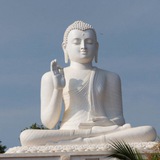
Uttararama Gal Viharaya, ancient city Polonnaruwa, Sri Lanka, the best rock carvings art of Sinhalese culture.
❤3🙏2👍1🥰1
Forwarded from Dhammapada - Buddha Dharma Teachings
Free Buddha Dharma ebook
Breakthrough in SAMATHA-VIPASSANĀ
Pa- auk Tawya Sayadaw Dr. Mehm Tin Mon
The Essence of the Buddha's Teachings is Morality, Concentration and Wisdom.
The Right Concentration is attained only by practising Samatha correctly.
Only with the Help of the Right Concentration can Ultimate Realities that constitute Mind and Body be discerned definitely.
Only when the Arising and Dissolving of Ultimate Realities are discerned vividly can Vipassanã be conducted properly.
Only when the Causal Relations of Paticcassmuppāda are penetratively observed can one proceed to the Path-Wisdom.
Only when the Vipassana procedure is conducted in detail as directed in Buddhist Canons can one attain Enlightenment!
Only when Nibbana is realized distinctly by the Path-Wisdom and its Fruition-Wisdom can one enjoy the full Benefits of the Buddha's Teachings!
To practise Samatha-Vipassanā successfully as directed by the Buddha please come to the Internation Pa-auk Forest Meditation Centres without delay.
Free download available:
https://static.sariputta.com/pdf/tipitaka/1245/DrMehmTinMon-BreakthroughinSamathaVipassanaMeditation(English).pdf
Breakthrough in SAMATHA-VIPASSANĀ
Pa- auk Tawya Sayadaw Dr. Mehm Tin Mon
The Essence of the Buddha's Teachings is Morality, Concentration and Wisdom.
The Right Concentration is attained only by practising Samatha correctly.
Only with the Help of the Right Concentration can Ultimate Realities that constitute Mind and Body be discerned definitely.
Only when the Arising and Dissolving of Ultimate Realities are discerned vividly can Vipassanã be conducted properly.
Only when the Causal Relations of Paticcassmuppāda are penetratively observed can one proceed to the Path-Wisdom.
Only when the Vipassana procedure is conducted in detail as directed in Buddhist Canons can one attain Enlightenment!
Only when Nibbana is realized distinctly by the Path-Wisdom and its Fruition-Wisdom can one enjoy the full Benefits of the Buddha's Teachings!
To practise Samatha-Vipassanā successfully as directed by the Buddha please come to the Internation Pa-auk Forest Meditation Centres without delay.
Free download available:
https://static.sariputta.com/pdf/tipitaka/1245/DrMehmTinMon-BreakthroughinSamathaVipassanaMeditation(English).pdf
💯2❤1🔥1🏆1
As a water-drop on lotus plant,
as water does not stain a lotus flower,
even so the sage is never stained
by seen, heard, or whatever’s cognized.
Certainly the wise do not conceive
upon the seen, the heard, and cognized,
nor wish for purity through another,
for they are not attached nor yet displeased.
Partial excerpts from Snp 4.6 : Jara Sutta
as water does not stain a lotus flower,
even so the sage is never stained
by seen, heard, or whatever’s cognized.
Certainly the wise do not conceive
upon the seen, the heard, and cognized,
nor wish for purity through another,
for they are not attached nor yet displeased.
Partial excerpts from Snp 4.6 : Jara Sutta
😍2🤩1