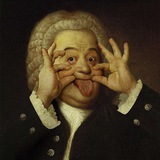
今天下午看完了一本 graphical novel, Golden Boy: Beethoven’s Youth还挺有意思~这本书介绍的是1795年在维也纳的第一次正式亮相前贝多芬的人生。里面应该是有些演绎啦,比如说莫扎特和贝多芬是在公共厕所(?)遇到的🙈还有 Waldstein “偷”了贝多芬的作曲,然后Haydn 借此威胁他找人资助贝多芬去维也纳(不知道这是真的假的),还有一些情窦初开的故事等等。书的画风还蛮有特色的,感觉把贝多芬的那种stubborn和暴脾气还是表现出来了的。
#beethoven #fun
#beethoven #fun
👍2
☝️感觉很适合一起听一下 Beethoven 的 Piano Trios, Opus 1 (虽然是 Op 1但其实他十二岁时出版过一部作品)
https://m.youtube.com/watch?v=WoeOyx6_bHQ
#beethoven #pianoTrios
https://m.youtube.com/watch?v=WoeOyx6_bHQ
#beethoven #pianoTrios
YouTube
Piano Trio No. 1 in E-Flat Major, Op. 1 No. 1: I. Allegro
Provided to YouTube by Warner Classics
Piano Trio No. 1 in E-Flat Major, Op. 1 No. 1: I. Allegro · Jacqueline du Pré · Pinchas Zukerman · Daniel Barenboim
Beethoven: Complete Piano Trios
℗ 1970 Parlophone Records Limited, a Warner Music Group Company.…
Piano Trio No. 1 in E-Flat Major, Op. 1 No. 1: I. Allegro · Jacqueline du Pré · Pinchas Zukerman · Daniel Barenboim
Beethoven: Complete Piano Trios
℗ 1970 Parlophone Records Limited, a Warner Music Group Company.…
👍1
前段时间在图书馆发现一本书叫 Musical Revolutions,第一章介绍了 music notation的历史,还挺有意思的~有机会写个小总结~
书里提到一个作品还蛮好玩,是 David Del Tredici的The Mouse’s Tale. 这个作品的曲谱复制了 Lewis Carroll的诗 The Mouse’s Tale 的“样子”🤣🤣🤣(见下一条)
可以在这里听 The Mouse’s Tale:https://www.daviddeltredici.com/works/adventures-underground/ 大约12分左右(?)。另外 David Del Tredici写了一系列的爱丽丝梦游仙境 inspired的work,这个网页做了简要的介绍~
#fun #contemporary
书里提到一个作品还蛮好玩,是 David Del Tredici的The Mouse’s Tale. 这个作品的曲谱复制了 Lewis Carroll的诗 The Mouse’s Tale 的“样子”🤣🤣🤣(见下一条)
可以在这里听 The Mouse’s Tale:https://www.daviddeltredici.com/works/adventures-underground/ 大约12分左右(?)。另外 David Del Tredici写了一系列的爱丽丝梦游仙境 inspired的work,这个网页做了简要的介绍~
#fun #contemporary
David Del Tredici, composer
Adventures Underground for soprano (amplified), folk group, and orchestra (1971, revised 1977) | Works | David Del Tredici, composer
"Since 'The Pool of Tears' and 'The Mouse's Tale' are from adjacent chapters of Alice's Adventures in Wonderland, I have connected them with narration, sketching …
今天我们在这里纪念一位群友——圈姐。圈姐非常地坚强勇敢,然而残酷的病魔还是在前天夺去了她年轻的生命。她曾经在群里分享过一段她演奏的 Bach 的 BWV 1001,愿天堂再无病痛折磨🙏
https://m.youtube.com/watch?v=MRKy3kX8XUM
https://m.youtube.com/watch?v=MRKy3kX8XUM
YouTube
Bach - Violin Sonata no. 1 in G minor BWV 1001 - Sato | Netherlands Bach Society
The first of Bach’s six solo works for violin exudes the most calm. This Sonata no. 1, performed by Shunske Sato for All of Bach, is written in the key of G minor. On a violin, this key has a pure and stable sound, as the two lower strings (the G and the…
😢27❤4
Finale from Mahler symphony no. 2 Resurrection, 复活 https://www.youtube.com/watch?v=G_2EWwxr5nU
经历了上周的事情心情有些沉重,有些不知道可以分享些什么内容。决定开辟一个比较casual的tag #今天我在听什么 restart一下吧🙏也欢迎大家分享自己在听的曲子~
https://www.youtube.com/watch?v=dAjq2fAHcfw
https://www.youtube.com/watch?v=dAjq2fAHcfw
YouTube
Menuhin plays Saint-Saëns Violin Concerto No. 3 - 3rd mvt
Yehudi Menuhin plays Saint-Saëns (Saint-Saens) Violin Concerto No. 3 in B minor, Op. 61. My favorite rendition of this piece.
London Symphony Orchestra
Conductor: Gaston Poulet
I: Allegro non troppo
II: Andantino quasi allegretto
III: Molto moderato…
London Symphony Orchestra
Conductor: Gaston Poulet
I: Allegro non troppo
II: Andantino quasi allegretto
III: Molto moderato…
第三十二期:Music Atoms - A Study of Interval
概要
好久没有更新YPC系列啦~说起理由真的是很搞笑但又很真实:因为我家电视看bilibili不是很方便!(Please don’t judge me 😳) Anyway,趁着出门在外的日子把这个系列再更新起来吧~
这一期是比较“理论”的一期,讲的是 interval (音程)这个概念。Bernstein说一个音符不能称之为音乐,至少需要两个音符,才能组成音乐性的关系,而随着音符的增多,音乐便从这些“关系”中诞生。在这里他又开展了他的类比大法:一个音符只能当作是一个电子或一个质子,无法单独存在,而至少需要再来一个才能组成最基础的原子,再结合一下组成分子,组成物质。而这至少两个音符组成的关系被称作 interval (音程)。接下来,Bernstein 用尺子为道具具体介绍了音程的概念,介绍了 inversion, Melodic (horizontal) interval, Harmonic (vertical) interval 等诸多概念,并让现场观众演唱了各种音程。最后Bernstein用两首曲目介绍了音程在作曲中的应用。第一首是 Brahms 的 Symphony No.4 第一乐章,其主题是由 3rd 和 6th (为 3rd 的 inversion)组成,并将 3rd 贯穿全曲。第二首介绍的曲目是 Vaughan Williams 的 Symphony No.4 的最后一个乐章。这首 Symphony 在前三个乐章里各种利用 minor 2nd,听起来非常刺激,而在最后一个乐章的 finale 终于出现了 major 2nd~ 虽然 major 2nd在各种音程中也算是不和谐的了,但是在那么多 minor 2nd 的铺垫下,简直就是迎来了一片曙光~ Bernstein 总结非常精辟,”There you have the real magic of intervals: in the hands of a composer who's a genius, a modest, humble little major second can have a mountainous majesty.”
喜欢的Quote
One simple note all by itself is not music — not even a single molecule of music, not even an atom. It's more like a proton or an electron, which, as you know, is meaningless all by itself; you need at least one of each — at least two atomic particles — to create an atom. And in exactly the same way you need at least two notes before you can begin to have an atom of music. Because with that one lonely note, isolated, nothing is happening, it's just floating in space. But once you have two notes [FLUTE] you suddenly feel a relationship between them, like an electrical tension. There's already the beginning of a musical meaning. And with three notes, that meaning increases and before you know it, [BLUE DANUBE]. You see what happened: those musical protons and electrons —the separate notes that is — have combined together forming atoms, which then combined into molecules, which finally combined into recognizable matter, like this wood or this hair, or that Blue Danube Waltz.
Now obviously, major seconds aren't all that wide-open compared to fourths for instance, or fifths which are really wide open; but compared to the scrunchy little minor seconds, which we've been hearing in every conceivable form for three whole movements, this major second seems like the gates of Heaven itself. And there you have the real magic of intervals: in the hands of a composer who's a genius, a modest, humble little major second can have a mountainous majesty.
https://www.bilibili.com/video/BV1sE411a7rz/
曲目
1. Wagner - Prelude to Act III of Lohengrin
2. Brahms - Symphony No.4
3. Vaughan Williams - Symphony No.4
#YPC
概要
好久没有更新YPC系列啦~说起理由真的是很搞笑但又很真实:因为我家电视看bilibili不是很方便!(Please don’t judge me 😳) Anyway,趁着出门在外的日子把这个系列再更新起来吧~
这一期是比较“理论”的一期,讲的是 interval (音程)这个概念。Bernstein说一个音符不能称之为音乐,至少需要两个音符,才能组成音乐性的关系,而随着音符的增多,音乐便从这些“关系”中诞生。在这里他又开展了他的类比大法:一个音符只能当作是一个电子或一个质子,无法单独存在,而至少需要再来一个才能组成最基础的原子,再结合一下组成分子,组成物质。而这至少两个音符组成的关系被称作 interval (音程)。接下来,Bernstein 用尺子为道具具体介绍了音程的概念,介绍了 inversion, Melodic (horizontal) interval, Harmonic (vertical) interval 等诸多概念,并让现场观众演唱了各种音程。最后Bernstein用两首曲目介绍了音程在作曲中的应用。第一首是 Brahms 的 Symphony No.4 第一乐章,其主题是由 3rd 和 6th (为 3rd 的 inversion)组成,并将 3rd 贯穿全曲。第二首介绍的曲目是 Vaughan Williams 的 Symphony No.4 的最后一个乐章。这首 Symphony 在前三个乐章里各种利用 minor 2nd,听起来非常刺激,而在最后一个乐章的 finale 终于出现了 major 2nd~ 虽然 major 2nd在各种音程中也算是不和谐的了,但是在那么多 minor 2nd 的铺垫下,简直就是迎来了一片曙光~ Bernstein 总结非常精辟,”There you have the real magic of intervals: in the hands of a composer who's a genius, a modest, humble little major second can have a mountainous majesty.”
喜欢的Quote
One simple note all by itself is not music — not even a single molecule of music, not even an atom. It's more like a proton or an electron, which, as you know, is meaningless all by itself; you need at least one of each — at least two atomic particles — to create an atom. And in exactly the same way you need at least two notes before you can begin to have an atom of music. Because with that one lonely note, isolated, nothing is happening, it's just floating in space. But once you have two notes [FLUTE] you suddenly feel a relationship between them, like an electrical tension. There's already the beginning of a musical meaning. And with three notes, that meaning increases and before you know it, [BLUE DANUBE]. You see what happened: those musical protons and electrons —the separate notes that is — have combined together forming atoms, which then combined into molecules, which finally combined into recognizable matter, like this wood or this hair, or that Blue Danube Waltz.
Now obviously, major seconds aren't all that wide-open compared to fourths for instance, or fifths which are really wide open; but compared to the scrunchy little minor seconds, which we've been hearing in every conceivable form for three whole movements, this major second seems like the gates of Heaven itself. And there you have the real magic of intervals: in the hands of a composer who's a genius, a modest, humble little major second can have a mountainous majesty.
https://www.bilibili.com/video/BV1sE411a7rz/
曲目
1. Wagner - Prelude to Act III of Lohengrin
2. Brahms - Symphony No.4
3. Vaughan Williams - Symphony No.4
#YPC
Bilibili
掘火中译:伯恩斯坦《年轻人的音乐会》| 音乐的原子:音程研究_哔哩哔哩_bilibili
《年轻人的音乐会》是纽约爱乐乐团推出的全球最悠久的家庭音乐会系列,始于1924年。伯恩斯坦于1958年担任该团音乐总监之后的首次执棒便是1月18日在纽约卡内基音乐厅演出的《年轻人的音乐会》,这也是该系列音乐会通过电视播放的第一场。到1972年为止,伯恩斯坦一共主讲和指挥了53场该系列的演出,它们全部都由哥伦比亚广播公司进行了电视转播,并在超过四十个国家播放,堪称有史以来影响力最大的讲座式音乐会。掘, 视频播放量 8716、弹幕量 85、点赞数 541、投硬币枚数 572、收藏人数 1090、转发人数 135…
🐳4👏2