Forwarded from The Jolly Reiver
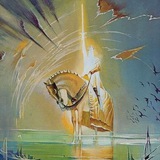
The ‘King in the Mountain’ belief is one of my favourite folklore tropes and is found across Europe & the world. Highly mysterious, this idea remains very popular in many countries and usually involves a heroic figure resting/sleeping (not dead) in a place of beauty or significance. Often they’re alone, but are believed to lie in wait with their armies in many cases. It’s believed that one day they will awaken and save their people and restore/usher in a golden age.
Some examples include:
🇬🇧 King Arthur
🏴 King Harold
🇮🇪 Fionn Mac Cumhaill
🏴 Owain Glyndŵr
🇩🇪 Barbarossa
🇱🇹 Vytautas the Great
🇫🇮 Väinämöinen
🇪🇸 King Pelayo
🇵🇱 Bolesław the Great
Some examples include:
🇬🇧 King Arthur
🏴 King Harold
🇮🇪 Fionn Mac Cumhaill
🏴 Owain Glyndŵr
🇩🇪 Barbarossa
🇱🇹 Vytautas the Great
🇫🇮 Väinämöinen
🇪🇸 King Pelayo
🇵🇱 Bolesław the Great
👍1
Forwarded from Sagittarius Granorum (Sagittarius Hyperboreius)
Little Kjersti was so young and innocent a girl
~ the brown foal trips so lightly ~
She could not govern her own life.
The rain falls and the wind blows.
Far north in the mountains, deep beneath the rocks the underworld is luring you.
The Mountain King came riding to the farm.
Pål the Goldsmith receives him.
The Mountain King had a silent horse.
He placed little Kjersti on his back
They circled the mountain three times,
And the mountain opened so that they could enter.
They gave her a drink poured in a red and golden horn,
And into the drink they slipped three villar grains.
The third time that little Kjersti drank
The Christian lands were lost to her.
“Where were you born, and where were you raised?
Where are your virginal shoes?”
“In the mountain I wish to live and there I wish to die,
And there I am betrothed to the Mountain King.”
~ the brown foal trips so lightly ~
She could not govern her own life.
The rain falls and the wind blows.
Far north in the mountains, deep beneath the rocks the underworld is luring you.
The Mountain King came riding to the farm.
Pål the Goldsmith receives him.
The Mountain King had a silent horse.
He placed little Kjersti on his back
They circled the mountain three times,
And the mountain opened so that they could enter.
They gave her a drink poured in a red and golden horn,
And into the drink they slipped three villar grains.
The third time that little Kjersti drank
The Christian lands were lost to her.
“Where were you born, and where were you raised?
Where are your virginal shoes?”
“In the mountain I wish to live and there I wish to die,
And there I am betrothed to the Mountain King.”
Forwarded from Ghost of de Maistre
"Philosophy is merely an emanation of theology. Indeed, the Lord appears both in Scripture and in Nature." - St. Lawrence of Brindisi, Complete Works, V. 3, pp. 14-1
🔥4
Forwarded from East and West
So in this revaluation of the ancient sacred Roman tradition which Julian attempted, what matters is the “esoteric” idea of nature of the “gods” and “knowledge” of them. Such knowledge signifies interior realization. From such a vantage the gods appear to be not poetic fictions or theologico-philosophastic abstractions, but rather symbols and projections of transcendental states of consciousness.
Thus Julian, who was himself an initiate of the Mithraic Mysteries, strictly associates a superior self-knowledge with the path which conducts to “knowledge of the gods” - an end so high, that he does not hesitate to say that dominion over all the lands, both Roman and barbarian, is nothing compared to it.
from Recognitions by Julius Evola
Thus Julian, who was himself an initiate of the Mithraic Mysteries, strictly associates a superior self-knowledge with the path which conducts to “knowledge of the gods” - an end so high, that he does not hesitate to say that dominion over all the lands, both Roman and barbarian, is nothing compared to it.
from Recognitions by Julius Evola
👍1👎1
"It is possible to cause consciousness to pass from an individualized state (which is the condition of the body = ego ☉ as 'vulgar Gold') to a nonindividualized, unshaped state (Waters, Solvents, Mercury, etc.). The symbols of this process are liquefaction, fusion, dissolution, solution, separation, and so on. It is also possible to confront this transformation in two distinct ways: actively or passively, as dominator or dominated, either according to 🜍 or to ☾.
This alternative underscores the main differences between mysticism and initiation. In the first case a kind of indiscriminate, ecstatic nondifference appears as the goal, the point of arrival, and salvation. In the second case, conversely, the goal is a state in which an individualising power, the same ☉ principle already manifested in the human body as the 'I' hidden in the shadows, is reborn and reaffirmed."
- Julius Evola, The Hermetic Tradition
This alternative underscores the main differences between mysticism and initiation. In the first case a kind of indiscriminate, ecstatic nondifference appears as the goal, the point of arrival, and salvation. In the second case, conversely, the goal is a state in which an individualising power, the same ☉ principle already manifested in the human body as the 'I' hidden in the shadows, is reborn and reaffirmed."
- Julius Evola, The Hermetic Tradition
Halls of the Hyperboreads
"It is possible to cause consciousness to pass from an individualized state (which is the condition of the body = ego ☉ as 'vulgar Gold') to a nonindividualized, unshaped state (Waters, Solvents, Mercury, etc.). The symbols of this process are liquefaction…
"In order to confirm definitely that the spirit of the hermetic achievement corresponds fully to this second possibility, an examination of the group of allegories in the literature that is concerned with symbolic connections between Mother and Son, Feminine and Masculine, will be decisive. We shall begin with the maxim of Philalethes that 'the fixed becomes volatile for a while in order to acquire a nobler quality the better to fix the same volatile again.' In this case the 'volatile'—equivalent to Mother, Woman, the Waters, the Moon, etc.—signifies the Spiritus Mundi, the universal life-force. The 'fixed'—which is the Son, the Male, Fire, Sun, Red Stone, etc.—on the other hand, signifies the ego, the personality, the Soul.
In general it is the unanimous opinion of all the hermetic philosophers that a 'mortification' must intervene: a dissolving in the Waters, a disappearance into the Mother's womb that devours or kills the son, a domination of the Female over the Male, of the Moon over the Sun, the volatile over the fixed, and so on; but all that is simply a provisional condition for returning potentiality to the son, to enable him to reaffirm himself again over what has previously dominated and 'dissolved' him, to make himself 'more perfect and greater than his parents.'"
- Julius Evola, The Hermetic Tradition
In general it is the unanimous opinion of all the hermetic philosophers that a 'mortification' must intervene: a dissolving in the Waters, a disappearance into the Mother's womb that devours or kills the son, a domination of the Female over the Male, of the Moon over the Sun, the volatile over the fixed, and so on; but all that is simply a provisional condition for returning potentiality to the son, to enable him to reaffirm himself again over what has previously dominated and 'dissolved' him, to make himself 'more perfect and greater than his parents.'"
- Julius Evola, The Hermetic Tradition
Forwarded from Sons of Sol
The truth is that the surviving Celtic elements were for the most
part assimilated by Christianity in the Middle Ages; the legend of
the ‘Holy Grail’, with all that it implies, is a particularly apt and
significant example of this. Moreover, we think that if a Western tradition could be rebuilt it would be bound to take on a religious
form in the strictest sense of this word, and that this form could
only be Christian; for on the one hand the other possible forms
have been too long foreign to the Western mentality, and on the
other it is only in Christianity— and we can say still more definitely
in Catholicism— that such remnants of a traditional spirit as still exist in the West are to be found.
Rene Guenon
part assimilated by Christianity in the Middle Ages; the legend of
the ‘Holy Grail’, with all that it implies, is a particularly apt and
significant example of this. Moreover, we think that if a Western tradition could be rebuilt it would be bound to take on a religious
form in the strictest sense of this word, and that this form could
only be Christian; for on the one hand the other possible forms
have been too long foreign to the Western mentality, and on the
other it is only in Christianity— and we can say still more definitely
in Catholicism— that such remnants of a traditional spirit as still exist in the West are to be found.
Rene Guenon
Sons of Sol
The truth is that the surviving Celtic elements were for the most part assimilated by Christianity in the Middle Ages; the legend of the ‘Holy Grail’, with all that it implies, is a particularly apt and significant example of this. Moreover, we think that…
Naturally for any traditional religion to take hold again in Europe or America it must come out of Christianity. This is a matter of simple practical reality separate from all personal bias. For an entirely new and separate religion to take hold in the 'West' would require the death of the 'West' as we know it.
🔥5👎3👍1
Forwarded from The way of the warrior
Jünger tells of a visit by the Count of Champagne to the head of the Order of the Ismailis at the time of the Crusades. At a sign from his host, some knights threw themselves down from the top of a wall. Asked if his own Christian knights were capable of similar obedience and fealty, the Count replied in the negative.
As for the Order of the Ismailis, a specific point should be borne in mind: 𝘢𝘣𝘴𝘰𝘭𝘶𝘵𝘦 𝘰𝘣𝘦𝘥𝘪𝘦𝘯𝘤𝘦 𝘵𝘰 𝘵𝘩𝘦 𝘦𝘹𝘵𝘳𝘦𝘮𝘦 𝘭𝘪𝘮𝘪𝘵, also had the value of discipline and was limited to the lower ranks of the initiatic hierarchy; once the individual will is eliminated, above the fourth degree, an absolutely contrary principle reigns, that of absolute freedom, so much so that someone once attributed the principle that “Nothing is true, everything is permitted” to the Ishmaelites.
~ Julius Evola
As for the Order of the Ismailis, a specific point should be borne in mind: 𝘢𝘣𝘴𝘰𝘭𝘶𝘵𝘦 𝘰𝘣𝘦𝘥𝘪𝘦𝘯𝘤𝘦 𝘵𝘰 𝘵𝘩𝘦 𝘦𝘹𝘵𝘳𝘦𝘮𝘦 𝘭𝘪𝘮𝘪𝘵, also had the value of discipline and was limited to the lower ranks of the initiatic hierarchy; once the individual will is eliminated, above the fourth degree, an absolutely contrary principle reigns, that of absolute freedom, so much so that someone once attributed the principle that “Nothing is true, everything is permitted” to the Ishmaelites.
~ Julius Evola
Forwarded from Traditionalism & Metaphysics
The Theological Virtues: Faith, Charity, Hope — Umbrian Painter (ca. 1500)
Forwarded from Sons of Sol
Maxim's of the Delphic Oracle in Greece:
Follow God (Επου θεω)
Obey the law (Νομω πειθου)
Worship the Gods (Θεους σεβου)
Respect your parents (Γονεις αιδου)
Be overcome by justice (Ηττω υπο δικαιου)
Know what you have learned (Γνωθι μαθων)
Perceive what you have heard (Ακουσας νοει)
Be (or Know) Yourself (Σαυτον ισθι)
Intend to get married (Γαμειν μελλε)
Know your opportunity (Καιρον γνωθι)
Think as a mortal (Φρονει θνητα)
If you are a stranger act like one (Ξepsilon;νος ωνισθι)
Honor the hearth (Εστιαν τιμα)
Control yourself (Αρχε σεαυτου)
Help your friends (Φιλοις βοηθει)
Control anger (Θυμου κρατει)
Exercise prudence (Φρονησιν ασκει)
Honour providence (Προνοιαν τιμα)
Do not use an oath (Ορκω μη χρω)
Love friendship (Φιλιαν αγαπα)
Cling to discipline (Παιδειας αντεχου)
Pursue honour (Δοξαν διωκε)
Long for wisdom (Σοφιαν ζηλου)
Praise the good (Καλον ευ λεγε)
Find fault with no one (Ψεγε μηδενα)
Praise virtue (Επαινει αρετην)
Practice what is just (Πραττε δικαια)
Be kind to friends (Θιλοις ευνοει)
Watch out for your enemies (Εχθρους αμυνου)
Exercise nobility of character (Ευγενειαν ασκει)
Shun evil (Κακιας απεχου)
Be impartial (Κοινος γινου)
Guard what is yours (Ιδια φυλαττε)
Shun what belongs to others (Αλλοτριων απεχου)
Listen to everyone (Ακουε παντα)
Be (religiously) silent (Ευφημος ιοθι)
Do a favour for a friend (Φιλω χαριζου)
Nothing to excess (Μηδεν αγαν)
Use time sparingly (Χρονου φειδου)
Foresee the future (Ορα το μελλον)
Despise insolence (Υβριν μισει)
Have respect for suppliants (Ικετας αιδου)
Be accommodating in everything (Παςιν αρμοζου)
Educate your sons (Υιους παιδευε)
Give what you have (Εχων χαριζου)
Fear deceit (Δολον φοβου)
Speak well of everyone (Ευλογει παντας)
Be a seeker of wisdom (Φιλοσοφος γινου)
Choose what is divine (Οσια κρινε)
Act when you know (Γνους πραττε)
Shun murder (Φονου απεχου)
Pray for things possible (Ευχου δυνατα)
Consult the wise (Σοφοις χρω)
Test the character (Ηθος δοκιμαζε)
Give back what you have received (Λαβων αποδος)
Down-look no one (Υφορω μηδενα)
Use your skill (Τεχνη χρω)
Do what you mean to do (Ο μελλεις, δος)
Honor a benefaction (Ευεργεςιας τιμα)
Be jealous of no one (Φθονει μηδενι)
Be on your guard (Φυλακη προσεχε)
Praise hope (Ελπιδα αινει)
Despise a slanderer (Διαβολην μισει)
Gain possessions justly (Δικαιως κτω)
Honor good men (Αγαθους τιμα)
Know the judge (Κριτην γνωθι)
Master wedding-feasts (Γαμους κρατει)
Recognize fortune (Τυχην νομιζε)
Flee a pledge (Εγγυην φευγε)
Speak plainly (Αμλως διαλεγου)
Associate with your peers (Ομοιοις χρω)
Govern your expenses (Δαπανων αρχου)
Be happy with what you have (Κτωμενος ηδου)
Rever a sense of shame (Αισχυνην σεβου)
Fulfill a favor (Χαριν εκτελει)
Pray for happiness (Ευτυχιαν ευχου)
Be fond of fortune (Τυχην στεργε)
Observe what you have heard (Ακουων ορα)
Work for what you can own (Εργαζου κτητα)
Despise strife (Εριν μισει)
Detest disgrace (Ονειδς εχθαιρε)
Restrain the tongue (Γλωτταν ισχε)
Keep yourself from insolence (Υβριν αμυνου)
Make just judgments (Κρινε δικαια)
Use what you have (Χρω χρημασιν)
Judge incorruptibly (Αδωροδοκητος δικαζε)
Accuse one who is present (Αιτιω παροντα)
Tell when you know (Λεγε ειδως)
Do not depend on strength (Βιας μη εχου)
Live without sorrow (Αλυπως βιου)
Live together meekly (Ομιλει πραως)
Finish the race without shrinking back (Περας επιτελει μη αποδειλιων))
Deal kindly with everyone (Φιλοφρονει πασιν)
Do not curse your sons (Υιοις μη καταρω)
Rule your wife (Γυναικος αρχε)
Benefit yourself (Σεαυτον ευ ποιει)
Be courteous (Ευπροσηγορος γινου)
Give a timely response (Αποκρινου εν καιρω)
Struggle with glory (Πονει μετ ευκλειας)
Act without relenting (Πραττε αμετανοητως)
Repent of sins (Αμαρτανων μετανοει)
Control the eye (Οφθαλμοθ κρατει)
Give a timely counsel (Βουλευου χρονω)
Act quickly (Πραττε συντομως)
Follow God (Επου θεω)
Obey the law (Νομω πειθου)
Worship the Gods (Θεους σεβου)
Respect your parents (Γονεις αιδου)
Be overcome by justice (Ηττω υπο δικαιου)
Know what you have learned (Γνωθι μαθων)
Perceive what you have heard (Ακουσας νοει)
Be (or Know) Yourself (Σαυτον ισθι)
Intend to get married (Γαμειν μελλε)
Know your opportunity (Καιρον γνωθι)
Think as a mortal (Φρονει θνητα)
If you are a stranger act like one (Ξepsilon;νος ωνισθι)
Honor the hearth (Εστιαν τιμα)
Control yourself (Αρχε σεαυτου)
Help your friends (Φιλοις βοηθει)
Control anger (Θυμου κρατει)
Exercise prudence (Φρονησιν ασκει)
Honour providence (Προνοιαν τιμα)
Do not use an oath (Ορκω μη χρω)
Love friendship (Φιλιαν αγαπα)
Cling to discipline (Παιδειας αντεχου)
Pursue honour (Δοξαν διωκε)
Long for wisdom (Σοφιαν ζηλου)
Praise the good (Καλον ευ λεγε)
Find fault with no one (Ψεγε μηδενα)
Praise virtue (Επαινει αρετην)
Practice what is just (Πραττε δικαια)
Be kind to friends (Θιλοις ευνοει)
Watch out for your enemies (Εχθρους αμυνου)
Exercise nobility of character (Ευγενειαν ασκει)
Shun evil (Κακιας απεχου)
Be impartial (Κοινος γινου)
Guard what is yours (Ιδια φυλαττε)
Shun what belongs to others (Αλλοτριων απεχου)
Listen to everyone (Ακουε παντα)
Be (religiously) silent (Ευφημος ιοθι)
Do a favour for a friend (Φιλω χαριζου)
Nothing to excess (Μηδεν αγαν)
Use time sparingly (Χρονου φειδου)
Foresee the future (Ορα το μελλον)
Despise insolence (Υβριν μισει)
Have respect for suppliants (Ικετας αιδου)
Be accommodating in everything (Παςιν αρμοζου)
Educate your sons (Υιους παιδευε)
Give what you have (Εχων χαριζου)
Fear deceit (Δολον φοβου)
Speak well of everyone (Ευλογει παντας)
Be a seeker of wisdom (Φιλοσοφος γινου)
Choose what is divine (Οσια κρινε)
Act when you know (Γνους πραττε)
Shun murder (Φονου απεχου)
Pray for things possible (Ευχου δυνατα)
Consult the wise (Σοφοις χρω)
Test the character (Ηθος δοκιμαζε)
Give back what you have received (Λαβων αποδος)
Down-look no one (Υφορω μηδενα)
Use your skill (Τεχνη χρω)
Do what you mean to do (Ο μελλεις, δος)
Honor a benefaction (Ευεργεςιας τιμα)
Be jealous of no one (Φθονει μηδενι)
Be on your guard (Φυλακη προσεχε)
Praise hope (Ελπιδα αινει)
Despise a slanderer (Διαβολην μισει)
Gain possessions justly (Δικαιως κτω)
Honor good men (Αγαθους τιμα)
Know the judge (Κριτην γνωθι)
Master wedding-feasts (Γαμους κρατει)
Recognize fortune (Τυχην νομιζε)
Flee a pledge (Εγγυην φευγε)
Speak plainly (Αμλως διαλεγου)
Associate with your peers (Ομοιοις χρω)
Govern your expenses (Δαπανων αρχου)
Be happy with what you have (Κτωμενος ηδου)
Rever a sense of shame (Αισχυνην σεβου)
Fulfill a favor (Χαριν εκτελει)
Pray for happiness (Ευτυχιαν ευχου)
Be fond of fortune (Τυχην στεργε)
Observe what you have heard (Ακουων ορα)
Work for what you can own (Εργαζου κτητα)
Despise strife (Εριν μισει)
Detest disgrace (Ονειδς εχθαιρε)
Restrain the tongue (Γλωτταν ισχε)
Keep yourself from insolence (Υβριν αμυνου)
Make just judgments (Κρινε δικαια)
Use what you have (Χρω χρημασιν)
Judge incorruptibly (Αδωροδοκητος δικαζε)
Accuse one who is present (Αιτιω παροντα)
Tell when you know (Λεγε ειδως)
Do not depend on strength (Βιας μη εχου)
Live without sorrow (Αλυπως βιου)
Live together meekly (Ομιλει πραως)
Finish the race without shrinking back (Περας επιτελει μη αποδειλιων))
Deal kindly with everyone (Φιλοφρονει πασιν)
Do not curse your sons (Υιοις μη καταρω)
Rule your wife (Γυναικος αρχε)
Benefit yourself (Σεαυτον ευ ποιει)
Be courteous (Ευπροσηγορος γινου)
Give a timely response (Αποκρινου εν καιρω)
Struggle with glory (Πονει μετ ευκλειας)
Act without relenting (Πραττε αμετανοητως)
Repent of sins (Αμαρτανων μετανοει)
Control the eye (Οφθαλμοθ κρατει)
Give a timely counsel (Βουλευου χρονω)
Act quickly (Πραττε συντομως)
❤3
Forwarded from Sons of Sol
Guard friendship (Φιλιαν φυλαττε)
Be grateful (Ευγνωμων γινου)
Pursue harmony (Ομονοιαν διωκε)
Keep deeply the top secret (Αρρητον κρυπτε)
Fear ruling (Το κρατουν φοβου)
Pursue what is profitable (Το συμφερον θηρω)
Accept due measure (Καιρον προσδεχου)
Do away with enmities (Εχθρας διαλυε)
Accept old age (Γηρας προσδεχου)
Do not boast in might (Επι ρωμη μη καυχω)
Exercise (religious) silence (Ευφημιαν ασκει)
Flee enmity (Απεχθειαν φευγε)
Acquire wealth justly (Πλουτει δικιως)
Do not abandon honor (Δοξαν μη λειπε)
Despise evil (Κακιαν μισει)
Venture into danger prudently (Κινδυνευε φρονιμως)
Do not tire of learning (Μανθανων μη καμνε)
Do not stop to be thrifty (Φειδομενος μη λειπε)
Admire oracles (Χρησμους θαυμαζε)
Love whom you rear (Ους τρεφεις αγαπα)
Do not oppose someone absent (Αποντι μη μαχου)
Respect the elder (Πρεσβυτερον αιδου)
Teach a youngster (Νεωτερον διδασκε)
Do not trust wealth (Πλουτω απιστει)
Respect yourself (Σεαυτον αιδου)
Do not begin to be insolent (Μη αρχε υβριζειν)
Crown your ancestors (Προγονους στεφανου)
Die for your country (Θνησκε υπερ πατριδος)
Do not be discontented by life (Τω βιω μη αχθου)
Do not make fun of the dead (Επι νεκρω μη γελα)
Share the load of the unfortunate (Ατυχουντι συναχθου)
Gratify without harming (Χαριζου αβλαβως)
Grieve for no one (Μη επι παντι λυπου)
Beget from noble routes (Εξ ευγενων γεννα)
Make promises to no one (Επαγγελου μηδενι)
Do not wrong the dead (Φθιμενους μη αδικει)
Be well off as a mortal (Ευ πασχε ως θνητος)
Do not trust fortune (Τυχη μη πιστευε)
As a child be well-behaved (Παις ων κοσμιος ισθι)
As a youth – self-disciplined (ηβων εγκρατης)
As of middle-age – just (μεσος δικαιος)
As an old man – sensible (πρεσβυτης ευλογος)
On reaching the end – without sorrow (τελευτων αλυπος)
Be grateful (Ευγνωμων γινου)
Pursue harmony (Ομονοιαν διωκε)
Keep deeply the top secret (Αρρητον κρυπτε)
Fear ruling (Το κρατουν φοβου)
Pursue what is profitable (Το συμφερον θηρω)
Accept due measure (Καιρον προσδεχου)
Do away with enmities (Εχθρας διαλυε)
Accept old age (Γηρας προσδεχου)
Do not boast in might (Επι ρωμη μη καυχω)
Exercise (religious) silence (Ευφημιαν ασκει)
Flee enmity (Απεχθειαν φευγε)
Acquire wealth justly (Πλουτει δικιως)
Do not abandon honor (Δοξαν μη λειπε)
Despise evil (Κακιαν μισει)
Venture into danger prudently (Κινδυνευε φρονιμως)
Do not tire of learning (Μανθανων μη καμνε)
Do not stop to be thrifty (Φειδομενος μη λειπε)
Admire oracles (Χρησμους θαυμαζε)
Love whom you rear (Ους τρεφεις αγαπα)
Do not oppose someone absent (Αποντι μη μαχου)
Respect the elder (Πρεσβυτερον αιδου)
Teach a youngster (Νεωτερον διδασκε)
Do not trust wealth (Πλουτω απιστει)
Respect yourself (Σεαυτον αιδου)
Do not begin to be insolent (Μη αρχε υβριζειν)
Crown your ancestors (Προγονους στεφανου)
Die for your country (Θνησκε υπερ πατριδος)
Do not be discontented by life (Τω βιω μη αχθου)
Do not make fun of the dead (Επι νεκρω μη γελα)
Share the load of the unfortunate (Ατυχουντι συναχθου)
Gratify without harming (Χαριζου αβλαβως)
Grieve for no one (Μη επι παντι λυπου)
Beget from noble routes (Εξ ευγενων γεννα)
Make promises to no one (Επαγγελου μηδενι)
Do not wrong the dead (Φθιμενους μη αδικει)
Be well off as a mortal (Ευ πασχε ως θνητος)
Do not trust fortune (Τυχη μη πιστευε)
As a child be well-behaved (Παις ων κοσμιος ισθι)
As a youth – self-disciplined (ηβων εγκρατης)
As of middle-age – just (μεσος δικαιος)
As an old man – sensible (πρεσβυτης ευλογος)
On reaching the end – without sorrow (τελευτων αλυπος)
❤2
Forwarded from Ghost of de Maistre
"Stressing the importance of the German philosopher in a different sense, Mussolini also recalled his admiration for and friendship with Oswald Spengler, whose work he perceived as a continuation of Nietzsche. Mussolini suggested that Spengler had found in Nietzsche the vision with which to counter scientific laws and the predictions of Marxism as they were acted out in contemporary reality and to propose a Caesarian alternative. The Duce went further and claimed that overcoming Spengler’s prophecy of the downfall of the West was now a miraculous possibility—in Nietzschean “Superhuman” terms—one currently being carried out by Mussolini and his followers as the creators of a new Europe."
~ 𝑵𝒊𝒆𝒕𝒛𝒔𝒄𝒉𝒆, 𝑮𝒐𝒅𝒇𝒂𝒕𝒉𝒆𝒓 𝒐𝒇 𝑭𝒂𝒔𝒄𝒊𝒔𝒎, 𝒃𝒚 𝑱𝒂𝒄𝒐𝒃 𝑮𝒐𝒍𝒐𝒎𝒃 𝒂𝒏𝒅 𝑹𝒐𝒃𝒆𝒓𝒕 𝑺. 𝑾𝒊𝒔𝒕𝒓𝒊𝒄𝒉
~ 𝑵𝒊𝒆𝒕𝒛𝒔𝒄𝒉𝒆, 𝑮𝒐𝒅𝒇𝒂𝒕𝒉𝒆𝒓 𝒐𝒇 𝑭𝒂𝒔𝒄𝒊𝒔𝒎, 𝒃𝒚 𝑱𝒂𝒄𝒐𝒃 𝑮𝒐𝒍𝒐𝒎𝒃 𝒂𝒏𝒅 𝑹𝒐𝒃𝒆𝒓𝒕 𝑺. 𝑾𝒊𝒔𝒕𝒓𝒊𝒄𝒉
👍5👎3
Ghost of de Maistre
"Stressing the importance of the German philosopher in a different sense, Mussolini also recalled his admiration for and friendship with Oswald Spengler, whose work he perceived as a continuation of Nietzsche. Mussolini suggested that Spengler had found in…
What a tragedy became of that miraculous possibility. Even before the war, upon seeing the reality of the ideology that was rising in his own Germany, Spengler grew pessimistic towards any redemption for the Faustian Civilization crumbling around him. By the end of the war, Evola (arguably the greater successor to Nietzsche) also abandoned the optimism he held for a renewal of a traditional Europe. The Übermensch continues to remain an unfulfilled prophecy.
👍1
Forwarded from Das Abenteuerliche Herz🏴⚒
Imam Mahdi in Hyperborea with the holy grail painting by Nicholas Roerich
Forwarded from Ghost of de Maistre
In Greek Daimon is just the word for spirits of which there are good and wicked ones
In Catholicism, Good Daimons are Angels and Evil Daimons are Demons/Devils. The Christian concept of one's holy guardian angel corresponds to the hellenic concept of the personal daimon, while the kakodaimon of greek belief is equivalent to our view of fallen spirits (aka demons). In Greece, good daimons were called agathodaimons.
Even in Christianity angels is the term for the spirits and we distinguish them after the fall as good angels or angels and fallen angels as demons.
In Catholicism, Good Daimons are Angels and Evil Daimons are Demons/Devils. The Christian concept of one's holy guardian angel corresponds to the hellenic concept of the personal daimon, while the kakodaimon of greek belief is equivalent to our view of fallen spirits (aka demons). In Greece, good daimons were called agathodaimons.
Even in Christianity angels is the term for the spirits and we distinguish them after the fall as good angels or angels and fallen angels as demons.