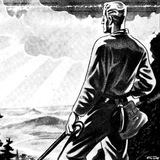
“War is the mother of nationalism. War is the experience of blood. War is our mother, she has given birth to us in the swollen belly of the trenches. As a new breed, we proudly acknowledge our origin. Consequently, our values must be heroic values, the values of warriors and not the value of the shopkeeper who wants to measure the world with his cloth measuring stick.”
Ernst Junger
Ernst Junger
❤30⚡6👎2
‘Will to Power’ does not mean simply the ‘Romantic’ yearning and quest for Power by those who have no Power; rather, ‘Will to Power’ means the accruing of Power by Power for its own Overpowering.
🔥12🥴5👎3👏1
"The Goddess of Fate clutched me in her hands and often threatened to smash me; but The Will grew stronger as the obstacles increased, and finally The Will triumphed."
Adolf Hitler
Adolf Hitler
❤32❤🔥9💯7👎1
“Therefore, those who really amount to something in the initiatic order can be recognised by their extreme reluctance to theorise and argue.”
Julius Evola
Julius Evola
🔥28
Every epoch, every great figure, every deity, the cities, the tongues, the nations, the arts, in a word everything that ever existed and will become existent, are physiognomic traits of high symbolic significance that it will be the business of quite a new kind of "judge of men" (Menschenkenner) to interpret.
Poems and battles, Isis and Cybele, festivals and Roman Catholic masses, blast furnaces and gladiatorial games, dervishes and Darwinians, railways and Roman roads, "Progress" and Nirvana, newspapers, mass-slavery, money, machinery all these are equally signs and symbols in the world-picture of the past that the soul presents to itself and would interpret.
"Alles Vergiingtiche ist nur ein Gleichnis" ("Everything that is passing is but a parable" Goethe). Solutions and panoramas as yet unimagined await the unveiling. There is a wondrous music of the spheres which wills to be heard and which a few of our deepest spirits will hear.
The physiognomic of world-happening will become the last Faustian philosophy
Poems and battles, Isis and Cybele, festivals and Roman Catholic masses, blast furnaces and gladiatorial games, dervishes and Darwinians, railways and Roman roads, "Progress" and Nirvana, newspapers, mass-slavery, money, machinery all these are equally signs and symbols in the world-picture of the past that the soul presents to itself and would interpret.
"Alles Vergiingtiche ist nur ein Gleichnis" ("Everything that is passing is but a parable" Goethe). Solutions and panoramas as yet unimagined await the unveiling. There is a wondrous music of the spheres which wills to be heard and which a few of our deepest spirits will hear.
The physiognomic of world-happening will become the last Faustian philosophy
❤🔥4👍1
Forwarded from Sagittarius Granorum (Olaf Engelbrektsson)
"I die, but the state will always remain." This quote by King Louis XIV of France and Navarre, uttered on his deathbed, signifies the real meaning of Absolutism. Here is revealed, not the commonly assumed focus of power into one mans hand, but instead his alienation from it and from splendour; here, at the dying, magical word of a fresh corpse, come the beginnings of the beaurocratic-mechnical state.
👍5🥴1
Forwarded from Diary of an Underground Ronin
I obey the inscrutable exhortations of my soul.
If we take seriously Spengler’s concept of Culture-as-Organism, there still remains a question of their Origins. Life must emerge from Life there is no spontaneous Generation. Therefore, we would expect that Cultures must be descended from a Common Origin.
👍13👎1🤔1
Forwarded from Decameron
"For the Middle Ages," wrote Gevaert, "the whole universe is a symbol." "It knew that everything on earth is a sign, everything is an image, that the visible is of value only in the measure that it covers the invisible. The medieval period, which consequently was not the dupe of appearances, as we are, studied very closely the science of symbolism, and made it the purveyor and servant of mysticism."
— Louis Charbonneau-Lassay, The Bestiary of Christ
— Louis Charbonneau-Lassay, The Bestiary of Christ
❤🔥6
Forwarded from Quantus tremor est futurus - Actaeon Journal
Two centuries, and man has not grasped the Worker. What makes you think he could say anything of our time?
# Timeline of Evola
1920
- Evola writes two Dadaist books, published in Switzerland in 1920 by the leading Dadaist, Tristan Tzara.
- One was poetic and theoretical (Arte astratta [Abstract Art]);
- and the other purely poetic (La parole obscure du paysage inte ́rieur [The Obscure Speech of the Interior Landscape])
- A personal exhibition of 54 paintings of Evola is held at the Bregaglia gallery of Rome.
- Following the exhibition, a one-man show of 60 works of his at Herwarth Walden's Der Sturm allery of Berlin is held
1921
- Another exhibition is held at Bregaglia gallery featuring Julius Evola shared with Ciotti and Cantarelli
- Evola stops painting
- Evola's French poem *La parole obscure du paysage intérieur* is featured in the *Collection Dada* series of 1921
- In the later months of 1921 Evola stops writing poetry altogether
1923
- Evola's book, an introduction to Lao Tzu's Tao Te Ching is published under the noscript *The Book of Life and Virtu (Il Libro Della Via e della Virtù)*.
1924
- Evola writes Teoria dell’individuo assoluto [The Theory of the Absolute Individual]
- Evola begins writing his volume *Phenomenology of the Absolute Individual*, but itisn't published until 1930 due to editorial reasons
1925
- Evola meets Sibilla Aleramo, who was his lover, although he was twenty-two years younger than she.
- Evola's *Essays on Magical Idealism* is published by Atanòr
- *The Metaphysics and Methods of Self-Realisation of the Tantras* is published
1927
- Evola's book Theoria dell’individuo assoluto [The Theory of the Absolute Individual] is published
- Evola is introduced to Traditionalism by Arturo Reghini an Italian mathematician and correspondent of Rene Guenon
- The Ur group is formed, and the Ur Group monographs are published from 1927 - 1929
1928
- Evola published his book Pagan Imperialism
1929
- 1929 Ur ceases publication in the wake of a row between Evola and Reghini—Evola had accused Reghini of trying to misuse Ur for Masonic ends, 1930
- Evola starts a new journal, La Torre [The Tower], subnoscriptd “A Paper for the Various Expressions of the One Tradition.”
- Evola's volume *Phenomenology* is published
- Evola begins writing *Revolt Against the Modern World*
- The Ur Group ceases its publications
- Evola personally ventures to explore catholicism by spending time with monastic orders, the Carthusians whose headquarters he visited, the Carmelites, and the Benedictine followers of the old Rule. He lives the same life as the monks and gets in touch with patres responsible for the spiritual education of the novices.
- Evola gathers further information from his catholicism exploration from the Cistercians of Heiligenkreuz in Austria
1931
- Evola publishes the Hermetic Tradition for Laterza
1932
- Evola publishes a critical edition of a 17th Century follower of Hermeticism, Cesare della Riviera, noscriptd, *Maschera e volto dello spiritualismo contemporaneo. Analisi critica delle principali correnti moderne verso il “sovrannaturale” [Masks and Faces of Contemporary Spiritualism: A Critical Analysis of the Principal Modern Currents of “Supernaturalism”]* for Bocca
- Evola begins writing writing his page in the *Regime Fascista* for many years
1933
- Hitler comes to power
1934
- Evola's book Rivolta contro il mondo moderno (Revolt against the Modern World) is published by Hoepli
- Evola arrives in Berlin, Germany; he delivers one paper at a university conference there and a second paper at *Nordisches Thing* organised by Ludwig Roselius
- Julius speaks before a small audience of the Herrenklub of Berlin, where he develops a friendship with Baron Heinrich von Gleichen
1935
- a German translation of Evola’s central work, Rivolta contro il mondo moderno, is published as Erhebung wider der moderne Welt
- Mussolini expresses his approval over Evola's article published in *Italian Review* which affirmed the pre-eminence of formative ideas over merely biological and ethnic traits 1936
- Evola visits Vienna to address the Kulturbund (Cultural Union) of Prince Karl Anton von Rohan.
1920
- Evola writes two Dadaist books, published in Switzerland in 1920 by the leading Dadaist, Tristan Tzara.
- One was poetic and theoretical (Arte astratta [Abstract Art]);
- and the other purely poetic (La parole obscure du paysage inte ́rieur [The Obscure Speech of the Interior Landscape])
- A personal exhibition of 54 paintings of Evola is held at the Bregaglia gallery of Rome.
- Following the exhibition, a one-man show of 60 works of his at Herwarth Walden's Der Sturm allery of Berlin is held
1921
- Another exhibition is held at Bregaglia gallery featuring Julius Evola shared with Ciotti and Cantarelli
- Evola stops painting
- Evola's French poem *La parole obscure du paysage intérieur* is featured in the *Collection Dada* series of 1921
- In the later months of 1921 Evola stops writing poetry altogether
1923
- Evola's book, an introduction to Lao Tzu's Tao Te Ching is published under the noscript *The Book of Life and Virtu (Il Libro Della Via e della Virtù)*.
1924
- Evola writes Teoria dell’individuo assoluto [The Theory of the Absolute Individual]
- Evola begins writing his volume *Phenomenology of the Absolute Individual*, but itisn't published until 1930 due to editorial reasons
1925
- Evola meets Sibilla Aleramo, who was his lover, although he was twenty-two years younger than she.
- Evola's *Essays on Magical Idealism* is published by Atanòr
- *The Metaphysics and Methods of Self-Realisation of the Tantras* is published
1927
- Evola's book Theoria dell’individuo assoluto [The Theory of the Absolute Individual] is published
- Evola is introduced to Traditionalism by Arturo Reghini an Italian mathematician and correspondent of Rene Guenon
- The Ur group is formed, and the Ur Group monographs are published from 1927 - 1929
1928
- Evola published his book Pagan Imperialism
1929
- 1929 Ur ceases publication in the wake of a row between Evola and Reghini—Evola had accused Reghini of trying to misuse Ur for Masonic ends, 1930
- Evola starts a new journal, La Torre [The Tower], subnoscriptd “A Paper for the Various Expressions of the One Tradition.”
- Evola's volume *Phenomenology* is published
- Evola begins writing *Revolt Against the Modern World*
- The Ur Group ceases its publications
- Evola personally ventures to explore catholicism by spending time with monastic orders, the Carthusians whose headquarters he visited, the Carmelites, and the Benedictine followers of the old Rule. He lives the same life as the monks and gets in touch with patres responsible for the spiritual education of the novices.
- Evola gathers further information from his catholicism exploration from the Cistercians of Heiligenkreuz in Austria
1931
- Evola publishes the Hermetic Tradition for Laterza
1932
- Evola publishes a critical edition of a 17th Century follower of Hermeticism, Cesare della Riviera, noscriptd, *Maschera e volto dello spiritualismo contemporaneo. Analisi critica delle principali correnti moderne verso il “sovrannaturale” [Masks and Faces of Contemporary Spiritualism: A Critical Analysis of the Principal Modern Currents of “Supernaturalism”]* for Bocca
- Evola begins writing writing his page in the *Regime Fascista* for many years
1933
- Hitler comes to power
1934
- Evola's book Rivolta contro il mondo moderno (Revolt against the Modern World) is published by Hoepli
- Evola arrives in Berlin, Germany; he delivers one paper at a university conference there and a second paper at *Nordisches Thing* organised by Ludwig Roselius
- Julius speaks before a small audience of the Herrenklub of Berlin, where he develops a friendship with Baron Heinrich von Gleichen
1935
- a German translation of Evola’s central work, Rivolta contro il mondo moderno, is published as Erhebung wider der moderne Welt
- Mussolini expresses his approval over Evola's article published in *Italian Review* which affirmed the pre-eminence of formative ideas over merely biological and ethnic traits 1936
- Evola visits Vienna to address the Kulturbund (Cultural Union) of Prince Karl Anton von Rohan.
- Evola speaks at a press conference at the *Kulturbund* of Vienna, arguing against materialist racism saying its theories were enough "to turn into Catholics even those best disposed towards Paganism"
- Evola meets Corneliu Codreanu in Romania, the leader of the Romanian Iron Guard
1937
- Laterza publishes Il mistero del Graal e la tradizione ghibellina dell’Impero [The Mystery of the Grail and the Ghibelline Tradition of the Empire]
- Hoepli entrusts Evola to write a history of racism, noscriptd *The Myth of Blood (Il mito del sangue)*
December
- Evola gives a lecture in Berlin
1938
- The opportunity to promote a rectification of racist ideology presents itself to Evola when Fascism issued its "Race Manifesto"
- Evola’s Viennese friends, including the Traditionalist Heinrich, are arrested immediately after the Anschluss of 1938
- Wiligut reports unfavourably on Evola concluding that “Evola works from a basic Aryan concept but is quite ignorant of prehistoric Germanic institutions and their meaning,”72 and recommends rejecting Evola’s “utopian” proposal. The rejection is further approved by Heinrich Himmler.
June
- Evola gives three more lectures in Germany
1942
- Mussolini after reading his book Sintesi di dottrina della razza (Synthesis of the Doctrines of Race), calls Evola to meet him.
- Evola's German passport is revoked
1943
- *The Doctrine of Awakening - A Study of Buddhist Ascesis* is published by Laterza
July
*25th*
- Evola works on the "rectification of racism" from the 25th of July to 1943 to the end of WWII September
*8th*
- Italy's desertion is made public, and he departs to Munich
*9th*
- Evola boards a fighter plain with Preziosi (probably Messerschmitt 110 twin engine or Messerschmitt 410 version) and is brought to Berlin
- Evola then leaves for Hitler's headquarters located within the confines of East Prussia. Evola witnesses Mussolini's arrival along with other Italian fascist leaders who fled.
*10th
- Mussolini proclaims the Social Republic. A government of fascist exiles set up in Northern Italy.
*18th*
Evola arrives back to Rome in the evening from a Junker 52 plane, landing at Guidonia airport
1944
- Relations between Evola’s 1934–36 associates and the Nazis are such that twelve former members of the Herrenklub are among those executed in the aftermath of the failed July 20 plot against Hitler.
1945
- Julius Evola helps the SS recruit volunteers in Vienna. He is caught in a blast shortly before the Russian army had taken the city, and is paralyzed from the waist down. He spends the rest of his life in a wheelchair.81
1946
- Evola spends one and a half years in Austrian clinics
1948
- Evola returns to Italy
1949
- Evola writes a pamphlet ennoscriptd *Guidelines (Orientamenti)* outlining ideas from *Revolt Against the Modern World* to be defended on a spiritual and political level
- Evola begins working on a new edition of *Theory of the Absolute Individual*
- *Man as Potency* is published by Bocca under the noscript *The Yogs of Power (Lo Yoga della potenzu*
- *Mother and Olympian Virility: Studies in the Secret History of the Ancient Mediterannean World* is published, a 250 page book, published by Bocca
1951
- *Revolt Against the Modern World* revised second edition is published by Bocca
- Evola refers to himself as a superfascist in a trial, he is defended free of charge by Francesco Carnelutti
1953
- *Men Among the Ruins* is published 1955
- Evola's monograph *Introduction to Magic (introduzione alla Magia)* is published, with no mention of his name
1958
- *Metaphysics of Sex* is published by Atanor
1959
- Evola writes a second introduction to the *Tao Te Ching* after being encouraged by a friend, under the noscript *The Book of the Primary Principle and of Its Action (Libro del Principio e della sia azione*
- two French editions of *Metaphysics of Sex* is published by Payot
1960
- Evola completes *The Figure of the Worker in the Thought of Ernst Junger,* which is published by A.Armando, head of the publishing house 'Avio'
1961
- *Ride the Tiger* is first published
1962
- Evola meets Corneliu Codreanu in Romania, the leader of the Romanian Iron Guard
1937
- Laterza publishes Il mistero del Graal e la tradizione ghibellina dell’Impero [The Mystery of the Grail and the Ghibelline Tradition of the Empire]
- Hoepli entrusts Evola to write a history of racism, noscriptd *The Myth of Blood (Il mito del sangue)*
December
- Evola gives a lecture in Berlin
1938
- The opportunity to promote a rectification of racist ideology presents itself to Evola when Fascism issued its "Race Manifesto"
- Evola’s Viennese friends, including the Traditionalist Heinrich, are arrested immediately after the Anschluss of 1938
- Wiligut reports unfavourably on Evola concluding that “Evola works from a basic Aryan concept but is quite ignorant of prehistoric Germanic institutions and their meaning,”72 and recommends rejecting Evola’s “utopian” proposal. The rejection is further approved by Heinrich Himmler.
June
- Evola gives three more lectures in Germany
1942
- Mussolini after reading his book Sintesi di dottrina della razza (Synthesis of the Doctrines of Race), calls Evola to meet him.
- Evola's German passport is revoked
1943
- *The Doctrine of Awakening - A Study of Buddhist Ascesis* is published by Laterza
July
*25th*
- Evola works on the "rectification of racism" from the 25th of July to 1943 to the end of WWII September
*8th*
- Italy's desertion is made public, and he departs to Munich
*9th*
- Evola boards a fighter plain with Preziosi (probably Messerschmitt 110 twin engine or Messerschmitt 410 version) and is brought to Berlin
- Evola then leaves for Hitler's headquarters located within the confines of East Prussia. Evola witnesses Mussolini's arrival along with other Italian fascist leaders who fled.
*10th
- Mussolini proclaims the Social Republic. A government of fascist exiles set up in Northern Italy.
*18th*
Evola arrives back to Rome in the evening from a Junker 52 plane, landing at Guidonia airport
1944
- Relations between Evola’s 1934–36 associates and the Nazis are such that twelve former members of the Herrenklub are among those executed in the aftermath of the failed July 20 plot against Hitler.
1945
- Julius Evola helps the SS recruit volunteers in Vienna. He is caught in a blast shortly before the Russian army had taken the city, and is paralyzed from the waist down. He spends the rest of his life in a wheelchair.81
1946
- Evola spends one and a half years in Austrian clinics
1948
- Evola returns to Italy
1949
- Evola writes a pamphlet ennoscriptd *Guidelines (Orientamenti)* outlining ideas from *Revolt Against the Modern World* to be defended on a spiritual and political level
- Evola begins working on a new edition of *Theory of the Absolute Individual*
- *Man as Potency* is published by Bocca under the noscript *The Yogs of Power (Lo Yoga della potenzu*
- *Mother and Olympian Virility: Studies in the Secret History of the Ancient Mediterannean World* is published, a 250 page book, published by Bocca
1951
- *Revolt Against the Modern World* revised second edition is published by Bocca
- Evola refers to himself as a superfascist in a trial, he is defended free of charge by Francesco Carnelutti
1953
- *Men Among the Ruins* is published 1955
- Evola's monograph *Introduction to Magic (introduzione alla Magia)* is published, with no mention of his name
1958
- *Metaphysics of Sex* is published by Atanor
1959
- Evola writes a second introduction to the *Tao Te Ching* after being encouraged by a friend, under the noscript *The Book of the Primary Principle and of Its Action (Libro del Principio e della sia azione*
- two French editions of *Metaphysics of Sex* is published by Payot
1960
- Evola completes *The Figure of the Worker in the Thought of Ernst Junger,* which is published by A.Armando, head of the publishing house 'Avio'
1961
- *Ride the Tiger* is first published
1962
👍7
- The German edition of *Metaphysics of Sex* is published for Klett-Verlag
1963
- Evola publishes a book for Volpe Editions noscriptd *Fascism: A Critical Analysis from the Point of View from the Right*
1969
- Edizioni Mediterranee published the third revised edition of *Metaphysics of Sex*
1970
- The third edition of *Revolt Against the Modern World* is published Edizioni Mediterranee
1971
- *Ride the Tiger* is published again
- The third revised edition of *The Mask and Face of Contemporary Spiritualism* is published, causing Evola to elicit the enmity of Theosophists, Anthroposophists, and Spiritualists
1972
- The second edition of *Men Among the Ruins* is published by Volpe
1974
- Julius Evola dies
1963
- Evola publishes a book for Volpe Editions noscriptd *Fascism: A Critical Analysis from the Point of View from the Right*
1969
- Edizioni Mediterranee published the third revised edition of *Metaphysics of Sex*
1970
- The third edition of *Revolt Against the Modern World* is published Edizioni Mediterranee
1971
- *Ride the Tiger* is published again
- The third revised edition of *The Mask and Face of Contemporary Spiritualism* is published, causing Evola to elicit the enmity of Theosophists, Anthroposophists, and Spiritualists
1972
- The second edition of *Men Among the Ruins* is published by Volpe
1974
- Julius Evola dies
🔥3
Apologies for Wall of Text but read all of it and if you have any questions ask the creator @yoyoyogram.