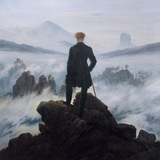
“Disobedience is the true foundation of liberty. The obedient must be slaves.”
— Henry David Thoreau, Journals (1847)
— Henry David Thoreau, Journals (1847)
❤3💯1
“…I labored to express, in Kantian and Schopenhauerian formulæ, strange and new valuations, which ran fundamentally counter to the spirit of Kant and Schopenhauer, as well as to their taste! What, forsooth, were Schopenhauer's views on tragedy? ‘What gives’—he says in Welt als Wille und Vorstellung [World as Will and Representation], II. 495—‘to all tragedy that singular swing towards elevation, is the awakening of the knowledge that the world, that life, cannot satisfy us thoroughly, and consequently is not worthy of our attachment. In this consists the tragic spirit: it therefore leads to resignation.’ Oh, how differently Dionysus spoke to me! Oh how far from me then was just this entire resignationism!”
— Friedrich Nietzsche, The Birth of Tragedy (An Attempt at Self-Criticism. §6)
— Friedrich Nietzsche, The Birth of Tragedy (An Attempt at Self-Criticism. §6)
Dionysian Anarchism
„Ob Hedonismus, ob Pessimismus, ob Utilitarismus, ob Eudämonismus: alle diese Denkweisen, welche nach Lust und Leid, das heißt nach Begleitzuständen und Nebensachen den Werth der Dinge messen, sind Vordergrunds-Denkweisen und Naivetäten, auf welche ein Jeder…
Anti-natalist vs Nietzschad
❤4👎1🤡1
“The human being is something only as my quality (property) like masculinity or femininity. The ancients found the ideal in one's being male in the full sense; their virtue is virtus and aretē, i.e., manliness. What is one supposed to think of a woman who only wanted to be a complete ‘woman’? That is not given to all of them, and some would set themselves an unattainable goal in this. She is, however, female in any case, by nature; femininity is her quality, and she doesn't need ‘true femininity’. I am human, just like the earth is a planet. As ridiculous as it would be to set the earth the task of being a ‘correct planet’, it is just as ridiculous to burden me with the calling to be a ‘correct human being’.”
— Max Stirner
— Max Stirner
🥰2
“Fascism — despite empty and contrary appearances — is something far too ephemeral and impotent to prevent the free, unbridled course of rebel thought that overflows and expands, impetuously bursting beyond every barrier, and furiously spreads beyond every limit — as a powerful, animating, driving force — drawing behind its gigantic steps the vigorous and titanic action of hard human muscle.
Fascism is impotent, because it is brute force.
It is matter without spirit.
It is body without mind.
It is night without dawn!”
— Renzo Novatore, Black Flags (VII)
Fascism is impotent, because it is brute force.
It is matter without spirit.
It is body without mind.
It is night without dawn!”
— Renzo Novatore, Black Flags (VII)
“Fascism is an epileptic child of the spiritual ‘no’ that is brutalized by striving — vainly — toward a vulgar material ‘yes.’”
— Renzo Novatore, Black Flags (VII)
— Renzo Novatore, Black Flags (VII)
“The foundation of irreligious criticism is: Man makes religion, religion does not make man. Religion is, indeed, the self-consciousness and self-esteem of man who has either not yet won through to himself, or has already lost himself again. But man is no abstract being squatting outside the world. Man is the world of man – state, society. This state and this society produce religion, which is an inverted consciousness of the world, because they are an inverted world. Religion is the general theory of this world, its encyclopaedic compendium, its logic in popular form, its spiritual point d’honneur, its enthusiasm, its moral sanction, its solemn complement, and its universal basis of consolation and justification. It is the fantastic realization of the human essence since the human essence has not acquired any true reality. The struggle against religion is, therefore, indirectly the struggle against that world whose spiritual aroma is religion.
Religious suffering is, at one and the same time, the expression of real suffering and a protest against real suffering. Religion is the sigh of the oppressed creature, the heart of a heartless world, and the soul of soulless conditions. It is the opium of the people.
The abolition of religion as the illusory happiness of the people is the demand for their real happiness. To call on them to give up their illusions about their condition is to call on them to give up a condition that requires illusions. The criticism of religion is, therefore, in embryo, the criticism of that vale of tears of which religion is the halo.
Criticism has plucked the imaginary flowers on the chain not in order that man shall continue to bear that chain without fantasy or consolation, but so that he shall throw off the chain and pluck the living flower. The criticism of religion disillusions man, so that he will think, act, and fashion his reality like a man who has discarded his illusions and regained his senses, so that he will move around himself as his own true Sun. Religion is only the illusory Sun which revolves around man as long as he does not revolve around himself.”
— Karl Marx, Critique of Hegel's Philosophy of Right (Introduction)
Religious suffering is, at one and the same time, the expression of real suffering and a protest against real suffering. Religion is the sigh of the oppressed creature, the heart of a heartless world, and the soul of soulless conditions. It is the opium of the people.
The abolition of religion as the illusory happiness of the people is the demand for their real happiness. To call on them to give up their illusions about their condition is to call on them to give up a condition that requires illusions. The criticism of religion is, therefore, in embryo, the criticism of that vale of tears of which religion is the halo.
Criticism has plucked the imaginary flowers on the chain not in order that man shall continue to bear that chain without fantasy or consolation, but so that he shall throw off the chain and pluck the living flower. The criticism of religion disillusions man, so that he will think, act, and fashion his reality like a man who has discarded his illusions and regained his senses, so that he will move around himself as his own true Sun. Religion is only the illusory Sun which revolves around man as long as he does not revolve around himself.”
— Karl Marx, Critique of Hegel's Philosophy of Right (Introduction)
👍1🔥1
“How comes an intelligent and well-informed man ever to feel the need of believing in this [religious] mystery?
Nothing is more natural than that the belief in God, the creator, regulator, judge, master, curser, savior, and benefactor of the world, should still prevail among the people, especially in the rural districts, where it is more widespread than among the proletariat of the cities. The people, unfortunately, are still very ignorant, and are kept in ignorance by the systematic efforts of all the governments, who consider this ignorance, not without good reason, as one of the essential conditions of their own power. Weighted down by their daily labor, deprived of leisure, of intellectual intercourse, of reading, in short of all the means and a good portion of the stimulants that develop thought in men, the people generally accept religious traditions without criticism and in a lump. These traditions surround them from infancy in all the situations of life, and artificially sustained in their minds by a multitude of official poisoners of all sorts, priests and laymen, are transformed therein into a sort of mental and moral habit, too often more powerful even than their natural good sense.
There is another reason which explains and in some sort justifies the absurd beliefs of the people—namely, the wretched situation to which they find themselves fatally condemned by the economic organization of society in the most civilized countries of Europe. Reduced, intellectually and morally as well as materially, to the minimum of human existence, confined in their life like a prisoner in his prison, without horizon, without outlet, without even a future if we believe the economists, the people would have the singularly narrow souls and blunted instincts of the bourgeois if they did not feel a desire to escape; but of escape there are but three methods—two chimerical and a third real. The first two are the dram-shop and the church, debauchery of the body or debauchery of the mind; the third is social revolution. Hence I conclude this last will be much more potent than all the theological propagandism of the freethinkers to destroy to their last vestige the religious beliefs and dissolute habits of the people, beliefs and habits much more intimately connected than is generally supposed. In substituting for the at once illusory and brutal enjoyments of bodily and spiritual licentiousness the enjoyments, as refined as they are real, of humanity developed in each and all, the social revolution alone will have the power to close at the same time all the dram-shops and all the churches.
Till then the people, taken as a whole, will believe; and, if they have no reason to believe, they will have at least a right.”
— Mikhail Bakunin,
God and the State (chapter 1)
Nothing is more natural than that the belief in God, the creator, regulator, judge, master, curser, savior, and benefactor of the world, should still prevail among the people, especially in the rural districts, where it is more widespread than among the proletariat of the cities. The people, unfortunately, are still very ignorant, and are kept in ignorance by the systematic efforts of all the governments, who consider this ignorance, not without good reason, as one of the essential conditions of their own power. Weighted down by their daily labor, deprived of leisure, of intellectual intercourse, of reading, in short of all the means and a good portion of the stimulants that develop thought in men, the people generally accept religious traditions without criticism and in a lump. These traditions surround them from infancy in all the situations of life, and artificially sustained in their minds by a multitude of official poisoners of all sorts, priests and laymen, are transformed therein into a sort of mental and moral habit, too often more powerful even than their natural good sense.
There is another reason which explains and in some sort justifies the absurd beliefs of the people—namely, the wretched situation to which they find themselves fatally condemned by the economic organization of society in the most civilized countries of Europe. Reduced, intellectually and morally as well as materially, to the minimum of human existence, confined in their life like a prisoner in his prison, without horizon, without outlet, without even a future if we believe the economists, the people would have the singularly narrow souls and blunted instincts of the bourgeois if they did not feel a desire to escape; but of escape there are but three methods—two chimerical and a third real. The first two are the dram-shop and the church, debauchery of the body or debauchery of the mind; the third is social revolution. Hence I conclude this last will be much more potent than all the theological propagandism of the freethinkers to destroy to their last vestige the religious beliefs and dissolute habits of the people, beliefs and habits much more intimately connected than is generally supposed. In substituting for the at once illusory and brutal enjoyments of bodily and spiritual licentiousness the enjoyments, as refined as they are real, of humanity developed in each and all, the social revolution alone will have the power to close at the same time all the dram-shops and all the churches.
Till then the people, taken as a whole, will believe; and, if they have no reason to believe, they will have at least a right.”
— Mikhail Bakunin,
God and the State (chapter 1)
🔥1
❤1
“Until we shall account to ourselves for the manner in which the idea of a supernatural or divine world was developed and had to be developed in the historical evolution of the human conscience, all our scientific conviction of its absurdity will be in vain; until then we shall never succeed in destroying it in the opinion of the majority, because we shall never be able to attack it in the very depths of the human being where it had birth. Condemned to a fruitless struggle, without issue and without end, we should for ever have to content ourselves with fighting it solely on the surface, in its innumerable manifestations, whose absurdity will be scarcely beaten down by the blows of common sense before it will reappear in a new form no less nonsensical. While the root of all the absurdities that torment the world, belief in God, remains intact, it will never fail to bring forth new offspring. Thus, at the present time, in certain sections of the highest society, Spiritualism tends to establish itself upon the ruins of Christianity.
It is not only in the interest of the masses, it is in that of the health of our own minds, that we should strive to understand the historic genesis, the succession of causes which developed and produced the idea of God in the consciousness of men. In vain shall we call and believe ourselves Atheists, until we comprehend these causes, for, until then, we shall always suffer ourselves to be more or less governed by the clamors of this universal conscience whose secret we have not discovered; and, considering the natural weakness of even the strongest individual against the all-powerful influence of the social surroundings that trammel him, we are always in danger of relapsing sooner or later, in one way or another, into the abyss of religious absurdity. Examples of these shameful conversions are frequent in society today.”
— Mikhail Bakunin,
God and the State (chapter 1)
It is not only in the interest of the masses, it is in that of the health of our own minds, that we should strive to understand the historic genesis, the succession of causes which developed and produced the idea of God in the consciousness of men. In vain shall we call and believe ourselves Atheists, until we comprehend these causes, for, until then, we shall always suffer ourselves to be more or less governed by the clamors of this universal conscience whose secret we have not discovered; and, considering the natural weakness of even the strongest individual against the all-powerful influence of the social surroundings that trammel him, we are always in danger of relapsing sooner or later, in one way or another, into the abyss of religious absurdity. Examples of these shameful conversions are frequent in society today.”
— Mikhail Bakunin,
God and the State (chapter 1)
Instead of saying "I'm unfit (for XYZ) under capitalism",
say "capitalism is unfit for me and for living beings in general"
Down with the anti-life system that is Capitalism!
say "capitalism is unfit for me and for living beings in general"
Down with the anti-life system that is Capitalism!
Dionysian Anarchism
“Ownness created a new freedom; for ownness is the creator of everything, as genius (a definite ownness), which is always originality, has for a long time already been looked upon as the creator of new productions that have a place in the history of the world.…
“True liberty is not a mere scrap of paper called ‘constitution,’ ‘legal right’ or ‘law.’ It is not an abstraction derived from the non-reality known as ‘the State.’ It is not the negative thing of being free from something, because with such freedom you may starve to death. Real freedom, true liberty is positive: it is freedom to something; it is the liberty to be, to do; in short, the liberty of actual and active opportunity.”
— Emma Goldman,
The Individual, Society and the State
— Emma Goldman,
The Individual, Society and the State
🔥2