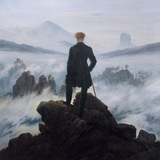
Instead of saying "I'm unfit (for XYZ) under capitalism",
say "capitalism is unfit for me and for living beings in general"
Down with the anti-life system that is Capitalism!
say "capitalism is unfit for me and for living beings in general"
Down with the anti-life system that is Capitalism!
Dionysian Anarchism
“Ownness created a new freedom; for ownness is the creator of everything, as genius (a definite ownness), which is always originality, has for a long time already been looked upon as the creator of new productions that have a place in the history of the world.…
“True liberty is not a mere scrap of paper called ‘constitution,’ ‘legal right’ or ‘law.’ It is not an abstraction derived from the non-reality known as ‘the State.’ It is not the negative thing of being free from something, because with such freedom you may starve to death. Real freedom, true liberty is positive: it is freedom to something; it is the liberty to be, to do; in short, the liberty of actual and active opportunity.”
— Emma Goldman,
The Individual, Society and the State
— Emma Goldman,
The Individual, Society and the State
🔥2
“When someone hides something behind a bush and looks for it again in the same place and finds it there as well, there is not much to praise in such seeking and finding. Yet this is how matters stand regarding seeking and finding ‘truth’ within the realm of reason. If I make up the definition of a mammal, and then, after inspecting a camel, declare ‘look, a mammal’ I have indeed brought a truth to light in this way, but it is a truth of limited value. That is to say, it is a thoroughly anthropomorphic truth which contains not a single point which would be ‘true in itself’ or really and universally valid apart from man.”
— Friedrich Nietzsche, On Truth and Lies in a Nonmoral Sense
— Friedrich Nietzsche, On Truth and Lies in a Nonmoral Sense
👏1
Anti-work quotes
Photo
On seeing this, most people—liberals and even most "leftists"—would think we are silly and childish (anarkitties 🥰): we want to destroy the current politico-economic system and want full unemployment so that we—all of us—could play?? Surely we must be (anar)kitties in our anarcho-fantasyland!
Now… that's a cute picture used in the background of that image: two cute bunnies playing on a beach; and it does seem related to the quote, insofar as it is about "playing".
But it has a deeper meaning!
First, children's play and children's childness itself are regarded by our cancerous, authoritarian politico-economic system, as altogether undesirable, as things that should merely be tolerated because they're unavoidable, but not things of value in themselves. This we oppose, it is a tyrannical system—for children, but as much (actually more) for adults.
That brings us to the second aspect: adults' play. Adults' play is of course even more demonized: what! "adult's play"? What a ridiculous phrase!
But adult's play doesn't necessarily mean just building a little castle on the beach. It could as well be building a house for people to live in. Instead of regarding such tasks as a divine duty, as monotonous "work", why don't we conceive of it as free play? Something people do for their pleasure as well, and not merely because it's necessary? with autonomy and dignity, without any dictatorial authority in the equation?
But that finally brings us to the third point: these two kinds of play are not necessarily distinct. What essential difference is there, after all?
If children find it interesting to build a cute little building with the sand on a beach, might they not find it similarly interesting, when they grow up, to build a bigger building – for people to reside in etc?
Can't we have such a society based on play rather than this boring, monotonous, exhausting, repelling thing called work? It is certainly possible! We can and will make it happen. We will build a new world!
That is what we mean by abolition of work, or by "replacing work with play".
Now… that's a cute picture used in the background of that image: two cute bunnies playing on a beach; and it does seem related to the quote, insofar as it is about "playing".
But it has a deeper meaning!
First, children's play and children's childness itself are regarded by our cancerous, authoritarian politico-economic system, as altogether undesirable, as things that should merely be tolerated because they're unavoidable, but not things of value in themselves. This we oppose, it is a tyrannical system—for children, but as much (actually more) for adults.
That brings us to the second aspect: adults' play. Adults' play is of course even more demonized: what! "adult's play"? What a ridiculous phrase!
But adult's play doesn't necessarily mean just building a little castle on the beach. It could as well be building a house for people to live in. Instead of regarding such tasks as a divine duty, as monotonous "work", why don't we conceive of it as free play? Something people do for their pleasure as well, and not merely because it's necessary? with autonomy and dignity, without any dictatorial authority in the equation?
But that finally brings us to the third point: these two kinds of play are not necessarily distinct. What essential difference is there, after all?
If children find it interesting to build a cute little building with the sand on a beach, might they not find it similarly interesting, when they grow up, to build a bigger building – for people to reside in etc?
Can't we have such a society based on play rather than this boring, monotonous, exhausting, repelling thing called work? It is certainly possible! We can and will make it happen. We will build a new world!
That is what we mean by abolition of work, or by "replacing work with play".
👏2
“In the case of the creative artist, as in that of the artisan, it is clear that man is least permitted to appropriate to himself what is most entirely his own. His works forsake him as the birds forsake the nest in which they were hatched.
The fate of the architect is the strangest of all in this way. How often he expends his whole soul, his whole heart and passion, to produce buildings into which he himself may never enter. The halls of kings owe their magnificence to him; but he has no enjoyment of them in their splendor. In the temple he draws a partition line between himself and the Holy of Holies; he may never more set his foot upon the steps which he has laid down for the heart-thrilling ceremonial; as the goldsmith may only adore from afar off the monstrance whose enamel and whose jewels he has himself set together.”
— Johann Wolfgang von Goethe,
Elective Affinities (Bk. II, Ch. 3)
The fate of the architect is the strangest of all in this way. How often he expends his whole soul, his whole heart and passion, to produce buildings into which he himself may never enter. The halls of kings owe their magnificence to him; but he has no enjoyment of them in their splendor. In the temple he draws a partition line between himself and the Holy of Holies; he may never more set his foot upon the steps which he has laid down for the heart-thrilling ceremonial; as the goldsmith may only adore from afar off the monstrance whose enamel and whose jewels he has himself set together.”
— Johann Wolfgang von Goethe,
Elective Affinities (Bk. II, Ch. 3)
“The architect hands over to the rich man with the keys to his palace all the ease and comfort to be found in it without being able to enjoy any of it himself. Must the artist not in this way gradually become alienated from his art, since his work, like a child that has been provided for and left home, can no longer have any effect upon its father? And how beneficial it must have been for art when it was intended to be concerned almost exclusively with what was public property, and belonged to everybody and therefore also to the artist!”
— Johann Wolfgang von Goethe,
Elective Affinities (Bk. II, Ch. 3)
— Johann Wolfgang von Goethe,
Elective Affinities (Bk. II, Ch. 3)
“Anarchist individualism as we understand it—and I say we because a substantial handful of friends think this like me—is hostile to every school and every party, every churchly and dogmatic moral, as well as every more or less academic imbecility. Every form of discipline, rule, and pedantry is repulsive to the sincere nobility of our vagabond and rebellious restlessness!
Individualism is, for us, creative force, immortal youth, exalting beauty, redemptive and fruitful war. It is the marvelous apotheosis of the flesh and the tragic epic of the spirit. Our logic is that of not having any. Our ideal is the categorical negation of all other ideals for the greatest and supreme triumph of the actual, real, instinctive, reckless, and merry life! For us perfection is not a dream, an ideal, a riddle, a mystery, a sphinx, but a vigorous and powerful, luminous and throbbing reality. All human beings are perfect in themselves. All they lack is the heroic courage of their perfection. Since the time that human beings first believed that life was a duty, a calling, a mission, it has meant shame for their power of being, and in following phantoms, they have denied themselves and distanced themselves from the real.”
— Renzo Novatore, Anarchist Individualism in the Social Revolution (§1)
Individualism is, for us, creative force, immortal youth, exalting beauty, redemptive and fruitful war. It is the marvelous apotheosis of the flesh and the tragic epic of the spirit. Our logic is that of not having any. Our ideal is the categorical negation of all other ideals for the greatest and supreme triumph of the actual, real, instinctive, reckless, and merry life! For us perfection is not a dream, an ideal, a riddle, a mystery, a sphinx, but a vigorous and powerful, luminous and throbbing reality. All human beings are perfect in themselves. All they lack is the heroic courage of their perfection. Since the time that human beings first believed that life was a duty, a calling, a mission, it has meant shame for their power of being, and in following phantoms, they have denied themselves and distanced themselves from the real.”
— Renzo Novatore, Anarchist Individualism in the Social Revolution (§1)
👍1
“The entire system of higher education in Germany has lost what matters most: the end as well as the means to the end. That education, that Bildung, is itself an end — and not ‘the Reich’ — and that educators are needed to that end, and not secondary-school teachers and university scholars — that has been forgotten. Educators are needed who have themselves been educated, superior, noble spirits, proved at every moment, proved by words and silence, representing culture which has grown ripe and sweet — not the learned louts whom secondary schools and universities today offer our youth as ’higher wet nurses.’ Educators are lacking, not counting the most exceptional of exceptions, the very first condition of education: hence the decline of German culture.…
What the ‘higher schools’ in Germany really achieve is a brutal training, designed to prepare huge numbers of young men, with as little loss of time as possible, to become usable, abusable [exploitable], in government service.…
In present-day Germany no one is any longer free to give his children a noble education: our ‘higher schools’ are all set up for the most ambiguous mediocrity, with their teachers, curricula, and teaching aims. And everywhere an indecent haste prevails, as if something would be lost if the young man of twenty-three were not yet ‘finished,’ or if he did not yet know the answer to the ‘main question’: which calling [Beruf; profession]? A higher kind of human being, if I may say so, does not like ‘callings,’ precisely because he knows himself to be called. He has time, he takes time, he does not even think of ‘finishing’: at thirty one is, in the sense of high culture, a beginner, a child. Our overcrowded secondary schools, our overworked, stupefied secondary-school teachers, are a scandal: for one to defend such conditions, as the professors at Heidelberg did recently, there may perhaps be causes — reasons there are none.”
— Friedrich Nietzsche,
Twilight of the Idols (§8. 5)
What the ‘higher schools’ in Germany really achieve is a brutal training, designed to prepare huge numbers of young men, with as little loss of time as possible, to become usable, abusable [exploitable], in government service.…
In present-day Germany no one is any longer free to give his children a noble education: our ‘higher schools’ are all set up for the most ambiguous mediocrity, with their teachers, curricula, and teaching aims. And everywhere an indecent haste prevails, as if something would be lost if the young man of twenty-three were not yet ‘finished,’ or if he did not yet know the answer to the ‘main question’: which calling [Beruf; profession]? A higher kind of human being, if I may say so, does not like ‘callings,’ precisely because he knows himself to be called. He has time, he takes time, he does not even think of ‘finishing’: at thirty one is, in the sense of high culture, a beginner, a child. Our overcrowded secondary schools, our overworked, stupefied secondary-school teachers, are a scandal: for one to defend such conditions, as the professors at Heidelberg did recently, there may perhaps be causes — reasons there are none.”
— Friedrich Nietzsche,
Twilight of the Idols (§8. 5)
“There are not two sexes, there are n sexes; there are as many sexes as there are assemblages. And since each of us enters into several assemblages, each of us has n sexes. When children discover that they are reduced to one sex, male or female, they discover their powerlessness: they lose the machinic sense and are left only with the signification of a tool. And then a child really does fall into depression. They have been damaged; their countless sexes have been stolen!”
— Gilles Deleuze,
The Interpretation of Utterances
— Gilles Deleuze,
The Interpretation of Utterances
💯3
Forwarded from mehkum-e-hikmah (josephine kalieda)
Desiring-machines or the nonhuman sex: not one or even two sexes, but n sexes. Schizoanalysis is the variable analysis of the n sexes in a subject, beyond the anthropomorphic representation that society imposes on this subject, and with which it represents its own sexuality. The schizoanalytic slogan of the desiring-revolution will be first of all: to each its own sexes.
Deleuze & Guattari, Anti-Oedipus
Dionysian Anarchism
Christian denial of life: designating desires of the flesh as evil etc
“Old Russian nurses full of such lore will tell you never to put a child to bed without unbuttoning the collar of its shirt. A warm spot at the bottom of the neck should be left bare, where the guardian angel may nestle. Otherwise the devil will worry the child even in its sleep.
These artless conceptions are passing away. But though the old words disappear, the essential idea remains the same.
Well brought up folks no longer believe in the devil, but as their ideas are no more rational than those of our nurses, they do but disguise devil and angel under a pedantic wordiness honored with the name of philosophy. They do not say ‘devil’ nowadays, but ‘the flesh,’ or ‘the passions.’ The ‘angel’ is replaced by the words ‘conscience’ or ‘soul,’ by ‘reflection of the thought of a divine creator’ or ‘the Great Architect,’ as the Free-Masons say. But man’s action is still represented as the result of a struggle between two hostile elements. And a man is always considered virtuous just in the degree to which one of these two elements — the soul or conscience — is victorious over the other — the flesh or passions.”
— Peter Kropotkin, Anarchist Morality (II)
These artless conceptions are passing away. But though the old words disappear, the essential idea remains the same.
Well brought up folks no longer believe in the devil, but as their ideas are no more rational than those of our nurses, they do but disguise devil and angel under a pedantic wordiness honored with the name of philosophy. They do not say ‘devil’ nowadays, but ‘the flesh,’ or ‘the passions.’ The ‘angel’ is replaced by the words ‘conscience’ or ‘soul,’ by ‘reflection of the thought of a divine creator’ or ‘the Great Architect,’ as the Free-Masons say. But man’s action is still represented as the result of a struggle between two hostile elements. And a man is always considered virtuous just in the degree to which one of these two elements — the soul or conscience — is victorious over the other — the flesh or passions.”
— Peter Kropotkin, Anarchist Morality (II)
❤1
“The most disheartening tendency common among readers is to tear out one sentence from a work, as a criterion of the writer’s ideas or personality. Friedrich Nietzsche, for instance, is decried as a hater of the weak because he believed in the Übermensch. It does not occur to the shallow interpreters of that giant mind that this vision of the Übermensch also called for a state of society which will not give birth to a race of weaklings and slaves.
It is the same narrow attitude which sees in Max Stirner naught but the apostle of the theory ‘each for himself, the devil take the hind one.’ That Stirner’s individualism contains the greatest social possibilities is utterly ignored. Yet, it is nevertheless true that if society is ever to become free, it will be so through liberated individuals, whose free efforts make society.”
— Emma Goldman, Anarchism and Other Essays (Preface)
It is the same narrow attitude which sees in Max Stirner naught but the apostle of the theory ‘each for himself, the devil take the hind one.’ That Stirner’s individualism contains the greatest social possibilities is utterly ignored. Yet, it is nevertheless true that if society is ever to become free, it will be so through liberated individuals, whose free efforts make society.”
— Emma Goldman, Anarchism and Other Essays (Preface)
🔥1
Nothing would help our so-called MRAs/"Meninists" more than a better understanding of patriarchy, a good dose of feminism... assuming that they actually care about the problems faced by men, which however appears to be a minority among them
Usually the worst feminist is better than the best MRA
Usually the worst feminist is better than the best MRA