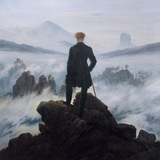
"Just go with the flow"
No thanks, dead bodies go with the flow, I'm alive
No thanks, dead bodies go with the flow, I'm alive
Renzo Novatore on the antagonistic attitude of Nietzsche et al towards the working class:
— Renzo Novatore,
The Great Brains… in the Time That Turns
If you want to go from the field of the living to the field of the dead, it would be the chance to immediately encounter F. Nietzsche himself, the satanic, playfully destructive philosopher, saturated with desperately and divinely creative, intoxicating poetry, discoverer of the strangest and most original truths of the human mind—well, he himself, I said, when he tried to concern himself with social questions was seized by the same myopia, by that same weakness: which one might call: The ignorance of great men! and in that book of his… Beyond Good and Evil, he sought to create (though under a formula all his own) a certain legislative theory for the use and consumption of a certain aristocracy (which I would call imperialistic) that he invented at the complete and exclusive injury of the people.
And saying that it would be enough that the people went to quench their thirst (oh! if they only had thirst…) at the springs of Nietzschean philosophy to throw it all into the air in an absolute and radical way both in the spiritual realm and in that of this materialistically experienced life of ours… Yes, precisely this, all in the air including his theory of aristocratic (thus not very aristocratic in the libertarian sense) domination!
In this instance Stirner himself seems more noble, more logical, and less cruel to me…
In fact on social questions, if it were granted to me to give advice to the great men, I would say (at least to those who are still living, and who still know how to read) to go back a bit to read that little, but so valuable, booklet that is called The Soul of Man Under Socialism, author Oscar Wilde who is more than one of their peers… But perhaps it is useless to make predictions about this since, alas!, there must be a certain fatality that weighs on all things. Even on the brains of the great men… With all this, however, I can’t yet close this topic without adding something else that is perhaps what matters most. And that is to explain, from my point of view, the psychology of this ugly affair.
It is, I believe, and I don’t just believe, I’m sure, that the phenomenon is explained like this. The great man, by his nature, lives in the world of his own greatness, meaning outside of the life of the people. Two lives, two worlds, two realities, and also two faults, this: that the people still haven’t learned how to become deserving of the name that they bear, that is: real people. The great men that of not having learned how to become truly great. Meaning that they still have to learn to not stick their so keenly delicate nose into the affairs of the people. Politics is a low, vulgar thing, linked to the economy, or rather is the economy itself. Now the economic affair, being an affair of the belly and of the kitchen, is important, indispensable, the most indispensable of all, but an affair for cooks, so not for poets and higher men.
— Renzo Novatore,
The Great Brains… in the Time That Turns
Renzo Novatore's and Emma Goldman's Libertarian Aristocracy
Aristocratic anarchism? A contradiction in terms!
Why would these anarchists speak of "aristocracy" with anything but contempt? What the hell is 'libertarian aristocracy' anyway?
This (libertarian) "aristocracy" has little to do with the political aristocracy; is in fact opposed to it, libertarian as it is. It is only aesthetic and cultural, and of course anti-political (not apolitical).
Their individualism, or that aristocratic aesthetic, is the very negation of the bourgeois elitism/individualism/aristocracy etc.
Now, in the case of Novatore in particular, it might seem from his writings that he was elitist or extremely individualistic. But it has to be kept in mind that he was no elitist academic making judgements about the masses from on high; no leader of any vanguard party.
Born in a poor peasant family, he was—right from his childhood—too rebellious and free spirited to fit into the authoritarian society around him.
"Unwilling to adapt to scholastic discipline, he only attended a few months of the first grade of grammar school and then left school forever. Though his father forced him to work on the farm, his strong will and thirst for knowledge led him to become a self-taught poet and philosopher."
At a young age he became a militant antifascist and lived the life of a vagabond by robbing the rich. He was almost always fighting the law and the Fascists no less. After being connoscripted for WW-I, he deserted the regiment and was sentenced to death for that. Etc etc.
Novatore was understandably pissed off that the dull, submissive masses were not rising up against the state and the capitalists; that they were even supporting the Fascists etc.
To quote Novatore himself:
“The proletariat bowed and resigned under the burden of enslavement disgusts me…. The proletariat in revolt is quite a pleasure for me. And I enjoy seeing the idiotic bourgeoisie weeping and despairing because the sacred table of the right to property has fallen broken under the rebellious fist of the new force.”
Below are some quotes from Goldman and especially from Novatore, referring to the libertarian "aristocracy":
Aristocratic anarchism? A contradiction in terms!
Why would these anarchists speak of "aristocracy" with anything but contempt? What the hell is 'libertarian aristocracy' anyway?
This (libertarian) "aristocracy" has little to do with the political aristocracy; is in fact opposed to it, libertarian as it is. It is only aesthetic and cultural, and of course anti-political (not apolitical).
Their individualism, or that aristocratic aesthetic, is the very negation of the bourgeois elitism/individualism/aristocracy etc.
Now, in the case of Novatore in particular, it might seem from his writings that he was elitist or extremely individualistic. But it has to be kept in mind that he was no elitist academic making judgements about the masses from on high; no leader of any vanguard party.
Born in a poor peasant family, he was—right from his childhood—too rebellious and free spirited to fit into the authoritarian society around him.
"Unwilling to adapt to scholastic discipline, he only attended a few months of the first grade of grammar school and then left school forever. Though his father forced him to work on the farm, his strong will and thirst for knowledge led him to become a self-taught poet and philosopher."
At a young age he became a militant antifascist and lived the life of a vagabond by robbing the rich. He was almost always fighting the law and the Fascists no less. After being connoscripted for WW-I, he deserted the regiment and was sentenced to death for that. Etc etc.
Novatore was understandably pissed off that the dull, submissive masses were not rising up against the state and the capitalists; that they were even supporting the Fascists etc.
To quote Novatore himself:
“The proletariat bowed and resigned under the burden of enslavement disgusts me…. The proletariat in revolt is quite a pleasure for me. And I enjoy seeing the idiotic bourgeoisie weeping and despairing because the sacred table of the right to property has fallen broken under the rebellious fist of the new force.”
Below are some quotes from Goldman and especially from Novatore, referring to the libertarian "aristocracy":
“Nietzsche was not a social theorist but a poet, a rebel and innovator. His aristocracy was neither of birth nor of purse; it was of the spirit. In that respect Nietzsche was an anarchist, and all true anarchists were aristocrats”.
— Emma Goldman,
Living My Life
— Emma Goldman,
Living My Life
The Anarchist Library
Living My Life
Emma Goldman Living My Life 1931 New York, Alfred A Knopf Inc., 1931.
Now that the age of obligation and slavery is agonizing, we want to close the cycle of theoretical and contemplative thought in order to open the breach to violent action, which is still the will of life and the exultation of expansion.
On the ruins of piety and religion we want to erect the creative hardness of our proud hearts.
We are not the admirers of the “ideal man” of “social rights”, but the proclaimers of the “actual individual”, enemy of social abstractions.
We fight for the liberation of the individual.
For the conquest of life.
For the triumph of our idea.
For the realization of our dreams.
And if our ideas are dangerous, it is because we are those who love to live dangerously.
And if our dreams are mad, it is because we are mad.
But our madness is supreme wisdom.
But our ideas are the heart of life; but our thoughts are the beacons of humanity.
And what the war has not done, revolution must do.
Because revolution is the fire of our will and a need of our solitary minds; it is an obligation of the libertarian aristocracy.
To create new ethical values.
To create new aesthetic values.
To communalize material wealth.
To individualize spiritual wealth.
— Renzo Novatore,
Toward the Creative Nothing (X)
🔥1
Now, it is proven…
Life is sorrow!
But we have learned to love sorrow in order to love life!
Because in loving sorrow we have learned to struggle.
And in struggle—in struggle alone—is our joy of living.
To remain suspended halfway is not our task.
The half circle symbolizes the ancient “yes and no”.
The impotence of life and death.
It is the circle of socialism, of pity and of faith.
But we are not socialists…
We are anarchists. And individualists, and nihilists, and aristocrats.
Because we come from the mountains.
From close to the stars.
We come from the heights: to laugh and to curse!
We have come to light a forest of pyres upon the earth to illuminate it during the night which precedes the great noon.
And our pyres will be extinguished when the fire of the sun bursts majestically over the sea. And if this day should not come, our pyres will continue to crackle tragically amidst the darkness of the eternal night.
Because we love all that is great.
We are the lovers of every miracle, the promoters of every prodigy, the creators of every wonder!
Yes: we know it!
For you, great things are in good as in evil.
But we live beyond good and evil, because all that is great belongs to beauty.
Even “crime”.
Even “perversity”.
Even “sorrow”.
And we want to be great like our crime!
In order not to slander it.
We want to be great like our perversity!
In order to render it conscious.
We want to be great like our sorrow.
In order to be worthy of it.
Because we come from the heights. From the home of Beauty.
— Renzo Novatore,
Toward the Creative Nothing (XI)
Our nihilism is not christian nihilism.
We do not deny life.
No! We are the great iconoclasts of the lie.
And all that is declared “sacred” is a lie.
We are the enemies of the “sacred” .
And to you a law is “sacred”; a society “sacred”; a moral “sacred”; an idea “sacred”!
But we—the masters and lovers of pitiless strength and strong-willed beauty, of the ravishing idea—we, the iconoclasts of all that is consecrated—we laugh satanically, with a fine broad and mocking laughter.
We laugh!…
And laughing, we keep the bow of our pagan will to enjoy always stretched toward the full integrity of life.
And we write our truths with laughter.
And we write our passions with blood.
And we laugh!…
We laugh the fine healthy and red laughter of hatred.
We laugh the fine blue and fresh laughter of love.
We laugh!
But laughing, we remember, with supreme gravity, to be the legitimate offspring and the worthy heirs of a great libertarian aristocracy that transmitted to us satanic outbursts of mad heroism in the blood, and waves of poetry, of solos, of songs in the flesh!
Our brain is a sparkling pyre, where the crackling fire of thought burns in joyful torments.
Our mind is a solitary oasis, always flowering and cheerful, where a secret music sings the complicated melody of our winged mystery.
And in our brain all the winds of the mountains cry to us; in our flesh all the tempests of the sea shout to us; all the Nymphs of Evil; our dreams are actual heavens inhabited by thrilling virgin muses.
We are the true demons of Life.
The forerunner of the time.
The first announcements!
Our vital exuberance intoxicates us with strength and with scorn.
It teaches us to despise Death.
— Renzo Novatore,
Toward the Creative Nothing (XII)
History, materialism, monism, positivism, and all the other isms of this world are old and rusty swords which are of no use to me and don’t concern me. My principle is life and my end is death. I want to live my life intensely so that I can embrace my death tragically.
You are waiting for the revolution! Very well! My own began a long time ago! When you are ready—God, what an endless wait!—it won’t nauseate me to go along the road awhile with you!
But when you stop, I will continue on my mad and triumphant march toward the great and sublime conquest of Nothing!
Every society you build will have its fringes, and on the fringes of every society, heroic and restless vagabonds will wander, with their wild and virgin thoughts, only able to live by preparing ever new and terrible outbreaks of rebellion!
I shall be among them!
And after me, as before me, there will always be those who tell human beings:
“So turn to yourselves rather than to your gods or idols: discover what is hidden within you, bring it to the light; reveal yourself!”
Because everyone who searches his inner being and draws out what is mysteriously hidden there, is a shadow eclipsing every form of Society that exists beneath the rays of the Sun!
All societies tremble when the scornful aristocracy of Vagabonds, Unique ones, Unapproachable ones, rulers over the ideal, and Conquerors of Nothing advance without inhibitions. So, come on, Iconoclasts, forward!
“Already the foreboding sky grows dark and silent!”
— Renzo Novatore,
My Iconoclastic Individualism
Anarchy is not a social form, but a method of individuation. No society will concede to me more than a limited freedom and a well being that it grants to each of its members. But I am not content with this and want more. I want all that I have the power to conquer. Every society seeks to confine me to the august limits of the permited and the prohibited. But I do not acknowledge these limits, for nothing is forbidden and all is permited to those who have the force and the valor.
Consequently, anarchy, which is the natural liberty of the individual freed from the odious yoke of spiritual and material rulers, is not the construction of a new and suffocating society. It is a decisive fight against all societies—christian, democratic, socialist, communist, etc, etc. Anarchism is the eternal struggle of a small minority of aristocratic outsiders against all societies that follow one another on the stage of history.
— Renzo Novatore
War is another thing. I am by nature warlike. To attack is among my instincts. So said Friedrich Nietzsche, the strong and sublime bard of the will and of heroic beauty.
And the second anarchist reason that serves to defend the terroristic, expropriating act is a heroic reason.
It is a heroic reason that embraces theft as a weapon of power and liberation that can be taken up only by that daring minority of exuberant ones who, while belonging to the class of discredited “proletarians,” have a vigorous and lively nature, rich in free spiritedness and independence, who cannot accept being chained in the shackles of any slavery, whether moral, or human, or social, or intellectual, and so much the less, economic slavery, which is the most degrading, most mortifying, most shameful slavery, impossible to bear when healthy, leonine, and throbbing blood pulses through the veins; when the tragic flashing of a thousand impetuous storms thunders in the mind; when the unquenchable fire of endless renewal crackles in the spirit; when the shadows of a thousand unknown worlds sparkle in the imagination; when the quivering wings of a thousand unsatisfied yearnings beat in the flesh and in the heart; when the heroic thought that burns and destroys all human lies and social conventions flashes in the brain.
And these tiny, exuberant, and daring minorities, dionysian and apollonian by nature, now satanic and now godlike, always aristocratic and unassimilable, scornful and antisocial, are the ones who, invaded by the anarchic flame, form the great perennial bonfires where every form of slavery is burnt up and dies.
And these mysterious and enigmatic, but always anarchic, natures were the ones who, willingly or unwillingly, wrote with letters of blood and fire, passion and love, the glorious and triumphant hymn of revolt and disobedience that breaks rules and laws, moralities and forms, pushing crude and heavy humanity forward along the dark path of the centuries, toward free human life together, which perhaps these anarchist heroes no longer believe in; they were always the blazing torches that cast the phophorescent light of a new life into the dark social shadow; they were always the great heralds of the revolutionary storms disrupting every social system in which every free, uncastrated individuality felt itself odiously suffocating.
— Renzo Novatore, In Defense of Heroic and Expropriating Anarchism
Übermensch and gender
Due to the similarity of the word "Mensch" to the English word "man", it's often thought that Mensch refers to man.
But actually, in German the word Mensch just means "person" or "human being"; it's completely gender-neutral.
(See the bottom of the post for some elaboration on the linguistic part.)
As such, the word Übermensch has no inherent gender. It could variously be translated as "Overhuman", "Beyond-human", "Super-human" etc, with a connotation of transcending the "human" condition into something beyond it — especially in the realm of morality (transcending slave morality etc). (This actually has little to do with physical strength as such.)
In a feminist reading, the concept could refer to transcending gender essentialism, to abolishing gender itself — to transcending into a species of beings beyond "gender" and patriarchy.
And more generally, in an anarchist reading, it could refer to transcending the slavish tendencies that have hitherto characterized the human society, especially under the modern liberal order; to an anarchist society.
And such interpretations are not non-existent.
For example:
“The most disheartening tendency common among readers is to tear out one sentence from a work, as a criterion of the writer's ideas or personality. Friedrich Nietzsche, for instance, is decried as a hater of the weak because he believed in the Übermensch. It does not occur to the shallow interpreters of that giant mind that this vision of the Übermensch also called for a state of society which will not give birth to a race of weaklings and slaves.”
— Emma Goldman,
Anarchism and Other Essays (preface)
("Mensch" is of course cognate with "man" in the same way as "human" is cognate with "man"; and this sorta relationship applies to many other related words in European languages. But limiting ourselves to modern German, Mensch is genderless. In fact, as the German word for "one" (the indefinite personal pronoun) is "man", feminists have advocated the usage of "frau" (Frau = woman) and "mensch" as alternatives, the latter specifically as a gender-neutral alternative.
Mensch is a masculine noun, yeah, but the grammatical gender in German should not be confused with colloquial gender — the two don't have much of a correlation in general. Literally every noun in German has one (even more than one in a few cases) of the three grammatical genders, and it's often arbitrary.)
Due to the similarity of the word "Mensch" to the English word "man", it's often thought that Mensch refers to man.
But actually, in German the word Mensch just means "person" or "human being"; it's completely gender-neutral.
(See the bottom of the post for some elaboration on the linguistic part.)
As such, the word Übermensch has no inherent gender. It could variously be translated as "Overhuman", "Beyond-human", "Super-human" etc, with a connotation of transcending the "human" condition into something beyond it — especially in the realm of morality (transcending slave morality etc). (This actually has little to do with physical strength as such.)
In a feminist reading, the concept could refer to transcending gender essentialism, to abolishing gender itself — to transcending into a species of beings beyond "gender" and patriarchy.
And more generally, in an anarchist reading, it could refer to transcending the slavish tendencies that have hitherto characterized the human society, especially under the modern liberal order; to an anarchist society.
And such interpretations are not non-existent.
For example:
“The most disheartening tendency common among readers is to tear out one sentence from a work, as a criterion of the writer's ideas or personality. Friedrich Nietzsche, for instance, is decried as a hater of the weak because he believed in the Übermensch. It does not occur to the shallow interpreters of that giant mind that this vision of the Übermensch also called for a state of society which will not give birth to a race of weaklings and slaves.”
— Emma Goldman,
Anarchism and Other Essays (preface)
("Mensch" is of course cognate with "man" in the same way as "human" is cognate with "man"; and this sorta relationship applies to many other related words in European languages. But limiting ourselves to modern German, Mensch is genderless. In fact, as the German word for "one" (the indefinite personal pronoun) is "man", feminists have advocated the usage of "frau" (Frau = woman) and "mensch" as alternatives, the latter specifically as a gender-neutral alternative.
Mensch is a masculine noun, yeah, but the grammatical gender in German should not be confused with colloquial gender — the two don't have much of a correlation in general. Literally every noun in German has one (even more than one in a few cases) of the three grammatical genders, and it's often arbitrary.)
Dionysian Anarchism
Übermensch and gender Due to the similarity of the word "Mensch" to the English word "man", it's often thought that Mensch refers to man. But actually, in German the word Mensch just means "person" or "human being"; it's completely gender-neutral. (See the…
The same applies to Max Stirner's concept of der Einzige (the Unique One)…
It's a masculine noun, in terms of grammatical gender, but actually the word is gender-neutral.
So while the original 1907 English translation of Stirner's Der Einzige und sein Eigentum was noscriptd "The Ego and His Own", the alternative noscripts and translations — which followed decades later — could as well have been chosen, such as "The Unique and Its Property" or "The Ego and Its Own" (or, "The Unique One and Their Property" etc).
So, der Übermensch and der Einzige are both gender-neutral and could easily have a feminist/anarchist interpretation. The latter is, indeed, very much anarchistic/feministic; it's only the former that is, due to the contradictions in Nietzsche's philosophy and politics, up for wild interpretations.
With all the critique of essentialism in Stirner's work, with even a somewhat direct reference to gender, it's hard to imagine that he or his philosophy would be in favor of gender essentialism. The same is sometimes said of Nietzsche, but it's less straightforward in his case.
It's a masculine noun, in terms of grammatical gender, but actually the word is gender-neutral.
So while the original 1907 English translation of Stirner's Der Einzige und sein Eigentum was noscriptd "The Ego and His Own", the alternative noscripts and translations — which followed decades later — could as well have been chosen, such as "The Unique and Its Property" or "The Ego and Its Own" (or, "The Unique One and Their Property" etc).
So, der Übermensch and der Einzige are both gender-neutral and could easily have a feminist/anarchist interpretation. The latter is, indeed, very much anarchistic/feministic; it's only the former that is, due to the contradictions in Nietzsche's philosophy and politics, up for wild interpretations.
With all the critique of essentialism in Stirner's work, with even a somewhat direct reference to gender, it's hard to imagine that he or his philosophy would be in favor of gender essentialism. The same is sometimes said of Nietzsche, but it's less straightforward in his case.
“To me anarchism was not a mere theory for a distant future; it was a living influence to free us from inhibitions, internal no less than external, and from the destructive barriers that separate man from man.”
— Emma Goldman, Living My Life
— Emma Goldman, Living My Life
The man who's afraid of being seen as feminine is also afraid of a part of himself…