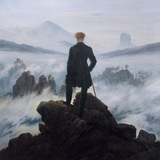
Dionysian Anarchism
Popular medicine and popular morality belong together and ought not to be evaluated so differently as they still are: both are the most dangerous pseudo-sciences.
This is most decisively the case with brahminical medicine and brahminical morality: for at bottom, the few major (ancient) works of medicine authored by the brahmins were largely Vedick nonsense decorated with some medicinal knowledge here and there (and even that genuine medicinal knowledge was likely stolen from non-brahmins)
Consequence as supplement. — Formerly people believed that the outcome of an action was not a consequence but a free supplement – namely God's. Is a greater confusion conceivable? The action and its outcome had to be worked at separately, with quite different means and practices!
— Friedrich Nietzsche,
The Dawn of Day (12)
Towards the re-education of the human race. — Men of application and goodwill assist in this one work: to take the concept of punishment which has overrun the whole world and root it out! There exists no more noxious weed! Not only has it been implanted into the consequences of our actions – and how dreadful and repugnant to reason even this is, to conceive cause and effect as cause and punishment! – but they have gone further and, through this infamous mode of interpretation with the aid of the concept of punishment, robbed of its innocence the whole purely chance character of events. Indeed, they have gone so far in their madness as to demand that we feel our very existence to be a punishment – it is as though the education of the human race had hitherto been directed by the fantasies of jailers and hangmen!
— Friedrich Nietzsche,
The Dawn of Day (13)
Significance of madness in the history of morality. — When in spite of that fearful pressure of ‘morality of custom’ under which all the communities of mankind have lived, many millennia before the beginnings of our calendar and also on the whole during the course of it up to the present day (we ourselves dwell in the little world of the exceptions and, so to speak, in the evil zone): – when, I say, in spite of this, new and deviate ideas, evaluations, drives again and again broke out, they did so accompanied by a dreadful attendant: almost everywhere it was madness which prepared the way for the new idea, which broke the spell of a venerated usage and superstition. Do you understand why it had to be madness which did this? Something in voice and bearing as uncanny and incalculable as the demonic moods of the weather and the sea and therefore worthy of a similar awe and observation? Something that bore so visibly the sign of total unfreedom as the convulsions and froth of the epileptic, that seemed to mark the madman as the mask and speaking-trumpet of a divinity? Something that awoke in the bearer of a new idea himself reverence for and dread of himself and no longer pangs of conscience and drove him to become the prophet and martyr of his idea? – while it is constantly suggested to us today that, instead of a grain of salt, a grain of the spice of madness is joined to genius, all earlier people found it much more likely that wherever there is madness there is also a grain of genius and wisdom – something ‘divine’, as one whispered to oneself. Or rather: as one said aloud forcefully enough. ‘It is through madness that the greatest good things have come to Greece’, Plato said, in concert with all ancient mankind. Let us go a step further: all superior men who were irresistibly drawn to throw off the yoke of any kind of morality and to frame new laws had, if they were not actually mad, no alternative but to make themselves or pretend to be mad – and this indeed applies to innovators in every domain and not only in the domain of priestly and political dogma: – even the innovator of poetical metre had to establish his credentials by madness. (A certain convention that they were mad continued to adhere to poets even into much gentler ages: a convention of which Solon, for example, availed himself when he incited the Athenians to reconquer Salamis.)
– ‘How can one make oneself mad when one is not mad and does not dare to appear so?’ – almost all the significant men of ancient civilisation have pursued this train of thought; a secret teaching of artifices and dietetic hints was propagated on this subject, together with the feeling that such reflections and purposes were innocent, indeed holy. The recipes for becoming a medicine-man among the Indians, a saint among the Christians of the Middle Ages, an angekok among Greenlanders, a pajee among Brazilians are essentially the same: senseless fasting, perpetual sexual abstinence, going into the desert or ascending a mountain or a pillar, or ‘sitting in an aged willow tree which looks upon a lake’ and thinking of nothing at all except what might bring on an ecstasy and mental disorder. Who would venture to take a look into the wilderness of bitterest and most superfluous agonies of soul in which probably the most fruitful men of all times have languished! To listen to the sighs of these solitary and agitated minds: ‘Ah, give me madness, you heavenly powers! Madness, that I may at last believe in myself! Give deliriums and convulsions, sudden lights and darkness, terrify me with frost and fire such as no mortal has ever felt, with deafening din and prowling figures, make me howl and whine and crawl like a beast: so that I may only come to believe in myself! I am consumed by doubt, I have killed the law, the law anguishes me as a corpse does a living man: if I am not more than the law I am the vilest of all men. The new spirit which is in me, whence is it if it is not from you? Prove to me that I am yours; madness alone can prove it.’ And only too often this fervour achieved its goal all too well: in that age in which Christianity proved most fruitful in saints and desert solitaries, and thought it was proving itself by this fruitfulness, there were in Jerusalem vast madhouses for abortive saints, for those who had surrendered to it their last grain of salt.
— Friedrich Nietzsche,
The Dawn of Day (14)
First proposition of civilisation. — Among barbarous peoples there exists a species of customs whose purpose appears to be custom in general: minute and fundamentally superfluous stipulations (as for example those among the Kamshadales forbidding the scraping of snow from the shoes with a knife, the impaling of a coal on a knife, the placing of an iron in the fire – and he who contravenes them meets death!) which, however, keep continually in the consciousness the constant proximity of custom the perpetual compulsion to practise customs: so as to strengthen the mighty proposition with which civilisation begins: any custom is better than no custom.
— Friedrich Nietzsche,
The Dawn of Day (16)
Morality makes stupid. — Custom represents the experiences of men of earlier times as to what they supposed useful and harmful – but the sense for custom (morality) applies, not to these experiences as such, but to the age, the sanctity, the indiscussability of the custom. And so this feeling is a hindrance to the acquisition of new experiences and the correction of customs: that is to say, morality is a hindrance to the creation of new and better customs: it makes stupid.
— Friedrich Nietzsche,
The Dawn of Day (19)
‘Observance of the law’. — If obedience to a moral precept produces a result different from the one promised and expected, and instead of the promised good fortune the moral man unexpectedly encounters ill fortune and misery, the conscientious and fearful will always be able to recourse to saying: ‘something was overlooked in the way it was performed’. In the worst event, a profoundly sorrowful and crushed mankind will even decree: ‘it is impossible to perform the precept properly, we are weak and sinful through and through and in the depths of us incapable of morality, consequently we can lay no claim to success and good fortune. Moral precepts and promises are for better beings than we are.’
— Friedrich Nietzsche,
The Dawn of Day (21)
🔥1
Refined cruelty as virtue. — Here is a morality which rests entirely on the drive to distinction – do not think too highly of it! For what kind of a drive is that and what thought lies behind it? We want to make the sight of us painful to another and to awaken in him the feeling of envy and of his own impotence and degradation; by dropping on to his tongue a drop of our honey, and while doing him this supposed favour looking him keenly and mockingly in the eyes, we want to make him savour the bitterness of his fate. This person has become humble and is now perfect in his humility – seek for those whom he has for long wished to torture with it! you will find them soon enough! That person is kind to animals and is admired on account of it – but there are certain people on whom he wants to vent his cruelty by this means. There stands a great artist: the pleasure he anticipated in the envy of his defeated rivals allowed his powers no rest until he had become great – how many bitter moments has his becoming great not cost the souls of others! The chastity of the nun: with what punitive eyes it looks into the faces of women who live otherwise! how much joy in revenge there is in these eyes! – The theme is brief, the variations that might be played upon it might be endless but hardly tedious – for it is still a far too paradoxical and almost pain-inducing novelty that the morality of distinction is in its ultimate foundation pleasure in refined cruelty. In its ultimate foundation – in this case that means: in its first generation. For when the habit of some distinguishing action is inherited, the thought that lies behind it is not inherited with it (thoughts are not hereditary, only feelings): and provided it is not again reproduced by education, even the second generation fails to experience any pleasure in cruelty in connection with it, but only pleasure in the habit as such. This pleasure, however, is the first stage of the ‘good’.
— Friedrich Nietzsche,
The Dawn of Day (30)
Contempt for causes, for consequences and for reality. — Whenever an evil chance event – a sudden storm or a crop failure or a plague – strikes a community, the suspicion is aroused that custom has been offended in some way or that new practices now have to be devised to propitiate a new demonic power and caprice. This species of suspicion and reflection is thus a direct avoidance of any investigation of the real natural causes of the phenomenon: it takes the demonic cause for granted. This is one spring of the perversity of the human intellect which we have inherited: and the other spring arises close beside it, in that the real natural consequences of an action are, equally on principle, accorded far less attention than the supernatural (the so-called punishments and mercies administered by the divinity). Certain ablutions are, for example, prescribed at certain times: one bathes, not so as to get clean, but because it is prescribed. One learns to avoid, not the real consequences of uncleanliness, but the supposed displeasure of the gods at the neglect of an ablution. Under the pressure of superstitious fear one suspects there must be very much more to this washing away of uncleanliness, one interprets a second and third meaning into it, one spoils one's sense for reality and one's pleasure in it, and in the end accords reality a value only insofar as it is capable of being a symbol. Thus, under the spell of the morality of custom, man despises first the causes, secondly the consequences, thirdly reality, and weaves all his higher feelings (of reverence, of sublimity, of pride, of gratitude, of love) into an imaginary world: the so-called higher world. And the consequences are perceptible even today: wherever a man's feelings are exalted, that imaginary world is involved in some way. It is a sad fact, but for the moment the man of science has to be suspicious of all higher feelings, so greatly are they nourished by delusion and nonsense. It is not that they are thus in themselves, or must always remain thus: but of all the gradual purifications awaiting mankind, the purification of the higher feelings will certainly be one of the most gradual.
— Friedrich Nietzsche,
The Dawn of Day (33)
With freedom of movement, groups of similar people can come together and form communities. Overcoming the Nations.
To consider the good as it appears as a sign of degeneration – as religious madness, for example, as philanthropy, etc.: everywhere where healthy egoism diminishes and apathy or asceticism is striven for.
The “saint” as an ideal of bodily atrophy, also the whole Brahmanical philosophy a sign of degeneration.
— Friedrich Nietzsche, Nachgelassene Fragmente (1883) (7[42])
The fear of power as productive force. This is the realm of religion. On the other hand, it appears to be man's highest aspiration to become one with the most powerful thing there is. This is the origin of Brahmanism, for example: generated within the caste of the rulers, as a phantastic further development of the need for power, probably because its discharge in wars is lacking.
The fusion with the deity can be greed for the highest lust (feminine-hysterical in some saints) or greed for the highest undisturbedness and silence and spirituality (Spinoza) or greed for power etc. Or even the consequence of the most helpless fearfulness: the only salvation and escape is to take refuge in God. The most cunning [Raffinierteste] is probably “overcoming grace” [Überwindung der Gnade] among the mystics.
— Friedrich Nietzsche, Nachgelassene Fragmente (1883) (7[108])
the Brahmin feels “all action is suffering” due to lack of initiative.
— Friedrich Nietzsche, Nachgelassene Fragmente (1883) (8[15])
🔥1
the highest power, in Brahman[ism] and Christianity — to turn away from the world.
— Friedrich Nietzsche, Nachgelassene Fragmente (1884) (26[221])
🔥1
The Brahmins and Christians lead away from the apparent world [Augenscheinwelt] because they consider (fear –) it to be evil, but the scientists work in the service of the will to overpower nature.
— Friedrich Nietzsche, Nachgelassene Fragmente (1884) (26[229])
👍1
Of the hypocrisy of philosophers.
the Greeks: conceal their agonal affect, drape themselves as the “happiest” through virtue, and as the most virtuous (twofold hypocrisy)
(Socrates, victorious as the plebeian ugly one among the beautiful and noble, the low talker among a city of orators, the conqueror of his affects, the common clever man with the “Why?” among the hereditary nobility — hides his pessimism)
the Brahmins basically want redemption from the tired, lukewarm, unenthusiastic feeling of existence
Leibnitz Kant Hegel Schopenhauer, their German two-nature
Spinoza and the vengeful affect, the hypocrisy of overcoming the affects
The hypocrisy of “pure science”, of “knowledge for the sake of knowledge”
— Friedrich Nietzsche, Nachgelassene Fragmente (1884) (26[285])
👍1
Of the superficiality of the mind! – Nothing is more dangerous than the self-indulgent “navel-gazing” of the mind, as with the Brahmins.
— Friedrich Nietzsche, Nachgelassene Fragmente (1884) (27[62])
👍1
There is from the first something unhealthy in such priestly aristocracies and in the habits ruling in them which turn them away from action and alternate between brooding and emotional explosions, habits which seem to have as their almost invariable consequence that intestinal morbidity and neurasthenia which has afflicted priests at all times; but as to that which they themselves devised as a remedy for this morbidity — must one not assert that it has ultimately proved itself a hundred times more dangerous in its effects than the sickness it was supposed to cure? Mankind itself is still ill with the effects of this priestly naïveté in medicine! Think, for example, of certain forms of diet (abstinence from meat), of fasting, of sexual continence, of flight “into the wilderness” (the Weir Mitchell isolation cure — without, to be sure, the subsequent fattening and overfeeding which constitute the most effective remedy for the hysteria induced by the ascetic ideal): add to these the entire antisensualistic metaphysic of the priests that makes men indolent and overrefined, their autohypnosis in the manner of fakirs and Brahmins — Brahma used in the shape of a glass knob and a fixed idea — and finally the only-too-comprehensible satiety with all this, together with the radical cure for it, nothingness (or God — the desire for a unio mystica with God is the desire of the Buddhist for nothingness, Nirvana — and no more!). For with the priests everything becomes more dangerous, not only cures and remedies, but also arrogance, revenge, acuteness, profligacy, love, lust to rule, virtue, disease…
— Friedrich Nietzsche,
On the Genealogy of Morality (I. §6)
As is well known, the priests are the most evil enemies — but why? Because they are the most impotent. It is because of their impotence that in them hatred grows to monstrous and uncanny proportions, to the most spiritual and poisonous kind of hatred. The truly great haters in world history have always been priests; likewise the most ingenious¹ haters: other kinds of spirit² hardly come into consideration when compared with the spirit of priestly vengefulness.
¹ geistreich
² Geist
— Friedrich Nietzsche,
On the Genealogy of Morality (I. §7)
Take away all the rights from a person, and then give them the "right" to defend their own slavery... they might then exercise this "right" almost with fanaticism
In such a condition of powerlessness, they might take this "power" to defend their own powerlessness to be their power
— Lysander Spooner,
The Constitution of No Authority
In such a condition of powerlessness, they might take this "power" to defend their own powerlessness to be their power
A man is none the less a slave because he is allowed to choose a new master once in a term of years. Neither are a people any the less slaves because permitted periodically to choose new masters. What makes them slaves is the fact that they now are, and are always hereafter to be, in the hands of men whose power over them is, and always is to be, absolute and irresponsible.
(Of what appreciable value is it to any man, as an individual, that he is allowed a voice in choosing these public masters? His voice is only one of several millions.)
— Lysander Spooner,
The Constitution of No Authority
🔥1
In truth, in the case of individuals, their actual voting is not to be taken as proof of consent, even for the time being. On the contrary, it is to be considered that, without his consent having even been asked, a man finds himself environed by a government that he cannot resist; a government that forces him to pay money, render service, and forego the exercise of many of his natural rights, under peril of weighty punishments. He sees, too, that other men practise this tyranny over him by the use of the ballot. He sees further, that, if he will but use the ballot himself, he has some chance of relieving himself from this tyranny of others, by subjecting them to his own. In short, he finds himself, without his consent, so situated that, if he use the ballot, he may become a master; if he does not use it, he must become a slave. And he has no other alternative than these two. In self-defence, he attempts the former.
His case is analogous to that of a man who has been forced into battle, where he must either kill others, or be killed himself. Because, to save his own life in battle, a man attempts to take the lives of his opponents, it is not to be inferred that the battle is one of his own choosing. Neither in contests with the ballot—which is a mere substitute for a bullet—because, as his only chance of self-preservation, a man uses a ballot, is it to be inferred that the contest is one into which he voluntarily entered; that he voluntarily set up all his own natural rights, as a stake against those of others, to be lost or won by the mere power of numbers. On the contrary, it is to be considered that, in an exigency into which he had been forced by others, and in which no other means of self-defence offered, he, as a matter of necessity, used the only one that was left to him.
Doubtless the most miserable of men, under the most oppressive government in the world, if allowed the ballot, would use it, if they could see any chance of thereby meliorating their condition. But it would not, therefore, be a legitimate inference that the government itself, that crushes them, was one which they had voluntarily set up, or ever consented to.
Therefore, a man's voting under the Constitution of the United States, is not to be taken as evidence that he ever freely assented to the Constitution, even for the time being. Consequently we have no proof that any very large portion, even of the actual voters of the United States, ever really and voluntarily consented to the Constitution, even for the time being. Nor can we ever have such proof, until every man is left perfectly free to consent, or not, without thereby subjecting himself or his property to be disturbed or injured by others.
— Lysander Spooner,
The Constitution of No Authority