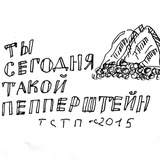
13 сентября, 20:00
Бар «Успех»
Так короче есть киборг, танцор и сладкая музыка
Device infantil pop
https://www.facebook.com/events/3000247803383403/?ti=as
Бар «Успех»
Так короче есть киборг, танцор и сладкая музыка
Device infantil pop
https://www.facebook.com/events/3000247803383403/?ti=as
Forwarded from собака по имени Смех
Олег Цодиков, ответственный за первые российские рейвы и приснопамятный клуб «Титаник», вчера принес пощупать сигнальный экземпляр своей новой книги «Made in Dance 1991/1999. Хроники электронной клубной сцены России». Неловкий каламбур, но это совершенно титанический труд: 6 лет работы, вылившиеся в почти 500 страниц альбомного формата. Сотни интервью с музыкантами, диджеями, промоутерами, дизайнерами, арт-директорами, под тысячу бережено собранных фотографий, флаеров и постеров — начиная с сейшнов в питерских сквотах и заканчивая афтепати в «Миксе».
Тираж должен приехать на следующей неделе и тогда поступит в продажу, следить за новостями можно тут и тут, а пока — эксклюзив.
Тираж должен приехать на следующей неделе и тогда поступит в продажу, следить за новостями можно тут и тут, а пока — эксклюзив.
Александр Гагарин из группы «Сансара» записал на Студии звукозаписи “Oktava Lab” саундтрек бессмертия — Immortality. 2019.
Уральская биеннале подготовила свой сингл, посвященный бессмертию #русскийкосмизм
“При сведении саундтрека использованы звуки тульских заводов, записанные в микрофон легендарного действующего завода «Октава» МК-012 (тот самый российский микрофон, при участии которого частично записан третий студийный альбом британской альтернативной рок-группы Radiohead «OK Computer»)."
https://youtu.be/EZOFoGLLnJI
Уральская биеннале подготовила свой сингл, посвященный бессмертию #русскийкосмизм
“При сведении саундтрека использованы звуки тульских заводов, записанные в микрофон легендарного действующего завода «Октава» МК-012 (тот самый российский микрофон, при участии которого частично записан третий студийный альбом британской альтернативной рок-группы Radiohead «OK Computer»)."
https://youtu.be/EZOFoGLLnJI
YouTube
Sansara. Immortality || Backstage
Сансара. Immortality. 2019 || Backstage
Индустриальная история Тулы связана с производством акустического оборудования. Здесь собирают легендарные микрофоны «Октава», которыми пользуются многие музыканты во всем мире (знаменитый альбом Radiohead «OK Computer»…
Индустриальная история Тулы связана с производством акустического оборудования. Здесь собирают легендарные микрофоны «Октава», которыми пользуются многие музыканты во всем мире (знаменитый альбом Radiohead «OK Computer»…
наконец-то вышел: https://music.apple.com/ru/album/faust/1476343455
Новости грантовых программ:
Для художников на создание мерча
От кого: Похититель Ароматов
Сроки: до 7 октября
https://youtu.be/7GBSL5Zjdu8
Для художников на создание мерча
От кого: Похититель Ароматов
Сроки: до 7 октября
https://youtu.be/7GBSL5Zjdu8
Forwarded from Северное техно
В AM диапазоне на частоте 4625 кGz можно услышать повторяющийся тревожный звук. Лишь иногда диктор по русски зачитывает имена и цифры, нарушая нескончаемый цикл зуммера. Это передача загадочной радиостанции УВБ 76, о назначении которой ходят легенды. В треке использованы звуки вещания этой радиостанции. Множество инструментов сделаны из звуков радио помех и искажений. https://impulse-audio.bandcamp.com/track/uvb-76
Impulse Audio Records
UVB 76, by Transdriver
from the album Zero Perception
https://knf.md/inside-modern-art-aes-f/
Съемки меня удивили: тогда то, что они делали, было инновационно. Двигающиеся картинки — такого до них еще никто не придумал. У нас в стране видеоарт в то время только зарождался, и они стали первыми во всём.
Съемки меня удивили: тогда то, что они делали, было инновационно. Двигающиеся картинки — такого до них еще никто не придумал. У нас в стране видеоарт в то время только зарождался, и они стали первыми во всём.
Нож
Как стать частью современного искусства
Герои съёмок у AES+F — о своем уникальном опыте и впечатлениях от работы с художниками.
Mutabor представляет второй музыкальный вечер «Ткани».
По залам Mutabor пройдет запутанный звуковой маршрут от электроакустических экспериментов и musique concrète к IDM, полиритмии и переосмыслению транса и популярной танцевальной культуры. Классические музыкальные инструменты встретятся с модулярным синтезом, органические тени сменятся алгоритмическим гипнозом, а на главном танцполе клуба вырастет тотем из Funktion-One.
https://www.facebook.com/events/623663194707273/?__mref=mb
По залам Mutabor пройдет запутанный звуковой маршрут от электроакустических экспериментов и musique concrète к IDM, полиритмии и переосмыслению транса и популярной танцевальной культуры. Классические музыкальные инструменты встретятся с модулярным синтезом, органические тени сменятся алгоритмическим гипнозом, а на главном танцполе клуба вырастет тотем из Funktion-One.
https://www.facebook.com/events/623663194707273/?__mref=mb
Facebook
Ткани: Lucy Railton, Ben Vince, Jung An Tagen
Music event in Moscow, Russia by Mutabor and 5 others on Saturday, October 5 2019 with 1K people interested and 346 people going. 28 posts in the discussion.
With a desirous and alienated ear, contemporary internet-based musicians like Oneohtrix Point Never are playing out a story that previously took place on the fringes of the avant-garde over the last century. With the invention of photography, a new human was revealed to the camera-eye: Snapshots showed a human being frozen in between readable expressions, nature on the way to culture, an uncanny contraption made of flesh, bone, and fat, vibrating, folding, filling and emptying as it moved between recognizably human expressions like a smile or a frown. We’ve all taken bad photos of ourselves and failed to recognize the subject of the photo, but who or what is this human-in-transit? What is the status of this flesh that obeys gravity more than social cues? How are we responsible to this squinting, grimacing, wincing creature? In other words: stars — they’re just like us — but who are we? Just as photography revealed the body as a nonsense poem, in the sound poetry of Oneohtrix Point Never’s Replica, this hidden language unveiled before the camera eye was made audible through digital micro-editing, tuning into the voices of the spectacle with a desirous and alienated ear…
…The pith of Replica: a latticework of sibilants, laminals, clicks, implosives, ejectives, fricatives, pulmonics, expands the limits of human vocal expression beyond phonetic language. Before Replica and the excellent eccojams of Dan Lopatin’s YouTube channel and early Games comes not just DJ Screw but William S. Burroughs, Antonin Artaud, the Ultraletterists, and other sound poets who found a new human articulation in these moments when expression takes a backseat to the laws of physics. Proto-Situationists and radical surrealists like François Dufrêne and Henri Chopin discovered in magnetic tape a medium that liberated speech from voice. Through splicing, manipulation of tape speed, overdubbing, addition of reverb, and other dub effects, poets like Chopin and Bob Cobbing abandoned words in favor of particles of sound, letting one mouth become an entire orchestra. In these poems, sound became a bodily landscape upon which a self might be composed, dramatized, or materialized out of the same dust that comprises the pith of Replica: a latticework of sibilants, laminals, clicks, implosives, ejectives, fricatives, pulmonics…
…OPN’s consonantal chorus of lost voices, the vocabulary of a glossa sans logos, highlighted what Roland Barthes called the “grain” of the voice, the song that comes from the body, not from the speaking subject — the body itself speaking, in a wet, libidinal poetry of consonants — not the speech of the lungs, but of “the tongue, the glottis, the teeth, the mucus membranes, the nose.” Barthes’ posthuman voice of the desirous recording is the same discovered by Lopatin, one that doesn’t come at the level of the word or even the phoneme (not the human, not the cultural level), but at the level of the glottal stop, the fleshy mechanical part of the body. In an interview with Altered Zones, Lopatin explained his interest in this noise that surrounds and comprises signs thusly: “It’s revealing that we’re not in a perfect system though we want to be. We want to believe that we’re efficient and perfect, but things are totally out of control and chaotic, like the way we speak and the way we think.” The human subject becomes a libidinal soundscape just barely contained within our skins, looped air temporarily trapped by the folds of the body, echoing with the consonantal chorus of lost voices, the vocabulary of a glossa sans logos…
…The pith of Replica: a latticework of sibilants, laminals, clicks, implosives, ejectives, fricatives, pulmonics, expands the limits of human vocal expression beyond phonetic language. Before Replica and the excellent eccojams of Dan Lopatin’s YouTube channel and early Games comes not just DJ Screw but William S. Burroughs, Antonin Artaud, the Ultraletterists, and other sound poets who found a new human articulation in these moments when expression takes a backseat to the laws of physics. Proto-Situationists and radical surrealists like François Dufrêne and Henri Chopin discovered in magnetic tape a medium that liberated speech from voice. Through splicing, manipulation of tape speed, overdubbing, addition of reverb, and other dub effects, poets like Chopin and Bob Cobbing abandoned words in favor of particles of sound, letting one mouth become an entire orchestra. In these poems, sound became a bodily landscape upon which a self might be composed, dramatized, or materialized out of the same dust that comprises the pith of Replica: a latticework of sibilants, laminals, clicks, implosives, ejectives, fricatives, pulmonics…
…OPN’s consonantal chorus of lost voices, the vocabulary of a glossa sans logos, highlighted what Roland Barthes called the “grain” of the voice, the song that comes from the body, not from the speaking subject — the body itself speaking, in a wet, libidinal poetry of consonants — not the speech of the lungs, but of “the tongue, the glottis, the teeth, the mucus membranes, the nose.” Barthes’ posthuman voice of the desirous recording is the same discovered by Lopatin, one that doesn’t come at the level of the word or even the phoneme (not the human, not the cultural level), but at the level of the glottal stop, the fleshy mechanical part of the body. In an interview with Altered Zones, Lopatin explained his interest in this noise that surrounds and comprises signs thusly: “It’s revealing that we’re not in a perfect system though we want to be. We want to believe that we’re efficient and perfect, but things are totally out of control and chaotic, like the way we speak and the way we think.” The human subject becomes a libidinal soundscape just barely contained within our skins, looped air temporarily trapped by the folds of the body, echoing with the consonantal chorus of lost voices, the vocabulary of a glossa sans logos…
…Something like an epistemological break as compared to the pristine surfaces of OPN’s synth recordings, OPN’s disintegrated voices were not the breaths of an artist or even a synthesizer. They were both. On Replica, Lopatin united the two basic aesthetics of electronic music: the acousmatic and the cut-up. The acousmatic seeks absolute abstraction in electronic sound, totally without reference to a physical world. This is the mode of the analogue synth, the literally experimental music of the mid 20th century that sought to reform music as a purely non-referential or at least absolutely alien soundscape. The sampling, DJ aesthetic, on the other hand, doesn’t eschew reference so much as overload it, reveling in the shards of modernity, playing with reference in a way that is a replica of nothing in the world so much as postmodern consciousness itself. Replica was composed from 80s TV commercials, strangely sinister sounds of aluminum cans being popped, and totally unsated sighs of “Ahh!” Far from the dreams of a human unconscious, these were rather an insidious capitalist desiring machine. This liberated speech that emerged from the avant garde’s tape recorders could speak only through that machine — or, even more ominously, as Lopatin suggested with his source material of mass-market commercials, it could only speak using the sounds of capital. To a less subversive end, in this essay, I’ve sampled and looped Reid Scott Reid’s stellar review of Replica, but his words are not the beginning or end of this loop. On this year-end list and across the internet underground is emerging a linguistic understanding of this phenomenon of hypnagogic pop, one that hears the jams kicked out at the conceptual level, the looped breaks slipping between different ways of knowing as much as different decades of pop history. Conceptual artist Joseph Kosuth, in his “Art After Philosophy,” writes that the meaning of art is never in the physical object or even the thoughts or intentions of the artist, but instead “the propositions of art […] express definitions of art, or the formal consequences of definitions of art” (emphasis mine). On Replica, Lopatin is frankly inspiring to us as listeners and as writers, looping the spectacle with a damaged grandeur that is, for this reviewer’s understanding of what it means to jam in 2011, close to something like an epistemological break…
https://www.youtube.com/watch?v=hiwi7d0f91Y
https://www.youtube.com/watch?v=hiwi7d0f91Y