send commands via stdin
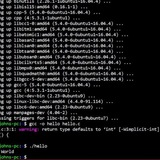
Hi every one, I am working with gdb, and I want to send commands to it via stdin,
look at this commands:
`echo -e "i r\n" > /proc/\`ps aux | grep "gdb ./args2" | awk 'NR == 1 {print $2}'\`/fd/0`
and I tried this
`echo -e "i r\r\n" > /proc/\`ps aux | grep "gdb ./args2" | awk 'NR == 1 {print $2}'\`/fd/0`
I expected to send `i r` to gdb, and when I check gdb, I found the string I send "i r", but it did not execute, and I was need to press enter, how to do it without press enter.
note: I do not want to use any tools "like expect", I want to do it through echo and stdin only.
https://redd.it/1jhergb
@r_bash
Hi every one, I am working with gdb, and I want to send commands to it via stdin,
look at this commands:
`echo -e "i r\n" > /proc/\`ps aux | grep "gdb ./args2" | awk 'NR == 1 {print $2}'\`/fd/0`
and I tried this
`echo -e "i r\r\n" > /proc/\`ps aux | grep "gdb ./args2" | awk 'NR == 1 {print $2}'\`/fd/0`
I expected to send `i r` to gdb, and when I check gdb, I found the string I send "i r", but it did not execute, and I was need to press enter, how to do it without press enter.
note: I do not want to use any tools "like expect", I want to do it through echo and stdin only.
https://redd.it/1jhergb
@r_bash
Reddit
From the bash community on Reddit
Explore this post and more from the bash community
Continue the noscript after an if ?
Hi there, I'm struggling :)
trying to make a small bash noscript, here it is :
I am wondering why commands after the if statement won't execute ?
https://redd.it/1ji02u4
@r_bash
Hi there, I'm struggling :)
trying to make a small bash noscript, here it is :
#!/bin/bashset -x #;)read userif [[ -n $user ]]; thenexec adduser $userelseexit 1fimkdir $HOME/$user && chown $usermkdir -p $HOME/$user/{Commun,Work,stuff}I am wondering why commands after the if statement won't execute ?
https://redd.it/1ji02u4
@r_bash
Reddit
From the bash community on Reddit
Explore this post and more from the bash community
Why is this echo command printing the error to terminal?
I was expecting the following command to print nothing. But for some reason it prints the error message from ls. Why? (I am on Fedora 41, GNOME terminal, on bash 5.2.32)
If someone knows, please explain? I just can't get this off my head.
https://redd.it/1ji5o1o
@r_bash
I was expecting the following command to print nothing. But for some reason it prints the error message from ls. Why? (I am on Fedora 41, GNOME terminal, on bash 5.2.32)
echo $(ls /sdfsdgd) &>/dev/nullIf someone knows, please explain? I just can't get this off my head.
https://redd.it/1ji5o1o
@r_bash
Reddit
From the bash community on Reddit
Explore this post and more from the bash community
How to run every noscript in directory one-at-a-time, pause after each, and wait for user input to advance to the next noscript?
https://redd.it/1jiimyg
@r_bash
find . -type f -executable -executable {} \; runs every noscript in the directory, automatically running each as soon as the previous one is finished. I would like to see the output of each noscript individually and manually advance to the next.https://redd.it/1jiimyg
@r_bash
Reddit
From the bash community on Reddit
Explore this post and more from the bash community
Sourcing for bash -c fails, but bash -i -c works
I think I am going insane already....
I need to run a lot of commands in parallel, but I want to ensure there is a timeout. So I tried this and any mutation I can think off:
I am 100% unable to get this to work. I tried cat to ensure that bashsource is defined properly. Yes, the file prints to stdout perfectly fine. So the path definitely is correct. Sourcing with && echo Success || echo Failed prints Success, so the sourcing itself is working. I tried with export. I tried eval. Eval does not work, as it is not a program, but just a function of the noscript and it cannot find it. Here commmes the issue:
Does not output anything.
This outputs the result as expected to console. But now combining the timeout with an & at the end to make it parallel and the loop being followed with a wait statement, the noscript never finishes executing, also not after 5 minutes. Adding an exit after the command also does nothing. I am now at 500 processes. What is going on?
There MUST be a way, to run a function from a noscript file (with a relative path like from $BASH_SOURCE) with a given timeout in parallel. I cannot get it to work. I tried like 100 different mutations of this command and none work. The first book of moses is short to the list of variations I tried.
You want to know, what pisses me off further?
This works:
But of course it is dang slow.
This does not work:
It just is stuck forever. HUUUUH????????? I am really going insane. What is so wrong with the & symbol? Any idea please? :(
https://redd.it/1jive1g
@r_bash
I think I am going insane already....
I need to run a lot of commands in parallel, but I want to ensure there is a timeout. So I tried this and any mutation I can think off:
timeout 2 bash -c ". ${BASH_SOURCE}; function_inside_this_file "$count"" > temp_findstuff_$count &I am 100% unable to get this to work. I tried cat to ensure that bashsource is defined properly. Yes, the file prints to stdout perfectly fine. So the path definitely is correct. Sourcing with && echo Success || echo Failed prints Success, so the sourcing itself is working. I tried with export. I tried eval. Eval does not work, as it is not a program, but just a function of the noscript and it cannot find it. Here commmes the issue:
timeout 2 bash -c ". ${BASH_SOURCE}; function_inside_this_file "$count""Does not output anything.
timeout 2 bash -i -c ". ${BASH_SOURCE}; function_inside_this_file "$count""This outputs the result as expected to console. But now combining the timeout with an & at the end to make it parallel and the loop being followed with a wait statement, the noscript never finishes executing, also not after 5 minutes. Adding an exit after the command also does nothing. I am now at 500 processes. What is going on?
There MUST be a way, to run a function from a noscript file (with a relative path like from $BASH_SOURCE) with a given timeout in parallel. I cannot get it to work. I tried like 100 different mutations of this command and none work. The first book of moses is short to the list of variations I tried.
You want to know, what pisses me off further?
This works:
timeout 2 bash -i -c ". ${BASH_SOURCE}; function_inside_this_file "$count"; exit;"But of course it is dang slow.
This does not work:
timeout 2 bash -i -c ". ${BASH_SOURCE}; function_inside_this_file "$count"; exit;" &It just is stuck forever. HUUUUH????????? I am really going insane. What is so wrong with the & symbol? Any idea please? :(
https://redd.it/1jive1g
@r_bash
Did I miss something
What happened to r/bash did someone rm -rf / from it? I could have sworn there were posts here.
https://redd.it/1jiuztz
@r_bash
What happened to r/bash did someone rm -rf / from it? I could have sworn there were posts here.
https://redd.it/1jiuztz
@r_bash
Reddit
From the bash community on Reddit
Explore this post and more from the bash community
GitHub - helpermethod/alias-investigations
This is a small Bash function to detect if an alias clashes with an existing command or shell builtin.
Just source
https://github.com/helpermethod/alias-investigations
https://redd.it/1jmkk6m
@r_bash
This is a small Bash function to detect if an alias clashes with an existing command or shell builtin.
Just source
ai and give it a try.https://github.com/helpermethod/alias-investigations
https://redd.it/1jmkk6m
@r_bash
GitHub
GitHub - helpermethod/alias-investigations
Contribute to helpermethod/alias-investigations development by creating an account on GitHub.
What is the professional/veteran take on use / over-use of "exit 1" ?
Is it okay, or lazy, or taboo, or just plain wrong to use to many EXIT's in a noscript?
For context... I've been dabbling with multiple languages over the past years in my off time (self-taught, not at all a profession), but noticed in this one program I'm building (that is kinda getting away from me, if u know what I mean), I've got multiple Functions and IF statements and noticed tonight it seems like I have a whole lot of "exit". As I write noscript, I'm using them to stop the noscript when an error occurs. But guarantee there are some redundancies there... between the functions that call other functions and other noscripts. If that makes sense.
It's working and I get the results I'm after. I'm just curious what the community take is outside of my little word...
https://redd.it/1jll0j9
@r_bash
Is it okay, or lazy, or taboo, or just plain wrong to use to many EXIT's in a noscript?
For context... I've been dabbling with multiple languages over the past years in my off time (self-taught, not at all a profession), but noticed in this one program I'm building (that is kinda getting away from me, if u know what I mean), I've got multiple Functions and IF statements and noticed tonight it seems like I have a whole lot of "exit". As I write noscript, I'm using them to stop the noscript when an error occurs. But guarantee there are some redundancies there... between the functions that call other functions and other noscripts. If that makes sense.
It's working and I get the results I'm after. I'm just curious what the community take is outside of my little word...
https://redd.it/1jll0j9
@r_bash
Reddit
From the bash community on Reddit
Explore this post and more from the bash community
Amateur - Made a shell noscript for reinstallation
I'm back on linux and into distro-hopping, so I made a reinstallation noscript.
I've been noscripting in PowerShell before, but new to Bash. But this project is my learning journey.
Always open to suggestions and tips if anyone is interested. If you have similar noscript please let me know, I'm eager to learn new ways.
https://github.com/dkaaven/Restaller
About the noscript
The install noscript is a terminal UI that helps look through the noscripts I'm making and run them.
install.sh will loop through the noscript folder and display all .sh files by name and the second line (used as a tag).
install-beta.sh supports folders and will replace install.sh soon.
Plan
I want to improve on the noscript part, make functions to reuse code.
Next function to make is a shell detect and add function, that takes the lines of code and add them to all .*rc files that the user has. But avoiding duplication.
I also want to support more distros in the future, but will focus on Debain/Ubuntu based for now, since this is what I use.
https://redd.it/1jldlzp
@r_bash
I'm back on linux and into distro-hopping, so I made a reinstallation noscript.
I've been noscripting in PowerShell before, but new to Bash. But this project is my learning journey.
Always open to suggestions and tips if anyone is interested. If you have similar noscript please let me know, I'm eager to learn new ways.
https://github.com/dkaaven/Restaller
About the noscript
The install noscript is a terminal UI that helps look through the noscripts I'm making and run them.
install.sh will loop through the noscript folder and display all .sh files by name and the second line (used as a tag).
install-beta.sh supports folders and will replace install.sh soon.
Plan
I want to improve on the noscript part, make functions to reuse code.
Next function to make is a shell detect and add function, that takes the lines of code and add them to all .*rc files that the user has. But avoiding duplication.
I also want to support more distros in the future, but will focus on Debain/Ubuntu based for now, since this is what I use.
https://redd.it/1jldlzp
@r_bash
GitHub
GitHub - dkaaven/Restaller
Contribute to dkaaven/Restaller development by creating an account on GitHub.
Automatic management of multiple background processes in a regular shell session?
I need to launch several (say, 4) background processes and have them all stay running while I interact with them. The interactions will be completely async and not in any particular order. I need to be able to do basicly three things:
1) If a background process dies, it's automaticly respawned, unless it's respawning too fast, in which case stop trying to respawn it and print an error message.
2) Functions are generated in the current session to allow me to send commands to the background processes individually, or all at once. Say:
task1 () { echo "${@}" > task1's stdin; }
task2 () { echo "${@}" > task2's stdin; }
all () { echo "${@}" > task1's stdin; echo ${@}" > task2's stdin; }
If the background task is respawned, I need its stdin function to be able to automaticly redirect to the newly spawned version's stdin, not a broken pipe.
and 3) Any output that they generate on their stdout/stderr gets echoed to the screen with a prefix for the background process' name in lower case for stdout traffic, and upper case for stderr traffic. Only process complete lines of output.
Am I barking up the wrong tree to think doing this all in a regular shell session is a good idea, or should I just make this a noscript of its own to REPL this. Having a hard time visuallizing how 1 can satisfy the requirement to keep 2 and 3 targetting the correct. I know I can capture the PIDs of the background tasks with $! and figure I can keep track of the file streams with an associative array like:
declare -A TASKPID
declare -A TASK1PIPE=(stdin=5 stdout=6 stderr=7)
task1.exe 0<${TASK1PIPE[stdin]} 1>${TASK1PIPEstdout} 2>${TASK1PIPE[stderr]} &
TASKPIDtask1=$!
But without something else happening asynchronously in the current session (background function?), how would the current session respawn a dead task and clean up its data, without the user having to issue the command directly, which breaks the "immersion".
I'm just hanging out over the edge of all of my prior bash noscripting experience here. This is as a direct result of my learning that there can, indeed, be only one coproc per bash interpretter.
https://redd.it/1jl525f
@r_bash
I need to launch several (say, 4) background processes and have them all stay running while I interact with them. The interactions will be completely async and not in any particular order. I need to be able to do basicly three things:
1) If a background process dies, it's automaticly respawned, unless it's respawning too fast, in which case stop trying to respawn it and print an error message.
2) Functions are generated in the current session to allow me to send commands to the background processes individually, or all at once. Say:
task1 () { echo "${@}" > task1's stdin; }
task2 () { echo "${@}" > task2's stdin; }
all () { echo "${@}" > task1's stdin; echo ${@}" > task2's stdin; }
If the background task is respawned, I need its stdin function to be able to automaticly redirect to the newly spawned version's stdin, not a broken pipe.
and 3) Any output that they generate on their stdout/stderr gets echoed to the screen with a prefix for the background process' name in lower case for stdout traffic, and upper case for stderr traffic. Only process complete lines of output.
Am I barking up the wrong tree to think doing this all in a regular shell session is a good idea, or should I just make this a noscript of its own to REPL this. Having a hard time visuallizing how 1 can satisfy the requirement to keep 2 and 3 targetting the correct. I know I can capture the PIDs of the background tasks with $! and figure I can keep track of the file streams with an associative array like:
declare -A TASKPID
declare -A TASK1PIPE=(stdin=5 stdout=6 stderr=7)
task1.exe 0<${TASK1PIPE[stdin]} 1>${TASK1PIPEstdout} 2>${TASK1PIPE[stderr]} &
TASKPIDtask1=$!
But without something else happening asynchronously in the current session (background function?), how would the current session respawn a dead task and clean up its data, without the user having to issue the command directly, which breaks the "immersion".
I'm just hanging out over the edge of all of my prior bash noscripting experience here. This is as a direct result of my learning that there can, indeed, be only one coproc per bash interpretter.
https://redd.it/1jl525f
@r_bash
Reddit
From the bash community on Reddit
Explore this post and more from the bash community
Introducing "bd" – A Simple Yet Powerful Bash Autoloader
Hey everyone,
I built a tool called `bd` to help with environment management in Bash. It automatically loads noscripts from multiple, different
Unlike
# Why use "bd"?
🔹 Automatic Script Loading – Just drop noscripts into a directory, and
🔹 No Root Access Needed – Works at the user level, making it useful for project-based configurations.
🔹 Keeps Bash Configs Clean – Reduces
🔹 Easy Environment Switching – The right configurations apply automatically as you move between directories.
The GitHub repo has documentation and examples to get started:
🔗 **GitHub: bash-d/bd**
If you manage Bash noscripts in a similar way, I’d love to hear your thoughts! Try it out and let me know what you think.
TL;DR:
https://redd.it/1jklki7
@r_bash
Hey everyone,
I built a tool called `bd` to help with environment management in Bash. It automatically loads noscripts from multiple, different
bash.d directories, making it easier to keep your setups modular and organized.Unlike
/etc/profile.d/, bd dynamically loads environment profiles based on the directory you’re in. This makes it great for keeping project-specific Bash settings with the project itself (e.g., in version control) rather than cluttering your personal .bashrc.# Why use "bd"?
🔹 Automatic Script Loading – Just drop noscripts into a directory, and
bd loads them automatically—no manual sourcing needed. 🔹 No Root Access Needed – Works at the user level, making it useful for project-based configurations.
🔹 Keeps Bash Configs Clean – Reduces
.bashrc clutter and makes things more maintainable. 🔹 Easy Environment Switching – The right configurations apply automatically as you move between directories.
The GitHub repo has documentation and examples to get started:
🔗 **GitHub: bash-d/bd**
If you manage Bash noscripts in a similar way, I’d love to hear your thoughts! Try it out and let me know what you think.
TL;DR:
bd is a small Bash tool that autoloads noscripts from specified directories, making environment management easier. Check it out!https://redd.it/1jklki7
@r_bash
GitHub
GitHub - bash-d/bd: Bash Directory Autoloader
Bash Directory Autoloader. Contribute to bash-d/bd development by creating an account on GitHub.
New to bash noscripting
Hey guys, i'm pretty new to bash noscripting, so i'm not completely sure if i'm doing things correctly. I just made a bash install noscript to get my preferred arch packages installed automatically (so i dont have to install every single package manually and inevitably forget some)
What im wondering is if my noscript is error prone, it seems to work well when i tested it in a VM, however im still unsure. This is what my noscript looks like, and thanks in advance for the help! Would also be much appreciated if whatever changes i need to make could be explained to me so i know for my future noscripts, thanks again!
\#!/bin/bash
\# Enable error checking for all commands
set -e
\# Install paru if not already installed
if ! command -v paru &> /dev/null; then
echo "Installing paru..."
sudo pacman -S --needed --noconfirm base-devel git
git clone https://aur.archlinux.org/paru.git /tmp/paru
(cd /tmp/paru && makepkg -si --noconfirm)
rm -rf /tmp/paru
fi
\# Update the system and install pacman packages
echo "Updating system..."
sudo pacman -Syu --noconfirm
\# List of pacman packages
pacman_packages=(
hyprland
kitty
hypridle
hyprlock
hyprpaper
neovim
starship
waybar
wofi
yazi
nautilus
swaync
xdg-desktop-portal-gtk
xdg-desktop-portal-hyprland
hyprpolkitagent
wlsunset
zoxide
zsh
zsh-syntax-highlighting
zsh-autosuggestions
fzf
qt6ct
btop
dbus
stow
flatpak
ttf-cascadia-code
ttf-ubuntu-font-family
ttf-font-awesome
)
echo "Installing pacman packages..."
sudo pacman -S --needed --noconfirm "${pacman_packages[@\]}"
\# List of AUR packages
aur_packages=(
trash-cli
adwaita-dark
hyprshot
sway-audio-idle-inhibit-git
brave-bin
)
echo "Installing AUR packages..."
paru -S --needed --noconfirm "${aur_packages[@\]}"
\# Set zsh as the default shell
echo "Setting zsh as the default shell..."
chsh -s "$(which zsh)"
echo "Installation complete!"
https://redd.it/1jkmmjs
@r_bash
Hey guys, i'm pretty new to bash noscripting, so i'm not completely sure if i'm doing things correctly. I just made a bash install noscript to get my preferred arch packages installed automatically (so i dont have to install every single package manually and inevitably forget some)
What im wondering is if my noscript is error prone, it seems to work well when i tested it in a VM, however im still unsure. This is what my noscript looks like, and thanks in advance for the help! Would also be much appreciated if whatever changes i need to make could be explained to me so i know for my future noscripts, thanks again!
\#!/bin/bash
\# Enable error checking for all commands
set -e
\# Install paru if not already installed
if ! command -v paru &> /dev/null; then
echo "Installing paru..."
sudo pacman -S --needed --noconfirm base-devel git
git clone https://aur.archlinux.org/paru.git /tmp/paru
(cd /tmp/paru && makepkg -si --noconfirm)
rm -rf /tmp/paru
fi
\# Update the system and install pacman packages
echo "Updating system..."
sudo pacman -Syu --noconfirm
\# List of pacman packages
pacman_packages=(
hyprland
kitty
hypridle
hyprlock
hyprpaper
neovim
starship
waybar
wofi
yazi
nautilus
swaync
xdg-desktop-portal-gtk
xdg-desktop-portal-hyprland
hyprpolkitagent
wlsunset
zoxide
zsh
zsh-syntax-highlighting
zsh-autosuggestions
fzf
qt6ct
btop
dbus
stow
flatpak
ttf-cascadia-code
ttf-ubuntu-font-family
ttf-font-awesome
)
echo "Installing pacman packages..."
sudo pacman -S --needed --noconfirm "${pacman_packages[@\]}"
\# List of AUR packages
aur_packages=(
trash-cli
adwaita-dark
hyprshot
sway-audio-idle-inhibit-git
brave-bin
)
echo "Installing AUR packages..."
paru -S --needed --noconfirm "${aur_packages[@\]}"
\# Set zsh as the default shell
echo "Setting zsh as the default shell..."
chsh -s "$(which zsh)"
echo "Installation complete!"
https://redd.it/1jkmmjs
@r_bash
Reddit
From the bash community on Reddit
Explore this post and more from the bash community
Why does glob expansion behave differently when file extensions are different?
I have a program which takes multiple files as command line arguments. These files are contained in a folder "mtx", and they all have ".mtx" extension. I usually call my program from the command line as
Now, I have another folder "roa", which has the same files as "mtx", except that they have ".roa" extension, and for these I call my program with
Since these folders contain the same exact file names except for the extension, I thought thought "mtx/*" and "roa/*" would expand the files in the same order. However, there are some differences in these expansions.
To prove these expansions are different, I created a toy example:
EDIT: Rather than running the code below, this behavior can be demonstrated as follows:
1) Make a directory "A" with subdirectories "mtx" and "roa"
2) In mtx create files called "G3.mtx" and "g3rmt3m3.mtx"
3) in roa, create these same files but with .roa extension.
4) From "A", run "echo mtx/*" and "echo roa/*". These should give different results.
END EDIT
https://github.com/Optimization10/GlobExpansion
The output of this code is two csv files, one with the file names from the "mtx" folder as they are expanded from "mtx/*", and one with file names from the "roa" as expanded from "roa/*".
As you can see in the Google sheet, lines 406 and 407 are interchanged, and lines 541-562 are permuted.
https://docs.google.com/spreadsheets/d/1Bw3sYcOMg7Nd8HIMmUoxXxWbT2yatsledLeiTEEUDXY/edit?usp=sharing
I am wondering why these expansions are different, and is this a known feature or issue?
https://redd.it/1jiwxud
@r_bash
I have a program which takes multiple files as command line arguments. These files are contained in a folder "mtx", and they all have ".mtx" extension. I usually call my program from the command line as
myprogram mtx/*Now, I have another folder "roa", which has the same files as "mtx", except that they have ".roa" extension, and for these I call my program with
myprogram roa/* .Since these folders contain the same exact file names except for the extension, I thought thought "mtx/*" and "roa/*" would expand the files in the same order. However, there are some differences in these expansions.
To prove these expansions are different, I created a toy example:
EDIT: Rather than running the code below, this behavior can be demonstrated as follows:
1) Make a directory "A" with subdirectories "mtx" and "roa"
2) In mtx create files called "G3.mtx" and "g3rmt3m3.mtx"
3) in roa, create these same files but with .roa extension.
4) From "A", run "echo mtx/*" and "echo roa/*". These should give different results.
END EDIT
https://github.com/Optimization10/GlobExpansion
The output of this code is two csv files, one with the file names from the "mtx" folder as they are expanded from "mtx/*", and one with file names from the "roa" as expanded from "roa/*".
As you can see in the Google sheet, lines 406 and 407 are interchanged, and lines 541-562 are permuted.
https://docs.google.com/spreadsheets/d/1Bw3sYcOMg7Nd8HIMmUoxXxWbT2yatsledLeiTEEUDXY/edit?usp=sharing
I am wondering why these expansions are different, and is this a known feature or issue?
https://redd.it/1jiwxud
@r_bash
GitHub
GitHub - Optimization10/GlobExpansion
Contribute to Optimization10/GlobExpansion development by creating an account on GitHub.
What's a good collection or source of bash noscripts that you can read to sharpen your knowledge of noscripting techniques
Hello my fellow bashelors/bashelorettes . Basically, what the noscript of the post says.
https://redd.it/1jndfqs
@r_bash
Hello my fellow bashelors/bashelorettes . Basically, what the noscript of the post says.
https://redd.it/1jndfqs
@r_bash
Reddit
From the bash community on Reddit
Explore this post and more from the bash community
Can someone explain this to me?
Why does the in-place replacement seem to work differently?
https://redd.it/1jn5km5
@r_bash
➜  ~ echo ' escaped_input=$(something)' > test.sh

sed -E 's/^(\s)escaped_input=\$\(.*\)$/\1user_input=$(whatever)/' test.sh
sed -iE 's/^(\s)escaped_input=\$\(.*\)$/\1user_input=$(whatever)/' test.sh; cat test.sh

 user_input=$(whatever)
 escaped_input=$(something)
Why does the in-place replacement seem to work differently?
https://redd.it/1jn5km5
@r_bash
Reddit
From the bash community on Reddit
Explore this post and more from the bash community
If I'm in the wrong place, they can erase it. Excuse me! Has anyone references about this command or program? https: / / linrunner.de / tlp / index.html
Hi I have problem with my laptop battery: at 88% of charge shutdown the laptop without alert me.
I think that I need to calibrate the battery.
this program by command line from my repo Lubuntu works on batteries...
any reference about it?
TLP https://linrunner.de/tlp/index.html
Thank you and regards!
https://redd.it/1jo3yjm
@r_bash
Hi I have problem with my laptop battery: at 88% of charge shutdown the laptop without alert me.
I think that I need to calibrate the battery.
this program by command line from my repo Lubuntu works on batteries...
any reference about it?
TLP https://linrunner.de/tlp/index.html
Thank you and regards!
https://redd.it/1jo3yjm
@r_bash
If I'm in the wrong place, they can erase it. Excuse me! Has anyone references about this command or program? https: / / linrunner.de / tlp / index.html
Hi I have problem with my laptop battery: at 88% of charge shutdown the laptop without alert me.
I think that I need to calibrate the battery.
this program by command line from my repo Lubuntu works on batteries...
any reference about it?
TLP https://linrunner.de/tlp/index.html
Thank you and regards!
https://redd.it/1jo3zhy
@r_bash
Hi I have problem with my laptop battery: at 88% of charge shutdown the laptop without alert me.
I think that I need to calibrate the battery.
this program by command line from my repo Lubuntu works on batteries...
any reference about it?
TLP https://linrunner.de/tlp/index.html
Thank you and regards!
https://redd.it/1jo3zhy
@r_bash
Reddit
From the bash community on Reddit
Explore this post and more from the bash community
how do I make such beautiful warning messages in my noscript like pnpm of NodeJS?
https://redd.it/1jobphj
@r_bash
https://redd.it/1jobphj
@r_bash
OctoWatch - A minimalistic command-line octoprint dashboard
Want to monitor your 3D prints on the command line?
https://preview.redd.it/dr5jp1jv05se1.png?width=759&format=png&auto=webp&s=15aa7483d36c61f3525c56e0d13bb06fa3ec7563
https://preview.redd.it/w4cr4yiv05se1.png?width=762&format=png&auto=webp&s=340d805a21a63fc6d70f4f20b999dc7a682dbb51
OctoWatch is a quick and simple dashboard for monitoring 3D printers, in your network. It uses OctoPrint’s API, and displaying live print progress, timing, and temperature data, ideal for resource-constrained system and a Quick peak at the progress of your prints.
Since i have 2, 3D printers and after customizing their firmware (for faster baud rates and some gcode tweaks, for my personal taste) - i connected them with Raspberry pi zero 2W each. Installed octoprint for each printer so i can control them via network.
Since octoprint is a web UI made with python, and it always takes 5-8 seconds to just load the dashboard. So, I created octowatch - it shows you the current progress with the minimalistic view of the dashboard.
If by chance, you have can use this to test it - your feedback is highly appreciated.
Here's the link to the project: GitHub - TheKvc/octowatch: OctoWatch is a quick and simple dashboard for monitoring 3D printers, in your network. It uses OctoPrint’s API, and displaying live print progress, timing, and temperature data, ideal for resource-constrained system and a Qucik peak at the progress of your prints. 3
*Consider giving it a star on github
Note: This is made in bash, I will work on making it in batch/python as well, But i mainly use linux now...so, that might be taking time. Let me know, if you want this for other platforms too.
https://redd.it/1joljjd
@r_bash
Want to monitor your 3D prints on the command line?
https://preview.redd.it/dr5jp1jv05se1.png?width=759&format=png&auto=webp&s=15aa7483d36c61f3525c56e0d13bb06fa3ec7563
https://preview.redd.it/w4cr4yiv05se1.png?width=762&format=png&auto=webp&s=340d805a21a63fc6d70f4f20b999dc7a682dbb51
OctoWatch is a quick and simple dashboard for monitoring 3D printers, in your network. It uses OctoPrint’s API, and displaying live print progress, timing, and temperature data, ideal for resource-constrained system and a Quick peak at the progress of your prints.
Since i have 2, 3D printers and after customizing their firmware (for faster baud rates and some gcode tweaks, for my personal taste) - i connected them with Raspberry pi zero 2W each. Installed octoprint for each printer so i can control them via network.
Since octoprint is a web UI made with python, and it always takes 5-8 seconds to just load the dashboard. So, I created octowatch - it shows you the current progress with the minimalistic view of the dashboard.
If by chance, you have can use this to test it - your feedback is highly appreciated.
Here's the link to the project: GitHub - TheKvc/octowatch: OctoWatch is a quick and simple dashboard for monitoring 3D printers, in your network. It uses OctoPrint’s API, and displaying live print progress, timing, and temperature data, ideal for resource-constrained system and a Qucik peak at the progress of your prints. 3
*Consider giving it a star on github
Note: This is made in bash, I will work on making it in batch/python as well, But i mainly use linux now...so, that might be taking time. Let me know, if you want this for other platforms too.
https://redd.it/1joljjd
@r_bash
Getting a job without experience
I have my bachelor's degree in Mechatronics Engineering, I graduated in a college in Mexico in 2015.
I did an internship of 6 months when I graduated and after that my family and I relocated to the States. But, since my visa didn't let me to work just to live here I wasn't able to work here until now that I have my permanent residency.
In the meantime I took 2 certifications one in C with Linux bash noscripting and another one in SQL Databases.
I have been applying for a couple of months but haven't had answers from the companies I applied for.
What do you guys think is the best path to get hired?
I would greatly appreciate your advice and suggestions.
https://redd.it/1jp3bj0
@r_bash
I have my bachelor's degree in Mechatronics Engineering, I graduated in a college in Mexico in 2015.
I did an internship of 6 months when I graduated and after that my family and I relocated to the States. But, since my visa didn't let me to work just to live here I wasn't able to work here until now that I have my permanent residency.
In the meantime I took 2 certifications one in C with Linux bash noscripting and another one in SQL Databases.
I have been applying for a couple of months but haven't had answers from the companies I applied for.
What do you guys think is the best path to get hired?
I would greatly appreciate your advice and suggestions.
https://redd.it/1jp3bj0
@r_bash
Reddit
From the bash community on Reddit
Explore this post and more from the bash community
Searching in always in the whole history
I search in my bash history, but somehow after I skipped something accidently by pressing:
ctrl + r a second time, I can not find it.
I love the search option, but this is so weird behaviour. Can anybody please explain, why this happens and suggest a solution, so that I can search all the time for everything?
https://redd.it/1jou6sf
@r_bash
I search in my bash history, but somehow after I skipped something accidently by pressing:
ctrl + r a second time, I can not find it.
I love the search option, but this is so weird behaviour. Can anybody please explain, why this happens and suggest a solution, so that I can search all the time for everything?
https://redd.it/1jou6sf
@r_bash
Reddit
From the bash community on Reddit
Explore this post and more from the bash community