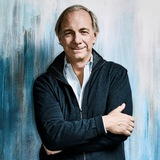
You will have to get over your reluctance to assess what people are like if you want to surround yourself with people who have the qualities you need. That goes for yourself too. People almost always find it difficult to identify and accept their own mistakes and weaknesses. Sometimes it's because they're blind to them, but more often it's because their egos get in the way. Most likely your associates are equally reluctant to point out your mistakes, because they don't want to hurt you. You all need to get over this. More than anything else, what differentiates people who live up to their potential from those who don't is their willingness to look at themselves and others objectively and understand the root causes standing in their way. #principleoftheday
@RayDalio
@RayDalio
👏11👍3
FED won't cut interest rate 29 January
@RayDalio
Billionaire investor Ray Dalio doesn’t see significant rate cuts coming from the Federal Reserve as the US economy “is in relatively good balance.” Dalio said, “the markets are getting ahead of themselves” in expectation of rate cuts during a remote conversation with Bloomberg’s Sonali Basak during the Greenwich Economic Forum on Tuesday.
@RayDalio
👍11😁2
Replay the story of where you have been (or what you have done) that led up to where you are now, and then visualize what you and others must do in the future so you will reach your goals. #principleoftheday #raydalio
🔥12👍6👏2
The U.S. must slash its deficit to 3% from an expected 7.5% before the president’s second term in office ends, otherwise bond markets will not be able to absorb the amount of new debt the Treasury issues and a death spiral will ensue.
👍9🔥3👏2
My point is that you can significantly raise your probabilities of making the right decisions by open-mindedly triangulating with believable people. Even in a terrible situation, you can still raise your probabilities of making the right decisions by open-mindedly triangulating with believable people. #principleoftheday
@RayDalio
@RayDalio
👍17
It's time to think about wider acceptance of alternative money such as crypto.
We have a situation where we have too much debt and we're producing it at a fast pace. So yes, we have to think about alternative monies.
Bitcoin prices have boomed 165% in the past year, climbing over $100,000 per coin after Donald Trump won his re-election in November. The new administration is widely expected to be more friendly to the crypto world. Trump and his wife, Melania Trump, have even released their own meme coins.
Maybe the biggest threat, certainly one of the biggest threats, is the supply-demand for bonds that relates to the Treasury bonds.
@RayDalio
#raydalio #us #bonds #crypto #bitcoin
We have a situation where we have too much debt and we're producing it at a fast pace. So yes, we have to think about alternative monies.
Bitcoin prices have boomed 165% in the past year, climbing over $100,000 per coin after Donald Trump won his re-election in November. The new administration is widely expected to be more friendly to the crypto world. Trump and his wife, Melania Trump, have even released their own meme coins.
Maybe the biggest threat, certainly one of the biggest threats, is the supply-demand for bonds that relates to the Treasury bonds.
@RayDalio
#raydalio #us #bonds #crypto #bitcoin
👍13🔥2👏1
This media is not supported in your browser
VIEW IN TELEGRAM
The day of doing everything in your head is over. Learn more about Digital Ray:
https://digitalray.ai/login
#principles #raydalio #mentor #AI
@RayDalio
https://digitalray.ai/login
#principles #raydalio #mentor #AI
@RayDalio
👍6
@RayDalio shares 3 trades to weather a US debt spiral
Ray Dalio is worried about a looming financial crisis sparked by spiraling US debt levels.
The US faces a $2 trillion deficit and $1 trillion in interest payments this year.
Dalio advises hedging against inflation with TIPS, gold, and bitcoin.
"We have to, in the next, year sell about $12 trillion. We have $1 trillion that we can pay in interest. We have $9 trillion in debt service in terms of principle, and then we have to sell another $2 trillion because we had a deficit. When faced with the choice, they print money."
#finance #usa #buy #sell #trade #raydalio
Ray Dalio is worried about a looming financial crisis sparked by spiraling US debt levels.
The US faces a $2 trillion deficit and $1 trillion in interest payments this year.
Dalio advises hedging against inflation with TIPS, gold, and bitcoin.
"We have to, in the next, year sell about $12 trillion. We have $1 trillion that we can pay in interest. We have $9 trillion in debt service in terms of principle, and then we have to sell another $2 trillion because we had a deficit. When faced with the choice, they print money."
#finance #usa #buy #sell #trade #raydalio
👍10🔥4
While there is nobody in the world who will share your point of view on everything, there are people who will share your most important values and the ways in which you choose to live them out. Make sure you end up with those people. #principleoftheday
@RayDalio
@RayDalio
🔥13👍11
So I certainly don’t want to dissuade you from going after whatever you want. At the same time, I urge you to reflect on whether what you are going after is consistent with your nature. Whatever your nature is, there are many paths that will suit you, so don’t fixate on just one. Should a particular path close, all you have to do is find another good one consistent with what you’re like. #principleoftheday #raydalio
@RayDalio
@RayDalio
👍10🔥4
Explore them openly with the goal of figuring out how you and your people are built so that the right people can be put in the right jobs. #principleoftheday
@RayDalio
@RayDalio
👍12🔥3
For me, watching what is now happening is like watching a movie that I have seen many times in history. I am a global macro investor whose approach to betting on what is going to happen is to understand the mechanics of how things work by learning the lessons of history. I find that what is now happening has happened repeatedly for the same reasons and that understanding the cause/effect relationships has helped me immensely. I am now in a stage of my life where I want to pass along what has helped me rather than keep it to myself to benefit myself. For that reason, I described the typical sequence of events that leads to the rises and declines of monetary orders, domestic political orders, and international geopolitical orders in my book, Principles for Dealing with the Changing World Order. I call this sequence of events the “Big Cycle” because it is big and long-lasting, typically lasting about 80 years (i.e., about one lifetime.)
The last time these orders broke down was in the 1930 - 1945 period, which led to the 1945 beginning of the post-war monetary, domestic political, and international geopolitical orders that we are now seeing break down. The symptoms that can be used to identify what stage of the Big Cycle we are in and the forces that drive the Big Cycle were comprehensively described in my book. Most importantly, I laid out, in detail, the processes and sequences of events that typically lead to the break down of the monetary order, the domestic political order, and the international geopolitical order so that one can compare the actual sequence of events with that which was laid out in that template.
For readers of the book, it should now be clear that we are on the brink of going from Stage 5 (pre-breakdown of the existing orders) to Stage 6 (breakdowns of the existing orders) of the Big Cycle.
I wrote that book with the intentions of 1) helping policy makers understand the process that leads to breakdowns and prevent them and 2) helping people protect themselves against being hurt by these breakdowns. I did that with the realization that my explanations probably wouldn't have a material effect on the trajectory. They haven’t. Still, as we are now clearly on the brink of crossing from Stage 5 (pre-breakdown) to Stage 6 (breakdown) and choices can be made that can have huge effects on outcomes, I feel compelled to reiterate the highlights of the dynamic that I believe is behind what is now happening and to make clear the choices that can make better or worse outcomes. To do that here, I am now going to briefly share the most relevant parts of what I wrote in Principles for Dealing with the Changing World Order for what’s happening now, specifically the highlights about how Stage 5 (the pre-breakdown of orders period) leads to Stage 6 (the breakdown of orders period). This will allow you to compare what is now happening with my Big Cycle template. To be clear, even though it is unlikely that the monetary order will be fixed via the financial discipline that is required to bring about financial health, and it is doubtful that there will be returns to rules-based domestic political and international geopolitical orders that are essential for peaceful resolutions of disagreements and democracy to work, these improvements are still possible as we haven’t yet gone over the brink from Stage 5 to Stage 6.
What follows are excerpts from the book that paint the picture. After sharing them, I will explain how what I wrote five years ago applies to the current situation (see “Where We Are Now” below).
“Stage 5: When There Are Bad Financial Conditions and Intense Conflict”
The last time these orders broke down was in the 1930 - 1945 period, which led to the 1945 beginning of the post-war monetary, domestic political, and international geopolitical orders that we are now seeing break down. The symptoms that can be used to identify what stage of the Big Cycle we are in and the forces that drive the Big Cycle were comprehensively described in my book. Most importantly, I laid out, in detail, the processes and sequences of events that typically lead to the break down of the monetary order, the domestic political order, and the international geopolitical order so that one can compare the actual sequence of events with that which was laid out in that template.
For readers of the book, it should now be clear that we are on the brink of going from Stage 5 (pre-breakdown of the existing orders) to Stage 6 (breakdowns of the existing orders) of the Big Cycle.
I wrote that book with the intentions of 1) helping policy makers understand the process that leads to breakdowns and prevent them and 2) helping people protect themselves against being hurt by these breakdowns. I did that with the realization that my explanations probably wouldn't have a material effect on the trajectory. They haven’t. Still, as we are now clearly on the brink of crossing from Stage 5 (pre-breakdown) to Stage 6 (breakdown) and choices can be made that can have huge effects on outcomes, I feel compelled to reiterate the highlights of the dynamic that I believe is behind what is now happening and to make clear the choices that can make better or worse outcomes. To do that here, I am now going to briefly share the most relevant parts of what I wrote in Principles for Dealing with the Changing World Order for what’s happening now, specifically the highlights about how Stage 5 (the pre-breakdown of orders period) leads to Stage 6 (the breakdown of orders period). This will allow you to compare what is now happening with my Big Cycle template. To be clear, even though it is unlikely that the monetary order will be fixed via the financial discipline that is required to bring about financial health, and it is doubtful that there will be returns to rules-based domestic political and international geopolitical orders that are essential for peaceful resolutions of disagreements and democracy to work, these improvements are still possible as we haven’t yet gone over the brink from Stage 5 to Stage 6.
What follows are excerpts from the book that paint the picture. After sharing them, I will explain how what I wrote five years ago applies to the current situation (see “Where We Are Now” below).
“Stage 5: When There Are Bad Financial Conditions and Intense Conflict”
👍8
“Because I covered that cycle comprehensively in Chapters 3 and 4, I won’t explain it here in detail. But to understand Stage 5, you need to know that it follows Stage 3, in which there is peace and prosperity and favorable debt and credit conditions, and Stage 4, in which excess and decadence begin to bring about worse conditions. This process culminates in the most difficult and painful stage—Stage 6—when the country runs out of money and there is typically terrible conflict in the form of revolution or civil war. Stage 5 is the period during which the interclass tensions that go along with worsening financial conditions come to a head. How different leaders, policy makers, and groups of people deal with conflict has a major impact on whether the country will undergo the needed changes peacefully or violently.”
“The Classic Toxic Mix”
“The classic toxic mix of forces that brings about big internal conflicts consists of 1) the country and the people in the country (or state or city) being in bad financial shape (e.g., having big debt and non-debt obligations), 2) large income, wealth, and values gaps within that entity, and 3) a severe negative economic shock.” “That confluence typically brings about disorder, conflict, and sometimes civil wars.”
“To have peace and prosperity, a society must have productivity that benefits most people.
Averages don’t matter as much as the percentage of people who are suffering and their power.” In other words, when there is not broad based productivity and prosperity, risks rise.
An essential ingredient for success is that the debt and money that are created are used to produce productivity gains and favorable returns on investment, rather than just being given away without yielding productivity and income gains. If it is given away without yielding these gains, the money will be devalued to the point that it won’t leave the government or anyone else with much buying power.
History shows that lending and spending on items that produce broad-based productivity gains and returns on investment that exceed the borrowing costs result in living standards rising with debts being paid off, so these are good policies.”
“History shows and logic dictates that investing well in education at all levels (including job training), infrastructure, and research that yields productive discoveries works very well. For example, big education and infrastructure programs have paid off nearly all the time (e.g., in the Tang Dynasty and many other Chinese dynasties, in the Roman Empire, in the Umayyad Caliphate, in the Mughal Empire in India, in Japan’s Meiji Restoration, and in China’s educational development programs over the last couple of decades), though they have long lead times. In fact, improvements in education and infrastructure, even those financed by debt, were essential ingredients behind the rises of virtually all empires, and declines in the quality of these investments were almost always ingredients behind empires’ declines. If done well, these interventions can more than counterbalance the classic toxic mix.” In Stage 5 this doesn't happen.
All of this makes the economy more vulnerable to an economic shock. “The economic shock can come about for many reasons, including financial bubbles that burst, acts of nature (such as pandemics, droughts, and floods), and wars. It creates a financial stress test. The financial conditions (as measured by incomes relative to expenses and assets relative to liabilities) that exist at the time of the stress test are the shock absorbers. The sizes of the gaps in incomes, wealth, and values are the best indicators of degrees of fragility of the system.”
“The Classic Toxic Mix”
“The classic toxic mix of forces that brings about big internal conflicts consists of 1) the country and the people in the country (or state or city) being in bad financial shape (e.g., having big debt and non-debt obligations), 2) large income, wealth, and values gaps within that entity, and 3) a severe negative economic shock.” “That confluence typically brings about disorder, conflict, and sometimes civil wars.”
“To have peace and prosperity, a society must have productivity that benefits most people.
Averages don’t matter as much as the percentage of people who are suffering and their power.” In other words, when there is not broad based productivity and prosperity, risks rise.
An essential ingredient for success is that the debt and money that are created are used to produce productivity gains and favorable returns on investment, rather than just being given away without yielding productivity and income gains. If it is given away without yielding these gains, the money will be devalued to the point that it won’t leave the government or anyone else with much buying power.
History shows that lending and spending on items that produce broad-based productivity gains and returns on investment that exceed the borrowing costs result in living standards rising with debts being paid off, so these are good policies.”
“History shows and logic dictates that investing well in education at all levels (including job training), infrastructure, and research that yields productive discoveries works very well. For example, big education and infrastructure programs have paid off nearly all the time (e.g., in the Tang Dynasty and many other Chinese dynasties, in the Roman Empire, in the Umayyad Caliphate, in the Mughal Empire in India, in Japan’s Meiji Restoration, and in China’s educational development programs over the last couple of decades), though they have long lead times. In fact, improvements in education and infrastructure, even those financed by debt, were essential ingredients behind the rises of virtually all empires, and declines in the quality of these investments were almost always ingredients behind empires’ declines. If done well, these interventions can more than counterbalance the classic toxic mix.” In Stage 5 this doesn't happen.
All of this makes the economy more vulnerable to an economic shock. “The economic shock can come about for many reasons, including financial bubbles that burst, acts of nature (such as pandemics, droughts, and floods), and wars. It creates a financial stress test. The financial conditions (as measured by incomes relative to expenses and assets relative to liabilities) that exist at the time of the stress test are the shock absorbers. The sizes of the gaps in incomes, wealth, and values are the best indicators of degrees of fragility of the system.”
👍3
When the financial problems occur, they typically first hit the private sector and then the public sector. Because governments will never let the private sector’s financial problems sink the entire system, it is the government’s financial condition that matters most. When the government runs out of buying power, there is a collapse. But on the way to a collapse there is a lot of fighting for money and political power.”
“From studying 50-plus civil wars and revolutions, it became clear that the single most reliable leading indicator of civil war or revolution is bankrupt government finances combined with big wealth gaps. That is because when the government lacks financial power, it can’t financially save those entities in the private sector that the government needs to save to keep the system running (as most governments, led by the United States, did at the end of 2008), it can’t buy what it needs, and it can’t pay people to do what it needs them to do. It is out of power.”
“A classic marker of being in Stage 5 and a leading indicator of the loss of borrowing and spending power, which is one of the triggers for going into Stage 6, is that the government has large deficits that are creating more debt to be sold than buyers other than the government’s own central bank are willing to buy. That leading indicator is turned on when governments that can’t print money have to raise taxes and cut spending, or when those that can print money print a lot of it and buy a lot of government debt. To be more specific, when the government runs out of money (by running a big deficit, having large debts, and not having access to adequate credit), it has limited options. It can either raise taxes and cut spending lot or print a lot of money, which depreciates its value. Those governments that have the option to print money always do so because that is the much less painful path, but it leads investors to run out of the money and debt that is being printed. Those governments that can’t print money have to raise taxes and cut spending, which drives those with money to run out of the country (or state or city) because paying more taxes and losing services is intolerable. If these entities that can’t print money have large wealth gaps among their constituents, these moves typically lead to some form of civil war/revolution.”
“Those places (cities, states, and countries) that have the largest wealth gaps, the largest debts, and the worst declines in incomes are most likely to have the greatest conflicts. Interestingly, those states and cities in the US that have the highest per capita income and wealth levels tend to be the states and cities that are the most indebted and have the largest wealth gaps—e.g., cities like San Francisco, Chicago, and New York City and states like Connecticut, Illinois, Massachusetts, New York, and New Jersey.”
“Facing these conditions, expenditures have to be cut or more money has to be raised in some way. The next question becomes who will pay to fix them, the “haves” or the “have-nots”? Obviously, it can’t be the have-nots. Expenditure cuts are most intolerable for those who are poorest, so there needs to be more taxation of people who can afford to pay more and there is a heightened risk of some form of civil war or revolution. But when the haves realize that they will be taxed to pay for debt service and to reduce the deficits, they typically leave, causing the hollowing-out process. This is currently motivating movements from some states to others in the US. If bad economic conditions occur, that hastens the process. These circumstances largely drive the tax cycle.”
“History shows that raising taxes and cutting spending when there are large wealth gaps and bad economic conditions, more than anything else, has been a leading indicator of civil wars or revolutions of some type.”
“Populism and Extremism”
“From studying 50-plus civil wars and revolutions, it became clear that the single most reliable leading indicator of civil war or revolution is bankrupt government finances combined with big wealth gaps. That is because when the government lacks financial power, it can’t financially save those entities in the private sector that the government needs to save to keep the system running (as most governments, led by the United States, did at the end of 2008), it can’t buy what it needs, and it can’t pay people to do what it needs them to do. It is out of power.”
“A classic marker of being in Stage 5 and a leading indicator of the loss of borrowing and spending power, which is one of the triggers for going into Stage 6, is that the government has large deficits that are creating more debt to be sold than buyers other than the government’s own central bank are willing to buy. That leading indicator is turned on when governments that can’t print money have to raise taxes and cut spending, or when those that can print money print a lot of it and buy a lot of government debt. To be more specific, when the government runs out of money (by running a big deficit, having large debts, and not having access to adequate credit), it has limited options. It can either raise taxes and cut spending lot or print a lot of money, which depreciates its value. Those governments that have the option to print money always do so because that is the much less painful path, but it leads investors to run out of the money and debt that is being printed. Those governments that can’t print money have to raise taxes and cut spending, which drives those with money to run out of the country (or state or city) because paying more taxes and losing services is intolerable. If these entities that can’t print money have large wealth gaps among their constituents, these moves typically lead to some form of civil war/revolution.”
“Those places (cities, states, and countries) that have the largest wealth gaps, the largest debts, and the worst declines in incomes are most likely to have the greatest conflicts. Interestingly, those states and cities in the US that have the highest per capita income and wealth levels tend to be the states and cities that are the most indebted and have the largest wealth gaps—e.g., cities like San Francisco, Chicago, and New York City and states like Connecticut, Illinois, Massachusetts, New York, and New Jersey.”
“Facing these conditions, expenditures have to be cut or more money has to be raised in some way. The next question becomes who will pay to fix them, the “haves” or the “have-nots”? Obviously, it can’t be the have-nots. Expenditure cuts are most intolerable for those who are poorest, so there needs to be more taxation of people who can afford to pay more and there is a heightened risk of some form of civil war or revolution. But when the haves realize that they will be taxed to pay for debt service and to reduce the deficits, they typically leave, causing the hollowing-out process. This is currently motivating movements from some states to others in the US. If bad economic conditions occur, that hastens the process. These circumstances largely drive the tax cycle.”
“History shows that raising taxes and cutting spending when there are large wealth gaps and bad economic conditions, more than anything else, has been a leading indicator of civil wars or revolutions of some type.”
“Populism and Extremism”
👍3