Forwarded from Atisha’s Lamp
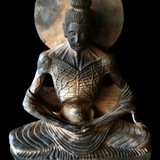
I have seen much of samsara. I am not even minutely attached to the trappings of royal life. A golden palace is no different from a prison. Queens are no different from the daughters of Mara [evil forces]. The three sweet substances are no different from dog-meat, pus, and blood. There is not the slightest difference between the beauty of wearing silks and jewels and donning a filthy blanket in a cemetery. I shall go into the forest to meditate.
—Atisha
—Atisha
"There is no birth like the human birth. Both the gods and the manes desire it. For the Jiva the human body is of all the bodies the most difficult to come by.
For this it is said that the human birth is attained with extreme difficulty It is said in all the Sastras that of the jiva's eighty-four lakhs of births the human birth is the most fruitful. In no other birth can the Jiva acquire knowledge of the Truth. Human birth is the stepping stone to the path of Liberation. But rare are the meritorious who come by it."
Visvasara Tantra
For this it is said that the human birth is attained with extreme difficulty It is said in all the Sastras that of the jiva's eighty-four lakhs of births the human birth is the most fruitful. In no other birth can the Jiva acquire knowledge of the Truth. Human birth is the stepping stone to the path of Liberation. But rare are the meritorious who come by it."
Visvasara Tantra
"Here on this mutable and ignorant earth, who is the lover and who is the friend? All passes here, nothing remains the same. None is for any on this transient globe. He whom thou lovest now, a stranger came and into a far strangeness shall depart."
Sri Aurobindo
Sri Aurobindo
Forwarded from 𝖳𝖱𝖨𝖪𝖠 𝖲𝖧𝖠𝖨𝖵𝖨𝖲𝖬
PASUBALI IN TANTRA'S.
To substantiate the first noscriptural statement Acharaya Abhinavagupta quotes as noscriptural authority the Netratantra's twentieth chapter. This is evidently a Saiva appropriation and reworking of a view found already much earlier in the Vaidika domain, where frequent appeal is made to the view that the soul of the victim is transported to heaven or liberation (svarga) during the sacrifice.
To substantiate the first noscriptural statement Acharaya Abhinavagupta quotes as noscriptural authority the Netratantra's twentieth chapter. This is evidently a Saiva appropriation and reworking of a view found already much earlier in the Vaidika domain, where frequent appeal is made to the view that the soul of the victim is transported to heaven or liberation (svarga) during the sacrifice.
Forwarded from 𝖳𝖱𝖨𝖪𝖠 𝖲𝖧𝖠𝖨𝖵𝖨𝖲𝖬
Jayaratha in his Commentary quotes as supporting evidence a passage from the Aitareyabrāhmana 2.1.6.8: "The victim, being led, directly beholds Death; he does not want to go to the Gods. The Gods say to him: Come! we will transport you to heaven." Tantras is Pasubali is accepted because it is performed because of Yoginīs, Mätrs and śākinīs. And the context is more specifically an apologia for the violence committed by semi-divine Yoginis, Mātrs and śākinīs. Why do the Yoginis, Mãtrs and śākinīs extract (ākarşanti) the vital energies (prāna) from the bodies of other living beings? Are they simply malevolent or are they otherwise motivated?
Forwarded from 𝖳𝖱𝖨𝖪𝖠 𝖲𝖧𝖠𝖨𝖵𝖨𝖲𝖬
The answer given in Netratantra quote that the Yoginis assail living beings in three ways:'transcendent' (para), "imperceptible' (sükşma) and physical' (sthūla). It is neither desire, enmity, nor craving that drives them to do this. They act in this way to worship Bhairava as stipulated in his own teachings, it is not their goal to cause harm (himsā). Šiva himself created sacrificial victims for this very purpose: by killing them the Yoginīs, Mätrs and Säkinīs are in reality bestowing liberating grace (anugraha) upon them, redeeming them from their severe sins (pāpa) and uniting them with Siva. In the transcendent attack by Yoginīs that concerns us here, the resulting union is compared to that occurring in Saiva initiation (dikşā). As such the sacrifice itself must not be considered an act of killing (märana) but rather an act of Iliberating (mokşana).
Forwarded from 𝖳𝖱𝖨𝖪𝖠 𝖲𝖧𝖠𝖨𝖵𝖨𝖲𝖬
In Tantrāloka 16.59cd-61ab paraphrases, rather freely, the Netratantra as noscriptural authority used by Acharya for the view that sacrifice liberates; it does so by virtue of being an unusual kind of initiation (dīkşā):
"
Note one thing [Šiva]yojanā, -yojanikā is the ritual fusion of the bound soul with Šiva during initiation, In Netratantra 4.8-9 it specific shows the instructions of which acolytes are fused with what level of Śiva.
"
And it is taught in the venerable Mrtyuñjaya (Netratantra): When the bonds have been severed a body does not arise again for the victim (bound soul) because of disjunction from the three malas. It is agreed that the body falls away when the flood of [karmic] dharma and adharma is stopped. Therefore this is not killing but an extraordinary initiation. For killing is the separation of the vital energies from a being that is formly bound, but this is a
fusion of the bound soul in the act of worshipping God."
Note one thing [Šiva]yojanā, -yojanikā is the ritual fusion of the bound soul with Šiva during initiation, In Netratantra 4.8-9 it specific shows the instructions of which acolytes are fused with what level of Śiva.
Forwarded from Vajrayana Tantrayana Buddhism
The True Nature of Mind
By Tulku Thondup
To understand how the world can be a creation of the mind, it is useful to recognize that our mind has two aspects: ordinary mind and enlightened mind. Ordinary mind, also known in Mahayana teachings as deluded mind, is conceptual, dualistic, and emotional. Enlightened mind also known as the awakened state or Buddha-nature is the true and pure nature of the mind. For most of us, the dualistic concepts, unhealthy emotions, and obsessive sensations (particularly strong clinging and craving) of our ordinary mind cover the enlightened aspect of our mind. These thoughts are like coverings that obstruct us from realizing and manifesting our true nature like clouds covering the sun.
Consider the difference between how an awakened person and an ordinary person view a flower. When an awakened person sees a flower, they see it through their enlightened wisdom-eyes that are free from the shrouds of duality, emotions and sensations, and that dwell instead in the nature of boundless openness, also known as “emptiness” nature. By contrast, when an ordinary person sees a flower, they see it through the eyes of their deluded mind, which is characterized by duality. Duality leads to attachment and aversion, which, as they become increasingly tight and obsessive, result in the familiar cycle of fireworks and misery.
By Tulku Thondup
To understand how the world can be a creation of the mind, it is useful to recognize that our mind has two aspects: ordinary mind and enlightened mind. Ordinary mind, also known in Mahayana teachings as deluded mind, is conceptual, dualistic, and emotional. Enlightened mind also known as the awakened state or Buddha-nature is the true and pure nature of the mind. For most of us, the dualistic concepts, unhealthy emotions, and obsessive sensations (particularly strong clinging and craving) of our ordinary mind cover the enlightened aspect of our mind. These thoughts are like coverings that obstruct us from realizing and manifesting our true nature like clouds covering the sun.
Consider the difference between how an awakened person and an ordinary person view a flower. When an awakened person sees a flower, they see it through their enlightened wisdom-eyes that are free from the shrouds of duality, emotions and sensations, and that dwell instead in the nature of boundless openness, also known as “emptiness” nature. By contrast, when an ordinary person sees a flower, they see it through the eyes of their deluded mind, which is characterized by duality. Duality leads to attachment and aversion, which, as they become increasingly tight and obsessive, result in the familiar cycle of fireworks and misery.
"[Enlightenment, of which the Buddha] said: “It is by nature clear light,” is similar to the sun and space.
It is free from the stains of the adventitious poisons and hindrances to knowledge, the veils of which obscured it [like] a dense sea of clouds.
Buddhahood is permanent, steadfast, and immutable, possessing all the unpolluted buddha qualities.
It is attained on the basis of [two] primordial wisdoms: [one is] free from ideation with regard to phenomena, [the other is] discriminative.
Buddhahood is indivisible, yet can be divided according to its property of [twofold] purity.
[Thus] it has two features, which are abandonment and primordial wisdom, similar to space and the sun.
Luminous clear light is not created.
It is indivisibly manifest [in the nature of beings] and holds all the buddha properties outnumbering the grains of sand in the river Ganges.
By nature not existent, pervasive, and adventitious, the veils of the poisons and of the hindrances to knowledge are described as being similar to a cloud."
Mahāyānottaratantra Śāstra
It is free from the stains of the adventitious poisons and hindrances to knowledge, the veils of which obscured it [like] a dense sea of clouds.
Buddhahood is permanent, steadfast, and immutable, possessing all the unpolluted buddha qualities.
It is attained on the basis of [two] primordial wisdoms: [one is] free from ideation with regard to phenomena, [the other is] discriminative.
Buddhahood is indivisible, yet can be divided according to its property of [twofold] purity.
[Thus] it has two features, which are abandonment and primordial wisdom, similar to space and the sun.
Luminous clear light is not created.
It is indivisibly manifest [in the nature of beings] and holds all the buddha properties outnumbering the grains of sand in the river Ganges.
By nature not existent, pervasive, and adventitious, the veils of the poisons and of the hindrances to knowledge are described as being similar to a cloud."
Mahāyānottaratantra Śāstra
"Rid of pollution [and] all-pervasive, [true buddhahood] has an indestructible nature since it is steadfast, at peace, permanent, and unchanging. As the abode [of qualities] a tathagata is similar to space. For the six sense-faculties of a saintly being it forms the cause to experience their respective [pure] objects [of perception]."
Mahāyānottaratantra Śāstra
Mahāyānottaratantra Śāstra
"Buddhahood is inconceivable, permanent, steadfast, at peace, and immutable.
It is utterly peaceful, pervasive, without thought, and unattached like space.
It is free from hindrance and coarse objects of contact are eliminated.
It cannot be seen or grasped. It is virtuous and free from pollution."
Mahāyānottaratantra Śāstra
It is utterly peaceful, pervasive, without thought, and unattached like space.
It is free from hindrance and coarse objects of contact are eliminated.
It cannot be seen or grasped. It is virtuous and free from pollution."
Mahāyānottaratantra Śāstra
Forwarded from Of Love and Grace 💖
“The greater and greater awakening of consciousness and its climb to a higher and higher level and a wider extent of its vision and action is the condition of our progress towards that supreme and total perfection which is the aim of our existence.”
~ Sri Aurobindo
#consciousness
💖 @OfLoveAndGrace 💖
~ Sri Aurobindo
#consciousness
💖 @OfLoveAndGrace 💖
"Vision is mind.
Mind is empty.
Emptiness is clear light.
Clear light is union.
Union is great bliss."
Dawa Gyaltsen
Mind is empty.
Emptiness is clear light.
Clear light is union.
Union is great bliss."
Dawa Gyaltsen
"Say that someone demolishes all the stūpas
found here in Jambudvīpa;
the bad actions of someone who abandons the sūtras are far more grave.
Even if someone murders as many arhats
as there are grains of sand in the Ganges,
the bad actions of someone who abandons the sūtras are far more grave."
Samādhirājasūtra
found here in Jambudvīpa;
the bad actions of someone who abandons the sūtras are far more grave.
Even if someone murders as many arhats
as there are grains of sand in the Ganges,
the bad actions of someone who abandons the sūtras are far more grave."
Samādhirājasūtra
"Faith is the foremost vehicle
leading to definite release.
For that reason the intelligent
rely on the pursuit of faith.
In those lacking faith,
virtuous phenomena do not arise,
just as in seeds burnt by fire,
no green sprout can germinate."
Daśadharmakasūtra
leading to definite release.
For that reason the intelligent
rely on the pursuit of faith.
In those lacking faith,
virtuous phenomena do not arise,
just as in seeds burnt by fire,
no green sprout can germinate."
Daśadharmakasūtra
"If you engage in no practice of pure Dharma at all for the sake of lasting happiness but strive your entire life merely to eliminate your suffering and attain happiness, then you are like an animal despite your fortunate rebirth since animals do the same."
Je Tsongkhapa
Je Tsongkhapa
By and large, human beings tend to prefer to fit in to society by following accepted rules of etiquette and being gentle, polite, and respectful. The irony is that this is also how most people imagine a spiritual person should behave. When a so-called dharma practitioner is seen to behave badly, we shake our heads over her audacity at presenting herself as a follower of the Buddha. Yet such judgments are better avoided, because to “fit in” is not what a genuine dharma practitioner strives for.
Think of Tilopa, for example. He looked so outlandish that if he turned up on your doorstep today, odds are you would refuse to let him in. And you would have a point. He would most likely be almost completely naked; if you were lucky, he might be sporting some kind of G-string; his hair would never have been introduced to shampoo; and protruding from his mouth would quiver the tail of a live fish. What would your moral judgment be of such a being? “Him! A Buddhist?” This is how our theistic, moralistic, and judgmental minds work. Of course, there is nothing wrong with morality, but the point of spiritual practice, according to the vajrayana teachings, is to go beyond all our concepts, including those of morality.
Dzongsar Khyentse Rinpoche
Think of Tilopa, for example. He looked so outlandish that if he turned up on your doorstep today, odds are you would refuse to let him in. And you would have a point. He would most likely be almost completely naked; if you were lucky, he might be sporting some kind of G-string; his hair would never have been introduced to shampoo; and protruding from his mouth would quiver the tail of a live fish. What would your moral judgment be of such a being? “Him! A Buddhist?” This is how our theistic, moralistic, and judgmental minds work. Of course, there is nothing wrong with morality, but the point of spiritual practice, according to the vajrayana teachings, is to go beyond all our concepts, including those of morality.
Dzongsar Khyentse Rinpoche
Forwarded from Meditations of a Yogin
Any kind of adherence to views prevents the realization of a truly open awareness, the only capable of reflecting the boundless wholeness. Therefore, merely understanding the absence of inherent existence (through inferential conclusions - as in madhyamika-prasangika) is not enough to understand the Ultimate
Forwarded from Meditations of a Yogin
“Of all the battles in the world, ignorance is the most dangerous enemy and anger the deadliest weapon. Only a warrior of wisdom wielding the spear of compassion can defeat them”
- Chamtrul Rinpoche
- Chamtrul Rinpoche
❤1
"As a disciple you must regard your Guru as an Enlightened Being. Even if from his own point of view he is not Enlightened and you, his disciple, have gained Buddhahood before him, you must still show him respect and pay homage.
For instance, Maitreya, the fifth and next Buddha of the thousand of this world age, who now presides over Tusita Buddha-field, became Enlightened before his Guru, Sakyamuni Buddha. To demonstrate respect for his Guru, Maitreya has a stupa or reliquary monument on his forehead.
Likewise Avalokitesvara, the incarnation of the compassion of all the Buddhas, is crowned in his eleven-headed aspect with the head of his Guru, Amitabha Buddha, the one who presides over Sukhavati Buddha-field.
This learning from a Guru should not be like killing a deer to extract its musk and then discarding its corpse.
Even after attaining Enlightenment you must still continue to honor your Guru who made all your achievements possible."
Geshe Ngawang Dhargey
For instance, Maitreya, the fifth and next Buddha of the thousand of this world age, who now presides over Tusita Buddha-field, became Enlightened before his Guru, Sakyamuni Buddha. To demonstrate respect for his Guru, Maitreya has a stupa or reliquary monument on his forehead.
Likewise Avalokitesvara, the incarnation of the compassion of all the Buddhas, is crowned in his eleven-headed aspect with the head of his Guru, Amitabha Buddha, the one who presides over Sukhavati Buddha-field.
This learning from a Guru should not be like killing a deer to extract its musk and then discarding its corpse.
Even after attaining Enlightenment you must still continue to honor your Guru who made all your achievements possible."
Geshe Ngawang Dhargey