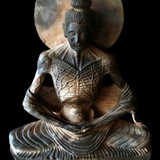
Forwarded from Vajrarastra
New blog! And a brand new entry!
On the Buddhist Concept of Divine Monarchy according to the Golden Light Sutra
https://vajrakingdom.wordpress.com/2023/03/15/on-the-buddhist-concept-of-divine-monarchy-according-to-the-golden-light-sutra/
On the Buddhist Concept of Divine Monarchy according to the Golden Light Sutra
https://vajrakingdom.wordpress.com/2023/03/15/on-the-buddhist-concept-of-divine-monarchy-according-to-the-golden-light-sutra/
Wordpress
On the Buddhist Concept of Divine Monarchy According to the Golden Light Sutra
The idea of a Divine Ruler, either sanctioned by divinity, or praised as a divinity itself, has always been one of the constants in world religion. One of the most archaic forms of divine rulership…
"It is difficult to feel fear without thinking that something is going wrong. We react impulsively when we judge others or ourselves in an attempt to escape the pain of suffering.
It doesn't work, just as running away into the woods doesn't work either. Even sacred places are doomed to disappoint us if we go there motivated by a desire to escape. However, if we take refuge in the Dhamma, interest in understanding fear and learning from it can be triggered.
Can we experience the feeling of fear without becoming afraid? Fear is still fear, but it is recognized through an expanded consciousness that is less foggy and less threatened. We can even begin to realize that fear too 'is what it is'.
A non-judgmental and wholehearted recognition, in body and mind, of the condition of fear, here and now, can transform our pain into freedom. The willingness to recognize where we stand is the way."
Ajahn Munindo
It doesn't work, just as running away into the woods doesn't work either. Even sacred places are doomed to disappoint us if we go there motivated by a desire to escape. However, if we take refuge in the Dhamma, interest in understanding fear and learning from it can be triggered.
Can we experience the feeling of fear without becoming afraid? Fear is still fear, but it is recognized through an expanded consciousness that is less foggy and less threatened. We can even begin to realize that fear too 'is what it is'.
A non-judgmental and wholehearted recognition, in body and mind, of the condition of fear, here and now, can transform our pain into freedom. The willingness to recognize where we stand is the way."
Ajahn Munindo
Forwarded from Dharma Initiative: The Quest for Knowledge
How to interpret surface level contradictions? Listen to this explanation from a Buddhist: “These stories are not contradictory because Highly Realized beings
abide in the Expanse of Great Equanimity with Perfect understanding and can do anything. Everything is possible. Everything is flexible. Enlightened beings can appear in any way they want or need to.”
~ Buddhist Scholar KPS Rinpoche
abide in the Expanse of Great Equanimity with Perfect understanding and can do anything. Everything is possible. Everything is flexible. Enlightened beings can appear in any way they want or need to.”
~ Buddhist Scholar KPS Rinpoche
"The best response to negative emotion is to allow it to self-liberate, by remaining in non-dual consciousness, free from attachment and aversion. If we can do this, the emotion passes through us like a bird flying through space; no trace of its passage remains. The emotion arises and then spontaneously dissolves into emptiness."
Tenzin Wangyal Rinpoche
Tenzin Wangyal Rinpoche
Forwarded from Meditations of a Yogin
“By acknowledging that mind is continuous and the root circumstance of all phenomena, we must try to recognize its pure essence, which is Buddha nature. We must try to transform temporary obscurations into positive, contributing circumstances in order to become the same as all Buddhas. We must try to distill the pure essence from the unclear confusion of subject and object which remains in the fragile coincidence container of our nihilist habit's fragmented mind. Instead of creating impure and contradictory phenomena which are the cause of suffering, we must create pure and complementary phenomena through positive habits that create positive karma in our continuous Buddha nature land until we transcend the phenomena of relative truth and attain enlightenment”
~ Thinley Norbu Rinpoche
~ Thinley Norbu Rinpoche
"Some people think that moral ethics and discipline are not important when practicing the highest tantra yoga and the vision of emptiness; they think that the precepts are meant for lower practitioners and not for advanced ones. This may be going too far. On the contrary, those who are more realized in the subtle aspects of Dharma have an even more sensitive and genuine conduct, setting a great example for the followers.
Following the precepts and keeping them is a 24-hour a day practice. It is a real test for Dharma practitioners to sustain their discipline at every moment for the rest of their lives. Using all our energy in virtuous ways is a very important method for training the body, speech, and mind."
Khenpo Konchog Gyaltsen
Following the precepts and keeping them is a 24-hour a day practice. It is a real test for Dharma practitioners to sustain their discipline at every moment for the rest of their lives. Using all our energy in virtuous ways is a very important method for training the body, speech, and mind."
Khenpo Konchog Gyaltsen
"The nature of space transcends color and shape,
Neither stained nor changed by black or white.
Likewise, the essence of your mind transcends color and shape,
Unpolluted by black or white qualities, misdeeds or virtues.
Just as the bright, clear essence of the sun
Cannot be obscured by the murk of a thousand aeons,
Likewise, the luminous essence of your mind
Can’t be obscured by aeons of samsara.
Though space is given the appellation “empty,”
There’s nothing in space that can be described as such.
Likewise, though mind is described as luminous,
There’s nothing to give a name, saying it’s like this.
Therefore, the nature of mind has always been like space.
There are no phenomena at all not contained within it."
Tilopa
Neither stained nor changed by black or white.
Likewise, the essence of your mind transcends color and shape,
Unpolluted by black or white qualities, misdeeds or virtues.
Just as the bright, clear essence of the sun
Cannot be obscured by the murk of a thousand aeons,
Likewise, the luminous essence of your mind
Can’t be obscured by aeons of samsara.
Though space is given the appellation “empty,”
There’s nothing in space that can be described as such.
Likewise, though mind is described as luminous,
There’s nothing to give a name, saying it’s like this.
Therefore, the nature of mind has always been like space.
There are no phenomena at all not contained within it."
Tilopa
Forwarded from Meditations of a Yogin
“Each sentient being is like a sleeping buddha who is dreaming about inherent existence of self and of all phenomena, and believing the dream to be true.
The practice of buddhism is like the method to wake up from this dream, by waking up to the reality of the lack of inherent existence of self and of all phenomena, to become a fully awakened buddha for the benefit of all sentient beings who are still dreaming”
~ Chamtrul Rinpoche
The practice of buddhism is like the method to wake up from this dream, by waking up to the reality of the lack of inherent existence of self and of all phenomena, to become a fully awakened buddha for the benefit of all sentient beings who are still dreaming”
~ Chamtrul Rinpoche
Forwarded from Egbert Moray-Falls
I take refuge in the Guru.
ཨོཾ་ཨཱཿ གུ་རུ་བཛྲ་དྷ་ར་བྷཊྚཱ་ར་ཀ་མཉྫུ་ཤྲཱི་ཝཱགིནྡྲ་སུ་མ་ཏི་ཛྙཱ་ན་ཤཱ་ས་ན་དྷ་ར་ས་མུ་དྲ་ཤྲཱི་བྷ་དྲ་སརྦ་སིདྡྷི་ཧཱུཾ་ཧཱུཾ།
ཨོཾ་ཨཱཿ གུ་རུ་བཛྲ་དྷ་ར་བྷཊྚཱ་ར་ཀ་མཉྫུ་ཤྲཱི་ཝཱགིནྡྲ་སུ་མ་ཏི་ཛྙཱ་ན་ཤཱ་ས་ན་དྷ་ར་ས་མུ་དྲ་ཤྲཱི་བྷ་དྲ་སརྦ་སིདྡྷི་ཧཱུཾ་ཧཱུཾ།
"All of this is merely mind,
Coming about like an illusion.
Through this, good and bad actions,
As well as good and bad rebirths [occur].
Through the wheel of mind stopping,
All phenomena come to a standstill.
Therefore, the nature of phenomena is identityless.
Hence, the nature of phenomena is completely pure."
Nagarjuna, Mahāyānaviṃśikā Verses 19-20
Coming about like an illusion.
Through this, good and bad actions,
As well as good and bad rebirths [occur].
Through the wheel of mind stopping,
All phenomena come to a standstill.
Therefore, the nature of phenomena is identityless.
Hence, the nature of phenomena is completely pure."
Nagarjuna, Mahāyānaviṃśikā Verses 19-20
"Concerning this statement, “Form is empty of form,” there are also three aspects of form—imagined form, imputed form, and the form of the true nature.
That which is the form of entities apprehended by childish ordinary persons as characteristics suitable to be form and so forth is known as “imagined form.”
Precisely that, in whatever aspect it becomes an object of consciousness appearing as an external entity, is known as “imputed form.”
That which is free from the aspects of both the imagined and the imputed, and is solely the fully established thusness, is known as “the form of the true nature.”
That which is the fully established, the form of the true nature, is empty of the characteristics of existence as imagined form and so forth, and also empty of form that appears in the aspect of an object imputed as form, so it is known as “empty.”
Thus it is explained. But you may have doubts, wondering, “Does that which is the form of the true nature, empty of imagined and imputed form, have some other characteristic of form? Why is it even known as ‘form’?”
Therefore it is explained, “That which is the emptiness of form is also not form.” Precisely that which is empty of imagined and imputed form is the characteristic of the fully established. That form of the true nature is not the quintessence of form, because it is in all aspects isolated from the aspect of form."
Vasubandhu, Vast Explication (Bṛhaṭṭīkā)
That which is the form of entities apprehended by childish ordinary persons as characteristics suitable to be form and so forth is known as “imagined form.”
Precisely that, in whatever aspect it becomes an object of consciousness appearing as an external entity, is known as “imputed form.”
That which is free from the aspects of both the imagined and the imputed, and is solely the fully established thusness, is known as “the form of the true nature.”
That which is the fully established, the form of the true nature, is empty of the characteristics of existence as imagined form and so forth, and also empty of form that appears in the aspect of an object imputed as form, so it is known as “empty.”
Thus it is explained. But you may have doubts, wondering, “Does that which is the form of the true nature, empty of imagined and imputed form, have some other characteristic of form? Why is it even known as ‘form’?”
Therefore it is explained, “That which is the emptiness of form is also not form.” Precisely that which is empty of imagined and imputed form is the characteristic of the fully established. That form of the true nature is not the quintessence of form, because it is in all aspects isolated from the aspect of form."
Vasubandhu, Vast Explication (Bṛhaṭṭīkā)
"I bow at the feet of the masters who teach that, like a butter lamp within a vase, the treasure of a pauper, and so forth, the sugata essence, luminosity, or the dharmakāya exists within the sheath of the relative, incidental aggregates.
I bow at the feet of the masters who carefully distinguish, “All imagined and dependent phenomena are nonexistent, but the fully established true nature is never nonexistent,” teaching what transcends existence and nonexistence, and eternalism and nihilism.
I bow at the feet of the masters who teach, “All relative phenomena are merely the dependent origination of cause and result, but the self-arisen absolute transcends dependent origination,” teaching the difference between primordial awareness that arises from conditions, and what is self-arisen."
Dolpopa
I bow at the feet of the masters who carefully distinguish, “All imagined and dependent phenomena are nonexistent, but the fully established true nature is never nonexistent,” teaching what transcends existence and nonexistence, and eternalism and nihilism.
I bow at the feet of the masters who teach, “All relative phenomena are merely the dependent origination of cause and result, but the self-arisen absolute transcends dependent origination,” teaching the difference between primordial awareness that arises from conditions, and what is self-arisen."
Dolpopa
Forwarded from Meditations of a Yogin
“The mind cannot be grasped; it is the expanse of emptiness
Consciousness is clear and empty, free from conceptual mind
Leave the mind as it is and look, with awareness observing itself
And you will meet insight meditation face to face”
~ Gyalwa Yangonpa
Consciousness is clear and empty, free from conceptual mind
Leave the mind as it is and look, with awareness observing itself
And you will meet insight meditation face to face”
~ Gyalwa Yangonpa
"Whatever is the dharmatā form is the primordial awareness of emptiness. Whatever is the primordial awareness of emptiness, appears as the dharmatā form.
Even if you understand merely that these two have a common locus, in order to refute any doubt that thinks it possible for there to be empty primordial awareness that is not the ultimate form (don dam gyi gzugs), and that it is possible for there to be ultimate form that is not empty primordial awareness [there are the lines]: “Emptiness is no other than form.”
Here ‘empty’ [does] not [mean] completely empty, but primordial awareness empty of dualism. The ultimate form aggregate (don dam pa’i gzug phungs) is not the form aggregate. The ultimate aspect of the form aggregate within the [endowed with] all supreme aspects dharmadhātu is the dharmatā form aggregate or the ultimate form aggregate."
Tāranātha
Even if you understand merely that these two have a common locus, in order to refute any doubt that thinks it possible for there to be empty primordial awareness that is not the ultimate form (don dam gyi gzugs), and that it is possible for there to be ultimate form that is not empty primordial awareness [there are the lines]: “Emptiness is no other than form.”
Here ‘empty’ [does] not [mean] completely empty, but primordial awareness empty of dualism. The ultimate form aggregate (don dam pa’i gzug phungs) is not the form aggregate. The ultimate aspect of the form aggregate within the [endowed with] all supreme aspects dharmadhātu is the dharmatā form aggregate or the ultimate form aggregate."
Tāranātha