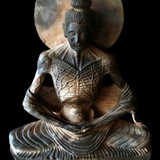
Recollecting Rebirth Oneself and Spontaneous recall, by Martin Willson
"Spontaneous recall, generally the recollection by a child of his immediately preceding life, and often of how he passed from that death to the present birth, is more common than is often thought. Normally, especially in the West, a young child who talks of its previous life soon learns not to. Doubtless any mother would tend to tire of repeated requests by her child to go "home" to its previous family, perhaps telling her "My own mother is much better than you." A life spontaneously recalled is generally very recent, so that there are likely to be persons still living who remember the deceased person. In these circumstances, very strong confirmation is often possible.
The child may give much detailed information on his former family and home, often not very far away but unknown to his present family, which can be confirmed by visiting the past-life abode. If the child comes on such a visit (as he is generally eager to do), he recognises places, buildings, and people known to him in his former life, and his former possessions, comments on changes since he was there, asks after missing possessions and old acquaintances, and so on.
If he died by violence (which apparently makes quick rebirth and spontaneous recall more probable), he may give details of his murder which can be confirmed from police records and witnesses.
There can also be other circumstantial evidence supporting the child's claim. If he was known to his new mother in his previous life, she may well have had a significant dream or vision of his coming to her, before his birth. The child may carry birthmarks resembling and in the same place as the wounds which caused his previous death, or even reproducing a mark deliberately applied to his predecessor's body to enable identification if he should be reborn in that family.
Some 1600 cases of spontaneous recall in various parts of the world, including 241 in Europe, have been investigated with great thoroughness by Dr. Ian Stevenson of the University of Virginia. This work provides the strongest scientific evidence for rebirth that we yet have-anyone of a scientific tum of mind who still doubts the reality of rebirth should definitely read some of the reports of it, in full."
"Spontaneous recall, generally the recollection by a child of his immediately preceding life, and often of how he passed from that death to the present birth, is more common than is often thought. Normally, especially in the West, a young child who talks of its previous life soon learns not to. Doubtless any mother would tend to tire of repeated requests by her child to go "home" to its previous family, perhaps telling her "My own mother is much better than you." A life spontaneously recalled is generally very recent, so that there are likely to be persons still living who remember the deceased person. In these circumstances, very strong confirmation is often possible.
The child may give much detailed information on his former family and home, often not very far away but unknown to his present family, which can be confirmed by visiting the past-life abode. If the child comes on such a visit (as he is generally eager to do), he recognises places, buildings, and people known to him in his former life, and his former possessions, comments on changes since he was there, asks after missing possessions and old acquaintances, and so on.
If he died by violence (which apparently makes quick rebirth and spontaneous recall more probable), he may give details of his murder which can be confirmed from police records and witnesses.
There can also be other circumstantial evidence supporting the child's claim. If he was known to his new mother in his previous life, she may well have had a significant dream or vision of his coming to her, before his birth. The child may carry birthmarks resembling and in the same place as the wounds which caused his previous death, or even reproducing a mark deliberately applied to his predecessor's body to enable identification if he should be reborn in that family.
Some 1600 cases of spontaneous recall in various parts of the world, including 241 in Europe, have been investigated with great thoroughness by Dr. Ian Stevenson of the University of Virginia. This work provides the strongest scientific evidence for rebirth that we yet have-anyone of a scientific tum of mind who still doubts the reality of rebirth should definitely read some of the reports of it, in full."
Forwarded from Buddha Words
Waking up late, adultery,
living with hatred, harming others,
associating with bad friends, and greediness:
these six things ruin a person.
Gambling, associating with others’ wives,
drinking alcohol, infatuated with music and dance;
sleeping by day and roaming at night;
bad friends, and excessive greed:
these six things ruin a person.
- Buddha's advice to Sigālaka
living with hatred, harming others,
associating with bad friends, and greediness:
these six things ruin a person.
Gambling, associating with others’ wives,
drinking alcohol, infatuated with music and dance;
sleeping by day and roaming at night;
bad friends, and excessive greed:
these six things ruin a person.
- Buddha's advice to Sigālaka
Forwarded from MAHASIDDHAS, MAHAMUDRA & DZOGCHEN 👹
“suffering is spontaneously present as great bliss; the obscurations
intrinsically blaze forth as wisdom.”
The Lamp (STMD)
intrinsically blaze forth as wisdom.”
The Lamp (STMD)
❤1
"A person is a dependent imputation on the aggregates. There is no person self-sufficient or standing up on its own."
Geshe Lobsang Gyatso
Geshe Lobsang Gyatso
"We beg you not to worry. After the Buddha has passed into extinction, in an age of fear and evil we will preach far and wide. There will be many ignorant people who will curse and speak ill of us and will attack us with swords and staves, but we will endure all these things.
In that evil age there will be monks with perverse wisdom and hearts that are fawning and crooked who will suppose they have attained what they have not attained, being proud and boastful in heart.
Or there will be forest-dwelling monks wearing clothing of patched rags and living in retirement, who will claim they are practicing the true way,
despising and looking down on all humankind.
Greedy for profit and support, they will preach the Law to white-robed laymen and will be respected and revered by the world as though they were arhats who possess the six transcendental powers. These men with evil in their hearts, constantly thinking of worldly affairs, will borrow the name of forest-dwelling monks and take delight in proclaiming our faults,
saying things like this:
“These monks are greedy for profit and support and therefore they preach non-Buddhist doctrines and fabricate their own noscriptures to delude the people of the world. Because they hope to gain fame and renown thereby they make distinctions when preaching this sutra.”
Because in the midst of great assemblies they constantly try to defame us, they will address the rulers, high ministers, Brahmans, and householders, as well as the other monks, slandering and speaking evil of us, saying, “These are men of perverted views who preach non-Buddhist doctrines!”
But because we revere the Buddha we will bear all these evils. Though they treat us with contempt, saying, “You are all no doubt buddhas!” all such words of arrogance and contempt we will endure and accept. In a muddied kalpa, in an evil age, there will be many things to fear.
Evil demons will take possession of others and through them curse, revile, and heap shame on us. But we, reverently trusting in the Buddha, will put on the armor of perseverance. In order to preach this sutra we will bear these difficult things."
LS ch.13, Encouraging Devotion.
In that evil age there will be monks with perverse wisdom and hearts that are fawning and crooked who will suppose they have attained what they have not attained, being proud and boastful in heart.
Or there will be forest-dwelling monks wearing clothing of patched rags and living in retirement, who will claim they are practicing the true way,
despising and looking down on all humankind.
Greedy for profit and support, they will preach the Law to white-robed laymen and will be respected and revered by the world as though they were arhats who possess the six transcendental powers. These men with evil in their hearts, constantly thinking of worldly affairs, will borrow the name of forest-dwelling monks and take delight in proclaiming our faults,
saying things like this:
“These monks are greedy for profit and support and therefore they preach non-Buddhist doctrines and fabricate their own noscriptures to delude the people of the world. Because they hope to gain fame and renown thereby they make distinctions when preaching this sutra.”
Because in the midst of great assemblies they constantly try to defame us, they will address the rulers, high ministers, Brahmans, and householders, as well as the other monks, slandering and speaking evil of us, saying, “These are men of perverted views who preach non-Buddhist doctrines!”
But because we revere the Buddha we will bear all these evils. Though they treat us with contempt, saying, “You are all no doubt buddhas!” all such words of arrogance and contempt we will endure and accept. In a muddied kalpa, in an evil age, there will be many things to fear.
Evil demons will take possession of others and through them curse, revile, and heap shame on us. But we, reverently trusting in the Buddha, will put on the armor of perseverance. In order to preach this sutra we will bear these difficult things."
LS ch.13, Encouraging Devotion.
Forwarded from Egbert Moray-Falls
What it means to Slander the Law Extracts.pdf
157.4 KB
For those of you who are brave enough to read the heavy Buddhist stuff.
Forwarded from Egbert Moray-Falls
Failing to believe that you can attain Buddhahood is the true offence Nichiren is warning against in this text. If you fail to believe in your potential to attain Buddhahood you will fall, not into one of the lesser hells, but into the great Avichi hell to remain there for one medium kalpa. The is what it really means to slander the Law (Dharma).
"Great hatred is the fetter of hell,
Great avarice the preta's chain,
Great delusion the animal's.
Great desire is the human fetter,
Great jealousy is the asura's,
And great pride the deva's chain. These are six fetters binding one from Freedom."
Milarepa
Great avarice the preta's chain,
Great delusion the animal's.
Great desire is the human fetter,
Great jealousy is the asura's,
And great pride the deva's chain. These are six fetters binding one from Freedom."
Milarepa
Forwarded from Egbert Moray-Falls
It seems this text has caused some confusion. Below is another quotation from Nichiren that I hope will make clear his meaning.
"You must never think that any of the eighty thousand sacred teachings of Shakyamuni Buddha’s lifetime or any of the Buddhas and bodhisattvas of the ten directions and three existences are outside yourself. Your practice of the Buddhist teachings will not relieve you of the sufferings of birth and death in the least unless you perceive the true nature of your life. If you seek enlightenment outside yourself, then your performing even ten thousand practices and ten thousand good deeds will be in vain. It is like the case of a poor man who spends night and day counting his neighbor’s wealth but gains not even half a coin. That is why the T’ien-t’ai school’s commentary states, 'Unless one perceives the nature of one’s life, one cannot eradicate one’s grave offenses.' This passage implies that, unless one perceives the nature of one’s life, one’s practice will become an endless, painful austerity. Therefore, such students of Buddhism are condemned as non-Buddhist. Great Concentration and Insight states that, although they study Buddhism, their views are no different from those of non-Buddhists.
"Whether you chant the Buddha’s name, recite the sutra, or merely offer flowers and incense, all your virtuous acts will implant benefits and roots of goodness in your life. With this conviction you should strive in faith."
"You must never think that any of the eighty thousand sacred teachings of Shakyamuni Buddha’s lifetime or any of the Buddhas and bodhisattvas of the ten directions and three existences are outside yourself. Your practice of the Buddhist teachings will not relieve you of the sufferings of birth and death in the least unless you perceive the true nature of your life. If you seek enlightenment outside yourself, then your performing even ten thousand practices and ten thousand good deeds will be in vain. It is like the case of a poor man who spends night and day counting his neighbor’s wealth but gains not even half a coin. That is why the T’ien-t’ai school’s commentary states, 'Unless one perceives the nature of one’s life, one cannot eradicate one’s grave offenses.' This passage implies that, unless one perceives the nature of one’s life, one’s practice will become an endless, painful austerity. Therefore, such students of Buddhism are condemned as non-Buddhist. Great Concentration and Insight states that, although they study Buddhism, their views are no different from those of non-Buddhists.
"Whether you chant the Buddha’s name, recite the sutra, or merely offer flowers and incense, all your virtuous acts will implant benefits and roots of goodness in your life. With this conviction you should strive in faith."
Forwarded from Vajrarastra
Not all Dharmapālas are wrathful, and not all wrathful deities are Dharmapālas. Dharmapāla is a technical term and it should be used instead of the generic "protector deity" label, since, in theory, all deities protect beings, however not all have protection as a specific function.
https://youtu.be/K7lXta9XtGk
https://youtu.be/K7lXta9XtGk
YouTube
Protector Deities: Function Versus Appearance
It is a common misconception and mistake to think that all wrathful deities in Tibetan Buddhism are protectors, or that a defining characteristic for a protector deity is wrathful appearance. This is clearly inaccurate and not the meaning or the purpose of…
"Dzongsar Jamyang Khyentse calls on Westerners to acknowledge the distortions we may bring to the study of Buddhism—through our cultural arrogance, the deceipt of ego, and simple ignorance. The successful transplant of such a subtle and challenging practice as Buddhism, he says, depends on thorough study and clear recognition of our habitual patterns.”
Editor, Shambhala Sun
https://www.siddharthasintent.org/resources/features/from-the-archives-distortion/
Editor, Shambhala Sun
https://www.siddharthasintent.org/resources/features/from-the-archives-distortion/
Forwarded from Vajrarastra
Buddha Weekly: Buddhist Practices, Mindfulness, Meditation
Guru Rinpoche's advice for visualizing the deity: a how-to from Padmasambhava with advice from today's teachers (with video how…
For many Vajrayana Buddhists, nothing is more difficult than generating (creating) a detailed, stable and complete visualization. Yet, at the same time, it is
Forwarded from Egbert Moray-Falls
Padmasambhava Dakini Teachings.pdf
1.4 MB
Guru Rinpoche's advice on receiving empowerments and practicing tantra. Including a short biography of Padmasambhava.
Forwarded from Dharma Events
Ven. Lama Kunga Rinpoche has kindly agreed to bestow the
Emowerment of Green Tara in the Atisha tradition through Zoom.
The day is Thursday, April 28, 2022
The time is 7:00 pm Pacific Daylight Time.
Everyone is welcome. Attendance is by pre-registration only.
Donations for the event and for Lama Kunga Rinpoche are accepted online (see below).
https://us06web.zoom.us/meeting/register/tZUkde2grzMpHNd_afKENvOaXGF0y145wLZS
Emowerment of Green Tara in the Atisha tradition through Zoom.
The day is Thursday, April 28, 2022
The time is 7:00 pm Pacific Daylight Time.
Everyone is welcome. Attendance is by pre-registration only.
Donations for the event and for Lama Kunga Rinpoche are accepted online (see below).
https://us06web.zoom.us/meeting/register/tZUkde2grzMpHNd_afKENvOaXGF0y145wLZS
Zoom Video Communications
Welcome! You are invited to join a meeting: Green Tara Initiation with Lama Kunga Rinpoche. After registering, you will receive…
I call Einodian Hecate,
lovely dame, of earthly, wat’ry, and celestial frame,
Sepulchral, in a saffron veil array’d, leas’d with dark ghosts that wander thro’ the shade;
Persian, unconquerable huntress hail!
The world’s key-bearer never doom’d to fail
On the rough rock to wander thee delights, leader and nurse be present to our rites
Propitious grant our just desires success, accept our homage,
and the incense bless.
lovely dame, of earthly, wat’ry, and celestial frame,
Sepulchral, in a saffron veil array’d, leas’d with dark ghosts that wander thro’ the shade;
Persian, unconquerable huntress hail!
The world’s key-bearer never doom’d to fail
On the rough rock to wander thee delights, leader and nurse be present to our rites
Propitious grant our just desires success, accept our homage,
and the incense bless.
"“I must stress here that visualize does not mean you should try to paint a picture of the refuge tree in your mind; that would be impossible. Visualization is very like thinking about the person who is closest to you in this life-your mother, for example. Try imagining her standing in front of you right now. As you do so, I’m quite sure you are not thinking about the exact shape of her ear. Or whether or not her toes curl. Or how many moles she has on her back. In fact, that kind of detail has probably never even occurred to you. At the same time, I am equally sure that you have created a strong sense of your mother in your mind and that you are completely confident it really is her. This is how you should visualize the objects of refuge, and the confidence you feel in your visualization is of utmost importance.”
Dzongsar Khyentse Norbu
Dzongsar Khyentse Norbu