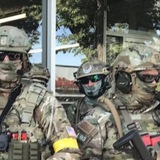
Lukashenko spoke openly about his communication with Prigozhin, head of Wagner:
The [Wagner PMC] guys are just from the front. They have seen thousands of their guys die. The guys are very offended, especially the commanders. And, as I understood, they were seriously influencing Prigozhin himself.
Yes, he is such a, you know, heroic guy, but he was pressured and influenced very much by those who led assault groups and saw these deaths. And so in this situation, having jumped out of there into Rostov, in such a half-frenzied state, I have this dialogue with him."
So basically he was influenced by the actual soldiers that were in Ukraine and saw how little progress they were making, they were probably exposed to the bullshit involving the invasion, they saw their guys die
The [Wagner PMC] guys are just from the front. They have seen thousands of their guys die. The guys are very offended, especially the commanders. And, as I understood, they were seriously influencing Prigozhin himself.
Yes, he is such a, you know, heroic guy, but he was pressured and influenced very much by those who led assault groups and saw these deaths. And so in this situation, having jumped out of there into Rostov, in such a half-frenzied state, I have this dialogue with him."
So basically he was influenced by the actual soldiers that were in Ukraine and saw how little progress they were making, they were probably exposed to the bullshit involving the invasion, they saw their guys die
It’s funny how Russia gave soldiers a medal just for surviving the U.S. Military.
Ukraine has for the first time liberated territory which has been under Russian control since 2014, British intelligence officials said.
The small patch of land is in an area near Krasnohorivka, some 10 miles south west of the city of Donetsk.
The capture marks the first time since Russia’s invasion in February last year that Ukraine’s forces have been able to retake land seized in the initial Donbas invasion eight years prior.
Ukrainian troops were said to have liberated the lands last week, but news of the victory has been kept secret until now for tactical reasons.
“Ukrainian Airborne forces have made small advances east from the village of Krasnohorivka, near Donetsk city, which sits on the old Line of Control,” Britain’s MoD said on Tuesday in its daily intelligence update.
“This is one of the first instances since Russia’s February 2022 invasion that Ukrainian forces have highly likely recaptured an area of territory occupied by Russia since 2014.”
A spokesman for the Ukrainian military said the land was recaptured in a “well-prepared assault”.
“There were initiations of actions, and support from artillery and heavy equipment. They also cleared certain areas of mines,” Valerii Shershen, a spokesman for the Tavria Defence Force, said.
He described the advance by Ukrainian troops as “unexpected”, and said Russia had been fighting hard to drive Kyiv’s forces out of the newly captured positions with daily assaults and heavy shelling.
“This has a symbolic meaning for us, a moment of principle, and a certain improvement in the tactical situation,” the spokesman added.
In his overnight address on Monday, President Volodymyr Zelensky said it was a “happy day” for Ukraine but did not reveal specific details of Kyiv’s advances.
“Our warriors have advanced in all directions, and this is a happy day. I wished the guys more days like this,” he said.
In 2014, Russia illegally annexed the Crimean peninsula, while forces backed by Moscow seized control of parts of the Donetsk and Luhansk regions neighbouring the Russian mainland.
Mr Zelensky has vowed to end the war with Russia by reclaiming those territories, restoring Ukraine’s borders as recognised at the time of the Soviet Union’s collapse in 1991.
The small patch of land is in an area near Krasnohorivka, some 10 miles south west of the city of Donetsk.
The capture marks the first time since Russia’s invasion in February last year that Ukraine’s forces have been able to retake land seized in the initial Donbas invasion eight years prior.
Ukrainian troops were said to have liberated the lands last week, but news of the victory has been kept secret until now for tactical reasons.
“Ukrainian Airborne forces have made small advances east from the village of Krasnohorivka, near Donetsk city, which sits on the old Line of Control,” Britain’s MoD said on Tuesday in its daily intelligence update.
“This is one of the first instances since Russia’s February 2022 invasion that Ukrainian forces have highly likely recaptured an area of territory occupied by Russia since 2014.”
A spokesman for the Ukrainian military said the land was recaptured in a “well-prepared assault”.
“There were initiations of actions, and support from artillery and heavy equipment. They also cleared certain areas of mines,” Valerii Shershen, a spokesman for the Tavria Defence Force, said.
He described the advance by Ukrainian troops as “unexpected”, and said Russia had been fighting hard to drive Kyiv’s forces out of the newly captured positions with daily assaults and heavy shelling.
“This has a symbolic meaning for us, a moment of principle, and a certain improvement in the tactical situation,” the spokesman added.
In his overnight address on Monday, President Volodymyr Zelensky said it was a “happy day” for Ukraine but did not reveal specific details of Kyiv’s advances.
“Our warriors have advanced in all directions, and this is a happy day. I wished the guys more days like this,” he said.
In 2014, Russia illegally annexed the Crimean peninsula, while forces backed by Moscow seized control of parts of the Donetsk and Luhansk regions neighbouring the Russian mainland.
Mr Zelensky has vowed to end the war with Russia by reclaiming those territories, restoring Ukraine’s borders as recognised at the time of the Soviet Union’s collapse in 1991.
Ukraine has been embroiled in a protracted conflict, fighting for its sovereignty and freedom against external aggression. In this struggle, various Ukrainian battalions and individuals with diverse ideological backgrounds have emerged, some of whom harbor neo-Nazi or extreme views. While the presence of such ideologies raises controversy, it is essential to recognize the complexities surrounding their role and understand the importance of preserving political freedom amidst the ongoing conflict.
Ukrainian battalions, comprised of individuals with different ideological leanings, have played a crucial role in defending Ukraine's independence. The conflict has brought together people from various walks of life who share a common goal: protecting their nation's territorial integrity and preserving its freedom. While the presence of extreme ideologies within these battalions is controversial, it should not overshadow their collective fight for Ukraine's political self-determination.
It is important to acknowledge that not all individuals within Ukrainian battalions espouse extremist ideologies. Many join these groups due to their deep-rooted patriotism, desire for self-defense, or simply as a response to the external threat to their homeland. Ukrainian society encompasses a wide range of political beliefs, and the battalions reflect this diversity, with individuals from different backgrounds standing united against the common enemy.
The presence of neo-Nazi or extreme ideologies within Ukrainian battalions is undoubtedly a contentious issue. However, it is important to recognize that the conflict has created a complex environment where individuals with extreme views have found an outlet. Focusing solely on these elements risks oversimplifying the situation and undermining the broader struggle for political freedom.
Ukrainian battalions, comprised of individuals with different ideological leanings, have played a crucial role in defending Ukraine's independence. The conflict has brought together people from various walks of life who share a common goal: protecting their nation's territorial integrity and preserving its freedom. While the presence of extreme ideologies within these battalions is controversial, it should not overshadow their collective fight for Ukraine's political self-determination.
It is important to acknowledge that not all individuals within Ukrainian battalions espouse extremist ideologies. Many join these groups due to their deep-rooted patriotism, desire for self-defense, or simply as a response to the external threat to their homeland. Ukrainian society encompasses a wide range of political beliefs, and the battalions reflect this diversity, with individuals from different backgrounds standing united against the common enemy.
The presence of neo-Nazi or extreme ideologies within Ukrainian battalions is undoubtedly a contentious issue. However, it is important to recognize that the conflict has created a complex environment where individuals with extreme views have found an outlet. Focusing solely on these elements risks oversimplifying the situation and undermining the broader struggle for political freedom.
This media is not supported in your browser
VIEW IN TELEGRAM
Cost of Russia's war on Ukraine
Taken from US Embassy in Moscow's Telegram
https://news.1rj.ru/str/USEmbRussia
Taken from US Embassy in Moscow's Telegram
https://news.1rj.ru/str/USEmbRussia
Throughout history, Russia has faced accusations of betraying its own soldiers, undermining the trust and loyalty that soldiers place in their government. This essay sheds light on this troubling aspect of Russian history, focusing on the case of Arsen Pavlov, known as Motorola, a Russian separatist commander in Ukraine who was likely killed by Russian forces. This case highlights the complexity and contradictions within the Russian military apparatus, raising concerns about the welfare and safety of soldiers under Russian command.
Russia has a long history of betraying its own soldiers, dating back to the Soviet era. From the harsh treatment of soldiers during World War II to the secret burial of fallen soldiers during the conflicts in Chechnya, the Russian government's actions have often contradicted the principles of duty, honor, and loyalty expected of military institutions.
Arsen Pavlov (Motorola), a prominent figure in the Russian-backed separatist movement in eastern Ukraine, was a key player in the conflict. However, his eventual demise at the hands of Russian forces raises questions about the loyalty and support provided to soldiers on the front lines. While the exact circumstances of his death remain unclear, evidence suggests that Russian forces were responsible for his demise.
The case of Arsen Pavlov highlights how soldiers can be manipulated and used as pawns in Russia's political agenda. By supporting separatist movements in Ukraine, Russia sought to destabilize its neighboring country, furthering its own geopolitical interests. However, this manipulation of soldiers, including their eventual betrayal, underscores a disregard for the lives and well-being of those serving under the Russian flag.
The Russian government has a long-standing culture of secrecy and denial regarding its actions, particularly concerning the treatment and fate of its soldiers. Instances of soldiers being abandoned, mistreated, or even killed without acknowledgment are often swept under the rug, leaving families and fellow soldiers in anguish and disillusionment.
Betrayal of soldiers by their own government has a profound impact on morale and trust within the ranks. When soldiers witness the disregard for their lives and the lives of their comrades, it erodes the foundation of trust upon which military units are built. Such betrayals can have lasting psychological effects, damaging the fighting spirit and commitment of soldiers.
Those who fight for the Russian flag have embedded themselves with a ticking time bomb, and it is an eventuality that they will eventually be stabbed in the back by the country that they serve if they are no longer deemed useful.
Russia has a long history of betraying its own soldiers, dating back to the Soviet era. From the harsh treatment of soldiers during World War II to the secret burial of fallen soldiers during the conflicts in Chechnya, the Russian government's actions have often contradicted the principles of duty, honor, and loyalty expected of military institutions.
Arsen Pavlov (Motorola), a prominent figure in the Russian-backed separatist movement in eastern Ukraine, was a key player in the conflict. However, his eventual demise at the hands of Russian forces raises questions about the loyalty and support provided to soldiers on the front lines. While the exact circumstances of his death remain unclear, evidence suggests that Russian forces were responsible for his demise.
The case of Arsen Pavlov highlights how soldiers can be manipulated and used as pawns in Russia's political agenda. By supporting separatist movements in Ukraine, Russia sought to destabilize its neighboring country, furthering its own geopolitical interests. However, this manipulation of soldiers, including their eventual betrayal, underscores a disregard for the lives and well-being of those serving under the Russian flag.
The Russian government has a long-standing culture of secrecy and denial regarding its actions, particularly concerning the treatment and fate of its soldiers. Instances of soldiers being abandoned, mistreated, or even killed without acknowledgment are often swept under the rug, leaving families and fellow soldiers in anguish and disillusionment.
Betrayal of soldiers by their own government has a profound impact on morale and trust within the ranks. When soldiers witness the disregard for their lives and the lives of their comrades, it erodes the foundation of trust upon which military units are built. Such betrayals can have lasting psychological effects, damaging the fighting spirit and commitment of soldiers.
Those who fight for the Russian flag have embedded themselves with a ticking time bomb, and it is an eventuality that they will eventually be stabbed in the back by the country that they serve if they are no longer deemed useful.
One of the Russian warplanes reportedly shot down during the Wagner rebellion was a “special mission aircraft” with a key role in Russia’s war in Ukraine, the British Ministry of Defence has said.
In its latest intelligence update, the defence ministry said that on Saturday air defence forces of the Wagner group had reportedly shot down an II-22M aircraft, part of a relatively small fleet of 12 “heavily utilised for both airborne command and control, and radio relay tasks.
The loss of the craft could have a longer term impact on Russia’s air capability, the ministry warned, as “there is a possibility that current tasking levels may have to be reduced to safely manage the remaining fleet.”
“This will likely undermine Russia’s ability to command and coordinate its forces, particularly during periods of high tempo operations.”
In its latest intelligence update, the defence ministry said that on Saturday air defence forces of the Wagner group had reportedly shot down an II-22M aircraft, part of a relatively small fleet of 12 “heavily utilised for both airborne command and control, and radio relay tasks.
The loss of the craft could have a longer term impact on Russia’s air capability, the ministry warned, as “there is a possibility that current tasking levels may have to be reduced to safely manage the remaining fleet.”
“This will likely undermine Russia’s ability to command and coordinate its forces, particularly during periods of high tempo operations.”
The Russian Empire, which spanned from the 18th to the early 20th century, held a prominent place in history and left a lasting impact on the world. During this era, the Russian Empire was guided by certain ideals and principles that emphasized cultural diversity, expansion through diplomacy, and respect for sovereignty. However, in recent times, the actions of modern Russia, particularly its invasion of Ukraine in 2022 and its actions in Donbass, stand in stark contrast to the values upheld by the Russian Empire. Modern supporters of the old Russian Empire need to realize that the lies which are spread by Putin about his Russia being traditional and in any way aligning with tradition are misinformation meant to align these supporters with his Communist-leaning government.
One of the core values of the Russian Empire was its commitment to cultural diversity and the preservation of various ethnic and religious communities within its borders. The empire respected the traditions, languages, and beliefs of different groups, recognizing that the strength of a nation lay in its ability to embrace diversity. However, the actions of modern Russia in Ukraine, including the support for separatist movements, undermine the principles of cultural tolerance and threaten the stability of the region. This departure from the empire's ideals warrants critical examination and reflection.
The Russian Empire pursued territorial expansion primarily through diplomatic means rather than resorting to force. It engaged in treaties, negotiations, and alliances to secure its borders and extend its influence. In contrast, modern Russia's invasion of Ukraine in 2022 represents a departure from this approach. The use of military force to assert control over sovereign territories undermines the diplomatic legacy of the Russian Empire and disregards the principles of international law and peaceful coexistence.
The Russian Empire respected the sovereignty of other nations and recognized the importance of self-determination. It engaged in diplomacy and mutual agreements, recognizing the rights of neighboring states to govern their own affairs. However, modern Russia's actions in Ukraine challenge the principles of sovereignty and non-interference. By supporting separatist movements and annexing Crimea, Russia has violated the territorial integrity of Ukraine and undermined the foundations of the nation-state system, which the Russian Empire once upheld.
The Russian Empire prioritized economic and social progress, investing in infrastructure, education, and industrialization to improve the lives of its citizens. In contrast, modern Russia's actions divert resources and attention away from domestic development. The costs associated with military interventions and ongoing conflicts in Ukraine impede the nation's potential for growth and hinder the welfare of its people.
I do not intend to say that the Russian Empire was in any way perfect, as for example they historically were against Ukrainian sovereignty. While the Russian Empire's opposition to Ukrainian sovereignty may have been seen as an obstacle to Ukrainian independence, it is important to recognize that this stance was not necessarily rooted in an inherent hatred towards Ukraine. Instead, it stemmed from the empire's ownership of the land at the time and the desire to maintain territorial integrity. The Russian Empire viewed Ukraine as an integral part of its vast territory and sought to preserve its control over the region.
Historical evidence suggests that the Russian Empire, during its reign, treated Ukrainian citizens relatively well, particularly when compared to the subsequent Soviet era. Under the empire's rule, Ukraine experienced periods of cultural and economic growth. For instance, in the late 19th and early 20th centuries, Ukrainian cultural and educational institutions flourished. Ukrainian-language publications and educational institutions were established, allowing for the development and preservation of Ukrainian language, literature, and culture.
One of the core values of the Russian Empire was its commitment to cultural diversity and the preservation of various ethnic and religious communities within its borders. The empire respected the traditions, languages, and beliefs of different groups, recognizing that the strength of a nation lay in its ability to embrace diversity. However, the actions of modern Russia in Ukraine, including the support for separatist movements, undermine the principles of cultural tolerance and threaten the stability of the region. This departure from the empire's ideals warrants critical examination and reflection.
The Russian Empire pursued territorial expansion primarily through diplomatic means rather than resorting to force. It engaged in treaties, negotiations, and alliances to secure its borders and extend its influence. In contrast, modern Russia's invasion of Ukraine in 2022 represents a departure from this approach. The use of military force to assert control over sovereign territories undermines the diplomatic legacy of the Russian Empire and disregards the principles of international law and peaceful coexistence.
The Russian Empire respected the sovereignty of other nations and recognized the importance of self-determination. It engaged in diplomacy and mutual agreements, recognizing the rights of neighboring states to govern their own affairs. However, modern Russia's actions in Ukraine challenge the principles of sovereignty and non-interference. By supporting separatist movements and annexing Crimea, Russia has violated the territorial integrity of Ukraine and undermined the foundations of the nation-state system, which the Russian Empire once upheld.
The Russian Empire prioritized economic and social progress, investing in infrastructure, education, and industrialization to improve the lives of its citizens. In contrast, modern Russia's actions divert resources and attention away from domestic development. The costs associated with military interventions and ongoing conflicts in Ukraine impede the nation's potential for growth and hinder the welfare of its people.
I do not intend to say that the Russian Empire was in any way perfect, as for example they historically were against Ukrainian sovereignty. While the Russian Empire's opposition to Ukrainian sovereignty may have been seen as an obstacle to Ukrainian independence, it is important to recognize that this stance was not necessarily rooted in an inherent hatred towards Ukraine. Instead, it stemmed from the empire's ownership of the land at the time and the desire to maintain territorial integrity. The Russian Empire viewed Ukraine as an integral part of its vast territory and sought to preserve its control over the region.
Historical evidence suggests that the Russian Empire, during its reign, treated Ukrainian citizens relatively well, particularly when compared to the subsequent Soviet era. Under the empire's rule, Ukraine experienced periods of cultural and economic growth. For instance, in the late 19th and early 20th centuries, Ukrainian cultural and educational institutions flourished. Ukrainian-language publications and educational institutions were established, allowing for the development and preservation of Ukrainian language, literature, and culture.