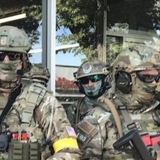
The UK is making plans for Russia if it suddenly collapses. This comes after Wagner's coup attempt. The US had also prepared plans for a range of scenarios with Russia. Western capitals are starting to make plans if Wagner is to come in possession of nuclear weapons. Officials in Washington are left wondering if they witnessed an aborted coup or a thwarted mutiny. One senior European Diplomat asked “Why did it calm down so quickly, and how come Putin’s puppet Lukashenko got the credit?” Many western officials are skeptical that this is the end, with some believing that Wagner will either challenge Russia’s military from abroad or that Prigozhin will be killed in Belarus. Also Putin revealed Russia had paid Wagner 68 billion rubles just this year.
Forwarded from 🇺🇦🔱Art of Wartime📡🎨
here is a higher quality remake of this meme. i made it more clear what is left of "Russia" is actually MUSCOVY, the real name
@artofwartimeUA
@artofwartimechat
@artofwartimeua_bot
@artofwartimeUA
@artofwartimechat
@artofwartimeua_bot
Forwarded from 🇺🇦🔱Art of Wartime📡🎨
A Happy Fourth of July to all American subscribers, may the Western world win together against Eastern barbarians
@artofwartimeUA
@artofwartimechat
@artofwartimeua_bot
@artofwartimeUA
@artofwartimechat
@artofwartimeua_bot
Estonian Prime Minister Kaja Kallas on July 4 said that NATO membership "is the only security guarantee" for Ukraine and said it is important that NATO member countries agree during their upcoming summit in Vilnius on "practical steps" on how Ukraine gets into the alliance.
It is important that during the July 11-12 summit members "go beyond the Bucharest wording," she said, referring to the 2008 summit declaration that offered Ukraine an opportunity to join the alliance without a concrete timetable.
But she cautioned that membership won't happen as long as fighting is ongoing.
"Of course, we understand it cannot happen when the war is going on. But we have to have a clear pathway [for] how Ukraine gets there," she said in an interview with RFE/RL in Tallinn one week ahead of the crucial summit.
During the summit, the alliance is expected to seek ways to provide Ukraine additional security guarantees but stop short of full Ukrainian membership, which Ukrainian President Volodymyr Zelenskiy has long pushed for.
What the pathway for Ukrainian membership will look like is currently under discussion as officials from the 31 NATO allies currently negotiate the wording of the summit declaration.
Cars burn at the site of a Russian military strike in the town of Pervomayskiy, Kharkiv region, Ukraine, on July 4.
According to RFE/RL sources familiar with the topic but barred from speaking on the record, the declaration could say that NATO commits to Ukrainian membership when "consequences" or "conditions allow" and that the topic could be reexamined during the NATO summit in Washington next summer.
Another idea being discussed is based on the Cold War model under which West Germany was in NATO and was covered by the alliance's mutual defense clause, Article 5, while East Germany was not.
Kallas, however, poured cold water on such a design, saying it would effectively reward Russia for its invasion.
"The end of the war is when Russia goes back to Russia. If we say…you get some territories, then aggression actually pays off," she said. "It is a very bad signal for international law and also the security of the whole world if [Russian aggression] pays off. That is the most important thing to keep in mind."
Kallas also reflected on the declaration of the Bucharest summit in 2008, which resulted in Ukraine and Georgia often going hand in hand in pursuing NATO membership.
But at the upcoming summit, Ukraine is set to be represented by Zelenskiy, who will meet with the other heads of state and governments, while Georgia will be represented by its foreign minister and participate in a lower-level meeting with other so-called "partners at risk" such as Bosnia-Herzegovina and Moldova.
Asked why this "de-coupling" has occurred, Kallas said the current leadership of Georgia "does not really believe in NATO membership" and pointed to a think-tank event in May in Bratislava in which Georgian Prime Minister Irakli Garibashvili said NATO enlargement was at the root of the war in Ukraine.
"It was the [Bratislava] conference where the prime minister of Georgia was saying that NATO is at fault for the war in Ukraine," she said, adding that the Georgian leader said this even though NATO is a defense alliance.
"NATO has not done anything. Ukraine has not done anything to really provoke Russia to attack them," Kallas said, noting that even Wagner mercenary head Yevgeny Prigozhin said that this has been "a false narrative" of the Russian leadership to justify attacking Ukraine.
She compared the situation in Georgia with that of Ukraine during the 2004-05 Orange Revolution that brought a pro-Western government to power after months of demonstrations prompted by a flawed presidential vote.
"I think Georgia is where Ukraine was years ago when they had the Orange Revolution, so that they also widely consider Europe (the EU) as their future. But that also requires reforms on their side," Kallas said.
It is important that during the July 11-12 summit members "go beyond the Bucharest wording," she said, referring to the 2008 summit declaration that offered Ukraine an opportunity to join the alliance without a concrete timetable.
But she cautioned that membership won't happen as long as fighting is ongoing.
"Of course, we understand it cannot happen when the war is going on. But we have to have a clear pathway [for] how Ukraine gets there," she said in an interview with RFE/RL in Tallinn one week ahead of the crucial summit.
During the summit, the alliance is expected to seek ways to provide Ukraine additional security guarantees but stop short of full Ukrainian membership, which Ukrainian President Volodymyr Zelenskiy has long pushed for.
What the pathway for Ukrainian membership will look like is currently under discussion as officials from the 31 NATO allies currently negotiate the wording of the summit declaration.
Cars burn at the site of a Russian military strike in the town of Pervomayskiy, Kharkiv region, Ukraine, on July 4.
According to RFE/RL sources familiar with the topic but barred from speaking on the record, the declaration could say that NATO commits to Ukrainian membership when "consequences" or "conditions allow" and that the topic could be reexamined during the NATO summit in Washington next summer.
Another idea being discussed is based on the Cold War model under which West Germany was in NATO and was covered by the alliance's mutual defense clause, Article 5, while East Germany was not.
Kallas, however, poured cold water on such a design, saying it would effectively reward Russia for its invasion.
"The end of the war is when Russia goes back to Russia. If we say…you get some territories, then aggression actually pays off," she said. "It is a very bad signal for international law and also the security of the whole world if [Russian aggression] pays off. That is the most important thing to keep in mind."
Kallas also reflected on the declaration of the Bucharest summit in 2008, which resulted in Ukraine and Georgia often going hand in hand in pursuing NATO membership.
But at the upcoming summit, Ukraine is set to be represented by Zelenskiy, who will meet with the other heads of state and governments, while Georgia will be represented by its foreign minister and participate in a lower-level meeting with other so-called "partners at risk" such as Bosnia-Herzegovina and Moldova.
Asked why this "de-coupling" has occurred, Kallas said the current leadership of Georgia "does not really believe in NATO membership" and pointed to a think-tank event in May in Bratislava in which Georgian Prime Minister Irakli Garibashvili said NATO enlargement was at the root of the war in Ukraine.
"It was the [Bratislava] conference where the prime minister of Georgia was saying that NATO is at fault for the war in Ukraine," she said, adding that the Georgian leader said this even though NATO is a defense alliance.
"NATO has not done anything. Ukraine has not done anything to really provoke Russia to attack them," Kallas said, noting that even Wagner mercenary head Yevgeny Prigozhin said that this has been "a false narrative" of the Russian leadership to justify attacking Ukraine.
She compared the situation in Georgia with that of Ukraine during the 2004-05 Orange Revolution that brought a pro-Western government to power after months of demonstrations prompted by a flawed presidential vote.
"I think Georgia is where Ukraine was years ago when they had the Orange Revolution, so that they also widely consider Europe (the EU) as their future. But that also requires reforms on their side," Kallas said.
Прем'єр-міністр Естонії Кая Каллас 4 липня заявила, що членство в НАТО "є єдиним гарантом безпеки" для України і висловила надію, що на саміті членів НАТО в Вільнюсі, що відбудеться 11-12 липня, країни-члени "перейдуть за рамки бухарестського формулювання" і домовляться про "конкретні кроки", як Україна зможе стати членом союзу.
Вона попередила, що членство не станеться, поки тривають бойові дії.
"Звичайно, ми розуміємо, що це не може статися, коли триває війна. Але у нас повинен бути чіткий шлях, яким Україна туди потрапить", - заявила вона в інтерв'ю Радіо Свобода в Таллінні на тиждень до вирішального саміту.
На саміті очікується, що союз буде шукати шляхи забезпечення України додатковими гарантіями безпеки, але не піде далі від повного членства України, яким давно прагнув український президент Володимир Зеленський.
Те, яким буде шлях до членства України, зараз обговорюється, оскільки посадовці з 31 країни-членів НАТО ведуть переговори щодо формулювання декларації саміту.
За даними Радіо Свобода, що володіють джерелами, які близькі до цієї теми, декларація може зазначати, що НАТО зобов'язується до членства України, коли "наслідки" або "умови дозволять", і що це питання може бути переглянуте під час саміту НАТО в Вашингтоні наступного літа.
Також обговорюється ідея, яка базується на моделі холодної війни, коли Західна Німеччина була в НАТО і користувалася положенням про колективну оборону альянсу, статтю 5, тоді як Східна Німеччина ним не скористалася.
Однак Каллас знівечила такий підхід, стверджуючи, що це фактично винагороджуватиме Росію за її вторгнення.
"Кінець війни - це коли Росія повертається в Росію. Якщо ми кажемо... ви отримуєте деякі території, то агресія фактично відплачується", - заявила вона. "Це дуже поганий сигнал для міжнародного права і також для безпеки всього світу, якщо [російська агресія] відплачується. Це найважливіша річ, яку треба пам'ятати."
Каллас також згадала декларацію саміту у Бухаресті 2008 року, яка призвела до того, що Україна і Грузія часто йшли рука об руку у прагненні до членства в НАТО.
Але на майбутньому саміті Україна представлятиме Зеленський, який зустрінеться з іншими главами держав і урядів, тоді як Грузія буде представлена своїм міністром закордонних справ і братиме участь в зустрічі на нижчому рівні з іншими так званими "партнерами у ризику", такими як Боснія і Герцеговина та Молдова.
На запитання, чому відбувається таке "роз'єднання", Каллас сказала, що нинішнє керівництво Грузії "не дуже вірить у членство в НАТО" і посилала на подію думкового центру в травні у Братиславі, де прем'єр-міністр Грузії Іраклій Гарібашвілі заявив, що розширення НАТО було причиною війни в Україні.
"Саме на [конференції у Братиславі] прем'єр-міністр Грузії говорив, що НАТО винне у війні в Україні", - сказала вона, додавши, що грузинський лідер сказав це навіть тоді, коли НАТО є оборонним альянсом.
"НАТО не зробила нічого. Україна не зробила нічого, щоб дійсно провокувати Росію напасти на них", - сказала Каллас, зауваживши, що навіть керівник наємників "Вагнер" Євген Прігожин сказав, що це була "фальшива наративна" російського керівництва, яка виправдовувала напад на Україну.
Вона порівняла ситуацію в Грузії з ситуацією в Україні під час Помаранчевої революції 2004-2005 років, яка привела до приходу до влади прозахідного уряду після місяців демонстрацій, спровокованих недійсним президентським голосуванням.
"Я думаю, Грузія знаходиться там, де була Україна кілька років тому, коли вони мали Помаранчеву революцію, і вони також широко розглядають Європу (ЄС) як своє майбутнє. Але це також потребує реформ з їхнього боку", - сказала Каллас.
Вона попередила, що членство не станеться, поки тривають бойові дії.
"Звичайно, ми розуміємо, що це не може статися, коли триває війна. Але у нас повинен бути чіткий шлях, яким Україна туди потрапить", - заявила вона в інтерв'ю Радіо Свобода в Таллінні на тиждень до вирішального саміту.
На саміті очікується, що союз буде шукати шляхи забезпечення України додатковими гарантіями безпеки, але не піде далі від повного членства України, яким давно прагнув український президент Володимир Зеленський.
Те, яким буде шлях до членства України, зараз обговорюється, оскільки посадовці з 31 країни-членів НАТО ведуть переговори щодо формулювання декларації саміту.
За даними Радіо Свобода, що володіють джерелами, які близькі до цієї теми, декларація може зазначати, що НАТО зобов'язується до членства України, коли "наслідки" або "умови дозволять", і що це питання може бути переглянуте під час саміту НАТО в Вашингтоні наступного літа.
Також обговорюється ідея, яка базується на моделі холодної війни, коли Західна Німеччина була в НАТО і користувалася положенням про колективну оборону альянсу, статтю 5, тоді як Східна Німеччина ним не скористалася.
Однак Каллас знівечила такий підхід, стверджуючи, що це фактично винагороджуватиме Росію за її вторгнення.
"Кінець війни - це коли Росія повертається в Росію. Якщо ми кажемо... ви отримуєте деякі території, то агресія фактично відплачується", - заявила вона. "Це дуже поганий сигнал для міжнародного права і також для безпеки всього світу, якщо [російська агресія] відплачується. Це найважливіша річ, яку треба пам'ятати."
Каллас також згадала декларацію саміту у Бухаресті 2008 року, яка призвела до того, що Україна і Грузія часто йшли рука об руку у прагненні до членства в НАТО.
Але на майбутньому саміті Україна представлятиме Зеленський, який зустрінеться з іншими главами держав і урядів, тоді як Грузія буде представлена своїм міністром закордонних справ і братиме участь в зустрічі на нижчому рівні з іншими так званими "партнерами у ризику", такими як Боснія і Герцеговина та Молдова.
На запитання, чому відбувається таке "роз'єднання", Каллас сказала, що нинішнє керівництво Грузії "не дуже вірить у членство в НАТО" і посилала на подію думкового центру в травні у Братиславі, де прем'єр-міністр Грузії Іраклій Гарібашвілі заявив, що розширення НАТО було причиною війни в Україні.
"Саме на [конференції у Братиславі] прем'єр-міністр Грузії говорив, що НАТО винне у війні в Україні", - сказала вона, додавши, що грузинський лідер сказав це навіть тоді, коли НАТО є оборонним альянсом.
"НАТО не зробила нічого. Україна не зробила нічого, щоб дійсно провокувати Росію напасти на них", - сказала Каллас, зауваживши, що навіть керівник наємників "Вагнер" Євген Прігожин сказав, що це була "фальшива наративна" російського керівництва, яка виправдовувала напад на Україну.
Вона порівняла ситуацію в Грузії з ситуацією в Україні під час Помаранчевої революції 2004-2005 років, яка привела до приходу до влади прозахідного уряду після місяців демонстрацій, спровокованих недійсним президентським голосуванням.
"Я думаю, Грузія знаходиться там, де була Україна кілька років тому, коли вони мали Помаранчеву революцію, і вони також широко розглядають Європу (ЄС) як своє майбутнє. Але це також потребує реформ з їхнього боку", - сказала Каллас.
Ukrainian President Volodymyr Zelenskiy told NATO Secretary-General Jens Stoltenberg during a telephone call on July 4 that he looks forward to "continuing our fruitful cooperation" after Stoltenberg's contract to lead the military alliance was extended by one year.
Zelenskiy congratulated Stoltenberg and thanked him for his "constant personal efforts to support Ukraine's Euro-Atlantic aspirations," according to the presidential press service. Zelenskiy also emphasized that "now is the time for powerful decisions and concrete steps in this direction."
The press service added that the two leaders also discussed the situation at the front and "the latest events inside Russia" during the call, which came as they coordinated positions before next week's NATO summit in Vilnius.
Stoltenberg commented on the conversation in a tweet. "A very good conversation with President Zelenskiy about the latest events in Ukraine and our preparations for the NATO summit. In Vilnius, the members of the Alliance will make decisions on strengthening long-term support, improving our political ties and bringing Ukraine closer to NATO," he wrote.
NATO announced earlier on July 4 that Stoltenberg’s contract will be extended by another year as the military alliance opted to stick with an experienced leader as war rages in Ukraine rather than try to agree on a successor.
Stoltenberg, a former prime minister of Norway, has been the transatlantic alliance’s civilian leader since 2014, and his tenure had already been extended three times before the latest decision to keep him.
"Honoured by NATO allies' decision to extend my term as secretary general until 1 October 2024," Stoltenberg, 64, said in a statement. "In a more dangerous world, our alliance is more important than ever."
The extension will see Stoltenberg remain in charge during next year's summit in Washington marking the 75th anniversary of NATO's founding.
U.S. President Joe Biden and leaders of other NATO nations also hailed the decision to extend Stoltenberg as the alliance’s chief.
"With his steady leadership, experience, and judgment, Secretary General Stoltenberg has brought our Alliance through the most significant challenges in European security since World War II," Biden said in a statement.
Zelenskiy congratulated Stoltenberg and thanked him for his "constant personal efforts to support Ukraine's Euro-Atlantic aspirations," according to the presidential press service. Zelenskiy also emphasized that "now is the time for powerful decisions and concrete steps in this direction."
The press service added that the two leaders also discussed the situation at the front and "the latest events inside Russia" during the call, which came as they coordinated positions before next week's NATO summit in Vilnius.
Stoltenberg commented on the conversation in a tweet. "A very good conversation with President Zelenskiy about the latest events in Ukraine and our preparations for the NATO summit. In Vilnius, the members of the Alliance will make decisions on strengthening long-term support, improving our political ties and bringing Ukraine closer to NATO," he wrote.
NATO announced earlier on July 4 that Stoltenberg’s contract will be extended by another year as the military alliance opted to stick with an experienced leader as war rages in Ukraine rather than try to agree on a successor.
Stoltenberg, a former prime minister of Norway, has been the transatlantic alliance’s civilian leader since 2014, and his tenure had already been extended three times before the latest decision to keep him.
"Honoured by NATO allies' decision to extend my term as secretary general until 1 October 2024," Stoltenberg, 64, said in a statement. "In a more dangerous world, our alliance is more important than ever."
The extension will see Stoltenberg remain in charge during next year's summit in Washington marking the 75th anniversary of NATO's founding.
U.S. President Joe Biden and leaders of other NATO nations also hailed the decision to extend Stoltenberg as the alliance’s chief.
"With his steady leadership, experience, and judgment, Secretary General Stoltenberg has brought our Alliance through the most significant challenges in European security since World War II," Biden said in a statement.
Український президент Володимир Зеленський повідомив генерального секретаря НАТО Єнса Столтенберга під час телефонної розмови 4 липня, що він очікує "продовження плідної співпраці" після продовження контракту Столтенберга на ще один рік на чолі військового альянсу.
Зеленський привітав Столтенберга і подякував йому за "постійні особисті зусилля в підтримці євроатлантичних амбіцій України", за інформацією прес-служби президента. Зеленський також наголосив, що "зараз настав час для сильних рішень та конкретних кроків в цьому напрямку".
У прес-службі додали, що два лідери також обговорили ситуацію на фронті та "останні події всередині Росії" під час розмови, яка відбулася під час координації позицій перед майбутнім самітом НАТО у Вільнюсі.
Столтенберг прокоментував розмову у своєму твіттері. "Дуже гарна розмова з президентом Зеленським про останні події в Україні та наші підготовки до саміту НАТО. У Вільнюсі члени альянсу приймуть рішення щодо посилення довгострокової підтримки, покращення наших політичних зв'язків та наближення України до НАТО", - написав він.
Раніше 4 липня НАТО оголосила, що контракт Столтенберга буде продовжено на ще один рік, оскільки війна триває в Україні, і альянс вирішив залишитися з досвідченим лідером, а не намагатися знайти наступника.
Столтенберг, колишній прем'єр-міністр Норвегії, очолює трансатлантичний альянс з 2014 року, і його термін уже був продовжений тричі до останнього рішення продовжити його.
"Почесний, що союзники НАТО прийняли рішення продовжити мій термін на посаді генерального секретаря до 1 жовтня 2024 року", - заявив 64-річний Столтенберг. "У більш небезпечному світі наш альянс важливіший, ніж будь-коли".
Це продовження дозволить Столтенбергу залишитися на посаді під час саміту в Вашингтоні наступного року, присвяченому 75-річчю заснування НАТО.
Президент США Джо Байден та лідери інших країн-членів НАТО також привітали рішення продовжити Столтенберга на посаді голови альянсу.
"Зі своїм стійким лідерством, досвідом та мудрістю генеральний секретар Столтенберг привів наш альянс через найважливіші виклики щодо європейської безпеки з часів Другої світової війни", - заявив Байден.
Зеленський привітав Столтенберга і подякував йому за "постійні особисті зусилля в підтримці євроатлантичних амбіцій України", за інформацією прес-служби президента. Зеленський також наголосив, що "зараз настав час для сильних рішень та конкретних кроків в цьому напрямку".
У прес-службі додали, що два лідери також обговорили ситуацію на фронті та "останні події всередині Росії" під час розмови, яка відбулася під час координації позицій перед майбутнім самітом НАТО у Вільнюсі.
Столтенберг прокоментував розмову у своєму твіттері. "Дуже гарна розмова з президентом Зеленським про останні події в Україні та наші підготовки до саміту НАТО. У Вільнюсі члени альянсу приймуть рішення щодо посилення довгострокової підтримки, покращення наших політичних зв'язків та наближення України до НАТО", - написав він.
Раніше 4 липня НАТО оголосила, що контракт Столтенберга буде продовжено на ще один рік, оскільки війна триває в Україні, і альянс вирішив залишитися з досвідченим лідером, а не намагатися знайти наступника.
Столтенберг, колишній прем'єр-міністр Норвегії, очолює трансатлантичний альянс з 2014 року, і його термін уже був продовжений тричі до останнього рішення продовжити його.
"Почесний, що союзники НАТО прийняли рішення продовжити мій термін на посаді генерального секретаря до 1 жовтня 2024 року", - заявив 64-річний Столтенберг. "У більш небезпечному світі наш альянс важливіший, ніж будь-коли".
Це продовження дозволить Столтенбергу залишитися на посаді під час саміту в Вашингтоні наступного року, присвяченому 75-річчю заснування НАТО.
Президент США Джо Байден та лідери інших країн-членів НАТО також привітали рішення продовжити Столтенберга на посаді голови альянсу.
"Зі своїм стійким лідерством, досвідом та мудрістю генеральний секретар Столтенберг привів наш альянс через найважливіші виклики щодо європейської безпеки з часів Другої світової війни", - заявив Байден.
The United States has decided to provide cluster munitions to Ukraine and is expected to announce on July 7 that they will be included in a new military aid package, according to news reports.
U.S. officials quoted in the reports on July 6 said the cluster munitions would be part of a new military assistance package to Ukraine worth about $800 million. The officials spoke on the condition of anonymity because they were not authorized to publicly discuss the move before the official announcement.
Asked about the reports, Pentagon spokesman Brigadier General Pat Ryder said he was aware of them but said he had "nothing specific to announce."
News reports in recent days said President Joe Biden was actively considering the inclusion of the controversial munitions in a new package of weapons.
The administration has avoided providing cluster munitions thus far for fear of alienating allies, but debate has intensified in recent months.
On June 30, General Mark Milley, chairman of the Joint Chiefs of Staff, said the United States had been thinking about providing the munitions “for a long time,” noting that Ukraine has asked for cluster munitions, European countries have provided them, and Russians troops have used them on the battlefield.
Laura Cooper, a U.S. deputy assistant secretary of defense focusing on Russia and Ukraine, has advocated in favor of sending cluster bombs to Ukraine, recently telling Congress that munitions “would be useful especially against dug-in Russian positions on the battlefield.”
Cluster munitions are bombs that are dropped from the air, releasing large numbers of small submunitions, or bomblets, over a wide swath of land.
These bombs have caused controversy for both their indiscriminate impact and the risk of unexploded ordnance. The UN reports that up to 40 percent of bombs don’t explode upon impact, and they remain a long-term risk to civilians after the war ends.
Additionally, due to the widespread area in which they land, the bombs do not distinguish between civilian and military targets.
Both Russian and Ukrainian forces have used cluster munitions in Russia's ongoing full-scale invasion, resulting in the death of Ukrainian civilians, Human Rights Watch (HRW) said in a report on July 6.
HRW along with 35 other organizations, including UNICEF USA and Amnesty International USA, signed a letter dated June 14 urging Biden not to provide cluster bombs to Ukraine.
The Convention on Cluster Munitions, an international treaty signed in 2008, prohibits all use, production, transfer, and stockpiling of cluster munitions. The agreement, which entered into force in 2010, has been implemented in 123 states, but not by the United States, Ukraine, or Russia.
U.S. officials quoted in the reports on July 6 said the cluster munitions would be part of a new military assistance package to Ukraine worth about $800 million. The officials spoke on the condition of anonymity because they were not authorized to publicly discuss the move before the official announcement.
Asked about the reports, Pentagon spokesman Brigadier General Pat Ryder said he was aware of them but said he had "nothing specific to announce."
News reports in recent days said President Joe Biden was actively considering the inclusion of the controversial munitions in a new package of weapons.
The administration has avoided providing cluster munitions thus far for fear of alienating allies, but debate has intensified in recent months.
On June 30, General Mark Milley, chairman of the Joint Chiefs of Staff, said the United States had been thinking about providing the munitions “for a long time,” noting that Ukraine has asked for cluster munitions, European countries have provided them, and Russians troops have used them on the battlefield.
Laura Cooper, a U.S. deputy assistant secretary of defense focusing on Russia and Ukraine, has advocated in favor of sending cluster bombs to Ukraine, recently telling Congress that munitions “would be useful especially against dug-in Russian positions on the battlefield.”
Cluster munitions are bombs that are dropped from the air, releasing large numbers of small submunitions, or bomblets, over a wide swath of land.
These bombs have caused controversy for both their indiscriminate impact and the risk of unexploded ordnance. The UN reports that up to 40 percent of bombs don’t explode upon impact, and they remain a long-term risk to civilians after the war ends.
Additionally, due to the widespread area in which they land, the bombs do not distinguish between civilian and military targets.
Both Russian and Ukrainian forces have used cluster munitions in Russia's ongoing full-scale invasion, resulting in the death of Ukrainian civilians, Human Rights Watch (HRW) said in a report on July 6.
HRW along with 35 other organizations, including UNICEF USA and Amnesty International USA, signed a letter dated June 14 urging Biden not to provide cluster bombs to Ukraine.
The Convention on Cluster Munitions, an international treaty signed in 2008, prohibits all use, production, transfer, and stockpiling of cluster munitions. The agreement, which entered into force in 2010, has been implemented in 123 states, but not by the United States, Ukraine, or Russia.
Сполучені Штати Америки вирішили надати Україні кассетні боєприпаси, про це очікується оголосити 7 липня у зв'язку з новим пакетом військової допомоги, згідно з новинами.
Посилаючись на американських посадовців, зазначають, що кассетні боєприпаси стануть частиною нового пакета військової допомоги для України, вартість якого становитиме приблизно 800 мільйонів доларів США. Однак посадовці проговорили під анонімністю, оскільки не мали дозволу говорити про це публічно до офіційного оголошення.
На запитання про ці звіти, представник Пентагону генерал-бригадир Пат Райдер сказав, що він їх знає, але нічого конкретного оголошувати не має.
Останні новини повідомляли, що президент Джо Байден розглядає можливість включення спірних боєприпасів до нового пакету зброї.
Адміністрація уникала поставок кассетних боєприпасів, оскільки це могло занепокоїти союзників, але дискусії набули обертів у останні місяці.
30 червня генерал Марк Міллі, голова Об'єднаних штабів США, сказав, що Сполучені Штати думали про постачання боєприпасів "довгий час", зазначивши, що Україна просила про кассетні боєприпаси, Європейські країни поставляли їх, а російські війська використовували їх на полі бою.
Лаура Купер, заступниця помічника міністра оборони США з питань Росії та України, пропагувала поставки кассетних бомб в Україну і нещодавно повідомила конгресу, що ці боєприпаси "будуть корисні, особливо проти російських позицій на полі бою".
Кассетні боєприпаси - це бомби, які скидаються з повітря, викидаючи велику кількість невеликих підривних боєприпасів або бомблетів по широкій зоні землі.
Ці бомби викликають суперечки через свою невибіркову дію та ризик вибуху нерозірваних боєприпасів. ООН повідомляє, що до 40 відсотків бомб не вибухають при ударі, і вони залишаються довгостроковою загрозою для мирного населення після завершення війни.
Крім того, через широку зону, в якій вони падають, бомби не розрізняють цивільних і військових цілей.
Як російські, так і українські сили використовували кассетні боєприпаси під час повномасштабного російського вторгнення, що призвело до смерті громадян України, заявила Громадська організація "Права людини" (HRW) у звіті від 6 липня.
HRW разом із 35 іншими організаціями, включаючи UNICEF USA та Amnesty International USA, підписали лист датований 14 червня, закликаючи Байдена не постачати кассетні бомби в Україну.
Конвенція про кассетні боєприпаси, міжнародний договір, підписаний у 2008 році, забороняє використання, виробництво, передачу і накопичення кассетних боєприпасів. Угода, яка набула чинності у 2010 роц, була ратифікована 123 країнами, але не Сполученими Штатами, Україною або Росією.
Посилаючись на американських посадовців, зазначають, що кассетні боєприпаси стануть частиною нового пакета військової допомоги для України, вартість якого становитиме приблизно 800 мільйонів доларів США. Однак посадовці проговорили під анонімністю, оскільки не мали дозволу говорити про це публічно до офіційного оголошення.
На запитання про ці звіти, представник Пентагону генерал-бригадир Пат Райдер сказав, що він їх знає, але нічого конкретного оголошувати не має.
Останні новини повідомляли, що президент Джо Байден розглядає можливість включення спірних боєприпасів до нового пакету зброї.
Адміністрація уникала поставок кассетних боєприпасів, оскільки це могло занепокоїти союзників, але дискусії набули обертів у останні місяці.
30 червня генерал Марк Міллі, голова Об'єднаних штабів США, сказав, що Сполучені Штати думали про постачання боєприпасів "довгий час", зазначивши, що Україна просила про кассетні боєприпаси, Європейські країни поставляли їх, а російські війська використовували їх на полі бою.
Лаура Купер, заступниця помічника міністра оборони США з питань Росії та України, пропагувала поставки кассетних бомб в Україну і нещодавно повідомила конгресу, що ці боєприпаси "будуть корисні, особливо проти російських позицій на полі бою".
Кассетні боєприпаси - це бомби, які скидаються з повітря, викидаючи велику кількість невеликих підривних боєприпасів або бомблетів по широкій зоні землі.
Ці бомби викликають суперечки через свою невибіркову дію та ризик вибуху нерозірваних боєприпасів. ООН повідомляє, що до 40 відсотків бомб не вибухають при ударі, і вони залишаються довгостроковою загрозою для мирного населення після завершення війни.
Крім того, через широку зону, в якій вони падають, бомби не розрізняють цивільних і військових цілей.
Як російські, так і українські сили використовували кассетні боєприпаси під час повномасштабного російського вторгнення, що призвело до смерті громадян України, заявила Громадська організація "Права людини" (HRW) у звіті від 6 липня.
HRW разом із 35 іншими організаціями, включаючи UNICEF USA та Amnesty International USA, підписали лист датований 14 червня, закликаючи Байдена не постачати кассетні бомби в Україну.
Конвенція про кассетні боєприпаси, міжнародний договір, підписаний у 2008 році, забороняє використання, виробництво, передачу і накопичення кассетних боєприпасів. Угода, яка набула чинності у 2010 роц, була ратифікована 123 країнами, але не Сполученими Штатами, Україною або Росією.