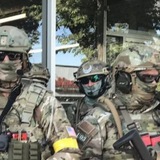
Close Quarters Combat (CQC), also known as close-quarters battle (CQB), is a tactical approach used in military, law enforcement, and self-defense scenarios when engaging an adversary at close range. Effective CQC techniques require a combination of physical skill, mental agility, situational awareness, and decisive action. Here are some common methods of CQC.
One widely employed method of CQC is the "center-mass" approach. This technique focuses on striking an adversary's vital areas, primarily the torso, to neutralize the threat quickly. Center-mass strikes can include punches, elbows, knee strikes, and kicks aimed at vulnerable targets such as the solar plexus, liver, or sternum. For example, a well-executed knee strike to an assailant's midsection can disrupt their balance, inflict pain, and create an opportunity for further control or disengagement.
Another effective method in CQC is the "joint manipulation" technique. This approach involves exploiting an opponent's joints to gain control and incapacitate them. Joint manipulation techniques can include wrist locks, arm bars, and finger manipulations. For instance, applying a wrist lock by rotating an opponent's wrist in a controlled manner can cause intense pain and compel compliance, allowing for effective control and restraint.
Additionally, the "takedown and ground control" method plays a vital role in CQC. This technique focuses on swiftly taking an adversary to the ground and maintaining dominance through effective grappling and positional control. Takedowns can involve techniques such as throws, sweeps, or trips to destabilize an opponent's balance and force them to the ground. Once on the ground, effective ground control involves maneuvers like mount, side control, or back control to establish dominance and limit the opponent's ability to counterattack.
It is important to note that these CQC methods require comprehensive training, experience, and an understanding of the rules of engagement. CQC techniques should be used responsibly and ethically, primarily in situations where there is an immediate threat to personal safety or the safety of others.
In military contexts, special operations units often employ CQC techniques during urban combat or hostage rescue operations. For example, the Navy SEALs, renowned for their expertise in CQC, undergo rigorous training that includes mastering various methods such as center-mass strikes, joint manipulations, and takedowns. These skills enable them to efficiently neutralize threats while minimizing collateral damage and maintaining control over rapidly evolving situations.
Law enforcement agencies also incorporate CQC techniques as part of their training to ensure officer safety and effective apprehension of suspects. Techniques such as joint manipulations, strikes, and takedowns are employed to safely control non-compliant individuals or diffuse potentially violent encounters.
One widely employed method of CQC is the "center-mass" approach. This technique focuses on striking an adversary's vital areas, primarily the torso, to neutralize the threat quickly. Center-mass strikes can include punches, elbows, knee strikes, and kicks aimed at vulnerable targets such as the solar plexus, liver, or sternum. For example, a well-executed knee strike to an assailant's midsection can disrupt their balance, inflict pain, and create an opportunity for further control or disengagement.
Another effective method in CQC is the "joint manipulation" technique. This approach involves exploiting an opponent's joints to gain control and incapacitate them. Joint manipulation techniques can include wrist locks, arm bars, and finger manipulations. For instance, applying a wrist lock by rotating an opponent's wrist in a controlled manner can cause intense pain and compel compliance, allowing for effective control and restraint.
Additionally, the "takedown and ground control" method plays a vital role in CQC. This technique focuses on swiftly taking an adversary to the ground and maintaining dominance through effective grappling and positional control. Takedowns can involve techniques such as throws, sweeps, or trips to destabilize an opponent's balance and force them to the ground. Once on the ground, effective ground control involves maneuvers like mount, side control, or back control to establish dominance and limit the opponent's ability to counterattack.
It is important to note that these CQC methods require comprehensive training, experience, and an understanding of the rules of engagement. CQC techniques should be used responsibly and ethically, primarily in situations where there is an immediate threat to personal safety or the safety of others.
In military contexts, special operations units often employ CQC techniques during urban combat or hostage rescue operations. For example, the Navy SEALs, renowned for their expertise in CQC, undergo rigorous training that includes mastering various methods such as center-mass strikes, joint manipulations, and takedowns. These skills enable them to efficiently neutralize threats while minimizing collateral damage and maintaining control over rapidly evolving situations.
Law enforcement agencies also incorporate CQC techniques as part of their training to ensure officer safety and effective apprehension of suspects. Techniques such as joint manipulations, strikes, and takedowns are employed to safely control non-compliant individuals or diffuse potentially violent encounters.