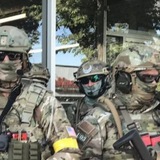
Close Quarters Combat (CQC), also known as close-quarters battle (CQB), is a tactical approach used in military, law enforcement, and self-defense scenarios when engaging an adversary at close range. Effective CQC techniques require a combination of physical skill, mental agility, situational awareness, and decisive action. Here are some common methods of CQC.
One widely employed method of CQC is the "center-mass" approach. This technique focuses on striking an adversary's vital areas, primarily the torso, to neutralize the threat quickly. Center-mass strikes can include punches, elbows, knee strikes, and kicks aimed at vulnerable targets such as the solar plexus, liver, or sternum. For example, a well-executed knee strike to an assailant's midsection can disrupt their balance, inflict pain, and create an opportunity for further control or disengagement.
Another effective method in CQC is the "joint manipulation" technique. This approach involves exploiting an opponent's joints to gain control and incapacitate them. Joint manipulation techniques can include wrist locks, arm bars, and finger manipulations. For instance, applying a wrist lock by rotating an opponent's wrist in a controlled manner can cause intense pain and compel compliance, allowing for effective control and restraint.
Additionally, the "takedown and ground control" method plays a vital role in CQC. This technique focuses on swiftly taking an adversary to the ground and maintaining dominance through effective grappling and positional control. Takedowns can involve techniques such as throws, sweeps, or trips to destabilize an opponent's balance and force them to the ground. Once on the ground, effective ground control involves maneuvers like mount, side control, or back control to establish dominance and limit the opponent's ability to counterattack.
It is important to note that these CQC methods require comprehensive training, experience, and an understanding of the rules of engagement. CQC techniques should be used responsibly and ethically, primarily in situations where there is an immediate threat to personal safety or the safety of others.
In military contexts, special operations units often employ CQC techniques during urban combat or hostage rescue operations. For example, the Navy SEALs, renowned for their expertise in CQC, undergo rigorous training that includes mastering various methods such as center-mass strikes, joint manipulations, and takedowns. These skills enable them to efficiently neutralize threats while minimizing collateral damage and maintaining control over rapidly evolving situations.
Law enforcement agencies also incorporate CQC techniques as part of their training to ensure officer safety and effective apprehension of suspects. Techniques such as joint manipulations, strikes, and takedowns are employed to safely control non-compliant individuals or diffuse potentially violent encounters.
One widely employed method of CQC is the "center-mass" approach. This technique focuses on striking an adversary's vital areas, primarily the torso, to neutralize the threat quickly. Center-mass strikes can include punches, elbows, knee strikes, and kicks aimed at vulnerable targets such as the solar plexus, liver, or sternum. For example, a well-executed knee strike to an assailant's midsection can disrupt their balance, inflict pain, and create an opportunity for further control or disengagement.
Another effective method in CQC is the "joint manipulation" technique. This approach involves exploiting an opponent's joints to gain control and incapacitate them. Joint manipulation techniques can include wrist locks, arm bars, and finger manipulations. For instance, applying a wrist lock by rotating an opponent's wrist in a controlled manner can cause intense pain and compel compliance, allowing for effective control and restraint.
Additionally, the "takedown and ground control" method plays a vital role in CQC. This technique focuses on swiftly taking an adversary to the ground and maintaining dominance through effective grappling and positional control. Takedowns can involve techniques such as throws, sweeps, or trips to destabilize an opponent's balance and force them to the ground. Once on the ground, effective ground control involves maneuvers like mount, side control, or back control to establish dominance and limit the opponent's ability to counterattack.
It is important to note that these CQC methods require comprehensive training, experience, and an understanding of the rules of engagement. CQC techniques should be used responsibly and ethically, primarily in situations where there is an immediate threat to personal safety or the safety of others.
In military contexts, special operations units often employ CQC techniques during urban combat or hostage rescue operations. For example, the Navy SEALs, renowned for their expertise in CQC, undergo rigorous training that includes mastering various methods such as center-mass strikes, joint manipulations, and takedowns. These skills enable them to efficiently neutralize threats while minimizing collateral damage and maintaining control over rapidly evolving situations.
Law enforcement agencies also incorporate CQC techniques as part of their training to ensure officer safety and effective apprehension of suspects. Techniques such as joint manipulations, strikes, and takedowns are employed to safely control non-compliant individuals or diffuse potentially violent encounters.
Bentley’s backstory is as wild as his present circumstance. He’s a former marijuana legalization activist who once mounted a third-party bid for the Senate in Minnesota — in the 1990 election that brought Paul Welstone to Washington — before landing in prison for felony marijuana trafficking.
He was born Russell Bonner Bentley III to a wealthy family in Texas in 1960. “I grew up in a very exclusive area of Dallas called Highland Park,” he says. “It’s basically the Beverly Hills of Dallas.” Bentley was the “black sheep” of the family as a teenager, he says, drawn to hard left causes. “I was reading Ho Chi Minh and Che Guevara” he says. “I understood the Vietnamese were right to defend their land against foreign invaders, and that the United States was wrong. I understood that Fidel and Che were right to overthrow the foreign masters that had turned Cuba into a casino and bordello.” Bentley insists: “I’m anti-racist. I’m anti-imperialist. I grew up supporting people’s rights to defend themselves.”
So pot DOES fry your brain
He was born Russell Bonner Bentley III to a wealthy family in Texas in 1960. “I grew up in a very exclusive area of Dallas called Highland Park,” he says. “It’s basically the Beverly Hills of Dallas.” Bentley was the “black sheep” of the family as a teenager, he says, drawn to hard left causes. “I was reading Ho Chi Minh and Che Guevara” he says. “I understood the Vietnamese were right to defend their land against foreign invaders, and that the United States was wrong. I understood that Fidel and Che were right to overthrow the foreign masters that had turned Cuba into a casino and bordello.” Bentley insists: “I’m anti-racist. I’m anti-imperialist. I grew up supporting people’s rights to defend themselves.”
So pot DOES fry your brain
Forwarded from Castle International
Any Wagner Group personnel reading this, surrender to your nearest Ukrainian forces. False surrenders will be met with violence. You're encroaching on Ukrainian sovereign land in an illegal military operation as an unregistered unit of the Russian Ministry of Defense.
Any and all aggression will be taken as such.
Lay down your weapons and approach with your hands up, and your body armor/helmets off.
Your unit has engaged in reckless violence against civilians across Ukraine, and Syria.
Any Wagner Group personnel in Ukraine will be killed or detained for their actions.
Welcome to Ukraine.
Все сотрудники Группы Вагнера, читающие это, сдаются ближайшим к вам украинским силам. Ложные капитуляции будут встречены насилием. Вы посягаете на суверенную украинскую землю в незаконной военной операции как незарегистрированное подразделение Минобороны России.
Любая агрессия будет воспринята как таковая.
Сложите оружие и подойдите с поднятыми руками, без бронежилетов/шлемов.
Ваше подразделение участвовало в безрассудном насилии против мирных жителей на Украине и в Сирии.
Любой сотрудник группы Вагнера в Украине будет убит или задержан за свои действия.
Добро пожаловать в Украину.
Any and all aggression will be taken as such.
Lay down your weapons and approach with your hands up, and your body armor/helmets off.
Your unit has engaged in reckless violence against civilians across Ukraine, and Syria.
Any Wagner Group personnel in Ukraine will be killed or detained for their actions.
Welcome to Ukraine.
Все сотрудники Группы Вагнера, читающие это, сдаются ближайшим к вам украинским силам. Ложные капитуляции будут встречены насилием. Вы посягаете на суверенную украинскую землю в незаконной военной операции как незарегистрированное подразделение Минобороны России.
Любая агрессия будет воспринята как таковая.
Сложите оружие и подойдите с поднятыми руками, без бронежилетов/шлемов.
Ваше подразделение участвовало в безрассудном насилии против мирных жителей на Украине и в Сирии.
Любой сотрудник группы Вагнера в Украине будет убит или задержан за свои действия.
Добро пожаловать в Украину.
The influence of media in shaping public opinion is a widely recognized phenomenon. In the case of Russian media, there have been allegations that it portrays Western countries in a negative light, potentially to discourage Russians from leaving their home country. While it is challenging to definitively prove such intentions, there are indications of biased reporting and narratives that may impact perceptions of Western countries among the Russian population.
Russian media outlets have been known to highlight certain negative aspects of Western societies, focusing on issues such as crime rates, social unrest, and economic disparities. These portrayals, often lacking context and balance, can create a skewed image of Western countries and potentially discourage Russians from considering them as desirable destinations. It is important to recognize that media bias exists in various forms and can be found in media outlets of any country, including Western ones.
One example of biased reporting can be observed in how incidents and events in Western countries are highlighted by Russian media. Acts of terrorism or violence are often given significant coverage, amplifying the perception of Western countries as dangerous and unstable. At the same time, positive aspects of Western societies such as freedom of speech, economic opportunities, and social welfare systems are downplayed or overshadowed by negative narratives.
Furthermore, there have been instances of misinformation and disinformation campaigns spread by Russian media outlets, including state-funded ones. These campaigns aim to create and perpetuate a sense of mistrust and suspicion towards Western countries. They may exploit real issues or incidents, selectively present information, or promote conspiracy theories to undermine confidence in Western democratic institutions and societal values.
To provide concrete proof of these allegations, it is essential to analyze specific instances and patterns of media coverage. Detailed content analysis of Russian media outlets, comparative studies of news reporting between Russian and Western media, and assessments of public opinion surveys can shed light on the extent of biased narratives and their potential impact on Russians' perceptions of Western countries.
It is worth noting that media influence is just one factor among many that shape individuals' decisions and perceptions. Economic, social, and political factors, as well as personal experiences and networks, also play crucial roles in determining migration patterns and attitudes towards other countries.
Russian media outlets have been known to highlight certain negative aspects of Western societies, focusing on issues such as crime rates, social unrest, and economic disparities. These portrayals, often lacking context and balance, can create a skewed image of Western countries and potentially discourage Russians from considering them as desirable destinations. It is important to recognize that media bias exists in various forms and can be found in media outlets of any country, including Western ones.
One example of biased reporting can be observed in how incidents and events in Western countries are highlighted by Russian media. Acts of terrorism or violence are often given significant coverage, amplifying the perception of Western countries as dangerous and unstable. At the same time, positive aspects of Western societies such as freedom of speech, economic opportunities, and social welfare systems are downplayed or overshadowed by negative narratives.
Furthermore, there have been instances of misinformation and disinformation campaigns spread by Russian media outlets, including state-funded ones. These campaigns aim to create and perpetuate a sense of mistrust and suspicion towards Western countries. They may exploit real issues or incidents, selectively present information, or promote conspiracy theories to undermine confidence in Western democratic institutions and societal values.
To provide concrete proof of these allegations, it is essential to analyze specific instances and patterns of media coverage. Detailed content analysis of Russian media outlets, comparative studies of news reporting between Russian and Western media, and assessments of public opinion surveys can shed light on the extent of biased narratives and their potential impact on Russians' perceptions of Western countries.
It is worth noting that media influence is just one factor among many that shape individuals' decisions and perceptions. Economic, social, and political factors, as well as personal experiences and networks, also play crucial roles in determining migration patterns and attitudes towards other countries.
Today, I will address a critical issue that affects the lives and future of many individuals in the Donbass region: the choice that the separatists face in deciding whether to defect from their current affiliations and join forces with Ukraine in the fight against Russia. I understand the complexities and emotions surrounding this topic, but I believe that a careful examination of the facts will reveal the path that can lead to a better future for the Donbass region and its people.
First and foremost, it is crucial to acknowledge the origins of the conflict in Eastern Ukraine. The armed conflict began in 2014 when Russia annexed Crimea and supported separatist movements in the Donbass region. This aggression has had severe consequences for the people of Eastern Ukraine, resulting in the loss of countless lives, the displacement of thousands, and economic devastation. It is evident that the separatist movement, backed by Russia, has led to a protracted conflict with devastating consequences.
To consider the path of defection and aligning with Ukraine, we must evaluate the benefits it offers. Ukraine is a sovereign nation that, despite facing numerous challenges, continues to strive for democratic values, economic growth, and stability. Joining forces with Ukraine would present an opportunity for the Donbass region to be part of a unified country that embraces the principles of democracy, human rights, and international cooperation.
Moreover, aligning with Ukraine would mean regaining control over the region's economic potential. The Donbass region is rich in resources and has a history of industrial production. By joining Ukraine, the region can benefit from the country's broader economic network, trade agreements, and international partnerships, leading to increased investment, job creation, and improved living conditions for its residents.
Additionally, aligning with Ukraine would offer the people of Donbass a chance to participate fully in the democratic processes and decision-making that shape their future. Ukraine, despite its challenges, has made significant strides in establishing democratic institutions, promoting civil society, and safeguarding individual freedoms. By integrating into the Ukrainian system, the Donbass region could contribute to shaping policies, electing representatives, and ensuring that the voices and aspirations of its people are heard and respected.
It is also important to recognize the international support that Ukraine enjoys. Numerous countries, including the United States, European Union member states, and others, stand in solidarity with Ukraine's sovereignty and territorial integrity. By aligning with Ukraine, the Donbass region would gain broader diplomatic recognition, access to international aid and development programs, and the potential for sustainable peace and reconciliation.
The choice to defect from the separatist movement and join forces with Ukraine is one that holds promise for the future of the Donbass region. By aligning with Ukraine, the region can regain control over its economic potential, participate in democratic processes, benefit from international support, and contribute to building a peaceful and prosperous future. It is my sincere hope that the individuals in the Donbass region carefully consider these facts, prioritize the well-being of their communities, and make a choice that leads to a brighter future for all.
Your home is Ukraine, not Russia.
Your homeland loves you.
First and foremost, it is crucial to acknowledge the origins of the conflict in Eastern Ukraine. The armed conflict began in 2014 when Russia annexed Crimea and supported separatist movements in the Donbass region. This aggression has had severe consequences for the people of Eastern Ukraine, resulting in the loss of countless lives, the displacement of thousands, and economic devastation. It is evident that the separatist movement, backed by Russia, has led to a protracted conflict with devastating consequences.
To consider the path of defection and aligning with Ukraine, we must evaluate the benefits it offers. Ukraine is a sovereign nation that, despite facing numerous challenges, continues to strive for democratic values, economic growth, and stability. Joining forces with Ukraine would present an opportunity for the Donbass region to be part of a unified country that embraces the principles of democracy, human rights, and international cooperation.
Moreover, aligning with Ukraine would mean regaining control over the region's economic potential. The Donbass region is rich in resources and has a history of industrial production. By joining Ukraine, the region can benefit from the country's broader economic network, trade agreements, and international partnerships, leading to increased investment, job creation, and improved living conditions for its residents.
Additionally, aligning with Ukraine would offer the people of Donbass a chance to participate fully in the democratic processes and decision-making that shape their future. Ukraine, despite its challenges, has made significant strides in establishing democratic institutions, promoting civil society, and safeguarding individual freedoms. By integrating into the Ukrainian system, the Donbass region could contribute to shaping policies, electing representatives, and ensuring that the voices and aspirations of its people are heard and respected.
It is also important to recognize the international support that Ukraine enjoys. Numerous countries, including the United States, European Union member states, and others, stand in solidarity with Ukraine's sovereignty and territorial integrity. By aligning with Ukraine, the Donbass region would gain broader diplomatic recognition, access to international aid and development programs, and the potential for sustainable peace and reconciliation.
The choice to defect from the separatist movement and join forces with Ukraine is one that holds promise for the future of the Donbass region. By aligning with Ukraine, the region can regain control over its economic potential, participate in democratic processes, benefit from international support, and contribute to building a peaceful and prosperous future. It is my sincere hope that the individuals in the Donbass region carefully consider these facts, prioritize the well-being of their communities, and make a choice that leads to a brighter future for all.
Your home is Ukraine, not Russia.
Your homeland loves you.
Сегодня я коснусь критической проблемы, которая затрагивает жизнь и будущее многих людей в Донбассе: выбор, который стоит перед сепаратистами, когда они решают, отказаться ли от своих нынешних связей и объединиться с Украиной в борьбе против России. Я понимаю сложности и эмоции, связанные с этой темой, но верю, что тщательное изучение фактов покажет путь, который может привести к лучшему будущему Донбасса и его жителей.
Прежде всего, необходимо признать происхождение конфликта на востоке Украины. Вооруженный конфликт начался в 2014 году, когда Россия присоединила Крым и поддержала сепаратистские движения в регионе Донбасс. Эта агрессия имела серьезные последствия для населения Восточной Украины, приведя к потере множества жизней, перемещению тысяч людей и экономическому разорению. Ясно, что сепаратистское движение, поддерживаемое Россией, привело к длительному конфликту с разрушительными последствиями.
Чтобы рассмотреть путь дезертирства и присоединения к Украине, мы должны оценить его преимущества. Украина - суверенное государство, которое, несмотря на множество проблем, стремится к демократическим ценностям, экономическому росту и стабильности. Присоединение к Украине предоставит возможность региону Донбасс стать частью объединенной страны, которая принимает принципы демократии, прав человека и международного сотрудничества.
Более того, присоединение к Украине означает возможность восстановления контроля над экономическим потенциалом региона. Донбасс богат ресурсами и имеет историю промышленного производства. Присоединение к Украине позволит региону воспользоваться широкой экономической сетью страны, торговыми соглашениями и международными партнерствами, что приведет к увеличению инвестиций, созданию рабочих мест и улучшению условий жизни для его жителей.
Кроме того, присоединение к Украине предложит жителям Донбасса возможность полноценного участия в демократических процессах и принятии решений, которые формируют их будущее. Украина, несмотря на свои проблемы, сделала значительные шаги в создании демократических институтов, развитии гражданского общества и защите индивидуальных свобод. Интеграция в украинскую систему позволит Донбассу вносить свой вклад в формирование политики, выбор представителей и обеспечение того, чтобы голоса и стремления его людей были услышаны и уважены.
Необходимо также признать международную поддержку, которую пользуется Украина. Множество стран, включая Соединенные Штаты, государства-члены Европейского союза и другие, стоят на стороне суверенитета и территориальной целостности Украины. Присоединение к Украине позволит региону Донбасс получить широкое дипломатическое признание, доступ к международной помощи и программам развития, а также потенциал для устойчивого мира и примирения.
Выбор дезертирства от сепаратистского движения и присоединения к Украине - это выбор, который обещает будущее для региона Донбасс. Присоединение к Украине позволит вернуть контроль над экономическим потенциалом, участвовать в демократических процессах, получить международную поддержку и внести свой вклад в строительство мирного и процветающего будущего. Я искренне надеюсь, что жители региона Донбасс тщательно рассмотрят эти факты, поставят благополучие своего сообщества на первое место и сделают выбор, который приведет к более светлому будущему для всех.
Ваш дом Украина, а не Россия.
Твоя родина любит тебя.
Прежде всего, необходимо признать происхождение конфликта на востоке Украины. Вооруженный конфликт начался в 2014 году, когда Россия присоединила Крым и поддержала сепаратистские движения в регионе Донбасс. Эта агрессия имела серьезные последствия для населения Восточной Украины, приведя к потере множества жизней, перемещению тысяч людей и экономическому разорению. Ясно, что сепаратистское движение, поддерживаемое Россией, привело к длительному конфликту с разрушительными последствиями.
Чтобы рассмотреть путь дезертирства и присоединения к Украине, мы должны оценить его преимущества. Украина - суверенное государство, которое, несмотря на множество проблем, стремится к демократическим ценностям, экономическому росту и стабильности. Присоединение к Украине предоставит возможность региону Донбасс стать частью объединенной страны, которая принимает принципы демократии, прав человека и международного сотрудничества.
Более того, присоединение к Украине означает возможность восстановления контроля над экономическим потенциалом региона. Донбасс богат ресурсами и имеет историю промышленного производства. Присоединение к Украине позволит региону воспользоваться широкой экономической сетью страны, торговыми соглашениями и международными партнерствами, что приведет к увеличению инвестиций, созданию рабочих мест и улучшению условий жизни для его жителей.
Кроме того, присоединение к Украине предложит жителям Донбасса возможность полноценного участия в демократических процессах и принятии решений, которые формируют их будущее. Украина, несмотря на свои проблемы, сделала значительные шаги в создании демократических институтов, развитии гражданского общества и защите индивидуальных свобод. Интеграция в украинскую систему позволит Донбассу вносить свой вклад в формирование политики, выбор представителей и обеспечение того, чтобы голоса и стремления его людей были услышаны и уважены.
Необходимо также признать международную поддержку, которую пользуется Украина. Множество стран, включая Соединенные Штаты, государства-члены Европейского союза и другие, стоят на стороне суверенитета и территориальной целостности Украины. Присоединение к Украине позволит региону Донбасс получить широкое дипломатическое признание, доступ к международной помощи и программам развития, а также потенциал для устойчивого мира и примирения.
Выбор дезертирства от сепаратистского движения и присоединения к Украине - это выбор, который обещает будущее для региона Донбасс. Присоединение к Украине позволит вернуть контроль над экономическим потенциалом, участвовать в демократических процессах, получить международную поддержку и внести свой вклад в строительство мирного и процветающего будущего. Я искренне надеюсь, что жители региона Донбасс тщательно рассмотрят эти факты, поставят благополучие своего сообщества на первое место и сделают выбор, который приведет к более светлому будущему для всех.
Ваш дом Украина, а не Россия.
Твоя родина любит тебя.