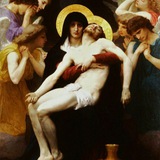
February 21 is the First Sunday in Lent, but is not considered part of the 40 days which comprise the Lenten season.
Forwarded from Smokes & Memes v.2.0 (Cut Hand)
This media is not supported in your browser
VIEW IN TELEGRAM
Forwarded from ✝️ 𝐈𝐧𝐋𝐮𝐱🔥
This media is not supported in your browser
VIEW IN TELEGRAM
Da pacem, Domine, in diebus nostris
Quia non est alius
Qui pugnet pro nobis
Nisi Tu Deus noster
IG: Cathwave_
#TradWave #Chant #ShareTheGospel
Quia non est alius
Qui pugnet pro nobis
Nisi Tu Deus noster
IG: Cathwave_
#TradWave #Chant #ShareTheGospel
Lent is the 40 days before Easter in which Catholics pray, fast, contemplate, and engage in acts of spiritual self-discipline. Catholics do these things because Easter, which celebrates the Resurrection of Christ, is the greatest holy day of the Christian year (even above Christmas) and Catholics have recognized that it is appropriate to prepare for such a holy day by engaging in such disciplines.
(Archbishop Fulton Sheen noted that the Protestant attitude is summarized by the line, “First comes the feast, then comes the hangover,” while the Catholic attitude is “First comes the fast, then comes the feast.”)
The reason Lent lasts 40 days is that 40 is the traditional number of judgment and spiritual testing in the Bible (Gn 7:4, Ex 24:18, 34:28, Nm 13:25, 14:33, Jon 3:4). Lent bears particular relationship to the 40 days Christ spent fasting in the desert before entering into his public ministry (Mt 4:1-11). Catholics imitate Christ by spending 40 days in spiritual discipline before the celebration of Christ’s triumph over sin and death.
Fasting is a biblical discipline that can be defended from both the Old and the New Testament. Christ expected his disciples to fast (Mt 9:14-15) and issued instructions for how they should do so (Mt 6:16-18). Catholics follow this pattern by holding a partial fast on Ash Wednesday and Good Friday.
Abstinence from certain foods is also a biblical discipline. In Daniel 10:2-3 we read, “In those days I, Daniel, was mourning for three weeks. I ate no delicacies, no meat or wine entered my mouth, nor did I anoint myself at all, for the full three weeks.” Catholics use a practice similar to Daniel’s when, as a way of commemorating Christ’s Crucifixion on a Friday, they abstain from eating meat on that day of the week during Lent. The only kind of flesh they eat on Friday is fish, which is a symbol of Christ.
Even the Ash Wednesday practice of having one’s forehead signed with ashes has a biblical parallel. Putting ashes on one’s head was a common biblical expression of mourning (1 Sm 13:19, Est 4:1, Is 61:3; see also Est 4:3, Jer 6:26, Ez 27:30, Dn 9:3, Mt 11:21, Lk 10:13). By having the sign of the cross made with ashes on their foreheads, Catholics mourn Christ’s suffering on the cross and their own sins, which made that suffering necessary.
(Archbishop Fulton Sheen noted that the Protestant attitude is summarized by the line, “First comes the feast, then comes the hangover,” while the Catholic attitude is “First comes the fast, then comes the feast.”)
The reason Lent lasts 40 days is that 40 is the traditional number of judgment and spiritual testing in the Bible (Gn 7:4, Ex 24:18, 34:28, Nm 13:25, 14:33, Jon 3:4). Lent bears particular relationship to the 40 days Christ spent fasting in the desert before entering into his public ministry (Mt 4:1-11). Catholics imitate Christ by spending 40 days in spiritual discipline before the celebration of Christ’s triumph over sin and death.
Fasting is a biblical discipline that can be defended from both the Old and the New Testament. Christ expected his disciples to fast (Mt 9:14-15) and issued instructions for how they should do so (Mt 6:16-18). Catholics follow this pattern by holding a partial fast on Ash Wednesday and Good Friday.
Abstinence from certain foods is also a biblical discipline. In Daniel 10:2-3 we read, “In those days I, Daniel, was mourning for three weeks. I ate no delicacies, no meat or wine entered my mouth, nor did I anoint myself at all, for the full three weeks.” Catholics use a practice similar to Daniel’s when, as a way of commemorating Christ’s Crucifixion on a Friday, they abstain from eating meat on that day of the week during Lent. The only kind of flesh they eat on Friday is fish, which is a symbol of Christ.
Even the Ash Wednesday practice of having one’s forehead signed with ashes has a biblical parallel. Putting ashes on one’s head was a common biblical expression of mourning (1 Sm 13:19, Est 4:1, Is 61:3; see also Est 4:3, Jer 6:26, Ez 27:30, Dn 9:3, Mt 11:21, Lk 10:13). By having the sign of the cross made with ashes on their foreheads, Catholics mourn Christ’s suffering on the cross and their own sins, which made that suffering necessary.
Forwarded from Catholic Arena
Twitter
Catholic Arena
Satanist band Behemoth are known for ripping up Bibles on stage and writing love songs about how much they adore the country of Israel. They think Poland is the worst place ever but they've been to Israel loads of times and love it. Weird! https://t.co/TJKE1qjNYW
"He doesn't love you as you are, He hates you as you are. That's why He is sorry for you as you are, and wants to make you as you are not yet. Let Him make you, I said, the sort of person you are not yet."
- Brooke Peterson, The Works of Saint Augustine: v. 1. Sermons on the Old Testament, 20-50, Sermon 9
- Brooke Peterson, The Works of Saint Augustine: v. 1. Sermons on the Old Testament, 20-50, Sermon 9
Just a friendly reminder for those of you who are observing a Friday abstinence from meat as a Lenten discipline.
Forwarded from Praying for You
God, I ask you to take control of my life, I surrender everything to you, my Lord. I wish to never sin against you. I would rather die than displease you, my sweet Lord. I love you, dear God. I wish to love you for the rest of eternity. Allow me to spend eternity praising You, and loving you with my entire heart.