This page has the same video if you do not have access to YouTube:
https://www.popsci.com/science/article/2012-10/targeted-brain-stimulation-warps-perception-faces-melting-them-someone-else-video
https://www.popsci.com/science/article/2012-10/targeted-brain-stimulation-warps-perception-faces-melting-them-someone-else-video
Popular Science
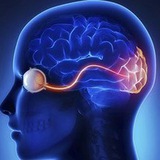
Electric Brain Stimulation Warps Your Perception Of Faces [Video]
A new study uncovers the two nerve centers responsible for face recognition--and the lack thereof.
Question for assignment #3: There are three levels of object recognition: superordinate-level (e.g. vehicle), basic-level (e.g. car), and subordinate-level (e.g. BMW). Which of these levels is processed earlier in visual system? Which technique has been used to address this question, and how it has been addressed?
This is an interesting article about object recognition:
http://www.cell.com/neuron/pdf/S0896-6273(12)00092-X.pdf
http://www.cell.com/neuron/pdf/S0896-6273(12)00092-X.pdf
I presented this topic (face perception) on Thursday last week, during “مسابقات دانشجویی علوم شناختی”. If you are auditing the course and you were in my presentation, you can skip tomorrow’s class.
Assignment #4: Two grayscale faces (Ferdowsipoor and Modiri) are attached below. They have the same size (250 x 360 pixels). You write a code (preferably in Matlab or Python) to morph them. You generate 10 faces in the morphing continuum (100% F, 90% F, ..., 50% MF, ..., 90% M, 100% M). The 50% MF is an average face. Since the facial features of these two faces are very different, morphing would not be an easy task; a simple pixel-based weighted averaging would not work at all (Hossein and I already tested this). Given the fact that this is a challenging assignment, you have two weeks to work on it. If you couldn’t implement a code, don’t worry - you can use a software to generate morphed faces. Obviously if you do it using your own code, you get extra points.
Whenever you are done, please send your code, denoscription of the algorithm used, and 10 morphed faces to our fabulous TA, Hossein Rafipoor (h.rafipoor@gmail.com).