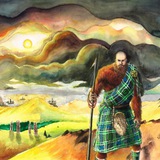
Nicnevin - The Scottish Witch Mother
First appearing in a 16th century poem by Alexander Montgomerie, Nicnevin, known as the Scottish Witch Mother, is often viewed as a witch, the queen of witches, and a fairy queen to boot.
Montgomerie describes her as such in his poem:
"Then a ready company came, soon after close,
Nicnevin with her nymphs, in number enough
With charms from Caithness and the Canonry of Ross
Whose knowledge consists in casting a ball of yarn...
The King of Fairy, and his Court, with the Elf Queen,
with many elvish Incubi was riding that night.”
Considering that fairies with wings and good nature are are not accurate to what fairies truly are, Nicnevin can be seen as a very powerful goddess indeed.
First appearing in a 16th century poem by Alexander Montgomerie, Nicnevin, known as the Scottish Witch Mother, is often viewed as a witch, the queen of witches, and a fairy queen to boot.
Montgomerie describes her as such in his poem:
"Then a ready company came, soon after close,
Nicnevin with her nymphs, in number enough
With charms from Caithness and the Canonry of Ross
Whose knowledge consists in casting a ball of yarn...
The King of Fairy, and his Court, with the Elf Queen,
with many elvish Incubi was riding that night.”
Considering that fairies with wings and good nature are are not accurate to what fairies truly are, Nicnevin can be seen as a very powerful goddess indeed.
One of the more popular cited etymological origins for Nicnevin’s name is the Gaelic “Nic an Neamh,” which is said to translate to “daughter of frenzy.”
Sir Walter Scott gives her a more in-depth denoscription in his book, “Letters on Demonologie and Witchcraft” (1831):
"...a gigantic and malignant female...who rode on the storm and marshalled the rambling host of wanderers under her grim banner. This hag...was called Nicneven in that later system which blended the faith of the Celts and of the Goths on this subject. The great Scottish poet Dunbar has made a spirited denoscription of this Hecate riding at the head of witches and good neighbours (fairies, namely), sorceresses and elves, indifferently, upon the ghostly eve of All-Hallow Mass."
In the folklore, she is described as leading witches and fairies through the darkness of Halloween night, her unnamed King at her side.
Sir Walter Scott gives her a more in-depth denoscription in his book, “Letters on Demonologie and Witchcraft” (1831):
"...a gigantic and malignant female...who rode on the storm and marshalled the rambling host of wanderers under her grim banner. This hag...was called Nicneven in that later system which blended the faith of the Celts and of the Goths on this subject. The great Scottish poet Dunbar has made a spirited denoscription of this Hecate riding at the head of witches and good neighbours (fairies, namely), sorceresses and elves, indifferently, upon the ghostly eve of All-Hallow Mass."
In the folklore, she is described as leading witches and fairies through the darkness of Halloween night, her unnamed King at her side.
Olwyn
In the Welsh myth masterpiece, the Mabinogion, Olwyn is the daughter of the great Ysbaddaden, the Chief of Giants. It is he who is fated to die if she ever married.
A curse is connected with her and Culhwch, royal prince and cousin to King Arthur. The young price is a main figure in the story “Olwyn and Culhwch” found in the Mabinogion. The enchantment affixed Culwch’s future, as Olwyn was the only bride to be his.
Because of his love for his daughter and the threat to his life, Ysbaddaden prepares for any gentlemen callers in pursuit of Olwen by ensuring challenging defenses in his castle. This will be covered at another time, for it deserves a post on its own.
In the Welsh myth masterpiece, the Mabinogion, Olwyn is the daughter of the great Ysbaddaden, the Chief of Giants. It is he who is fated to die if she ever married.
A curse is connected with her and Culhwch, royal prince and cousin to King Arthur. The young price is a main figure in the story “Olwyn and Culhwch” found in the Mabinogion. The enchantment affixed Culwch’s future, as Olwyn was the only bride to be his.
Because of his love for his daughter and the threat to his life, Ysbaddaden prepares for any gentlemen callers in pursuit of Olwen by ensuring challenging defenses in his castle. This will be covered at another time, for it deserves a post on its own.
The hero emerges triumphant as Culhwch rescues the resplendent Olwyn and marries her sealing Ysbaddaden’s doom.
Olwyn is described as a vision of the beautiful, with “hair more yellow than the broom, white skin, rosy cheeks, and pale hands.”
Her movement blossomed trefoils (flowers) with her every step, as her name means “white footprint” or “white track.”
Definitely a beauty to behold, her role in the Mabinogion heralds her as every Welshman’s desire.
Olwyn is described as a vision of the beautiful, with “hair more yellow than the broom, white skin, rosy cheeks, and pale hands.”
Her movement blossomed trefoils (flowers) with her every step, as her name means “white footprint” or “white track.”
Definitely a beauty to behold, her role in the Mabinogion heralds her as every Welshman’s desire.
Personification of the gods
Our gods are terrifying, yet beautiful, loving, yet indifferent, powerful, yet have weaknesses and through all of our attempts to describe and define them, they are as close to us as our mother, father, sisters or brothers.
They are part of our extended family, and deserve the affection reserved for our kin.
Like us, they have wants, desires, contempts, and dislikes. This does not make them less god-like, it just makes us more so like them. Their stories bear witness to this, and by them we can be seen as god-kin.
Taranis and Thor can be felt in the moment between the thunderclap and a lightning strike, the buildup of raw power right before a crashing down of destruction from on high. This is relatable to the pure anger coursing through the veins right before releasing the fury upon a foe.
Our gods are terrifying, yet beautiful, loving, yet indifferent, powerful, yet have weaknesses and through all of our attempts to describe and define them, they are as close to us as our mother, father, sisters or brothers.
They are part of our extended family, and deserve the affection reserved for our kin.
Like us, they have wants, desires, contempts, and dislikes. This does not make them less god-like, it just makes us more so like them. Their stories bear witness to this, and by them we can be seen as god-kin.
Taranis and Thor can be felt in the moment between the thunderclap and a lightning strike, the buildup of raw power right before a crashing down of destruction from on high. This is relatable to the pure anger coursing through the veins right before releasing the fury upon a foe.
Áine and Freyja are felt through the love a husband has for his wife, or lovers fawning over each other, hopelessly lost in each others eyes. This happens every day for our people and is one of the most wonderful (and miserable) experiences.
Goibniu watches over the craftsman who forges through fire, and welcomes the stranger into the home. Our people are industrious and welcome others in to rest from the long road and a meal to loosen the belt a notch or two.
All of these gods are incarnations of an aspect of the Hyperborean race, and can be seen as an “archetype”, but I see them as what they are.. gods of their respective domains.
It is easy to overlook how one is being formed in connection to god or goddess, and the physical changes that we undergo while employed in a hobby or job in relation to a specific deity.
Goibniu watches over the craftsman who forges through fire, and welcomes the stranger into the home. Our people are industrious and welcome others in to rest from the long road and a meal to loosen the belt a notch or two.
All of these gods are incarnations of an aspect of the Hyperborean race, and can be seen as an “archetype”, but I see them as what they are.. gods of their respective domains.
It is easy to overlook how one is being formed in connection to god or goddess, and the physical changes that we undergo while employed in a hobby or job in relation to a specific deity.
Brewers who are large and barrel-chested are like Sucellos, the Gaulish god of alcohol.
Those in warrior professions embody Tyr, god of war and justice, although living your life in opposition to forces opposing your folk is truly being in communion with the vengeful god.
There are many other great examples of how we are literally demigods, who have yet to live up to our full potential. Once we come to terms with that and live up to our full potential, we are on our way to possible deification.
Live to the fullest, Hyperborean. We are the children of gods.
Those in warrior professions embody Tyr, god of war and justice, although living your life in opposition to forces opposing your folk is truly being in communion with the vengeful god.
There are many other great examples of how we are literally demigods, who have yet to live up to our full potential. Once we come to terms with that and live up to our full potential, we are on our way to possible deification.
Live to the fullest, Hyperborean. We are the children of gods.
Lugh of the Long Arm
God of justice, oaths, craftsmanship, and master of many talents, the Celtic god Lugh is part of the Tuatha Dé Danann, gods of pre-christian Gaelic Ireland.
Sometimes referred to as “Lug”, his name was popular throughout Ireland with the Celtic tribes.
He has many noscripts, but the most popular was Lámfada or “of the Long Arm”, which can possibly be attributed to the length of his spear during battle.
He was also heralded as Ildánach or “the skilled god” as he was adept at many different things, which might explain his inventing several Irish games. These are: horse-racing, sports, and fidchell, which predates chess.
God of justice, oaths, craftsmanship, and master of many talents, the Celtic god Lugh is part of the Tuatha Dé Danann, gods of pre-christian Gaelic Ireland.
Sometimes referred to as “Lug”, his name was popular throughout Ireland with the Celtic tribes.
He has many noscripts, but the most popular was Lámfada or “of the Long Arm”, which can possibly be attributed to the length of his spear during battle.
He was also heralded as Ildánach or “the skilled god” as he was adept at many different things, which might explain his inventing several Irish games. These are: horse-racing, sports, and fidchell, which predates chess.
Serving as the god of justice in its various forms, his vengefulness was quite often very quick and without mercy.
Bequeathed powerful weapons of war and magical items from his foster-father Manannán, Lugh was a fearsome warrior to pit against. This gear included:
The Spear (Sleg) of Assal, one of the Four Jewels of the Tuatha Dé Danann. This spear was practically invincible in battle and could take the form of lightning when thrown. When the word “Ibar” was said or yelled, it hit its mark; with another (“Athibar!”), it returned to the wielder.
The Cloich tabaill, or slingshot, wielded in battle against Balor of the Evil Eye.
Fragarach, or “The Answerer,” sword of Manannán. The sword could force those it was pointed at to answer questions truthfully.
Sguaba Tuinne, the “Wind-sweeper,” a boat of considerable speed.
Several horses, including Manannán’s horse Énbarr of the Flowing Mane, he rode gallantly.
Bequeathed powerful weapons of war and magical items from his foster-father Manannán, Lugh was a fearsome warrior to pit against. This gear included:
The Spear (Sleg) of Assal, one of the Four Jewels of the Tuatha Dé Danann. This spear was practically invincible in battle and could take the form of lightning when thrown. When the word “Ibar” was said or yelled, it hit its mark; with another (“Athibar!”), it returned to the wielder.
The Cloich tabaill, or slingshot, wielded in battle against Balor of the Evil Eye.
Fragarach, or “The Answerer,” sword of Manannán. The sword could force those it was pointed at to answer questions truthfully.
Sguaba Tuinne, the “Wind-sweeper,” a boat of considerable speed.
Several horses, including Manannán’s horse Énbarr of the Flowing Mane, he rode gallantly.
Failinis, a greyhound of great fame who never missed its prey, was invulnerable in battle, and could turn water into wine.
Even to this day, Lughasa (Lughnasadh), a harvest festival in Ireland, takes place on August 1st and is celebrated across Ireland, Scotland, and the Isle of Man. This date marks Lugh’s victory over the spirits of Tír na nÓg.
To celebrate his victory, Lugh blessed the early fruits of harvest and hosted games in memory of his foster-mother Tailtiu.
There are different versions of the stories of Lugh of the Long arm, but the differences do not lose value or meaning as they are passed down from parent to child and tribe to tribe.
Even to this day, Lughasa (Lughnasadh), a harvest festival in Ireland, takes place on August 1st and is celebrated across Ireland, Scotland, and the Isle of Man. This date marks Lugh’s victory over the spirits of Tír na nÓg.
To celebrate his victory, Lugh blessed the early fruits of harvest and hosted games in memory of his foster-mother Tailtiu.
There are different versions of the stories of Lugh of the Long arm, but the differences do not lose value or meaning as they are passed down from parent to child and tribe to tribe.
The Stirling Wolf legend, Scotland. Legend is told that in the 9th century, the town of Stirling was about to be raided by the invading Danes (vikings) under the cover of darkness. They stumbled upon a pack of wolves who began howling, alerting the town guard and saving the town.
Since we are approaching the end of March, which Gaelic Celtic gods or goddesses would you like us to discover?
Final Results
0%
The Daghda
40%
Cernunnos
40%
Morrigan
20%
Goibniu
0%
Nuada
0%
Ogma
Forwarded from Hyperborean Radio (Uncensored)
Today we played a game trying to place the gods in modern professions such as Venus as a Beautician, Tyr as a Mercenary, Chislobog as a coder, Saga as a Bartender, etc. As well as what gods would go with what professions the Muses and Athena show up a lot. This was a fun one enjoy! https://anchor.fm/heimdallrshome/episodes/A-Fun-Game-etgkcg
BC Neanderthal Mindset
Since we are approaching the end of March, which Gaelic Celtic gods or goddesses would you like us to discover?
A tie!! That is a win all around because we will be visiting both of these deities! Both Cernunnos and Morrigan.
Forwarded from Hyperborean Radio (Uncensored)
The Traveler and The Doctor: A Study of the Psychological Echoes of an Archetype
By The Antlered One
What is it that exists deep within our souls that causes us to explore? To wish to cross the endless ocean or the imposing mountains? The Wanderer in us all seeks to find the new things. To find the great cave of the dragon, to stop the hordes and be the hero of a far off land. When told the world is known, though a new discovery and adventure waits around every corner we look to the stars and dream of wandering the cosmos skimming nebulas and jumping from planet to planet. Just as long ago through realms and the wide woods of the North. The Traveling gods of Europe walked amongst us and at times found us beside them as companions on their next grand adventure. These stories, these emotions, this Wanderlust does not fade in a mere moment in history, it continues and when we are denied our gods we still need to feel them, and we are...............
Check out on:
https://www.subscribestar.com/posts/299545
By The Antlered One
What is it that exists deep within our souls that causes us to explore? To wish to cross the endless ocean or the imposing mountains? The Wanderer in us all seeks to find the new things. To find the great cave of the dragon, to stop the hordes and be the hero of a far off land. When told the world is known, though a new discovery and adventure waits around every corner we look to the stars and dream of wandering the cosmos skimming nebulas and jumping from planet to planet. Just as long ago through realms and the wide woods of the North. The Traveling gods of Europe walked amongst us and at times found us beside them as companions on their next grand adventure. These stories, these emotions, this Wanderlust does not fade in a mere moment in history, it continues and when we are denied our gods we still need to feel them, and we are...............
Check out on:
https://www.subscribestar.com/posts/299545
Mórrígan - The Phantom Queen
Known in the Celtic pantheon as the warrior queen of war, destiny, death, as well as rebirth, the Mórrígan is one of the most mysterious goddesses of the ancient Celts.
She interacts with mortal men and is often associated with the crow, as they can be seen in the aftermath of battles, feasting on the dead.
She wanders the battlefield, giving aid to those she favors and those she does not are cursed, collecting the souls of the slain. She both gives life and takes it away.
In the Cath Maige Tuired or 'Battle of Mag Tuired' (The Battle of Moytura), Mórrígan sleeps with the Daghda, the good god, with one foot on each bank of a mighty river and later promises to summon magicians of Ireland to assist the Tuatha De Danann in their war against the Fomorians. It is believed that on Samhain she and the Dagda would meet and make love.
Known in the Celtic pantheon as the warrior queen of war, destiny, death, as well as rebirth, the Mórrígan is one of the most mysterious goddesses of the ancient Celts.
She interacts with mortal men and is often associated with the crow, as they can be seen in the aftermath of battles, feasting on the dead.
She wanders the battlefield, giving aid to those she favors and those she does not are cursed, collecting the souls of the slain. She both gives life and takes it away.
In the Cath Maige Tuired or 'Battle of Mag Tuired' (The Battle of Moytura), Mórrígan sleeps with the Daghda, the good god, with one foot on each bank of a mighty river and later promises to summon magicians of Ireland to assist the Tuatha De Danann in their war against the Fomorians. It is believed that on Samhain she and the Dagda would meet and make love.