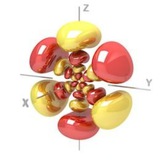
Scientist resolves one of the holy grails of physical chemistry after 17 years of research
https://phys.org/news/2022-09-scientist-holy-grails-physical-chemistry.html
https://phys.org/news/2022-09-scientist-holy-grails-physical-chemistry.html
phys.org
Scientist resolves one of the holy grails of physical chemistry after 17 years of research
Prof. Ehud Pines is an iconoclast. What else can you call a scientist who spent 17 years doggedly pursuing the solution to an over 200-year-old chemistry problem which he felt never received a satisfying ...
🔥2
Paper by team claiming to have achieved superconductivity at room temperature retracted
https://phys.org/news/2022-09-paper-team-superconductivity-room-temperature.html
https://phys.org/news/2022-09-paper-team-superconductivity-room-temperature.html
phys.org
Paper by team claiming to have achieved superconductivity at room temperature retracted
Editors at the journal Nature have retracted a paper by a team that claimed to have achieved superconductivity at room temperature. Published in 2020, the paper described work by a combined team from ...
The Application of Computational Chemistry to Problems in Mass Spectrometry
https://www.spectroscopyonline.com/view/application-computational-chemistry-problems-mass-spectrometry
https://www.spectroscopyonline.com/view/application-computational-chemistry-problems-mass-spectrometry
Spectroscopy Online
The Application of Computational Chemistry to Problems in Mass Spectrometry
Quantum chemistry is capable of calculating a wide range of electronic and thermodynamic properties of interest to a chemist or physicist. Calculations can be used both to predict the results of future experiments and to aid in the interpretation of existing…
- Visualizing Generic Reaction Patterns -
Reaction schemes for organic molecules play a crucial role in modern in silico drug design processes. In contrast to the classical drawn reaction diagrams, computational chemists prefer SMARTS based line notations due to a substantially increased expressiveness and precision. They are used to search databases, calculate synthesizability, generate new molecules, or simulate novel reactions. Working with computer-readable representations of reaction schemes can be challenging due to the complexity of the features to be represented. Line representations of reaction schemes can often be cryptic, even to experienced users. To simplify the work with Reaction SMARTS for synthetic, computational, and medicinal chemists, we introduce a visualization technique for reaction schemes and provide a respective tool, called ReactionViewer.
https://pubs.acs.org/doi/full/10.1021/acs.jcim.2c00992
Reaction schemes for organic molecules play a crucial role in modern in silico drug design processes. In contrast to the classical drawn reaction diagrams, computational chemists prefer SMARTS based line notations due to a substantially increased expressiveness and precision. They are used to search databases, calculate synthesizability, generate new molecules, or simulate novel reactions. Working with computer-readable representations of reaction schemes can be challenging due to the complexity of the features to be represented. Line representations of reaction schemes can often be cryptic, even to experienced users. To simplify the work with Reaction SMARTS for synthetic, computational, and medicinal chemists, we introduce a visualization technique for reaction schemes and provide a respective tool, called ReactionViewer.
https://pubs.acs.org/doi/full/10.1021/acs.jcim.2c00992
Open Access - Stability of Alkyl Carbocations
The traditional and widespread rationale behind the stability trend of alkyl-substituted carbocations is incomplete. Through state-of-the-art quantum chemical analyses, we quantitatively established a generally overlooked driving force behind the stability of carbocations, namely, that parent substrates are substantially destabilized by the introduction of substituents, often playing a dominant role in solution. This stems from the repulsion between the substituents and the C–X bond.
https://pubs.rsc.org/en/Content/ArticleLanding/2022/CC/D2CC04034D
The traditional and widespread rationale behind the stability trend of alkyl-substituted carbocations is incomplete. Through state-of-the-art quantum chemical analyses, we quantitatively established a generally overlooked driving force behind the stability of carbocations, namely, that parent substrates are substantially destabilized by the introduction of substituents, often playing a dominant role in solution. This stems from the repulsion between the substituents and the C–X bond.
https://pubs.rsc.org/en/Content/ArticleLanding/2022/CC/D2CC04034D
pubs.rsc.org
Stability of alkyl carbocations
The traditional and widespread rationale behind the stability trend of alkyl-substituted carbocations is incomplete. Through state-of-the-art quantum chemical analyses, we quantitatively established a generally overlooked driving force behind the stability…
Scientists discover they can pull water molecules apart using graphene electrodes
https://phys.org/news/2022-10-scientists-molecules-graphene-electrodes.html
https://phys.org/news/2022-10-scientists-molecules-graphene-electrodes.html
phys.org
Scientists discover they can pull water molecules apart using graphene electrodes
Writing in Nature Communications, a team led by Dr. Marcelo Lozada-Hidalgo based at the National Graphene Institute (NGI) used graphene as an electrode to measure both the electrical force applied on ...
OPEN ACCESS - Completing density functional theory by machine learning hidden messages from molecules
Kohn–Sham density functional theory (DFT) is the basis of modern computational approaches to electronic structures. Their accuracy heavily relies on the exchange-correlation energy functional, which encapsulates electron–electron interaction beyond the classical model. As its universal form remains undiscovered, approximated functionals constructed with heuristic approaches are used for practical studies. However, there are problems in their accuracy and transferability, while any systematic approach to improve them is yet obscure. In this study, we demonstrate that the functional can be systematically constructed using accurate density distributions and energies in reference molecules via machine learning. Surprisingly, a trial functional machine learned from only a few molecules is already applicable to hundreds of molecules comprising various first- and second-row elements with the same accuracy as the standard functionals. This is achieved by relating density and energy using a flexible feed-forward neural network, which allows us to take a functional derivative via the back-propagation algorithm. In addition, simply by introducing a nonlocal density denoscriptor, the nonlocal effect is included to improve accuracy, which has hitherto been impractical. Our approach thus will help enrich the DFT framework by utilizing the rapidly advancing machine-learning technique.
https://www.nature.com/articles/s41524-020-0310-0
Kohn–Sham density functional theory (DFT) is the basis of modern computational approaches to electronic structures. Their accuracy heavily relies on the exchange-correlation energy functional, which encapsulates electron–electron interaction beyond the classical model. As its universal form remains undiscovered, approximated functionals constructed with heuristic approaches are used for practical studies. However, there are problems in their accuracy and transferability, while any systematic approach to improve them is yet obscure. In this study, we demonstrate that the functional can be systematically constructed using accurate density distributions and energies in reference molecules via machine learning. Surprisingly, a trial functional machine learned from only a few molecules is already applicable to hundreds of molecules comprising various first- and second-row elements with the same accuracy as the standard functionals. This is achieved by relating density and energy using a flexible feed-forward neural network, which allows us to take a functional derivative via the back-propagation algorithm. In addition, simply by introducing a nonlocal density denoscriptor, the nonlocal effect is included to improve accuracy, which has hitherto been impractical. Our approach thus will help enrich the DFT framework by utilizing the rapidly advancing machine-learning technique.
https://www.nature.com/articles/s41524-020-0310-0
Nature
Completing density functional theory by machine learning hidden messages from molecules
npj Computational Materials - Completing density functional theory by machine learning hidden messages from molecules
🤩1
Sign-up for the free webinar!
Q-Chem Webinar 67: Projection-based Quantum Mechanical Embedding Methods in Q-Chem
Modeling of the environment plays an essential role in computational studies of chemical processes in realistic condensed-phase systems. In this regard, Q-Chem offers a wide variety of options including continuum solvation models, hybrid QM/MM methods, and QM embedding approaches. In this webinar, I will focus on a version of projection-based embedding theory that has been implemented in Q-Chem, which stands for a robust and formally exact approach to incorporating the environment quantum mechanically. This method involves the partition of a chemical system into two subsystems that can then be treated at two different levels of theory: typically a small, chemically important part of the system is described using a higher-level theory, while the surrounding environment is treated at a lower level; the higher-level calculation is subjected to the embedding potential supplied by the environment. I will introduce the theory underlying our Q-Chem implementation of the DFT-in-DFT and WFT-in-DFT embedding schemes, the techniques available for the robust partition of occupied spaces and truncation of virtual spaces in embedding calculations, and the practical aspects regarding the setup of Q-Chem inputs for different types of projection-based embedding calculations. I will also use a few examples to demonstrate how this tool, when combined with other functionalities of Q-Chem, can be useful for studying both ground- and excited-state chemistry in complex environments.
About the Presenter: Yuezhi Mao
Yuezhi Mao received his B.S. degree in materials chemistry from Peking University in 2012. He then joined Prof. Martin Head-Gordon’s group at UC Berkeley and earned his PhD in 2017. He then worked as a postdoc scholar in Prof. Tom Markland’s group at Stanford University for another 4 and half years. Just in this August, Yuezhi started his independent position as an Assistant Professor at the San Diego State University, where his group will continue working on the development and application of new theoretical methods.
https://register.gotowebinar.com/register/7425823783685083660
Q-Chem Webinar 67: Projection-based Quantum Mechanical Embedding Methods in Q-Chem
Modeling of the environment plays an essential role in computational studies of chemical processes in realistic condensed-phase systems. In this regard, Q-Chem offers a wide variety of options including continuum solvation models, hybrid QM/MM methods, and QM embedding approaches. In this webinar, I will focus on a version of projection-based embedding theory that has been implemented in Q-Chem, which stands for a robust and formally exact approach to incorporating the environment quantum mechanically. This method involves the partition of a chemical system into two subsystems that can then be treated at two different levels of theory: typically a small, chemically important part of the system is described using a higher-level theory, while the surrounding environment is treated at a lower level; the higher-level calculation is subjected to the embedding potential supplied by the environment. I will introduce the theory underlying our Q-Chem implementation of the DFT-in-DFT and WFT-in-DFT embedding schemes, the techniques available for the robust partition of occupied spaces and truncation of virtual spaces in embedding calculations, and the practical aspects regarding the setup of Q-Chem inputs for different types of projection-based embedding calculations. I will also use a few examples to demonstrate how this tool, when combined with other functionalities of Q-Chem, can be useful for studying both ground- and excited-state chemistry in complex environments.
About the Presenter: Yuezhi Mao
Yuezhi Mao received his B.S. degree in materials chemistry from Peking University in 2012. He then joined Prof. Martin Head-Gordon’s group at UC Berkeley and earned his PhD in 2017. He then worked as a postdoc scholar in Prof. Tom Markland’s group at Stanford University for another 4 and half years. Just in this August, Yuezhi started his independent position as an Assistant Professor at the San Diego State University, where his group will continue working on the development and application of new theoretical methods.
https://register.gotowebinar.com/register/7425823783685083660
Ancient Chemistry: Why Living Things Use ATP As the Universal Energy Currency
https://scitechdaily.com/ancient-chemistry-why-living-things-use-atp-as-the-universal-energy-currency/
https://scitechdaily.com/ancient-chemistry-why-living-things-use-atp-as-the-universal-energy-currency/
SciTechDaily
Ancient Chemistry: Why Living Things Use ATP As the Universal Energy Currency
An early step in metabolic evolution set the stage for emergence of ATP as the universal energy carrier. A simple two-carbon compound may have been a crucial player in the evolution of metabolism before the advent of cells. This is according to a new study…
A new process to build 2D materials made possible by quantum calculations
https://phys.org/news/2022-10-2d-materials-quantum.html
https://phys.org/news/2022-10-2d-materials-quantum.html
phys.org
A new process to build 2D materials made possible by quantum calculations
Quantum calculations performed by researchers from the University of Surrey have allowed scientists to discover new "phases" of two-dimensional (2D) material that could be used to develop the next generation ...
Upcoming Free Webinar
Calculations of electron-phonon interactions from first principles are becoming an increasingly popular tool for the study of functional materials at finite temperature. As a result, several new techniques have been developed during the past decade to address a broad array of properties and phenomena, ranging from light-matter interactions to superconductivity [1]. In this lecture I will outline the basic concepts of electron-phonon calculations from first principles, and I will illustrate some recent applications to several materials classes.
https://www.materialssquare.com/webinar
Calculations of electron-phonon interactions from first principles are becoming an increasingly popular tool for the study of functional materials at finite temperature. As a result, several new techniques have been developed during the past decade to address a broad array of properties and phenomena, ranging from light-matter interactions to superconductivity [1]. In this lecture I will outline the basic concepts of electron-phonon calculations from first principles, and I will illustrate some recent applications to several materials classes.
https://www.materialssquare.com/webinar
Materials Square
Join our monthly webinar! - Materials Square
You can learn the latest global trends in various materials fields for free.
👍4🤩1
Scientists Transformed Pure Water Into a Metal, And There's Footage : ScienceAlert
https://www.sciencealert.com/scientists-transformed-pure-water-into-a-metal-and-theres-footage
https://www.sciencealert.com/scientists-transformed-pure-water-into-a-metal-and-theres-footage
ScienceAlert
Scientists Transformed Pure Water Into a Metal, And There's Footage
This is so cool.
🔥3
Physicists Baffled by Proton Structure Anomaly
https://scitechdaily.com/physicists-baffled-by-proton-structure-anomaly/
https://scitechdaily.com/physicists-baffled-by-proton-structure-anomaly/
SciTechDaily
Physicists Baffled by Proton Structure Anomaly
Precision measurement of how a proton’s structure deforms in an electric field has revealed new details about an unexplained spike in proton data. Nuclear physicists have confirmed that the current denoscription of proton structure isn’t perfect. A bump in…
Watch "The man who tried to fake an element" on YouTube
https://youtu.be/Qe5WT22-AO8
https://youtu.be/Qe5WT22-AO8
YouTube
The man who tried to fake an element
This is the race for the periodic table.
Where else you can find me:
https://twitter.com/bobbybroccole
https://www.patreon.com/bobbybroccoli
Big thank you to @CGFigures for the Blender geonodes help: https://www.youtube.com/watch?v=N4TYfYf1fjo&ab_channel=CGFigures…
Where else you can find me:
https://twitter.com/bobbybroccole
https://www.patreon.com/bobbybroccoli
Big thank you to @CGFigures for the Blender geonodes help: https://www.youtube.com/watch?v=N4TYfYf1fjo&ab_channel=CGFigures…
🔥2👍1