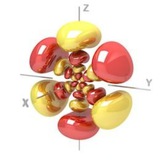
Breakthrough reported in machine learning-enhanced quantum chemistry
https://phys.org/news/2022-09-breakthrough-machine-learning-enhanced-quantum-chemistry.html
https://phys.org/news/2022-09-breakthrough-machine-learning-enhanced-quantum-chemistry.html
phys.org
Breakthrough reported in machine learning-enhanced quantum chemistry
In a new study, published in Proceedings of the National Academy of Sciences, researchers from Los Alamos National Laboratory have proposed incorporating more of the mathematics of quantum mechanics into ...
👍2
2 PhD positions theoretical & computational chemistr/physics @ University of Parma
Topics:
(a) Theoretical and computational approaches to molecular functional materials for application in organic electronics (mainly OLED): photophysics and environmental effects
(b) Theoretical and computational approaches to Chiral Induced Spin Selectivity (CISS) effect
Background: Master degree in chemistry, or in physics or in material science (or similar)
Duration: 3 years
Estimate starting date: January, 1st 2023
Monthly fellowship ≈ 1150€
For information: cristina.sissa@unipr.it; anna.painelli@unipr.it
Topics:
(a) Theoretical and computational approaches to molecular functional materials for application in organic electronics (mainly OLED): photophysics and environmental effects
(b) Theoretical and computational approaches to Chiral Induced Spin Selectivity (CISS) effect
Background: Master degree in chemistry, or in physics or in material science (or similar)
Duration: 3 years
Estimate starting date: January, 1st 2023
Monthly fellowship ≈ 1150€
For information: cristina.sissa@unipr.it; anna.painelli@unipr.it
👍7
OPEN ACCESS
Best-Practice DFT Protocols for Basic Molecular Computational Chemistry
—
Many chemical investigations are supported by routine calculations of molecular structures, reaction energies, barrier heights, and spectroscopic properties. Most of these quantum-chemical calculations apply various combinations of DFT-based methods. This Scientific Perspective provides best-practice protocols and guidance in the choice of robust method combinations to deal with many day-to-day challenges in computational chemistry and discusses representative examples.
https://onlinelibrary.wiley.com/doi/10.1002/anie.202205735
Best-Practice DFT Protocols for Basic Molecular Computational Chemistry
—
Many chemical investigations are supported by routine calculations of molecular structures, reaction energies, barrier heights, and spectroscopic properties. Most of these quantum-chemical calculations apply various combinations of DFT-based methods. This Scientific Perspective provides best-practice protocols and guidance in the choice of robust method combinations to deal with many day-to-day challenges in computational chemistry and discusses representative examples.
https://onlinelibrary.wiley.com/doi/10.1002/anie.202205735
👍9
First organic magnesium electride is stable at room temperature | Research | Chemistry World
https://www.chemistryworld.com/news/first-organic-magnesium-electride-is-stable-at-room-temperature/4016043.article
https://www.chemistryworld.com/news/first-organic-magnesium-electride-is-stable-at-room-temperature/4016043.article
Chemistry World
First organic magnesium electride is stable at room temperature
Molecule has potential in redox reactions, as it's highly soluble in organic solvents and easily stored in a glovebox
👍2
Forwarded from Lets Learn Bio-IT School 🇫🇷🇮🇳
#workshop #virtual #genomics #beginner #level
Virtual workshop on Introduction to fundamentals and Bash Scripting for Genomics.
This two-day workshop focuses on the basics of genomics and using Linux for genomics. Further, It will provide concepts, and hands-on training on Linux commands noscripts and basics of genomics, such as designing experiments, accessing datasets from different databases, and data uploading to resources like NCBI.
🎙Our speakers, Dr. Meenakshi I (NCBS, India) & Dr.Samdani A (ICOA, France), carry Ph.D. degrees in Bioinformatics with rich of experience in Genomics.
✍️Who can apply?
Anyone interested in learning the basics of Linux and genomics study design and managing sequencing data. The workshop assumes that learners have no or little experience with Linux systems
✳️It is free for Undergraduate students.
👨💻For more info & registration, visit our site at https://www.nyberman.com/internship-trainings/workshop
📢«««««««
Channel @llbschool
Forum @letslearnbioinformatics
Virtual workshop on Introduction to fundamentals and Bash Scripting for Genomics.
This two-day workshop focuses on the basics of genomics and using Linux for genomics. Further, It will provide concepts, and hands-on training on Linux commands noscripts and basics of genomics, such as designing experiments, accessing datasets from different databases, and data uploading to resources like NCBI.
🎙Our speakers, Dr. Meenakshi I (NCBS, India) & Dr.Samdani A (ICOA, France), carry Ph.D. degrees in Bioinformatics with rich of experience in Genomics.
✍️Who can apply?
Anyone interested in learning the basics of Linux and genomics study design and managing sequencing data. The workshop assumes that learners have no or little experience with Linux systems
✳️It is free for Undergraduate students.
👨💻For more info & registration, visit our site at https://www.nyberman.com/internship-trainings/workshop
📢«««««««
Channel @llbschool
Forum @letslearnbioinformatics
👍1
Artificial intelligence reduces a 100,000-equation quantum physics problem to only four equations
https://phys.org/news/2022-09-artificial-intelligence-equation-quantum-physics.html
https://phys.org/news/2022-09-artificial-intelligence-equation-quantum-physics.html
phys.org
Artificial intelligence reduces a 100,000-equation quantum physics problem to only four equations
Using artificial intelligence, physicists have compressed a daunting quantum problem that until now required 100,000 equations into a bite-size task of as few as four equations—all without sacrificing ...
🔥2
Quantum developer tools for chemistry - Q# Blog
https://devblogs.microsoft.com/qsharp/quantum-developer-tools-for-chemistry/
https://devblogs.microsoft.com/qsharp/quantum-developer-tools-for-chemistry/
Q# Blog
Quantum developer tools for chemistry
Learn how to use Microsoft's Q# libraries and developer tools to simulate the exact quantum nature of chemical systems with quantum computing.
A collective effort for building DFT | Nature Computational Science
https://www.nature.com/articles/s43588-022-00294-1
https://www.nature.com/articles/s43588-022-00294-1
Nature
A collective effort for building DFT
Nature Computational Science - Dr Lu Sham, Distinguished Professor Emeritus of Physics at the University of California, San Diego, talks with Nature Computational Science about his current...
👍1
Scientist resolves one of the holy grails of physical chemistry after 17 years of research
https://phys.org/news/2022-09-scientist-holy-grails-physical-chemistry.html
https://phys.org/news/2022-09-scientist-holy-grails-physical-chemistry.html
phys.org
Scientist resolves one of the holy grails of physical chemistry after 17 years of research
Prof. Ehud Pines is an iconoclast. What else can you call a scientist who spent 17 years doggedly pursuing the solution to an over 200-year-old chemistry problem which he felt never received a satisfying ...
🔥2
Paper by team claiming to have achieved superconductivity at room temperature retracted
https://phys.org/news/2022-09-paper-team-superconductivity-room-temperature.html
https://phys.org/news/2022-09-paper-team-superconductivity-room-temperature.html
phys.org
Paper by team claiming to have achieved superconductivity at room temperature retracted
Editors at the journal Nature have retracted a paper by a team that claimed to have achieved superconductivity at room temperature. Published in 2020, the paper described work by a combined team from ...
The Application of Computational Chemistry to Problems in Mass Spectrometry
https://www.spectroscopyonline.com/view/application-computational-chemistry-problems-mass-spectrometry
https://www.spectroscopyonline.com/view/application-computational-chemistry-problems-mass-spectrometry
Spectroscopy Online
The Application of Computational Chemistry to Problems in Mass Spectrometry
Quantum chemistry is capable of calculating a wide range of electronic and thermodynamic properties of interest to a chemist or physicist. Calculations can be used both to predict the results of future experiments and to aid in the interpretation of existing…
- Visualizing Generic Reaction Patterns -
Reaction schemes for organic molecules play a crucial role in modern in silico drug design processes. In contrast to the classical drawn reaction diagrams, computational chemists prefer SMARTS based line notations due to a substantially increased expressiveness and precision. They are used to search databases, calculate synthesizability, generate new molecules, or simulate novel reactions. Working with computer-readable representations of reaction schemes can be challenging due to the complexity of the features to be represented. Line representations of reaction schemes can often be cryptic, even to experienced users. To simplify the work with Reaction SMARTS for synthetic, computational, and medicinal chemists, we introduce a visualization technique for reaction schemes and provide a respective tool, called ReactionViewer.
https://pubs.acs.org/doi/full/10.1021/acs.jcim.2c00992
Reaction schemes for organic molecules play a crucial role in modern in silico drug design processes. In contrast to the classical drawn reaction diagrams, computational chemists prefer SMARTS based line notations due to a substantially increased expressiveness and precision. They are used to search databases, calculate synthesizability, generate new molecules, or simulate novel reactions. Working with computer-readable representations of reaction schemes can be challenging due to the complexity of the features to be represented. Line representations of reaction schemes can often be cryptic, even to experienced users. To simplify the work with Reaction SMARTS for synthetic, computational, and medicinal chemists, we introduce a visualization technique for reaction schemes and provide a respective tool, called ReactionViewer.
https://pubs.acs.org/doi/full/10.1021/acs.jcim.2c00992
Open Access - Stability of Alkyl Carbocations
The traditional and widespread rationale behind the stability trend of alkyl-substituted carbocations is incomplete. Through state-of-the-art quantum chemical analyses, we quantitatively established a generally overlooked driving force behind the stability of carbocations, namely, that parent substrates are substantially destabilized by the introduction of substituents, often playing a dominant role in solution. This stems from the repulsion between the substituents and the C–X bond.
https://pubs.rsc.org/en/Content/ArticleLanding/2022/CC/D2CC04034D
The traditional and widespread rationale behind the stability trend of alkyl-substituted carbocations is incomplete. Through state-of-the-art quantum chemical analyses, we quantitatively established a generally overlooked driving force behind the stability of carbocations, namely, that parent substrates are substantially destabilized by the introduction of substituents, often playing a dominant role in solution. This stems from the repulsion between the substituents and the C–X bond.
https://pubs.rsc.org/en/Content/ArticleLanding/2022/CC/D2CC04034D
pubs.rsc.org
Stability of alkyl carbocations
The traditional and widespread rationale behind the stability trend of alkyl-substituted carbocations is incomplete. Through state-of-the-art quantum chemical analyses, we quantitatively established a generally overlooked driving force behind the stability…
Scientists discover they can pull water molecules apart using graphene electrodes
https://phys.org/news/2022-10-scientists-molecules-graphene-electrodes.html
https://phys.org/news/2022-10-scientists-molecules-graphene-electrodes.html
phys.org
Scientists discover they can pull water molecules apart using graphene electrodes
Writing in Nature Communications, a team led by Dr. Marcelo Lozada-Hidalgo based at the National Graphene Institute (NGI) used graphene as an electrode to measure both the electrical force applied on ...
OPEN ACCESS - Completing density functional theory by machine learning hidden messages from molecules
Kohn–Sham density functional theory (DFT) is the basis of modern computational approaches to electronic structures. Their accuracy heavily relies on the exchange-correlation energy functional, which encapsulates electron–electron interaction beyond the classical model. As its universal form remains undiscovered, approximated functionals constructed with heuristic approaches are used for practical studies. However, there are problems in their accuracy and transferability, while any systematic approach to improve them is yet obscure. In this study, we demonstrate that the functional can be systematically constructed using accurate density distributions and energies in reference molecules via machine learning. Surprisingly, a trial functional machine learned from only a few molecules is already applicable to hundreds of molecules comprising various first- and second-row elements with the same accuracy as the standard functionals. This is achieved by relating density and energy using a flexible feed-forward neural network, which allows us to take a functional derivative via the back-propagation algorithm. In addition, simply by introducing a nonlocal density denoscriptor, the nonlocal effect is included to improve accuracy, which has hitherto been impractical. Our approach thus will help enrich the DFT framework by utilizing the rapidly advancing machine-learning technique.
https://www.nature.com/articles/s41524-020-0310-0
Kohn–Sham density functional theory (DFT) is the basis of modern computational approaches to electronic structures. Their accuracy heavily relies on the exchange-correlation energy functional, which encapsulates electron–electron interaction beyond the classical model. As its universal form remains undiscovered, approximated functionals constructed with heuristic approaches are used for practical studies. However, there are problems in their accuracy and transferability, while any systematic approach to improve them is yet obscure. In this study, we demonstrate that the functional can be systematically constructed using accurate density distributions and energies in reference molecules via machine learning. Surprisingly, a trial functional machine learned from only a few molecules is already applicable to hundreds of molecules comprising various first- and second-row elements with the same accuracy as the standard functionals. This is achieved by relating density and energy using a flexible feed-forward neural network, which allows us to take a functional derivative via the back-propagation algorithm. In addition, simply by introducing a nonlocal density denoscriptor, the nonlocal effect is included to improve accuracy, which has hitherto been impractical. Our approach thus will help enrich the DFT framework by utilizing the rapidly advancing machine-learning technique.
https://www.nature.com/articles/s41524-020-0310-0
Nature
Completing density functional theory by machine learning hidden messages from molecules
npj Computational Materials - Completing density functional theory by machine learning hidden messages from molecules
🤩1