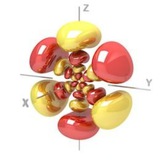
NWChem is a complete (free and opensource) Quantum Chemistry package that is available for Linux and Windows. Give it a try!
https://github.com/nwchemgit/nwchem/releases/tag/v7.0.2-release
https://github.com/nwchemgit/nwchem/releases/tag/v7.0.2-release
GitHub
Release NWChem 7.0.2 · nwchemgit/nwchem
The NWChem 7.0.2 release is now available.
This is a maintenance release that contains fixes to bugs uncovered in the NWChem 7.0.0 release.
Documentation available at
https://nwchemgit.github.io
Pl...
This is a maintenance release that contains fixes to bugs uncovered in the NWChem 7.0.0 release.
Documentation available at
https://nwchemgit.github.io
Pl...
Dear Colleagues,
In those challenging times of travel restrictions, the IAB and local organizing committee of the "physical" second International Conference on Noncovalent Interactions (Strasbourg July 2022, more information at http://icni2021.unistra.fr ) organizes a free online symposium:
the Online-ICNI Symposium -July 5th 2021
with 10 speakers from several continents and various fields of research.
The Online-ICNI Symposium web site is active and registrations are now open until July 3rd 2021
Check the program and register here:
https://online-icni.sciencesconf.org/
Don't miss this unique symposium !
(Online attendance is free of charge but registration is mandatory)
Register now !
We look forward to meeting you online !
In those challenging times of travel restrictions, the IAB and local organizing committee of the "physical" second International Conference on Noncovalent Interactions (Strasbourg July 2022, more information at http://icni2021.unistra.fr ) organizes a free online symposium:
the Online-ICNI Symposium -July 5th 2021
with 10 speakers from several continents and various fields of research.
The Online-ICNI Symposium web site is active and registrations are now open until July 3rd 2021
Check the program and register here:
https://online-icni.sciencesconf.org/
Don't miss this unique symposium !
(Online attendance is free of charge but registration is mandatory)
Register now !
We look forward to meeting you online !
Dear CP2K users,
we are pleased to announce the release of the CP2K version 8.2 (May 28, 2021).
The CP2K source tarball and a pre-compiled binary can be downloaded from:
https://github.com/cp2k/cp2k/releases/tag/v8.2.0
Further information about Git access and Linux distros can be found at:
https://www.cp2k.org/download
The corresponding input denoscription can be browsed at:
https://manual.cp2k.org/cp2k-8_2-branch/index.html
For a list of major changes with respect to the previous CP2K version see:
http://www.cp2k.org/version_history
We invite you to report any issue here on this list. In case of a confirmed bug please file it at:
https://github.com/cp2k/cp2k/issues
we are pleased to announce the release of the CP2K version 8.2 (May 28, 2021).
The CP2K source tarball and a pre-compiled binary can be downloaded from:
https://github.com/cp2k/cp2k/releases/tag/v8.2.0
Further information about Git access and Linux distros can be found at:
https://www.cp2k.org/download
The corresponding input denoscription can be browsed at:
https://manual.cp2k.org/cp2k-8_2-branch/index.html
For a list of major changes with respect to the previous CP2K version see:
http://www.cp2k.org/version_history
We invite you to report any issue here on this list. In case of a confirmed bug please file it at:
https://github.com/cp2k/cp2k/issues
GitHub
Release CP2K v8.2 · cp2k/cp2k
Speedup grid kernels, especially non-orthorhombic on CPU and integrate on GPU
Upgrade to COSMA 2.5 (#1303)
Add support for ARM64
Drop support for GCC 6 (#1203)
Upgrade to LibXC 5 and harmonize its ...
Upgrade to COSMA 2.5 (#1303)
Add support for ARM64
Drop support for GCC 6 (#1203)
Upgrade to LibXC 5 and harmonize its ...
Scientists Overhear Two Atoms Chatting: Magnetic Quantum Interactions
https://scitechdaily.com/scientists-overhear-two-atoms-chatting-magnetic-quantum-interactions/
https://scitechdaily.com/scientists-overhear-two-atoms-chatting-magnetic-quantum-interactions/
SciTechDaily
Scientists Overhear Two Atoms Chatting: Magnetic Quantum Interactions
How materials behave depends on the interactions between countless atoms. You could see this as a giant group chat in which atoms are continuously exchanging quantum information. Researchers from Delft University of Technology in collaboration with RWTH Aachen…
New study turns our understanding of ice upside down | Live Science
https://www.livescience.com/ice-formation-requires-some-heat.html
https://www.livescience.com/ice-formation-requires-some-heat.html
livescience.com
New study turns our understanding of ice upside down
As water freezes into ice, free-wheeling water molecules suddenly stop moving and begin forming ice crystals with their neighbors — but ironically, they need a bit of heat to do so, scientists recently discovered.
If you need some computational power, you may use the EMSL's (Environmental Molecular Sciences Laboratory) clusters for free and submit your NWChem jobs using the ARROWS API. It is a good excuse to learn the NWChem Quantum Chemistry package!
https://arrows.emsl.pnnl.gov/api/qsharp_chem
https://arrows.emsl.pnnl.gov/api/qsharp_chem
This popularity poll is based on an idea by Miquel Duran after a seminar given by Matthias Bickelhaupt (see http://www.marcelswart.eu/dft-poll/newsitem.pdf). By choice only 20 density functionals are given in the Primera Divisió, 20 in the Segona Divisió with 10 reserve places available (in Segona Divisió) for additional suggestions (mail these to marcel.swart (at) udg.edu). The functionals are ordered alphabetically (except for the reserve places that are ordered chronologically).
Please indicate for both the Primera Divisió and the Segona Divisió what you think of current density functionals. NOTE THAT IT IS POSSIBLE TO LEAVE EMPTY SOME OF THE FUNCTIONALS, either by not indicating anything or by clicking ("Vot en Blanc", "None Of The Above").
The poll will be open until Oct. 1 2021, after which the ranking of density functionals for the year 2021 will be made.
https://www.surveylegend.com/survey/#/d29yZHByZXNzMTA5MTY4~-Mahn4Kc_JuFVwlBafi3
Please indicate for both the Primera Divisió and the Segona Divisió what you think of current density functionals. NOTE THAT IT IS POSSIBLE TO LEAVE EMPTY SOME OF THE FUNCTIONALS, either by not indicating anything or by clicking ("Vot en Blanc", "None Of The Above").
The poll will be open until Oct. 1 2021, after which the ranking of density functionals for the year 2021 will be made.
https://www.surveylegend.com/survey/#/d29yZHByZXNzMTA5MTY4~-Mahn4Kc_JuFVwlBafi3
Electronic_and_photoelectron_spectroscopy_fundamentals_and_case.pdf
3.5 MB
Electronic and photoelectron spectroscopy fundamentals and case studies by Andrew M. Ellis, Miklos Feher, Timothy G. Wright
Put in your calendar!
Unless something dramatic and unforeseen happens, the release of ORCA 5 has now been scheduled to take place on
Thursday JULY 1st, 2021
There will be an online event consisting of a short presentation and an Q&A session in the early evening of the 1st (probably around 5 pm, Central European Time). We hope that this allows as many users from overseas to take part in it as possible. The program will become available for download after the presentation.
On Friday July 2nd, we will have a day of detailed lectures going more in depth about the new features and the development that has taken place with additional room for questions and discussions.
We will post details about both online events here as soon as we have the organizational details under control. It will be similar in format to the last ORCA user's meeting.
We are looking really forward to this event and to all of you being able to work with, what we think is, the by far best ORCA there has ever been.
Take care!
Best wishes,
Frank (on behalf of an incredibly excited ORCA development team!)
Unless something dramatic and unforeseen happens, the release of ORCA 5 has now been scheduled to take place on
Thursday JULY 1st, 2021
There will be an online event consisting of a short presentation and an Q&A session in the early evening of the 1st (probably around 5 pm, Central European Time). We hope that this allows as many users from overseas to take part in it as possible. The program will become available for download after the presentation.
On Friday July 2nd, we will have a day of detailed lectures going more in depth about the new features and the development that has taken place with additional room for questions and discussions.
We will post details about both online events here as soon as we have the organizational details under control. It will be similar in format to the last ORCA user's meeting.
We are looking really forward to this event and to all of you being able to work with, what we think is, the by far best ORCA there has ever been.
Take care!
Best wishes,
Frank (on behalf of an incredibly excited ORCA development team!)
International Workshop on Computer-Aided Materials Discovery
Virtual Lab successfully have held first week (Automation) of international workshop on Computer-Aided Materials Discovery. More than 800 people registered and around 300 people attended yesterday. Special thanks to Prof. Nicola, Seungwu and Kristian.
Next week, we are going to discuss about "Data-driven research" with pioneers. Prof. Claudia, Gian-Marco, Stefano and Dr. Jain will give a talk.
This workshop is FREE but PRE-REGISTERED RESEARCHER ONLY (NO RECORDING PROVIDED TO UNREGISTERED ONE). Dont hesitate register here!!
(https://www.materialssquare.com/workshop)
Week 2 (Data-Driven Research) : June 3, 09:00 13:00 (PDT, San Francisco) <> June 3, 18:00 22:00 (CEST, Paris)
* (B-1) Claudia Draxl (Humboldt) : From Data to Knowledge
* (B-2) Gian-Marco Rignanese (UCLouvain) : Materials Informatics: The Combined Power of High-Throughput ab Initio Calculations and Machine Learning
* (B-3) Stefano Curtarolo (Duke) : To Mix or Not to Mix? Addressing Tangible Problems with Entropy Denoscriptors
* (B-4) Anubhav Jain (LBL) : Conducting and Enabling Data-Driven Research through the Materials Project
https://www.materialssquare.com/workshop
Virtual Lab successfully have held first week (Automation) of international workshop on Computer-Aided Materials Discovery. More than 800 people registered and around 300 people attended yesterday. Special thanks to Prof. Nicola, Seungwu and Kristian.
Next week, we are going to discuss about "Data-driven research" with pioneers. Prof. Claudia, Gian-Marco, Stefano and Dr. Jain will give a talk.
This workshop is FREE but PRE-REGISTERED RESEARCHER ONLY (NO RECORDING PROVIDED TO UNREGISTERED ONE). Dont hesitate register here!!
(https://www.materialssquare.com/workshop)
Week 2 (Data-Driven Research) : June 3, 09:00 13:00 (PDT, San Francisco) <> June 3, 18:00 22:00 (CEST, Paris)
* (B-1) Claudia Draxl (Humboldt) : From Data to Knowledge
* (B-2) Gian-Marco Rignanese (UCLouvain) : Materials Informatics: The Combined Power of High-Throughput ab Initio Calculations and Machine Learning
* (B-3) Stefano Curtarolo (Duke) : To Mix or Not to Mix? Addressing Tangible Problems with Entropy Denoscriptors
* (B-4) Anubhav Jain (LBL) : Conducting and Enabling Data-Driven Research through the Materials Project
https://www.materialssquare.com/workshop
Materials Square
Workshop on Computer-Aided Materials Discovery - Materials Square
This workshop is organized into five distinct topics which are currently the spotlight of global R&D efforts.
Organic_Stereochemistry_Experimental_and_Computational_Methods_by.pdf
3.5 MB
Organic Stereochemistry Experimental and Computational Methods by Hua-Jie Zhu
Free webinar: Teaching Computational Chemistry with SCIGRESS
We are honored to invite you to our free webinar: Teaching Computational Chemistry with SCIGRESS.
Date: 09 June 2021
Time: 9:30AM EDT (Eastern Daylight Time)
Duration: 1h
During the meeting we will show, how to use SCIGRESS (former CAChe) to perform productive and interesting classes for students.
We are meeting at Google Meet. You can join directly with the link: meet.google.com/yrm-mzga-mxn
The webinar is completely free. After it you will also have the possibility to enjoy SCIGRESS with a full 30-day free trial version.
We hope to see you at the webinar!
Fujitsu Computational Chemistry Group
https://www.fqs.pl/en/chemistry/products/scigress
We are honored to invite you to our free webinar: Teaching Computational Chemistry with SCIGRESS.
Date: 09 June 2021
Time: 9:30AM EDT (Eastern Daylight Time)
Duration: 1h
During the meeting we will show, how to use SCIGRESS (former CAChe) to perform productive and interesting classes for students.
We are meeting at Google Meet. You can join directly with the link: meet.google.com/yrm-mzga-mxn
The webinar is completely free. After it you will also have the possibility to enjoy SCIGRESS with a full 30-day free trial version.
We hope to see you at the webinar!
Fujitsu Computational Chemistry Group
https://www.fqs.pl/en/chemistry/products/scigress
Google
Real-time meetings by Google. Using your browser, share your video, desktop, and presentations with teammates and customers.
Potassium’s electrons slowly transform into anions under pressure | Research | Chemistry World
https://www.chemistryworld.com/news/potassiums-electrons-slowly-transform-into-anions-under-pressure/4013780.article
https://www.chemistryworld.com/news/potassiums-electrons-slowly-transform-into-anions-under-pressure/4013780.article
Chemistry World
Potassium’s electrons slowly transform into anions under pressure
Electride transition solves the mystery of how a liquid can be denser than a close-packed solid
New form of silicon could enable next-gen electronic and energy devices
https://phys.org/news/2021-06-silicon-enable-next-gen-electronic-energy.html
https://phys.org/news/2021-06-silicon-enable-next-gen-electronic-energy.html
phys.org
New form of silicon could enable next-gen electronic and energy devices
A team led by Carnegie's Thomas Shiell and Timothy Strobel developed a new method for synthesizing a novel crystalline form of silicon with a hexagonal structure that could potentially be used to create ...
Q-Chem Webinar 51
Implicit Solvation Models in Q-Chem, for Ground and Excited States
https://www.q-chem.com/webinars/51/
Implicit Solvation Models in Q-Chem, for Ground and Excited States
https://www.q-chem.com/webinars/51/
Mechanochemical peptide bond formation behind the origins of life
https://phys.org/news/2021-06-mechanochemical-peptide-bond-formation-life.html
https://phys.org/news/2021-06-mechanochemical-peptide-bond-formation-life.html
phys.org
Mechanochemical peptide bond formation behind the origins of life
The presence of amino acids on the prebiotic Earth is widely accepted, either coming from endogenous chemical processes or being delivered by extraterrestrial material. On the other hand, plausibly prebiotic ...
Eyringpy2.0
Eyringpy is a program for computing rate constants using the transition state theory (TST), in the gas phase and in solution. The Gibbs activation energy is obtained by computing from scratch the canonical partition functions. Unimolecular and bimolecular reactions with one or two products are supported. Rate constants of bimolecular reactions involving the formation of pre-reactive and/or product complexes are also estimated. The reaction symmetry is considered. One-dimensional Wigner and Eckart tunneling corrections are also available. To compute rate constants in solution, Eyringpy employs the Collins–Kimball theory to include the diffusion-limit, the Marcus theory for electron transfer (ET) processes, and the molar fractions to account for the effect of pH in aqueous reactions. Two versions are available.
In Eyringpy2.0, the IRC-Analysis is available for monitoring the evolution of primitive changes along the intrinsic reaction coordinate (IRC). For now, the available primitive changes that can be studied are the bond distances, angles, Wiberg bond indices, natural charges, dipole moment, orbital energies (and related properties), and reaction forces. A spline interpolator from Python's Scipy library is used to smooth the energy profiles. In addition, a discriminator to remove points causing noise in the energy profiles is also available. The Python's Matplotlib library is used for plotting the evolution of the primitive changes along the IRC.
If you are interested in Eyringpy, visit our web page:
https://www.theochemmerida.org/eyringpy
Eyringpy is a program for computing rate constants using the transition state theory (TST), in the gas phase and in solution. The Gibbs activation energy is obtained by computing from scratch the canonical partition functions. Unimolecular and bimolecular reactions with one or two products are supported. Rate constants of bimolecular reactions involving the formation of pre-reactive and/or product complexes are also estimated. The reaction symmetry is considered. One-dimensional Wigner and Eckart tunneling corrections are also available. To compute rate constants in solution, Eyringpy employs the Collins–Kimball theory to include the diffusion-limit, the Marcus theory for electron transfer (ET) processes, and the molar fractions to account for the effect of pH in aqueous reactions. Two versions are available.
In Eyringpy2.0, the IRC-Analysis is available for monitoring the evolution of primitive changes along the intrinsic reaction coordinate (IRC). For now, the available primitive changes that can be studied are the bond distances, angles, Wiberg bond indices, natural charges, dipole moment, orbital energies (and related properties), and reaction forces. A spline interpolator from Python's Scipy library is used to smooth the energy profiles. In addition, a discriminator to remove points causing noise in the energy profiles is also available. The Python's Matplotlib library is used for plotting the evolution of the primitive changes along the IRC.
If you are interested in Eyringpy, visit our web page:
https://www.theochemmerida.org/eyringpy
merino-researchgroup
Merino Research Group | Eyringpy
More metallomimetic chemistry from boron | Research | Chemistry World
https://www.chemistryworld.com/news/more-metallomimetic-chemistry-from-boron/4013817.article
https://www.chemistryworld.com/news/more-metallomimetic-chemistry-from-boron/4013817.article
Chemistry World
More metallomimetic chemistry from boron
One boron atom bonds like a transition metal in two different ways
The next books that we're going to post here are a personal selection for the "get started with quantum mechanics" pack. If you have any suggestion, share in the comments.