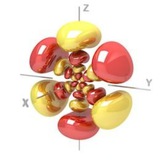
If you need some computational power, you may use the EMSL's (Environmental Molecular Sciences Laboratory) clusters for free and submit your NWChem jobs using the ARROWS API. It is a good excuse to learn the NWChem Quantum Chemistry package!
https://arrows.emsl.pnnl.gov/api/qsharp_chem
https://arrows.emsl.pnnl.gov/api/qsharp_chem
This popularity poll is based on an idea by Miquel Duran after a seminar given by Matthias Bickelhaupt (see http://www.marcelswart.eu/dft-poll/newsitem.pdf). By choice only 20 density functionals are given in the Primera Divisió, 20 in the Segona Divisió with 10 reserve places available (in Segona Divisió) for additional suggestions (mail these to marcel.swart (at) udg.edu). The functionals are ordered alphabetically (except for the reserve places that are ordered chronologically).
Please indicate for both the Primera Divisió and the Segona Divisió what you think of current density functionals. NOTE THAT IT IS POSSIBLE TO LEAVE EMPTY SOME OF THE FUNCTIONALS, either by not indicating anything or by clicking ("Vot en Blanc", "None Of The Above").
The poll will be open until Oct. 1 2021, after which the ranking of density functionals for the year 2021 will be made.
https://www.surveylegend.com/survey/#/d29yZHByZXNzMTA5MTY4~-Mahn4Kc_JuFVwlBafi3
Please indicate for both the Primera Divisió and the Segona Divisió what you think of current density functionals. NOTE THAT IT IS POSSIBLE TO LEAVE EMPTY SOME OF THE FUNCTIONALS, either by not indicating anything or by clicking ("Vot en Blanc", "None Of The Above").
The poll will be open until Oct. 1 2021, after which the ranking of density functionals for the year 2021 will be made.
https://www.surveylegend.com/survey/#/d29yZHByZXNzMTA5MTY4~-Mahn4Kc_JuFVwlBafi3
Electronic_and_photoelectron_spectroscopy_fundamentals_and_case.pdf
3.5 MB
Electronic and photoelectron spectroscopy fundamentals and case studies by Andrew M. Ellis, Miklos Feher, Timothy G. Wright
Put in your calendar!
Unless something dramatic and unforeseen happens, the release of ORCA 5 has now been scheduled to take place on
Thursday JULY 1st, 2021
There will be an online event consisting of a short presentation and an Q&A session in the early evening of the 1st (probably around 5 pm, Central European Time). We hope that this allows as many users from overseas to take part in it as possible. The program will become available for download after the presentation.
On Friday July 2nd, we will have a day of detailed lectures going more in depth about the new features and the development that has taken place with additional room for questions and discussions.
We will post details about both online events here as soon as we have the organizational details under control. It will be similar in format to the last ORCA user's meeting.
We are looking really forward to this event and to all of you being able to work with, what we think is, the by far best ORCA there has ever been.
Take care!
Best wishes,
Frank (on behalf of an incredibly excited ORCA development team!)
Unless something dramatic and unforeseen happens, the release of ORCA 5 has now been scheduled to take place on
Thursday JULY 1st, 2021
There will be an online event consisting of a short presentation and an Q&A session in the early evening of the 1st (probably around 5 pm, Central European Time). We hope that this allows as many users from overseas to take part in it as possible. The program will become available for download after the presentation.
On Friday July 2nd, we will have a day of detailed lectures going more in depth about the new features and the development that has taken place with additional room for questions and discussions.
We will post details about both online events here as soon as we have the organizational details under control. It will be similar in format to the last ORCA user's meeting.
We are looking really forward to this event and to all of you being able to work with, what we think is, the by far best ORCA there has ever been.
Take care!
Best wishes,
Frank (on behalf of an incredibly excited ORCA development team!)
International Workshop on Computer-Aided Materials Discovery
Virtual Lab successfully have held first week (Automation) of international workshop on Computer-Aided Materials Discovery. More than 800 people registered and around 300 people attended yesterday. Special thanks to Prof. Nicola, Seungwu and Kristian.
Next week, we are going to discuss about "Data-driven research" with pioneers. Prof. Claudia, Gian-Marco, Stefano and Dr. Jain will give a talk.
This workshop is FREE but PRE-REGISTERED RESEARCHER ONLY (NO RECORDING PROVIDED TO UNREGISTERED ONE). Dont hesitate register here!!
(https://www.materialssquare.com/workshop)
Week 2 (Data-Driven Research) : June 3, 09:00 13:00 (PDT, San Francisco) <> June 3, 18:00 22:00 (CEST, Paris)
* (B-1) Claudia Draxl (Humboldt) : From Data to Knowledge
* (B-2) Gian-Marco Rignanese (UCLouvain) : Materials Informatics: The Combined Power of High-Throughput ab Initio Calculations and Machine Learning
* (B-3) Stefano Curtarolo (Duke) : To Mix or Not to Mix? Addressing Tangible Problems with Entropy Denoscriptors
* (B-4) Anubhav Jain (LBL) : Conducting and Enabling Data-Driven Research through the Materials Project
https://www.materialssquare.com/workshop
Virtual Lab successfully have held first week (Automation) of international workshop on Computer-Aided Materials Discovery. More than 800 people registered and around 300 people attended yesterday. Special thanks to Prof. Nicola, Seungwu and Kristian.
Next week, we are going to discuss about "Data-driven research" with pioneers. Prof. Claudia, Gian-Marco, Stefano and Dr. Jain will give a talk.
This workshop is FREE but PRE-REGISTERED RESEARCHER ONLY (NO RECORDING PROVIDED TO UNREGISTERED ONE). Dont hesitate register here!!
(https://www.materialssquare.com/workshop)
Week 2 (Data-Driven Research) : June 3, 09:00 13:00 (PDT, San Francisco) <> June 3, 18:00 22:00 (CEST, Paris)
* (B-1) Claudia Draxl (Humboldt) : From Data to Knowledge
* (B-2) Gian-Marco Rignanese (UCLouvain) : Materials Informatics: The Combined Power of High-Throughput ab Initio Calculations and Machine Learning
* (B-3) Stefano Curtarolo (Duke) : To Mix or Not to Mix? Addressing Tangible Problems with Entropy Denoscriptors
* (B-4) Anubhav Jain (LBL) : Conducting and Enabling Data-Driven Research through the Materials Project
https://www.materialssquare.com/workshop
Materials Square
Workshop on Computer-Aided Materials Discovery - Materials Square
This workshop is organized into five distinct topics which are currently the spotlight of global R&D efforts.
Organic_Stereochemistry_Experimental_and_Computational_Methods_by.pdf
3.5 MB
Organic Stereochemistry Experimental and Computational Methods by Hua-Jie Zhu
Free webinar: Teaching Computational Chemistry with SCIGRESS
We are honored to invite you to our free webinar: Teaching Computational Chemistry with SCIGRESS.
Date: 09 June 2021
Time: 9:30AM EDT (Eastern Daylight Time)
Duration: 1h
During the meeting we will show, how to use SCIGRESS (former CAChe) to perform productive and interesting classes for students.
We are meeting at Google Meet. You can join directly with the link: meet.google.com/yrm-mzga-mxn
The webinar is completely free. After it you will also have the possibility to enjoy SCIGRESS with a full 30-day free trial version.
We hope to see you at the webinar!
Fujitsu Computational Chemistry Group
https://www.fqs.pl/en/chemistry/products/scigress
We are honored to invite you to our free webinar: Teaching Computational Chemistry with SCIGRESS.
Date: 09 June 2021
Time: 9:30AM EDT (Eastern Daylight Time)
Duration: 1h
During the meeting we will show, how to use SCIGRESS (former CAChe) to perform productive and interesting classes for students.
We are meeting at Google Meet. You can join directly with the link: meet.google.com/yrm-mzga-mxn
The webinar is completely free. After it you will also have the possibility to enjoy SCIGRESS with a full 30-day free trial version.
We hope to see you at the webinar!
Fujitsu Computational Chemistry Group
https://www.fqs.pl/en/chemistry/products/scigress
Google
Real-time meetings by Google. Using your browser, share your video, desktop, and presentations with teammates and customers.
Potassium’s electrons slowly transform into anions under pressure | Research | Chemistry World
https://www.chemistryworld.com/news/potassiums-electrons-slowly-transform-into-anions-under-pressure/4013780.article
https://www.chemistryworld.com/news/potassiums-electrons-slowly-transform-into-anions-under-pressure/4013780.article
Chemistry World
Potassium’s electrons slowly transform into anions under pressure
Electride transition solves the mystery of how a liquid can be denser than a close-packed solid
New form of silicon could enable next-gen electronic and energy devices
https://phys.org/news/2021-06-silicon-enable-next-gen-electronic-energy.html
https://phys.org/news/2021-06-silicon-enable-next-gen-electronic-energy.html
phys.org
New form of silicon could enable next-gen electronic and energy devices
A team led by Carnegie's Thomas Shiell and Timothy Strobel developed a new method for synthesizing a novel crystalline form of silicon with a hexagonal structure that could potentially be used to create ...
Q-Chem Webinar 51
Implicit Solvation Models in Q-Chem, for Ground and Excited States
https://www.q-chem.com/webinars/51/
Implicit Solvation Models in Q-Chem, for Ground and Excited States
https://www.q-chem.com/webinars/51/
Mechanochemical peptide bond formation behind the origins of life
https://phys.org/news/2021-06-mechanochemical-peptide-bond-formation-life.html
https://phys.org/news/2021-06-mechanochemical-peptide-bond-formation-life.html
phys.org
Mechanochemical peptide bond formation behind the origins of life
The presence of amino acids on the prebiotic Earth is widely accepted, either coming from endogenous chemical processes or being delivered by extraterrestrial material. On the other hand, plausibly prebiotic ...
Eyringpy2.0
Eyringpy is a program for computing rate constants using the transition state theory (TST), in the gas phase and in solution. The Gibbs activation energy is obtained by computing from scratch the canonical partition functions. Unimolecular and bimolecular reactions with one or two products are supported. Rate constants of bimolecular reactions involving the formation of pre-reactive and/or product complexes are also estimated. The reaction symmetry is considered. One-dimensional Wigner and Eckart tunneling corrections are also available. To compute rate constants in solution, Eyringpy employs the Collins–Kimball theory to include the diffusion-limit, the Marcus theory for electron transfer (ET) processes, and the molar fractions to account for the effect of pH in aqueous reactions. Two versions are available.
In Eyringpy2.0, the IRC-Analysis is available for monitoring the evolution of primitive changes along the intrinsic reaction coordinate (IRC). For now, the available primitive changes that can be studied are the bond distances, angles, Wiberg bond indices, natural charges, dipole moment, orbital energies (and related properties), and reaction forces. A spline interpolator from Python's Scipy library is used to smooth the energy profiles. In addition, a discriminator to remove points causing noise in the energy profiles is also available. The Python's Matplotlib library is used for plotting the evolution of the primitive changes along the IRC.
If you are interested in Eyringpy, visit our web page:
https://www.theochemmerida.org/eyringpy
Eyringpy is a program for computing rate constants using the transition state theory (TST), in the gas phase and in solution. The Gibbs activation energy is obtained by computing from scratch the canonical partition functions. Unimolecular and bimolecular reactions with one or two products are supported. Rate constants of bimolecular reactions involving the formation of pre-reactive and/or product complexes are also estimated. The reaction symmetry is considered. One-dimensional Wigner and Eckart tunneling corrections are also available. To compute rate constants in solution, Eyringpy employs the Collins–Kimball theory to include the diffusion-limit, the Marcus theory for electron transfer (ET) processes, and the molar fractions to account for the effect of pH in aqueous reactions. Two versions are available.
In Eyringpy2.0, the IRC-Analysis is available for monitoring the evolution of primitive changes along the intrinsic reaction coordinate (IRC). For now, the available primitive changes that can be studied are the bond distances, angles, Wiberg bond indices, natural charges, dipole moment, orbital energies (and related properties), and reaction forces. A spline interpolator from Python's Scipy library is used to smooth the energy profiles. In addition, a discriminator to remove points causing noise in the energy profiles is also available. The Python's Matplotlib library is used for plotting the evolution of the primitive changes along the IRC.
If you are interested in Eyringpy, visit our web page:
https://www.theochemmerida.org/eyringpy
merino-researchgroup
Merino Research Group | Eyringpy
More metallomimetic chemistry from boron | Research | Chemistry World
https://www.chemistryworld.com/news/more-metallomimetic-chemistry-from-boron/4013817.article
https://www.chemistryworld.com/news/more-metallomimetic-chemistry-from-boron/4013817.article
Chemistry World
More metallomimetic chemistry from boron
One boron atom bonds like a transition metal in two different ways
The next books that we're going to post here are a personal selection for the "get started with quantum mechanics" pack. If you have any suggestion, share in the comments.
Trigonometry_by_David_I_Schneider_Callie_J_Daniels_John_Hornsby.pdf
517.8 MB
Trigonometry by David I. Schneider Callie J. Daniels John Hornsby Margaret L. Lial
FEBS advanced course Computational Approaches to Understanding and
Engineering Enzyme Catalysis will be held from 19 to 22 October 2021 in
Oulu / FINLAND in a hybrid way (both PHYSICAL and ONLINE participation is
possible).
Registrations are open until 30 June 2021.
For detailed information and application criteria please
visit the FEBS2021 website
https://computationalenzymeengineering2021.febsevents.org/
The program is available here:
https://computationalenzymeengineering2021.febsevents.org/programme-features
Engineering Enzyme Catalysis will be held from 19 to 22 October 2021 in
Oulu / FINLAND in a hybrid way (both PHYSICAL and ONLINE participation is
possible).
Registrations are open until 30 June 2021.
For detailed information and application criteria please
visit the FEBS2021 website
https://computationalenzymeengineering2021.febsevents.org/
The program is available here:
https://computationalenzymeengineering2021.febsevents.org/programme-features
computationalenzymeengineering2021.febsevents.org
FEBS Practical/Lecture Course 2021 │ Computational Approaches to Understanding and Engineering Enzyme Catalysis
19–22 October 2021 │ Oulu, Finland
Elk version 7.2.42 released
Elk version 7.2.42 has just been released.
The most significant improvement in this version is a new RAM disk feature for storing direct-access files in memory.
---------------------
elk-7.2.42
-added new RAM disk feature which allows Elk to store direct-access files in memory and can dramatically speed up calculations; enable this by setting 'ramdisk' to .true. in elk.in
-many optimisations throughout the code
-fixed an issue with the scissors operator in optical response code (task=320, 330, 331) for materials which are nearly metallic; thanks to Peter Elliott for pointing this out
-further improved the electron-phonon mean-field code
-added variables 'scalex', 'scaley' and 'scalez' to the input file; these allow scaling of the unit cell in the Cartesian directions
https://sourceforge.net/projects/elk/
Elk version 7.2.42 has just been released.
The most significant improvement in this version is a new RAM disk feature for storing direct-access files in memory.
---------------------
elk-7.2.42
-added new RAM disk feature which allows Elk to store direct-access files in memory and can dramatically speed up calculations; enable this by setting 'ramdisk' to .true. in elk.in
-many optimisations throughout the code
-fixed an issue with the scissors operator in optical response code (task=320, 330, 331) for materials which are nearly metallic; thanks to Peter Elliott for pointing this out
-further improved the electron-phonon mean-field code
-added variables 'scalex', 'scaley' and 'scalez' to the input file; these allow scaling of the unit cell in the Cartesian directions
https://sourceforge.net/projects/elk/
SourceForge
Elk
Download Elk for free. An all-electron full-potential linearised augmented-planewave (FP-LAPW) code. Designed to be as developer friendly as possible so that new developments in the field of density functional theory (DFT) can be added quickly and reliably.
Basis Sets in Computational Chemistry by Eva Perlt.pdf
8.3 MB
Basis Sets in Computational Chemistry by Eva Perlt
Dear ORCA Users - for the release of ORCA 5.0 there will be a webinar with an introduction by F. Neese, presentations by the authors and plenty of room for discussions and questions. The webinar will be hosted in ZOOM and will take place on the 1st and 2nd of July with an introductory talk in the evening of the 1st and scientific talks on the 2nd of July.
Here are the ZOOM links for the two days :
ORCA 5.0 Release Webinar Grand Opening
Time: Jul 1, 2021 opens 04:30 PM Amsterdam, Berlin, Rome, Stockholm, Vienna - starts at 5 pm
Join Zoom Meeting:
https://us02web.zoom.us/j/87800425716?pwd=dWhIcGFZQ05pNDBEVXlXVHRvYjFRUT09
ORCA 5.0 Release Webinar
Time: Jul 2, 2021 opens 08:30 AM Amsterdam, Berlin, Rome, Stockholm, Vienna - starts at 9 am
Join Zoom Meeting:
https://us02web.zoom.us/j/89314236320?pwd=WGJaRHFsRGdFUUFrdkZPOW9EczhiUT09
Note that you don't need to register and the meeting is free of charge, the only restriction is that we have a max of 300 participants, so be quick ;-)
Looking forward to seeing many of you at the meeting !
Here are the ZOOM links for the two days :
ORCA 5.0 Release Webinar Grand Opening
Time: Jul 1, 2021 opens 04:30 PM Amsterdam, Berlin, Rome, Stockholm, Vienna - starts at 5 pm
Join Zoom Meeting:
https://us02web.zoom.us/j/87800425716?pwd=dWhIcGFZQ05pNDBEVXlXVHRvYjFRUT09
ORCA 5.0 Release Webinar
Time: Jul 2, 2021 opens 08:30 AM Amsterdam, Berlin, Rome, Stockholm, Vienna - starts at 9 am
Join Zoom Meeting:
https://us02web.zoom.us/j/89314236320?pwd=WGJaRHFsRGdFUUFrdkZPOW9EczhiUT09
Note that you don't need to register and the meeting is free of charge, the only restriction is that we have a max of 300 participants, so be quick ;-)
Looking forward to seeing many of you at the meeting !
Zoom Video
Join our Cloud HD Video Meeting
Zoom is the leader in modern enterprise video communications, with an easy, reliable cloud platform for video and audio conferencing, chat, and webinars across mobile, desktop, and room systems. Zoom Rooms is the original software-based conference room solution…