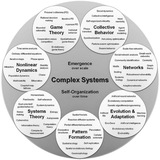
💎 In physics, #symmetry_breaking is a phenomenon in which (infinitesimally) small fluctuations acting on a system crossing a critical point decide the system's fate, by determining which branch of a bifurcation is taken. To an outside observer unaware of the fluctuations (or "noise"), the choice will appear arbitrary. This process is called symmetry "breaking", because such transitions usually bring the system from a symmetric but disorderly state into one or more definite states. Symmetry breaking is thought to play a major role in #pattern_formation.
🌀 One of the first cases of broken symmetry discussed in the physics literature is related to the form taken by a uniformly rotating body of incompressible fluid in gravitational and hydrostatic equilibrium. Jacobi and soon later Liouville, in 1834, discussed the fact that a tri-axial ellipsoid was an equilibrium solution for this problem when the kinetic energy compared to the gravitational energy of the rotating body exceeded a certain critical value. The axial symmetry presented by the McLaurin spheroids is broken at this bifurcation point. Furthermore, above this bifurcation point, and for constant angular momentum, the solutions that minimize the kinetic energy are the non-axially symmetric Jacobi ellipsoids instead of the Maclaurin spheroids.
https://en.wikipedia.org/wiki/Symmetry_breaking
🌀 One of the first cases of broken symmetry discussed in the physics literature is related to the form taken by a uniformly rotating body of incompressible fluid in gravitational and hydrostatic equilibrium. Jacobi and soon later Liouville, in 1834, discussed the fact that a tri-axial ellipsoid was an equilibrium solution for this problem when the kinetic energy compared to the gravitational energy of the rotating body exceeded a certain critical value. The axial symmetry presented by the McLaurin spheroids is broken at this bifurcation point. Furthermore, above this bifurcation point, and for constant angular momentum, the solutions that minimize the kinetic energy are the non-axially symmetric Jacobi ellipsoids instead of the Maclaurin spheroids.
https://en.wikipedia.org/wiki/Symmetry_breaking
ای مردم، ویکیپدیای فارسی رو دریابین!
اگر متخصص هستین، به توسعه ویکیپدیا بپردازین!
https://fa.wikipedia.org/wiki/%D9%88%DB%8C%DA%A9%DB%8C%E2%80%8C%D9%BE%D8%AF%DB%8C%D8%A7:%D9%88%DB%8C%DA%A9%DB%8C%E2%80%8C%D9%BE%D8%B1%D9%88%DA%98%D9%87_%D9%81%DB%8C%D8%B2%DB%8C%DA%A9
اگر متخصص هستین، به توسعه ویکیپدیا بپردازین!
https://fa.wikipedia.org/wiki/%D9%88%DB%8C%DA%A9%DB%8C%E2%80%8C%D9%BE%D8%AF%DB%8C%D8%A7:%D9%88%DB%8C%DA%A9%DB%8C%E2%80%8C%D9%BE%D8%B1%D9%88%DA%98%D9%87_%D9%81%DB%8C%D8%B2%DB%8C%DA%A9
Wikipedia
ویکیپدیا:ویکیپروژه فیزیک
به ویکیپروژهی فیزیک خوش آمدید! اینجا مکانی است که در آن میکوشیم، در زمینهی ایجاد مقالههای مرتبط با علم فیزیک، به ساماندهی فعالیتهایمان بپردازیم. همچنین برای کاملسازی و ویرایش مقالههای مربوط به این علم، نگهداری از درگاه فیزیک و ساخت ردههای مورد…
#سمینارهای_هفتگی گروه سیستمهای پیچیده و علم شبکه دانشگاه شهید بهشتی
🔹دوشنبه، ۲۲ آبان ماه، ساعت ۴:۰۰ - کلاس۱ دانشکده فیزیک دانشگاه شهید بهشتی.
@carimi
🔹دوشنبه، ۲۲ آبان ماه، ساعت ۴:۰۰ - کلاس۱ دانشکده فیزیک دانشگاه شهید بهشتی.
@carimi
Forwarded from کافه فیزیک بهشتی (sbuPhysics)
در کافه فیزیک این هفته:
آغاز قرن ۲۱ام با یک انفجار همراه شده. برای مردم عادی، این انفجار در مورد انقلابهای فناوری است که از قرن ۱۹ میلادی شروع شده و توسعه آن، تاثیر به شدت محسوسی بر روی قوانین اقتصادی داشته است. با این وجود، برای دانشمندان، یکی از وجههای این انفجار، «انقلاب پیچیدگی» است. موضوعی که در همه حوزههای علمی مانند زیستشناسی و پزشکی مورد پژوهش و مطالعه قرار گرفته است. اکنون پرسشی مطرح میشود؛ نقش فیزیک به عنوان قدیمیترین و سادهترین علم چیست؟ آیا فیزیک نظری هم باید دچار تغییر شود؟
فیزیک نظری قرن ۲۰ام از دل انقلاب نسبیت و مکانیک کوانتومی به دنیا آمد و تماما در مورد سادگی و پیوستگی بود. ابزار اصلی آن حسابان (حساب دیفرانسیل و انتگرال) و تجلی نهایی آن نظریه میدان بود.
فیزیک نظری قرن ۲۱ام، از انقلاب آشوب بیرون آمده و درباره پیچیدگی است. ابزار اصلی آن کامپیوتر است و آخرین دستاورد آن هنوز مشخص نیست. ترمودینامیک، به عنوان یک بخش حیاتی فیزیک، در این جابهجایی نقش اساسی بازی خواهد کرد.
در كافه فيزيك اين هفته، با مرور تاریخ علم فیزیک و تحولات آن از زمان نیوتون، میخواهیم گریزی بزنیم به مفاهیمى چون آشوب، پیچیدگی و انتروپی و بیان کنیم که منظورمان از پیچیدگی چیست!
عباس کریمی، از گروه سیستمهای پیچیده
sitpor.org/abbas
با كافه فيزيك همراه باشيد... ☕️ 😊
@sbu_physicscafe
آغاز قرن ۲۱ام با یک انفجار همراه شده. برای مردم عادی، این انفجار در مورد انقلابهای فناوری است که از قرن ۱۹ میلادی شروع شده و توسعه آن، تاثیر به شدت محسوسی بر روی قوانین اقتصادی داشته است. با این وجود، برای دانشمندان، یکی از وجههای این انفجار، «انقلاب پیچیدگی» است. موضوعی که در همه حوزههای علمی مانند زیستشناسی و پزشکی مورد پژوهش و مطالعه قرار گرفته است. اکنون پرسشی مطرح میشود؛ نقش فیزیک به عنوان قدیمیترین و سادهترین علم چیست؟ آیا فیزیک نظری هم باید دچار تغییر شود؟
فیزیک نظری قرن ۲۰ام از دل انقلاب نسبیت و مکانیک کوانتومی به دنیا آمد و تماما در مورد سادگی و پیوستگی بود. ابزار اصلی آن حسابان (حساب دیفرانسیل و انتگرال) و تجلی نهایی آن نظریه میدان بود.
فیزیک نظری قرن ۲۱ام، از انقلاب آشوب بیرون آمده و درباره پیچیدگی است. ابزار اصلی آن کامپیوتر است و آخرین دستاورد آن هنوز مشخص نیست. ترمودینامیک، به عنوان یک بخش حیاتی فیزیک، در این جابهجایی نقش اساسی بازی خواهد کرد.
در كافه فيزيك اين هفته، با مرور تاریخ علم فیزیک و تحولات آن از زمان نیوتون، میخواهیم گریزی بزنیم به مفاهیمى چون آشوب، پیچیدگی و انتروپی و بیان کنیم که منظورمان از پیچیدگی چیست!
عباس کریمی، از گروه سیستمهای پیچیده
sitpor.org/abbas
با كافه فيزيك همراه باشيد... ☕️ 😊
@sbu_physicscafe
Forwarded from کافه فیزیک بهشتی (sbuPhysics)
#کافه_فیزیک هشتم
🗓 ۳شنبه ۲۳ آبان ١٣٩٦
🕰 ساعت ۱۱:۴۵
📍دانشكده فيزيك دانشگاه شهيد بهشتى، طبقه همكف.
صحبت در مورد "آشوب، پیچیدگی و بینظمی"
عباس کریمی
http://sitpor.org/abbas
همراه هم خواهيم بود با كافه فيزيك! ☕️😊
@farzin23i
@sbu_physicscafe
🗓 ۳شنبه ۲۳ آبان ١٣٩٦
🕰 ساعت ۱۱:۴۵
📍دانشكده فيزيك دانشگاه شهيد بهشتى، طبقه همكف.
صحبت در مورد "آشوب، پیچیدگی و بینظمی"
عباس کریمی
http://sitpor.org/abbas
همراه هم خواهيم بود با كافه فيزيك! ☕️😊
@farzin23i
@sbu_physicscafe
🎞 Physical Applications of Stochastic Processes
IIT Madras Course , Prof. V. Balakrishnan
http://freevideolectures.com/Course/3702/Physical-Applications-of-Stochastic-Processes
IIT Madras Course , Prof. V. Balakrishnan
http://freevideolectures.com/Course/3702/Physical-Applications-of-Stochastic-Processes
Free Video Lectures
Physical Applications of Stochastic Processes video lectures, V. Balakrishnan of IIT Madras
Physical Applications of Stochastic Processes Video Lectures, IIT Madras Online Course, free tutorials for free download
🐘 Metabolism and power laws
https://www.johndcook.com/blog/2009/04/16/metabolism-and-power-laws/
Bigger animals have more cells than smaller animals. More cells means more cellular metabolism and so more heat produced. How does the amount of heat an animal produces vary with its size? We clearly expect it to go up with size, but does it increase in proportion to volume? Surface area? Something in between?
A first guess would be that metabolism (equivalently, heat produced) goes up in proportion to volume. If cells are all roughly the same size, then number of cells increases proportionately with volume. But heat is dissipated through the surface. Surface area increases in proportion to the square of length but volume increases in proportion to the cube of length. That means the ratio of surface area to volume decreases as overall size increases. The surface area to volume ratio for an elephant is much smaller than it is for a mouse.
If an elephant’s metabolism per unit volume were the same as that of a mouse, the elephant’s skin would burn up.
So metabolism cannot be proportional to volume. What about surface area? Here we get into variety and controversy. Many people assume metabolism is proportional to surface area based on the argument above. This idea was first proposed by Max Rubner in 1883. Others emphasize data that supports the theory that suggests metabolism is proportional to surface area.
In the 1930’s, Max Kleiber proposed that metabolism increases according to body mass raised to the power 3/4. (I’ve been a little sloppy here using body mass and volume interchangeably. Body mass is more accurate, though to first approximation animals have uniform density.) If metabolism were proportional to volume, the exponent would be 1. If it were proportional to surface area, the exponent would be 2/3. But Kleiber’s law says it’s somewhere in between, namely 3/4.
So why the exponent 3/4? There is a theoretical explanation called the #metabolic_scaling_theory proposed by #Geoffrey_West, Brian Enquist, and James Brown.
Metabolic scaling theory says that circulatory systems and other networks are fractal-like because this is the most efficient way to serve an animal’s physiological needs.
To quote Enquist:
Although living things occupy a three-dimensional space, their internal physiology and anatomy operate as if they were four-dimensional. … Fractal geometry has literally given life an added dimension.
The fractal theory would explain the power law exponent exponent 3/4 simply: it’s the ratio of the volume dimension to the fractal dimension. However, as I suggested earlier, this theory is controversial. Some biologists dispute Kleiber’s law. Others accept Kleiber’s law as an empirical observation but dispute the theoretical explanation of West, Enquist, and Brown.
To read more about metabolism and power laws, see chapter 17 of Complexity: A Guided Tour.
Johndcook
Metabolism and power law distributions
Bigger animals have more cells than smaller animals. More cells means more cellular metabolism and so more heat produced. How does the amount of heat an animal
⛑ همراهان عزیز، برای کمک به مردم زلزلهزده، راههای زیادی وجود داره. یکی از راحتترین کارها واریز مبلغی به حساب کسایی هست که به این امور واقف هستن، مثلا جمعیت امام علی(ع):
یکی دو هزار تومن پول زیادی نیست ولی قطره قطره جمع گردد...
شماره کارت شانزده رقمی:
۶۱۰۴۳۳۷۹۰۵۳۲۴۶۰۲
بانک ملت به نام جمعیت امداد دانشجویی امام علی (ع)
به حساب شماره ۵۳۲۵۰۴۳۸۷۷
درگاه پرداخت اینترنتی:
https://donate.sosapoverty.org/emdadresani
🆔 @imamalisociety
یکی دو هزار تومن پول زیادی نیست ولی قطره قطره جمع گردد...
شماره کارت شانزده رقمی:
۶۱۰۴۳۳۷۹۰۵۳۲۴۶۰۲
بانک ملت به نام جمعیت امداد دانشجویی امام علی (ع)
به حساب شماره ۵۳۲۵۰۴۳۸۷۷
درگاه پرداخت اینترنتی:
https://donate.sosapoverty.org/emdadresani
🆔 @imamalisociety
👌🏻 https://www.quantamagazine.org/the-beautiful-intelligence-of-bacteria-and-other-microbes-20171113/
Quanta Magazine
Seeing the Beautiful Intelligence of Microbes
Bacterial biofilms and slime molds are more than crude patches of goo. Detailed time-lapse microscopy reveals how they sense and explore their surroundings, communicate with their neighbors and…
😱 http://www.bbc.com/news/av/technology-41935721/why-these-faces-do-not-belong-to-real-people
Jaakko Lehtinen's interview on BBC is about the generative adversarial networks (GANs). This technique can generate photographs that look authentic to human observers. See for more information
http://research.nvidia.com/publication/2017-10_Progressive-Growing-of
Jaakko Lehtinen's interview on BBC is about the generative adversarial networks (GANs). This technique can generate photographs that look authentic to human observers. See for more information
http://research.nvidia.com/publication/2017-10_Progressive-Growing-of
Bbc
Why these faces do not belong to 'real' people
Nvidia has been developing algorithms to generate photorealistic faces.
🐘 گویا فیلها کمتر از حد انتظار سرطان میگیرن:
https://www.wired.com/story/a-zombie-gene-protects-elephants-from-cancer/amp
https://www.wired.com/story/a-zombie-gene-protects-elephants-from-cancer/amp
WIRED
A Zombie Gene Protects Elephants From Cancer
Elephants did not evolve to become huge animals until after they turned a bit of genetic junk into a unique defense against inevitable tumors.
💊 مدلسازی ریاضی داروی ایدز:
https://sinews.siam.org/Details-Page/mathematically-modeling-hiv-drug-pharmacodynamics
https://sinews.siam.org/Details-Page/mathematically-modeling-hiv-drug-pharmacodynamics
Forwarded from رادیوفیزیک 📣
This media is not supported in your browser
VIEW IN TELEGRAM
شبیهسازی ۴۱ آونگ سهتایی که با شرایط اولیه تقریبا مشابهی رها میشوند ولی تحول متفاوتی دارند.
#آشوب #حساس_بودن_به_شرایط_اولیه
#آشوب #حساس_بودن_به_شرایط_اولیه
Forwarded from رادیوفیزیک 📣
Chaos, Complexity, and Entropy.pdf
1.7 MB