💵 PhD Position "Swiss Parliamentary Networks" (100%)
We are currently looking for a PhD candidate working in the project “Analyzing Co-Sponsorship Networks from 127 Years of the Swiss Federal Assembly”, starting as soon as possible or by agreement. The project aims at gaining a deeper understanding of legislative collaboration networks using a data-driven approach. The applicant will work on a newly compiled data set, which comprises of speeches given by members of parliament and information on collaboration networks from 1891 until today. Successful applicants should have a strong academic background in data sciences with an interest in political science. Since the project entails working with German texts, only PhD candidates with excellent German skills are considered.
The successful candidate has graduated from a university and has received a MSc degree (or equivalent) in physics, computer science, or related field, with proven interest in social sciences and interdisciplinary research. Alternatively, he/she has received a MA degree in political science (or sociology) with proven technical skills in data management and quantitative methods. Furthermore, good programming skills in scientific computing languages like Python or R are necessary, knowledge of natural language processing (NLP) tools is a plus.
The candidate should be interested in becoming acquainted with the workings of the Swiss parliament and should have strong abilities to communicate in an interdisciplinary scientific environment. Fluency in German and English is a must, French or Italian language skills are of advantage but are not mandatory.
https://apply.refline.ch/845721/7003/pub/13/index.html
We are currently looking for a PhD candidate working in the project “Analyzing Co-Sponsorship Networks from 127 Years of the Swiss Federal Assembly”, starting as soon as possible or by agreement. The project aims at gaining a deeper understanding of legislative collaboration networks using a data-driven approach. The applicant will work on a newly compiled data set, which comprises of speeches given by members of parliament and information on collaboration networks from 1891 until today. Successful applicants should have a strong academic background in data sciences with an interest in political science. Since the project entails working with German texts, only PhD candidates with excellent German skills are considered.
The successful candidate has graduated from a university and has received a MSc degree (or equivalent) in physics, computer science, or related field, with proven interest in social sciences and interdisciplinary research. Alternatively, he/she has received a MA degree in political science (or sociology) with proven technical skills in data management and quantitative methods. Furthermore, good programming skills in scientific computing languages like Python or R are necessary, knowledge of natural language processing (NLP) tools is a plus.
The candidate should be interested in becoming acquainted with the workings of the Swiss parliament and should have strong abilities to communicate in an interdisciplinary scientific environment. Fluency in German and English is a must, French or Italian language skills are of advantage but are not mandatory.
https://apply.refline.ch/845721/7003/pub/13/index.html
Forwarded from انجمن علمی دانشکده ریاضی و علوم کامپیوتر
🔹سمینار ۲روزه آمار (با رویکرد علومداده|DataScience)
🗓دوشنبه و سهشنبه مورخ ۱۰ و ۱۱ تیرماه ۹۸
⏰از ساعت ۱۳:۳۰ الی ۱۵:۳۰ و ۱۶ الی ۱۸
🏛دانشگاه صنعتی امیرکبیر، سالن آمفیتئاتر مرکزی بهمن
✳️لینک ثبتنام:
evnd.co/9jiaH
❓در صورت هرگونه مشکل یا سوال به آیدی زیر پیام دهید
@amirali_kbl
🗓دوشنبه و سهشنبه مورخ ۱۰ و ۱۱ تیرماه ۹۸
⏰از ساعت ۱۳:۳۰ الی ۱۵:۳۰ و ۱۶ الی ۱۸
🏛دانشگاه صنعتی امیرکبیر، سالن آمفیتئاتر مرکزی بهمن
✳️لینک ثبتنام:
evnd.co/9jiaH
❓در صورت هرگونه مشکل یا سوال به آیدی زیر پیام دهید
@amirali_kbl
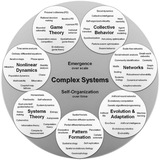
🚨 What is Complexity Science?
This new site just went online:
🔗 https://complexityexplained.github.io/
Great source for everyone interest in #complexity.
#ComplexityExplained
This new site just went online:
🔗 https://complexityexplained.github.io/
Great source for everyone interest in #complexity.
#ComplexityExplained
complexityexplained.github.io
Complexity Explained
Forwarded from Complex Networks (SBU)
#سمینارهای_هفتگی
«حالتهای شبه پایدار در فیزیک و کاربرد آن در اقتصاد»
🗣 محمد بهرامی - دانشگاه شهید بهشتی
⏰ دوشنبه، ۱۰ تیر - ساعت ۱۶:۰۰
🏛 محل برگزاری: سالن ابنهیثم
~~~~~~~~~~~~~~~~
⭕️ مشتاق دیدار همه اقشار جامعه در مرکز هستیم. برای هماهنگی با مسئول جلسه میتوانید با آقای محمد شرافتی تماس بگیرید:
📞 @herman1
—————————————
🕸 مرکز شبکههای پیچیده و علم داده اجتماعی دانشگاه شهید بهشتی
🕸 @CCNSD 🔗 ccnsd.ir
—————————————
«حالتهای شبه پایدار در فیزیک و کاربرد آن در اقتصاد»
🗣 محمد بهرامی - دانشگاه شهید بهشتی
⏰ دوشنبه، ۱۰ تیر - ساعت ۱۶:۰۰
🏛 محل برگزاری: سالن ابنهیثم
~~~~~~~~~~~~~~~~
⭕️ مشتاق دیدار همه اقشار جامعه در مرکز هستیم. برای هماهنگی با مسئول جلسه میتوانید با آقای محمد شرافتی تماس بگیرید:
📞 @herman1
—————————————
🕸 مرکز شبکههای پیچیده و علم داده اجتماعی دانشگاه شهید بهشتی
🕸 @CCNSD 🔗 ccnsd.ir
—————————————
Deep Learning from the Foundations course is here!!! 15 hours of videos, Jupyter notebooks, all free. Covers foundations of deep learning, state of the art research, & software engineering best practices. All new material! https://t.co/Nar3Uspqii
🎞 Statistical Mechanics (PSI 13/14, Core, PHYS 602) - Anton Burkov (University of Waterloo)
https://www.youtube.com/playlist?list=PLFMKfDJ8QzbNzBPtYEQiOdjZjvA29_Orm
Lecture 1 Introduction to phase transitions, the Ising model, Mean Field Theory (MFT)
Lecture 2 Critical exponents α, β, γ, δ out of MFT, Hubbard-Stratonovich Transformation
Lecture 3 Spin-spin correlation function; calculation in the functional integral formalism and in MFT
Lecture 4 Calculation of the correlation function in the MFT through Fourier transform; Fluctuations
Lecture 5 Corrections in Cv from fluctuations, Ginzburg criterion, Landau-Ginzburg theory
Lecture 6 Wilsonian RG: fast and slow modes
Lecture 7 Calculation of the first cumulant; the Gaussian fixed point; Feynman diagrams
Lecture 8 Calculation of the 2nd cumulant; Wilson-Fisher fixed point; linearized flow around the Gaussian fixed point
Lecture 9 Linearized flow around fixed points; calculation of critical exponents from RG
Lecture 10 Mermin-Wagner theorem, lower critical dimension
Lecture 11 Results of 2+ε expansion; Topological order in d=2
Lecture 12 Electrostatic analogy, Duality transformation of the XY model
Lecture 13 & 14 Renormalization Group (RG) for the sine-Gordon model
https://www.youtube.com/playlist?list=PLFMKfDJ8QzbNzBPtYEQiOdjZjvA29_Orm
Lecture 1 Introduction to phase transitions, the Ising model, Mean Field Theory (MFT)
Lecture 2 Critical exponents α, β, γ, δ out of MFT, Hubbard-Stratonovich Transformation
Lecture 3 Spin-spin correlation function; calculation in the functional integral formalism and in MFT
Lecture 4 Calculation of the correlation function in the MFT through Fourier transform; Fluctuations
Lecture 5 Corrections in Cv from fluctuations, Ginzburg criterion, Landau-Ginzburg theory
Lecture 6 Wilsonian RG: fast and slow modes
Lecture 7 Calculation of the first cumulant; the Gaussian fixed point; Feynman diagrams
Lecture 8 Calculation of the 2nd cumulant; Wilson-Fisher fixed point; linearized flow around the Gaussian fixed point
Lecture 9 Linearized flow around fixed points; calculation of critical exponents from RG
Lecture 10 Mermin-Wagner theorem, lower critical dimension
Lecture 11 Results of 2+ε expansion; Topological order in d=2
Lecture 12 Electrostatic analogy, Duality transformation of the XY model
Lecture 13 & 14 Renormalization Group (RG) for the sine-Gordon model
YouTube
- YouTube
Complex Systems Studies
🎞 Statistical Mechanics (PSI 13/14, Core, PHYS 602) - Anton Burkov (University of Waterloo) https://www.youtube.com/playlist?list=PLFMKfDJ8QzbNzBPtYEQiOdjZjvA29_Orm Lecture 1 Introduction to phase transitions, the Ising model, Mean Field Theory (MFT) Lecture…
این آقای بورکُف(اگر درست خوانده باشم) چند کار مهم در زمینهی فرمیونهای وایل
(Weyl fermions)
کرده است.
(Weyl fermions)
کرده است.
Complex Systems Studies
https://www.nature.com/articles/s41567-019-0545-1
این مقاله یک مرور خیلی کلی روی استفاده از شبکههای عصبی به عنوان یک تابع موج برای حالت پایه و حتی برخی حالات برانگیختهی یک سیستم کوانتومی میکنه. نویسندهی اول، راجر مِلکو است که خودش جزو اولینها در استفاده از این روش است.
توضیحات مقاله خیلی کلی است، اما به نظرم لیست مراجع ارزشمندی داره.
توجه کنید که به دو روش(تا جایی که من میدونم) میشه از هوش مصنوعی استفاده کرد(اینجا به هر دو اشاره میشه):
توضیحات مقاله خیلی کلی است، اما به نظرم لیست مراجع ارزشمندی داره.
توجه کنید که به دو روش(تا جایی که من میدونم) میشه از هوش مصنوعی استفاده کرد(اینجا به هر دو اشاره میشه):
Complex Systems Studies
این مقاله یک مرور خیلی کلی روی استفاده از شبکههای عصبی به عنوان یک تابع موج برای حالت پایه و حتی برخی حالات برانگیختهی یک سیستم کوانتومی میکنه. نویسندهی اول، راجر مِلکو است که خودش جزو اولینها در استفاده از این روش است. توضیحات مقاله خیلی کلی است،…
راه اول این است که شما شبکه را با تصاویری از فازها در حالات حدی تغذیه میکنید و بعد سعی میکنید گذار فاز رو با استفاده از شبکه پیدا کنید. مثلن به نحوی از تابع همبستگی یک تصویر میسازید، و این را به شبکه میدهید.
راه دوم استفاده، روش وردشی و استفاده از شبکه برای نمایش تابع موج سیستم بسذرهای است. این میشود شبیه به کاری که با
Matrix Product States
میکنیم. به ارتباط بین این دونمایش هم تو این مقاله اشاره شده.
راه دوم استفاده، روش وردشی و استفاده از شبکه برای نمایش تابع موج سیستم بسذرهای است. این میشود شبیه به کاری که با
Matrix Product States
میکنیم. به ارتباط بین این دونمایش هم تو این مقاله اشاره شده.
Forwarded from Sitpor.org سیتپـــــور
نگاهی به کتاب «فرمول: قوانین جهانشمول موفقیت» باراباشی
http://www.sitpor.org/2019/07/the-formula/
آلبرت لازلو باراباشی، یک دانشمند شبکه معروفه که اخیرا پروژهای به اسم «علم موفقیت» در دپارتمان «علم شبکه» دانشگاه نورثایسترن شروع کرده. منظور از علم موفقیت، بررسی افراد، شرکتها، کسبوکارها و … به صورت کمی برای رسیدن به تحلیلهای دادهمحور از موفقیت اونهاست. خلاصه که کارشون استفاده از روش علمی برای مطالعه میزان موفقیت افراد یا شرکتها در موضوعات مختلفه. باراباشی تجربیات پژوهشی پروژه علم موفقیت رو در کتاب عامهپسندی به اسم «The Formula: The Universal Laws of Success» منتشر کرده. این نوشته کوتاه، نظر من در مورد این کتابه.
http://www.sitpor.org/2019/07/the-formula/
http://www.sitpor.org/2019/07/the-formula/
آلبرت لازلو باراباشی، یک دانشمند شبکه معروفه که اخیرا پروژهای به اسم «علم موفقیت» در دپارتمان «علم شبکه» دانشگاه نورثایسترن شروع کرده. منظور از علم موفقیت، بررسی افراد، شرکتها، کسبوکارها و … به صورت کمی برای رسیدن به تحلیلهای دادهمحور از موفقیت اونهاست. خلاصه که کارشون استفاده از روش علمی برای مطالعه میزان موفقیت افراد یا شرکتها در موضوعات مختلفه. باراباشی تجربیات پژوهشی پروژه علم موفقیت رو در کتاب عامهپسندی به اسم «The Formula: The Universal Laws of Success» منتشر کرده. این نوشته کوتاه، نظر من در مورد این کتابه.
http://www.sitpor.org/2019/07/the-formula/
Forwarded from Complex Networks (SBU)
#سمینارهای_هفتگی_محتوا
فرآیند تولید نوسانات مغزی و نقش احتمالی آنها در کارکردهای سیستم عصبی
🗣 دکتر علیرضا ولیزاده
دانشگاه تحصیلات تکمیلی علوم پایه زنجان
🎞 https://www.aparat.com/v/TwD2c
~~~~~~~~~~~~~~~~~
🔗 سخنرانیهای بیشتر در:
https://ccnsd.ir/events-news/weekly-seminars/
🕸 مرکز شبکههای پیچیده و علم داده اجتماعی دانشگاه شهید بهشتی
🕸 @CCNSD 🔗 ccnsd.ir
~~~~~~~~~~~~~~~~~
فرآیند تولید نوسانات مغزی و نقش احتمالی آنها در کارکردهای سیستم عصبی
🗣 دکتر علیرضا ولیزاده
دانشگاه تحصیلات تکمیلی علوم پایه زنجان
🎞 https://www.aparat.com/v/TwD2c
~~~~~~~~~~~~~~~~~
🔗 سخنرانیهای بیشتر در:
https://ccnsd.ir/events-news/weekly-seminars/
🕸 مرکز شبکههای پیچیده و علم داده اجتماعی دانشگاه شهید بهشتی
🕸 @CCNSD 🔗 ccnsd.ir
~~~~~~~~~~~~~~~~~
آپارات - سرویس اشتراک ویدیو
فرآیند تولید نوسانات مغزی و نقش احتمالی آنها در کارکردهای سیستم عصبی
دکتر علیرضا ولیزادهhttps://ccnsd.ir/events-news/weekly-seminars/
Forwarded from Complex Networks (SBU)
#سمینارهای_هفتگی_محتوا
«حالتهای شبه پایدار در فیزیک و کاربرد آن در اقتصاد»
🗣 محمد بهرامی - دانشگاه شهید بهشتی
🎞 https://www.aparat.com/v/q9Fyo
~~~~~~~~~~~~~~~~~
🔗 سخنرانیهای بیشتر در:
https://ccnsd.ir/events-news/weekly-seminars/
🕸 مرکز شبکههای پیچیده و علم داده اجتماعی دانشگاه شهید بهشتی
🕸 @CCNSD 🔗 ccnsd.ir
~~~~~~~~~~~~~~~~~
«حالتهای شبه پایدار در فیزیک و کاربرد آن در اقتصاد»
🗣 محمد بهرامی - دانشگاه شهید بهشتی
🎞 https://www.aparat.com/v/q9Fyo
~~~~~~~~~~~~~~~~~
🔗 سخنرانیهای بیشتر در:
https://ccnsd.ir/events-news/weekly-seminars/
🕸 مرکز شبکههای پیچیده و علم داده اجتماعی دانشگاه شهید بهشتی
🕸 @CCNSD 🔗 ccnsd.ir
~~~~~~~~~~~~~~~~~
آپارات - سرویس اشتراک ویدیو
حالتهای شبهپایدار در فیزیک و کاربرد آن در اقتصادـ محمد بهرامی
https://ccnsd.ir/events-news/weekly-seminars/
📢 The 41st Conference on #StochasticProcesses and their Applications 2019 (SPA 2019)
⏰ 8–12 July 2019
📍 Chicago, IL, USA
https://t.co/HGgz2Y8g0c
More related conferences: https://t.co/QsT67x9JQh
⏰ 8–12 July 2019
📍 Chicago, IL, USA
https://t.co/HGgz2Y8g0c
More related conferences: https://t.co/QsT67x9JQh
🎬 Universal Biology, the Genetic Code and the First Billion Years of Life on Earth
Dr. Nigel Goldenfeld
University of Illinois at Urbana-Champaign
https://www.youtube.com/watch?v=ACdJ4uS2ULQ
This colloquium concerns two ideas. First, that there are universal laws of life, which can be deduced by abstracting what we know about life on Earth. Second, universal dynamical signatures of early life, preceding even the last universal common ancestor of all life on Earth, are present in the structure of the modern day canonical genetic code --- the map between DNA sequence and amino acids that form proteins. The code is not random, as often assumed, but instead is now known to have certain error minimisation properties. How could such a code evolve, when it would seem that mutations to the code itself would cause the wrong proteins to be translated, thus killing the organism? Using digital life simulations, I show how a unique and optimal genetic code can emerge over evolutionary time, but only if early life was dominated by collective effects, very different from the present era where individuals and species are well-defined concepts. I will also discuss a second universal signature of life: the complete breaking of chiral symmetry in biological amino acids and sugars, and explain how such transitions can arise in principle as a result of the non-equilibrium dynamics of early-life autocatalytic replicators.
Dr. Nigel Goldenfeld
University of Illinois at Urbana-Champaign
https://www.youtube.com/watch?v=ACdJ4uS2ULQ
This colloquium concerns two ideas. First, that there are universal laws of life, which can be deduced by abstracting what we know about life on Earth. Second, universal dynamical signatures of early life, preceding even the last universal common ancestor of all life on Earth, are present in the structure of the modern day canonical genetic code --- the map between DNA sequence and amino acids that form proteins. The code is not random, as often assumed, but instead is now known to have certain error minimisation properties. How could such a code evolve, when it would seem that mutations to the code itself would cause the wrong proteins to be translated, thus killing the organism? Using digital life simulations, I show how a unique and optimal genetic code can emerge over evolutionary time, but only if early life was dominated by collective effects, very different from the present era where individuals and species are well-defined concepts. I will also discuss a second universal signature of life: the complete breaking of chiral symmetry in biological amino acids and sugars, and explain how such transitions can arise in principle as a result of the non-equilibrium dynamics of early-life autocatalytic replicators.
YouTube
10 03 18 Nigel Goldenfeld
Special Colloquium Talk
Universal Biology, the Genetic Code and the First Billion Years of Life on Earth
Dr. Nigel Goldenfeld
University of Illinois at Urbana-Champaign
This colloquium concerns two ideas. First, that there are universal laws of life,…
Universal Biology, the Genetic Code and the First Billion Years of Life on Earth
Dr. Nigel Goldenfeld
University of Illinois at Urbana-Champaign
This colloquium concerns two ideas. First, that there are universal laws of life,…
🎬 Beyond Chaos: The Continuing Enigma of Turbulence - KITP Public Lecture by Nigel Goldenfeld
https://www.youtube.com/watch?v=LW1C-HVJN-o
Turbulence is the last great unsolved problem of classical physics. This seemingly random, unpredictable motion of fluids is pervasive and completely familiar to us all. Turbulence governs the speed at which rivers flow and the air drag as you drive your car; it is the bane of air travelers. Turbulence can kill, by causing arteries and aneurisms to burst. Turbulence makes stars twinkle. Its random but structured patterns have inspired artists and scientists alike. And yet, despite a century of scientific investigation, our understanding is primarily based upon a mere handful of early seminal insights. In this talk, I'll try to explain why this problem is so difficult — much harder than chaos — and what it would mean to solve it. Finally, I'll discuss recent dramatic advances in both experiment and theory that account for the way in which fluids start to become turbulent as their flow speed is increased, making precise mathematical contact with transitional behavior in other fields such as ecology and even neuroscience.
https://www.youtube.com/watch?v=LW1C-HVJN-o
Turbulence is the last great unsolved problem of classical physics. This seemingly random, unpredictable motion of fluids is pervasive and completely familiar to us all. Turbulence governs the speed at which rivers flow and the air drag as you drive your car; it is the bane of air travelers. Turbulence can kill, by causing arteries and aneurisms to burst. Turbulence makes stars twinkle. Its random but structured patterns have inspired artists and scientists alike. And yet, despite a century of scientific investigation, our understanding is primarily based upon a mere handful of early seminal insights. In this talk, I'll try to explain why this problem is so difficult — much harder than chaos — and what it would mean to solve it. Finally, I'll discuss recent dramatic advances in both experiment and theory that account for the way in which fluids start to become turbulent as their flow speed is increased, making precise mathematical contact with transitional behavior in other fields such as ecology and even neuroscience.
YouTube
Beyond Chaos: The Continuing Enigma of Turbulence ▸ KITP Public Lecture by Nigel Goldenfeld
Turbulence is the last great unsolved problem of classical physics. This seemingly random, unpredictable motion of fluids is pervasive and completely familiar to us all. Turbulence governs the speed at which rivers flow and the air drag as you drive your…
At the precise moment when a random system seems most chaotic, exquisite geometric order can peer through.
https://t.co/qMo090Yyfm
https://t.co/qMo090Yyfm