Forwarded from Communism
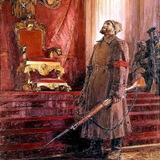
Communists march in Riga, Latvia, ahead of the formation of the Latvian SSR, 1940
@Communism
Since the proletariat must first of all acquire political supremacy, must rise to be the leading class of the nation, must constitute itself the nation, it is so far, itself national, though not in the bourgeois sense of the word.
Marx and Engels
The Manifesto of the Communist Party
@Communism
🫡3
Forwarded from KFA UK
Tree Planting Conducted by Working People's Organizations in DPRK
Pyongyang, March 15 (KCNA) -- Working people's organizations of the DPRK planted trees on the occasion of the tree-planting day.
Officials and members of the youth league, the trade unions, the agricultural workers' union and the women's union sincerely planted many trees in their relevant areas.
Officials and members of the Central Committee of the youth league and the youth league in Pyongyang planted fir, white birch, picea Koraiensis and flower shrubs at the April 15 Children's Flower Garden.
Young people in South Phyongan, North Phyongan, South Hamgyong, North Hamgyong and other provinces planted trees in conformity with the seasonal conditions in their relevant areas.
Officials of the Central Committee of the General Federation of Trade Unions of Korea made efforts to plant trees in Hwasong Hill.
Pyongyang, March 15 (KCNA) -- Working people's organizations of the DPRK planted trees on the occasion of the tree-planting day.
Officials and members of the youth league, the trade unions, the agricultural workers' union and the women's union sincerely planted many trees in their relevant areas.
Officials and members of the Central Committee of the youth league and the youth league in Pyongyang planted fir, white birch, picea Koraiensis and flower shrubs at the April 15 Children's Flower Garden.
Young people in South Phyongan, North Phyongan, South Hamgyong, North Hamgyong and other provinces planted trees in conformity with the seasonal conditions in their relevant areas.
Officials of the Central Committee of the General Federation of Trade Unions of Korea made efforts to plant trees in Hwasong Hill.
Forwarded from Beorn and The Shieldmaiden
February 28, 1949 – The Council of Ministers of the USSR announced a reduction in prices for consumer goods.
After the Great Patriotic War, the financial system of the USSR was in a difficult situation. In order to restore the purchasing power of the rouble and improve the welfare of the population, monetary reform was initiated at the end of 1947, during which banknotes and deposits were changed out, as well as starting a gradual reduction in commodity prices. The first stage of the price reform was carried out by an order of the USSR Ministry of Trade dated December 14, 1947, which established fixed reduced prices for a limited list of food and industrial goods, which included bread, flour, sugar, butter, sunflower oil, beef meat and other goods.
By the beginning of 1949, thanks to the rise of the national economy, a reduction in the cost of goods and an increase in production, it became possible to carry out another price reduction for a wider range of goods in high demand. The corresponding joint resolution of the Council of Ministers of the USSR and the Central Committee of the CPSU(b) was published on February 28, 1949 in the newspaper Pravda. Since March 1, 1949, the prices of bread, meat, sausages, fish, butter, wool and silk fabrics, furs, household goods and electrical goods, cameras and binoculars has reduced by 10%, the price of woolen garments has decreased by 12%, hats and dresses have become cheaper by 15%, and cheeses, perfumes, jewelry, bicycles, tableware and household appliances fell in price by 20%. In addition, the price of hay has decreased by 30%, and mixed feed has become 20% cheaper.
Due to the decrease in prices made on March 1, 1949, the purchasing power of the rouble increased significantly, its exchange rate improved compared to the exchange rate of foreign currencies, real wages of workers increased and the costs incurred by the peasants for the purchase of industrial goods decreased. "In this undertaking, the Bolshevik Party and the Soviet government demonstrated with renewed vigor the great concern for the working people, for their prosperity, for the growth of well-being and culture," the newspaper Pravda reported in an editorial on March 1, 1949.
Source: CPRF
@BeornAndTheShieldmaiden
🚀 Boost🚀
After the Great Patriotic War, the financial system of the USSR was in a difficult situation. In order to restore the purchasing power of the rouble and improve the welfare of the population, monetary reform was initiated at the end of 1947, during which banknotes and deposits were changed out, as well as starting a gradual reduction in commodity prices. The first stage of the price reform was carried out by an order of the USSR Ministry of Trade dated December 14, 1947, which established fixed reduced prices for a limited list of food and industrial goods, which included bread, flour, sugar, butter, sunflower oil, beef meat and other goods.
By the beginning of 1949, thanks to the rise of the national economy, a reduction in the cost of goods and an increase in production, it became possible to carry out another price reduction for a wider range of goods in high demand. The corresponding joint resolution of the Council of Ministers of the USSR and the Central Committee of the CPSU(b) was published on February 28, 1949 in the newspaper Pravda. Since March 1, 1949, the prices of bread, meat, sausages, fish, butter, wool and silk fabrics, furs, household goods and electrical goods, cameras and binoculars has reduced by 10%, the price of woolen garments has decreased by 12%, hats and dresses have become cheaper by 15%, and cheeses, perfumes, jewelry, bicycles, tableware and household appliances fell in price by 20%. In addition, the price of hay has decreased by 30%, and mixed feed has become 20% cheaper.
Due to the decrease in prices made on March 1, 1949, the purchasing power of the rouble increased significantly, its exchange rate improved compared to the exchange rate of foreign currencies, real wages of workers increased and the costs incurred by the peasants for the purchase of industrial goods decreased. "In this undertaking, the Bolshevik Party and the Soviet government demonstrated with renewed vigor the great concern for the working people, for their prosperity, for the growth of well-being and culture," the newspaper Pravda reported in an editorial on March 1, 1949.
Source: CPRF
@BeornAndTheShieldmaiden
Please open Telegram to view this post
VIEW IN TELEGRAM
🫡1