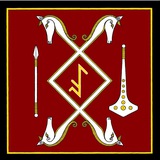
Our gods are a family, connected by mǽġða, oathed in holy tréow, bound by the law of orleġ, and rulers over creation. When we look upon ourselves, our house, our folk - do we emulate our gods? Look around, the time is now to stand up and reclaim what is ours; to rediscover our heritage and work to build our culture. Our children’s lives hang in the balance.
Ós, Ésa - The highest of the divine mǽġða; primarily, though not solely, deities of valor and protection.
Ós, literally means (a) god & is symbolized by the ᚩ rune and represents the letter Oo
Ós “god”
Ésa “gods”
Ósa (one) “god’s”
Ésa (more than one) “god’s”
OE-ON Comparison:
Tréow - Trúnaðr
Ós, Ésa - Áss, Æsir
Mǽġþ, Mǽġða - Ætt, Ættir
*a Mǽġþ is a Clan
https://linktr.ee/TheFrithstead
Ós, Ésa - The highest of the divine mǽġða; primarily, though not solely, deities of valor and protection.
Ós, literally means (a) god & is symbolized by the ᚩ rune and represents the letter Oo
Ós “god”
Ésa “gods”
Ósa (one) “god’s”
Ésa (more than one) “god’s”
OE-ON Comparison:
Tréow - Trúnaðr
Ós, Ésa - Áss, Æsir
Mǽġþ, Mǽġða - Ætt, Ættir
*a Mǽġþ is a Clan
https://linktr.ee/TheFrithstead
The Gods of Fertility, Peace, & Love
A man is only as powerful as he can change his environment, strong as his masculinity & virility, and smart as his will to learn. He is as successful, and able to be called a man, as he can provide, protect, teach, & love his wife & children. Oathed to his house in complete loyalty.
A woman is only as powerful as she can change her environment, strong as her femininity & fecundity, and smart as her will to learn. She is as successful, and able to be honored & exalted as a lady, as she can guide, counsel, & love her man, & nurture, protect, teach, & love her children. Oathed to her house in complete loyalty.
Wan, Wanas The Fertility Gods & 2nd highest of the divine mǽġða. Their function is primarily focused on the natural order and regulation of nature & gods of peace and love.
Wan “god”
Wanas “gods”
Wanes (one) “god’s”
Wana (more than one) “gods’”
OE-ON Comparison:
Wan, Wanas - Áss, Æsir
Mǽġþ, Mǽġða - Ætt, Ættir
*a Mǽġþ is a Clan
https://linktr.ee/TheFrithstead
A man is only as powerful as he can change his environment, strong as his masculinity & virility, and smart as his will to learn. He is as successful, and able to be called a man, as he can provide, protect, teach, & love his wife & children. Oathed to his house in complete loyalty.
A woman is only as powerful as she can change her environment, strong as her femininity & fecundity, and smart as her will to learn. She is as successful, and able to be honored & exalted as a lady, as she can guide, counsel, & love her man, & nurture, protect, teach, & love her children. Oathed to her house in complete loyalty.
Wan, Wanas The Fertility Gods & 2nd highest of the divine mǽġða. Their function is primarily focused on the natural order and regulation of nature & gods of peace and love.
Wan “god”
Wanas “gods”
Wanes (one) “god’s”
Wana (more than one) “gods’”
OE-ON Comparison:
Wan, Wanas - Áss, Æsir
Mǽġþ, Mǽġða - Ætt, Ættir
*a Mǽġþ is a Clan
https://linktr.ee/TheFrithstead
❤1
The Nature Artists - Part 1
Ylf, Ylfe - Descended from Mimor and Seonumare and the third of the Teutonic divine Mǽġða. The Ylfe are of lower status, but can rise higher, via deeds or marriage. They are the sworn helpers of the Gods, oathed in loyalty, and the greatest nature artists and heroes.
Landwyht, Landwyhtu - a branch of the Ylfe living in Middanġeard and connected to the land. Some are connected to properties or homes, while others are linked to forests or bodies of water.
OE-ON Comparison:
Ylf, Ylfe - Alfr, Alfar
Mimor - Mímir
Seonumare - Sinmara
Mǽġþ, Mǽġða - Ætt, Ættir
* a mǽġþ is a clan
Landwyht, Landwyhtu - Landvættr, Landvættir
Middanġeard - Miðgarðr
https://linktr.ee/TheFrithstead
Ylf, Ylfe - Descended from Mimor and Seonumare and the third of the Teutonic divine Mǽġða. The Ylfe are of lower status, but can rise higher, via deeds or marriage. They are the sworn helpers of the Gods, oathed in loyalty, and the greatest nature artists and heroes.
Landwyht, Landwyhtu - a branch of the Ylfe living in Middanġeard and connected to the land. Some are connected to properties or homes, while others are linked to forests or bodies of water.
OE-ON Comparison:
Ylf, Ylfe - Alfr, Alfar
Mimor - Mímir
Seonumare - Sinmara
Mǽġþ, Mǽġða - Ætt, Ættir
* a mǽġþ is a clan
Landwyht, Landwyhtu - Landvættr, Landvættir
Middanġeard - Miðgarðr
https://linktr.ee/TheFrithstead
The Nature Artists - Part 2
Are the Ylfe our Male Ancestors?
Much of history is indeed lost or obscured, which makes it difficult to reclaim that which we have lost and rediscover that which has been stolen. The idea that the Ylfe are our male ancestors is rooted in the folklore of our forebears. Folklore is a mix of truth and fiction; originally utilized as a way to preserve our history in a way where it could be hidden in plain sight. A folk begins with living in truth, then when obfuscation occurs, we hold on tight to what we know is true, but this is when the obscuring takes place, both intentionally by the offending party and unintentionally by the innocent party. The slide continues until we reach where we are today where the overwhelming masses are amnesiac to their history, have abandoned their culture, forgotten their ancestors, and have embraced chaotic emptiness of degeneracy. The slide is seen as such - Truth is in the Lore and Skaldic Poetry, or any other text written by Heathen authors. Then, sliding a bit further we have the Sagas, where a dual-faith was practiced. This is where we have embellishments, half-truths, and when foreign elements begin to be woven into the truth. It’s just enough to both make a good entertaining story, set hold enough Heathen truth and historical accuracy to be a valuable research tool. Even with the embellishments, the truth is there, in plain sight, for all who seek. Next, is when the folk have forgotten much of their past, having adopted a foreign creed, and it’s various ideologies, but in their subconscious, in their blood, manifested in the traditions they perform, and through the faint whisperings in their ears from their ancestors and gods, folklore emerges. Folklore is seen as fiction, and rightly so, for much of it is, but in its depths are kernels of ancient truths and nuggets of Heathen wisdom. It’s as if the truth sits on the bottom of a lake, resting on the Sandy floor, waiting to be brought to the surface. One just has to make the dive and analyze the texts. One such example is the motif of fairy godmothers, where they work with fate; reminiscent of the Norns of Orlæġ, Wyrd, Weorðende, and Sċyld. Until finally, the stories become pure fiction with tales of Sherlock Holmes, Superman, Lord of The Rings, or the Matrix. Yet even Sherlock inspired us to seek truth, Superman, akin to Béowulf, tells us to be honorable & brave, Lord of the Rings inspires us to remember our ancient ways, and the Matrix begs us to break free from our chains and return home. To complete the circle, I don’t believe that the Ylfe began as our ancestors, but we do have tales of the gods siring children with the daughters of man. It’s possible that this folkloric belief is rooted in the ancestral memory of when the gods sired family lines in Middanġeard. One such example is found in Þáttr Ólafs Geirstaða Alfs, where King Ólaf rides past his forebear and namesake’s burial mound. His forebear, is now called Ólaf Geirstaðaálfr - “Olaf, the Elf of Geirstad.” This noscript implies the ylfen state of Ólaf’s forefather. The text also implies that King Ólaf is the reincarnation of Ólaf Geirstaðaálfr. One thing is certain however, we must never give up in our quest to uncover our past, for in doing so, we wake up to the beauty of life and become as a blind man seeing color for the first time or a deaf child first hearing her mother’s voice. The richness of learning of our heritage is joy unspeakable.
https://linktr.ee/TheFrithstead
Are the Ylfe our Male Ancestors?
Much of history is indeed lost or obscured, which makes it difficult to reclaim that which we have lost and rediscover that which has been stolen. The idea that the Ylfe are our male ancestors is rooted in the folklore of our forebears. Folklore is a mix of truth and fiction; originally utilized as a way to preserve our history in a way where it could be hidden in plain sight. A folk begins with living in truth, then when obfuscation occurs, we hold on tight to what we know is true, but this is when the obscuring takes place, both intentionally by the offending party and unintentionally by the innocent party. The slide continues until we reach where we are today where the overwhelming masses are amnesiac to their history, have abandoned their culture, forgotten their ancestors, and have embraced chaotic emptiness of degeneracy. The slide is seen as such - Truth is in the Lore and Skaldic Poetry, or any other text written by Heathen authors. Then, sliding a bit further we have the Sagas, where a dual-faith was practiced. This is where we have embellishments, half-truths, and when foreign elements begin to be woven into the truth. It’s just enough to both make a good entertaining story, set hold enough Heathen truth and historical accuracy to be a valuable research tool. Even with the embellishments, the truth is there, in plain sight, for all who seek. Next, is when the folk have forgotten much of their past, having adopted a foreign creed, and it’s various ideologies, but in their subconscious, in their blood, manifested in the traditions they perform, and through the faint whisperings in their ears from their ancestors and gods, folklore emerges. Folklore is seen as fiction, and rightly so, for much of it is, but in its depths are kernels of ancient truths and nuggets of Heathen wisdom. It’s as if the truth sits on the bottom of a lake, resting on the Sandy floor, waiting to be brought to the surface. One just has to make the dive and analyze the texts. One such example is the motif of fairy godmothers, where they work with fate; reminiscent of the Norns of Orlæġ, Wyrd, Weorðende, and Sċyld. Until finally, the stories become pure fiction with tales of Sherlock Holmes, Superman, Lord of The Rings, or the Matrix. Yet even Sherlock inspired us to seek truth, Superman, akin to Béowulf, tells us to be honorable & brave, Lord of the Rings inspires us to remember our ancient ways, and the Matrix begs us to break free from our chains and return home. To complete the circle, I don’t believe that the Ylfe began as our ancestors, but we do have tales of the gods siring children with the daughters of man. It’s possible that this folkloric belief is rooted in the ancestral memory of when the gods sired family lines in Middanġeard. One such example is found in Þáttr Ólafs Geirstaða Alfs, where King Ólaf rides past his forebear and namesake’s burial mound. His forebear, is now called Ólaf Geirstaðaálfr - “Olaf, the Elf of Geirstad.” This noscript implies the ylfen state of Ólaf’s forefather. The text also implies that King Ólaf is the reincarnation of Ólaf Geirstaðaálfr. One thing is certain however, we must never give up in our quest to uncover our past, for in doing so, we wake up to the beauty of life and become as a blind man seeing color for the first time or a deaf child first hearing her mother’s voice. The richness of learning of our heritage is joy unspeakable.
https://linktr.ee/TheFrithstead
The Nature Artists - Part 3
We are a folk of nature, not one of brick and concrete. Although our forebears created and built the world’s greatest and most beautiful architectural wonders, we are most at home when outside. We are at peace when we feel the warmth of the sun on our face or the cool breeze washing over us. The smell of a flower or salty ocean mist can heal our ills. We find inspiration in the birdsong or the sound of windy pines. It is of no surprise that our harrows and sacred henges were in the woods and holy leas. Let us embrace our heritage, feel the homecoming call, and build our culture upon the foundation of Folcsida. It can begin with something as simple as honoring the Ylfe by respecting and enjoying nature and making a habit of leaving offerings to the Landwyhtu and Húswyhtu.
https://linktr.ee/TheFrithstead
We are a folk of nature, not one of brick and concrete. Although our forebears created and built the world’s greatest and most beautiful architectural wonders, we are most at home when outside. We are at peace when we feel the warmth of the sun on our face or the cool breeze washing over us. The smell of a flower or salty ocean mist can heal our ills. We find inspiration in the birdsong or the sound of windy pines. It is of no surprise that our harrows and sacred henges were in the woods and holy leas. Let us embrace our heritage, feel the homecoming call, and build our culture upon the foundation of Folcsida. It can begin with something as simple as honoring the Ylfe by respecting and enjoying nature and making a habit of leaving offerings to the Landwyhtu and Húswyhtu.
https://linktr.ee/TheFrithstead
The Forces of Chaos - Part 1
The Eotenas are the Eaters, or Giants. There are two Eoten races. The higher-born were created from Wóma’s arms, descended from Mimor & Bæstel, and are deserving of divine honors. In status they are equal to the Ylfe and can rise to a higher status. The lower-born, known as the Þyrsas, were created from Wóma’s feet & are the enemies of the Gods
We must be careful, as trolls walk among us, looking to do harm. I had an encounter with a troll once. He was +/- 5’ 7”; very ugly. Upon sight, you knew what he was. He was looking for someone; maybe me, I didn’t know. I knew he was dangerous. I was wearing my Norse Œgishjalmr hat patch, and necklace. Now, this symbol is debated, but I prayed to the gods for a cloak of invisibility & protection. It worked. He was inches from me and couldn’t see me.
OE-ON Comparison:
Eoten, Eotenas - Jǫtunn, Jǫtnar
Wóma - Ymir
Mimor - Mímir
Bæstle - Bestla
Þrýþġylla - Þrúðgelmir
Þyrs, Þyrsas - Þurs, Þursar (aka Trolls)
https://linktr.ee/TheFrithstead
The Eotenas are the Eaters, or Giants. There are two Eoten races. The higher-born were created from Wóma’s arms, descended from Mimor & Bæstel, and are deserving of divine honors. In status they are equal to the Ylfe and can rise to a higher status. The lower-born, known as the Þyrsas, were created from Wóma’s feet & are the enemies of the Gods
We must be careful, as trolls walk among us, looking to do harm. I had an encounter with a troll once. He was +/- 5’ 7”; very ugly. Upon sight, you knew what he was. He was looking for someone; maybe me, I didn’t know. I knew he was dangerous. I was wearing my Norse Œgishjalmr hat patch, and necklace. Now, this symbol is debated, but I prayed to the gods for a cloak of invisibility & protection. It worked. He was inches from me and couldn’t see me.
OE-ON Comparison:
Eoten, Eotenas - Jǫtunn, Jǫtnar
Wóma - Ymir
Mimor - Mímir
Bæstle - Bestla
Þrýþġylla - Þrúðgelmir
Þyrs, Þyrsas - Þurs, Þursar (aka Trolls)
https://linktr.ee/TheFrithstead
👍2
Forwarded from Æhtemen
Interesting post from The Frithstead above. In christian Anglo-Saxon texts, as well as heathen Norse sagas there are references to a 'Helmet of Invisibility' or Heoloðhelm in Old English. The OE, OSaxon root 'helan' meant 'to hide'. As the Helmet was able to cover entire boats and crews, we know the Helmet of Invisibility was a magical art or invocation -
Thorstein then bade them not to hide him: “For I can make myself a ‘helmet of invisibility,’ that no one may see me.” Goðmundr called that good magical knowledge. - Þorsteins þáttr bæjarmagns, 5
Eyvindr made them a “helmet of invisibility” and a great dark fog, so that
the king and his men should not be able to see them. - Ólafs saga Tryggvasonar, 63
Kerling had command over the host, and she put a “helmet of invisibility”
over the ship while they rowed over the fjord to Hofstaðir - Gull-Þoris saga, 17
Thorstein then bade them not to hide him: “For I can make myself a ‘helmet of invisibility,’ that no one may see me.” Goðmundr called that good magical knowledge. - Þorsteins þáttr bæjarmagns, 5
Eyvindr made them a “helmet of invisibility” and a great dark fog, so that
the king and his men should not be able to see them. - Ólafs saga Tryggvasonar, 63
Kerling had command over the host, and she put a “helmet of invisibility”
over the ship while they rowed over the fjord to Hofstaðir - Gull-Þoris saga, 17
The Forces of Chaos - Part 2
In the chat group, I was asked about my prayer. Was informal; how Xtians “talk” to Jesus. Young in my Heathen path, I lacked knowledge & understood less, but I knew we were in danger. We were at a small club in a big city; hundreds packed shoulder to shoulder. It wasn’t spoken, but I sent out intention and believed our gods would hear. This is magic, sending intention, seeking result, but this was before I understood gift for a gift. The experience encouraged me in my Heathen life; another moment, which led me to to where I am now
The questioner’s response resonated:
“The Allfather must have seen what would come to pass if he protected you, saw that it would gain him a loyal follower and make a measure of progress toward his eventual return, so despite no gift being offered, he must have reasoned that his help would be repaid sufficiently in future”
Trust the gods; they see more than we do. We cannot fight Fate - it marches on
thefrithstead.com
In the chat group, I was asked about my prayer. Was informal; how Xtians “talk” to Jesus. Young in my Heathen path, I lacked knowledge & understood less, but I knew we were in danger. We were at a small club in a big city; hundreds packed shoulder to shoulder. It wasn’t spoken, but I sent out intention and believed our gods would hear. This is magic, sending intention, seeking result, but this was before I understood gift for a gift. The experience encouraged me in my Heathen life; another moment, which led me to to where I am now
The questioner’s response resonated:
“The Allfather must have seen what would come to pass if he protected you, saw that it would gain him a loyal follower and make a measure of progress toward his eventual return, so despite no gift being offered, he must have reasoned that his help would be repaid sufficiently in future”
Trust the gods; they see more than we do. We cannot fight Fate - it marches on
thefrithstead.com
🔥1
The Forces of Chaos - Part 3
The Eotenas are the enemies of the gods and man. The Higher powers are separated by tribal affiliations, just as we are. Allegiances are made and each are bound by that choice. One cannot simply honor the Eotenas because some of the gods are “Part Eoten”. Either we’re loyal to the gods or we’re not. Wóden, Hanwer, and Léod claim descent through both the god and eoten lines; however, when two opposing forces join, a choice will have to be made; one cannot serve two masters. Wóden is the Ealfæder & king of the Ésa. Hanwer, aligned with Wóden and fathered the Wanas. Léod, father of the Ylfe & Dweorgas (Dvergar), however, rebelled and aligned as the Eotenas. We either follow the gods or we do not. Honoring the Éotanas, such as Loga (Loki) or Goldwǽġe (Gullveig) is to declare oneself an enemy of the gods and man and won’t bode well for you at the Helþing. Rise up and take a stand. We cannot walk both paths. Declare your spiritual choice.
https://linktr.ee/TheFrithstead
The Eotenas are the enemies of the gods and man. The Higher powers are separated by tribal affiliations, just as we are. Allegiances are made and each are bound by that choice. One cannot simply honor the Eotenas because some of the gods are “Part Eoten”. Either we’re loyal to the gods or we’re not. Wóden, Hanwer, and Léod claim descent through both the god and eoten lines; however, when two opposing forces join, a choice will have to be made; one cannot serve two masters. Wóden is the Ealfæder & king of the Ésa. Hanwer, aligned with Wóden and fathered the Wanas. Léod, father of the Ylfe & Dweorgas (Dvergar), however, rebelled and aligned as the Eotenas. We either follow the gods or we do not. Honoring the Éotanas, such as Loga (Loki) or Goldwǽġe (Gullveig) is to declare oneself an enemy of the gods and man and won’t bode well for you at the Helþing. Rise up and take a stand. We cannot walk both paths. Declare your spiritual choice.
https://linktr.ee/TheFrithstead
Ġealdor, the First of Three Magics
Ġealdor /ˈjæ͜ɑl.dor/ “An Incantation; a charm”. Cognate with Old Norse Galdr. Seen today, in the word, Nightingale, literally Night + Singer. Ġealdor is the Wódenic art of singing to the gods in verse, known as Ġealdreslæġ (known in Old Norse as Gladralag). Ġealdor is the holy art of the gods & and in stark opposition to Bealocræft (Old Norse: Seiðr). The most known Ġealdor is ALU (ᚨᛚᚢ, ᛠᛚᚢ), the runic representation of the Alugod, Wóden. Alu means “Ale”, which in association with Wóden, we are reminded of his drinks from Mimor’s Spring, where he gained knowledge of the runes. Living off mead alone, this is what we are to blót to him. A prayer to Wóden might be a mead offering while performing an ᚨᛚᚢ / ᛠᛚᚢ Ġealdor.
https://linktr.ee/TheFrithstead
Ġealdor /ˈjæ͜ɑl.dor/ “An Incantation; a charm”. Cognate with Old Norse Galdr. Seen today, in the word, Nightingale, literally Night + Singer. Ġealdor is the Wódenic art of singing to the gods in verse, known as Ġealdreslæġ (known in Old Norse as Gladralag). Ġealdor is the holy art of the gods & and in stark opposition to Bealocræft (Old Norse: Seiðr). The most known Ġealdor is ALU (ᚨᛚᚢ, ᛠᛚᚢ), the runic representation of the Alugod, Wóden. Alu means “Ale”, which in association with Wóden, we are reminded of his drinks from Mimor’s Spring, where he gained knowledge of the runes. Living off mead alone, this is what we are to blót to him. A prayer to Wóden might be a mead offering while performing an ᚨᛚᚢ / ᛠᛚᚢ Ġealdor.
https://linktr.ee/TheFrithstead
Bealocræft, the Second of Three Magics
Bealocræft /ˈbæ͜ɑ.lo.kræft/ is maleficent Sorcery. To the Norse, it’s known as Seiðr, the black art founded by Goldwǽġe (Gullveig). It utilizes mind-control, poisoning, conjuration, and necromancy. The gods outlawed Bealocræft after the ancient folk-war, as it was declared harmful to our folk and against our faith.
https://norroena.org/odins-banishment-and-the-seidr/
https://linktr.ee/TheFrithstead
Bealocræft /ˈbæ͜ɑ.lo.kræft/ is maleficent Sorcery. To the Norse, it’s known as Seiðr, the black art founded by Goldwǽġe (Gullveig). It utilizes mind-control, poisoning, conjuration, and necromancy. The gods outlawed Bealocræft after the ancient folk-war, as it was declared harmful to our folk and against our faith.
https://norroena.org/odins-banishment-and-the-seidr/
https://linktr.ee/TheFrithstead
👍1
Spæ, the Third of Three Magics
*Spæ /spæ/ is the magical art of foretelling future events. It’s a neutral art, which can be used for good or bad. The most recognizable form of Spæ is found in the the ON poem Vǫluspá, i.e. the Vǫlva’s Spá, or the Seeress’ Foretelling, when the Vǫlva gives Wóden an overview of history, past and future. Other names for a woman who practices Spæ are Wítegestre & Wítege; both related to witan, the OE verb meaning to know or to feel. The ON Vǫlva (the v is pronounced as a w), interestingly, stems from Vǫlr, meaning a rounded staff, thus giving the meaning of ‘Staff-Bearer’. In Icelandic, we see Spæ in the form of Spákona, or Spá-Woman. We have accounts of men using Spæ; however, it was known as a feminine art.
https://linktr.ee/TheFrithstead
*Spæ /spæ/ is the magical art of foretelling future events. It’s a neutral art, which can be used for good or bad. The most recognizable form of Spæ is found in the the ON poem Vǫluspá, i.e. the Vǫlva’s Spá, or the Seeress’ Foretelling, when the Vǫlva gives Wóden an overview of history, past and future. Other names for a woman who practices Spæ are Wítegestre & Wítege; both related to witan, the OE verb meaning to know or to feel. The ON Vǫlva (the v is pronounced as a w), interestingly, stems from Vǫlr, meaning a rounded staff, thus giving the meaning of ‘Staff-Bearer’. In Icelandic, we see Spæ in the form of Spákona, or Spá-Woman. We have accounts of men using Spæ; however, it was known as a feminine art.
https://linktr.ee/TheFrithstead
* A YouTube Update *
I haven’t released a new video in a while. I’ve been having technical difficulties with my software. I’m currently engaged in the back-n-forth with tech support, so you know how it goes. Rest assured, once straightened out, more videos are to come. Please let me know in the comments any area of interest.
I haven’t released a new video in a while. I’ve been having technical difficulties with my software. I’m currently engaged in the back-n-forth with tech support, so you know how it goes. Rest assured, once straightened out, more videos are to come. Please let me know in the comments any area of interest.
Check out the new podcast from the PNWWP!
Episode 1 - The Sacred Stew
Follow James and Anthony, two modern heathens, as they discuss paganism, asatru, history, philosophy and theology for the modern heathen.
https://open.spotify.com/show/2H5HgYHC2LAqRcr8ku3mJO
Episode 1 - The Sacred Stew
Follow James and Anthony, two modern heathens, as they discuss paganism, asatru, history, philosophy and theology for the modern heathen.
https://open.spotify.com/show/2H5HgYHC2LAqRcr8ku3mJO
Spotify
The Sacred Stew
Podcast · The Sacred Stew · Follow James and Anthony, two modern heathens, as they discuss paganism, asatru, history, philosophy and theology for the modern heathen.
A Study of the Soul (& its parts)
- Part 1 -
(with Old English & Old Norse comparisons)
The Gifts of the Brother Gods
Æsċ (ASH) “Ash” and Elmle (EM-bowl) “Woman”. Known to the Norse as Askr and Embla.The first Teutonic man and woman, formed by Mimor & Dúren (Mímor & Durinn) from an ash tree, then given life, the divine gifts by Wóden, Hanwer, & Léod (Óðinn, Hœnir, & Lóðurr).
Völuspá 18, Gylfaginning 9
1. Wóden gave gást - Óðinn gave ǫnd
2. Hanwer gave mód - Hœnir gave óðr
3. Léod gave blód and gód wlitas - Lóðurr gave lá and litu góða
Wóden
Gást - the breath; the spirit, soul
Ǫnd - the breath, life; the soul
Hanwer
Mód - mind, wit, soul, emotions
Óðr - mind, wit, soul, sense
Léod
Blód - blood
Lá - blood
* with Let (Læti) - manner, with sound, i.e. movement and voice
Gód Wlitas - good hue, countenance, looks, appearance, shape, form
Litu Góða - good hue, countenance, complexion, shape, form
https://linktr.ee/TheFrithstead
- Part 1 -
(with Old English & Old Norse comparisons)
The Gifts of the Brother Gods
Æsċ (ASH) “Ash” and Elmle (EM-bowl) “Woman”. Known to the Norse as Askr and Embla.The first Teutonic man and woman, formed by Mimor & Dúren (Mímor & Durinn) from an ash tree, then given life, the divine gifts by Wóden, Hanwer, & Léod (Óðinn, Hœnir, & Lóðurr).
Völuspá 18, Gylfaginning 9
1. Wóden gave gást - Óðinn gave ǫnd
2. Hanwer gave mód - Hœnir gave óðr
3. Léod gave blód and gód wlitas - Lóðurr gave lá and litu góða
Wóden
Gást - the breath; the spirit, soul
Ǫnd - the breath, life; the soul
Hanwer
Mód - mind, wit, soul, emotions
Óðr - mind, wit, soul, sense
Léod
Blód - blood
Lá - blood
* with Let (Læti) - manner, with sound, i.e. movement and voice
Gód Wlitas - good hue, countenance, looks, appearance, shape, form
Litu Góða - good hue, countenance, complexion, shape, form
https://linktr.ee/TheFrithstead
👍2❤1
A Study of the Soul (& its parts)
- Part 2
with OE-ON comparison
Hama - a natural covering, integument, membrane, skin, slough
Hamr - a skin, slough; shape, form
Part of our Gást (Ǫnd)
Used in compound words:
*Hamremme (Hamramr) - a term denoting one’s ability to change one’s shape, as in taking on the qualities of other beings, such as how the Bersyrcan (Berserkir), Wulfhednas (Úlfhéðnar), and Eoforas (Jöfurr) taking on the qualities of the bear, wolf, & boar. This change is perceptible to others
*Hamingġe (Hamingja) - our female ‘Guardian Spirit’ assigned to us at birth who witness for us at the Hellþing after death, represents the power of our ‘luck’, & can appear in the form of an animal. Our Hamingġe is connected to our hama, if not our hama itself. The name Hamingġe implies that our hama is the spiritual manifestation of our ‘Luck’, i.e. our orlæġ, or fate. Our deeds, as well as the collective inherited luck from our forebears, effect its strength
https://linktr.ee/TheFrithstead
- Part 2
with OE-ON comparison
Hama - a natural covering, integument, membrane, skin, slough
Hamr - a skin, slough; shape, form
Part of our Gást (Ǫnd)
Used in compound words:
*Hamremme (Hamramr) - a term denoting one’s ability to change one’s shape, as in taking on the qualities of other beings, such as how the Bersyrcan (Berserkir), Wulfhednas (Úlfhéðnar), and Eoforas (Jöfurr) taking on the qualities of the bear, wolf, & boar. This change is perceptible to others
*Hamingġe (Hamingja) - our female ‘Guardian Spirit’ assigned to us at birth who witness for us at the Hellþing after death, represents the power of our ‘luck’, & can appear in the form of an animal. Our Hamingġe is connected to our hama, if not our hama itself. The name Hamingġe implies that our hama is the spiritual manifestation of our ‘Luck’, i.e. our orlæġ, or fate. Our deeds, as well as the collective inherited luck from our forebears, effect its strength
https://linktr.ee/TheFrithstead
❤1👍1
A Study of the Soul (& its parts)
- Part 3
(With OE-ON comparison)
Our Soul is part of an interwoven tapestry of creation. The elements combine, creating Eormensýl (Yggdrasil), the great pillar, or tree of life. The gods gift us with life & we realize that our ‘soul’ is not singular, but manifold. After looking into the gifts given by the gods, our Hama (Hamr), & Haminge (Hamingja), the lesser norn who’s also known as our Fylġestre (Fylgja), or simply our ‘Follower’, let us now define a couple terms as we seek to gain deeper understandings into how we fit within the tapestry of creation.
Orlæġ (Örlög) is fate, represented as the threads in a Web, where each thread effects, & is effected by, other threads. Also known as wyrd and commonly spoken of as the ‘Web of Wyrd’.
Luck is the strength of our ability to change our environment, or at least our perception of "changing it". Our luck is the strength of each orlæġ thread (within the greater Web of Wyrd).
https://linktr.ee/TheFrithstead
- Part 3
(With OE-ON comparison)
Our Soul is part of an interwoven tapestry of creation. The elements combine, creating Eormensýl (Yggdrasil), the great pillar, or tree of life. The gods gift us with life & we realize that our ‘soul’ is not singular, but manifold. After looking into the gifts given by the gods, our Hama (Hamr), & Haminge (Hamingja), the lesser norn who’s also known as our Fylġestre (Fylgja), or simply our ‘Follower’, let us now define a couple terms as we seek to gain deeper understandings into how we fit within the tapestry of creation.
Orlæġ (Örlög) is fate, represented as the threads in a Web, where each thread effects, & is effected by, other threads. Also known as wyrd and commonly spoken of as the ‘Web of Wyrd’.
Luck is the strength of our ability to change our environment, or at least our perception of "changing it". Our luck is the strength of each orlæġ thread (within the greater Web of Wyrd).
https://linktr.ee/TheFrithstead
👍4❤1
A Study of the Soul (& its parts) - Part 4
Hanwer’s gift of Mód (Óðr), defined as our mind, wit, soul, & emotions, is comprised of two parts: Hyġe (Huginn) & Myne (Muninn)
The Hyġe is defined as the mind, heart, & soul. The Hyġe can be seen as the thinking, rational mind. The inclusion of heart and soul reminds us that our Celtic kinsmen believed that the mind was the seat of the soul. Our Teutonic forbears may have believed similarly, evidenced by Wóden’s counsel through Mimor’s severed head (Völuspá 46; Sigrdrífumál 14). Memory is a function of the Hyġe
The Myne is defined as mind, desire, & love. It’s the Myne where we have our longing to know & understand; to get answers to that which we seek. Our ability to feel love and affection. Grímnismál 20, Wóden says: “I dread about Huginn (Hyġ) lest he never return, yet I am more afraid for Muninn (Myne)”. Wóden fears the day his mind leaves him, but he more fears the day he loses his longing & love for life (and his memories of)
thefrithstead.com
Hanwer’s gift of Mód (Óðr), defined as our mind, wit, soul, & emotions, is comprised of two parts: Hyġe (Huginn) & Myne (Muninn)
The Hyġe is defined as the mind, heart, & soul. The Hyġe can be seen as the thinking, rational mind. The inclusion of heart and soul reminds us that our Celtic kinsmen believed that the mind was the seat of the soul. Our Teutonic forbears may have believed similarly, evidenced by Wóden’s counsel through Mimor’s severed head (Völuspá 46; Sigrdrífumál 14). Memory is a function of the Hyġe
The Myne is defined as mind, desire, & love. It’s the Myne where we have our longing to know & understand; to get answers to that which we seek. Our ability to feel love and affection. Grímnismál 20, Wóden says: “I dread about Huginn (Hyġ) lest he never return, yet I am more afraid for Muninn (Myne)”. Wóden fears the day his mind leaves him, but he more fears the day he loses his longing & love for life (and his memories of)
thefrithstead.com
❤1
A Study of the Soul (& its parts) - Part 5
Within sleep, the dreaming stage is called REM, or Rapid Eye Movement. In comparative Indo-European studies, the earliest Upanishads, written before 300 BCE, emphasize two meanings of dreams: expressions of inner desires & the belief of the soul leaving the body & being guided until awakened. In Germanic thought, dreams come from the Myne (Muninn), the part of our mind that longs for, desires, & loves. Science shows that without REM “Dreaming” sleep, symptoms include: lack of focus, memory loss, irritability, low attention span, lack of rational thought, lethargy, mental health disorders, increased physical pain, & immunodeficiencies. In other words, we slowly die, while losing our Hyġ (Hugr). Like Wóden, I would surely fear losing my Hyġ (Hugr), but fear more the loss of Myne (Muninn). Dreams are an extension of our Myne (Muninn), & can work with our Hama (Hamr) for out of body experiences. Dreams are divine pieces of our very soul.
https://linktr.ee/TheFrithstead
Within sleep, the dreaming stage is called REM, or Rapid Eye Movement. In comparative Indo-European studies, the earliest Upanishads, written before 300 BCE, emphasize two meanings of dreams: expressions of inner desires & the belief of the soul leaving the body & being guided until awakened. In Germanic thought, dreams come from the Myne (Muninn), the part of our mind that longs for, desires, & loves. Science shows that without REM “Dreaming” sleep, symptoms include: lack of focus, memory loss, irritability, low attention span, lack of rational thought, lethargy, mental health disorders, increased physical pain, & immunodeficiencies. In other words, we slowly die, while losing our Hyġ (Hugr). Like Wóden, I would surely fear losing my Hyġ (Hugr), but fear more the loss of Myne (Muninn). Dreams are an extension of our Myne (Muninn), & can work with our Hama (Hamr) for out of body experiences. Dreams are divine pieces of our very soul.
https://linktr.ee/TheFrithstead
❤1
Forwarded from ☀️The Sun Riders☀️ (O’Gravy)
I’ve been working on a blog for the last two years with the goal of making Celtic myth (and myths of other cultures) more clear and understandable.
Many people have asked me for a physical book version of the blog so they don’t have to read so much on a screen.
Today is the day.
Taliesin’s Map: The Comparative Guide to Celtic Mythology
Amazon USA link: https://tinyurl.com/3dmra3kx
Amazon UK: https://tinyurl.com/525vnavd
Amazon Canada: https://tinyurl.com/bdcmedxf
(please search the noscript and author in your country’s Amazon site if not listed)
The paperback edition is OUT NOW and a hardcover version (with an alternate cover design) will be available in 3 weeks.
What you see on the blog is what you will get in print, with a few added footnotes (and no index). It is the size of a textbook at 540 pages 7 x 10 in.
I make a lot of claims that this book has the most accurate interpretation of Celtic myth yet produced, digging down to the ancient theology underneath the myths, and I am aware that the information in it must, with great urgency, be spread among Celts and other Europeans interested in Indo-European religion. I am making this format available for those who would like a hard copy they can sit with, study, and teach others with.
The greater purpose of this book is to provide the one book people will need to begin accurately understanding the Celtic gods and seeing them in their proper relations to the gods of the other pantheons of Europe and India. Having all of this information in one place can provide a single clear entry point for practitioners of Celtic paganism and a shared understanding that can be built upon together.
This book furthermore sheds light on Germanic and Greek myths in turn. When properly understood, Celtic myth again and again provides missing pieces to the puzzles of these related branches.
Some of these puzzles will ONLY ever be solved by looking to what Celtic myth has preserved, just as most of Celtic myth can only be understood by looking at the other Indo-European branches. And so I urge people to hear what I am telling you, and to become familiar with the solutions I have made easily available here.
Although spending time studying this material is one of the most purely enjoyable things I’ve ever done, I don’t only do it for fun, but am driven by a burning obsession to improve the practical and theoretical understanding available to Celtic pagans.
The Celts are a sleeping giant. We must awaken to an understanding of our sacred lore at last and begin to do justice once again to what was the most prized possession of our ancestors.
⁃ O’Gravy, The Sun Riders
@solarcult
Many people have asked me for a physical book version of the blog so they don’t have to read so much on a screen.
Today is the day.
Taliesin’s Map: The Comparative Guide to Celtic Mythology
Amazon USA link: https://tinyurl.com/3dmra3kx
Amazon UK: https://tinyurl.com/525vnavd
Amazon Canada: https://tinyurl.com/bdcmedxf
(please search the noscript and author in your country’s Amazon site if not listed)
The paperback edition is OUT NOW and a hardcover version (with an alternate cover design) will be available in 3 weeks.
What you see on the blog is what you will get in print, with a few added footnotes (and no index). It is the size of a textbook at 540 pages 7 x 10 in.
I make a lot of claims that this book has the most accurate interpretation of Celtic myth yet produced, digging down to the ancient theology underneath the myths, and I am aware that the information in it must, with great urgency, be spread among Celts and other Europeans interested in Indo-European religion. I am making this format available for those who would like a hard copy they can sit with, study, and teach others with.
The greater purpose of this book is to provide the one book people will need to begin accurately understanding the Celtic gods and seeing them in their proper relations to the gods of the other pantheons of Europe and India. Having all of this information in one place can provide a single clear entry point for practitioners of Celtic paganism and a shared understanding that can be built upon together.
This book furthermore sheds light on Germanic and Greek myths in turn. When properly understood, Celtic myth again and again provides missing pieces to the puzzles of these related branches.
Some of these puzzles will ONLY ever be solved by looking to what Celtic myth has preserved, just as most of Celtic myth can only be understood by looking at the other Indo-European branches. And so I urge people to hear what I am telling you, and to become familiar with the solutions I have made easily available here.
Although spending time studying this material is one of the most purely enjoyable things I’ve ever done, I don’t only do it for fun, but am driven by a burning obsession to improve the practical and theoretical understanding available to Celtic pagans.
The Celts are a sleeping giant. We must awaken to an understanding of our sacred lore at last and begin to do justice once again to what was the most prized possession of our ancestors.
⁃ O’Gravy, The Sun Riders
@solarcult
🔥2