Forwarded from Æhtemen
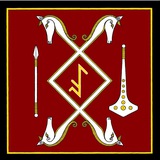
Interesting post from The Frithstead above. In christian Anglo-Saxon texts, as well as heathen Norse sagas there are references to a 'Helmet of Invisibility' or Heoloðhelm in Old English. The OE, OSaxon root 'helan' meant 'to hide'. As the Helmet was able to cover entire boats and crews, we know the Helmet of Invisibility was a magical art or invocation -
Thorstein then bade them not to hide him: “For I can make myself a ‘helmet of invisibility,’ that no one may see me.” Goðmundr called that good magical knowledge. - Þorsteins þáttr bæjarmagns, 5
Eyvindr made them a “helmet of invisibility” and a great dark fog, so that
the king and his men should not be able to see them. - Ólafs saga Tryggvasonar, 63
Kerling had command over the host, and she put a “helmet of invisibility”
over the ship while they rowed over the fjord to Hofstaðir - Gull-Þoris saga, 17
Thorstein then bade them not to hide him: “For I can make myself a ‘helmet of invisibility,’ that no one may see me.” Goðmundr called that good magical knowledge. - Þorsteins þáttr bæjarmagns, 5
Eyvindr made them a “helmet of invisibility” and a great dark fog, so that
the king and his men should not be able to see them. - Ólafs saga Tryggvasonar, 63
Kerling had command over the host, and she put a “helmet of invisibility”
over the ship while they rowed over the fjord to Hofstaðir - Gull-Þoris saga, 17
The Forces of Chaos - Part 2
In the chat group, I was asked about my prayer. Was informal; how Xtians “talk” to Jesus. Young in my Heathen path, I lacked knowledge & understood less, but I knew we were in danger. We were at a small club in a big city; hundreds packed shoulder to shoulder. It wasn’t spoken, but I sent out intention and believed our gods would hear. This is magic, sending intention, seeking result, but this was before I understood gift for a gift. The experience encouraged me in my Heathen life; another moment, which led me to to where I am now
The questioner’s response resonated:
“The Allfather must have seen what would come to pass if he protected you, saw that it would gain him a loyal follower and make a measure of progress toward his eventual return, so despite no gift being offered, he must have reasoned that his help would be repaid sufficiently in future”
Trust the gods; they see more than we do. We cannot fight Fate - it marches on
thefrithstead.com
In the chat group, I was asked about my prayer. Was informal; how Xtians “talk” to Jesus. Young in my Heathen path, I lacked knowledge & understood less, but I knew we were in danger. We were at a small club in a big city; hundreds packed shoulder to shoulder. It wasn’t spoken, but I sent out intention and believed our gods would hear. This is magic, sending intention, seeking result, but this was before I understood gift for a gift. The experience encouraged me in my Heathen life; another moment, which led me to to where I am now
The questioner’s response resonated:
“The Allfather must have seen what would come to pass if he protected you, saw that it would gain him a loyal follower and make a measure of progress toward his eventual return, so despite no gift being offered, he must have reasoned that his help would be repaid sufficiently in future”
Trust the gods; they see more than we do. We cannot fight Fate - it marches on
thefrithstead.com
🔥1
The Forces of Chaos - Part 3
The Eotenas are the enemies of the gods and man. The Higher powers are separated by tribal affiliations, just as we are. Allegiances are made and each are bound by that choice. One cannot simply honor the Eotenas because some of the gods are “Part Eoten”. Either we’re loyal to the gods or we’re not. Wóden, Hanwer, and Léod claim descent through both the god and eoten lines; however, when two opposing forces join, a choice will have to be made; one cannot serve two masters. Wóden is the Ealfæder & king of the Ésa. Hanwer, aligned with Wóden and fathered the Wanas. Léod, father of the Ylfe & Dweorgas (Dvergar), however, rebelled and aligned as the Eotenas. We either follow the gods or we do not. Honoring the Éotanas, such as Loga (Loki) or Goldwǽġe (Gullveig) is to declare oneself an enemy of the gods and man and won’t bode well for you at the Helþing. Rise up and take a stand. We cannot walk both paths. Declare your spiritual choice.
https://linktr.ee/TheFrithstead
The Eotenas are the enemies of the gods and man. The Higher powers are separated by tribal affiliations, just as we are. Allegiances are made and each are bound by that choice. One cannot simply honor the Eotenas because some of the gods are “Part Eoten”. Either we’re loyal to the gods or we’re not. Wóden, Hanwer, and Léod claim descent through both the god and eoten lines; however, when two opposing forces join, a choice will have to be made; one cannot serve two masters. Wóden is the Ealfæder & king of the Ésa. Hanwer, aligned with Wóden and fathered the Wanas. Léod, father of the Ylfe & Dweorgas (Dvergar), however, rebelled and aligned as the Eotenas. We either follow the gods or we do not. Honoring the Éotanas, such as Loga (Loki) or Goldwǽġe (Gullveig) is to declare oneself an enemy of the gods and man and won’t bode well for you at the Helþing. Rise up and take a stand. We cannot walk both paths. Declare your spiritual choice.
https://linktr.ee/TheFrithstead
Ġealdor, the First of Three Magics
Ġealdor /ˈjæ͜ɑl.dor/ “An Incantation; a charm”. Cognate with Old Norse Galdr. Seen today, in the word, Nightingale, literally Night + Singer. Ġealdor is the Wódenic art of singing to the gods in verse, known as Ġealdreslæġ (known in Old Norse as Gladralag). Ġealdor is the holy art of the gods & and in stark opposition to Bealocræft (Old Norse: Seiðr). The most known Ġealdor is ALU (ᚨᛚᚢ, ᛠᛚᚢ), the runic representation of the Alugod, Wóden. Alu means “Ale”, which in association with Wóden, we are reminded of his drinks from Mimor’s Spring, where he gained knowledge of the runes. Living off mead alone, this is what we are to blót to him. A prayer to Wóden might be a mead offering while performing an ᚨᛚᚢ / ᛠᛚᚢ Ġealdor.
https://linktr.ee/TheFrithstead
Ġealdor /ˈjæ͜ɑl.dor/ “An Incantation; a charm”. Cognate with Old Norse Galdr. Seen today, in the word, Nightingale, literally Night + Singer. Ġealdor is the Wódenic art of singing to the gods in verse, known as Ġealdreslæġ (known in Old Norse as Gladralag). Ġealdor is the holy art of the gods & and in stark opposition to Bealocræft (Old Norse: Seiðr). The most known Ġealdor is ALU (ᚨᛚᚢ, ᛠᛚᚢ), the runic representation of the Alugod, Wóden. Alu means “Ale”, which in association with Wóden, we are reminded of his drinks from Mimor’s Spring, where he gained knowledge of the runes. Living off mead alone, this is what we are to blót to him. A prayer to Wóden might be a mead offering while performing an ᚨᛚᚢ / ᛠᛚᚢ Ġealdor.
https://linktr.ee/TheFrithstead
Bealocræft, the Second of Three Magics
Bealocræft /ˈbæ͜ɑ.lo.kræft/ is maleficent Sorcery. To the Norse, it’s known as Seiðr, the black art founded by Goldwǽġe (Gullveig). It utilizes mind-control, poisoning, conjuration, and necromancy. The gods outlawed Bealocræft after the ancient folk-war, as it was declared harmful to our folk and against our faith.
https://norroena.org/odins-banishment-and-the-seidr/
https://linktr.ee/TheFrithstead
Bealocræft /ˈbæ͜ɑ.lo.kræft/ is maleficent Sorcery. To the Norse, it’s known as Seiðr, the black art founded by Goldwǽġe (Gullveig). It utilizes mind-control, poisoning, conjuration, and necromancy. The gods outlawed Bealocræft after the ancient folk-war, as it was declared harmful to our folk and against our faith.
https://norroena.org/odins-banishment-and-the-seidr/
https://linktr.ee/TheFrithstead
👍1
Spæ, the Third of Three Magics
*Spæ /spæ/ is the magical art of foretelling future events. It’s a neutral art, which can be used for good or bad. The most recognizable form of Spæ is found in the the ON poem Vǫluspá, i.e. the Vǫlva’s Spá, or the Seeress’ Foretelling, when the Vǫlva gives Wóden an overview of history, past and future. Other names for a woman who practices Spæ are Wítegestre & Wítege; both related to witan, the OE verb meaning to know or to feel. The ON Vǫlva (the v is pronounced as a w), interestingly, stems from Vǫlr, meaning a rounded staff, thus giving the meaning of ‘Staff-Bearer’. In Icelandic, we see Spæ in the form of Spákona, or Spá-Woman. We have accounts of men using Spæ; however, it was known as a feminine art.
https://linktr.ee/TheFrithstead
*Spæ /spæ/ is the magical art of foretelling future events. It’s a neutral art, which can be used for good or bad. The most recognizable form of Spæ is found in the the ON poem Vǫluspá, i.e. the Vǫlva’s Spá, or the Seeress’ Foretelling, when the Vǫlva gives Wóden an overview of history, past and future. Other names for a woman who practices Spæ are Wítegestre & Wítege; both related to witan, the OE verb meaning to know or to feel. The ON Vǫlva (the v is pronounced as a w), interestingly, stems from Vǫlr, meaning a rounded staff, thus giving the meaning of ‘Staff-Bearer’. In Icelandic, we see Spæ in the form of Spákona, or Spá-Woman. We have accounts of men using Spæ; however, it was known as a feminine art.
https://linktr.ee/TheFrithstead
* A YouTube Update *
I haven’t released a new video in a while. I’ve been having technical difficulties with my software. I’m currently engaged in the back-n-forth with tech support, so you know how it goes. Rest assured, once straightened out, more videos are to come. Please let me know in the comments any area of interest.
I haven’t released a new video in a while. I’ve been having technical difficulties with my software. I’m currently engaged in the back-n-forth with tech support, so you know how it goes. Rest assured, once straightened out, more videos are to come. Please let me know in the comments any area of interest.
Check out the new podcast from the PNWWP!
Episode 1 - The Sacred Stew
Follow James and Anthony, two modern heathens, as they discuss paganism, asatru, history, philosophy and theology for the modern heathen.
https://open.spotify.com/show/2H5HgYHC2LAqRcr8ku3mJO
Episode 1 - The Sacred Stew
Follow James and Anthony, two modern heathens, as they discuss paganism, asatru, history, philosophy and theology for the modern heathen.
https://open.spotify.com/show/2H5HgYHC2LAqRcr8ku3mJO
Spotify
The Sacred Stew
Podcast · The Sacred Stew · Follow James and Anthony, two modern heathens, as they discuss paganism, asatru, history, philosophy and theology for the modern heathen.
A Study of the Soul (& its parts)
- Part 1 -
(with Old English & Old Norse comparisons)
The Gifts of the Brother Gods
Æsċ (ASH) “Ash” and Elmle (EM-bowl) “Woman”. Known to the Norse as Askr and Embla.The first Teutonic man and woman, formed by Mimor & Dúren (Mímor & Durinn) from an ash tree, then given life, the divine gifts by Wóden, Hanwer, & Léod (Óðinn, Hœnir, & Lóðurr).
Völuspá 18, Gylfaginning 9
1. Wóden gave gást - Óðinn gave ǫnd
2. Hanwer gave mód - Hœnir gave óðr
3. Léod gave blód and gód wlitas - Lóðurr gave lá and litu góða
Wóden
Gást - the breath; the spirit, soul
Ǫnd - the breath, life; the soul
Hanwer
Mód - mind, wit, soul, emotions
Óðr - mind, wit, soul, sense
Léod
Blód - blood
Lá - blood
* with Let (Læti) - manner, with sound, i.e. movement and voice
Gód Wlitas - good hue, countenance, looks, appearance, shape, form
Litu Góða - good hue, countenance, complexion, shape, form
https://linktr.ee/TheFrithstead
- Part 1 -
(with Old English & Old Norse comparisons)
The Gifts of the Brother Gods
Æsċ (ASH) “Ash” and Elmle (EM-bowl) “Woman”. Known to the Norse as Askr and Embla.The first Teutonic man and woman, formed by Mimor & Dúren (Mímor & Durinn) from an ash tree, then given life, the divine gifts by Wóden, Hanwer, & Léod (Óðinn, Hœnir, & Lóðurr).
Völuspá 18, Gylfaginning 9
1. Wóden gave gást - Óðinn gave ǫnd
2. Hanwer gave mód - Hœnir gave óðr
3. Léod gave blód and gód wlitas - Lóðurr gave lá and litu góða
Wóden
Gást - the breath; the spirit, soul
Ǫnd - the breath, life; the soul
Hanwer
Mód - mind, wit, soul, emotions
Óðr - mind, wit, soul, sense
Léod
Blód - blood
Lá - blood
* with Let (Læti) - manner, with sound, i.e. movement and voice
Gód Wlitas - good hue, countenance, looks, appearance, shape, form
Litu Góða - good hue, countenance, complexion, shape, form
https://linktr.ee/TheFrithstead
👍2❤1
A Study of the Soul (& its parts)
- Part 2
with OE-ON comparison
Hama - a natural covering, integument, membrane, skin, slough
Hamr - a skin, slough; shape, form
Part of our Gást (Ǫnd)
Used in compound words:
*Hamremme (Hamramr) - a term denoting one’s ability to change one’s shape, as in taking on the qualities of other beings, such as how the Bersyrcan (Berserkir), Wulfhednas (Úlfhéðnar), and Eoforas (Jöfurr) taking on the qualities of the bear, wolf, & boar. This change is perceptible to others
*Hamingġe (Hamingja) - our female ‘Guardian Spirit’ assigned to us at birth who witness for us at the Hellþing after death, represents the power of our ‘luck’, & can appear in the form of an animal. Our Hamingġe is connected to our hama, if not our hama itself. The name Hamingġe implies that our hama is the spiritual manifestation of our ‘Luck’, i.e. our orlæġ, or fate. Our deeds, as well as the collective inherited luck from our forebears, effect its strength
https://linktr.ee/TheFrithstead
- Part 2
with OE-ON comparison
Hama - a natural covering, integument, membrane, skin, slough
Hamr - a skin, slough; shape, form
Part of our Gást (Ǫnd)
Used in compound words:
*Hamremme (Hamramr) - a term denoting one’s ability to change one’s shape, as in taking on the qualities of other beings, such as how the Bersyrcan (Berserkir), Wulfhednas (Úlfhéðnar), and Eoforas (Jöfurr) taking on the qualities of the bear, wolf, & boar. This change is perceptible to others
*Hamingġe (Hamingja) - our female ‘Guardian Spirit’ assigned to us at birth who witness for us at the Hellþing after death, represents the power of our ‘luck’, & can appear in the form of an animal. Our Hamingġe is connected to our hama, if not our hama itself. The name Hamingġe implies that our hama is the spiritual manifestation of our ‘Luck’, i.e. our orlæġ, or fate. Our deeds, as well as the collective inherited luck from our forebears, effect its strength
https://linktr.ee/TheFrithstead
❤1👍1
A Study of the Soul (& its parts)
- Part 3
(With OE-ON comparison)
Our Soul is part of an interwoven tapestry of creation. The elements combine, creating Eormensýl (Yggdrasil), the great pillar, or tree of life. The gods gift us with life & we realize that our ‘soul’ is not singular, but manifold. After looking into the gifts given by the gods, our Hama (Hamr), & Haminge (Hamingja), the lesser norn who’s also known as our Fylġestre (Fylgja), or simply our ‘Follower’, let us now define a couple terms as we seek to gain deeper understandings into how we fit within the tapestry of creation.
Orlæġ (Örlög) is fate, represented as the threads in a Web, where each thread effects, & is effected by, other threads. Also known as wyrd and commonly spoken of as the ‘Web of Wyrd’.
Luck is the strength of our ability to change our environment, or at least our perception of "changing it". Our luck is the strength of each orlæġ thread (within the greater Web of Wyrd).
https://linktr.ee/TheFrithstead
- Part 3
(With OE-ON comparison)
Our Soul is part of an interwoven tapestry of creation. The elements combine, creating Eormensýl (Yggdrasil), the great pillar, or tree of life. The gods gift us with life & we realize that our ‘soul’ is not singular, but manifold. After looking into the gifts given by the gods, our Hama (Hamr), & Haminge (Hamingja), the lesser norn who’s also known as our Fylġestre (Fylgja), or simply our ‘Follower’, let us now define a couple terms as we seek to gain deeper understandings into how we fit within the tapestry of creation.
Orlæġ (Örlög) is fate, represented as the threads in a Web, where each thread effects, & is effected by, other threads. Also known as wyrd and commonly spoken of as the ‘Web of Wyrd’.
Luck is the strength of our ability to change our environment, or at least our perception of "changing it". Our luck is the strength of each orlæġ thread (within the greater Web of Wyrd).
https://linktr.ee/TheFrithstead
👍4❤1
A Study of the Soul (& its parts) - Part 4
Hanwer’s gift of Mód (Óðr), defined as our mind, wit, soul, & emotions, is comprised of two parts: Hyġe (Huginn) & Myne (Muninn)
The Hyġe is defined as the mind, heart, & soul. The Hyġe can be seen as the thinking, rational mind. The inclusion of heart and soul reminds us that our Celtic kinsmen believed that the mind was the seat of the soul. Our Teutonic forbears may have believed similarly, evidenced by Wóden’s counsel through Mimor’s severed head (Völuspá 46; Sigrdrífumál 14). Memory is a function of the Hyġe
The Myne is defined as mind, desire, & love. It’s the Myne where we have our longing to know & understand; to get answers to that which we seek. Our ability to feel love and affection. Grímnismál 20, Wóden says: “I dread about Huginn (Hyġ) lest he never return, yet I am more afraid for Muninn (Myne)”. Wóden fears the day his mind leaves him, but he more fears the day he loses his longing & love for life (and his memories of)
thefrithstead.com
Hanwer’s gift of Mód (Óðr), defined as our mind, wit, soul, & emotions, is comprised of two parts: Hyġe (Huginn) & Myne (Muninn)
The Hyġe is defined as the mind, heart, & soul. The Hyġe can be seen as the thinking, rational mind. The inclusion of heart and soul reminds us that our Celtic kinsmen believed that the mind was the seat of the soul. Our Teutonic forbears may have believed similarly, evidenced by Wóden’s counsel through Mimor’s severed head (Völuspá 46; Sigrdrífumál 14). Memory is a function of the Hyġe
The Myne is defined as mind, desire, & love. It’s the Myne where we have our longing to know & understand; to get answers to that which we seek. Our ability to feel love and affection. Grímnismál 20, Wóden says: “I dread about Huginn (Hyġ) lest he never return, yet I am more afraid for Muninn (Myne)”. Wóden fears the day his mind leaves him, but he more fears the day he loses his longing & love for life (and his memories of)
thefrithstead.com
❤1
A Study of the Soul (& its parts) - Part 5
Within sleep, the dreaming stage is called REM, or Rapid Eye Movement. In comparative Indo-European studies, the earliest Upanishads, written before 300 BCE, emphasize two meanings of dreams: expressions of inner desires & the belief of the soul leaving the body & being guided until awakened. In Germanic thought, dreams come from the Myne (Muninn), the part of our mind that longs for, desires, & loves. Science shows that without REM “Dreaming” sleep, symptoms include: lack of focus, memory loss, irritability, low attention span, lack of rational thought, lethargy, mental health disorders, increased physical pain, & immunodeficiencies. In other words, we slowly die, while losing our Hyġ (Hugr). Like Wóden, I would surely fear losing my Hyġ (Hugr), but fear more the loss of Myne (Muninn). Dreams are an extension of our Myne (Muninn), & can work with our Hama (Hamr) for out of body experiences. Dreams are divine pieces of our very soul.
https://linktr.ee/TheFrithstead
Within sleep, the dreaming stage is called REM, or Rapid Eye Movement. In comparative Indo-European studies, the earliest Upanishads, written before 300 BCE, emphasize two meanings of dreams: expressions of inner desires & the belief of the soul leaving the body & being guided until awakened. In Germanic thought, dreams come from the Myne (Muninn), the part of our mind that longs for, desires, & loves. Science shows that without REM “Dreaming” sleep, symptoms include: lack of focus, memory loss, irritability, low attention span, lack of rational thought, lethargy, mental health disorders, increased physical pain, & immunodeficiencies. In other words, we slowly die, while losing our Hyġ (Hugr). Like Wóden, I would surely fear losing my Hyġ (Hugr), but fear more the loss of Myne (Muninn). Dreams are an extension of our Myne (Muninn), & can work with our Hama (Hamr) for out of body experiences. Dreams are divine pieces of our very soul.
https://linktr.ee/TheFrithstead
❤1
Forwarded from ☀️The Sun Riders☀️ (O’Gravy)
I’ve been working on a blog for the last two years with the goal of making Celtic myth (and myths of other cultures) more clear and understandable.
Many people have asked me for a physical book version of the blog so they don’t have to read so much on a screen.
Today is the day.
Taliesin’s Map: The Comparative Guide to Celtic Mythology
Amazon USA link: https://tinyurl.com/3dmra3kx
Amazon UK: https://tinyurl.com/525vnavd
Amazon Canada: https://tinyurl.com/bdcmedxf
(please search the noscript and author in your country’s Amazon site if not listed)
The paperback edition is OUT NOW and a hardcover version (with an alternate cover design) will be available in 3 weeks.
What you see on the blog is what you will get in print, with a few added footnotes (and no index). It is the size of a textbook at 540 pages 7 x 10 in.
I make a lot of claims that this book has the most accurate interpretation of Celtic myth yet produced, digging down to the ancient theology underneath the myths, and I am aware that the information in it must, with great urgency, be spread among Celts and other Europeans interested in Indo-European religion. I am making this format available for those who would like a hard copy they can sit with, study, and teach others with.
The greater purpose of this book is to provide the one book people will need to begin accurately understanding the Celtic gods and seeing them in their proper relations to the gods of the other pantheons of Europe and India. Having all of this information in one place can provide a single clear entry point for practitioners of Celtic paganism and a shared understanding that can be built upon together.
This book furthermore sheds light on Germanic and Greek myths in turn. When properly understood, Celtic myth again and again provides missing pieces to the puzzles of these related branches.
Some of these puzzles will ONLY ever be solved by looking to what Celtic myth has preserved, just as most of Celtic myth can only be understood by looking at the other Indo-European branches. And so I urge people to hear what I am telling you, and to become familiar with the solutions I have made easily available here.
Although spending time studying this material is one of the most purely enjoyable things I’ve ever done, I don’t only do it for fun, but am driven by a burning obsession to improve the practical and theoretical understanding available to Celtic pagans.
The Celts are a sleeping giant. We must awaken to an understanding of our sacred lore at last and begin to do justice once again to what was the most prized possession of our ancestors.
⁃ O’Gravy, The Sun Riders
@solarcult
Many people have asked me for a physical book version of the blog so they don’t have to read so much on a screen.
Today is the day.
Taliesin’s Map: The Comparative Guide to Celtic Mythology
Amazon USA link: https://tinyurl.com/3dmra3kx
Amazon UK: https://tinyurl.com/525vnavd
Amazon Canada: https://tinyurl.com/bdcmedxf
(please search the noscript and author in your country’s Amazon site if not listed)
The paperback edition is OUT NOW and a hardcover version (with an alternate cover design) will be available in 3 weeks.
What you see on the blog is what you will get in print, with a few added footnotes (and no index). It is the size of a textbook at 540 pages 7 x 10 in.
I make a lot of claims that this book has the most accurate interpretation of Celtic myth yet produced, digging down to the ancient theology underneath the myths, and I am aware that the information in it must, with great urgency, be spread among Celts and other Europeans interested in Indo-European religion. I am making this format available for those who would like a hard copy they can sit with, study, and teach others with.
The greater purpose of this book is to provide the one book people will need to begin accurately understanding the Celtic gods and seeing them in their proper relations to the gods of the other pantheons of Europe and India. Having all of this information in one place can provide a single clear entry point for practitioners of Celtic paganism and a shared understanding that can be built upon together.
This book furthermore sheds light on Germanic and Greek myths in turn. When properly understood, Celtic myth again and again provides missing pieces to the puzzles of these related branches.
Some of these puzzles will ONLY ever be solved by looking to what Celtic myth has preserved, just as most of Celtic myth can only be understood by looking at the other Indo-European branches. And so I urge people to hear what I am telling you, and to become familiar with the solutions I have made easily available here.
Although spending time studying this material is one of the most purely enjoyable things I’ve ever done, I don’t only do it for fun, but am driven by a burning obsession to improve the practical and theoretical understanding available to Celtic pagans.
The Celts are a sleeping giant. We must awaken to an understanding of our sacred lore at last and begin to do justice once again to what was the most prized possession of our ancestors.
⁃ O’Gravy, The Sun Riders
@solarcult
🔥2
A Study of the Soul (& its parts)
- Part 6
Our Myne (Muninn) can work with our Hama (Hamr) for out of body experiences. There is an Old Norse term, Hamfǫr (Hamfaru in OE); a name given for one who travels in the shape of an animal.
Wóden could transform his shape: his body would lie as dead or asleep, but he would be in the shape of a fish, worm, bird, or beast & be off to distant lands on his own or other folk’s business - Ynglinga Saga, ch. 7
King Harald told a warlock to go to Iceland in some altered shape, & to learn what he could there to tell him. He set out in the shape of a whale - Olaf Trygvason’s Saga, ch. 37
The two brothers, near their ship, uprose a walrus. Cormac hurled at it a pole-staff, striking the beast, so that it sank, but the men aboard thought that they knew its eyes as Thorveig the witch. That walrus came up no more, but of Thorveig it was heard that she lay sick to death; and indeed folk say that this was the end of her - Kormáks saga, ch. 18
https://linktr.ee/TheFrithstead
- Part 6
Our Myne (Muninn) can work with our Hama (Hamr) for out of body experiences. There is an Old Norse term, Hamfǫr (Hamfaru in OE); a name given for one who travels in the shape of an animal.
Wóden could transform his shape: his body would lie as dead or asleep, but he would be in the shape of a fish, worm, bird, or beast & be off to distant lands on his own or other folk’s business - Ynglinga Saga, ch. 7
King Harald told a warlock to go to Iceland in some altered shape, & to learn what he could there to tell him. He set out in the shape of a whale - Olaf Trygvason’s Saga, ch. 37
The two brothers, near their ship, uprose a walrus. Cormac hurled at it a pole-staff, striking the beast, so that it sank, but the men aboard thought that they knew its eyes as Thorveig the witch. That walrus came up no more, but of Thorveig it was heard that she lay sick to death; and indeed folk say that this was the end of her - Kormáks saga, ch. 18
https://linktr.ee/TheFrithstead
❤1
Forwarded from BC Neanderthal Mindset
Men, never let the fire die out, and give your boys a courageous life to aspire to, as well as showing your daughters what to look for in a husband.
Show them by becoming a living example of honor and noble virtue.
Show them by becoming a living example of honor and noble virtue.
👍1
The Sacred Stew- Episode 2
Finding Identity In Tradition
James and Anthony discuss how traditionalism connects us to our past and how it can help us build modern heathen communities. We examine piety, morals, community building, the lore and identity. Join us for a deep dive into authentic germanic theology for the modern pagan.
https://anchor.fm/the-sacred-stew/episodes/Finding-Identity-In-Tradition-e1d6o15/a-a790pjq
Finding Identity In Tradition
James and Anthony discuss how traditionalism connects us to our past and how it can help us build modern heathen communities. We examine piety, morals, community building, the lore and identity. Join us for a deep dive into authentic germanic theology for the modern pagan.
https://anchor.fm/the-sacred-stew/episodes/Finding-Identity-In-Tradition-e1d6o15/a-a790pjq
Anchor
Finding Identity In Tradition by The Sacred Stew
James and Anthony discuss how traditionalism connects us to our past and how it can help us build modern heathen communities. We examine piety, morals, community building, the lore and identity. Join us for a deep dive into authentic germanic theology for…
👍3
A Study of the Soul (& its parts) - Part 7
The Hamfaru (Hamfǫr) can access their Myne (Muninn), akin to lucid dreaming, while empowering the Hama (Hamr) for out of body experiences
A Saami sorceress tells a wealthy landowner that he will emigrate from Norway to Iceland, and that an amulet of his is missing & is waiting for him there. The landowner hires three Saami sorcerers to travel to Iceland and find his amulet, & bring it back. The Saami tell him that the journey is very dangerous. They must be shut together in a shed for three days, & their names must not be revealed while they are out of their bodies - Vatnsdaela Saga
Queen Gunhild takes the form of a twittering bird outside Egil’s window to thwart his attempts to write a poem on which his life depends - Egil’s Saga
Bjorn lay in the hall as if asleep during a battle, while a huge bear joined the fight. When someone woke Bjorn, the bear disappeared & the battle was lost - Hrolf’s Saga Kraki
https://linktr.ee/TheFrithstead
The Hamfaru (Hamfǫr) can access their Myne (Muninn), akin to lucid dreaming, while empowering the Hama (Hamr) for out of body experiences
A Saami sorceress tells a wealthy landowner that he will emigrate from Norway to Iceland, and that an amulet of his is missing & is waiting for him there. The landowner hires three Saami sorcerers to travel to Iceland and find his amulet, & bring it back. The Saami tell him that the journey is very dangerous. They must be shut together in a shed for three days, & their names must not be revealed while they are out of their bodies - Vatnsdaela Saga
Queen Gunhild takes the form of a twittering bird outside Egil’s window to thwart his attempts to write a poem on which his life depends - Egil’s Saga
Bjorn lay in the hall as if asleep during a battle, while a huge bear joined the fight. When someone woke Bjorn, the bear disappeared & the battle was lost - Hrolf’s Saga Kraki
https://linktr.ee/TheFrithstead
❤1
A Study of the Soul (& its parts) - Part 8
It’s indicated that after death, our soul is viewed as if still physical, with great care being placed on our body (Líċ, Lík)
Gisli Surson's Saga ch. 24 mentions the practice of binding Hell-shoes on the dead’s feet - “It’s custom to bind hel-shoes to men, so they walk to Valhöll" (Wælheall)
Sólarljóð 44, tells us that our
tongues become “like wood”, losing the ability to speak
In studying the ‘Soul’, Vilhelm Grønbech’s words in his ‘Culture of the Teutons: Volume 1’ rings with an heir of accuracy:
“The soul is more than the body, as it’s seen & felt in space-filling reality, but it’s not outside the material. When we cannot find the boundary between the inner & outer, there is nothing to be done but give truth the credit, & say that the body is a part of the soul, or even the soul itself”
Our forebears didn’t separate the aspects of self. ‘Body’ and ‘Soul’ were not viewed as independent entities, but parts of a greater whole
https://linktr.ee/TheFrithstead
It’s indicated that after death, our soul is viewed as if still physical, with great care being placed on our body (Líċ, Lík)
Gisli Surson's Saga ch. 24 mentions the practice of binding Hell-shoes on the dead’s feet - “It’s custom to bind hel-shoes to men, so they walk to Valhöll" (Wælheall)
Sólarljóð 44, tells us that our
tongues become “like wood”, losing the ability to speak
In studying the ‘Soul’, Vilhelm Grønbech’s words in his ‘Culture of the Teutons: Volume 1’ rings with an heir of accuracy:
“The soul is more than the body, as it’s seen & felt in space-filling reality, but it’s not outside the material. When we cannot find the boundary between the inner & outer, there is nothing to be done but give truth the credit, & say that the body is a part of the soul, or even the soul itself”
Our forebears didn’t separate the aspects of self. ‘Body’ and ‘Soul’ were not viewed as independent entities, but parts of a greater whole
https://linktr.ee/TheFrithstead
A Study of the Soul (& its parts) - Part 9
In looking at the soul and it’s parts, we turn our attention to the word soul itself. The Anglo-Saxon sáwol traces back to Proto-Germanic and Proto-Indo-European times; stemming from two words, meaning “sea, ocean” & “self, will”. The Norse didn’t continue its use, but in later times, borrowed its usage in the form of Sál, and reincorporated it back into their lexicon. The Anglo-Saxon use of sáwol could refer to our physical life, corresponding to Wóden’s (Óðinn’s) gift of gást (ǫnd), our breath & life, but mostly referred to the intellectual and immortal principle of the self, corresponding to Hanwer’s (Hœnir’s) gift of mód (óðr), our mind, wit, emotions, and sense, with its hyġe & myne (huginn & muninn). The Anglo-Saxons continued to use the ancient term, as a general term for the “Spiritual” aspects of who we are, which served as an umbrella term comprising both gást (ǫnd) and mód (óðr)
https://linktr.ee/TheFrithstead
In looking at the soul and it’s parts, we turn our attention to the word soul itself. The Anglo-Saxon sáwol traces back to Proto-Germanic and Proto-Indo-European times; stemming from two words, meaning “sea, ocean” & “self, will”. The Norse didn’t continue its use, but in later times, borrowed its usage in the form of Sál, and reincorporated it back into their lexicon. The Anglo-Saxon use of sáwol could refer to our physical life, corresponding to Wóden’s (Óðinn’s) gift of gást (ǫnd), our breath & life, but mostly referred to the intellectual and immortal principle of the self, corresponding to Hanwer’s (Hœnir’s) gift of mód (óðr), our mind, wit, emotions, and sense, with its hyġe & myne (huginn & muninn). The Anglo-Saxons continued to use the ancient term, as a general term for the “Spiritual” aspects of who we are, which served as an umbrella term comprising both gást (ǫnd) and mód (óðr)
https://linktr.ee/TheFrithstead
This media is not supported in your browser
VIEW IN TELEGRAM
Our European ancestors in the Iron Age.